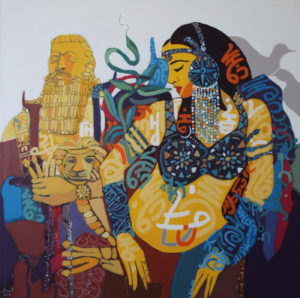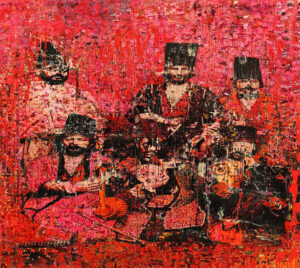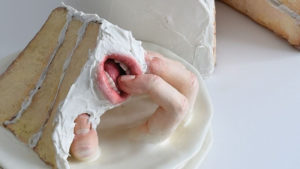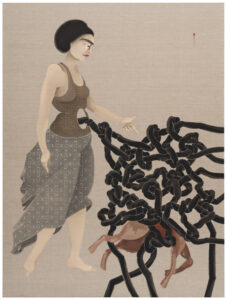
In times of seemingly endless war, where does one find motivation to create art? And is there any point?
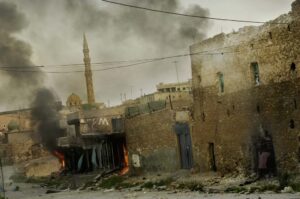
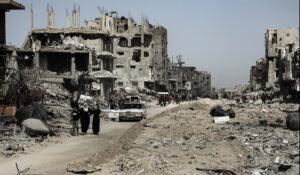
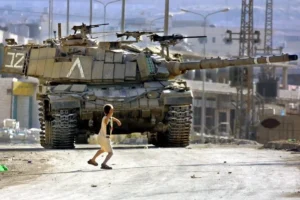
Regardless of where you get your news these days, when consulting your chosen medium, you will invariably see that the world is still, relentlessly, at war. Some outlets are strikingly vague as to the parties responsible, drafting passive-voice headlines and captions that would be impressive, as grammatical leger-de-mains, if they weren’t so patently evasive and yet consequential in shaping public opinion. In this context — the U.S.-Israeli war on Iran (which as of this writing has been victoriously if unconvincingly declared over), the cruel and intensifying bombardment of Lebanon, the retaliatory assaults on the Gulf states, the continuing devastation of and in Gaza, and finally, the daily attempts to distort or deny the facts — what motivation can remain to write, draw, paint, or create anything at all? More troubling still, is there any point?
Unsure of the first question, but convinced of the answer to the second — yes! — The Markaz Review asked a few writers and artists where and what they are creating in this time of prolonged, violent conflict.
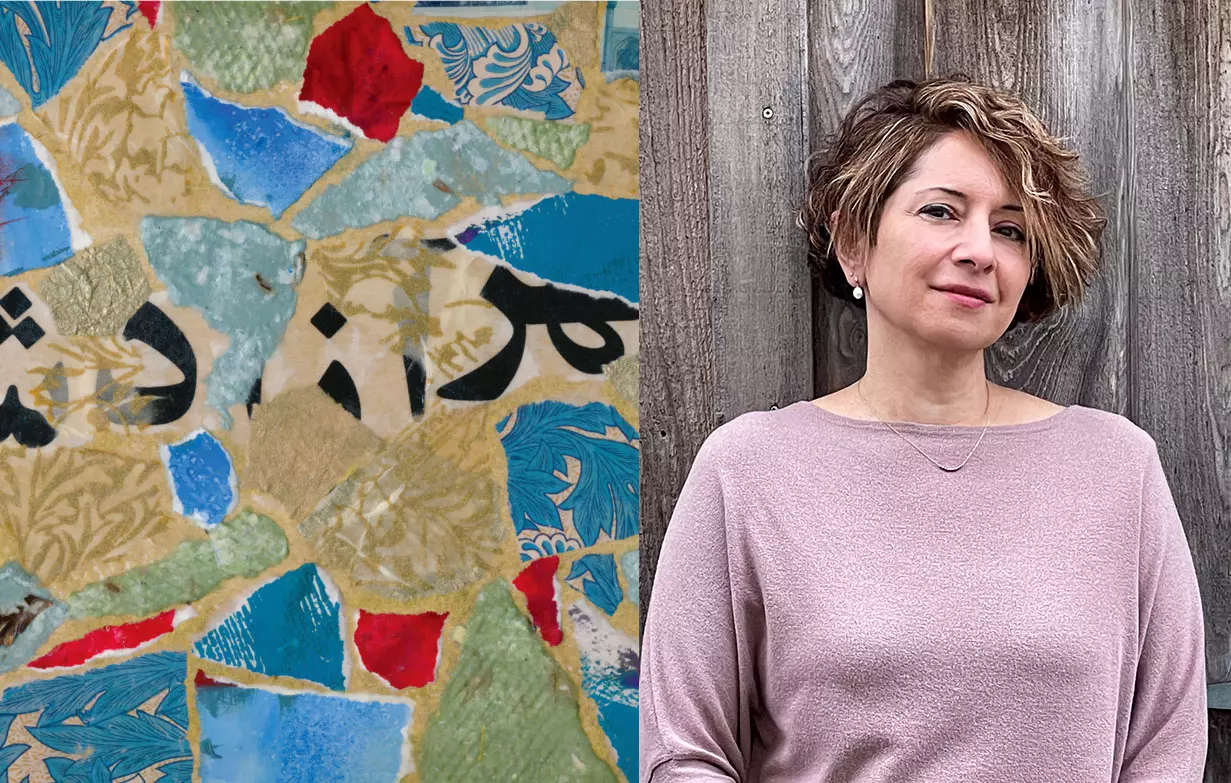
Noura Ali-Ramahi • Abu Dhabi • multimedia artist
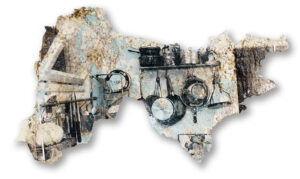
I turn to other tools; pots, pans, knives, whisks, flour, butter, salt, sugar.
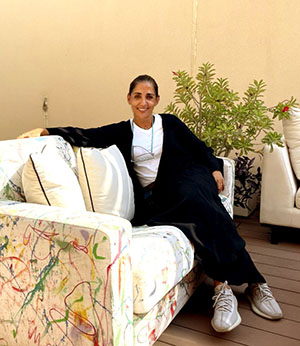
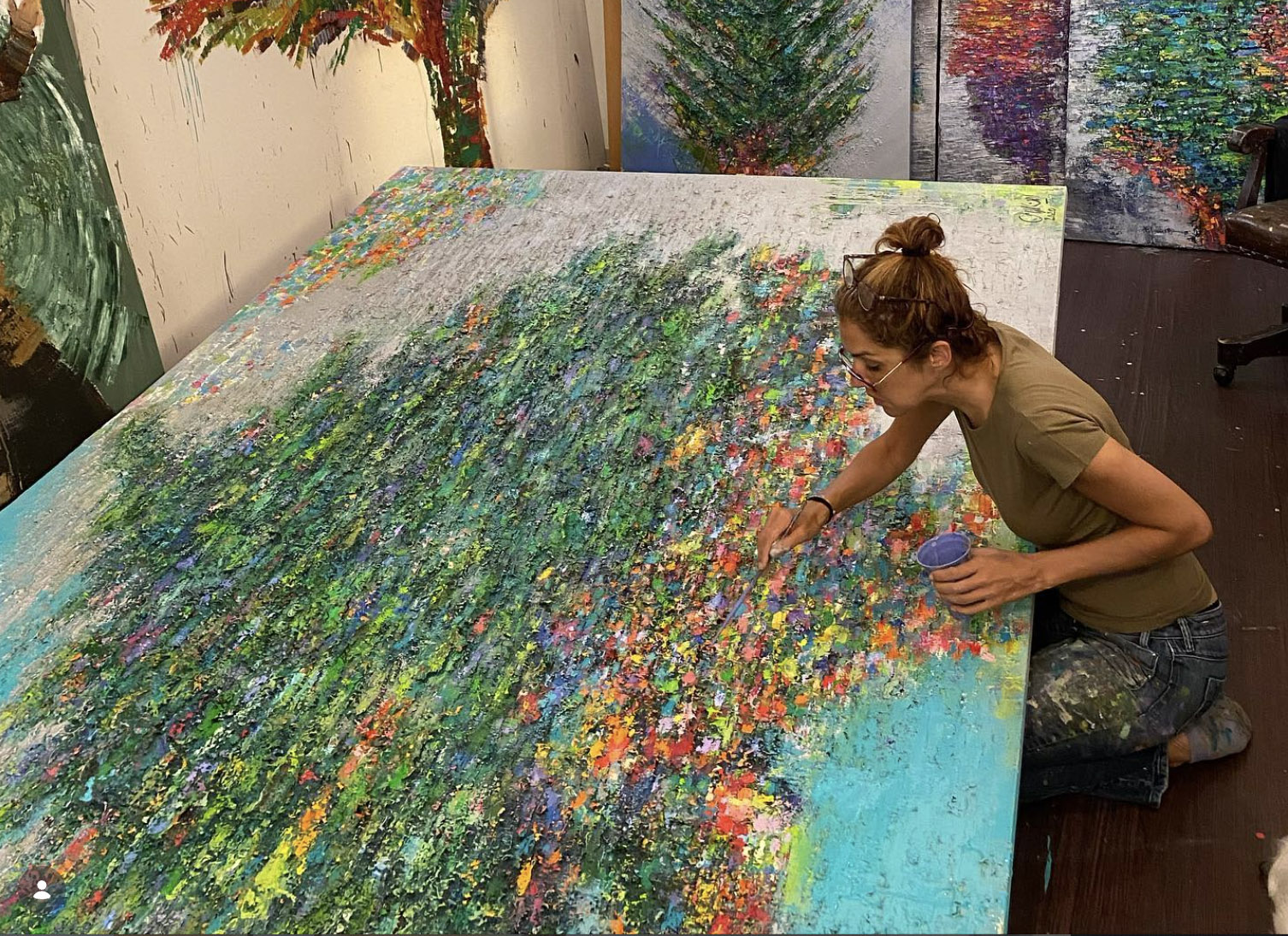
The missile alert buzzes on my phone. The same one used in 2020 for COVID curfew warnings. It’s so loud against the backdrop of my quiet kitchen. I message my “familia group chat” with one word “beep.” They know what I mean and I continue preparing the fattoush. I squeeze the lemons and wait for the thud/boom sound to come and I know it will make me jump. My kids say I have PTSD from my childhood in Lebanon. I don’t deny it and it’s all coming back to me now. Sumac, salt, olive oil. Then I begin frying the pine nuts to garnish the magluba. This war has brought back the cook in me. When I’m unable to walk outside because of the risk of falling debris from missile interceptions, I paint, draw, collage, and cook. When the paintbrush hesitates and the scissors sit on top of the scattered photographs, not knowing what to cut or why, I turn to other tools: pots, pans, knives, whisks, flour, butter, salt, sugar. My hands chop and knead and stir while my mind wanders uninhibited, unafraid, unlike me, searching for escape and shelter and meaning and inspiration and hope and answers all at once. The sizzle in the skillet is drowned out suddenly by the words of a poem forming in my head. I turn off the heat, grab my phone, open notes, and start typing. When I do that, I’m not here anymore. I’m looking at myself, my life, the world from far away. I don’t stop (return) until I know the last word has been written. Like snapping out of a daydream, I walk back to the stove, turn on the fire, and start stirring again. The second alert buzzes, just as loud, but this time reassuring us that the attack is over. Life goes on.
Noura Ali-Ramahi is a Lebanese-born Emirati multidisciplinary artist based in Abu Dhabi, UAE.
Mai Al-Nakib • Kuwait • novelist
In the midst of [uncertainty], I turn to the people I love; write because I must…
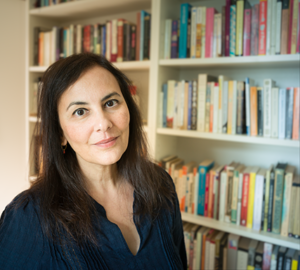
The wars and violence that unfold across the region today are occurring because Palestine is not free. If bombs explode here, it’s because they have exploded there for decades with impunity. If we, as a region, want to live in peace, we, as a region, must stand behind Palestine without equivocation, without division. We fail to do so at our peril.
The future is uncertain. As a Kuwaiti, I’ve grown up with this uncertainty. The person and writer I am today is a product of this uncertainty. It’s an uncomfortable environment to exist in, and yet, it creates an edgy flexibility that, paradoxically, keeps me grounded. In the midst of it, I turn to the people I love; write because I must; and hold tight to the values that keep me sane — justice above all.
Mai Al-Nakib was born in Kuwait and spent the first six years of her life in London, Edinburgh, and St. Louis, Missouri. Her academic research and publications have focused on cultural politics in Kuwait and the Middle East more broadly, with a special emphasis on citizenship, feminism, and postcolonial issues. She is the author of The Hidden Light of Objects (Saqi 2025) and An Unlasting Home (Harper Collins 2022).
Lama Balaghi • Dubai • singer-songwriter
[These songs] were my sliver of purpose in a world where purpose felt lost.

When the Gaza genocide began, the world as I knew it came to a standstill. It was impossible to focus on anything else. At the time, I was recording original jazz music for release, but I put that on hold and pivoted to a side project of songs for Palestine, Lebanon, and our region — a collection I call “Songs I Wish I Never Wrote.” They were my sliver of purpose in a world where purpose felt lost.
Eventually, as life settled into a kind of recalibrated normalcy, I returned to the jazz originals. Those songs now make up the tracklist for my EP March, which has a carefully chosen release date linked to its story. And of course, things escalate again just as that date — already delayed two years for the same reason — approaches.
It feels like the world should come to a standstill once more. My family is from the south of Lebanon, and like others, they are deeply affected by the looming threat of occupation. This time, sadly, my reaction feels seasoned. I’m mostly tired and angry, and tired of being angry that this continues to be our reality. And right or wrong, letting them derail me again feels like a kind of defeat.
So, I’m carrying two worlds in parallel: one that moves as (somewhat) planned, and one that stands still. In the world that moves, I’m sticking to release dates. As a Lebanese artist working with other Lebanese artists and reaching an international audience, it feels important not to let what we create be buried. Going forward feels like a form of protest.
In the world that stands still, I face the dissonance that moving forward brings. I write poems to vent. I may share another song I wish hadn’t written. It’s not perfect, but it’s what feels right today. Check in with me again tomorrow.
Lama’s EP, March, is now available for purchase. Half of the earnings from the digital album sales of the EP will be donated to help displaced families in Lebanon.
Originally from Beirut and raised in Montreal, Lama Balaghi, who records under the name Lululeloup, is a jazz and blues singer-songwriter celebrated for her vintage-inspired style, sharp lyrical voice, and charismatic performances. Known for combining nostalgia with modern storytelling, Lama crafts music that is timeless yet distinctly her own. Dubbed “jazz’s darkly comic romantic,” Lama has been praised for her subtle humor and the ability to make heartbreak feel both devastating and quietly amusing.
Roshanak Aminelahi • Dubai • visual artist
It’s not easy to enter that quiet, focused space that painting needs.
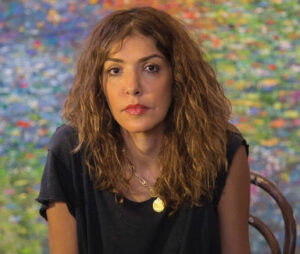
Honestly, it’s been very difficult for me to concentrate and work these days. There’s a constant sense of worry and emotional heaviness with everything that’s happening, and it’s not easy to enter that quiet, focused space that painting needs.
That said, I do feel that some ideas have started to emerge very naturally from the current situation. I can sense that something is forming, and I think I will be working on them in the near future. But for now, I’m still going through a lot emotionally, and I’m not really able to fully focus and paint.
At the same time, I feel very safe here in Dubai. The UAE has been extremely efficient in protecting everyone living here and very supportive throughout this period. There are clear channels for information, help lines you can call if you feel anxious or need support, and everything is being managed in a very calm and organized way. Daily life continues, supplies are available, and there is a real sense of stability.
It also means a lot to hear Sheikh Mohamed speak about supporting all Iranians living in the UAE and calling it our home. That reassurance is deeply felt, especially at a time like this.
Roshanak Aminelahi was born in Tehran, Iran, and currently resides in Dubai where she spends all of her time painting, drawing, and teaching.
Hatem Imam • Lebanon • visual artist
I find myself wholly immersed in activities that I forever fancied doing but always found impossibly time-consuming…
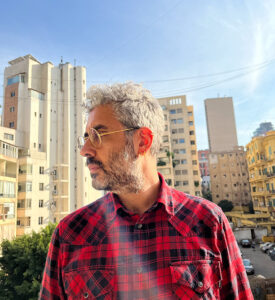
My eighty-year-old teacher summoned me to his atelier. The air was heavy in the tightly-stacked space. We had barely finished drinking our coffee when a thundering bang shook the room, and seconds later, another one. A sonic boom, we concurred. I asked him and his wife if they were spending time up in the mountains. They shook their heads in sync and said, in times like these, we stay put, and proceeded to recount stories and anecdotes from the war they survived fifty years ago in their apartment in Hamra. As someone who saw a cell phone for the first time in high school and who sent his first email from a computer lab at university, it was still hard for me to imagine how one might go through a day without both during wartime.
Since the beginning of this latest episode of unceasing Israeli aggression, I find myself wholly immersed in activities that I forever fancied doing but always found impossibly time-consuming and too onerous to achieve. I set out to make compost on my balcony; started my first watercolor botanical painting; finally bought a lemon tree. The potential futility and excessive exhaustion magically lost on me. I have never had such discipline.
I tell my teacher about all my projects — a week earlier, I had brought him a plate of mfataqa, a turmeric-and-rice pudding that requires hours of nonstop stirring. He laughs and shares with me an adage he had eloquently formulated, refashioned from Sufi teachings into a rhyming couplet in Arabic: Natrok el amal, w namdi ila-l ‘amal. Relinquish hope, and let’s get to work.
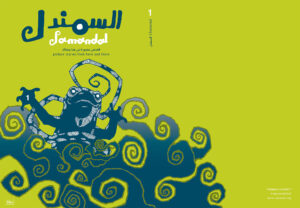
Hatem Imam is an artist and a graphic designer living and working in Beirut, Lebanon. He co-founded the design agency Studio Safar, and the design and visual culture magazine, Journal Safar. He is also one of the co-founders of the Samandal comics collective, and Annihaya record label. He has been teaching graphic design and printmaking since 2007. He is currently the creative director of the news outlet Megaphone.




![Ali Cherri’s show at Marseille’s [mac] Is Watching You](https://themarkaz.org/wp-content/uploads/2025/09/Ali-Cherri-22Les-Veilleurs22-at-the-mac-Musee-dart-contemporain-de-Marseille-photo-Gregoire-Edouard-Ville-de-Marseille-300x200.jpg)