Nasrin Abu Baker
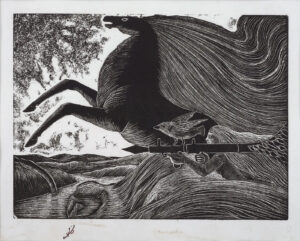
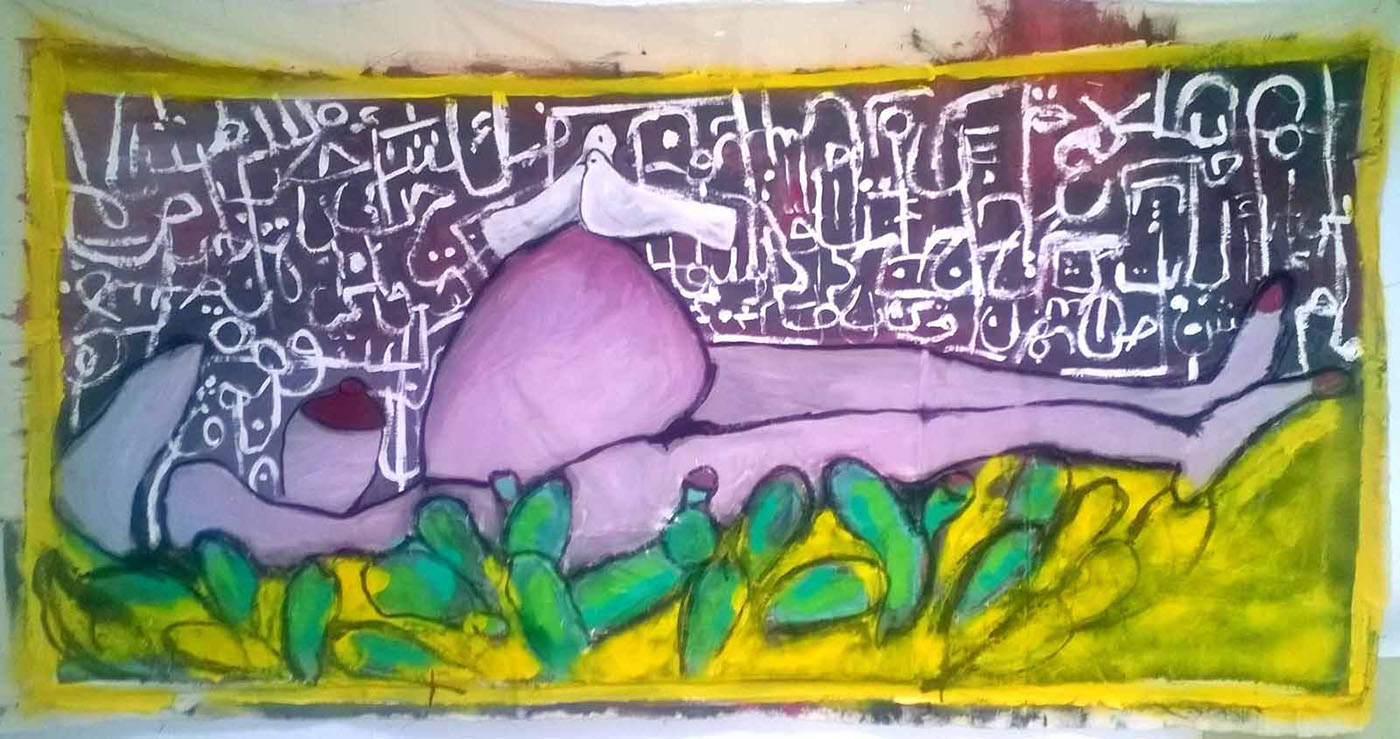
Despite being a city dweller, Nasrin Abu Baker remains connected to earth and nature. You can see it throughout her art, regardless of the period, for she often works in earth tones with a wide range of natural materials. “I combine a variety of techniques including painting, sculpting, sewing and embroidery,” she explains. “The result revolves around a personal, intuitive, wild world that touches the realms of surrealism and fantasy. With that my works also touch social, religious and political issues. There are references to well-known works of art, to mythological stories; my work has a sense of humor and even religious and ceremonial dimension.”
A versatile creator, Nasrin’s work often explores her identity and roots through feminist representation. She places woman in a sociopolitical context front and center in her works, exemplifying strength and determination. She works with locally gathered materials and attempts to create a dialogue between the local and the universal, mixing cultural symbols and peoples. In some of her paintings, she uses tar, in accordance with the German expressionist school. Nasrin intercedes in order to provide her own interpretation of images.
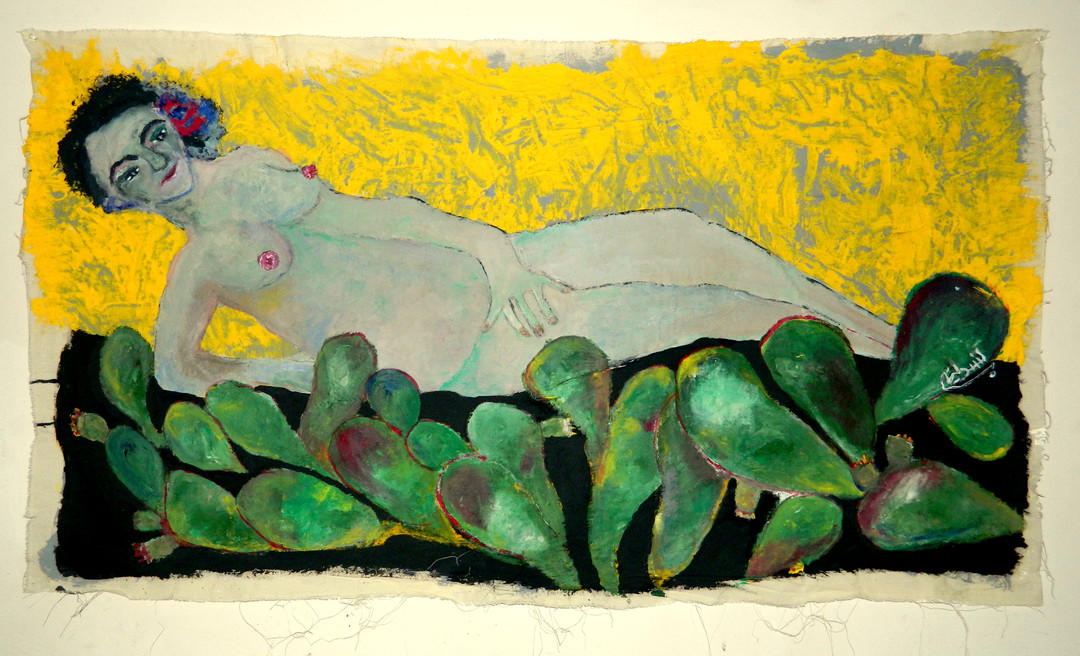
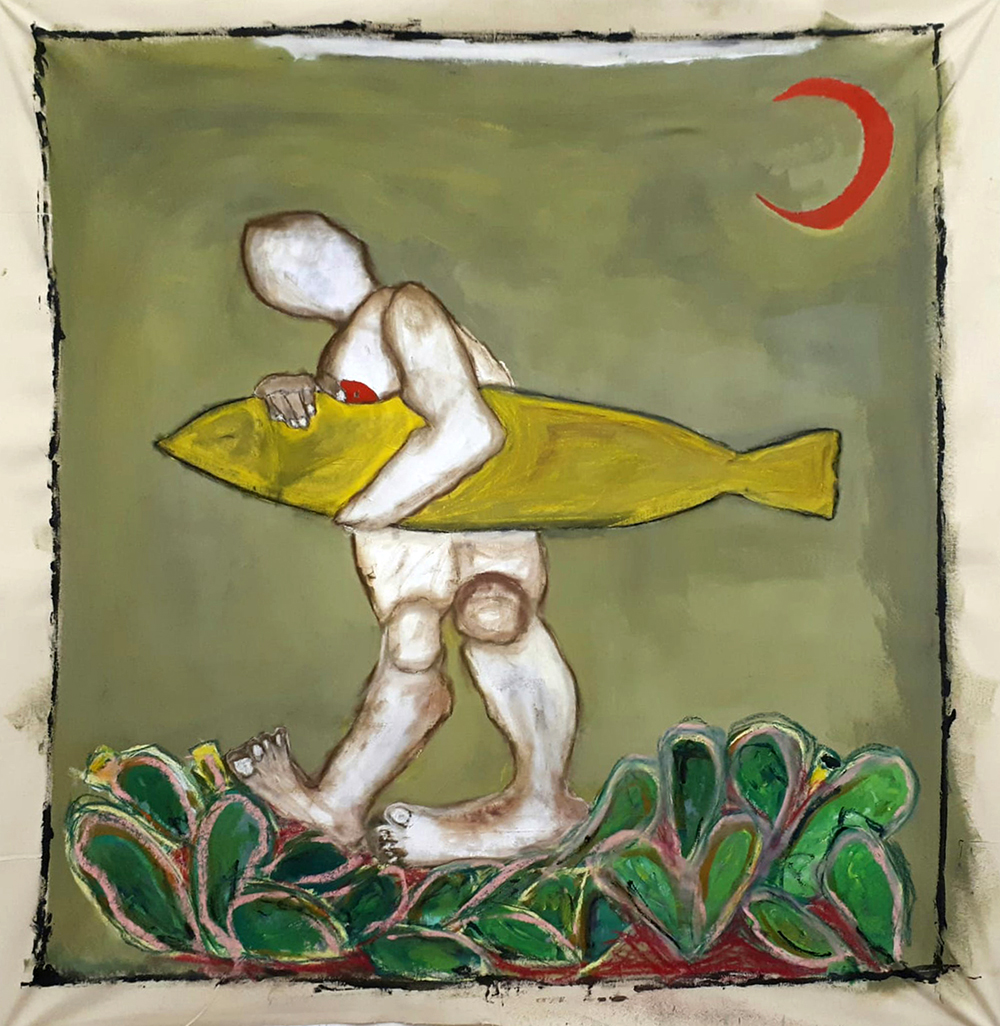
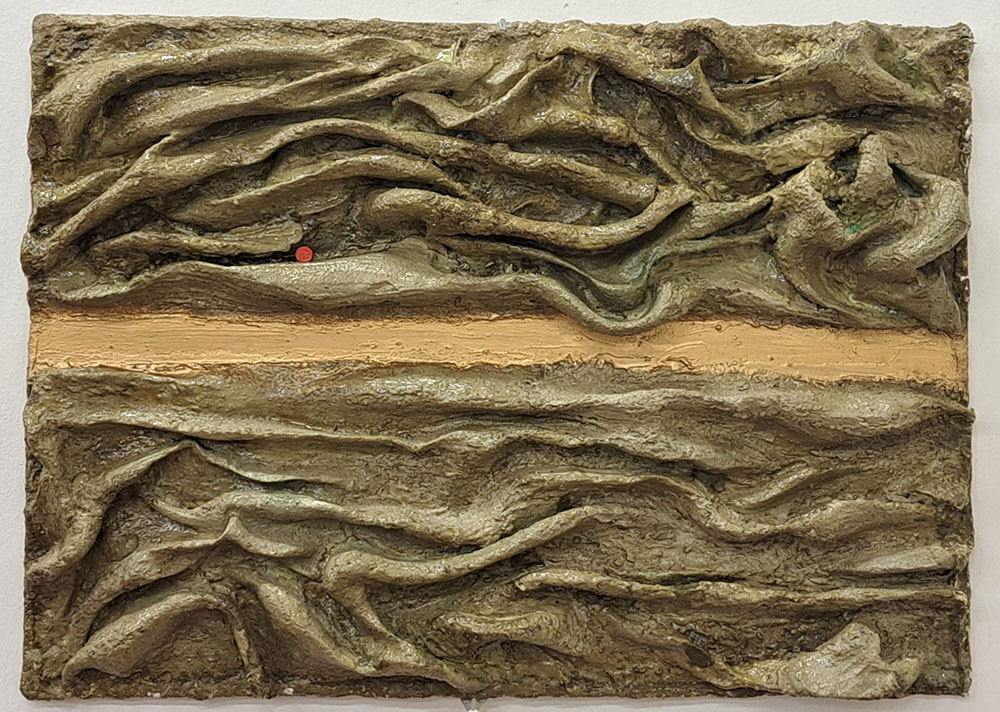
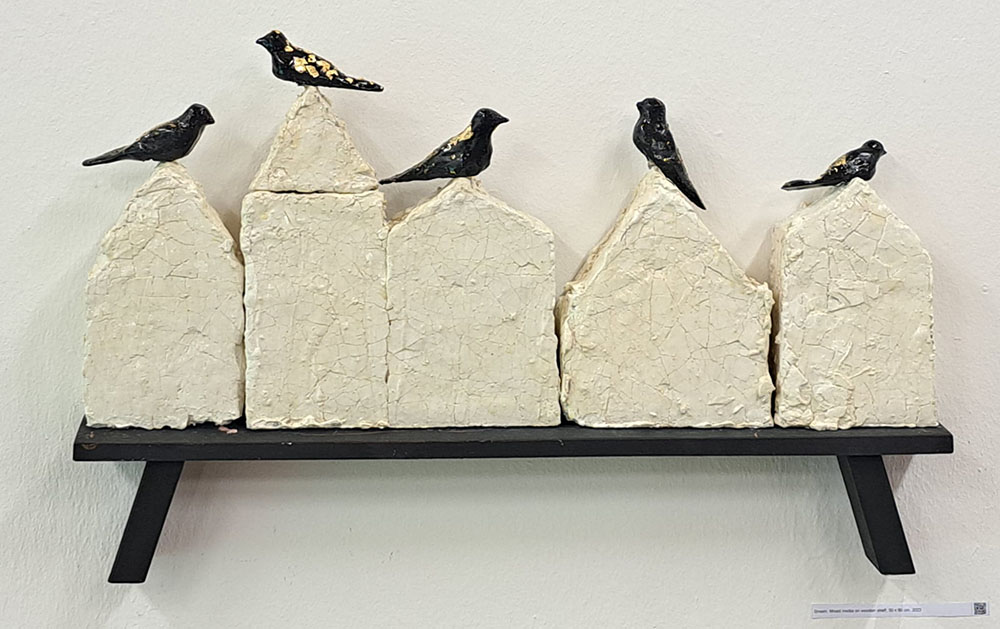
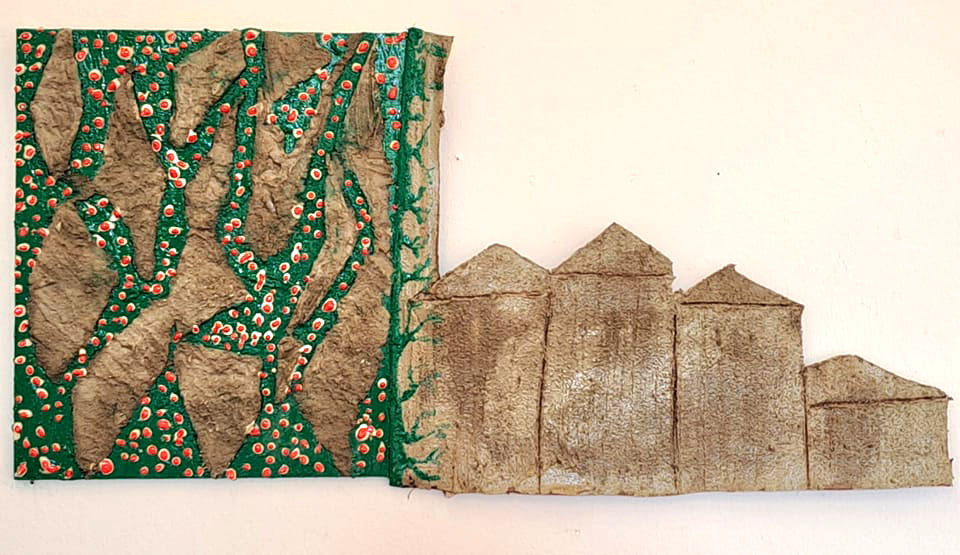
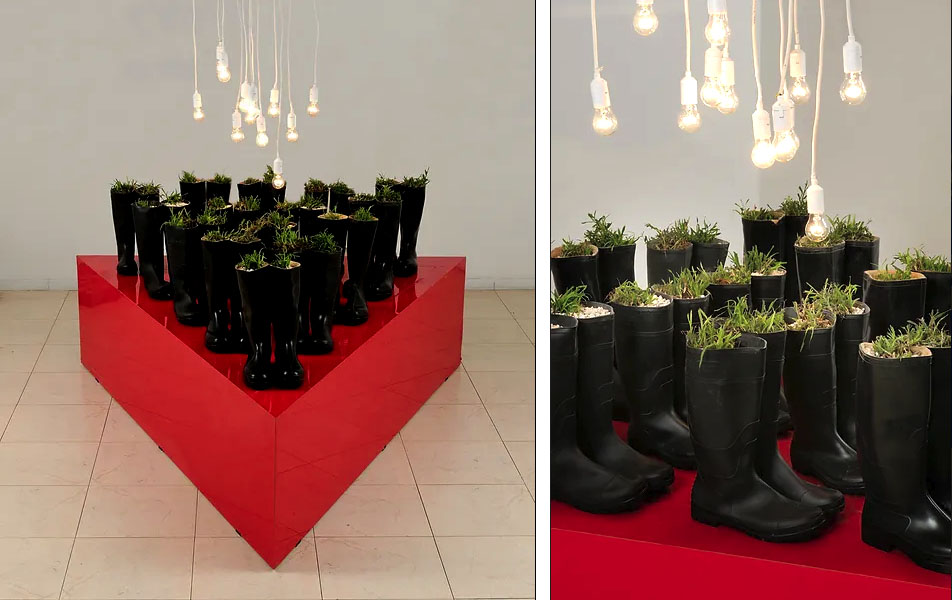
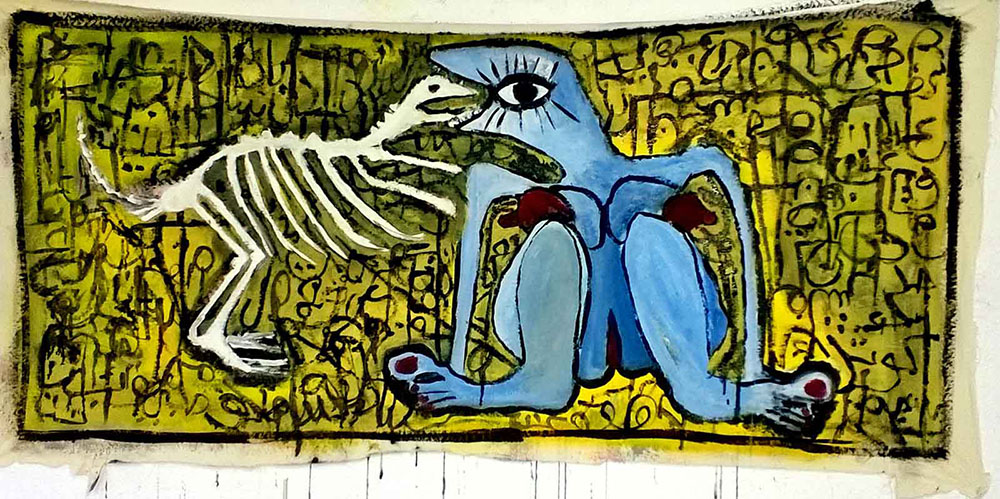
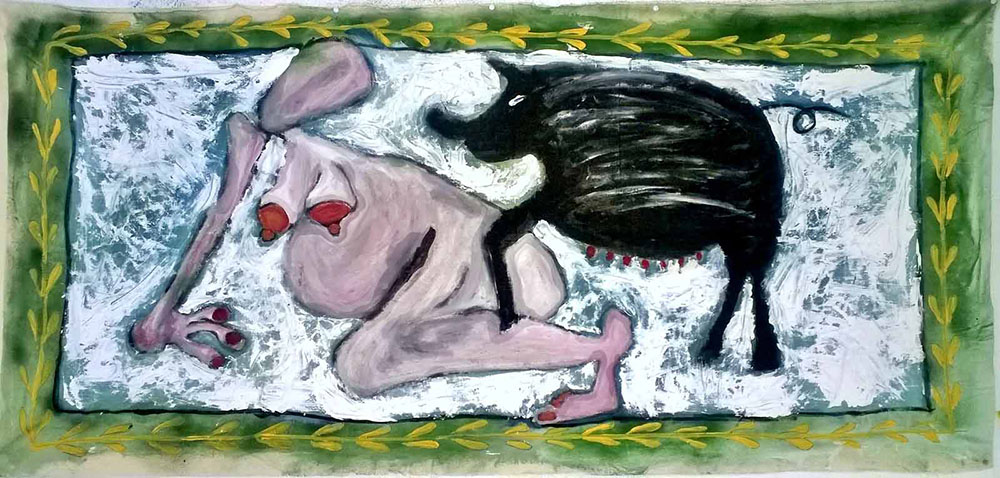
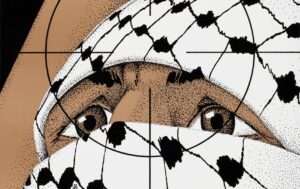
Whether in Leipzig or Jerusalem, all of the materials she uses represent her local community. Her paintings present the viewer with symbols lacking any actual source. A lack of knowledge about the identity of the figures amplifies feelings of peculiarity, isolation, and fear. She reinterprets and reformulates pictures and posters of Palestinian representation.
During a 2018 project called Dissolving Boundaries, the artist commented on her dual national identity as an Arab born within the borders of Israel. “The experience of a Palestinian living in Israel is complex and multi-layered,” she said. “Much like the political conflict itself, it is filled with internal contradiction. I live within a divided society in the city of Jerusalem with Eastern and Western districts, which are split between Arab and Jewish communities.”
Nasrin’s works are created without perspective, without background, without frame, to produce detachment; an expressive response to the current political situation. Her ironic and perhaps bitter use of distorted characters, body parts and inarticulate curves in her paintings are done deliberately clumsy, in the style of Picasso. She examines the relationship between the strong and the weak, the victim and oppressor, the present and the absent.