This month, Souseh answers two letters, both from readers grappling with the unbearable weight of war.
This month, unsurprisingly, I received two letters from two different readers distressed by the outbreak of war across the region. Each, however, addresses the topic with a different nuance. One describes the immediate dilemma of the diasporic person experiencing war from afar; the other the way this dilemma develops into an existential problem over time, with a person coming to feel like they are almost literally split into two separate selves. I decided to answer both at once.
Dear Souseh,
I am a Lebanese-Palestinian woman currently living in the West, and most of my family lives across the Gulf and Lebanon. Since this recent attack on the region, I have once again found myself hyper-anxious, obsessively doomscrolling and devastated by the destruction and dehumanization happening across the region. I have to note that my family members are not based in Iran, Palestine, or southern Lebanon, which are and have been receiving the brunt of the genocidal violence.
Those of us in the diaspora are continuously forced to normalize the terror and stress of what is happening to our region, families, and friends against the backdrop of living in the heart of the empire. Although my colleagues and community here in the West are generally aware and understanding, I am having trouble reconciling this double existence — the unreasonable expectation from others and myself to consistently show up at work and in my personal life with my heightened state of anxiety for my family members and the constant horrors being inflicted on the region.
Do you have any advice on how to navigate this hellscape?
Signed,
Exhausted & Stressed
*
Dear Souseh,
I’m a Lebanese expat who has built a life abroad. A good, successful life at the top of my profession.
I return every six months for a brief taste of home and to check in on my elderly, ailing parents. I struggle with feelings that many of us expats find familiar: the burden of responsibility and the guilt of being away. Spikes of grief piercing through otherwise joyful moments. Snippets of terrifying news that pull us back to Beirut. The sadness of that city that we carry with us no matter how high we climb.
And the higher I climb, the wider the cognitive dissonance. People abroad look at me with puzzlement. Why am I not beaming with joy at all my success? After all, not many people like me — immigrants, Arabs — have made it to where I am.
But inside my head there are two operating systems running at once, incompatible, interfering with each other. Two people in one body, both misunderstood, blurred boundaries between them, holding contradictions and operating in constant dissonance.
Which one is the real me?
In 2006, when the Israelis wiped out part of Lebanon, I was in London. During that war I began writing letters from my British self to my Arab self, and sometimes my Arab self wrote back. We all invent ways to cope. War from a distance creates a strange fog. Disconnection. Back then I had time. I was a student.
By October 7, 2023, the contradiction had grown ever more stark. I had a public-facing job with huge responsibility. Meanwhile, life in Lebanon and Gaza became increasingly darker, more violent, more cruel. My tools for coping began to fail.
I now live between two extremes: the privilege of the life I inhabit and the guilt that shadows it. The anxiety and impotence of watching the daily horror show of grief and a daily grind in London where things just continue on as if nothing has happened.
Capitalism’s wheels keep turning. And I am a part of that wheel. My taxes help fund bombs that fall on people who look like me.
I tell myself that my work matters. That I am building bridges in a divided world. That creating understanding and nuance has value.
But lately I wonder.
When greedy, genocidal men seem to get their way, while people like me labor to contextualize, explain, soften, humanize, the effort begins to feel exhausting. Almost naive.
So I ask you, dearest Souseh: How does one live honestly between privilege and grief without feeling like a fraud in both worlds?
Signed,
The Cognitively Dissonant

Dear Exhausted & Stressed; dear Cognitively Dissonant,
Forgive me for combining your queries, but it seemed imperative to me to address them together, given not only the urgency of the situation but because they resonate more deeply side-by-side, in ways that will become clearer as we go on. And so:
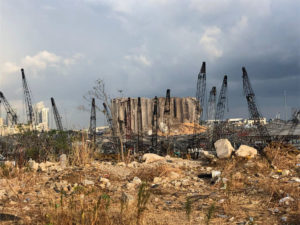
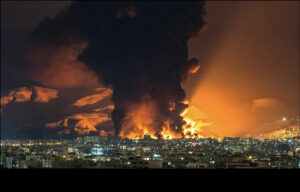
Some nights ago in Beirut, the bombing was especially bad, and the drones and war jets so low it felt like they would knock the roofs off the buildings. The world was too loud and awful to sleep; my body too jittery. I didn’t want to speak to anyone here. What was there to say? We were all trapped under the same murderous sky. And so I called my friend in the U.S. instead. She put me on speakerphone so I could talk to her husband, also a dear friend. I suddenly found myself in their home in Chicago, their cat padding around the house, their preparations for dinner a cozy commotion in the background. Their voices overtook the sound of the jets. The night lifted, lightened into a midwestern afternoon. The fear and tension eased. It was not just the comfort of other voices. It was that I was transported elsewhere.
During the conversation — which wasn’t just about war, but inevitably kept coming back to it — my friend told me how, during the 2024 Israeli assault on Lebanon, she had found herself flinching at the sound of passenger planes on their way to and from O’Hare airport. She had to consciously remind herself that these were not fighter planes that would suddenly start dropping bombs. I told her I knew exactly what she was talking about: during the 2006 war, when I’d been, like you, Cognitively Dissonant, away from Lebanon, I’d begun running away whenever I saw a delivery truck or ambulance. Back home, the Israelis had been targeting these vehicles specifically, claiming they were being used to transport militants. We — my friend and I — had remained in this bewildered state as long as the war persisted. But it was not that our minds were on one place and our bodies in another, which is how such dissonance is usually explained. It was that our entire existence was attuned to an elsewhere — to home, to our loved ones and what they might be experiencing. Like a radio tuned to a certain frequency, transmitting its signals, impossible to turn off.
What I’m trying to say is: our connections to others have the ability to alter time and space, in ways both beautiful and thoroughly excruciating.
Our agony is heightened exponentially when it is a country we call home that is being bombarded, and our friends, family, and communities are in the direct line of danger. We turn feral with worry and rage. The guilt becomes so acute it’s hard to breathe.
Everyone in the diaspora, anyone with any sensitivity to others, has been experiencing the excruciating side of this, for two years and running now. Since the beginning of the Gaza genocide. We have read the news and seen the images; agonized over the sadistic cruelty being inflicted, and experienced the guilt and shame of going about our ordinary lives of plenty, knowing that all the while others are being subjected to deprivations untold.
But this state of agony is heightened exponentially when it is a country we call home that is being bombarded, and our friends, family, and communities are in the direct line of danger. We turn feral with worry and rage. The guilt becomes so acute it’s hard to breathe. It is impossible to put down the news, which feels like a lifeline, in the sense that it keeps us connected to what we think people “over there” are experiencing. It feels unbearable that they should be living all this while we ourselves are safe. We are terrified that the next bombardment will hurt someone we love, destroy some special spot integral to our memories. We are aware of the war, experiencing its emotional stresses, even if not its physical ones, every minute of every day, while at the same time, as you say, Exhausted & Stressed, forced to fulfill the “unreasonable expectation… to consistently show up at work and in [our] personal life.”
It is indeed a “hellscape,” and I sympathize with everyone experiencing it, as I did when I was away from Lebanon in 2006 and again in 2024. The experience is so awful, destabilizing, and lonely that in some ways, I will admit that it has been easier, emotionally speaking, to be here, in Beirut, during the war. Partly because the fear and worry here correspond to direct and tangible stimuli. And because when you ask the people you encounter on the daily how they are, there is an acknowledgment of mutual anguish that goes a long way toward making you feel less crazy. And yet this still doesn’t make me, or anyone else I know here, immune to guilt, knowing that so many others are experiencing this war under far worse circumstances. And we are also expected to carry on with our jobs, however impossible that sometimes feels (this column, for example, was set to run last week). Still, things continue apace. You can’t set everything aside and slump into paralysis, much as you’d like. No one can. The mundane and the earth-shattering are always unfolding side-by-side, all at the same time.
•
These questions you ask, Exhausted & Stressed, and you, Cognitively Dissonant, are essentially the same question. One that is bigger than the current moment of war, but becomes particularly acute during it. This question is about how to maintain your sense of equilibrium and moral integrity while living “in the heart of empire;” while your “taxes help fund bombs that fall on people who look like [you].” It is, as you so beautifully put it, Cognitively Dissonant, about trying to “live honestly between privilege and grief without feeling like a fraud in both worlds.” The word “honestly” here is fundamental. It is about wishing to live a different kind of life, in a different kind of world entirely.
You tell me, Cognitively Dissonant, that you are running two operating systems in the same body. Which one, you ask, is the real me? The answer, I think, is that there is only one operating system, one self, with a multitude of concerns and connections and relationships.
Capitalism — and the resultant system of endless war and extraction that props it up — is built on fracture. More: it requires fracture. A fracture of the self from the self. A fracture of the self from community. A fracture of communities from nature. A fracture of species from species. It allows us to conform to the needs of the system, which wasn’t built for our comfort or safety or survival (though the comfort of some helps keep them complacent), but for profit. Fractured into component parts, we are better able to compartmentalize, putting away the self that doesn’t “serve” the machine. We have to work, we have to “show up” and do our jobs; our emotional distress is something we deal with on our own time. The state of fracture makes it harder to connect in general: to others; idea to idea; that feeling of distress to our jobs and the machine we’re helping empower. And it primes us, the world, to accept and justify genocidal logic. We stop seeing ourselves as components of a whole, as members of a vast and fragile ecosystem of life wherein our destinies are not only connected but dependent upon one another. Thus we are more willing to accept certain things as simply natural: that the price of my comfort is your misery, that weapons of mass destruction for some are necessary to ensure the wealth of others, that in order for me to experience security in my home, you must be ethnically cleansed from your land. As we are separate, your suffering, your death, does not diminish me. It is the requisite condition for my own survival.
And yet guilt, that terrible feeling so many of us are trying to reconcile, is the clue that something is deeply, deeply wrong with this way of living.
When the economic collapse happened in Lebanon I had the occasion to meditate on guilt and came to think of it differently. It is not only capitalism’s collective crime reinterpreted as individual transgression. It is the phantom pain where community has been amputated from us. We feel bound to others, affected by their pain, and yet have no real framework of interpretation for the way it afflicts us. We can only understand pain on an individual level. And this way of thinking isolates us, which in turn serves the system and its need for fracture.
So how can we think of ourselves and our relationship to others, to the world, in a way that accounts for this kind of pain? After all, that is the pain that you both — along with most in the diaspora — are feeling right now, only clarified and intensified by war.
We do it by remembering, in direct opposition to what capitalism teaches us, that we are not closed systems of self, affected by our environments but not permeable to them. We are rather nodes, points of light in a constellation, articulations in a vast web, neurons in a network — choose the metaphor you like best. The point is that we exist in relationship to others, that our existence affects and is affected by those around us. Nor are we stagnant points in this network. As nodes, as neurons, things pass through us. We are conduits. The pain and joy and worry and fear of others are transmitted to us along this web, reverberate in our own bodies. The closer we are to them, the more acutely we feel along with them. But we live under systems that don’t account for this way of being. They deny us our nature as communal creatures and force us to behave in ways at odds with our own survival, because there is no acknowledgement that this survival is fundamentally, symbiotically dependent on the survival of others, humans, animals, and plants alike. This is the source of the dissonance. Of the anxiety, the horror, the pain. This is why we feel guilt; we are receiving pain from without and absorbing it all, accepting it as a sign that we have done something wrong, rather than an indication that something is wrong with the world we’ve built. This world antithetical to life.
Does it help to know this? To shift your thinking about who and what you are? I hope so.
Now, this does not mean the effort is solely mental. You also have to shift the way you interact with yourself and with the environment around you. Which means: engage consciously. Understand that the smallest things you do can have a big impact. Operate in the world as though you were a part of it, not separate from it. Claim your right to the world, to your community, to your pain. You’re right that “war from a distance creates a strange fog. Disconnection.” And so connect. Open yourself. Reach out to your friends and loved ones. Reach out to your friends back home. Reach out to your friends who are also in the diaspora. Feed love into the network, the constellation, the web. Keep those connections alive, tend to them. Maintain the openness and flow through giving: time, attention, care, effort. Don’t mainline the news 24/7. It not only doesn’t help, it clogs the circuitry. You become a point of accumulation, the rage and helplessness backing up in your body, stoppering up any possibility of action. Think of your small joys not as selfishness, but as conscious acts of nourishment, of feeding the network with love. You must understand that this network goes both ways. When you nourish your connections, they nourish you back. Know that you are not alone, not in your sorrow or your rage, and not in your profound sense of displacement from the reality surrounding you. This is why I chose to answer your letters together, Exhausted & Stressed and Cognitively Dissonant. You do not know one another, but you are in community with one another, as I am in community with both of you.
I would not have gotten through the other night without my friends. Just like none of us can get through this long night of the soul without one another. I can’t say anything that will force the empire to treat you better, to treat your loved ones better, to even acknowledge your suffering at witnessing all this horror from afar. If you can ask for sick days, ask for sick days. If you can speak openly to people around you, do so. If you can do community work, volunteer. Organize. Lobby. Write. Any way you can find to impose the fullness of yourself, the undivided and indivisible entirety of yourself, do it. You are people going about your ordinary lives of plenty in the west. You are also people living a war at home. Impose that reality on those around you. Remind them of it shamelessly. Refuse to be fractured or compartmentalized. It’s a small rebellion, but before, alongside, after, and to preserve collective action, we have to shift the way we think about ourselves and our place in the world. How can we build a different kind of world if we don’t know what kind of life, what sorts of connections we’re looking to sustain?
Dear letter-writers, dear friends: you are conduits and openings. You exist in a network of love and care. Your pain is proof of that; proof that our connections to others have the ability to alter time and space. How are you going to exercise this power?

















![Ali Cherri’s show at Marseille’s [mac] Is Watching You](https://themarkaz.org/wp-content/uploads/2025/09/Ali-Cherri-22Les-Veilleurs22-at-the-mac-Musee-dart-contemporain-de-Marseille-photo-Gregoire-Edouard-Ville-de-Marseille-300x200.jpg)