La grammaire du pouvoir : sur le journalisme, le deuil et les récits qui nous brisent

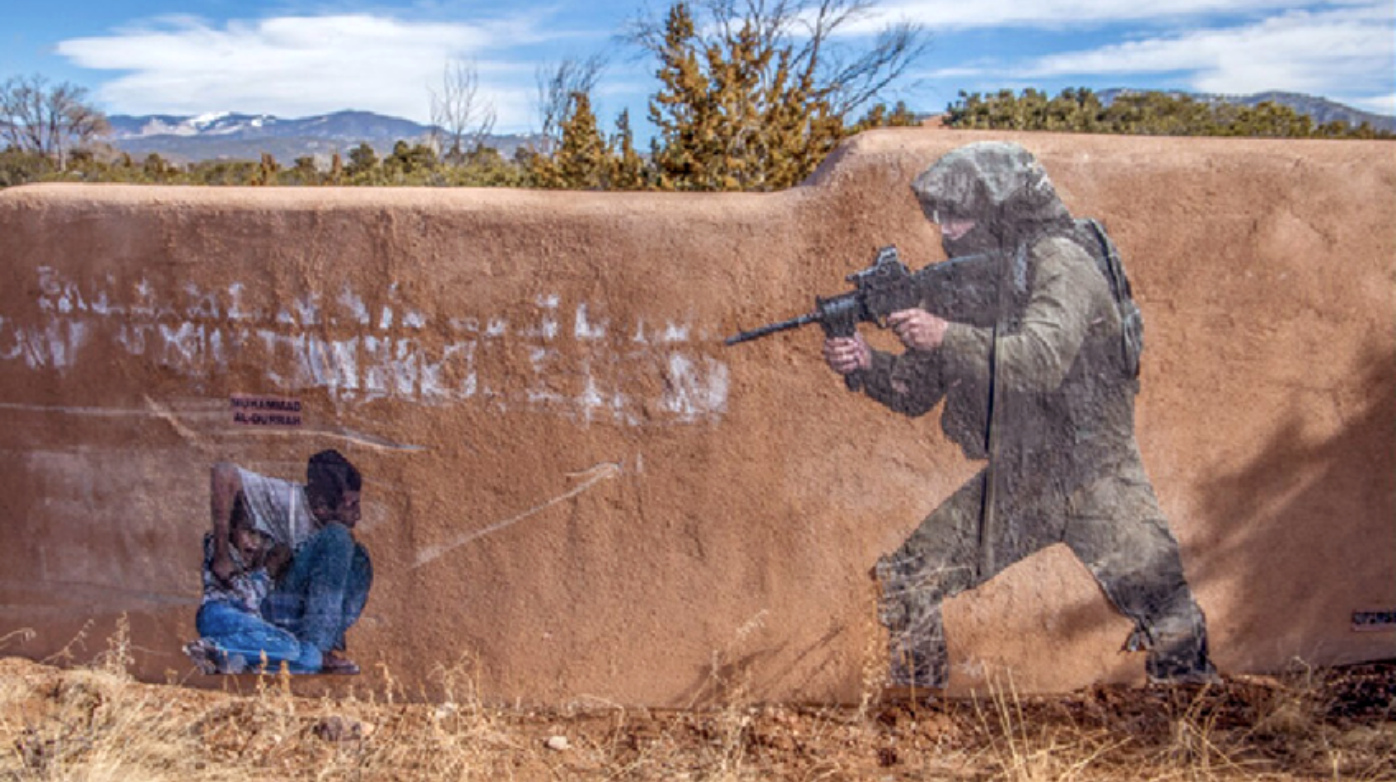
Muhammed al-Durrah Mural.

7 NOVEMBER 2025 • By Adam Makary

Select Other Languages English.

De Gaza à New York, le deuil de la Palestine a longtemps été considéré comme un acte de défiance. Cet essai retrace comment cette défiance est contrôlée dans les salles de classe, répétée dans les salles de rédaction et au-delà des frontières, et ce qu’il en coûte de continuer à en être témoin.


1. La première rupture

En septembre 2000, le meurtre de Muhammad al-Durrah, âgé de douze ans, à Gaza, filmé par le caméraman palestinien Talal Abu Rahma et diffusé par France 2, a brièvement fait la une des journaux internationaux. En moins d’une minute, il a brisé l’indifférence qui enterre les vies palestiniennes sous l’étiquette de « conflit régional ».

Les images ont fixé la grammaire du pouvoir : un père implorant pitié ; des coups de feu en réponse ; un enfant qui sursaute ; du sang qui se répand sur le béton. Le père a survécu. L’enfant, non.

En septembre de cette année-là, j’ai participé à une petite veillée sur les marches sous la statue de l’Alma Mater à Columbia. Une douzaine d’entre nous s’étaient rassemblés, à la lueur des bougies vacillantes dans le vent, avec la photo du garçon parmi nous.

Puis une étudiante s’est approchée, et pendant un instant, j’ai pensé qu’elle allait s’arrêter pour se joindre à nous. Au lieu de cela, elle nous a craché dessus et a dit : « Nous aurions dû en tuer davantage », avant de continuer à monter les marches. Mes yeux se sont fixés sur la tache humide qu’elle avait laissée sur le béton.

La certitude de ses mots m’a frappé plus durement que leur cruauté. Elle n’a pas hésité à les prononcer parce qu’elle n’avait pas à le faire. Elle portait le feu israélien dans sa bouche, certaine qu’il serait permis de l’allumer même ici, au cœur d’un campus de l’Ivy League. À cet instant, j’ai compris que la violence d’Israël ne s’arrêtait pas à une frontière. Elle se propageait comme une permission générale de dire ou de faire presque tout ce qui servait les intérêts de l’État.

Edward Said enseignait encore à Columbia à l’époque. Ses écrits sur la Palestine, sur un peuple contraint de vivre à l’intérieur des récits que d’autres racontaient à son sujet, m’ont aidé à mettre des mots sur la dissonance que je ressentais. Ma tristesse pour un enfant palestinien avait été considérée comme une offense.

Lorsque la nouvelle de l’incident lui est parvenue, il l’a signalée. Plus tard, j’ai appris que cette étudiante était retournée en Israël, où elle venait de terminer son service militaire.

Chaque génération se voit attribuer une image qui la secoue et la fait prendre conscience pendant un instant. Pour ma génération, c’était Muhammad al-Durrah, recroquevillé à côté de son père en 2000. Pour les gens d’aujourd’hui, c’est Hind Rajab, cinq ans, à Gaza, suppliant au téléphone des personnes de la sauver. Les images changent, mais la grammaire reste la même : un enfant, une supplication, une réponse qui consiste en l’incapacité ou le refus du monde de réagir.

Ce n’était pas un incident isolé. Après ce jour-là, j’ai pris mes marques dans chaque pièce avant de parler de la Palestine. Columbia m’a appris ce que mon chagrin pouvait me coûter, et que le simple fait d’être visible en tant qu’Arabe en Amérique était dangereux.
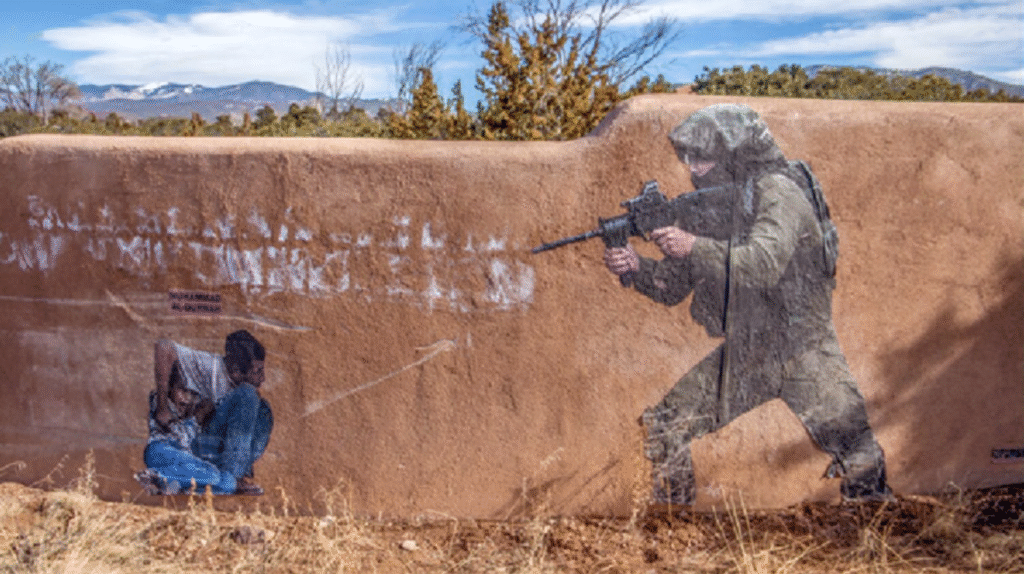

Mohammed al-Durrah Mural. Santa Fe, NM, by artist Remy. Image courtesy of Alex De Vose
Mohammed al-Durrah Mural. Santa Fe, NM, par l’artiste Remy (avec l’aimable autorisation d’Alex De Vose)

2. Une prise de conscience précoce

Avant que je ne la connaisse géographiquement, la Palestine vivait dans des chansons qui aspiraient au retour, mais je ne l’avais jamais perçue de mes propres yeux.

L’été de mes douze ans, nous sommes partis en voyage avec mon oncle, qui aimait profondément l’Égypte. Il voulait que nous voyions le pays non pas comme des touristes, mais comme ses héritiers. Il transformait chaque voyage en histoire, et cet été-là, notre périple a commencé près d’un arbre dans le nord du Sinaï qui, disait-on, avait abrité la Sainte Famille lors de sa fuite en Égypte. Depuis Arish, nous avons roulé vers l’est jusqu’à la frontière avec Gaza.

Plus nous nous approchions, plus le silence s’installait, les bâtiments se faisant de plus en plus rares autour de nous. Nous nous sommes arrêtés devant une longue clôture.

Au-delà, il y avait des murs criblés de trous et un drapeau israélien flottant au-dessus des ruines.

Cette même année, mon projet de fin d’année en quatrième portait sur l’Holocauste. Une atrocité avait sa place dans le programme scolaire. L’autre, je devais la découvrir par moi-même, dans le silence que mon oncle avait laissé s’installer. C’était là la forme du désir exprimé dans toutes ces chansons, un lieu déjà pris.

En Égypte, la Palestine faisait la une des journaux presque tous les jours. En Amérique, presque jamais. Vivre entre ces deux pays et percevoir ces contradictions m’a finalement appris le caractère délibéré de cette absence et comment mes sympathies étaient conditionnées.

À l’école, on m’a appris que l’Amérique avait sauvé le monde. J’ai dû découvrir par moi-même le prix de ce salut : comment cette grandeur avait été construite, et sur le dos de qui. La violence inhérente à l’Amérique était réemballée, banalisée, voire effacée. L’esclavage a été réécrit comme un progrès et est devenu un mois de réussite. Le génocide des autochtones est devenu des mascottes, des noms d’équipes et une fête qui a transformé la conquête en tradition.

Gaza s’inscrit dans ce schéma. Liée à Israël, sa souffrance a été mise de côté pour protéger le mythe de la liberté américaine. Dans un pays dont les relations avec le monde arabe dépendent de l’aide, du pétrole et de la stratégie, la leçon est claire : certaines histoires sont mises en valeur, d’autres sont occultées.

J’ai conservé deux témoignages du monde : ce que j’ai vu en Égypte et ce que les États-Unis ont essayé de m’empêcher de voir.


3. Le jour où la maison est devenue une frontière

Après le 11 septembre, le double standard a quitté les salles de classe pour entrer dans la vie quotidienne. Du jour au lendemain, les Arabes sont devenus des suspects, considérés comme des menaces. C’était le même scénario qui est toujours en vigueur aujourd’hui : traiter tout un peuple comme hostile, effacer son individualité et faire de la suspicion le point de départ.

En tant que chrétiens égyptiens, certains d’entre nous se sont appuyés sur la différence pour échapper à l’étiquette d’Arabes musulmans. Quelques-uns ont rejeté complètement l’étiquette arabe, s’accrochant à une identité purement égyptienne façonnée par la persécution. J’ai fait un autre choix, gardant foi en une appartenance arabe commune.

Mes protections étaient insignifiantes : un prénom biblique, un nom de famille pris pour irlandais, voire un visage parfois perçu comme juif. Rien de tout cela n’avait d’importance. La guerre contre le terrorisme a mis en évidence notre fragilité en tant qu’Arabes, martelée dans l’esprit du public par des slogans tels que « Si vous voyez quelque chose, dites quelque chose ».

Elle nous a rendus visibles et nous a marqués de force, sans possibilité de détourner le regard. La guerre prétendait viser une idée, mais son imprécision était une stratégie. En déclarant la guerre à une abstraction, les États-Unis se sont donné le droit de mener une campagne sans fin, qu’ils pouvaient d’abord tourner contre les Arabes, ou contre quiconque incarnait cette abstraction.

Les nations qui nous ont qualifiés de terroristes figuraient elles-mêmes parmi les plus violentes de l’histoire : l’Amérique avec ses invasions et ses occupations, l’Europe avec ses siècles de conquêtes et de guerres mondiales. Leur histoire était imprégnée de sang, mais c’est nous qui étions présentés comme un danger.

Quelques semaines après l’effondrement des tours jumelles, je suis allé avec mon père dans une épicerie du coin pour commander des sandwichs pour un pique-nique en famille. Après avoir pris la commande, le vendeur a jeté un coup d’œil à mon père et lui a dit sans détour : « Nous ne servons pas les terroristes. »

Nous sommes restés figés.

Mon père s’est retourné sans un mot. Je l’ai suivi, sans rien dire. Alors que nous étions assis dans la voiture, il a fixé le mur de briques du parking, les mains posées sur ses genoux.

Tout comme lors de l’incident à Columbia, ce n’est pas l’insulte qui m’a glacé. C’était la permission qui se cachait derrière.

Je savais que mon père ne resterait pas les bras croisés. Il lui a suffi d’un instant pour se ressaisir avant de retourner à l’intérieur pour faire ce que n’importe qui aurait fait à sa place : se défendre.

À travers le pare-brise, j’ai vu un responsable intervenir et mon père porter plainte. Plus tard, nous avons appris que l’employé avait été licencié.

Dans les mois qui ont suivi, mes parents se sont appuyés sur leur identité américaine et leur christianisme. Ils ont planté un drapeau américain à côté de la Vierge Marie dans notre jardin, espérant que ces symboles les protégeraient de la suspicion.

Mon père nous avait toujours dit de ne pas parler arabe en public, craignant que nous soyons considérés comme des immigrants. Mais comme nous l’avons tous rapidement compris, ce n’était pas quelque chose que nous pouvions contrôler. Ils nous voyaient comme ils voulaient nous voir.

J’ai donc pris une direction complètement différente. Je me suis surpris à dire « arabe » plus souvent, lorsqu’on m’interrogeait sur mon identité. Je ne l’utilisais pas comme un slogan, mais comme un bouclier.


4. Un foyer pour l’histoire

Je suis devenu journaliste pour donner une place aux histoires que je portais en moi. Le journalisme m’a donné un langage auquel je pouvais me fier et, pendant un certain temps, il m’a libéré de ma quête d’appartenance. Il m’a connecté à un vocabulaire plus large, que je croyais être la vérité même.

À vingt-trois ans, j’ai rejoint Al Jazeera English, où j’étais le plus jeune journaliste du réseau. Je m’y sentais chez moi, dans une salle de rédaction où tous, comme moi, avaient vécu les histoires qu’ils couvraient. Les reporters qui m’entouraient venaient de pays qui avaient connu des coups d’État, des occupations et des soulèvements. La mémoire était notre autorité, la proximité était notre preuve. Et notre public était composé d’autres personnes comme nous.

Al Jazeera n’était pas exempte de politique. Financée par le Qatar, elle donnait souvent l’impression de servir également de projet de soft power pour ce pays. Mais même dans ce cadre, elle donnait la parole à des voix que d’autres médias refusaient de diffuser. De sa couverture ininterrompue de l’invasion américaine de l’Irak en 2003 à ses reportages dans le monde arabe, elle a bouleversé les ondes comme aucune autre chaîne n’avait osé le faire. Elle a brisé le monopole occidental sur les reportages de guerre et a changé la façon dont les guerres étaient racontées.

Cela n’était nulle part plus évident que dans sa couverture de la Palestine. Alors que la plupart des chaînes se pliaient aux exigences d’Israël, Al Jazeera ne le faisait pas. Les critiques concernant sa complaisance envers le Qatar étaient fondées, mais le Qatar était rarement au centre de l’actualité. C’était la Palestine. Nous avons couvert l’actualité avec un accès et une clarté que personne d’autre ne pouvait égaler, et nous avons fait quelque chose d’inédit pour une chaîne arabe : nous avons invité des responsables israéliens à s’exprimer à l’antenne, les amenant ainsi dans les salons arabes. Les risques étaient énormes, et cette approche a valu à la chaîne des ennemis de tous bords.

Al Jazeera a changé l’atmosphère dans toute la région et au sein de la diaspora. Son téléscripteur n’a jamais cessé de défiler, ses écrans se sont remplis de voix que d’autres ont tenté d’effacer. Pour la première fois, le monde arabe se regardait lui-même, s’exprimant d’une voix mondiale impossible à ignorer.

Depuis ses débuts colonialistes, l’Occident avait traité le monde arabe comme un monolithe. Le revers de la médaille était de revendiquer de manière proactive une identité plus collective, et Al Jazeera est devenue à la fois son extension et son exemple.


5. Apprendre le langage du pouvoir

Lorsque les soulèvements arabes ont commencé, d’abord en Tunisie, puis en Égypte, j’étais de retour au Caire. J’ai couvert l’intégralité de la révolution égyptienne, y compris ses prémices et ses conséquences. D’août 2010 à décembre 2012, le bureau du Caire est devenu une porte tournante, avec des correspondants venus des quatre coins du monde, débarqués en Égypte pour goûter au printemps arabe avant d’être envoyés en Syrie ou en Libye.

J’étais chargé de couvrir plus de la moitié du pays. J’ai envoyé des reportages depuis des usines, des fermes, des hôpitaux, des morgues ; j’ai participé à des centaines de manifestations, enregistrant et documentant tout. Le rythme était effréné et le coût physique élevé. J’ai souffert de tendinites, de zona et de crises de panique. Mais même dans les moments les plus difficiles, ce travail restait un privilège. Je faisais partie d’une histoire plus grande.

Lorsque j’ai commencé à travailler pour des rédactions occidentales, le changement a été immédiat. L’histoire n’avait pas besoin d’être vraie, elle devait être acceptable. Chaque révision m’a appris quel type de souffrance était lisible, quel type de mort avait le droit d’avoir de l’importance. Le langage du pouvoir avait sa propre syntaxe et j’apprenais à l’écrire. L’objectivité était un déguisement, un costume que le pouvoir portait pour être impartial. Où les événements apparaissaient, comment ils étaient formulés, quelles normes s’appliquaient : tout était par défaut soumis au pouvoir occidental. Le résultat était prévisible : certaines souffrances étaient rendues lisibles, d’autres effacées. La guerre au Soudan s’est prolongée mois après mois. Lorsque ses jours les plus sombres ont coïncidé avec l’invasion de l’Ukraine par la Russie, elle a disparu des gros titres. La mort noire en Afrique ne faisait pas le poids face à la guerre en Europe.

Puis vint le 7 octobre. Après cela, il est devenu clairement évident que notre travail de journalistes n’était pas de rapporter les événements, mais de les remodeler jusqu’à ce qu’ils correspondent au cadre dominant.

Des notes de style ont codifié ce modèle : minimiser les morts palestiniens, accepter les chiffres israéliens, qualifier les institutions de Gaza de « dirigées par le Hamas », remplacer « garçon » par « adolescent », remplacer « raid » par « affrontement » et toujours mentionner les roquettes tombant sur Israël, même dans les articles sur les maisons détruites à Gaza. Les attaques israéliennes étaient présentées comme des représailles au 7 octobre, tandis que le Hamas était dépeint comme un agresseur menant une guerre contre toute une nation, comme si la symétrie était égale. Un article sur la mort de quarante Palestiniens ne pouvait être publié sans au moins une ligne sur la peur des Israéliens. Même lorsque les articles sur les Palestiniens étaient publiés, ils étaient souvent relégués au second plan, tandis que les voix israéliennes occupaient le devant de la scène. Des Palestiniens mouraient par dizaines pendant que les rédacteurs en chef débattaient du vocabulaire à utiliser. Ils hésitaient à employer le terme « génocide » tandis que leurs propres journalistes étaient pourchassés, leurs morts rapportées dans la même colonne où leurs signatures et leurs articles apparaissaient autrefois.

Des articles étaient approuvés sur la base d’allégations non prouvées contre les Palestiniens, tandis que les rapports documentés sur les Palestiniens torturés en détention quittaient rarement le dossier régional, pour refaire surface plus tard sous forme de note de bas de page. Personne ne l’avait explicitement ordonné. Les habitudes et les corrections l’avaient enseigné jusqu’à ce que vous anticipiez les coupes et les fassiez vous-même. Vous aviez été formé à accepter la voix du pouvoir jusqu’à devenir son écho obéissant. La machine ne se contente pas de tuer, elle contrôle le sens.


6. Après le bureau

Je suis loin du bureau depuis près d’un an maintenant, la plus longue période de ma vie. Le temps s’écoule différemment maintenant, se répandant partout, sans être contenu par les mots auxquels je faisais autrefois confiance. Je sursaute encore lorsque les gros titres arrivent, mon corps étant programmé pour les transformer en article, mais le curseur ne fait que clignoter. Je suis un témoin parmi des millions d’autres. Comme nous tous, je vis dans une double exposition : je prépare le dîner tout en regardant des corps être retirés des décombres, je nourris le chat pendant que Gaza brûle, j’envoie des vœux d’anniversaire alors que les bombes tombent.

Sur les réseaux sociaux, le chagrin s’effondre dans la banalité : un enfant courant sur une plage, un enfant enveloppé dans un linceul, un toast de célébration, une frappe aérienne. Les plateformes n’ont jamais été conçues pour supporter autant de chagrin, et le débordement a sa propre violence. Le traumatisme auquel nous sommes confrontés ne réside pas seulement dans les images que nous voyons, mais aussi dans le choc entre elles. Mais je ne suis plus dans le métier de façonner le langage des événements. Comme tout le monde, je reste assis à les voir se répéter. Comme si j’écoutais un refrain sans fin, sans mélodie.

Avec le recul, il est clair que le centre du journalisme s’est déplacé. Les réseaux continuent de façonner le cadre, mais la vérité passe désormais par les personnes, les journalistes indépendants, qui ne sont redevables à aucune institution en particulier. C’est quelque chose que je n’ai pu voir qu’une fois que j’ai pris du recul.

Deux fois par semaine, j’enseigne la rédaction médiatique. Je ne me tiens pas devant les étudiants parce que j’ai les réponses, mais pour garder leurs questions vivantes. Il semble parfois absurde d’enseigner le journalisme après avoir vu comment le langage se plie au pouvoir, mais je le fais quand même, car je continue de croire que c’est important.

Le journalisme ne consiste pas à sauver qui que ce soit. Il s’agit de refuser de détourner le regard. Dans le meilleur des cas, c’est un acte de confiance, car si nous rapportons ce que nous voyons sans complaisance, quelqu’un d’autre devra peut-être y faire face aussi.


7. Une nation de témoins

Ma génération d’Arabes est née dans un cycle de deuils : la guerre du Liban, la première Intifada, la guerre du Golfe, l’Irak, la Syrie, la Libye, le Soudan et, bien sûr, Gaza, encore et encore. La guerre s’est infiltrée dans la moelle de nos années.

Mais ce chagrin m’a en quelque sorte conduit à ma véritable identité. Parler de la Palestine a rendu publique mon identité arabe. Je n’ai jamais cherché à être un activiste. J’étais simplement honnête dans un monde qui considérait l’honnêteté comme un acte de défi. C’est la partie que personne ne vous dit. Dans les systèmes fondés sur le silence, même dire la vérité devient une forme de résistance. Même si la plupart du temps, cela ressemblait moins à un choix qu’à de l’autodéfense, en cherchant un endroit où pleurer, où rendre mon chagrin lisible et valable, je me suis retrouvé dans une nouvelle nation.

Gaza a déchiré le monde. Elle nous pose chaque jour la question suivante : qui a le droit d’être humain, et qui ne l’a pas ?

Autour de cette question, nous construisons une nouvelle façon d’être dans le monde et une nouvelle façon d’être les uns avec les autres. Nous ne pouvons pas effacer la famine des enfants ni reconstruire les souvenirs qui ont été réduits en poussière, mais ensemble, nous pouvons trouver des moyens de nommer les forces qui ont rendu possible cet ordre destructeur : une alliance qui arme Israël jusqu’aux dents, réécrit la vérité et punit quiconque refuse sa version. 

Je n’ai pas hérité du mot « arabe » comme un nom stable. Je l’ai appris comme un verbe, dans la pause avant de dire « nous » dans les salles américaines, et dans l’arrière-goût une fois qu’il avait quitté ma bouche. Le militantisme m’a appris le pouvoir de ce « nous », celui que les récits israéliens ont tenté de dissoudre et que les institutions américaines ont rendu conditionnel. Plus j’étais témoin, plus le pronom devenait clair. « Nous » est notre histoire. Plus encore, c’est l’histoire que le pouvoir a cherché à fragmenter puis à enterrer. 

Gaza a fait de nous tous une nation. Une nation de chagrin, certes, mais aussi une nation de personnes, arabes et autres, unies dans l’insistance sur la valeur humaine et la dignité tranquille que seul le fait d’être témoin peut transmettre.


Traduit de l’anglais par Maï Taffin

Adam Makary

Adam Makary is a writer based in Cairo. He has reported across the Middle East and now divides his time between teaching and rowing on the Nile.

Join Our Community

TMR exists thanks to its readers and supporters. By sharing our stories and celebrating cultural pluralism, we aim to counter racism, xenophobia, and exclusion with knowledge, empathy, and artistic expression.

Learn more

RELATED

Book Reviews

Two New Books Show How Gaza Changed the World

13 FEBRUARY 2026 • By Rebecca Ruth Gould
Two New Books Show How Gaza Changed the World
Columns

On Legal Victories and Human Healing

13 FEBRUARY 2026 • By Amal Ghandour
On Legal Victories and Human Healing
Book Reviews

Stolen Nation: An Argument for Palestinian Reparations

6 FEBRUARY 2026 • By Selma Dabbagh
<em>Stolen Nation</em>: An Argument for Palestinian Reparations
Columns

Small Moments and Their Much Larger Meaning

30 JANUARY 2026 • By Amal Ghandour
Small Moments and Their Much Larger Meaning
Fiction

“Tiny Suns”—a short story

30 JANUARY 2026 • By Sahar Mustafah
“Tiny Suns”—a short story
Essays

Jewish Supremacy and the Making of Genocide in Gaza

30 JANUARY 2026 • By Sheryl Ono
Jewish Supremacy and the Making of Genocide in Gaza
Art

Behind the Seen: Mona Hatoum on Art and Palestine

30 JANUARY 2026 • By Arie Amaya-Akkermans
<em>Behind the Seen</em>: Mona Hatoum on Art and Palestine
Essays

Not Even the Dead Rest in Palestine

30 JANUARY 2026 • By A Mom from Bethlehem
Not Even the Dead Rest in Palestine
Essays

How Can Palestinians and Israelis Live Together?

30 JANUARY 2026 • By Raja Shehadeh
How Can Palestinians and Israelis Live Together?
Film Reviews

With Hasan in Gaza: Salvaged Palestine

30 JANUARY 2026 • By Jim Quilty
<em>With Hasan in Gaza</em>: Salvaged Palestine
TMR 57 • PALESTINE

In Two New Books, Palestinian Writing Bears Witness

30 JANUARY 2026 • By Gabriel Polley
In Two New Books, Palestinian Writing Bears Witness
Book Reviews

You Must Live: A Collection of Palestinian Poetry

30 JANUARY 2026 • By Sholeh Wolpé
<em>You Must Live</em>: A Collection of Palestinian Poetry
TMR 57 • PALESTINE

Letter from Gaza: Our Long Wait for Gas

30 JANUARY 2026 • By Esraa Abo Qamar
Letter from Gaza: Our Long Wait for Gas
TMR 57 • PALESTINE

Letter from Gaza: Stuck in Place

30 JANUARY 2026 • By Mariam Mushtaha
Letter from Gaza: Stuck in Place
Editorial

Why PALESTINE?

30 JANUARY 2026 • By TMR
Why PALESTINE?
Columns

Trump, The Liberator! (and the Fear Wagons)

16 JANUARY 2026 • By Amal Ghandour
Trump, The Liberator! (and the Fear Wagons)
Film

The Palestinian Legacy of Mohammad Bakri

2 JANUARY 2026 • By Hadani Ditmars
The Palestinian Legacy of Mohammad Bakri
Columns

Emm Kamel: The Future Is Here and So Is the Past

19 DECEMBER 2025 • By Amal Ghandour
<em>Emm Kamel</em>: The Future Is Here and So Is the Past
Fiction

A Bomb for Personal Use—an excerpt

5 DECEMBER 2025 • By Mirna Al-Mahdi
<em>A Bomb for Personal Use</em>—an excerpt
short story

“Tuesday”—a story from Palestine

5 DECEMBER 2025 • By Majd Aburrub
“Tuesday”—a story from Palestine
Film

10 Noir Films from the Arab world, Iran, and Turkey

5 DECEMBER 2025 • By TMR
10 Noir Films from the Arab world, Iran, and Turkey
Art & Photography

Artist Interview: Corinne Silva on Israeli Settlement Gardens in Palestine

28 NOVEMBER 2025 • By Jelena Sofronijevic
Artist Interview: Corinne Silva on Israeli Settlement Gardens in Palestine
Book Reviews

Terms of Servitude and the Threats of Digital Settler Colonialism

28 NOVEMBER 2025 • By Maura Finkelstein
<em>Terms of Servitude</em> and the Threats of Digital Settler Colonialism
Columns

How Much Do We Miss Umm Khulthum?

7 NOVEMBER 2025 • By Amal Ghandour
How Much Do We Miss Umm Khulthum?
Interviews

Novelist Jadd Hilal on Being French and Palestinian

7 NOVEMBER 2025 • By Lara Vergnaud
Novelist Jadd Hilal on Being French and Palestinian
Centerpiece

The Grammar of Power: On Journalism, Grief, and the Stories That Break Us

7 NOVEMBER 2025 • By Adam Makary
The Grammar of Power: On Journalism, Grief, and the Stories That Break Us
Film

In Raoul Peck’s Orwell: 2+2=5, Truth is Revolutionary

17 OCTOBER 2025 • By Alex Demyanenko
In Raoul Peck’s <em>Orwell: 2+2=5</em>, Truth is Revolutionary
Essays

The War on Palestinians Didn’t Start on October 7

10 OCTOBER 2025 • By Taqwa Ahmed Al-Wawi
The War on Palestinians Didn’t Start on October 7
Essays

Blue, The Arabian Red Fox

3 OCTOBER 2025 • By Noura Ali-Ramahi
Blue, The Arabian Red Fox
Essays

Lament For My Dear Cousin and Friend in Tulkarm

3 OCTOBER 2025 • By Thoth
Lament For My Dear Cousin and Friend in Tulkarm
Columns

Longing for Love in a Time of Genocide

26 SEPTEMBER 2025 • By Lina Mounzer
Longing for Love in a Time of Genocide
Fiction

Diba’s House

26 SEPTEMBER 2025 • By Sara Masry
Diba’s House
Featured article

Together for Palestine — Truly Historic

19 SEPTEMBER 2025 • By TMR
Together for Palestine — Truly Historic
Book Reviews

How the Media Fails Armenia and Palestine

19 SEPTEMBER 2025 • By Gabriel Polley
How the Media Fails Armenia and Palestine
Uncategorized

Reading the Landscape: Cultural Clues and Regime Messages in Iran

12 SEPTEMBER 2025 • By Raha Nik-Andish
Reading the Landscape: Cultural Clues and Regime Messages in Iran
Film Reviews

New Documentaries from Palestine, Sudan, Afghanistan, and Iran

12 SEPTEMBER 2025 • By Yassin El-Moudden
New Documentaries from Palestine, Sudan, Afghanistan, and Iran
Editorial

Why Out of Our Minds?

5 SEPTEMBER 2025 • By Lina Mounzer
Why <em>Out of Our Minds</em>?
Centerpiece

Trauma After Gaza

5 SEPTEMBER 2025 • By Joelle Abi-Rached
Trauma After Gaza
Film

Once Upon a Time in Gaza Wants to Be an Indie Western

29 AUGUST 2025 • By Karim Goury
<em>Once Upon a Time in Gaza</em> Wants to Be an Indie Western
Essays

From Stitch to Symbol: The Power of Palestinian Tatreez

22 AUGUST 2025 • By Joanna Barakat
From Stitch to Symbol: The Power of Palestinian Tatreez
Essays

Amal Doesn’t Even Know What a Banana Is: Child Malnutrition in Gaza

1 AUGUST 2025 • By Asem Al Jerjawi
Amal Doesn’t Even Know What a Banana Is: Child Malnutrition in Gaza
Essays

“A Love That Endures”: How Tamer and Sabreen Defied War and Death

25 JULY 2025 • By Husam Maarouf
“A Love That Endures”: How Tamer and Sabreen Defied War and Death
Art & Photography

August World Picks from the Editors

25 JULY 2025 • By TMR
August World Picks from the Editors
Fiction

Hiding From Dragons—a short story set in Gaza

18 JULY 2025 • By Richie Billing
Hiding From Dragons—a short story set in Gaza
Featured article

“Silence is Not the Way”—Arab Writers Against Israel’s Genocide

18 JULY 2025 • By Jordan Elgrably
“Silence is Not the Way”—Arab Writers Against Israel’s Genocide
Art

Taqi Spateen Paints Palestine Museum Mural of Aaron Bushnell

11 JULY 2025 • By Hadani Ditmars
Taqi Spateen Paints Palestine Museum Mural of Aaron Bushnell
Poetry

Nasser Rabah on Poetry and Gaza

4 JULY 2025 • By Nasser Rabah
Nasser Rabah on Poetry and Gaza
Book Reviews

Palestine’s Places and Memorials Are Not Forgotten

4 JULY 2025 • By Gabriel Polley
Palestine’s Places and Memorials Are Not <em>Forgotten</em>
Essays

A Voice That Defied Silence: The Legacy of Dr. Refaat Al-Areer

4 JULY 2025 • By Taqwa Ahmed Al-Wawi
A Voice That Defied Silence: The Legacy of Dr. Refaat Al-Areer
Essays

Unwritten Stories from Palestine

4 JULY 2025 • By Thoth
Unwritten Stories from Palestine
Essays

Life Under the Shadow of Missiles: the View From Iran

20 JUNE 2025 • By Amir
Life Under the Shadow of Missiles: the View From Iran
Essays

Doaa: From a Dreamworld to the Ashes of Displacement

30 MAY 2025 • By Taqwa Ahmed Al-Wawi
Doaa: From a Dreamworld to the Ashes of Displacement
Interviews

23 Hours Inside State Dept. Press Briefings on the Gaza Genocide

23 MAY 2025 • By Malu Halasa
23 Hours Inside State Dept. Press Briefings on the Gaza Genocide
Featured article

Arrested and Rearrested: Palestinian Women in the West Bank

16 MAY 2025 • By Lynzy Billing
Arrested and Rearrested: Palestinian Women in the West Bank
Books

Algerian-French Author Kamel Daoud on the Defensive

16 MAY 2025 • By Lara Vergnaud
Algerian-French Author Kamel Daoud on the Defensive
Books

Editors’ 2025 Palestinian Lit List

15 MAY 2025 • By TMR
Editors’ 2025 Palestinian Lit List
Books

Poet Mosab Abu Toha Wins Pulitzer Prize for Essays on Gaza

9 MAY 2025 • By Jordan Elgrably
Poet Mosab Abu Toha Wins Pulitzer Prize for Essays on Gaza
Editorial

For Our 50th Issue, Writers Reflect on Going Home

2 MAY 2025 • By TMR
For Our 50th Issue, Writers Reflect on Going Home
Essays

A Kashmiri in Cashmere

2 MAY 2025 • By Nafeesa Syeed
A Kashmiri in Cashmere
Art

Neither Here Nor There

2 MAY 2025 • By Myriam Cohenca
Neither Here Nor There
Essays

Looking for a Job, Living and Dying in Iran: The Logistics of Going Back

2 MAY 2025 • By Raha Nik-Andish
Looking for a Job, Living and Dying in Iran: The Logistics of Going Back
Literature

The Pen and the Sword — Censorship Threatens Us All

2 MAY 2025 • By Anna Badkhen
The Pen and the Sword — Censorship Threatens Us All
Art

Between Belief and Doubt: Ramzi Mallat’s Suspended Disbelief

11 APRIL 2025 • By Marta Mendes
Between Belief and Doubt: Ramzi Mallat’s Suspended Disbelief
Advice

Dear Souseh: Existential Advice for Third World Problems

4 APRIL 2025 • By Lina Mounzer
Dear Souseh: Existential Advice for Third World Problems
Film

Gaza, Sudan, Israel/Palestine Documentaries Show in Thessaloniki

28 MARCH 2025 • By Iason Athanasiadis
Gaza, Sudan, Israel/Palestine Documentaries Show in Thessaloniki
Essays

A Conversation Among My Homeland’s Trees

7 MARCH 2025 • By Alia Yunis
A Conversation Among My Homeland’s Trees
Fiction

Manifesto of Love & Revolution

7 MARCH 2025 • By Iskandar Abdalla
Manifesto of Love & Revolution
Art

Finding Emptiness: Gaza Artist Taysir Batniji in Beirut

21 FEBRUARY 2025 • By Jim Quilty
Finding Emptiness: Gaza Artist Taysir Batniji in Beirut
Book Reviews

Omar El Akkad & Mohammed El-Kurd: Liberalism in a Time of Genocide

14 FEBRUARY 2025 • By Rebecca Ruth Gould
Omar El Akkad & Mohammed El-Kurd: Liberalism in a Time of Genocide
Editorial

Memoir in the Age of Narcissism

7 FEBRUARY 2025 • By TMR
Memoir in the Age of Narcissism
Centerpiece

Ravaged by Fire

7 FEBRUARY 2025 • By Francisco Letelier
Ravaged by Fire
Book Reviews

Memories of Palestine through Contemporary Media

7 FEBRUARY 2025 • By Malu Halasa
Memories of Palestine through Contemporary Media
Essays

Flight Plans: From Gaza to Singapore

7 FEBRUARY 2025 • By Chin-chin Yap
Flight Plans: From Gaza to Singapore
Books

“Culinary Palestine” — Fadi Kattan in an excerpt from Sumud

31 JANUARY 2025 • By Fadi Kattan
“Culinary Palestine” — Fadi Kattan in an excerpt from <em>Sumud</em>
Book Reviews

Yassini Girls—a Powerful Yet Flawed Account of Historical Trauma

31 JANUARY 2025 • By Natasha Tynes
<em>Yassini Girls</em>—a Powerful Yet Flawed Account of Historical Trauma
Arabic

Huda Fakhreddine & Yasmeen Hanoosh: Translating Arabic & Gaza

17 JANUARY 2025 • By Yasmeen Hanoosh, Huda J. Fakhreddine
Huda Fakhreddine & Yasmeen Hanoosh: Translating Arabic & Gaza
Book Reviews

Radwa Ashour’s Classic Granada Now in a New English Edition

17 JANUARY 2025 • By Guy Mannes-Abbott
Radwa Ashour’s Classic <em>Granada</em> Now in a New English Edition
Uncategorized

Malu Halasa and Jordan Elgrably publish Sumūd: a New Palestinian Reader

4 JANUARY 2025 • By TMR
Malu Halasa and Jordan Elgrably publish Sumūd: a New Palestinian Reader
Book Reviews

Maya Abu Al-Hayyat’s Defiant Exploration of Palestinian Life

20 DECEMBER 2024 • By Zahra Hankir
Maya Abu Al-Hayyat’s Defiant Exploration of Palestinian Life
Book Reviews

Criticizing a Militaristic Israel is not Inherently Antisemitic

20 DECEMBER 2024 • By Stephen Rohde
Criticizing a Militaristic Israel is not Inherently Antisemitic
Featured Artist

Palestine Features in Larissa Sansour’s Sci-Fi Future

6 DECEMBER 2024 • By Larissa Sansour
Palestine Features in Larissa Sansour’s Sci-Fi Future
Opinion

Susan Abulhawa at Oxford Union on Palestine/Israel

6 DECEMBER 2024 • By Susan Abulhawa
Susan Abulhawa at Oxford Union on Palestine/Israel
Essays

A Fragile Ceasefire as Lebanon Survives, Traumatized

29 NOVEMBER 2024 • By Tarek Abi Samra, Lina Mounzer
A Fragile Ceasefire as Lebanon Survives, Traumatized
Art

Basel Abbas & Ruanne Abou-Rahme: Palestinian artists at Copenhagen’s Glyptotek

22 NOVEMBER 2024 • By Arie Amaya-Akkermans
Basel Abbas & Ruanne Abou-Rahme: Palestinian artists at Copenhagen’s Glyptotek
Essays

A Jewish Meditation on the Palestinian Genocide

15 NOVEMBER 2024 • By Sheryl Ono
A Jewish Meditation on the Palestinian Genocide
Editorial

The Editor’s Letter Following the US 2024 Presidential Election

8 NOVEMBER 2024 • By Jordan Elgrably
The Editor’s Letter Following the US 2024 Presidential Election
Art & Photography

Palestinian Artists Reflect on the Role of Art in Catastrophic Times

1 NOVEMBER 2024 • By Nina Hubinet
Palestinian Artists Reflect on the Role of Art in Catastrophic Times
Centerpiece

“Habib”—a story by Ghassan Ghassan

1 NOVEMBER 2024 • By Ghassan Ghassan
“Habib”—a story by Ghassan Ghassan
Books

“The Ballad of Lulu and Amina” — from Jerusalem to Gaza

1 NOVEMBER 2024 • By Izzeldin Bukhari
“The Ballad of Lulu and Amina” — from Jerusalem to Gaza
Art & Photography

Artists & Animals: Adham Faramawy, Tarlan Lotfizadeh, Ouma & Mohammad Shaqdih

1 NOVEMBER 2024 • By Jelena Sofronijevic, Tarlan Lotfizadeh, Siobhán Shilton, Charlotte Bank
Artists & Animals: Adham Faramawy, Tarlan Lotfizadeh, Ouma & Mohammad Shaqdih
Art & Photography

The Palestinian Gazelle

1 NOVEMBER 2024 • By Manal Mahamid
The Palestinian Gazelle
Opinion

Should a Climate-Destroying Dictatorship Host a Climate-Saving Conference?

25 OCTOBER 2024 • By Lucine Kasbarian
Should a Climate-Destroying Dictatorship Host a Climate-Saving Conference?
Books

November World Picks from the Editors

25 OCTOBER 2024 • By TMR
November World Picks from the Editors
Book Reviews

The Walls Have Eyes—Surveillance in the Algorithm Age

18 OCTOBER 2024 • By Iason Athanasiadis
<em>The Walls Have Eyes</em>—Surveillance in the Algorithm Age
Interviews

The Hybrid — The Case of Michael Vatikiotis

18 OCTOBER 2024 • By Rana Haddad
The Hybrid — The Case of Michael Vatikiotis
Essays

Palestine, the Land of Grapes and Wine

11 OCTOBER 2024 • By Fadi Kattan, Anna Patrowicz
Palestine, the Land of Grapes and Wine
Editorial

A Year of War Without End

4 OCTOBER 2024 • By Lina Mounzer
A Year of War Without End
TMR 45 • From Here, One Year On

Witnessing Catastrophe: a Painter in Lebanon

4 OCTOBER 2024 • By Ziad Suidan
Witnessing Catastrophe: a Painter in Lebanon
Art & Photography

Visuals and Voices: Palestine Will Not Be a Palimpsest

4 OCTOBER 2024 • By Malu Halasa
Visuals and Voices: Palestine Will Not Be a Palimpsest
Featured article

Censorship and Cancellation Fail to Camouflage the Ugly Truth

4 OCTOBER 2024 • By Jordan Elgrably
Censorship and Cancellation Fail to Camouflage the Ugly Truth
Essays

Shamrocks & Watermelons: Palestine Politics in Belfast

4 OCTOBER 2024 • By Stuart Bailie
Shamrocks & Watermelons: Palestine Politics in Belfast
Essays

Depictions of Genocide: The Un-Imaginable Visibility of Extermination

4 OCTOBER 2024 • By Viola Shafik
Depictions of Genocide: The Un-Imaginable Visibility of Extermination
Opinion

Everything Has Changed, Nothing Has Changed

4 OCTOBER 2024 • By Amal Ghandour
Everything Has Changed, Nothing Has Changed
Art

Activism in the Landscape: Environmental Arts & Resistance in Palestine

4 OCTOBER 2024 • By Katie Logan
Activism in the Landscape: Environmental Arts & Resistance in Palestine
Poetry

Poems by Nasser Rabah, Amanee Izhaq and Mai Al-Nakib

4 OCTOBER 2024 • By Nasser Rabah, Amanee Izhaq, Mai Al-Nakib, Wiam El-Tamami
Poems by Nasser Rabah, Amanee Izhaq and Mai Al-Nakib
Book Reviews

Don’t Look Left: A Diary of Genocide by Atif Abu Saif

20 SEPTEMBER 2024 • By Selma Dabbagh
<em>Don’t Look Left: A Diary of Genocide</em> by Atif Abu Saif
Featured Artist

Featured Artists: “Barred From Home”

6 SEPTEMBER 2024 • By Malu Halasa
Featured Artists: “Barred From Home”
Essays

Meta’s Community Standards as a Tool of Digital Settler Colonialism

6 SEPTEMBER 2024 • By Omar Zahzah
Meta’s Community Standards as a Tool of Digital Settler Colonialism
Book Reviews

Egypt’s Gatekeeper — President or Despot?

6 SEPTEMBER 2024 • By Elias Feroz
Egypt’s Gatekeeper — President or Despot?
Fiction

“Fragments from a Gaza Nightmare”—fiction from Sama Hassan

30 AUGUST 2024 • By Sama Hassan, Rana Asfour
“Fragments from a Gaza Nightmare”—fiction from Sama Hassan
Essays

Beyond Rubble — Cultural Heritage and Healing After Disaster

23 AUGUST 2024 • By Arie Amaya-Akkermans
Beyond Rubble — Cultural Heritage and Healing After Disaster
Books

“Kill the Music”—an excerpt from a new novel by Badar Salem

16 AUGUST 2024 • By Badar Salem
“Kill the Music”—an excerpt from a new novel by Badar Salem
Film

World Picks from the Editors: AUGUST

2 AUGUST 2024 • By TMR
World Picks from the Editors: AUGUST
Book Reviews

Israel’s Black Panthers by Asaf Elia-Shalev—a Review

19 JULY 2024 • By Ilan Benattar
<em>Israel’s Black Panthers</em> by Asaf Elia-Shalev—a Review
Art & Photography

World Picks from the Editors: July 15 — August 2

12 JULY 2024 • By TMR
World Picks from the Editors: July 15 — August 2
Fiction

“The Cockroaches”—flash fiction

5 JULY 2024 • By Stanko Uyi Srsen
“The Cockroaches”—flash fiction
short story

“Deferred Sorrow”—fiction from Haidar Al Ghazali

5 JULY 2024 • By Haidar Al Ghazali, Rana Asfour
“Deferred Sorrow”—fiction from Haidar Al Ghazali
Book Reviews

Is Amin Maalouf’s Latest Novel, On the Isle of Antioch, a Parody?

14 JUNE 2024 • By Farah-Silvana Kanaan
Is Amin Maalouf’s Latest Novel, <em>On the Isle of Antioch</em>, a Parody?
Centerpiece

Dare Not Speak—a One-Act Play

7 JUNE 2024 • By Hassan Abdulrazzak
<em>Dare Not Speak</em>—a One-Act Play
Books

Palestine, Political Theatre & the Performance of Queer Solidarity in Jean Genet’s Prisoner of Love

7 JUNE 2024 • By Saleem Haddad
Palestine, Political Theatre & the Performance of Queer Solidarity in Jean Genet’s <em>Prisoner of Love</em>
Essays

A Small Kernel of Human Kindness: Some Notes on Solidarity and Resistance

24 MAY 2024 • By Nancy Kricorian
A Small Kernel of Human Kindness: Some Notes on Solidarity and Resistance
Art

Demarcations of Identity: Rushdi Anwar

10 MAY 2024 • By Malu Halasa
Demarcations of Identity: Rushdi Anwar
Editorial

Why FORGETTING?

3 MAY 2024 • By Malu Halasa, Jordan Elgrably
Why FORGETTING?
Centerpiece

Memory Archive: Between Remembering and Forgetting

3 MAY 2024 • By Mai Al-Nakib
Memory Archive: Between Remembering and Forgetting
Essays

The Elephant in the Box

3 MAY 2024 • By Asmaa Elgamal
The Elephant in the Box
Art & Photography

Not Forgotten, Not (All) Erased: Palestine’s Sacred Shrines

3 MAY 2024 • By Gabriel Polley
Not Forgotten, Not (All) Erased: Palestine’s Sacred Shrines
Book Reviews

Palestinian Culture, Under Assault, Celebrated in New Cookbook

3 MAY 2024 • By Mischa Geracoulis
Palestinian Culture, Under Assault, Celebrated in New Cookbook
Art & Photography

Malak Mattar: No Words, Only Scenes of Ruin

26 APRIL 2024 • By Nadine Nour el Din
Malak Mattar: No Words, Only Scenes of Ruin
Opinion

Equating Critique of Israel with Antisemitism, US Academics are Being Silenced

12 APRIL 2024 • By Maura Finkelstein
Equating Critique of Israel with Antisemitism, US Academics are Being Silenced
Opinion

Censorship over Gaza and Palestine Roils the Arts Community

12 APRIL 2024 • By Hassan Abdulrazzak
Censorship over Gaza and Palestine Roils the Arts Community
Art

Past Disquiet at the Palais de Tokyo in Paris

1 APRIL 2024 • By Kristine Khouri, Rasha Salti
<em>Past Disquiet</em> at the Palais de Tokyo in Paris
Essays

Undoing Colonial Geographies from Paris with Ariella Aïsha Azoulay

1 APRIL 2024 • By Sasha Moujaes, Jordan Elgrably
Undoing Colonial Geographies from Paris with Ariella Aïsha Azoulay
Book Reviews

Fady Joudah’s […] Dares Us to Listen to Palestinian Words—and Silences

25 MARCH 2024 • By Eman Quotah
Fady Joudah’s <em>[…]</em> Dares Us to Listen to Palestinian Words—and Silences
Art & Photography

Will Artists Against Genocide Boycott the Venice Biennale?

18 MARCH 2024 • By Hadani Ditmars
Will Artists Against Genocide Boycott the Venice Biennale?
LGBTQ+

Two Poems from Omar Sakr

3 MARCH 2024 • By Omar Sakr
Two Poems from Omar Sakr
Editorial

Why “Burn It all Down”?

3 MARCH 2024 • By Lina Mounzer
Why “Burn It all Down”?
Books

Four Books to Revolutionize Your Thinking

3 MARCH 2024 • By Rana Asfour
Four Books to Revolutionize Your Thinking
Essays

Israel’s Environmental and Economic Warfare on Lebanon

3 MARCH 2024 • By Michelle Eid
Israel’s Environmental and Economic Warfare on Lebanon
Columns

Genocide: “That bell can’t be unrung. That thought can’t be unthunk.”

3 MARCH 2024 • By Amal Ghandour
Genocide: “That bell can’t be unrung. That thought can’t be unthunk.”
Essays

The Story of the Keffiyeh

3 MARCH 2024 • By Rajrupa Das
The Story of the Keffiyeh
Essays

Messages from Gaza Now / 5

26 FEBRUARY 2024 • By Hossam Madhoun
Messages from Gaza Now / 5
Weekly

World Picks from the Editors: Feb 23 — Mar 7

23 FEBRUARY 2024 • By TMR
World Picks from the Editors: Feb 23 — Mar 7
Poetry

“WE” and “4978 and One Nights” by Ghayath Almadhoun

4 FEBRUARY 2024 • By Ghayath Al Madhoun
“WE” and “4978 and One Nights” by Ghayath Almadhoun
Editorial

Shoot That Poison Arrow to My Heart: The LSD Editorial

4 FEBRUARY 2024 • By Malu Halasa
Shoot That Poison Arrow to My Heart: The LSD Editorial
Art & Photography

The Body, Intimacy and Technology in the Middle East

4 FEBRUARY 2024 • By Naima Morelli
The Body, Intimacy and Technology in the Middle East
Columns

Driving in Palestine Now is More Dangerous Than Ever

29 JANUARY 2024 • By TMR
Driving in Palestine Now is More Dangerous Than Ever
Featured article

Israel-Palestine: Peace Under Occupation?

29 JANUARY 2024 • By Laëtitia Soula
Israel-Palestine: Peace Under Occupation?
Essays

Nothing out of the Ordinary: A Journalist’s West Bank Memories

22 JANUARY 2024 • By Chloé Benoist
Nothing out of the Ordinary: A Journalist’s West Bank Memories
Books

Illuminated Reading for 2024: Our Anticipated Titles

22 JANUARY 2024 • By TMR
Illuminated Reading for 2024: Our Anticipated Titles
Fiction

“New Reasons”—a short story by Samira Azzam

15 JANUARY 2024 • By Samira Azzam, Ranya Abdelrahman
“New Reasons”—a short story by Samira Azzam
Art

Palestinian Artists

12 JANUARY 2024 • By TMR
Palestinian Artists
Essays

Gaza Sunbirds: the Palestinian Para-Cyclists Who Won’t Quit

25 DECEMBER 2023 • By Malu Halasa
Gaza Sunbirds: the Palestinian Para-Cyclists Who Won’t Quit
Essays

Jesus Was Palestinian, But Bethlehem Suspends Christmas

25 DECEMBER 2023 • By Ahmed Twaij
Jesus Was Palestinian, But Bethlehem Suspends Christmas
Books

Inside Hamas: From Resistance to Regime

25 DECEMBER 2023 • By Paola Caridi
Inside <em>Hamas: From Resistance to Regime</em>
Columns

Messages from Gaza Now / 2

18 DECEMBER 2023 • By Hossam Madhoun
Messages from Gaza Now / 2
Music

We Will Sing Until the Pain Goes Away—a Palestinian Playlist

18 DECEMBER 2023 • By Brianna Halasa
We Will Sing Until the Pain Goes Away—a Palestinian Playlist
Columns

Messages From Gaza Now

11 DECEMBER 2023 • By Hossam Madhoun
Messages From Gaza Now
Book Reviews

Assassination in Malta: How They Killed My Mother

11 DECEMBER 2023 • By Teodor Reljić
Assassination in Malta: How They Killed My Mother
Featured excerpt

The Palestine Laboratory and Gaza: An Excerpt

4 DECEMBER 2023 • By Antony Loewenstein
<em>The Palestine Laboratory</em> and Gaza: An Excerpt
Editorial

Why Endings & Beginnings?

3 DECEMBER 2023 • By Jordan Elgrably
Why Endings & Beginnings?
TMR 37 • Endings & Beginnings

“The Summer They Heard Music”—a short story by MK Harb

3 DECEMBER 2023 • By MK Harb
“The Summer They Heard Music”—a short story by MK Harb
Fiction

“I, Hanan”—a Gazan tale of survival by Joumana Haddad

3 DECEMBER 2023 • By Joumana Haddad
“I, Hanan”—a Gazan tale of survival by Joumana Haddad
Opinion

Gaza vs. Mosul from a Medical and Humanitarian Standpoint

27 NOVEMBER 2023 • By Ahmed Twaij
Gaza vs. Mosul from a Medical and Humanitarian Standpoint
Art & Photography

Palestinian Artists & Anti-War Supporters of Gaza Cancelled

27 NOVEMBER 2023 • By Nada Ghosn
Palestinian Artists & Anti-War Supporters of Gaza Cancelled
Opinion

What’s in a Ceasefire?

20 NOVEMBER 2023 • By Adrian Kreutz, Enzo Rossi, Lillian Robb
What’s in a Ceasefire?
Book Reviews

The Fiction of Palestine’s Ghassan Zaqtan

13 NOVEMBER 2023 • By Cory Oldweiler
The Fiction of Palestine’s Ghassan Zaqtan
Opinion

Beautiful October 7th Art Belies the Horrors of War

13 NOVEMBER 2023 • By Mark LeVine
Beautiful October 7th Art Belies the Horrors of War
Arabic

Poet Ahmad Almallah

9 NOVEMBER 2023 • By Ahmad Almallah
Poet Ahmad Almallah
Opinion

Palestine’s Pen against Israel’s Swords of Injustice

6 NOVEMBER 2023 • By Mai Al-Nakib
Palestine’s Pen against Israel’s Swords of Injustice
Books

Domicide—War on the City

5 NOVEMBER 2023 • By Ammar Azzouz
<em>Domicide</em>—War on the City
Essays

On Fathers, Daughters and the Genocide in Gaza 

30 OCTOBER 2023 • By Deema K Shehabi
On Fathers, Daughters and the Genocide in Gaza 
Islam

October 7 and the First Days of the War

23 OCTOBER 2023 • By Robin Yassin-Kassab
October 7 and the First Days of the War
Editorial

Palestine and the Unspeakable

16 OCTOBER 2023 • By Lina Mounzer
Palestine and the Unspeakable
Art

The Ongoing Nakba—Rasha Al-Jundi’s Embroidery Series

16 OCTOBER 2023 • By Rasha Al Jundi
The Ongoing Nakba—Rasha Al-Jundi’s Embroidery Series
Art

Vera Tamari’s Lifetime of Palestinian Art

16 OCTOBER 2023 • By Taline Voskeritchian
Vera Tamari’s Lifetime of Palestinian Art
Book Reviews

A Day in the Life of Abed Salama: A Palestine Story

16 OCTOBER 2023 • By Dalia Hatuqa
<em>A Day in the Life of Abed Salama</em>: A Palestine Story
Weekly

World Picks from the Editors, Oct 13 — Oct 27, 2023

12 OCTOBER 2023 • By TMR
World Picks from the Editors, Oct 13 — Oct 27, 2023
Poetry

Home: New Arabic Poems in Translation

11 OCTOBER 2023 • By Sarah Coolidge
<em>Home</em>: New Arabic Poems in Translation
Books

Edward Said: Writing in the Service of Life 

9 OCTOBER 2023 • By Layla AlAmmar
Edward Said: Writing in the Service of Life 
Books

Fairouz: The Peacemaker and Champion of Palestine

1 OCTOBER 2023 • By Dima Issa
Fairouz: The Peacemaker and Champion of Palestine
Book Reviews

Saqi’s Revenant: Sahar Khalifeh’s Classic Nablus Novel Wild Thorns

25 SEPTEMBER 2023 • By Noshin Bokth
Saqi’s Revenant: Sahar Khalifeh’s Classic Nablus Novel <em>Wild Thorns</em>
Book Reviews

Laila Halaby’s The Weight of Ghosts is a Haunting Memoir

28 AUGUST 2023 • By Thérèse Soukar Chehade
Laila Halaby’s <em>The Weight of Ghosts</em> is a Haunting Memoir
Book Reviews

What’s the Solution for Jews and Palestine in the Face of Apartheid Zionism?

21 AUGUST 2023 • By Jonathan Ofir
What’s the Solution for Jews and Palestine in the Face of Apartheid Zionism?
Columns

Open Letter: On Being Palestinian and Publishing Poetry in the US

21 AUGUST 2023 • By Ahmad Almallah
Open Letter: On Being Palestinian and Publishing Poetry in the US
Opinion

The Middle East is Once Again West Asia

14 AUGUST 2023 • By Chas Freeman, Jr.
The Middle East is Once Again West Asia
Book Reviews

Ilan Pappé on Tahrir Hamdi’s Imagining Palestine

7 AUGUST 2023 • By Ilan Pappé
Ilan Pappé on Tahrir Hamdi’s <em> Imagining Palestine</em>
Art

What Palestine Brings to the World—a Major Paris Exhibition

31 JULY 2023 • By Sasha Moujaes
<em>What Palestine Brings to the World</em>—a Major Paris Exhibition
Book Reviews

Off to War—A Marriage on the Brink

31 JULY 2023 • By Antony Loewenstein
Off to War—A Marriage on the Brink
Opinion

The End of the Palestinian State? Jenin Is Only the Beginning

10 JULY 2023 • By Yousef M. Aljamal
The End of the Palestinian State? Jenin Is Only the Beginning
Fiction

Tears from a Glass Eye—a story by Samira Azzam

2 JULY 2023 • By Samira Azzam, Ranya Abdelrahman
Tears from a Glass Eye—a story by Samira Azzam
Columns

The Rite of Flooding: When the Land Speaks

19 JUNE 2023 • By Bint Mbareh
The Rite of Flooding: When the Land Speaks
Arabic

Arab Theatre Grapples With Climate Change, Borders, War & Love

4 JUNE 2023 • By Hassan Abdulrazzak
Arab Theatre Grapples With Climate Change, Borders, War & Love
Essays

Alien Entities in the Desert

4 JUNE 2023 • By Dror Shohet
Alien Entities in the Desert
Featured Artist

Nasrin Abu Baker: The Markaz Review Featured Artist, June 2023

4 JUNE 2023 • By TMR
Nasrin Abu Baker: The Markaz Review Featured Artist, June 2023
Islam

From Pawns to Global Powers: Middle East Nations Strike Back

29 MAY 2023 • By Chas Freeman, Jr.
From Pawns to Global Powers: Middle East Nations Strike Back
Book Reviews

How Bethlehem Evolved From Jerusalem’s Sleepy Backwater to a Global Town

15 MAY 2023 • By Karim Kattan
How Bethlehem Evolved From Jerusalem’s Sleepy Backwater to a Global Town
TMR Conversations

TMR CONVERSATIONS: Amal Ghandour Interviews Raja Shehadeh

11 MAY 2023 • By Amal Ghandour, Raja Shehadeh
TMR CONVERSATIONS: Amal Ghandour Interviews Raja Shehadeh
Book Reviews

Rebecca Makkai’s New Novel Makes Us Question What We Know

8 MAY 2023 • By Deborah Williams
Rebecca Makkai’s New Novel Makes Us Question What We Know
Essays

The Invisible Walls, a Meditation on Work and Being

1 MAY 2023 • By Nashwa Nasreldin
The Invisible Walls, a Meditation on Work and Being
Essays

Artsakh and the Truth About the Legend of Monte Melkonian

17 APRIL 2023 • By Seta Kabranian-Melkonian
Artsakh and the Truth About the Legend of Monte Melkonian
Film Reviews

Yallah Gaza! Presents the Case for Gazan Humanity

10 APRIL 2023 • By Karim Goury
<em>Yallah Gaza!</em> Presents the Case for Gazan Humanity
Beirut

Tel Aviv-Beirut, a Film on War, Love & Borders

20 MARCH 2023 • By Karim Goury
<em>Tel Aviv-Beirut</em>, a Film on War, Love & Borders
Beirut

Interview with Michale Boganim, Director of Tel Aviv-Beirut

20 MARCH 2023 • By Karim Goury
Interview with Michale Boganim, Director of <em>Tel Aviv-Beirut</em>
Book Reviews

In Search of Fathers: Raja Shehadeh’s Palestinian Memoir

13 MARCH 2023 • By Amal Ghandour
In Search of Fathers: Raja Shehadeh’s Palestinian Memoir
Centerpiece

Broken Home: Britain in the Time of Migration

5 MARCH 2023 • By Malu Halasa
Broken Home: Britain in the Time of Migration
Essays

More Photographs Taken From The Pocket of a Dead Arab

5 MARCH 2023 • By Saeed Taji Farouky
More Photographs Taken From The Pocket of a Dead Arab
Book Reviews

To Receive Asylum, You First Have to be Believed, and Accepted

5 MARCH 2023 • By Mischa Geracoulis
To Receive Asylum, You First Have to be Believed, and Accepted
Essays

Home Under Siege: a Palestine Photo Essay

5 MARCH 2023 • By Anam Raheem
Home Under Siege: a Palestine Photo Essay
Art & Photography

Becoming Palestine Imagines a Liberated Future

27 FEBRUARY 2023 • By Katie Logan
<em>Becoming Palestine</em> Imagines a Liberated Future
Columns

Sudden Journeys: Deluge at Wadi Feynan

6 FEBRUARY 2023 • By Jenine Abboushi
Sudden Journeys: Deluge at Wadi Feynan
TV Review

Palestinian Territories Under Siege But Season 4 of Fauda Goes to Brussels and Beirut Instead

6 FEBRUARY 2023 • By Brett Kline
Palestinian Territories Under Siege But Season 4 of <em>Fauda</em> Goes to Brussels and Beirut Instead
Art

The Creative Resistance in Palestinian Art

26 DECEMBER 2022 • By Malu Halasa
The Creative Resistance in Palestinian Art
Essays

Conflict and Freedom in Palestine, a Trip Down Memory Lane

15 DECEMBER 2022 • By Eman Quotah
Art

Art World Picks: Albraehe, Kerem Yavuz, Zeghidour, Amer & Tatah

12 DECEMBER 2022 • By TMR
Art

Museums in Exile—MO.CO’s show for Chile, Sarajevo & Palestine

12 DECEMBER 2022 • By Jordan Elgrably
Museums in Exile—MO.CO’s show for Chile, Sarajevo & Palestine
Art

Where is the Palestinian National Museum of Modern and Contemporary Art?

12 DECEMBER 2022 • By Nora Ounnas Leroy
Where is the Palestinian National Museum of Modern and Contemporary Art?
Columns

Sudden Journeys: Israel’s Intimate Separations—Part 3

5 DECEMBER 2022 • By Jenine Abboushi
Sudden Journeys: Israel’s Intimate Separations—Part 3
Book Reviews

Fida Jiryis on Palestine in Stranger in My Own Land

28 NOVEMBER 2022 • By Diana Buttu
Fida Jiryis on Palestine in <em>Stranger in My Own Land</em>
Fiction

“Eleazar”—a short story by Karim Kattan

15 NOVEMBER 2022 • By Karim Kattan
“Eleazar”—a short story by Karim Kattan
Art

An Interview with with Graphic Memoirist Malaka Gharib

15 NOVEMBER 2022 • By Rushda Rafeek
An Interview with with Graphic Memoirist Malaka Gharib
Opinion

Fragile Freedom, Fragile States in the Muslim World

24 OCTOBER 2022 • By I. Rida Mahmood
Fragile Freedom, Fragile States in the Muslim World
Editorial

You Don’t Have to Be A Super Hero to Be a Heroine

15 OCTOBER 2022 • By TMR
You Don’t Have to Be A Super Hero to Be a Heroine
Interviews

Interview with Ahed Tamimi, an Icon of the Palestinian Resistance

15 OCTOBER 2022 • By Nora Lester Murad
Interview with Ahed Tamimi, an Icon of the Palestinian Resistance
Art & Photography

The Postcard Women’s Imaginarium: Decolonizing the Western Gaze

15 OCTOBER 2022 • By Salma Ahmad Caller
The Postcard Women’s Imaginarium: Decolonizing the Western Gaze
Essays

Yemen’s Feminist Trailblazer Flees Death Threats for a New Life in the UK

15 OCTOBER 2022 • By Nadia Al-Sakkaf
Yemen’s Feminist Trailblazer Flees Death Threats for a New Life in the UK
Columns

Sudden Journeys: Israel’s Intimate Separations—Part 1

26 SEPTEMBER 2022 • By Jenine Abboushi
Sudden Journeys: Israel’s Intimate Separations—Part 1
Essays

Phoneless in Filthy Berlin

15 SEPTEMBER 2022 • By Maisan Hamdan, Rana Asfour
Phoneless in Filthy Berlin
Columns

Unapologetic Palestinians, Reactionary Germans

15 SEPTEMBER 2022 • By Abir Kopty
Unapologetic Palestinians, Reactionary Germans
Art & Photography

Photographer Mohamed Badarne (Palestine) and his U48 Project

15 SEPTEMBER 2022 • By Viola Shafik
Photographer Mohamed Badarne (Palestine) and his U48 Project
Opinion

Attack on Salman Rushdie is Shocking Tip of the Iceberg

15 AUGUST 2022 • By Jordan Elgrably
Attack on Salman Rushdie is Shocking Tip of the Iceberg
Editorial

Editorial: Is the World Driving Us Mad?

15 JULY 2022 • By TMR
Editorial: Is the World Driving Us Mad?
Book Reviews

A Poet and Librarian Catalogs Life in Gaza

20 JUNE 2022 • By Eman Quotah
A Poet and Librarian Catalogs Life in Gaza
Art & Photography

Featured Artist: Steve Sabella, Beyond Palestine

15 JUNE 2022 • By TMR
Featured Artist: Steve Sabella, Beyond Palestine
Fiction

Rabih Alameddine: “Remembering Nasser”

15 JUNE 2022 • By Rabih Alameddine
Rabih Alameddine: “Remembering Nasser”
Essays

Sulafa Zidani: “Three Buses and the Rhythm of Remembering”

15 JUNE 2022 • By Sulafa Zidani
Sulafa Zidani: “Three Buses and the Rhythm of Remembering”
Film

Saeed Taji Farouky: “Strange Cities Are Familiar”

15 JUNE 2022 • By Saeed Taji Farouky
Saeed Taji Farouky: “Strange Cities Are Familiar”
Art & Photography

Steve Sabella: Excerpts from “The Parachute Paradox”

15 JUNE 2022 • By Steve Sabella
Steve Sabella: Excerpts from “The Parachute Paradox”
Fiction

Selma Dabbagh: “Trash”

15 JUNE 2022 • By Selma Dabbagh
Selma Dabbagh: “Trash”
Opinion

Israel and Palestine: Focus on the Problem, Not the Solution

30 MAY 2022 • By Mark Habeeb
Israel and Palestine: Focus on the Problem, Not the Solution
Opinion

France’s new Culture Minister Meets with Racist Taunts

23 MAY 2022 • By Rosa Branche
France’s new Culture Minister Meets with Racist Taunts
Book Reviews

Fragmented Love in Alison Glick’s “The Other End of the Sea”

16 MAY 2022 • By Nora Lester Murad
Fragmented Love in Alison Glick’s “The Other End of the Sea”
Essays

We, Palestinian Israelis

15 MAY 2022 • By Jenine Abboushi
We, Palestinian Israelis
Book Reviews

In East Jerusalem, Palestinian Youth Struggle for Freedom

15 MAY 2022 • By Mischa Geracoulis
Featured excerpt

Palestinian and Israeli: Excerpt from “Haifa Fragments”

15 MAY 2022 • By khulud khamis
Palestinian and Israeli: Excerpt from “Haifa Fragments”
Latest Reviews

Palestinian Filmmaker, Israeli Passport

15 MAY 2022 • By Jordan Elgrably
Palestinian Filmmaker, Israeli Passport
Opinion

Palestinians and Israelis Will Commemorate the Nakba Together

25 APRIL 2022 • By Rana Salman, Yonatan Gher
Palestinians and Israelis Will Commemorate the Nakba Together
Latest Reviews

Food in Palestine: Five Videos From Nasser Atta

15 APRIL 2022 • By Nasser Atta
Food in Palestine: Five Videos From Nasser Atta
Columns

Green Almonds in Ramallah

15 APRIL 2022 • By Wafa Shami
Green Almonds in Ramallah
Film

“Breaking Bread, Building Bridges”: a Film Review

15 APRIL 2022 • By Mischa Geracoulis
“Breaking Bread, Building Bridges”: a Film Review
Columns

Libyan, Palestinian and Syrian Family Dinners in London

15 APRIL 2022 • By Layla Maghribi
Libyan, Palestinian and Syrian Family Dinners in London
Film Reviews

Palestine in Pieces: Hany Abu-Assad’s Huda’s Salon

21 MARCH 2022 • By Jordan Elgrably
Palestine in Pieces: Hany Abu-Assad’s <em>Huda’s Salon</em>
Opinion

U.S. Sanctions Russia for its Invasion of Ukraine; Now Sanction Israel for its Occupation of Palestine

21 MARCH 2022 • By Yossi Khen, Jeff Warner
U.S. Sanctions Russia for its Invasion of Ukraine; Now Sanction Israel for its Occupation of Palestine
Essays

Mariupol, Ukraine and the Crime of Hospital Bombing

17 MARCH 2022 • By Neve Gordon, Nicola Perugini
Mariupol, Ukraine and the Crime of Hospital Bombing
Columns

“There’s Nothing Worse Than War”

24 FEBRUARY 2022 • By Jordan Elgrably
“There’s Nothing Worse Than War”
Art

Silver Stories from Artist Micaela Amateau Amato

15 FEBRUARY 2022 • By Micaela Amateau Amato
Silver Stories from Artist Micaela Amateau Amato
Columns

The Conspiracy to Conceal Conspiracies

7 FEBRUARY 2022 • By Mike Booth
The Conspiracy to Conceal Conspiracies
Book Reviews

Arabic and Latin, Cosmopolitan Languages of the Premodern Mediterranean and its Hinterlands

24 JANUARY 2022 • By Justin Stearns
Arabic and Latin, Cosmopolitan Languages of the Premodern Mediterranean and its Hinterlands
Fiction

Three Levantine Tales

15 DECEMBER 2021 • By Nouha Homad
Three Levantine Tales
Columns

Sudden Journeys: The Villa Salameh Bequest

29 NOVEMBER 2021 • By Jenine Abboushi
Sudden Journeys: The Villa Salameh Bequest
Essays

Syria Through British Eyes

29 NOVEMBER 2021 • By Rana Haddad
Syria Through British Eyes
Book Reviews

The Vanishing: Are Arab Christians an Endangered Minority?

15 NOVEMBER 2021 • By Hadani Ditmars
The Vanishing: Are Arab Christians an Endangered Minority?
Film Reviews

Victims of Discrimination Never Forget in The Forgotten Ones

1 NOVEMBER 2021 • By Jordan Elgrably
Victims of Discrimination Never Forget in <em>The Forgotten Ones</em>
Featured excerpt

Memoirs of a Militant, My Years in the Khiam Women’s Prison

15 OCTOBER 2021 • By Nawal Qasim Baidoun
Memoirs of a Militant, My Years in the Khiam Women’s Prison
Centerpiece

The Untold Story of Zakaria Zubeidi

15 OCTOBER 2021 • By Ramzy Baroud
The Untold Story of Zakaria Zubeidi
Film Reviews

Will Love Triumph in the Midst of Gaza’s 14-Year Siege?

11 OCTOBER 2021 • By Jordan Elgrably
Will Love Triumph in the Midst of Gaza’s 14-Year Siege?
Essays

Attack the Empire and the Empire Strikes Back: What 20 Years of American Imperialism Has Wrought

15 SEPTEMBER 2021 • By Omar El Akkad
Attack the Empire and the Empire Strikes Back: What 20 Years of American Imperialism Has Wrought
Columns

In Flawed Democracies, White Supremacy and Ethnocentrism Flourish

1 AUGUST 2021 • By Mya Guarnieri Jaradat
In Flawed Democracies, White Supremacy and Ethnocentrism Flourish
Weekly

Heba Hayek’s Gaza Memories

1 AUGUST 2021 • By Shereen Malherbe
Heba Hayek’s Gaza Memories
Memoir

“Guns and Figs” from Heba Hayek’s new Gaza book

1 AUGUST 2021 • By Heba Hayek
“Guns and Figs” from Heba Hayek’s new Gaza book
Weekly

Wafa Shami’s Palestinian Mulukhiyah

25 JULY 2021 • By Wafa Shami
Wafa Shami’s Palestinian Mulukhiyah
Weekly

Fadi Kattan’s Fatteh Ghazawiya الفتة الغزاوية

25 JULY 2021 • By Fadi Kattan
Fadi Kattan’s Fatteh Ghazawiya الفتة الغزاوية
Columns

When War is Just Another Name for Murder

15 JULY 2021 • By Norman G. Finkelstein
When War is Just Another Name for Murder
Fiction

Gazan Skies, from the novel “Out of It”

14 JULY 2021 • By Selma Dabbagh
Gazan Skies, from the novel “Out of It”
Art

Malak Mattar — Gaza Artist and Survivor

14 JULY 2021 • By Jordan Elgrably
Malak Mattar — Gaza Artist and Survivor
Essays

The Gaza Mythologies

14 JULY 2021 • By Ilan Pappé
The Gaza Mythologies
Columns

The Semantics of Gaza, War and Truth

14 JULY 2021 • By Mischa Geracoulis
The Semantics of Gaza, War and Truth
Latest Reviews

No Exit

14 JULY 2021 • By Allam Zedan
No Exit
Essays

Gaza, You and Me

14 JULY 2021 • By Abdallah Salha
Gaza, You and Me
Columns

Gaza’s Catch-22s

14 JULY 2021 • By Khaled Diab
Gaza’s Catch-22s
Essays

Making a Film in Gaza

14 JULY 2021 • By Elana Golden
Making a Film in Gaza
Essays

Gaza IS Palestine

14 JULY 2021 • By Jenine Abboushi
Gaza IS Palestine
Latest Reviews

A Response to “Gaza: Mowing the Lawn” 2014-15

14 JULY 2021 • By Tony Litwinko
A Response to “Gaza: Mowing the Lawn” 2014-15
Centerpiece

“Gaza: Mowing the Lawn” by Artist Jaime Scholnick

14 JULY 2021 • By Sagi Refael
“Gaza: Mowing the Lawn” by Artist Jaime Scholnick
Essays

Sailing to Gaza to Break the Siege

14 JULY 2021 • By Greta Berlin
Sailing to Gaza to Break the Siege
Weekly

The Unfinished Presidency of Jimmy Carter

4 JULY 2021 • By Maryam Zar
The Unfinished Presidency of Jimmy Carter
Weekly

A New Book on Music, Palestine-Israel & the “Three State Solution”

28 JUNE 2021 • By Mark LeVine
A New Book on Music, Palestine-Israel & the “Three State Solution”
Columns

The Diplomats’ Quarter: Wasta of the Palestinian Authority

14 JUNE 2021 • By Raja Shehadeh
The Diplomats’ Quarter: Wasta of the Palestinian Authority
Book Reviews

The Triumph of Love and the Palestinian Revolution

16 MAY 2021 • By Fouad Mami
Essays

The Wall We Can’t Tell You About

14 MAY 2021 • By Jean Lamore
The Wall We Can’t Tell You About
Essays

Is Tel Aviv’s Neve Tzedek, Too, Occupied Territory?

14 MAY 2021 • By Taylor Miller, TMR
Is Tel Aviv’s Neve Tzedek, Too, Occupied Territory?
Essays

Between Thorns and Thistles in Bil’in

14 MAY 2021 • By Francisco Letelier
Between Thorns and Thistles in Bil’in
Weekly

“I Advance in Defeat”, the Poems of Najwan Darwish

28 MARCH 2021 • By Patrick James Dunagan
“I Advance in Defeat”, the Poems of Najwan Darwish
Editorial

Why TRUTH? الحقيقه

15 MARCH 2021 • By Jordan Elgrably
Why TRUTH? الحقيقه
Poetry

A visual poem from Hala Alyan: Gaza

14 MARCH 2021 • By TMR
A visual poem from Hala Alyan: Gaza
TMR 7 • Truth?

Poetry Against the State

14 MARCH 2021 • By Gil Anidjar
Poetry Against the State
Essays

The Short, Happy Life of Shirley Thompson

14 MARCH 2021 • By Preeta Samarasan
The Short, Happy Life of Shirley Thompson
TMR 6 • Revolutions

Ten Years of Hope and Blood

14 FEBRUARY 2021 • By Robert Solé
Ten Years of Hope and Blood
Book Reviews

The Howling of the Dog: Adania Shibli’s “Minor Detail”

30 DECEMBER 2020 • By Layla AlAmmar
The Howling of the Dog: Adania Shibli’s “Minor Detail”
TMR 4 • Small & Indie Presses

Children of the Ghetto, My Name Is Adam

14 DECEMBER 2020 • By Elias Khoury
Children of the Ghetto, My Name Is Adam
Centerpiece

The Road to Jerusalem, Then and Now

15 NOVEMBER 2020 • By Raja Shehadeh
The Road to Jerusalem, Then and Now
World Picks

Interlink Proposes 4 New Arab Novels

22 SEPTEMBER 2020 • By TMR
Interlink Proposes 4 New Arab Novels

Leave a Comment

Your email address will not be published. Required fields are marked *

20 − twelve =

Scroll to Top