The Palestinian filmmaker’s latest piece is an intimate memento of a lost time, less journalism than engaged contemporary art.
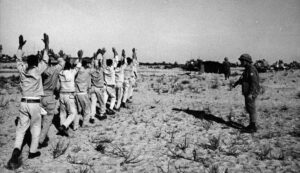
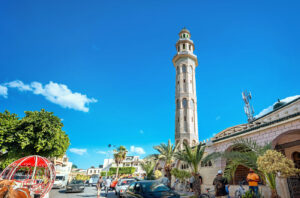
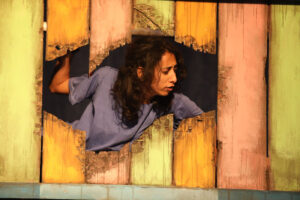
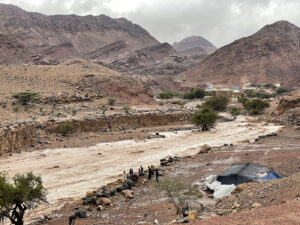
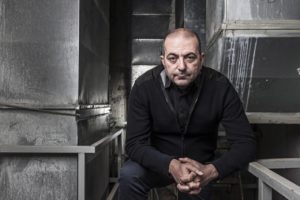
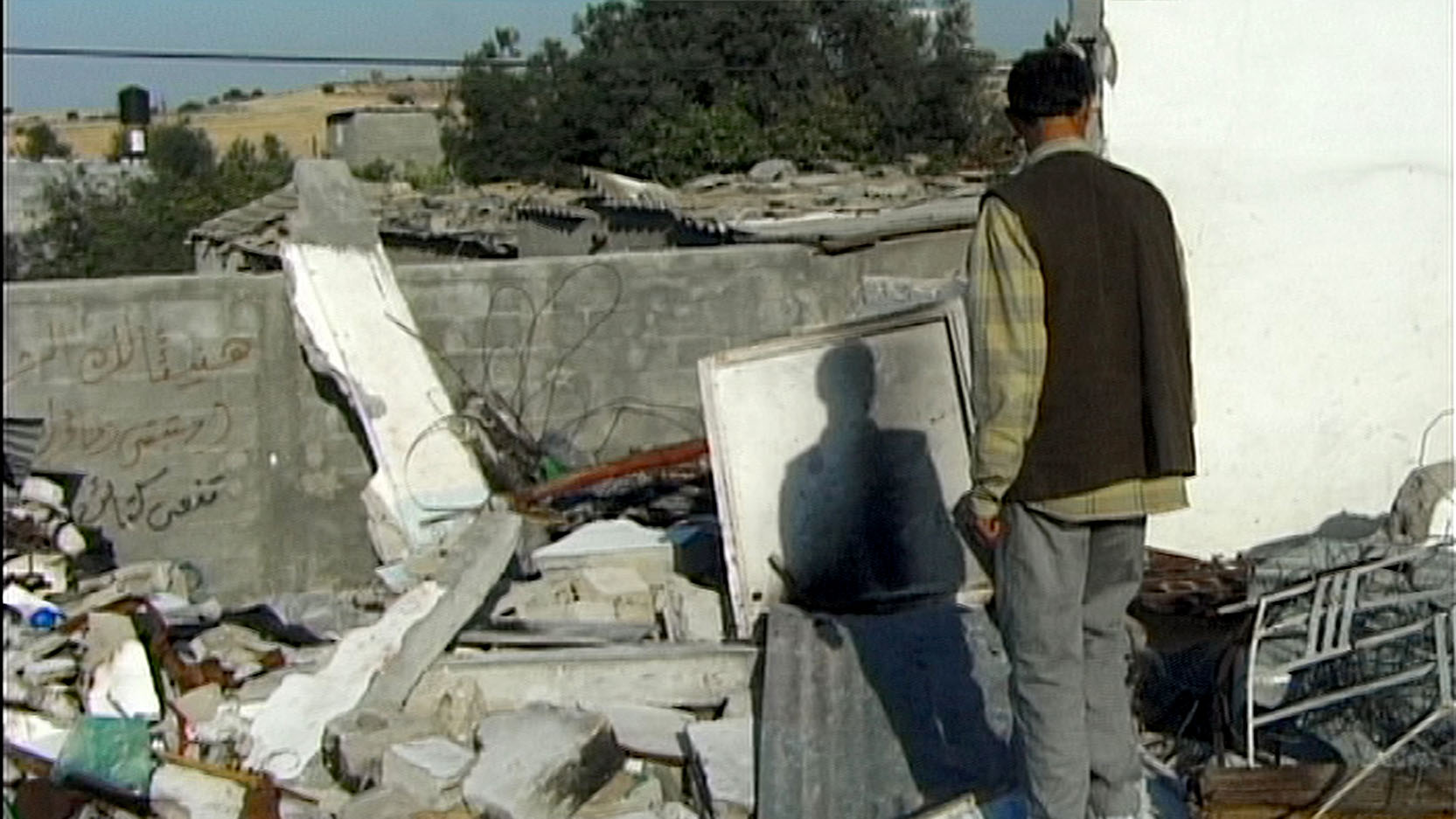
BEIRUT—Kamal Aljafari’s 2025 film With Hasan in Gaza is a work of deceptive simplicity. The footage of this nonfiction road movie documents the young filmmaker’s trip through the territory — from Erez crossing to Khan Younis and Rafah and back. It was shot in November 2001, before the so-called Gaza Disengagement, when the Israelis withdrew their settlements from the coastal strip. Joining him in the shared taxis is Khan Younis resident Hasan al-Boubou, his guide, host, and occasional camera operator.
Images of Israel’s ethnic cleansing campaign against Gaza’s people and material culture have been near the top of the news cycle since October 2023. After more than two years of real-time bloodletting and destruction, of what use is a documentary shot a quarter of a century ago?
As a standalone piece, Aljafari’s film provides a glimpse of the vitality that persisted in Gaza despite 34 years of occupation. It reminds viewers that the catastrophe of contemporary Gaza is not an expression of the Palestinian condition, or the natural end of a wrong-headed militancy that can be fixed by redeveloping the land as beachfront real estate. It is the result of violent occupation.
A road trip and its signposts
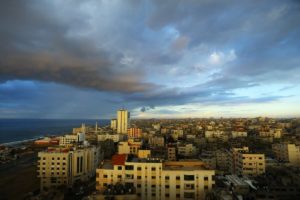
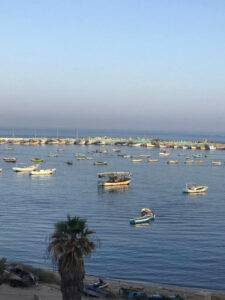
While in Gaza City, Aljafari and Hasan go to the seaside and find families enjoying the beach. As kids goof around for the camera, the filmmaker chats with their father, who spent eight years in the Israeli prison system. He was released just a few months earlier, he explains, so he’s trying to make up for lost time with his kids.
He lists the prisons where he was held over the years, and Aljafari asks if he knew Abedelrahim Shamiyyeh. Hasan is filming at this point, and the conversation continues inaudibly.
Later, as Hasan and Aljafari continue south, the filmmaker inserts the intertitle, “I remember I went to Gaza looking for a friend I met in prison when I was 17.”
[This] is not journalism but a piece of engaged contemporary art. Its resonance is amplified within a body of work dedicated to salvaging a home under erasure.
Early in the first Intifada, Aljafari was arrested for belonging to a Palestinian organization and spent half a year in Naqab Desert Prison. There he shared a cell with some forty men. The only other time his detention is discussed is early in his first film, during a conversation with his sister. He recalls that he learned a lot and made friends there but that it was very difficult to stay in touch with former detainees after release. Later in the film he speaks with Nabih Awada, a friend from prison who was by then in Lebanon.
For reasons he later explains, the filmmaker didn’t have Shamiyyeh’s address. He is mentioned only once more in the footage. When the men are returning north, they drive through Shatea refugee camp and Hasan remarks, “I think your friend should be around this area.”
They don’t find Shamiyyeh. In lieu of that, the film is preoccupied with Aljafari’s observations of an occupation that is still being contested.
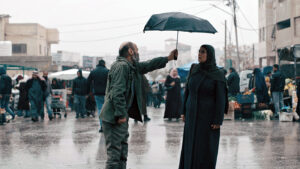
The men pause in the souq in Gaza City’s Shujaiyya neighborhood. Finding the shops shut, Hasan remarks that the economic situation has worsened since the Second Intifada (2000-2005).
“Sawarni!” the kids shout whenever the two men climb out of a car. “Take my photo!”
Somewhere between Nuseirat and Deir el-Balah, they stop briefly to film some unemployed men playing cards in a café. The enforced indolence of occupation is offset by vignettes of labor.
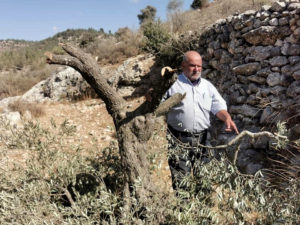
While filming a razed house in Khan Younis, a young man asks them to not photograph him. He fears it will endanger his Israeli work permit. Hasan reassures him that this footage won’t be seen by anyone for many years — a comment that takes on extra prescience for the contemporary viewer. The man tells Aljafari that he grows tomatoes, cucumbers, peppers, and the like.
Throughout this encounter, men walk past on their way to work while Israeli soldiers shout at them in Arabic over a loudspeaker, demanding that they present themselves at the checkpoint. From behind the camera, Hasan tells Aljafari that Arab migrant labor helps police Israel’s Gaza occupation. Some are Palestinian Druze or Christians from the Jalil. Others are veterans of Antoine Lahd’s South Lebanon Army — unemployed since the Israelis quit their occupation zone the year before in 2000.
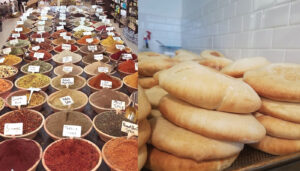
The next day, the souq in Shatea refugee camp is bustling. Men form an assembly line making bread on a saj oven. In one area, clothes are displayed in jumbles piled on the ground. Another floor is turned over to the day’s catch of fish and crab.
There are few traces of rural Palestine here, but for a sequence shot in Rafah, where they spend some time with a young man who keeps goats and a beautiful horse — emerging like a revelation from the dark of a stable — that he says he’s cared for since he was a boy.
Aljafari encounters the Israeli settlement in Khan Younis, where Hasan points out an Israeli military post, the shelled Palestinian Security headquarters, the red-tiled roofs of the settlement, and the concrete barricades re-routing traffic.
At a razed house, they speak with a young man who wants to show them some shrapnel from a recent raid on his family’s house. They follow him home and the man produces a few shards of metal and, like an aspiring production designer, Hasan arranges them on the floor, as if for a reenactment.
Outside a roadside café where they stop to film, Hasan points out a portrait of former PFLP leader Abu Ali Mustafa, assassinated a couple of months earlier.
The first day ends at Hasan’s house in Khan Younis, where Aljafari films his neighborhood during a nighttime sparring match between a Palestinian mortar team, targeting the settlement, and a Merkava. The action is audible but largely invisible. The camera finds residents sitting across the street, a discreet distance from the exchanges.
When he’s not reassuring Aljafari that he’s in no danger filming from this position, Hasan reflects that Khan Younis has been under siege for 20 days. His young daughters are in a constant state of fear and worry, he admits, but they go about their routine as best they can.
He notes that the Israeli reprisals to the mortar fire are quite light this evening, speculating it’s because there had been many Palestinian funerals that day from previous raids.
Sitting on the floor before a televised basketball game, Hasan reckons the Israelis are also distracted because the Tel Aviv basketball team Maccabi is playing in the European league finals.
“Last year,” he notes, “they won.”
Retrospective cinema
Much of the resonance of Aljafari’s film arises from the way its footage compares with TV and online images of Gaza today. The creative ballast of the film, however, came in post-production, after the filmmaker rediscovered tapes of the 2001 footage in 2025.
Aljafari’s mature work is distinguished by this dialogue between archival footage and the documentary present. Most of his films focus on those parts of ’48 Palestine where he grew up — the neighborhoods of Ajami, in Jaffa, and Al-Jamil, in Ramla.
In The Roof, his 2006 debut, the director and his DP document what remained of Palestinian Ramla (his parents’ home) and Jaffa (home of his grandmother, uncle, and aunt). These locations anchor the family’s occupation story — fragile, receding recollections of the Nakba that, combined with the lethargy of daily life, are juxtaposed with Israel’s entitled institutional narrative.
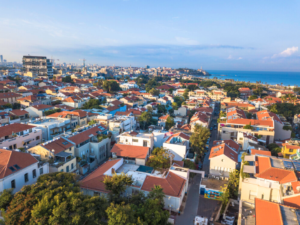
Port of Memory (2010) depicts the psychic dislocation arising from Tel Aviv municipality’s gentrification of Jaffa in the 2000s. Focusing on his uncle Salim, the filmmaker explores occupation in counterpoint to clips of Israeli-produced movies shot in the town’s historic neighborhoods. Near the end of the film, Aljafari redacts the actors and soundtrack of a Jaffa-shot Israeli musical-comedy from the 1970s; he inserts Salim into footage of areas erased in the interim.
In Recollection (2015), the filmmaker assembles an archive from Israeli cinema (mostly commercial movies) shot in Jaffa when the old city was used as a shooting location for Israeli and American productions. Here too he flenses the footage of its Israeli actors and plots, searching for traces of home, often on the margins of the frame.
The filmmaker applies a similar postproduction aesthetic to A Fida’i Film (2024), which draws upon the Palestinian audio-visual archive Israel stole during its 1982 Beirut occupation, and footage appropriated from Israeli movies shot in Palestinian locations. Zionist characters are redacted from the latter, using the digital equivalent of a bright red felt-tipped pen.
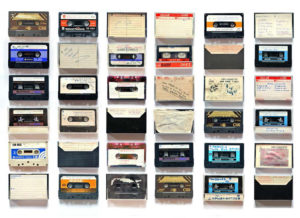
With An Unusual Summer (2020), Aljafari returned to Ramla via a cache of VHS security camera tapes. The filmmaker’s deceased father had installed a camera on the family house in hopes of identifying a vandal targeting the family car. Aljafari selects scenes shot by the fixed camera during Israel’s month-long 2006 war on Lebanon — an ironic counterpoint to the banal lyricism of pixilated family members and neighbors, birds and plastic bags moving through the frame.
Since Recollection, An Unusual Summer, and A Fida’i Film are constructed entirely from found footage, the filmmaking craft is exercised in postproduction. The filmmaker complements the silence of the captured landscapes with personal anecdotes they provoke. These stories may be expressed as intertitles or voiceover during the film or scroll at the end of the work, before the production credits.
Aljafari brings the same retrospective postproduction, the same interest in documenting erased lives and locations, to his 2001 Gaza footage.
In the anecdotes that scroll following the 2001 footage, Aljafari recalls how many from the Jaffa side of his family were deported to Gaza in 1948. He remembers an uncle coming to Jaffa to celebrate his wedding at his grandmother and grandfather’s house.
Laborers from Gaza, many of them from Jafawi families, also came to town in search of work, gathering in a green space that came to be known as the Gazans’ Garden.
Israel later banned Gaza residents from travelling to the ‘48 lands, ending family reunions and employment. He recalls how his aunt raised money for relatives in Gaza, though the Israeli postal service set a low ceiling on how much she could send.
His family ties to Gaza compel Aljafari to recall his detention. The filmmaker vividly recollects Abedelrahim Shamiyyeh’s disdain for their captors in the Naqab Prison, how he once responded to the humiliating three-times-daily rollcall by punching a prison guard in the face. He remembers the violence of the guards’ response to his defiance, and Shamiyyeh’s abrupt disappearance.
While the search for Shamiyyeh spurred the road trip in 2001, the 2025 film transcends that original intent to become something much larger. With Hasan in Gaza unifies many stories, usually presented as separate, into one body of work: the razing of Gaza, the erasure of ’48 Palestine, violence both slow and spectacular. In turn, it reminds us that Palestine, history and land, is one.
Screening info:
With Hasan in Gaza will screen at the following festivals between February and April:
DocPoint Helsinki (Feb)
DocPoint Tallinn Documentary Film Festival
Antenna Documentary Film Festival, Sydney (Feb)
Glasgow Film Festival, (Feb-March)
Tempo Documentary Festival
Ambulante, Mexico City/Querétaro/Morelos/Baja California (March-May)
Luxembourg City Film Festival
Ciné-Palestine Toulouse Occitanie (March)
International Film Festival of Uruguay (Jan)
There will be a release in German theaters from end of March.






















![Fady Joudah’s <em>[…]</em> Dares Us to Listen to Palestinian Words—and Silences](https://themarkaz.org/wp-content/uploads/2024/03/SAMAH-SHIHADI-DAIR-AL-QASSI-charcoal-on-paper-100x60-cm-2023-courtesy-Tabari-Artspace.jpg.webp)