In her latest This Arab Life column, Amal Ghandour reflects upon the Palestinians’ long and ongoing journey of loss.
I have no real memory of Jericho, only a faint imprint left in my inner eye by a tattered black-and-white photograph. In it, my sister Raghida and I are standing beside the white horses sculpted into the walls of the hotel’s garden in Jericho, where my family often went for lunch on weekends. The slow drive from Amman was less than two hours. The photo must have been taken in 1966 or early 1967, months before the Six-Day War. I rummaged everywhere for it when I began writing This Arab Life, A Generation’s Journey Into Silence.
After the war, I never saw Palestine again. And I never found the still.
I am often asked by friends foreign to these lands: what is it about Palestine that refuses to let go of the Arabs who love it so? What is it about this place that inspires a yearning that transcends generations and birthplaces, religions and sects — even politics? It is the one question that has bedeviled Israelis more than any other about us, the multitudes living across from them in a vast expanse that reaches as far as Mauritania. The one place so many of us, strangers to one another, even adversaries on so many issues, are tethered to is Palestine: the matter of Palestine, the principle and heart of it, the cause itself, far removed from ideologies and their divides, politicians and their camps, regimes and their agendas.
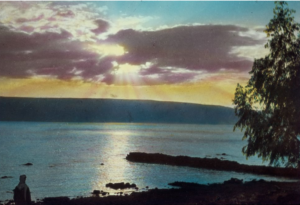
I have never ceased to wonder: how can this love, this yearning for that horizon, still puzzle others, especially Israelis? From Naquora in southern Lebanon, Haifa is 45 minutes by car; from the Jordan Valley, at dusk, you can see Jerusalem lit up; from the Golan Heights, Tiberias could be a four-hour bike ride… To miss Palestine is to miss one’s lost father or mother, sister or brother.
Is it that hard to fathom?
It was not for Albert Camus, a pied-noir, whose love for his Algeria wrestled with his commitment to justice for Algerians and their struggle for independence. “People are now planting bombs in the tramways of Algiers. My mother might be on one of those tramways. If that is justice, then I prefer my mother,” he replied to an Algerian student in the press conference after the 1957 Nobel Prize ceremony. Le Monde at the time perhaps unfairly distilled it to: “I believe in justice, but I will defend my mother before justice.” In the end, for this Algerian-born French existentialist, the son of settlers, the agonizing choice between what the heart desires and what the mind knows to be unjust was finally settled: the mother country won.
How could such love, then, not be infinitely more profound for us Levantines, when Palestine and justice mesh as one?
In fact, for many of the early Zionist settlers, even the most hard-edged among them, the Palestinians’ devotion to Palestine was a stark truth: incontrovertible, plain to the eye, stubborn, immovable. In today’s Israel, the likes of Ze’ev Jabotinsky would very likely be branded heretics or traitors by the likes of Itamar Ben Gvir. There was nothing accommodating about the vision of the father of Revisionist Zionism. Jabotinsky wanted all of Palestine and more. He wanted it as Eretz Israel, a fortress behind iron walls. He wanted the majority of its Palestinian Arabs gone, the rest subdued. He knew that blood would have to be spilled, mass expulsions committed, submission exacted, and hope snuffed out. He knew all this because he understood the strength of the Palestinians’ attachment to their land.
“They look upon Palestine with the same instinctive love and true fervor that any Aztec looked upon his Mexico or any Sioux looked upon his prairie,” he wrote in The Iron Wall (1923). Thus, through such words, the Palestinian’s identity as the native and Jabotinsky’s as the colonial settler are unambiguously established, first and foremost in his own eyes. He continued:
Compromisers in our midst attempt to convince us that the Arabs are some kind of fools who can be tricked by a softened formulation of our goals, or a tribe of money grubbers who will abandon their birthright to Palestine for cultural and economic gains. I flatly reject this assessment of the Palestinian Arabs.
But how tired we are of quoting Jabotinsky, as our witness, to successive generations of recalcitrant Israelis, among them his most ardent followers. We kept summoning him not in the hope of refuting their claims to Palestine — history itself is damning refutation enough — but to impress upon them a very simple fact: defeat in battle may deny us the land, but it cannot extinguish our love for it. More poignantly still, such sustained dispossession only compounds the original injustice and the commitment to redress it.
Alas, only the wise few among them have seen and understood the implications of such injustice — for Israelis no less than for us. Dare I add that I consider them companions in conscience? But who in Israel today heeds the likes of Zeev Sternhel, Gideon Levy, or Omer Bartov? The struggle over Palestine endures amid ever harsher Israeli measures and campaigns, all waged to kill this abiding love. Conquest, eviction, subjugation, ethnic cleansing, apartheid, pogroms, and now genocide, all intended, in essence, to sever a bond that, under siege, grows ever stronger.
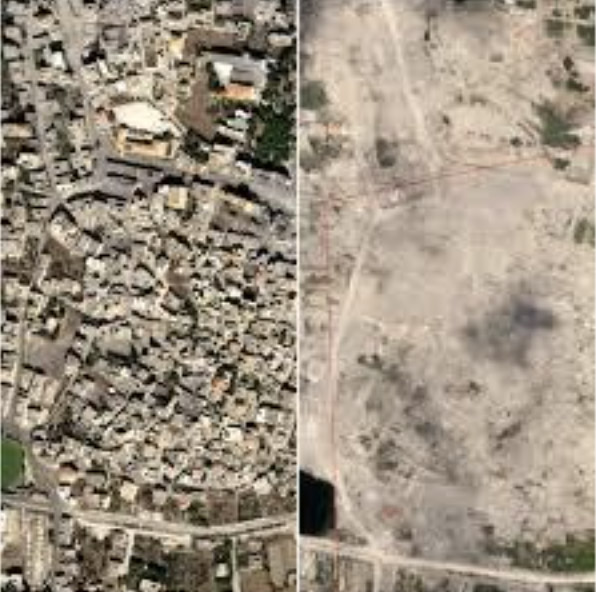
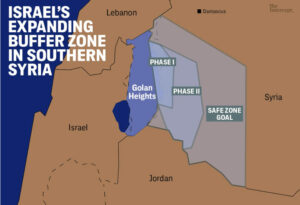
Such Israeli incomprehension has come at enormous cost to the peoples of the Levant. It has driven us to the far reaches of desperation; the Israelis to the point of madness. Close to a century into this tragedy, the Palestinians suffer a harrowing assault on their very existence; most of Syria’s south lies occupied; and Lebanon’s burning southern region succumbs to ever-increasing Israeli “security” lines. And Jordan, the showcase of choice when Israel’s friends want to demonstrate the real possibilities of peace, lives in dread that hundreds of thousands of Palestinians might finally be driven from the West Bank to their side of the border.
Today, May 15, marks seventy-eight years since the Palestinians’ long journey of loss began. It has yet to end. In 1948, we Levantines were thrust into our own saga with the Jewish state. It too has yet to end. The entire face of the Levant has changed. Across it, heroes rose and fell, grand movements soared and crashed, brother fought against brother, dictator against despot, tyrant against rebel, resistance against invaders and occupiers. It must be said, Palestine was neither the sole object of our aspirations nor the only reason for our heartbreak. Equally, Israel was neither the singular source of our troubles nor the main cause of our failures.
And yet, there it still towers today, the cause through which so many solutions may find the light.
On Another Note
In memory of the 1948 Nakba, in memory of Gaza and all other homes that were once filled with family and love and life, only to stand empty or lie in rubble because of hearts of stone, I share this excerpt from Yehuda Amichai’s poem, Houses (Plural); Love (Singular):
We lived in many houses and left remnants of memory
In every one of them: a newspaper, a book face-down, a crumpled map
Of some faraway land, a forgotten toothbrush standing sentinel in a cup
That too is a memorial candle, an eternal light
Amal Ghandour’s biweekly column, “This Arab Life,” appears in The Markaz Review every other Friday, as well as in her Substack, and is syndicated in Arabic in Al Quds Al Arabi.
Opinions published in The Markaz Review reflect the perspective of their authors and do not necessarily represent TMR.