Select Other Languages Français.
How do you solve a problem like... Trump? TMR columnist Amal Ghandour offers a scathing analysis of not only Trumpian politics but Empire itself.
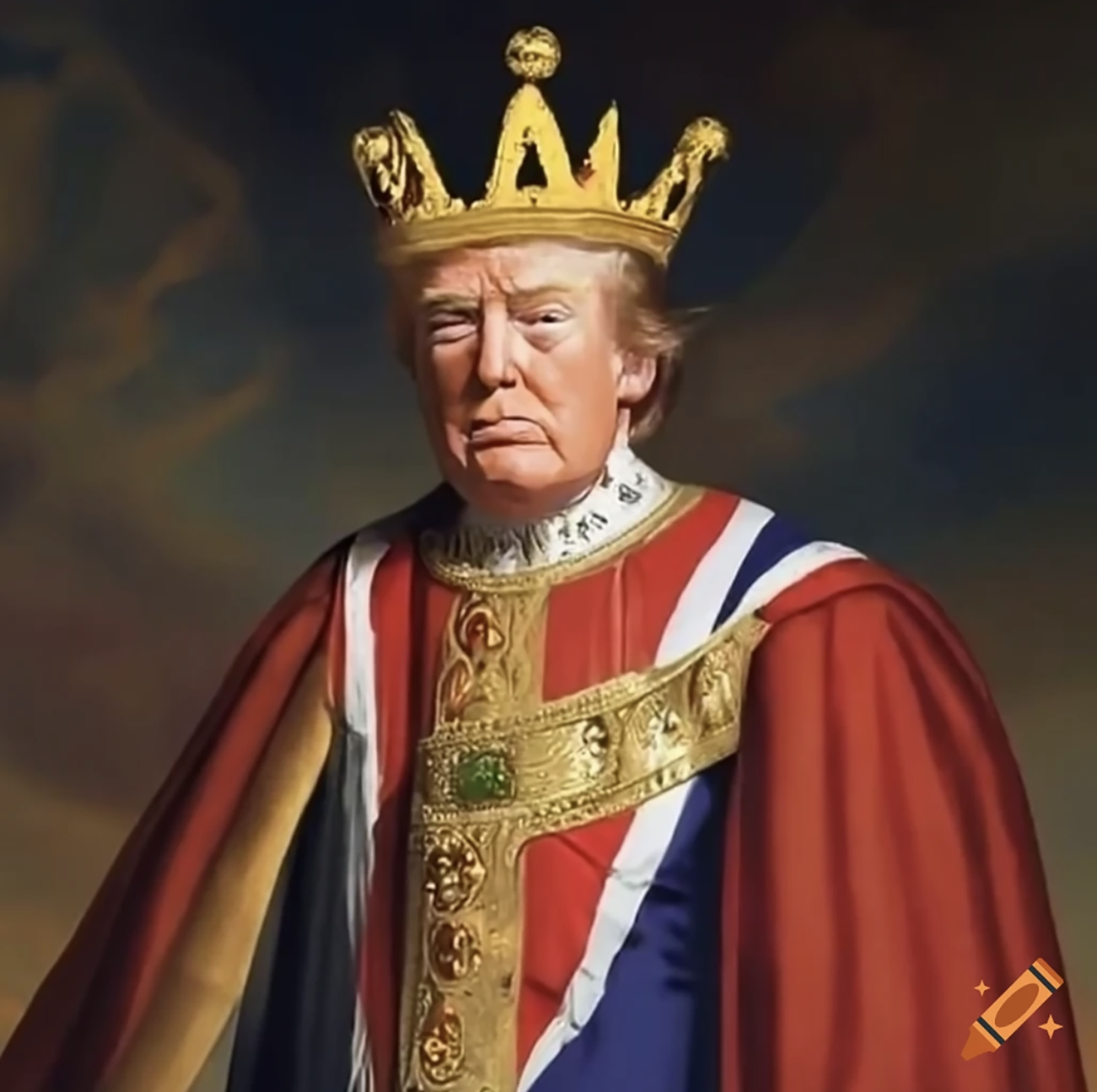
You’re looking at Donald, The Liberator. I’ll have you know neither the image nor the title are tongue-in-cheek. The AI-generated visual was used by the White House’s social media accounts. The title is all mine, of course.
President Donald Trump, truth be told, has an array of fascinating peculiarities. The most intriguing, to my mind, are the affinities between his love of ornamental excess and his relish for base politics. The gilded furniture and walls are faux Louis-Quatorze; the conduct, brass-knuckled.
At first glance, one detects a mismatch, only to discover exactly the opposite. Because the man is all about flourish. He likes gold finery, a military parade, a huge crowd, a gigantic chocolate cake, a massive ballroom. And he likes a bar fight. Or more precisely, he likes to look as though he wins hard — even when there is a clear path to an easy victory.
It’s not merely a penchant for spectacle, but for the spectacular within the spectacle. Whatever the individual performative act’s shape or purpose, the message is always same: I want it and I shall have it, because I can. Power, liberated, unleashed, unfettered, and ruthless, with a Trumpain twist, exercised at will, at whim, towards anyone and anything.
So what’s the problem? Empire is reflexively brutal, even when it doesn’t really need to be. We, on the receiving end of it, have always seethed at the “international niceties” behind which it hides its cruelties. In America, its own leading dissenters have long warned that the supposed protections that insulated the republic from imperium were imaginary. “We have no more a democracy than we have a republic. We have an empire,” wrote Gore Vidal in 2002, in Perpetual War For Perpetual Peace. Now comes an American president who embraces this truth and openly acts on it, and the aghast are frothing at the mouth.
Empire is also capricious and, more often than we care to admit, preposterous. In its advanced years, it can be comically cantankerous. It is only befitting that the emperor and his entourage faithfully embody its modalities and temperament. One might have expected Trump’s disdain to observe hierarchy: the lower a country’s position on the rung, the rougher the treatment; the higher, the softer the touch. Not so, to the dismay of Western allies, most with rich colonial histories of their own. That shared imperial legacy alone made them kindred spirits — members of the same club, collectively authoring a made-to-fit international order, partaking of the same privileges, indulging in the same hypocrisies, and dispensing exemptions to darling countries. Not so, apparently, for Trump.
To be fair, such are the prerogatives of great superpowers, even with their closest friends. And such, too, is Trump’s particular fancy. Whether this public display of contemptuous dismissiveness makes any sense, let alone corrodes imperial interests, is another matter –– one that I suspect doesn’t really concern this American president. After all, as Scarlett O’Hara said, “Tomorrow is another day,” just before she faded into black in Gone With the Wind.
Suffice it to say, for today, that it is rather amusing to see a flummoxed Europe climb aboard the fear wagon that the rest of us, in the rank and file of humanity, have been riding for what feels like an eternity. It has been particularly entertaining to watch its leading members lose their tongue over the legality of Trump’s grab-and-snatch in Venezuela, only to recover it when he turns his yearning for Greenland. One has to wonder: what exactly differentiates Venezuela from the Land of the Kalaallit?
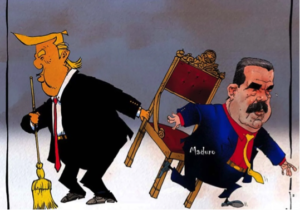
Trump surely asked himself this question a long time ago and quickly discovered: nothing. For this equal opportunity attitude, he gets all the credit for plain honesty; for Europe’s dithering, they, alas, end up with all the sniggering.
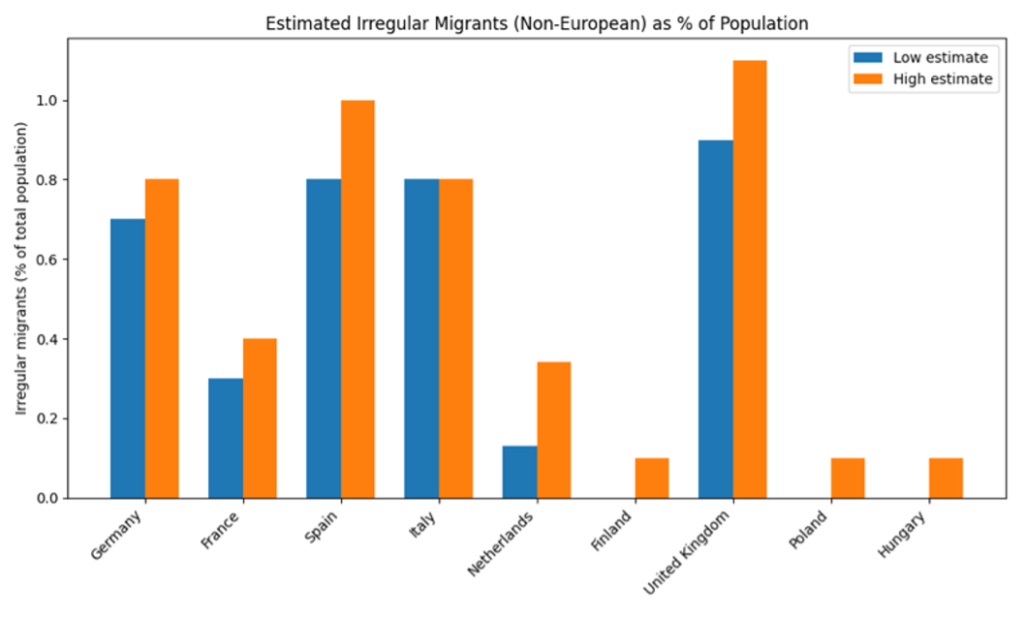
If these Trumpian sensibilities are shocking to Europe, which itself, frankly, is shocking, the exceptions are teachable: Hungary, on the far edge of the fear spectrum. Magyarország’s Viktor Orbán was among the first to publicly cast foreignness as a contaminant, tap into those raw emotions, and efficiently set the fear wagons in motion to insulate his people against “civilizational erasure.” It’s not that many of his fellow European members were offended, far from it. It is all that hemming and hawing as they sheepishly followed his example.
In fact, Europe has been embarrassingly hemming and hawing its way through crises for years now: about Gaza but not Ukraine; about Palestine but not Israel; about Putin but not Netanyahu; about freedom of expression and assembly but not for Palestine; about brown refugees but not white ones; about Islamophobia but not antisemitism.
And Trump simply doesn’t like those who hem and haw. He doesn’t like it in America; so why should he tolerate it anywhere he deems his backyard?
“It’s a new world order,” Orbán declared approvingly at the beginning of 2026. It may well be so for his Western universe. For ours, it’s the world order as it’s always been.
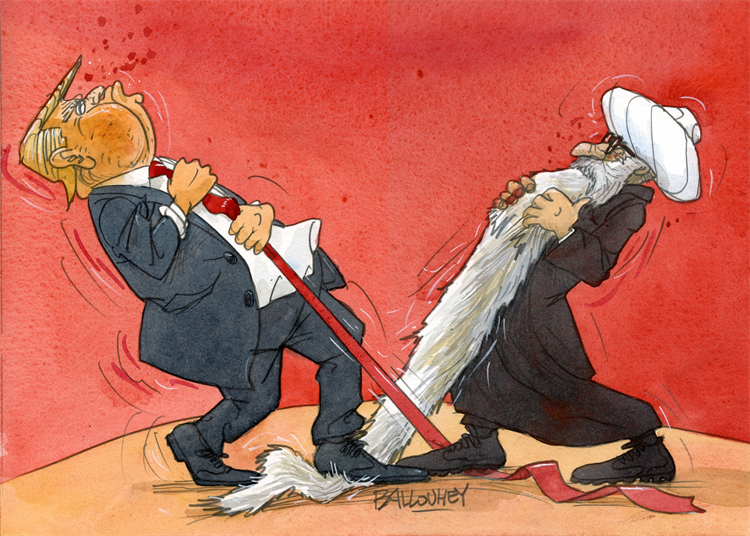
In the immediate future, therefore, my eyes are fixed on Iran.
•
On Another Note
I am staying on subject this week, because it’s all so damn interesting.
Two countries now sit squarely in the eye of the storm: Venezuela and Iran. Two podcasts from the Quincy Institute for Responsible Statecraft on both countries stand out.
The discussion on Venezuela brings together John Mearsheimer, Curt Mills, and Miguel Tinker Salas.
The Iran panel features Vali Nasr, Ellie Geranmayeh, and Mohammad Ali Shabani.
Both offer exceptional insight.
*Sources: Eurostat – “EU population diversity by citizenship and country of birth” (January 2024); RFBerlin – “The Immigrant Population in the European Union” (April 2025) –Voronoi / Visual Capitalist – “How Much of Europe Is Made Up of Immigrants?” (2025); MIrreM working paper – “The Irregular Migrant Population of Europe” (2024) –MIrreM country pages.
Amal Ghandour’s biweekly column, “This Arab Life,” appears in The Markaz Review every other Friday, as well as in her Substack, and is syndicated in Arabic in Al Quds Al Arabi.
Opinions published in The Markaz Review reflect the perspective of their authors and do not necessarily represent TMR.
Select Other Languages Français.