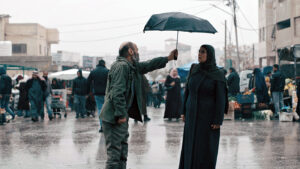
More than a question of convenience, transportation in Gaza can be a matter of life or death.
Prior to October 7, a taxi ride was an afterthought, a question of practicality and not survival. Before the war, a taxi ride from my neighborhood in Tel Al-Hawa to nearby Al-Remal, for example, only cost two shekels (60 cents). Now, it has more than doubled, to five shekels.
Tuk-tuks and donkey carts, though once a common sight on the streets of Gaza, weren’t in fact necessary — it was easy enough to find a vehicle to take you anywhere you wanted, whether within Gaza City or across the entire Strip. Now, this simple convenience has vanished almost completely, like so many things people take for granted.
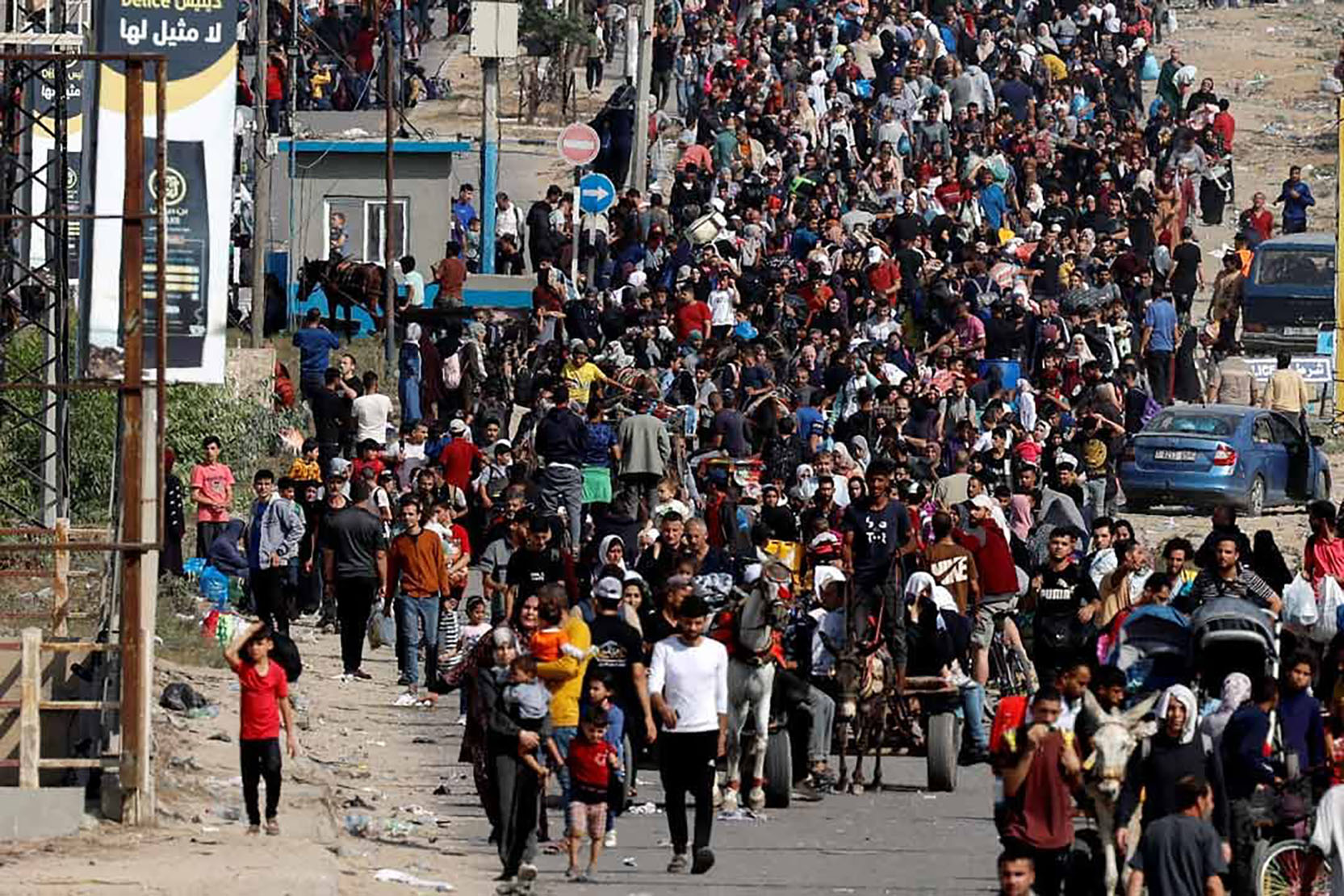
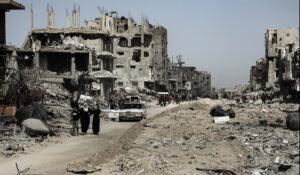
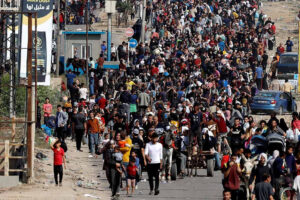
In fact, it’s not that modes of transportation vanished — they were destroyed, in Israeli bombings. Donkey carts, though unsafe, then became essential for Gazans in the absence of fuel-powered vehicles (not to mention the fact that in 2022, Israel banned further importation of donkeys). And even when vehicles remained intact, there was no way to fuel them. After Israel split Gaza in half, by establishing the Netzarim corridor in November 2023, the besiegement of the north prevented any kind of energy sources from entering. Drivers were afraid to move between streets or neighborhoods — cars could be targeted at any moment. Walking became the only option. During displacement journeys, we often had to move between shelters on foot because no vehicles were available. I remember walking for hours with my family while carrying bags of essential items. Along the way, we saw elderly people being pushed in wheelchairs or on carts because that was the only way to transport them.
In January 2025, after a ceasefire agreement was announced, people began returning to their homes in northern Gaza, and vehicles could move again without fear. But although Israel allowed limited amounts of aid and fuel to enter, the supply was insufficient. A vicious cycle began: taxi drivers were forced to purchase fuel at very high prices; transportation fares increased. In any case, the feeling of peace was short-lived; in March 2025, Israel resumed its war, creating a new crisis on top of an unresolved one. Its siege tightened on the Strip, preventing even the most essential aid from entering — food, medical supplies, and the fuel needed for hospitals to operate and for transportation to function.
As a result, the prices of gas and diesel required for vehicles soared, along with the cost of transportation. Transportation is just a symptom, however, of a deeper crisis, which stemmed from the severe cash shortage that began at the onset of the genocide. The repeated closure of border crossings meant that no new money was entering Gaza, and the same currency kept circulating among its residents. Banks remain closed and withdrawing money remains impossible.
In response, Gazans have turned to digital solutions such as mobile banking and e-wallets to purchase goods; internet connectivity issues and the restrictions on international remittances make even this a challenge. Plus, taxi drivers refuse to use these methods, insisting on being paid in cash only. Even when we manage to obtain cash, most of the banknotes are rejected by the drivers, who claim they are old or torn. And if the notes are clean, new, and undamaged, another problem arises — there are no coins available to make change. So even if you could afford a taxi ride from, say, the western part of Gaza City to the eastern part — a trip that cost two shekels before October 7th, and now four — you might remain housebound anyway.
More than a question of convenience, the transportation issue can be a matter of life or death. In September 2025, Gaza City was heavily targeted by Israel following the Knesset’s announcement of its intention to occupy it; anyone who wanted to leave the city had to rely on trucks to transport their furniture, clothes, and food. Truck drivers were charging over $1,000, depending on the destination in the south. Some people remained in the City, beneath the bombings and shelling, not because they weren’t afraid, but simply because they did not have enough cash to pay for transportation.
My family was among those who fled Gaza City to the south. Like everyone else, we needed a truck to leave. After looking for and failing to find a driver that would accept payment through digital methods, we eventually found one who accepted half in cash and half through a mobile banking app, though at considerable cost. Large crowds of people hoping to flee and the huge number of trucks transporting people to the south meant vehicles had to wait in long lines, which further increased the price. In the end, our journey took 12 hours and cost around $1500.
The war is supposedly over, and yet, the transportation situation has not improved.
My family remains displaced in the Al-Mawasi area of Khan Younis. Every day, my sister Noor has to pay 40 shekels for transportation to get from Khan Younis to Gaza City, where she works. My brother Yousef faces the same challenge — his school is in Gaza City, and he pays 40 shekels as well. That same journey would have cost 20 shekels before the genocide, half the current price. Time, too, has become precious; what was once a thirty-minute trip can now take up to two hours depending on traffic.
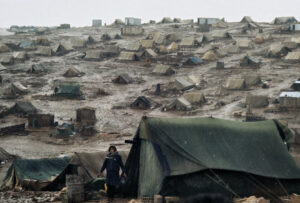
And it’s not just school and work; reaching aid distribution points has become a major challenge. My family recently received a message from a distribution center inviting us to collect tarpaulins. The location was relatively far, but my brother Yousef insisted on going because we urgently needed them to protect our tent from the rain. No luck; Youssef was unable to find a ride to the distribution point and returned empty-handed.
As long as Israel continues to block fuel entry, transportation will remain a struggle, just one among many relentless hardships Gazans endure, despite the ceasefire. The little cash my family has goes mostly to transportation, and yet we continue — working, schooling, surviving. And, for me, writing. Because internet is unavailable most of the time where we are, I had to walk forty minutes to a workspace, there and back, simply to write this article and submit it. A few rounds of edits, back and forths, meant more walking. Since I don’t have any cash, it goes without saying that I couldn’t grab a ride.

































![Fady Joudah’s <em>[…]</em> Dares Us to Listen to Palestinian Words—and Silences](https://themarkaz.org/wp-content/uploads/2024/03/SAMAH-SHIHADI-DAIR-AL-QASSI-charcoal-on-paper-100x60-cm-2023-courtesy-Tabari-Artspace.jpg.webp)