Jewish Supremacy and the Making of Genocide in Gaza

Goliath vs. David (courtesy Middle East Monitor).

30 JANUARY 2026 • By Sheryl Ono

Sheryl Ono traces a history of Jewish supremacy to its logical conclusion in Israel’s savagery.

I was about twelve when I first heard that I was blessed with a Jewish brain. Actually, my mother was referring to my best friend when she brought it up, but I knew that she meant me as well. “Leslie’s got a real yiddishe kop,” mom said. “She has more smarts in her little finger than your friend Laura will ever have.” I gathered that Laura had the dreaded gentile head beneath her shining blonde hair.

My parents were liberal Democrats, committed to civil rights, feminism, and gay rights, back when all were deeply unpopular. I was proud of their hearts and their politics. But the snide remarks that they liked to share about “the goyim,” without a hint of self-consciousness, filled me with shame. I understood that their worldview was a product of their upbringing, and that my immigrant grandparents deserved a pass for it. Growing up in Czarist Russia, my paternal grandmother and her three sisters had to hide in the attic whenever soldiers passed through their village demanding a bed and some entertainment. It’s not surprising that she coped by believing herself superior to them — the same way other oppressed groups have invented narratives about their own exceptionalism.

But my mother and father weren’t raised in a shtetl. Born and educated in the United States, they should have known better, I thought. Jews were not only safe in our New York City suburb, we were a political and economic force in the community. Or at least that’s how it seemed to my teenage self in the late ‘60s, untouched by discrimination. Slurs about gentiles struck me as embarrassingly arrogant, not to mention contrary to everything that my parents had taught me. I didn’t get how they could turn into completely different people on this subject.

I was eighteen and my gut was telling me that I should keep my distance from Israel.

All of this was well before I learned about the brutal history of Zionism, so my shame had nothing to do with Israel. It was more about being a shy, sensitive kid surrounded by extroverts, which had turned me into a keen observer. I clocked every slight, no matter who was the target, and was especially rattled by self-important, entitled behavior, which felt to me like a tyranny of the loudest. So many years later, I can still describe in detail all the times my soul was crushed by watching a friend or cousin suffer a public humiliation. Praise from my parents about my Jewish brain, or Jewish whatever, felt especially awful. It enlisted me as one of the bullies — the Chosen People — ridiculing others who were not so lucky.

The first time I encountered Israelis was while waiting tables in South Florida before I left for college. Up until then I’d had nothing but positive, if comical, associations with them: as romantic heroes in a friend’s letters the summer she milked cows on a kibbutz, or as heartthrobs in Exodus, a movie I’d seen multiple times. Israel was not a big topic of conversation at home. I knew that my parents supported its existence, but it wasn’t part of our lives.

I was therefore caught off-guard by the run of demanding and disrespectful families who kept asking to be seated at my station — after they had alienated all the other servers. Unlike our European customers, the Israelis were weirdly familiar to me, like a caricature of relatives who I already found challenging. My internal alarm sounded loudly every time I had to deal with them. I’m ashamed to admit that I made a sweeping judgment based on my restaurant experience, but I was eighteen and my gut was telling me that I should keep my distance from Israel.
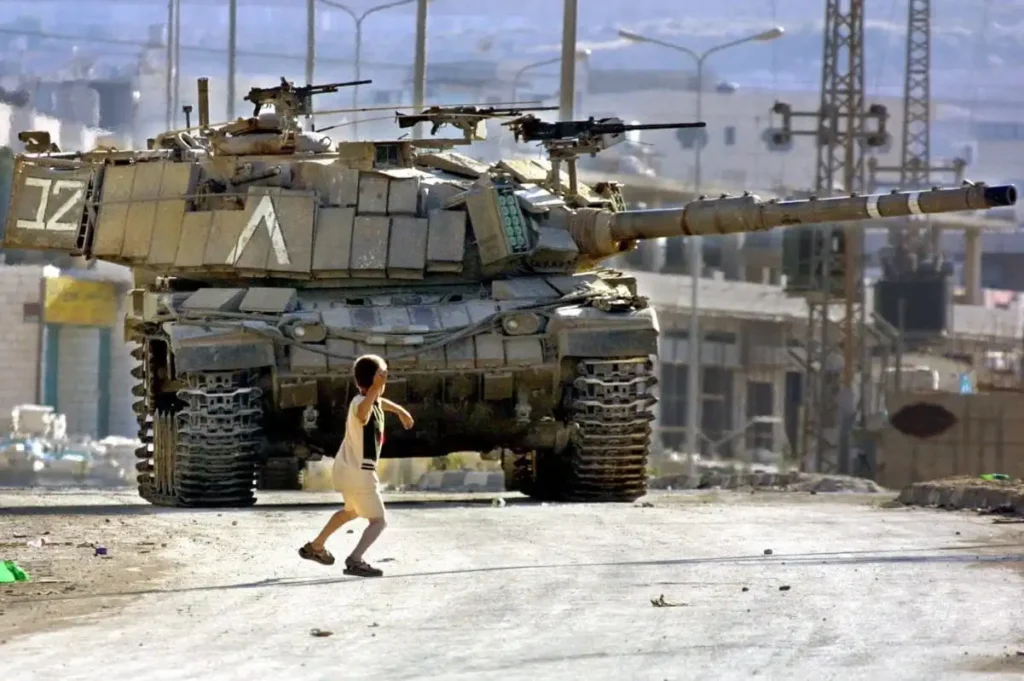

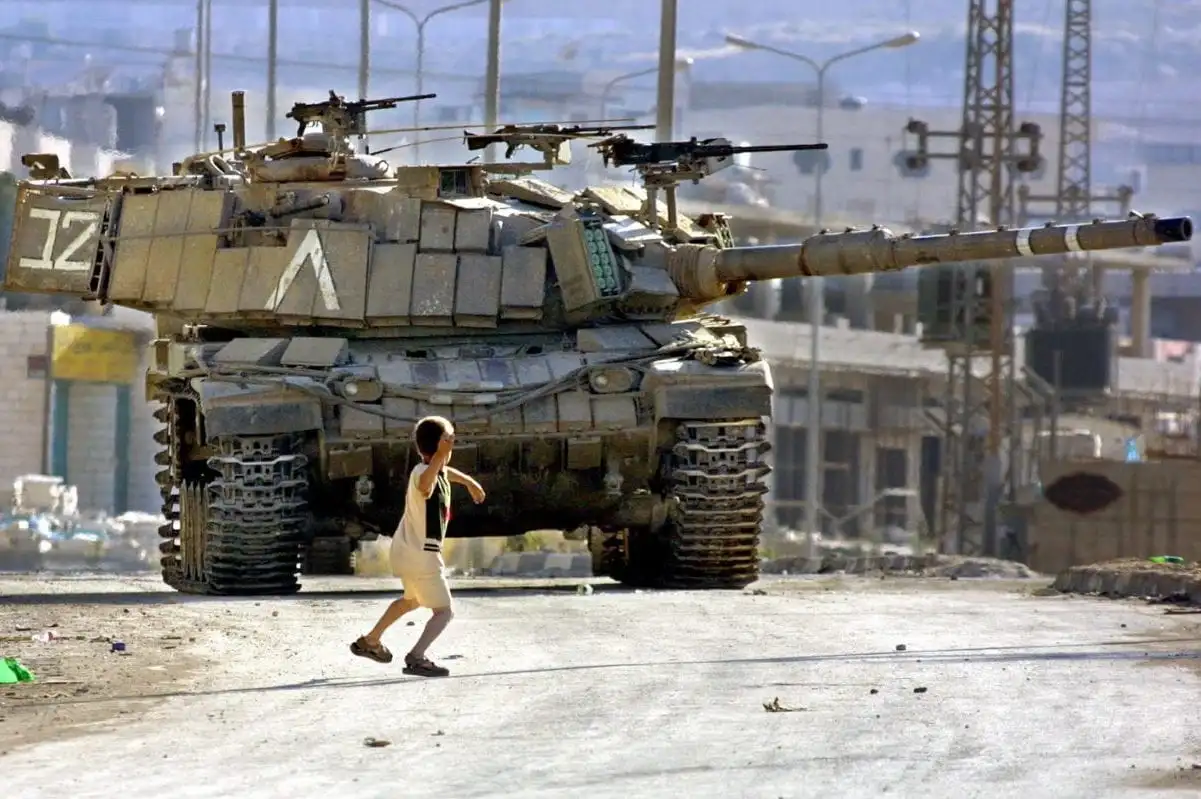
palestinian-child-throwing-rock-at-israeli-tank-photo-by-musa-AL-SHAER courtesy middle east monitor
Goliath vs. David (courtesy Middle East Monitor/photo Musa Al-Shaer).

Reading Israeli historians years later, I discovered that the imperious personality I’d found so off-putting had apparently been baked into the national identity by the early Zionists. They understood that they couldn’t create an ethnostate without domination: Jewish supremacy was a requisite of Zionism.

I also learned what the national identity was not. Contrary to Hollywood mythology and what most of us were taught, early Zionists never envisioned the country as a haven for desperate refugees. I had to sit with this foundational lie for a minute when I first came across it, but as Israeli historian Gur Alroey described in Land of Refuge: Immigration to the Land of Israel, 1919-1927, Zionist leaders rejected or expelled would-be migrants who had anything that was deemed a frailty — from heart disease to anxiety disorders. Never mind those with amputated limbs and other legacies of persecution. “Alas, Zionism can’t provide a solution for catastrophes,” said Israel’s future first president, Chaim Weizmann, in 1919, to explain why he had blocked entry to thousands of Ukrainian Jews who were trying to escape pogroms.

Instead, Weizmann and the others wanted young, strong, Paul Newman types for a new Jewish prototype to replace the bookish “diaspora Jew” they loathed. I guess my instincts had been correct: an empath like me was never meant to feel comfortable in Israel. “They wanted to look like Arabs, to be suntanned, muscle-y, to master Arab horses, to know how to use guns, and to work the land,” said Nurit Peled-Elhanan, an Israeli philologist, author, and activist, on the Book Café podcast last year.

Peled was born in the early days of the new state and grew up steeped in the contempt that David Ben-Gurion, Israel’s first prime minister, had for so-called weak Jews. Shockingly, he meant Jews who had been victims of the Holocaust, whether they survived or were killed in the camps. “He told us they went like sheep to the slaughter,” Peled said. “Ben-Gurion set the tone to despise them, to really despise them.”

Nearly 2,000 of the Holocaust survivors who immigrated to Israel after the end of WWII wound up forgotten in mental hospitals, where they were plied with anti-psychotics instead of properly treated for post-traumatic stress. Reparation payments that Germany sent to survivors were largely diverted by Israel into road projects and weapons. It wasn’t until the early aughts — a half-century after they arrived in Israel — that the government apologized to survivor families and began to make amends.

All of this informs the current situation. I have been called a self-hating Jew many times since I began speaking out for Palestinians, but if there is such a thing, I think the real self-hating Jews were those who founded Israel. Max Nordau, a father of Zionism who was responsible for the Jews-with-muscles movement, was full of loathing for his fellow European Jews, referring to them as parasites and “accursed beggars.” It is hard for me to see the Zionists’ obsession with strength and weapons as anything but a mask for humiliation and shame. Isn’t that usually the case?

And history has shown that humiliation sprinkled on top of ego makes for a toxic national stew. Like my grandparents, who had learned to survive by believing in their own superiority, Zionist leaders made clear in their writings that they considered themselves far above the Arab population intellectually, economically, and culturally. Ben-Gurion, for example, according to a recent biography, was opposed to intermarriage in his new state because “an Arab is still not on the human level that I would want for a man who marries a Jewish woman.” People on the street in 1947 expressed similarly racist views to The New York Times, in an article sub-headed “Sure of Superiority, Settlers Feel They Can Win Natives by Reason or Force.”

Jews made up less than a third of the population at that time; they would have had to have been master persuaders to wind up with a majority-Jewish state “by reason.” No matter what they said in public, it was clear from their writings that they planned to drive out the Arabs by force. But first, Ben-Gurion needed to convince his weary immigrants to despise their Arab neighbors, many of whom had been gracious to them when they arrived.

Until I started writing about the early Zionists two years ago, I was unaware that Ben-Gurion had managed to project his people’s post-war thirst for revenge onto the Arabs by subtly linking them with Nazis in public discourse. As Israeli-British historian Avi Shlaim, a professor emeritus at Oxford, noted on a podcast last year, the Zionists were “hellbent on building a new state and they would use any means, fair or foul, in order to realize this ambition.”

The invented correlation with Nazis helps explain the savagery that marked the massacres in Arab villages like Deir Yassin, Safsaf, and Tantura in 1948. Two Zionist terrorist groups, the Irgun and Lehi, were responsible for the attack on Deir Yassin a month before Israel was formed. “They stood ten or fifteen Arabs against a wall — men, women, and children — and shot them,” a member of the Haganah militia, who witnessed the attack, said in a documentary about it. “Once they’d taken over the village, the Irgun went from house to house and made sure any Arabs that were left went straight to heaven.” In Safsaf, members of the newly formed Israel Defense Forces tied dozens of men together, threw them in a pit, and shot them, according to a soldier’s notes. They covered the villagers with dirt while some of the bodies were still twitching. By the end of the forced expulsions in 1947-48, known as the Nakba, 750,000 Arabs had become refugees.

While the original idea behind Nazification may have been to rally the troops, it quickly became the way to guarantee Israel’s survival. Benjamin Netanyahu wasn’t the first prime minister to realize that Israel could outlive its raison d’être. What would happen to it if Jews were no longer scared of extermination? Without a tangible threat, there would be little reason for diaspora Jews to keep the money flowing, or for young Israelis to sustain the ethnostate.

Israel’s solution has been to create an elaborate trauma industry, as author Naomi Klein calls it, to make sure that Jews stay connected to their pain and fear, in a perpetual state of fight or flight from “Nazis” — known to the rest of the world as Palestinians. Just two months after the October 7 attack in 2023, there was already an exhibit in Tel Aviv to recreate the killings at the Nova music festival, complete with burnt cars, bullet-pocked portable toilets, and piles of lost shoes, the latter deliberately reminiscent of Holocaust memorials across the world. The show is currently on international tour to cities with large Jewish populations. Its goal: to immerse visitors into “the depths of pain and loss” and to feel the contrast between “light and darkness, good and evil,” according to the show’s promoters. This, too, is the same visceral, us-versus-them framing that is widely used in Holocaust museums, via interactive gas chambers and virtual reality.

I saw just how well the fearmongering works when a close cousin was radicalized within weeks of the Hamas attack on Israel. She is only half-Jewish and was raised Christian, without any of the cultural indoctrination that I got growing up. So I was surprised when her Instagram stories suddenly were all about Israel — and speechless when the subject turned to her own safety. To begin with, she lives in Los Angeles, the second-largest Jewish city in the world outside of Israel, 7,500 miles from Hamas. Besides that, she has a Scandinavian last name and looks like a Swedish model. She would have had to wear a sign to get someone to target her — if any of the world’s outrage were really directed at Jews and not at Israel.

She wasn’t alone in this panic. The #WouldYouHideMe posts started to appear one month into the Gaza genocide, when protests were spreading across college campuses. Like my cousin, these self-imagined victims — mainly women of wealth and privilege, including billionaire Sheryl Sandberg, the former Facebook executive — interpreted any chants for Palestinian rights as a call for Jewish extermination. One of the most outspoken, influencer Lizzy Savetsky, who lives with her family in a luxurious Manhattan high-rise, sees an implicit threat in the Palestinian flag, be it on a license plate or waving at a rock concert. “They all just want me dead,” she said in an Instagram reel in May. Never mind that a few months earlier Savetsky had posted a speech by the late Meir Kahane, a Jewish extremist convicted of terrorist activities in the U.S. and Israel. Before he was assassinated in 1990, Kahane wanted to purge all Palestinians from the river to the sea.

The dissonance is stunning: much of the world feels like it needs protection from Israelis. Far from seeing Israel as a victim, they see a nuclear superpower that bombed five countries in the space of seventy-two hours last September — Lebanon, Syria, Tunisia, Qatar, and Yemen — at will, without repercussion, while continuing to bombard Gaza and bragging about regional domination. And this was just three months after invading Iran.

It takes effort to make the powerful feel perpetually scared and victimized. That grunt work is left to the school system. Several generations of Israeli children have now learned from textbooks that demonize Palestinians and link them to Nazis, while offering Jewish supremacy as the only safeguard, according to Peled, a retired professor at the Hebrew University of Jerusalem and author of two books on the subject. “How do you take nice Jewish boys and girls and turn them into monsters, killers of children when they reach eighteen?” she asked in a November 2023 interview in Portugal. “It takes a very long, thorough, and sophisticated education to do that.”

The educational project, reinforced by the trauma of the Hamas attack, has left Israelis so delusionally fearful that they feel righteous in annihilating Palestinians and see “Jew hate” as the only possible explanation for not recognizing that righteousness. “I live today in a society that became completely genocidal,” said Yuli Novak, executive director of the Israeli human rights organization B’Tselem, in an interview with Zeteo News this month.  “… You can open TV and hear a discussion whether it is beneficial or not to starve people. Whether it will harm Israel internationally if we let or not let humanitarian aid into Gaza. Or what it will do to Israel’s image if we bomb hospitals or kill babies. Those are discussions that are really insane.”

The extent of the insanity was immediately apparent to Dr. Mark Perlmutter, a Jewish orthopedic surgeon from North Carolina, when he arrived for the first of his two stints in Gaza hospitals in 2024. He was shocked to see a rash of young Palestinian children with sniper bullet wounds in the head and chest, an atrocity he had never seen in his decades of volunteer work in war zones. But then colleagues told him about something even more unspeakable: IDF soldiers in a bulldozer had shoveled two living children into a mass grave, their hands tied behind their backs, according to witnesses. The children’s cries were muffled by dirt poured over them. “That type of monstrousness, that level of heinous behavior, can only happen if your hatred is formulated by design, from your birth,” Perlmutter told Katie Halper on her YouTube channel last August.

The dissonance is stunning: much of the world feels like it needs protection from Israelis.

Diaspora Jews are exposed to this fever as well, courtesy of Jewish day schools, summer camps, Birthright tours, and the propaganda that the Israeli government spent at least $150 million on last year — including an estimated $7,000 per post that it pays to select TikTok influencers. In 2024, ahead of a New York Times exposé, Meta announced that it had taken down more than 500 fake Facebook profiles created by an Israeli political marketing firm, as well as their 11 fake business pages, one fake group, and 32 fake Instagram accounts. Many of the accounts posed as Jewish students, helping to feed the media narrative about fear on college campuses. I suspect that they also helped arm my cousin with her talking points — “It is a tiny country surrounded by enemies; look at a map” — without explaining to her how Israel dominates its larger neighbors.

Between the propaganda machine, the soldiers showing off their war crimes on TikTok, the families cheering on the annihilation of Palestinians in Gaza from a touristic lookout point near the border, the settler children assaulting Palestinians in the West Bank, and the pure sadism on display every day, parallels to Nazi Germany and Hitler youth are inescapable. I can’t help but think of the master race when Israeli police burn the Star of David into the face of a Palestinian prisoner. The sight of the star now makes my skin crawl. It has become the new swastika.

In the course of reporting, I read a transcript of the cross examination of Otto Ohlendorf, an SS commander, at the Nuremberg trials. His defense of the Nazi order to exterminate children was identical to what I’ve heard again and again from Israelis, be they politicians or rabbis or celebrities: today’s child is tomorrow’s terrorist.

DEFENDANT OHLENDORF: …[T]his order did not only try to achieve security, but also permanent security because the children would grow up and surely, being the children of parents who had been killed, they would constitute a danger no smaller than that of the parents.

[PROSECUTOR] HEATH: That is the master race exactly, is it not, the decimation of whole races in order to remove a real or fancied threat to the German people?

That is what it boils down to in Israel as well: Israeli Jews, along with many Jews in the diaspora, don’t feel safe unless all real and imagined threats are eliminated. In that, Israelis aren’t so different from the Hutus in Rwanda, who believed that the Tutsis were out to get them, or the ethnic Serbs in Bosnia, who were afraid of their Muslim compatriots, even though a third of the population was intermarried when that war started. Fear coupled with tribalism is what fuels genocide.

What sets Israel apart here, and makes the situation more intractable, is that no one is able to call out Jewish supremacy without being labelled an antisemite and risking their own safety and livelihood. That threat has largely silenced the world’s press corps and politicians. As a result, Israel can freely invoke the Holocaust to justify its atrocities and its quest to destabilize every country in the region, while the rest of us choke on the hypocrisy and lack of accountability.

It was maddening to watch this scenario play out in the New York City mayoral campaign of Zohran Mamdani. Social media was full of comments from people I know — Jewish lawyers and book editors I used to respect — going on about their fears of the “antisemitic” mayor-elect, whose sole offense was saying that he supported a democratic Israel with equal rights for all. The media doggedly covered Jewish fears and his imaginary antisemitism, while ignoring the very real Islamophobia that was lobbed at Mamdani from all directions: from the same Jews who were crying antisemitism, from the candidates who implied that he would bring about another 9/11, and from members of Congress, who called him a jihadist and demanded his deportation. Suddenly I was twelve again, cringing as my people hijacked the narrative.

The more that Zionists gaslight those of us who are witnessing Israel’s war crimes, the more their priorities dominate the news and impinge on free speech, the more actual antisemitism will grow. Ironically, that is a net gain for Israel. As Israeli political commentator Ben Caspit, a popular centrist, admitted on his radio show in November, “I’m a longtime and consistent supporter of antisemitism,” because it helps convince diaspora Jews to relocate. “I’m in favor of all the Jews coming here.”

Theodor Herzl, the father of Zionism, expressed pretty much the same idea in his diaries: “[T]he antisemites will become our most dependable friends, the antisemitic countries our allies.” The ugly truth is that Israel needs antisemitism to survive; it is supply for a dysregulated country. That puts Israel’s needs directly at odds with most of the 8.5 million Jews who don’t live there, even those who feel deeply connected to Israel.

As I have intuited since childhood, Jewish supremacy is just as poisonous as any other kind. Recently, my news feed was full of Melanie Phillips, a conservative British political commentator. Speaking at the “Rage Against the Hate” conference in New York, where Jewish leaders met to discuss, in all sincerity, what could possibly underlie “a sharp and unprecedented rise in anti-Israel sentiment,” Phillips spewed nothing but hate and violence.

“There is no such thing as Palestine. There is no such thing as the Palestinian people,” she said, before clearly calling for their mass extermination. “It is no longer enough simply to [do] what was called ‘mowing the lawn’ to keep the enemy down,” meaning the Israeli invasions of Gaza in 2008-9, 2012, 2014, and 2020. She begged Israelis to stop acting like timid diaspora Jews and finish the job already. The audience, filled with more entitlement, political clout, and privilege than my grandparents could have ever imagined, cheered. Here were the people of the early colonizers’ dreams, fully realized.


Sheryl Ono

Sheryl Ono has written for The Atlantic, The New Yorker, Newsweek, LIFE, and many other magazines and newspapers, usually under her real name.

Join Our Community

TMR exists thanks to its readers and supporters. By sharing our stories and celebrating cultural pluralism, we aim to counter racism, xenophobia, and exclusion with knowledge, empathy, and artistic expression.

Learn more

RELATED

Columns

Small Moments and Their Much Larger Meaning

30 JANUARY 2026 • By Amal Ghandour
Small Moments and Their Much Larger Meaning
Fiction

“Tiny Suns”—a short story

30 JANUARY 2026 • By Sahar Mustafah
“Tiny Suns”—a short story
Essays

Jewish Supremacy and the Making of Genocide in Gaza

30 JANUARY 2026 • By Sheryl Ono
Jewish Supremacy and the Making of Genocide in Gaza
Essays

Not Even the Dead Rest in Palestine

30 JANUARY 2026 • By A Mom from Bethlehem
Not Even the Dead Rest in Palestine
Essays

How Can Palestinians and Israelis Live Together?

30 JANUARY 2026 • By Raja Shehadeh
How Can Palestinians and Israelis Live Together?
Film Reviews

With Hasan in Gaza: Salvaged Palestine

30 JANUARY 2026 • By Jim Quilty
<em>With Hasan in Gaza</em>: Salvaged Palestine
TMR 57 • PALESTINE

In Two New Books, Palestinian Writing Bears Witness

30 JANUARY 2026 • By Gabriel Polley
In Two New Books, Palestinian Writing Bears Witness
Book Reviews

You Must Live: A Collection of Palestinian Poetry

30 JANUARY 2026 • By Sholeh Wolpé
<em>You Must Live</em>: A Collection of Palestinian Poetry
TMR 57 • PALESTINE

Letter from Gaza: Our Long Wait for Gas

30 JANUARY 2026 • By Esraa Abo Qamar
Letter from Gaza: Our Long Wait for Gas
TMR 57 • PALESTINE

Letter from Gaza: Stuck in Place

30 JANUARY 2026 • By Mariam Mushtaha
Letter from Gaza: Stuck in Place
Editorial

Why PALESTINE?

30 JANUARY 2026 • By TMR
Why PALESTINE?
Columns

Trump, The Liberator! (and the Fear Wagons)

16 JANUARY 2026 • By Amal Ghandour
Trump, The Liberator! (and the Fear Wagons)
Film

The Palestinian Legacy of Mohammad Bakri

2 JANUARY 2026 • By Hadani Ditmars
The Palestinian Legacy of Mohammad Bakri
Columns

Emm Kamel: The Future Is Here and So Is the Past

19 DECEMBER 2025 • By Amal Ghandour
<em>Emm Kamel</em>: The Future Is Here and So Is the Past
Fiction

A Bomb for Personal Use—an excerpt

5 DECEMBER 2025 • By Mirna Al-Mahdi
<em>A Bomb for Personal Use</em>—an excerpt
short story

“Tuesday”—a story from Palestine

5 DECEMBER 2025 • By Majd Aburrub
“Tuesday”—a story from Palestine
Film

10 Noir Films from the Arab world, Iran, and Turkey

5 DECEMBER 2025 • By TMR
10 Noir Films from the Arab world, Iran, and Turkey
Art & Photography

Artist Interview: Corinne Silva on Israeli Settlement Gardens in Palestine

28 NOVEMBER 2025 • By Jelena Sofronijevic
Artist Interview: Corinne Silva on Israeli Settlement Gardens in Palestine
Book Reviews

Terms of Servitude and the Threats of Digital Settler Colonialism

28 NOVEMBER 2025 • By Maura Finkelstein
<em>Terms of Servitude</em> and the Threats of Digital Settler Colonialism
Columns

How Much Do We Miss Umm Khulthum?

7 NOVEMBER 2025 • By Amal Ghandour
How Much Do We Miss Umm Khulthum?
Centerpiece

The Grammar of Power: On Journalism, Grief, and the Stories That Break Us

7 NOVEMBER 2025 • By Adam Makary
The Grammar of Power: On Journalism, Grief, and the Stories That Break Us
Book Reviews

Myth and Migration in the Work of Dalia Al-Dujaili

6 NOVEMBER 2025 • By Noshin Bokth
Myth and Migration in the Work of Dalia Al-Dujaili
Essays

The War on Palestinians Didn’t Start on October 7

10 OCTOBER 2025 • By Taqwa Ahmed Al-Wawi
The War on Palestinians Didn’t Start on October 7
Essays

Lament For My Dear Cousin and Friend in Tulkarm

3 OCTOBER 2025 • By Thoth
Lament For My Dear Cousin and Friend in Tulkarm
Columns

Longing for Love in a Time of Genocide

26 SEPTEMBER 2025 • By Lina Mounzer
Longing for Love in a Time of Genocide
Fiction

Diba’s House

26 SEPTEMBER 2025 • By Sara Masry
Diba’s House
Featured article

Together for Palestine — Truly Historic

19 SEPTEMBER 2025 • By TMR
Together for Palestine — Truly Historic
Book Reviews

How the Media Fails Armenia and Palestine

19 SEPTEMBER 2025 • By Gabriel Polley
How the Media Fails Armenia and Palestine
Uncategorized

Reading the Landscape: Cultural Clues and Regime Messages in Iran

12 SEPTEMBER 2025 • By Raha Nik-Andish
Reading the Landscape: Cultural Clues and Regime Messages in Iran
Film Reviews

New Documentaries from Palestine, Sudan, Afghanistan, and Iran

12 SEPTEMBER 2025 • By Yassin El-Moudden
New Documentaries from Palestine, Sudan, Afghanistan, and Iran
Film

Once Upon a Time in Gaza Wants to Be an Indie Western

29 AUGUST 2025 • By Karim Goury
<em>Once Upon a Time in Gaza</em> Wants to Be an Indie Western
Essays

From Stitch to Symbol: The Power of Palestinian Tatreez

22 AUGUST 2025 • By Joanna Barakat
From Stitch to Symbol: The Power of Palestinian Tatreez
Essays

Amal Doesn’t Even Know What a Banana Is: Child Malnutrition in Gaza

1 AUGUST 2025 • By Asem Al Jerjawi
Amal Doesn’t Even Know What a Banana Is: Child Malnutrition in Gaza
Essays

“A Love That Endures”: How Tamer and Sabreen Defied War and Death

25 JULY 2025 • By Husam Maarouf
“A Love That Endures”: How Tamer and Sabreen Defied War and Death
Art & Photography

August World Picks from the Editors

25 JULY 2025 • By TMR
August World Picks from the Editors
Advice

“Why Bother?” Dear Souseh, Existential Advice for Third World Problems

25 JULY 2025 • By Lina Mounzer
“Why Bother?” Dear Souseh, Existential Advice for Third World Problems
Featured article

“Silence is Not the Way”—Arab Writers Against Israel’s Genocide

18 JULY 2025 • By Jordan Elgrably
“Silence is Not the Way”—Arab Writers Against Israel’s Genocide
TMR Interviews

Aida Šehović on the 30th Anniversary of the Srebrenica Genocide

18 JULY 2025 • By Claudia Mende
Aida Šehović on the 30th Anniversary of the Srebrenica Genocide
Art

Taqi Spateen Paints Palestine Museum Mural of Aaron Bushnell

11 JULY 2025 • By Hadani Ditmars
Taqi Spateen Paints Palestine Museum Mural of Aaron Bushnell
Book Reviews

Palestine’s Places and Memorials Are Not Forgotten

4 JULY 2025 • By Gabriel Polley
Palestine’s Places and Memorials Are Not <em>Forgotten</em>
Essays

A Voice That Defied Silence: The Legacy of Dr. Refaat Al-Areer

4 JULY 2025 • By Taqwa Ahmed Al-Wawi
A Voice That Defied Silence: The Legacy of Dr. Refaat Al-Areer
Essays

Unwritten Stories from Palestine

4 JULY 2025 • By Thoth
Unwritten Stories from Palestine
Essays

Life Under the Shadow of Missiles: the View From Iran

20 JUNE 2025 • By Amir
Life Under the Shadow of Missiles: the View From Iran
Columns

Afraid for Our Children’s Future, How Do We Talk About War?

20 JUNE 2025 • By Lina Mounzer
Afraid for Our Children’s Future, How Do We Talk About War?
Essays

Doaa: From a Dreamworld to the Ashes of Displacement

30 MAY 2025 • By Taqwa Ahmed Al-Wawi
Doaa: From a Dreamworld to the Ashes of Displacement
Books

Editors’ 2025 Palestinian Lit List

15 MAY 2025 • By TMR
Editors’ 2025 Palestinian Lit List
Books

Poet Mosab Abu Toha Wins Pulitzer Prize for Essays on Gaza

9 MAY 2025 • By Jordan Elgrably
Poet Mosab Abu Toha Wins Pulitzer Prize for Essays on Gaza
Editorial

For Our 50th Issue, Writers Reflect on Going Home

2 MAY 2025 • By TMR
For Our 50th Issue, Writers Reflect on Going Home
Art

Neither Here Nor There

2 MAY 2025 • By Myriam Cohenca
Neither Here Nor There
Essays

Looking for a Job, Living and Dying in Iran: The Logistics of Going Back

2 MAY 2025 • By Raha Nik-Andish
Looking for a Job, Living and Dying in Iran: The Logistics of Going Back
Literature

The Pen and the Sword — Censorship Threatens Us All

2 MAY 2025 • By Anna Badkhen
The Pen and the Sword — Censorship Threatens Us All
Film

Gaza, Sudan, Israel/Palestine Documentaries Show in Thessaloniki

28 MARCH 2025 • By Iason Athanasiadis
Gaza, Sudan, Israel/Palestine Documentaries Show in Thessaloniki
Essays

A Conversation Among My Homeland’s Trees

7 MARCH 2025 • By Alia Yunis
A Conversation Among My Homeland’s Trees
Book Reviews

The World After Gaza—a Review

28 FEBRUARY 2025 • By Selma Dabbagh
<em>The World After Gaza</em>—a Review
Art

Finding Emptiness: Gaza Artist Taysir Batniji in Beirut

21 FEBRUARY 2025 • By Jim Quilty
Finding Emptiness: Gaza Artist Taysir Batniji in Beirut
Book Reviews

Omar El Akkad & Mohammed El-Kurd: Liberalism in a Time of Genocide

14 FEBRUARY 2025 • By Rebecca Ruth Gould
Omar El Akkad & Mohammed El-Kurd: Liberalism in a Time of Genocide
Centerpiece

Ravaged by Fire

7 FEBRUARY 2025 • By Francisco Letelier
Ravaged by Fire
Book Reviews

Memories of Palestine through Contemporary Media

7 FEBRUARY 2025 • By Malu Halasa
Memories of Palestine through Contemporary Media
Essays

Flight Plans: From Gaza to Singapore

7 FEBRUARY 2025 • By Chin-chin Yap
Flight Plans: From Gaza to Singapore
Books

“Culinary Palestine” — Fadi Kattan in an excerpt from Sumud

31 JANUARY 2025 • By Fadi Kattan
“Culinary Palestine” — Fadi Kattan in an excerpt from <em>Sumud</em>
Arabic

Huda Fakhreddine & Yasmeen Hanoosh: Translating Arabic & Gaza

17 JANUARY 2025 • By Yasmeen Hanoosh, Huda J. Fakhreddine
Huda Fakhreddine & Yasmeen Hanoosh: Translating Arabic & Gaza
Book Reviews

Radwa Ashour’s Classic Granada Now in a New English Edition

17 JANUARY 2025 • By Guy Mannes-Abbott
Radwa Ashour’s Classic <em>Granada</em> Now in a New English Edition
Book Reviews

Maya Abu Al-Hayyat’s Defiant Exploration of Palestinian Life

20 DECEMBER 2024 • By Zahra Hankir
Maya Abu Al-Hayyat’s Defiant Exploration of Palestinian Life
Book Reviews

Criticizing a Militaristic Israel is not Inherently Antisemitic

20 DECEMBER 2024 • By Stephen Rohde
Criticizing a Militaristic Israel is not Inherently Antisemitic
Featured Artist

Palestine Features in Larissa Sansour’s Sci-Fi Future

6 DECEMBER 2024 • By Larissa Sansour
Palestine Features in Larissa Sansour’s Sci-Fi Future
Opinion

Susan Abulhawa at Oxford Union on Palestine/Israel

6 DECEMBER 2024 • By Susan Abulhawa
Susan Abulhawa at Oxford Union on Palestine/Israel
Essays

A Fragile Ceasefire as Lebanon Survives, Traumatized

29 NOVEMBER 2024 • By Tarek Abi Samra, Lina Mounzer
A Fragile Ceasefire as Lebanon Survives, Traumatized
Essays

Beirut War Diary: 8 Days in October

22 NOVEMBER 2024 • By Rima Rantisi
Beirut War Diary: 8 Days in October
Art

Basel Abbas & Ruanne Abou-Rahme: Palestinian artists at Copenhagen’s Glyptotek

22 NOVEMBER 2024 • By Arie Amaya-Akkermans
Basel Abbas & Ruanne Abou-Rahme: Palestinian artists at Copenhagen’s Glyptotek
Essays

A Jewish Meditation on the Palestinian Genocide

15 NOVEMBER 2024 • By Sheryl Ono
A Jewish Meditation on the Palestinian Genocide
Editorial

The Editor’s Letter Following the US 2024 Presidential Election

8 NOVEMBER 2024 • By Jordan Elgrably
The Editor’s Letter Following the US 2024 Presidential Election
Essays

Between Two Sieges: Translating Roger Assaf in California

8 NOVEMBER 2024 • By Zeina Hashem Beck
Between Two Sieges: Translating Roger Assaf in California
Art & Photography

The Palestinian Gazelle

1 NOVEMBER 2024 • By Manal Mahamid
The Palestinian Gazelle
Opinion

Should a Climate-Destroying Dictatorship Host a Climate-Saving Conference?

25 OCTOBER 2024 • By Lucine Kasbarian
Should a Climate-Destroying Dictatorship Host a Climate-Saving Conference?
Book Reviews

The Walls Have Eyes—Surveillance in the Algorithm Age

18 OCTOBER 2024 • By Iason Athanasiadis
<em>The Walls Have Eyes</em>—Surveillance in the Algorithm Age
Interviews

The Hybrid — The Case of Michael Vatikiotis

18 OCTOBER 2024 • By Rana Haddad
The Hybrid — The Case of Michael Vatikiotis
Essays

Palestine, the Land of Grapes and Wine

11 OCTOBER 2024 • By Fadi Kattan, Anna Patrowicz
Palestine, the Land of Grapes and Wine
Editorial

A Year of War Without End

4 OCTOBER 2024 • By Lina Mounzer
A Year of War Without End
TMR 45 • From Here, One Year On

Witnessing Catastrophe: a Painter in Lebanon

4 OCTOBER 2024 • By Ziad Suidan
Witnessing Catastrophe: a Painter in Lebanon
Art & Photography

Visuals and Voices: Palestine Will Not Be a Palimpsest

4 OCTOBER 2024 • By Malu Halasa
Visuals and Voices: Palestine Will Not Be a Palimpsest
Essays

Shamrocks & Watermelons: Palestine Politics in Belfast

4 OCTOBER 2024 • By Stuart Bailie
Shamrocks & Watermelons: Palestine Politics in Belfast
Essays

Depictions of Genocide: The Un-Imaginable Visibility of Extermination

4 OCTOBER 2024 • By Viola Shafik
Depictions of Genocide: The Un-Imaginable Visibility of Extermination
Opinion

Everything Has Changed, Nothing Has Changed

4 OCTOBER 2024 • By Amal Ghandour
Everything Has Changed, Nothing Has Changed
Art

Activism in the Landscape: Environmental Arts & Resistance in Palestine

4 OCTOBER 2024 • By Katie Logan
Activism in the Landscape: Environmental Arts & Resistance in Palestine
Poetry

Poems by Nasser Rabah, Amanee Izhaq and Mai Al-Nakib

4 OCTOBER 2024 • By Nasser Rabah, Amanee Izhaq, Mai Al-Nakib, Wiam El-Tamami
Poems by Nasser Rabah, Amanee Izhaq and Mai Al-Nakib
Essays

Meta’s Community Standards as a Tool of Digital Settler Colonialism

6 SEPTEMBER 2024 • By Omar Zahzah
Meta’s Community Standards as a Tool of Digital Settler Colonialism
Books

“Kill the Music”—an excerpt from a new novel by Badar Salem

16 AUGUST 2024 • By Badar Salem
“Kill the Music”—an excerpt from a new novel by Badar Salem
Film

World Picks from the Editors: AUGUST

2 AUGUST 2024 • By TMR
World Picks from the Editors: AUGUST
Book Reviews

Israel’s Black Panthers by Asaf Elia-Shalev—a Review

19 JULY 2024 • By Ilan Benattar
<em>Israel’s Black Panthers</em> by Asaf Elia-Shalev—a Review
Art & Photography

World Picks from the Editors: July 15 — August 2

12 JULY 2024 • By TMR
World Picks from the Editors: July 15 — August 2
Fiction

“The Cockroaches”—flash fiction

5 JULY 2024 • By Stanko Uyi Srsen
“The Cockroaches”—flash fiction
short story

“Deferred Sorrow”—fiction from Haidar Al Ghazali

5 JULY 2024 • By Haidar Al Ghazali, Rana Asfour
“Deferred Sorrow”—fiction from Haidar Al Ghazali
Book Reviews

Is Amin Maalouf’s Latest Novel, On the Isle of Antioch, a Parody?

14 JUNE 2024 • By Farah-Silvana Kanaan
Is Amin Maalouf’s Latest Novel, <em>On the Isle of Antioch</em>, a Parody?
Centerpiece

Dare Not Speak—a One-Act Play

7 JUNE 2024 • By Hassan Abdulrazzak
<em>Dare Not Speak</em>—a One-Act Play
Books

Palestine, Political Theatre & the Performance of Queer Solidarity in Jean Genet’s Prisoner of Love

7 JUNE 2024 • By Saleem Haddad
Palestine, Political Theatre & the Performance of Queer Solidarity in Jean Genet’s <em>Prisoner of Love</em>
Essays

A Small Kernel of Human Kindness: Some Notes on Solidarity and Resistance

24 MAY 2024 • By Nancy Kricorian
A Small Kernel of Human Kindness: Some Notes on Solidarity and Resistance
Essays

Postscript: Disrupting the Colonial Gaze—Gaza and Israel after October 7th

17 MAY 2024 • By Sara Roy, Ivar Ekeland
Postscript: Disrupting the Colonial Gaze—Gaza and Israel after October 7th
Art

Demarcations of Identity: Rushdi Anwar

10 MAY 2024 • By Malu Halasa
Demarcations of Identity: Rushdi Anwar
Art

This Year in Venice, it’s the “Palestine Biennale”

10 MAY 2024 • By Hadani Ditmars
This Year in Venice, it’s the “Palestine Biennale”
Editorial

Why FORGETTING?

3 MAY 2024 • By Malu Halasa, Jordan Elgrably
Why FORGETTING?
Centerpiece

Memory Archive: Between Remembering and Forgetting

3 MAY 2024 • By Mai Al-Nakib
Memory Archive: Between Remembering and Forgetting
Art & Photography

Not Forgotten, Not (All) Erased: Palestine’s Sacred Shrines

3 MAY 2024 • By Gabriel Polley
Not Forgotten, Not (All) Erased: Palestine’s Sacred Shrines
Book Reviews

Palestinian Culture, Under Assault, Celebrated in New Cookbook

3 MAY 2024 • By Mischa Geracoulis
Palestinian Culture, Under Assault, Celebrated in New Cookbook
Art & Photography

Malak Mattar: No Words, Only Scenes of Ruin

26 APRIL 2024 • By Nadine Nour el Din
Malak Mattar: No Words, Only Scenes of Ruin
Opinion

Equating Critique of Israel with Antisemitism, US Academics are Being Silenced

12 APRIL 2024 • By Maura Finkelstein
Equating Critique of Israel with Antisemitism, US Academics are Being Silenced
Opinion

Censorship over Gaza and Palestine Roils the Arts Community

12 APRIL 2024 • By Hassan Abdulrazzak
Censorship over Gaza and Palestine Roils the Arts Community
Art

Past Disquiet at the Palais de Tokyo in Paris

1 APRIL 2024 • By Kristine Khouri, Rasha Salti
<em>Past Disquiet</em> at the Palais de Tokyo in Paris
Essays

Undoing Colonial Geographies from Paris with Ariella Aïsha Azoulay

1 APRIL 2024 • By Sasha Moujaes, Jordan Elgrably
Undoing Colonial Geographies from Paris with Ariella Aïsha Azoulay
Book Reviews

Fady Joudah’s […] Dares Us to Listen to Palestinian Words—and Silences

25 MARCH 2024 • By Eman Quotah
Fady Joudah’s <em>[…]</em> Dares Us to Listen to Palestinian Words—and Silences
Art & Photography

Will Artists Against Genocide Boycott the Venice Biennale?

18 MARCH 2024 • By Hadani Ditmars
Will Artists Against Genocide Boycott the Venice Biennale?
Editorial

Why “Burn It all Down”?

3 MARCH 2024 • By Lina Mounzer
Why “Burn It all Down”?
Essays

The Time of Monsters

3 MARCH 2024 • By Layla AlAmmar
The Time of Monsters
Books

Four Books to Revolutionize Your Thinking

3 MARCH 2024 • By Rana Asfour
Four Books to Revolutionize Your Thinking
Fiction

“The Map of a Genocide Victim”—fiction from Faris Lounis

3 MARCH 2024 • By Faris Lounis, Jordan Elgrably
“The Map of a Genocide Victim”—fiction from Faris Lounis
Essays

Israel’s Environmental and Economic Warfare on Lebanon

3 MARCH 2024 • By Michelle Eid
Israel’s Environmental and Economic Warfare on Lebanon
Columns

Genocide: “That bell can’t be unrung. That thought can’t be unthunk.”

3 MARCH 2024 • By Amal Ghandour
Genocide: “That bell can’t be unrung. That thought can’t be unthunk.”
Essays

The Story of the Keffiyeh

3 MARCH 2024 • By Rajrupa Das
The Story of the Keffiyeh
Essays

Messages from Gaza Now / 5

26 FEBRUARY 2024 • By Hossam Madhoun
Messages from Gaza Now / 5
Weekly

World Picks from the Editors: Feb 23 — Mar 7

23 FEBRUARY 2024 • By TMR
World Picks from the Editors: Feb 23 — Mar 7
Art & Photography

The Body, Intimacy and Technology in the Middle East

4 FEBRUARY 2024 • By Naima Morelli
The Body, Intimacy and Technology in the Middle East
Columns

Driving in Palestine Now is More Dangerous Than Ever

29 JANUARY 2024 • By TMR
Driving in Palestine Now is More Dangerous Than Ever
Featured article

Israel-Palestine: Peace Under Occupation?

29 JANUARY 2024 • By Laëtitia Soula
Israel-Palestine: Peace Under Occupation?
Books

Illuminated Reading for 2024: Our Anticipated Titles

22 JANUARY 2024 • By TMR
Illuminated Reading for 2024: Our Anticipated Titles
Fiction

“New Reasons”—a short story by Samira Azzam

15 JANUARY 2024 • By Samira Azzam, Ranya Abdelrahman
“New Reasons”—a short story by Samira Azzam
Essays

Messages from Gaza Now / 3

8 JANUARY 2024 • By Hossam Madhoun
Messages from Gaza Now / 3
Essays

Jesus Was Palestinian, But Bethlehem Suspends Christmas

25 DECEMBER 2023 • By Ahmed Twaij
Jesus Was Palestinian, But Bethlehem Suspends Christmas
Columns

Messages from Gaza Now / 2

18 DECEMBER 2023 • By Hossam Madhoun
Messages from Gaza Now / 2
Music

We Will Sing Until the Pain Goes Away—a Palestinian Playlist

18 DECEMBER 2023 • By Brianna Halasa
We Will Sing Until the Pain Goes Away—a Palestinian Playlist
Columns

Messages From Gaza Now

11 DECEMBER 2023 • By Hossam Madhoun
Messages From Gaza Now
TMR 37 • Endings & Beginnings

“The Summer They Heard Music”—a short story by MK Harb

3 DECEMBER 2023 • By MK Harb
“The Summer They Heard Music”—a short story by MK Harb
Fiction

“I, Hanan”—a Gazan tale of survival by Joumana Haddad

3 DECEMBER 2023 • By Joumana Haddad
“I, Hanan”—a Gazan tale of survival by Joumana Haddad
Opinion

Gaza vs. Mosul from a Medical and Humanitarian Standpoint

27 NOVEMBER 2023 • By Ahmed Twaij
Gaza vs. Mosul from a Medical and Humanitarian Standpoint
Art & Photography

Palestinian Artists & Anti-War Supporters of Gaza Cancelled

27 NOVEMBER 2023 • By Nada Ghosn
Palestinian Artists & Anti-War Supporters of Gaza Cancelled
Book Reviews

The Fiction of Palestine’s Ghassan Zaqtan

13 NOVEMBER 2023 • By Cory Oldweiler
The Fiction of Palestine’s Ghassan Zaqtan
Opinion

Beautiful October 7th Art Belies the Horrors of War

13 NOVEMBER 2023 • By Mark LeVine
Beautiful October 7th Art Belies the Horrors of War
Arabic

Poet Ahmad Almallah

9 NOVEMBER 2023 • By Ahmad Almallah
Poet Ahmad Almallah
Opinion

Palestine’s Pen against Israel’s Swords of Injustice

6 NOVEMBER 2023 • By Mai Al-Nakib
Palestine’s Pen against Israel’s Swords of Injustice
Essays

On Fathers, Daughters and the Genocide in Gaza 

30 OCTOBER 2023 • By Deema K Shehabi
On Fathers, Daughters and the Genocide in Gaza 
Islam

October 7 and the First Days of the War

23 OCTOBER 2023 • By Robin Yassin-Kassab
October 7 and the First Days of the War
Editorial

Palestine and the Unspeakable

16 OCTOBER 2023 • By Lina Mounzer
Palestine and the Unspeakable
Art

Vera Tamari’s Lifetime of Palestinian Art

16 OCTOBER 2023 • By Taline Voskeritchian
Vera Tamari’s Lifetime of Palestinian Art
Book Reviews

A Day in the Life of Abed Salama: A Palestine Story

16 OCTOBER 2023 • By Dalia Hatuqa
<em>A Day in the Life of Abed Salama</em>: A Palestine Story
Weekly

World Picks from the Editors, Oct 13 — Oct 27, 2023

12 OCTOBER 2023 • By TMR
World Picks from the Editors, Oct 13 — Oct 27, 2023
Poetry

Home: New Arabic Poems in Translation

11 OCTOBER 2023 • By Sarah Coolidge
<em>Home</em>: New Arabic Poems in Translation
Books

Edward Said: Writing in the Service of Life 

9 OCTOBER 2023 • By Layla AlAmmar
Edward Said: Writing in the Service of Life 
Books

Fairouz: The Peacemaker and Champion of Palestine

1 OCTOBER 2023 • By Dima Issa
Fairouz: The Peacemaker and Champion of Palestine
Book Reviews

Saqi’s Revenant: Sahar Khalifeh’s Classic Nablus Novel Wild Thorns

25 SEPTEMBER 2023 • By Noshin Bokth
Saqi’s Revenant: Sahar Khalifeh’s Classic Nablus Novel <em>Wild Thorns</em>
Book Reviews

Laila Halaby’s The Weight of Ghosts is a Haunting Memoir

28 AUGUST 2023 • By Thérèse Soukar Chehade
Laila Halaby’s <em>The Weight of Ghosts</em> is a Haunting Memoir
Book Reviews

What’s the Solution for Jews and Palestine in the Face of Apartheid Zionism?

21 AUGUST 2023 • By Jonathan Ofir
What’s the Solution for Jews and Palestine in the Face of Apartheid Zionism?
Opinion

The Middle East is Once Again West Asia

14 AUGUST 2023 • By Chas Freeman, Jr.
The Middle East is Once Again West Asia
Book Reviews

Ilan Pappé on Tahrir Hamdi’s Imagining Palestine

7 AUGUST 2023 • By Ilan Pappé
Ilan Pappé on Tahrir Hamdi’s <em> Imagining Palestine</em>
Art

What Palestine Brings to the World—a Major Paris Exhibition

31 JULY 2023 • By Sasha Moujaes
<em>What Palestine Brings to the World</em>—a Major Paris Exhibition
Opinion

The End of the Palestinian State? Jenin Is Only the Beginning

10 JULY 2023 • By Yousef M. Aljamal
The End of the Palestinian State? Jenin Is Only the Beginning
Fiction

Tears from a Glass Eye—a story by Samira Azzam

2 JULY 2023 • By Samira Azzam, Ranya Abdelrahman
Tears from a Glass Eye—a story by Samira Azzam
Arabic

Arab Theatre Grapples With Climate Change, Borders, War & Love

4 JUNE 2023 • By Hassan Abdulrazzak
Arab Theatre Grapples With Climate Change, Borders, War & Love
Essays

Alien Entities in the Desert

4 JUNE 2023 • By Dror Shohet
Alien Entities in the Desert
Featured Artist

Nasrin Abu Baker: The Markaz Review Featured Artist, June 2023

4 JUNE 2023 • By TMR
Nasrin Abu Baker: The Markaz Review Featured Artist, June 2023
Islam

From Pawns to Global Powers: Middle East Nations Strike Back

29 MAY 2023 • By Chas Freeman, Jr.
From Pawns to Global Powers: Middle East Nations Strike Back
Book Reviews

How Bethlehem Evolved From Jerusalem’s Sleepy Backwater to a Global Town

15 MAY 2023 • By Karim Kattan
How Bethlehem Evolved From Jerusalem’s Sleepy Backwater to a Global Town
TMR Conversations

TMR CONVERSATIONS: Amal Ghandour Interviews Raja Shehadeh

11 MAY 2023 • By Amal Ghandour, Raja Shehadeh
TMR CONVERSATIONS: Amal Ghandour Interviews Raja Shehadeh
Film Reviews

Yallah Gaza! Presents the Case for Gazan Humanity

10 APRIL 2023 • By Karim Goury
<em>Yallah Gaza!</em> Presents the Case for Gazan Humanity
Beirut

Tel Aviv-Beirut, a Film on War, Love & Borders

20 MARCH 2023 • By Karim Goury
<em>Tel Aviv-Beirut</em>, a Film on War, Love & Borders
Beirut

Interview with Michale Boganim, Director of Tel Aviv-Beirut

20 MARCH 2023 • By Karim Goury
Interview with Michale Boganim, Director of <em>Tel Aviv-Beirut</em>
Book Reviews

In Search of Fathers: Raja Shehadeh’s Palestinian Memoir

13 MARCH 2023 • By Amal Ghandour
In Search of Fathers: Raja Shehadeh’s Palestinian Memoir
Centerpiece

Broken Home: Britain in the Time of Migration

5 MARCH 2023 • By Malu Halasa
Broken Home: Britain in the Time of Migration
Essays

More Photographs Taken From The Pocket of a Dead Arab

5 MARCH 2023 • By Saeed Taji Farouky
More Photographs Taken From The Pocket of a Dead Arab
Essays

Home Under Siege: a Palestine Photo Essay

5 MARCH 2023 • By Anam Raheem
Home Under Siege: a Palestine Photo Essay
Art & Photography

Becoming Palestine Imagines a Liberated Future

27 FEBRUARY 2023 • By Katie Logan
<em>Becoming Palestine</em> Imagines a Liberated Future
Columns

Sudden Journeys: Deluge at Wadi Feynan

6 FEBRUARY 2023 • By Jenine Abboushi
Sudden Journeys: Deluge at Wadi Feynan
TV Review

Palestinian Territories Under Siege But Season 4 of Fauda Goes to Brussels and Beirut Instead

6 FEBRUARY 2023 • By Brett Kline
Palestinian Territories Under Siege But Season 4 of <em>Fauda</em> Goes to Brussels and Beirut Instead
Art

The Creative Resistance in Palestinian Art

26 DECEMBER 2022 • By Malu Halasa
The Creative Resistance in Palestinian Art
Essays

Conflict and Freedom in Palestine, a Trip Down Memory Lane

15 DECEMBER 2022 • By Eman Quotah
Art

Art World Picks: Albraehe, Kerem Yavuz, Zeghidour, Amer & Tatah

12 DECEMBER 2022 • By TMR
Art

Museums in Exile—MO.CO’s show for Chile, Sarajevo & Palestine

12 DECEMBER 2022 • By Jordan Elgrably
Museums in Exile—MO.CO’s show for Chile, Sarajevo & Palestine
Art

Where is the Palestinian National Museum of Modern and Contemporary Art?

12 DECEMBER 2022 • By Nora Ounnas Leroy
Where is the Palestinian National Museum of Modern and Contemporary Art?
Columns

Sudden Journeys: Israel’s Intimate Separations—Part 3

5 DECEMBER 2022 • By Jenine Abboushi
Sudden Journeys: Israel’s Intimate Separations—Part 3
Book Reviews

Fida Jiryis on Palestine in Stranger in My Own Land

28 NOVEMBER 2022 • By Diana Buttu
Fida Jiryis on Palestine in <em>Stranger in My Own Land</em>
Fiction

“Eleazar”—a short story by Karim Kattan

15 NOVEMBER 2022 • By Karim Kattan
“Eleazar”—a short story by Karim Kattan
Columns

Sudden Journeys: Israel’s Intimate Separations—Part 2

31 OCTOBER 2022 • By Jenine Abboushi
Sudden Journeys: Israel’s Intimate Separations—Part 2
Opinion

Fragile Freedom, Fragile States in the Muslim World

24 OCTOBER 2022 • By I. Rida Mahmood
Fragile Freedom, Fragile States in the Muslim World
Interviews

Interview with Ahed Tamimi, an Icon of the Palestinian Resistance

15 OCTOBER 2022 • By Nora Lester Murad
Interview with Ahed Tamimi, an Icon of the Palestinian Resistance
Columns

Sudden Journeys: Israel’s Intimate Separations—Part 1

26 SEPTEMBER 2022 • By Jenine Abboushi
Sudden Journeys: Israel’s Intimate Separations—Part 1
Essays

Phoneless in Filthy Berlin

15 SEPTEMBER 2022 • By Maisan Hamdan, Rana Asfour
Phoneless in Filthy Berlin
Columns

Unapologetic Palestinians, Reactionary Germans

15 SEPTEMBER 2022 • By Abir Kopty
Unapologetic Palestinians, Reactionary Germans
Art & Photography

Photographer Mohamed Badarne (Palestine) and his U48 Project

15 SEPTEMBER 2022 • By Viola Shafik
Photographer Mohamed Badarne (Palestine) and his U48 Project
Opinion

Attack on Salman Rushdie is Shocking Tip of the Iceberg

15 AUGUST 2022 • By Jordan Elgrably
Attack on Salman Rushdie is Shocking Tip of the Iceberg
Editorial

Editorial: Is the World Driving Us Mad?

15 JULY 2022 • By TMR
Editorial: Is the World Driving Us Mad?
Art & Photography

Featured Artist: Steve Sabella, Beyond Palestine

15 JUNE 2022 • By TMR
Featured Artist: Steve Sabella, Beyond Palestine
Essays

Sulafa Zidani: “Three Buses and the Rhythm of Remembering”

15 JUNE 2022 • By Sulafa Zidani
Sulafa Zidani: “Three Buses and the Rhythm of Remembering”
Film

Saeed Taji Farouky: “Strange Cities Are Familiar”

15 JUNE 2022 • By Saeed Taji Farouky
Saeed Taji Farouky: “Strange Cities Are Familiar”
Fiction

Selma Dabbagh: “Trash”

15 JUNE 2022 • By Selma Dabbagh
Selma Dabbagh: “Trash”
Opinion

Israel and Palestine: Focus on the Problem, Not the Solution

30 MAY 2022 • By Mark Habeeb
Israel and Palestine: Focus on the Problem, Not the Solution
Essays

We, Palestinian Israelis

15 MAY 2022 • By Jenine Abboushi
We, Palestinian Israelis
Latest Reviews

Palestinian Filmmaker, Israeli Passport

15 MAY 2022 • By Jordan Elgrably
Palestinian Filmmaker, Israeli Passport
Book Reviews

In East Jerusalem, Palestinian Youth Struggle for Freedom

15 MAY 2022 • By Mischa Geracoulis
Featured excerpt

Palestinian and Israeli: Excerpt from “Haifa Fragments”

15 MAY 2022 • By khulud khamis
Palestinian and Israeli: Excerpt from “Haifa Fragments”
Opinion

Palestinians and Israelis Will Commemorate the Nakba Together

25 APRIL 2022 • By Rana Salman, Yonatan Gher
Palestinians and Israelis Will Commemorate the Nakba Together
Columns

Green Almonds in Ramallah

15 APRIL 2022 • By Wafa Shami
Green Almonds in Ramallah
Columns

Libyan, Palestinian and Syrian Family Dinners in London

15 APRIL 2022 • By Layla Maghribi
Libyan, Palestinian and Syrian Family Dinners in London
Film Reviews

Palestine in Pieces: Hany Abu-Assad’s Huda’s Salon

21 MARCH 2022 • By Jordan Elgrably
Palestine in Pieces: Hany Abu-Assad’s <em>Huda’s Salon</em>
Opinion

U.S. Sanctions Russia for its Invasion of Ukraine; Now Sanction Israel for its Occupation of Palestine

21 MARCH 2022 • By Yossi Khen, Jeff Warner
U.S. Sanctions Russia for its Invasion of Ukraine; Now Sanction Israel for its Occupation of Palestine
Columns

“There’s Nothing Worse Than War”

24 FEBRUARY 2022 • By Jordan Elgrably
“There’s Nothing Worse Than War”
Fiction

Three Levantine Tales

15 DECEMBER 2021 • By Nouha Homad
Three Levantine Tales
Columns

Sudden Journeys: The Villa Salameh Bequest

29 NOVEMBER 2021 • By Jenine Abboushi
Sudden Journeys: The Villa Salameh Bequest
Essays

Syria Through British Eyes

29 NOVEMBER 2021 • By Rana Haddad
Syria Through British Eyes
Film Reviews

Victims of Discrimination Never Forget in The Forgotten Ones

1 NOVEMBER 2021 • By Jordan Elgrably
Victims of Discrimination Never Forget in <em>The Forgotten Ones</em>
Featured excerpt

Memoirs of a Militant, My Years in the Khiam Women’s Prison

15 OCTOBER 2021 • By Nawal Qasim Baidoun
Memoirs of a Militant, My Years in the Khiam Women’s Prison
Centerpiece

The Untold Story of Zakaria Zubeidi

15 OCTOBER 2021 • By Ramzy Baroud
The Untold Story of Zakaria Zubeidi
Film Reviews

Will Love Triumph in the Midst of Gaza’s 14-Year Siege?

11 OCTOBER 2021 • By Jordan Elgrably
Will Love Triumph in the Midst of Gaza’s 14-Year Siege?
Columns

In Flawed Democracies, White Supremacy and Ethnocentrism Flourish

1 AUGUST 2021 • By Mya Guarnieri Jaradat
In Flawed Democracies, White Supremacy and Ethnocentrism Flourish
Essays

Gaza, You and Me

14 JULY 2021 • By Abdallah Salha
Gaza, You and Me
Essays

Making a Film in Gaza

14 JULY 2021 • By Elana Golden
Making a Film in Gaza
Weekly

The Unfinished Presidency of Jimmy Carter

4 JULY 2021 • By Maryam Zar
The Unfinished Presidency of Jimmy Carter
Columns

The Diplomats’ Quarter: Wasta of the Palestinian Authority

14 JUNE 2021 • By Raja Shehadeh
The Diplomats’ Quarter: Wasta of the Palestinian Authority
Book Reviews

The Triumph of Love and the Palestinian Revolution

16 MAY 2021 • By Fouad Mami
Essays

The Wall We Can’t Tell You About

14 MAY 2021 • By Jean Lamore
The Wall We Can’t Tell You About
Essays

Is Tel Aviv’s Neve Tzedek, Too, Occupied Territory?

14 MAY 2021 • By Taylor Miller, TMR
Is Tel Aviv’s Neve Tzedek, Too, Occupied Territory?
Essays

Between Thorns and Thistles in Bil’in

14 MAY 2021 • By Francisco Letelier
Between Thorns and Thistles in Bil’in
Weekly

“I Advance in Defeat”, the Poems of Najwan Darwish

28 MARCH 2021 • By Patrick James Dunagan
“I Advance in Defeat”, the Poems of Najwan Darwish
TMR 7 • Truth?

Poetry Against the State

14 MARCH 2021 • By Gil Anidjar
Poetry Against the State
Poetry

A visual poem from Hala Alyan: Gaza

14 MARCH 2021 • By TMR
A visual poem from Hala Alyan: Gaza
Book Reviews

The Howling of the Dog: Adania Shibli’s “Minor Detail”

30 DECEMBER 2020 • By Layla AlAmmar
The Howling of the Dog: Adania Shibli’s “Minor Detail”
TMR 4 • Small & Indie Presses

Children of the Ghetto, My Name Is Adam

14 DECEMBER 2020 • By Elias Khoury
Children of the Ghetto, My Name Is Adam
Centerpiece

The Road to Jerusalem, Then and Now

15 NOVEMBER 2020 • By Raja Shehadeh
The Road to Jerusalem, Then and Now
World Picks

Interlink Proposes 4 New Arab Novels

22 SEPTEMBER 2020 • By TMR
Interlink Proposes 4 New Arab Novels

Leave a Comment

Your email address will not be published. Required fields are marked *

3 × four =

Scroll to Top