Lire <em>The Orchards of Basra</em>

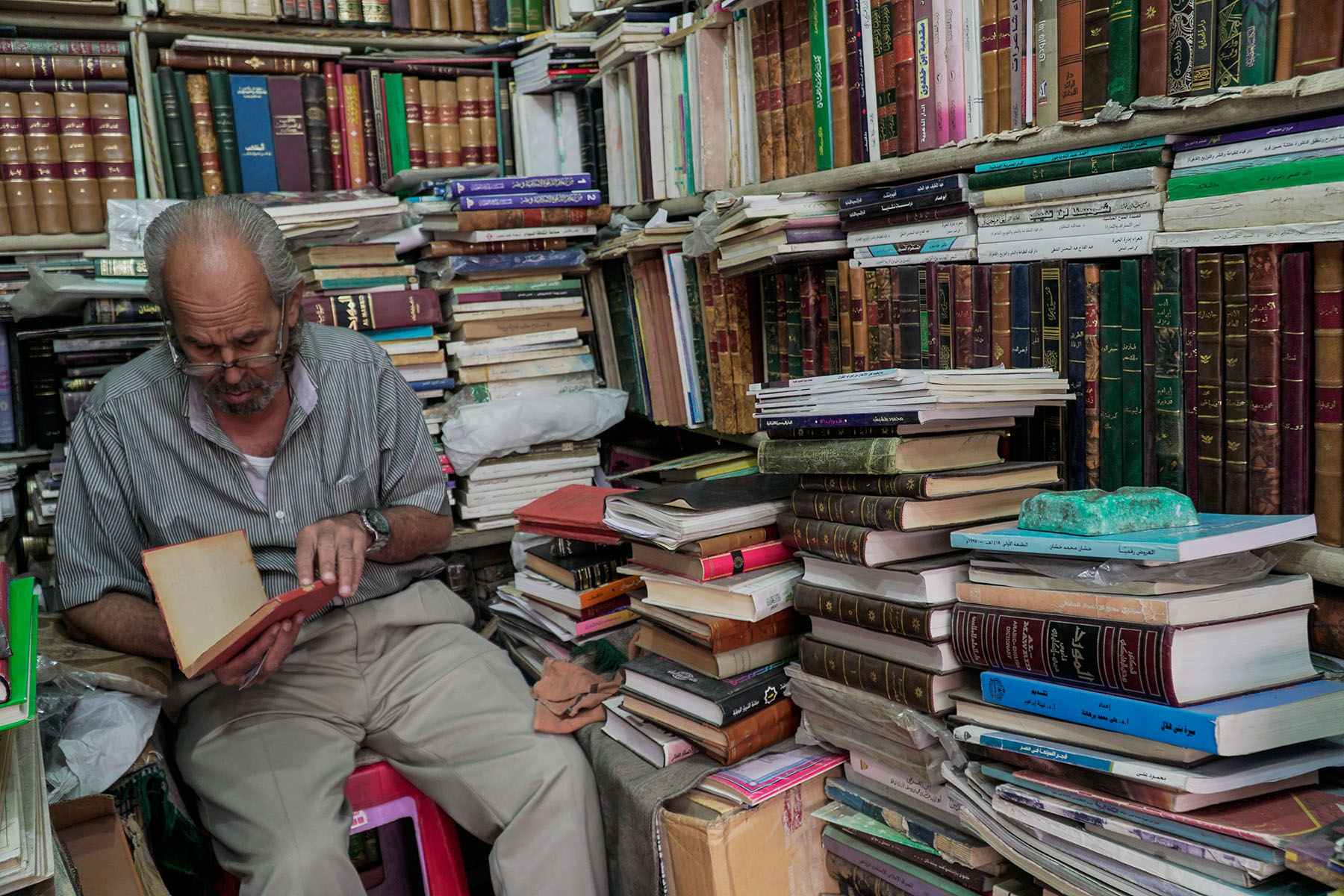
Un marché aux livres à Ezbekiya, au Caire, 2017 – là où les volumes qui s'effritent et les étals d'occasion font écho à la turbulence politique de la ville et à sa fragile emprise sur la mémoire (photo de Dana Smilie).

12 SEPTEMBER 2025 • By Jacob Wirtschafter

Select Other Languages French.

Le nouveau roman de Mansoura Ez-Eldin explore les conséquences de l'effacement de l'histoire. Mêlant éléments oniriques, souvenirs et philosophie oubliée, il raconte l'histoire d'un libraire du Caire hanté par le fantôme d'un penseur muʿtazilite. Dans une région où le souvenir revêt souvent une dimension politique, cet ouvrage insiste sur le fait que certaines histoires ne peuvent être passées sous silence.

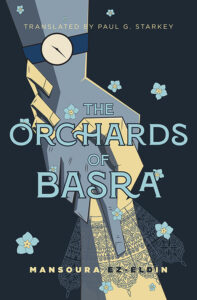
The Orchards of Basra un roman de Mansoura Ez-Eldin
Interlink Publishing 2025
ISBN 9781626499815

Le roman The Orchards of Basra (Les vergers de Bassorah) de Mansoura Ez-Eldin invite les lecteurs à découvrir un monde d’histoires oubliées, de sagesse perdue et de nostalgie intellectuelle. Il ne s’agit pas simplement d’un roman sur les conflits intellectuels ou politiques, c’est une exploration poignante de ce que nous perdons lorsque les forces de l’histoire et de la politique effacent notre passé. L’intrigue mêle deux mondes disparates : les troubles politiques du Caire et les vestiges intellectuels de Bassorah, autrefois épicentre florissant de la pensée rationnelle et de la raison dans le monde arabe.
Orchards of Basra
The Orchards of Basra est publié par Interlink.

Bassorah, telle qu’elle apparaît dans le roman, est à la fois un symbole et un décor. Pour Hisham Khattab, un libraire antiquaire basé au Caire, qui devient obsédé par Yazid ibn Abihi, un philosophe muʿtazilite effacé de l’histoire, Bassorah représente plus qu’une ville : c’est une oasis intellectuelle. Autrefois siège du rationalisme et des débats théologiques, l’importance historique de la ville a été ensevelie sous des couches de répression politique et religieuse. Pour Hisham, cependant, c’est un lieu d’évasion mentale, un mirage qui l’attire avec la promesse de quelque chose de perdu depuis longtemps. Mais à mesure que Hisham approfondit sa recherche de l’héritage de Yazid, la ville commence à changer dans son esprit, passant d’une image idéalisée de liberté intellectuelle à un rappel de tout ce qui a été perdu :

C’était le rêve d’une terre dont le nom même évoque l’encens et les embruns, dont les palmiers s’élèvent vers le ciel comme des lettres… Bassorah, mirage et archive, ses vergers brûlés et ressuscités par la mémoire.

La ville de Bassorah, telle que Hisham l’imagine, est à la fois lointaine et profondément liée à ses propres luttes intellectuelles et émotionnelles. Elle passe d’un lieu d’évasion à quelque chose de plus ambigu, reflétant les tensions entre un passé intellectuel autrefois florissant et les douloureuses réalités du présent, confluence décourageante de postes de contrôle, d’hommes armés et de rigidité idéologique. La quête de Yazid menée par Hisham devient non seulement une quête pour retrouver un philosophe perdu dans le temps, mais aussi pour récupérer la sagesse — hikma — qui était autrefois célébrée à Bassorah, mais qui a depuis été obscurcie par le pouvoir politique et religieux.


Dans une ville où même les espaces publics sont dominés par la surveillance et le contrôle, les livres constituent l’un des rares et seuls espaces où l’on peut encore trouver le véritable sens des choses.


En son cœur, le roman traite précisément de ce concept d’hikma, sagesse qui découle de la raison, de la moralité et du savoir. Les muʿtazilites, qui croyaient que la foi devait être guidée par la raison, incarnaient cette philosophie. Dans un monde qui privilégie souvent le dogme à la raison, l’hikma devient un champ de bataille. Ainsi, l’intérêt porté par le roman à Yazid et à sa tradition intellectuelle dépasse le cadre historique : il s’agit d’un commentaire direct sur les forces intellectuelles et politiques qui étouffent aujourd’hui la raison et la pensée indépendante.

Contrairement à Bassorah, Le Caire sert de cadre au présent de Hisham, c’est une ville débordante d’énergie mais constamment étouffée par le contrôle politique. La description du Caire par Ez-Eldin est elle-même oppressante et suffocante, ses rues sont remplies du bruit de la surveillance étatique et du théâtre politique. L’une des images les plus frappantes du roman capture ce sentiment de contrôle oppressant :

Les rues étaient vidées de leur sens par le cortège présidentiel. Les sirènes hurlaient comme des chiens errants… Bella se tenait sur le trottoir, encadrée par la lumière d’une vitrine de librairie, berçant Le Grand Livre d’Interprétation des Rêves comme s’il s’agissait d’un nouveau-né.

À ce moment-là, Bella, une femme qui entre brièvement dans la vie de Hisham, tient son livre comme s’il était sacré. Il devient, dans ce cas, un symbole de résistance. Dans une ville où même les espaces publics sont assombris par la surveillance et le contrôle, les livres constituent l’un des rares espaces qui permettent au sens véritable de s’exprimer. La vénération de Bella pour le texte ressemble presque à un acte de défi silencieux, un rappel du pouvoir de la connaissance dans une ville qui préfèrerait la réduire au silence.

La librairie, qui occupe une place centrale dans le roman, est un autre symbole : un lieu de préservation et de décadence. Tout autant qu’un espace où le savoir oublié est préservé, c’est aussi un lieu de déclin intellectuel, reflétant l’effacement des idées du passé. La librairie de Hisham regorge de textes, certains en ruine, d’autres incomplets, chacun représentant un morceau d’histoire perdu, un fragment de pensée :

L’air à l’intérieur était chargé d’odeur de moisi, les dos craquelés des volumes se dressaient comme des pierres tombales. Les manuscrits, dont beaucoup étaient dépourvus de couverture ou de titre, s’appuyaient les uns contre les autres dans un silence complice.

Cet espace, avec ses manuscrits vieillissants, devient une métaphore du déclin intellectuel qui s’est installé dans les sociétés où les idées dissidentes ont été systématiquement réprimées. Pour Hisham, la boutique est à la fois un sanctuaire et un rappel de ce déclin qui l’entoure. Sa recherche de Yazid est une quête pour récupérer ce qui a été réduit au silence, pour sauver le savoir de l’ombre de l’histoire.

La charge émotionnelle du roman réside également dans ses liens personnels. La relation de Hisham avec l’hérétique, un érudit marginalisé à la fois par l’État et les autorités religieuses, est au cœur de l’histoire. L’hérétique, qui représente le dissident intellectuel, devient le mentor de Hisham, mais aussi le miroir de ses propres luttes. Dans un moment particulièrement émouvant, il tient un manuscrit, non seulement avec soin, mais aussi avec tristesse :

Il tenait le manuscrit comme quelqu’un qui fait le deuil d’un ami, qui caresse son visage, doucement, avec incrédulité. « Ils ont essayé de l’effacer », murmura-t-il, et je ne savais pas s’il parlait de Yazid ibn Abihi ou de lui-même.

Ce passage résume le thème central du roman : la tentative de récupérer quelque chose qui a été effacé, non pas par une défaite intellectuelle, mais par la force politique. La tristesse silencieuse de l’hérétique reflète la tragédie plus large des idées et des mouvements intellectuels perdus dans le temps, leurs voix réduites au silence non pas par un débat rationnel, mais par le pouvoir du contrôle politique.

Au cœur du roman, la romance entre Hisham et Bella offre un contraste subtil mais puissant avec les thèmes intellectuels abordés. Leur baiser, décrit comme la révélation de quelque chose de caché sous la peau, reflète l’exploration du silence, de la mémoire et des non-dits dans le roman :

Lorsque nous nous sommes embrassés, j’ai eu l’impression de découvrir un palimpseste, quelque chose d’inscrit sous la peau. Elle souriait uniquement avec ses yeux, comme si les mots lui coûtaient trop cher.

Ce baiser n’est pas seulement un acte de passion, c’est aussi la révélation symbolique de quelque chose d’enfoui, quelque chose qui ne peut être facilement exprimé ou compris. Tout comme Hisham cherche à découvrir les idées de Yazid, ce baiser symbolise le désir ardent de ce qui est caché et obscurci par le temps et le pouvoir.

La relation de Hisham avec son père, autre figure d’absence et d’effacement, ajoute encore plus de profondeur à l’exploration de la perte dans le roman. La mort du père, marquée par une absence d’identité et un manque de reconnaissance, reflète l’effacement intellectuel qui imprègne le roman :

Mon père est mort comme il avait vécu : inaccessible, dans un autre pays, en envoyant des lettres que personne n’ouvrait. Quand ils l’ont enterré, ils ont dit qu’il n’avait pas de papiers. C’était la première vérité que lui et moi partagions.

Ce passage évoque la profonde solitude qui imprègne le roman, c’est non seulement l’absence du père de Hisham, mais aussi l’absence d’identité et d’héritage intellectuel qui résonne tout au long de l’histoire. La recherche de Yazid dans laquelle se lance Hisham, tout comme sa tentative de comprendre son père, est une quête de liens – tant intellectuels qu’émotionnels – qui lui ont été refusés par les forces du temps et de la politique.

En réalité, The Orchards of Basra traite de la politique de la mémoire. Les penseurs muʿtazilites, tels que Yazid, représentent plus qu’une tradition intellectuelle : ils représentent la lutte pour la raison et la liberté de penser face à l’oppression politique et religieuse. Le roman analyse la manière dont le muʿtazilisme, qui mettait autrefois l’accent sur la rationalité, la justice morale et la raison, a été progressivement réprimé. Comme il le montre clairement, l’effacement de Yazid et des muʿtazilites n’est pas seulement historique, c’est aussi une lutte actuelle :

L’hérétique affirmait que nos rationalistes n’avaient pas été vaincus par la théologie, mais par l’empire. Qu’un simple décret du calife pouvait réduire au silence une école de pensée pendant mille ans.

Cette phrase résume bien la tension intellectuelle et politique qui anime le roman : la liberté intellectuelle n’est pas seulement une question académique, mais aussi un combat politique. La suppression du savoir et l’effacement des idées sont des combats permanents, non seulement dans le contexte du monde arabe moderne, mais aussi en Occident, où beaucoup affirment que la démocratie est menacée par le fascisme.

La question du genre est également un élément essentiel de la réflexion du roman sur l’effacement. L’une des phrases les plus marquantes du roman est celle d’un personnage féminin qui décrit son corps comme une « note de bas de page », reflétant la manière dont les voix et les corps des femmes sont souvent effacés ou mal interprétés :

Elle disait que son corps était une note de bas de page, censurée, mal interprétée, toujours annotée par les hommes. Elle qualifiait son hijab de marque-page, et non de barrière, mais même cette explication semblait volée.

La réflexion de Bella sur son corps évoque les dimensions genrées de l’effacement, soulignant comment les identités des femmes, tout comme les traditions intellectuelles, sont souvent réécrites ou ignorées par les forces dominantes de la société.

L’écriture d’Ez-Eldin est riche et évocatrice. The Orchards of Basra n’est pas seulement une histoire de redécouverte intellectuelle, c’est une méditation sur la fragilité de la mémoire, le coût de la reconquête des connaissances perdues et la lutte pour la liberté intellectuelle. Le combat au centre du roman qu’est la reconquête de la philosophie muʿtazilite menacée d’effacement, est une métaphore de l’amnésie culturelle plus large que critique le roman. C’est une histoire qui parle de la lutte entreprise pour se souvenir, même lorsque les forces de l’histoire et du pouvoir jouent contre vous.

Le roman est un défi lancé à tous ceux qui ont déjà remis en question l’autorité, recherché des connaissances perdues ou lutté contre le silence intellectuel. C’est une œuvre d’art qui nous incite à reconsidérer les histoires qu’on nous a racontées et celles qu’on nous a appris à oublier.


Traduit de l’anglais par Marion Beauchamp-Levet 

Jacob Wirtschafter

Jacob Wirtschafter is a journalist based in Istanbul who writes on culture, politics, and the Middle East. He lived and reported from Cairo in the aftermath of the Arab Spring. His work has appeared in Moment Magazine and Monocle, as well as in outlets including The Washington Times and USA Today.

Join Our Community

TMR exists thanks to its readers and supporters. By sharing our stories and celebrating cultural pluralism, we aim to counter racism, xenophobia, and exclusion with knowledge, empathy, and artistic expression.

Learn more

RELATED

Theatre Reviews

Who Speaks for Iraq? A Review of Bengal Tiger at the Baghdad Zoo

23 JANUARY 2026 • By Nazli Tarzi
Who Speaks for Iraq? A Review of <em>Bengal Tiger at the Baghdad Zoo</em>
Book Reviews

Controlled Demolition: an Epistolary Review

16 JANUARY 2026 • By Lina Mounzer
<em>Controlled Demolition</em>: an Epistolary Review
Film Reviews

If You See Something—an Iraqi Film on Asylum

12 DECEMBER 2025 • By Alex Demyanenko
<em>If You See Something</em>—an Iraqi Film on Asylum
TMR 56 NOIR

Featured Artist Ala Younis: Ambiguous Architectures in Abu Dhabi

5 DECEMBER 2025 • By Arie Amaya-Akkermans
Featured Artist Ala Younis: Ambiguous Architectures in Abu Dhabi
Book Reviews

The Price of Freedom: Prison Writings from Post-Revolutionary Egypt

5 DECEMBER 2025 • By Rebecca Ruth Gould
The Price of Freedom: Prison Writings from Post-Revolutionary Egypt
Film

10 Noir Films from the Arab world, Iran, and Turkey

5 DECEMBER 2025 • By TMR
10 Noir Films from the Arab world, Iran, and Turkey
Book Reviews

Contemporary Kurdish Writers in the Diaspora

14 NOVEMBER 2025 • By Matt Broomfield
Contemporary Kurdish Writers in the Diaspora
Columns

How Much Do We Miss Umm Khulthum?

7 NOVEMBER 2025 • By Amal Ghandour
How Much Do We Miss Umm Khulthum?
Book Reviews

Myth and Migration in the Work of Dalia Al-Dujaili

6 NOVEMBER 2025 • By Noshin Bokth
Myth and Migration in the Work of Dalia Al-Dujaili
Music

Youssra El Hawary’s Taraddud — Sound as Survival

17 OCTOBER 2025 • By Salma Harland
Youssra El Hawary’s <em>Taraddud</em> — Sound as Survival
short story

Come See the Peacock

3 OCTOBER 2025 • By Aya Chalabee
Come See the Peacock
Book Reviews

Reading The Orchards of Basra

12 SEPTEMBER 2025 • By Jacob Wirtschafter
Reading <em>The Orchards of Basra</em>
Poetry

Mai Serhan on the poems in CAIRO: the undelivered letters

31 AUGUST 2025 • By Mai Serhan
Mai Serhan on the poems in <em>CAIRO: the undelivered letters</em>
Book Reviews

Egyptian Novelist Skewers British Bureaucracy with Black Humor

15 AUGUST 2025 • By Valeria Berghinz
Egyptian Novelist Skewers British Bureaucracy with Black Humor
Book Reviews

Without Women, the 2011 Revolution Might Have Never Been

8 AUGUST 2025 • By Jasmin Attia
Without Women, the 2011 Revolution Might Have Never Been
Book Reviews

Brutally Honest Exploration of Taboo Subjects in Empty Cages

8 AUGUST 2025 • By Ahmed Naji
Brutally Honest Exploration of Taboo Subjects in <em>Empty Cages</em>
Art

Architectural Biennale Confronts Brutality of Climate Change

1 AUGUST 2025 • By Iason Athanasiadis
Architectural Biennale Confronts Brutality of Climate Change
Advice

“Why Bother?” Dear Souseh, Existential Advice for Third World Problems

25 JULY 2025 • By Lina Mounzer
“Why Bother?” Dear Souseh, Existential Advice for Third World Problems
Book Reviews

Hope Without Hope: Rojava and Revolutionary Commitment

11 JULY 2025 • By Arie Amaya-Akkermans
Hope Without Hope: Rojava and Revolutionary Commitment
Essays

Architecture and Political Memory

4 JULY 2025 • By Meriam Othman
Architecture and Political Memory
Fiction

“Waving at the Sky”—a story by Nahla Karam

4 JULY 2025 • By Nahla Karam, Nada Faris
“Waving at the Sky”—a story by Nahla Karam
Essays

Israel is Today’s Sparta: Middle East Wars Viewed from Iraq

20 JUNE 2025 • By Hassan Abdulrazzak
Israel is Today’s Sparta: Middle East Wars Viewed from Iraq
Art & Photography

Cairo: A Downtown in Search of Lost Global City Status

13 JUNE 2025 • By Iason Athanasiadis
Cairo: A Downtown in Search of Lost Global City Status
Art

Return to Iraq: Sama Alshaibi’s ‘طرس’

2 MAY 2025 • By Yasmine Al Awa, Sama Alshaibi
Return to Iraq: Sama Alshaibi’s ‘طرس’
Book Reviews

Hassan Blasim’s Sololand features Three Novellas on Iraq

25 APRIL 2025 • By Hassan Abdulrazzak
Hassan Blasim’s <em>Sololand</em> features Three Novellas on Iraq
Book Reviews

Frankenstein in Baghdad: A Novel for Our Present Dystopia

21 MARCH 2025 • By Deborah Williams
<em>Frankenstein in Baghdad</em>: A Novel for Our Present Dystopia
short story

Baxtyar Hamasur: “A Strand of Hair Shaped Like the Letter J”

7 FEBRUARY 2025 • By Baxtyar Hamasur, Jiyar Homer, Hannah Fox
Baxtyar Hamasur: “A Strand of Hair Shaped Like the Letter J”
Book Reviews

Radwa Ashour’s Classic Granada Now in a New English Edition

17 JANUARY 2025 • By Guy Mannes-Abbott
Radwa Ashour’s Classic <em>Granada</em> Now in a New English Edition
Centerpiece

“Not a Picture, a Precise Kick”—metafiction

6 DECEMBER 2024 • By Mansoura Ez-Eldin, Fatima El-Kalay
“Not a Picture, a Precise Kick”—metafiction
Fiction

“The Small Clay Plate”—a Siwa folk tale

6 DECEMBER 2024 • By Bel Parker
“The Small Clay Plate”—a Siwa folk tale
Books

“Ghosts of Farsis” — a cyberpunk story

6 DECEMBER 2024 • By Hussein Fawzy, Rana Asfour
“Ghosts of Farsis” — a cyberpunk story
Books

The Time-Travels of the Man who Sold Pickles and Sweets — an Excerpt

6 DECEMBER 2024 • By Khairy Shalaby, Michael Cooperson
<em>The Time-Travels of the Man who Sold Pickles and Sweets</em> — an Excerpt
Essays

Liberation Cosplay: on the Day of the Imprisoned Writer

15 NOVEMBER 2024 • By Abdelrahman ElGendy
Liberation Cosplay: on the Day of the Imprisoned Writer
Editorial

Animal Truths

1 NOVEMBER 2024 • By Malu Halasa
Animal Truths
Art & Photography

Lin May Saeed

1 NOVEMBER 2024 • By Arie Amaya-Akkermans
Lin May Saeed
Art

Photographer Mohamed Mahdy—Artist at Work

27 SEPTEMBER 2024 • By Marianne Roux
Photographer Mohamed Mahdy—Artist at Work
Book Reviews

Tragic Consequences — On Western Meddling in the Middle East

13 SEPTEMBER 2024 • By Dina Rezk
Tragic Consequences — On Western Meddling in the Middle East
Centerpiece

Mohammad Hafez Ragab: Upsetting the Guards of Cairo

6 SEPTEMBER 2024 • By Maha Al Aswad, Rana Asfour
Mohammad Hafez Ragab: Upsetting the Guards of Cairo
Book Reviews

Egypt’s Gatekeeper — President or Despot?

6 SEPTEMBER 2024 • By Elias Feroz
Egypt’s Gatekeeper — President or Despot?
Fiction

“Dear Sniper” — a short story by Ali Ramthan Hussein

6 SEPTEMBER 2024 • By Ali Ramthan Hussein, Essam M. Al-Jassim
“Dear Sniper” — a short story by Ali Ramthan Hussein
Essays

Beyond Rubble — Cultural Heritage and Healing After Disaster

23 AUGUST 2024 • By Arie Amaya-Akkermans
Beyond Rubble — Cultural Heritage and Healing After Disaster
Essays

SPECIAL KURDISH ISSUE: From Kurmanji to English, an Introduction to Selim Temo

9 AUGUST 2024 • By Zêdan Xelef
SPECIAL KURDISH ISSUE: From Kurmanji to English, an Introduction to Selim Temo
Book Reviews

All That Rage: On Comma Press’ Egypt +100

2 AUGUST 2024 • By Alex Tan
All That Rage: On Comma Press’ <em>Egypt +100</em>
Art

Deena Mohamed

5 JULY 2024 • By Katie Logan
Deena Mohamed
Essays

The Butcher’s Assistant—a true story set in Alexandria

5 JULY 2024 • By Bel Parker
The Butcher’s Assistant—a true story set in Alexandria
Fiction

“Certainty”—a short story by Nora Nagi

5 JULY 2024 • By Nora Nagi, Nada Faris
“Certainty”—a short story by Nora Nagi
Fiction

“The Doll with the Purple Scarf”—flash fiction from Diaa Jubaili

5 JULY 2024 • By Diaa Jubaili, Chip Rossetti
“The Doll with the Purple Scarf”—flash fiction from Diaa Jubaili
Book Reviews

Upheavals of Beauty and Oppression in The Oud Player of Cairo

28 JUNE 2024 • By Tala Jarjour
Upheavals of Beauty and Oppression in <em>The Oud Player of Cairo</em>
Essays

Laughing for Change—Activist Theatre Tours Egypt

7 JUNE 2024 • By Nada Sabet
Laughing for Change—Activist Theatre Tours Egypt
Art

Demarcations of Identity: Rushdi Anwar

10 MAY 2024 • By Malu Halasa
Demarcations of Identity: Rushdi Anwar
Editorial

Why FORGETTING?

3 MAY 2024 • By Malu Halasa, Jordan Elgrably
Why FORGETTING?
Essays

Regarding the Photographs of Others—An Iraqi Journey Toward Remembering

3 MAY 2024 • By Nabil Salih
Regarding the Photographs of Others—An Iraqi Journey Toward Remembering
Essays

A Proustian Alexandria

3 MAY 2024 • By Mohamed Gohar
A Proustian Alexandria
Essays

The Elephant in the Box

3 MAY 2024 • By Asmaa Elgamal
The Elephant in the Box
Fiction

“Cotton Flower”—a short story by Areej Gamal

3 MAY 2024 • By Areej Gamal, Manal Shalaby
“Cotton Flower”—a short story by Areej Gamal
Book Reviews

Feurat Alani: Paris, Fallujah and Recovered Memory

1 APRIL 2024 • By Nada Ghosn, Rana Asfour
Feurat Alani: Paris, Fallujah and Recovered Memory
Books

Four Books to Revolutionize Your Thinking

3 MARCH 2024 • By Rana Asfour
Four Books to Revolutionize Your Thinking
Book Reviews

Rotten Evidence: Ahmed Naji Writes About Writing in Prison

12 FEBRUARY 2024 • By Lina Mounzer
<em>Rotten Evidence</em>: Ahmed Naji Writes About Writing in Prison
Essays

Tears of the Patriarch

4 FEBRUARY 2024 • By Dina Wahba
Tears of the Patriarch
Essays

Don’t Ask me to Reveal my Lover’s Name لا تسألوني ما اسمهُ حبيبي

4 FEBRUARY 2024 • By Mohammad Shawky Hassan
Don’t Ask me to Reveal my Lover’s Name لا تسألوني ما اسمهُ حبيبي
Poetry

Four Poems by Alaa Hassanien from The Love That Doubles Loneliness

4 FEBRUARY 2024 • By Alaa Hassanien, Salma Moustafa Khalil
Four Poems by Alaa Hassanien from <em>The Love That Doubles Loneliness</em>
Fiction

“The Waiting Bones”—an essay by Maryam Haidari

3 DECEMBER 2023 • By Maryam Haidari, Salar Abdoh
“The Waiting Bones”—an essay by Maryam Haidari
Featured excerpt

Almost Every Day—from the novel by Mohammed Abdelnabi

3 DECEMBER 2023 • By Mohammed Abdelnabi, Nada Faris
<em>Almost Every Day</em>—from the novel by Mohammed Abdelnabi
Essays

“My Father’s Last Meal”—a Kurdish Tale

28 NOVEMBER 2023 • By Dilan Qadir
“My Father’s Last Meal”—a Kurdish Tale
Book Reviews

First Kurdish Sci-Fi Collection is Rooted in the Past

28 NOVEMBER 2023 • By Matt Broomfield
First Kurdish Sci-Fi Collection is Rooted in the Past
Opinion

Gaza vs. Mosul from a Medical and Humanitarian Standpoint

27 NOVEMBER 2023 • By Ahmed Twaij
Gaza vs. Mosul from a Medical and Humanitarian Standpoint
Art & Photography

Middle Eastern Artists and Galleries at Frieze London

23 OCTOBER 2023 • By Sophie Kazan Makhlouf
Middle Eastern Artists and Galleries at Frieze London
Poetry

Home: New Arabic Poems in Translation

11 OCTOBER 2023 • By Sarah Coolidge
<em>Home</em>: New Arabic Poems in Translation
Books

Edward Said: Writing in the Service of Life 

9 OCTOBER 2023 • By Layla AlAmmar
Edward Said: Writing in the Service of Life 
Essays

The Vanishing of the Public Intellectual

1 OCTOBER 2023 • By Moustafa Bayoumi
The Vanishing of the Public Intellectual
Essays

Alaa Abd El-Fattah: Political Prisoner and Public Intellectual

1 OCTOBER 2023 • By Yasmine El Rashidi
Alaa Abd El-Fattah: Political Prisoner and Public Intellectual
Book Reviews

The Mystery of Enayat al-Zayyat in Iman Mersal’s Tour de Force

25 SEPTEMBER 2023 • By Selma Dabbagh
The Mystery of Enayat al-Zayyat in Iman Mersal’s Tour de Force
Fiction

“The Beggar King”—a short story by Michael Scott Moore

11 SEPTEMBER 2023 • By Michael Scott Moore
“The Beggar King”—a short story by Michael Scott Moore
Amazigh

World Picks: Festival Arabesques in Montpellier

4 SEPTEMBER 2023 • By TMR
World Picks: Festival Arabesques in Montpellier
Fiction

“A Dog in the Woods”—a short story by Malu Halasa

3 SEPTEMBER 2023 • By Malu Halasa
“A Dog in the Woods”—a short story by Malu Halasa
Essays

They and I, in Budapest

3 SEPTEMBER 2023 • By Nadine Yasser
They and I, in Budapest
Essays

A Day in the Life of a Saturday Market Trawler in Cairo

3 SEPTEMBER 2023 • By Karoline Kamel, Rana Asfour
A Day in the Life of a Saturday Market Trawler in Cairo
Book Reviews

On Museums and the Preservation of Cultural Heritage

21 AUGUST 2023 • By Arie Amaya-Akkermans
On Museums and the Preservation of Cultural Heritage
Opinion

The Middle East is Once Again West Asia

14 AUGUST 2023 • By Chas Freeman, Jr.
The Middle East is Once Again West Asia
Books

Books That Will Chase me in the Afterlife

14 AUGUST 2023 • By Mohammad Rabie
Books That Will Chase me in the Afterlife
Book Reviews

Can the Kurdish Women’s Movement Transform the Middle East?

31 JULY 2023 • By Matt Broomfield
Can the Kurdish Women’s Movement Transform the Middle East?
A Day in the Life

A Day in the Life: Cairo

24 JULY 2023 • By Sarah Eltantawi
A Day in the Life: Cairo
Film Reviews

A Deaf Boy’s Quest to Find His Voice in a Hearing World

24 JULY 2023 • By Nazli Tarzi
A Deaf Boy’s Quest to Find His Voice in a Hearing World
Book Reviews

Why Isn’t Ghaith Abdul-Ahad a Household Name?

10 JULY 2023 • By Iason Athanasiadis
Why Isn’t Ghaith Abdul-Ahad a Household Name?
Fiction

“The Long Walk of the Martyr”—fiction from Salar Abdoh

2 JULY 2023 • By Salar Abdoh
“The Long Walk of the Martyr”—fiction from Salar Abdoh
Cities

In Shahrazad’s Hammam—fiction by Ahmed Awadalla

2 JULY 2023 • By Ahmed Awadalla
In Shahrazad’s Hammam—fiction by Ahmed Awadalla
Fiction

Abortion Tale: On Our Ground

2 JULY 2023 • By Ghadeer Ahmed, Hala Kamal
Abortion Tale: On Our Ground
Fiction

Genesis and East Cairo—fiction from Shady Lewis Botros

2 JULY 2023 • By Shady Lewis Botros, Salma Moustafa Khalil
Genesis and East Cairo—fiction from Shady Lewis Botros
Book Reviews

Youssef Rakha Practices Literary Deception in Emissaries

19 JUNE 2023 • By Zein El-Amine
Youssef Rakha Practices Literary Deception in <em>Emissaries</em>
Book Reviews

Wounded Tigris: A River Journey Through the Cradle of Civilisation

12 JUNE 2023 • By Nazli Tarzi
<em>Wounded Tigris: A River Journey Through the Cradle of Civilisation</em>
TMR Interviews

The Markaz Review Interview—Leila Aboulela, Writing Sudan

29 MAY 2023 • By Yasmine Motawy
The Markaz Review Interview—Leila Aboulela, Writing Sudan
Books

Cruising the Abu Dhabi International Book Fair

29 MAY 2023 • By Rana Asfour
Cruising the Abu Dhabi International Book Fair
Islam

From Pawns to Global Powers: Middle East Nations Strike Back

29 MAY 2023 • By Chas Freeman, Jr.
From Pawns to Global Powers: Middle East Nations Strike Back
Book Reviews

The Yellow Birds Author Returns With Iraq War/Noir Mystery

29 MAY 2023 • By Hamilton Cain
<em>The Yellow Birds</em> Author Returns With Iraq War/Noir Mystery
Book Reviews

Radius Recounts a History of Sexual Assault in Tahrir Square

15 MAY 2023 • By Sally AlHaq
<em>Radius</em> Recounts a History of Sexual Assault in Tahrir Square
Book Reviews

A Debut Novel, Between Two Moons, is set in “Arabland” Brooklyn

15 MAY 2023 • By R.P. Finch
A Debut Novel, <em>Between Two Moons</em>, is set in “Arabland” Brooklyn
Essays

Working the News: a Short History of Al Jazeera’s First 30 Years

1 MAY 2023 • By Iason Athanasiadis
Working the News: a Short History of Al Jazeera’s First 30 Years
Cities

In Luxor, Egypt Projects Renewed Tourism Economy

10 APRIL 2023 • By William Carruthers
In Luxor, Egypt Projects Renewed Tourism Economy
Fiction

“The Stranger”—a Short Story by Hany Ali Said

2 APRIL 2023 • By Hany Ali Said, Ibrahim Fawzy
“The Stranger”—a Short Story by Hany Ali Said
Film

Hanging Gardens and the New Iraqi Cinema Scene

27 MARCH 2023 • By Laura Silvia Battaglia
<em>Hanging Gardens</em> and the New Iraqi Cinema Scene
Arabic

The Politics of Wishful Thinking: Deena Mohamed’s Shubeik Lubeik

13 MARCH 2023 • By Katie Logan
The Politics of Wishful Thinking: Deena Mohamed’s <em>Shubeik Lubeik</em>
Fiction

“Raise Your Head High”—new fiction from Leila Aboulela

5 MARCH 2023 • By Leila Aboulela
“Raise Your Head High”—new fiction from Leila Aboulela
Cities

The Odyssey That Forged a Stronger Athenian

5 MARCH 2023 • By Iason Athanasiadis
The Odyssey That Forged a Stronger Athenian
Cities

Coming of Age in a Revolution

5 MARCH 2023 • By Lushik Lotus Lee
Coming of Age in a Revolution
Poetry Markaz

Dunya Mikhail Knows Her Poetry Will Not Save You

5 FEBRUARY 2023 • By Dunya Mikhail
Dunya Mikhail Knows Her Poetry Will Not Save You
Columns

Tiba al-Ali: A Death Foretold on Social Media

5 FEBRUARY 2023 • By Malu Halasa
Tiba al-Ali: A Death Foretold on Social Media
Art & Photography

Dispossessed by Climate—Iraqi Refugees in Their Own Country

5 FEBRUARY 2023 • By Susan Schulman
Dispossessed by Climate—Iraqi Refugees in Their Own Country
Featured excerpt

Fiction: Inaam Kachachi’s The Dispersal, or Tashari

5 FEBRUARY 2023 • By Inaam Kachachi
Fiction: Inaam Kachachi’s <em>The Dispersal</em>, or <em>Tashari</em>
Fiction

“The Truck to Berlin”—Fiction from Hassan Blasim

5 FEBRUARY 2023 • By Hassan Blasim
“The Truck to Berlin”—Fiction from Hassan Blasim
Centerpiece

Iraqi Diaspora Playwrights Hassan Abdulrazzak & Jasmine Naziha Jones: Use Your Anger as Fuel

5 FEBRUARY 2023 • By Hassan Abdulrazzak, Jasmine Naziha Jones
Iraqi Diaspora Playwrights Hassan Abdulrazzak & Jasmine Naziha Jones: Use Your Anger as Fuel
Art

Lahib Jaddo—An Iraqi Artist in the Diaspora

5 FEBRUARY 2023 • By Mischa Geracoulis
Lahib Jaddo—An Iraqi Artist in the Diaspora
Interviews

Zahra Ali, Pioneer of Feminist Studies on Iraq

5 FEBRUARY 2023 • By Nada Ghosn
Zahra Ali, Pioneer of Feminist Studies on Iraq
Book Reviews

 The Watermelon Boys on Iraq, War, Colonization and Familial Love

5 FEBRUARY 2023 • By Rachel Campbell
<em> The Watermelon Boys</em> on Iraq, War, Colonization and Familial Love
Art

Art World Picks: Albraehe, Kerem Yavuz, Zeghidour, Amer & Tatah

12 DECEMBER 2022 • By TMR
Film

The Chess Moves of Tarik Saleh’s Spy Thriller, Boy From Heaven

15 NOVEMBER 2022 • By Karim Goury
The Chess Moves of Tarik Saleh’s Spy Thriller, <em>Boy From Heaven</em>
Essays

Stadiums, Ghosts & Games—Football’s International Intrigue

15 NOVEMBER 2022 • By Francisco Letelier
Stadiums, Ghosts & Games—Football’s International Intrigue
Essays

Nawal El-Saadawi, a Heroine in Prison

15 OCTOBER 2022 • By Ibrahim Fawzy
Nawal El-Saadawi, a Heroine in Prison
Book Reviews

Cassette Tapes Once Captured Egypt’s Popular Culture

10 OCTOBER 2022 • By Mariam Elnozahy
Cassette Tapes Once Captured Egypt’s Popular Culture
Book Reviews

The Egyptian Revolution and “The Republic of False Truths”

26 SEPTEMBER 2022 • By Aimee Dassa Kligman
The Egyptian Revolution and “The Republic of False Truths”
Centerpiece

“What Are You Doing in Berlin?”—a short story by Ahmed Awny

15 SEPTEMBER 2022 • By Ahmed Awny, Rana Asfour
“What Are You Doing in Berlin?”—a short story by Ahmed Awny
Fiction

“Another German”—a short story by Ahmed Awadalla

15 SEPTEMBER 2022 • By Ahmed Awadalla
“Another German”—a short story by Ahmed Awadalla
Art

My Berlin Triptych: On Museums and Restitution

15 SEPTEMBER 2022 • By Viola Shafik
My Berlin Triptych: On Museums and Restitution
Essays

Kairo Koshary, Berlin’s Egyptian Food Truck

15 SEPTEMBER 2022 • By Mohamed Radwan
Kairo Koshary, Berlin’s Egyptian Food Truck
Art

On Ali Yass’s Die Flut (The Flood)

15 SEPTEMBER 2022 • By Ala Younis
On Ali Yass’s Die Flut (The Flood)
Essays

Exile, Music, Hope & Nostalgia Among Berlin’s Arab Immigrants

15 SEPTEMBER 2022 • By Diana Abbani
Exile, Music, Hope & Nostalgia Among Berlin’s Arab Immigrants
Book Reviews

After Nine Years in Detention, an Iraqi is Finally Granted Asylum

22 AUGUST 2022 • By Rana Asfour
After Nine Years in Detention, an Iraqi is Finally Granted Asylum
Opinion

Attack on Salman Rushdie is Shocking Tip of the Iceberg

15 AUGUST 2022 • By Jordan Elgrably
Attack on Salman Rushdie is Shocking Tip of the Iceberg
Editorial

Editorial: Is the World Driving Us Mad?

15 JULY 2022 • By TMR
Editorial: Is the World Driving Us Mad?
Book Reviews

Poetry as a Form of Madness—Review of a Friendship

15 JULY 2022 • By Youssef Rakha
Poetry as a Form of Madness—Review of a Friendship
Book Reviews

Alaa Abd El-Fattah—the Revolutionary el-Sissi Fears Most?

11 JULY 2022 • By Fouad Mami
Alaa Abd El-Fattah—the Revolutionary el-Sissi Fears Most?
Book Reviews

Leaving One’s Country in Mai Al-Nakib’s “An Unlasting Home”

27 JUNE 2022 • By Rana Asfour
Leaving One’s Country in Mai Al-Nakib’s “An Unlasting Home”
Book Reviews

Traps and Shadows in Noor Naga’s Egypt Novel

20 JUNE 2022 • By Ahmed Naji
Traps and Shadows in Noor Naga’s Egypt Novel
Columns

World Refugee Day — What We Owe Each Other

20 JUNE 2022 • By Jordan Elgrably
World Refugee Day — What We Owe Each Other
Fiction

Mai Al-Nakib: “Naaseha’s Counsel”

15 JUNE 2022 • By Mai Al-Nakib
Mai Al-Nakib: “Naaseha’s Counsel”
Fiction

“Godshow.com”—a short story by Ahmed Naji

15 JUNE 2022 • By Ahmed Naji, Rana Asfour
“Godshow.com”—a short story by Ahmed Naji
Featured excerpt

Hawra Al-Nadawi: “Tuesday and the Green Movement”

15 JUNE 2022 • By Hawra Al-Nadawi, Alice Guthrie
Hawra Al-Nadawi: “Tuesday and the Green Movement”
Fiction

“The Suffering Mother of the Whole World”—a story by Amany Kamal Eldin

15 JUNE 2022 • By Amany Kamal Eldin
“The Suffering Mother of the Whole World”—a story by Amany Kamal Eldin
Film

Film Review: Maysoon Pachachi’s “Our River…Our Sky” in Iraq

30 MAY 2022 • By Nadje Al-Ali
Film Review: Maysoon Pachachi’s “Our River…Our Sky” in Iraq
Art

Baghdad Art Scene Springs to Life as Iraq Seeks Renewal

23 MAY 2022 • By Hadani Ditmars
Baghdad Art Scene Springs to Life as Iraq Seeks Renewal
Book Reviews

Fragmented Love in Alison Glick’s “The Other End of the Sea”

16 MAY 2022 • By Nora Lester Murad
Fragmented Love in Alison Glick’s “The Other End of the Sea”
Book Reviews

Siena and Her Art Soothe a Writer’s Grieving Soul

25 APRIL 2022 • By Rana Asfour
Siena and Her Art Soothe a Writer’s Grieving Soul
Book Reviews

Egyptian Comedic Novel Captures Dark Tale of Bedouin Migrants

18 APRIL 2022 • By Saliha Haddad
Egyptian Comedic Novel Captures Dark Tale of Bedouin Migrants
Interviews

Conversations on Food and Race with Andy Shallal

15 APRIL 2022 • By Jordan Elgrably
Conversations on Food and Race with Andy Shallal
Book Reviews

Abū Ḥamza’s Bread

15 APRIL 2022 • By Philip Grant
Abū Ḥamza’s Bread
Book Reviews

Mohamed Metwalli’s “A Song by the Aegean Sea” Reviewed

28 MARCH 2022 • By Sherine Elbanhawy
Mohamed Metwalli’s “A Song by the Aegean Sea” Reviewed
Art

Artist Hayv Kahraman’s “Gut Feelings” Exhibition Reviewed

28 MARCH 2022 • By Melissa Chemam
Artist Hayv Kahraman’s “Gut Feelings” Exhibition Reviewed
Book Reviews

Nadia Murad Speaks on Behalf of Women Heroes of War

7 MARCH 2022 • By Maryam Zar
Nadia Murad Speaks on Behalf of Women Heroes of War
Columns

“There’s Nothing Worse Than War”

24 FEBRUARY 2022 • By Jordan Elgrably
“There’s Nothing Worse Than War”
Essays

The Alexandrian: Life and Death in L.A.

15 FEBRUARY 2022 • By Noreen Moustafa
The Alexandrian: Life and Death in L.A.
Art

Silver Stories from Artist Micaela Amateau Amato

15 FEBRUARY 2022 • By Micaela Amateau Amato
Silver Stories from Artist Micaela Amateau Amato
Art

(G)Hosting the Past: On Michael Rakowitz’s “Reapparitions”

7 FEBRUARY 2022 • By Arie Amaya-Akkermans
(G)Hosting the Past: On Michael Rakowitz’s “Reapparitions”
Film

“The Translator” Brings the Syrian Dilemma to the Big Screen

7 FEBRUARY 2022 • By Jordan Elgrably
“The Translator” Brings the Syrian Dilemma to the Big Screen
Art & Photography

Mapping an Escape from Cairo’s Hyperreality through informal Instagram archives

24 JANUARY 2022 • By Yahia Dabbous
Mapping an Escape from Cairo’s Hyperreality through informal Instagram archives
Essays

Taming the Immigrant: Musings of a Writer in Exile

15 JANUARY 2022 • By Ahmed Naji, Rana Asfour
Taming the Immigrant: Musings of a Writer in Exile
Editorial

Refuge, or the Inherent Dignity of Every Human Being

15 JANUARY 2022 • By Jordan Elgrably
Refuge, or the Inherent Dignity of Every Human Being
Art & Photography

Children in Search of Refuge: a Photographic Essay

15 JANUARY 2022 • By Iason Athanasiadis
Children in Search of Refuge: a Photographic Essay
Columns

Getting to the Other Side: a Kurdish Migrant Story

15 JANUARY 2022 • By Iason Athanasiadis
Getting to the Other Side: a Kurdish Migrant Story
Film Reviews

“Europa,” Iraq’s Entry in the 94th annual Oscars, Frames Epic Refugee Struggle

15 JANUARY 2022 • By Thomas Dallal
“Europa,” Iraq’s Entry in the 94th annual Oscars, Frames Epic Refugee Struggle
Fiction

“Turkish Delights”—fiction from Omar Foda

15 DECEMBER 2021 • By Omar Foda
“Turkish Delights”—fiction from Omar Foda
Columns

An Arab and a Jew Walk into a Bar…

15 DECEMBER 2021 • By Hadani Ditmars
An Arab and a Jew Walk into a Bar…
Columns

Sudden Journeys: The Villa Salameh Bequest

29 NOVEMBER 2021 • By Jenine Abboushi
Sudden Journeys: The Villa Salameh Bequest
Book Reviews

The Vanishing: Are Arab Christians an Endangered Minority?

15 NOVEMBER 2021 • By Hadani Ditmars
The Vanishing: Are Arab Christians an Endangered Minority?
Essays

A Street in Marrakesh Revisited

8 NOVEMBER 2021 • By Deborah Kapchan
A Street in Marrakesh Revisited
Art

Guantánamo—The World’s Most Infamous Prison

15 OCTOBER 2021 • By Sarah Mirk
<em>Guantánamo</em>—The World’s Most Infamous Prison
Essays

Why Resistance Is Foundational to Kurdish Literature

15 SEPTEMBER 2021 • By Ava Homa
Why Resistance Is Foundational to Kurdish Literature
Featured excerpt

The Harrowing Life of Kurdish Freedom Activist Kobra Banehi

15 SEPTEMBER 2021 • By Kobra Banehi, Jordan Elgrably
The Harrowing Life of Kurdish Freedom Activist Kobra Banehi
Essays

The Complexity of Belonging: Reflections of a Female Copt

15 SEPTEMBER 2021 • By Nevine Abraham
The Complexity of Belonging: Reflections of a Female Copt
Latest Reviews

Shelf Life: The Irreverent Nadia Wassef

15 SEPTEMBER 2021 • By Sherine Elbanhawy
Shelf Life: The Irreverent Nadia Wassef
Weekly

Reading Egypt from the Outside In, Youssef Rakha’s “Baraa and Zaman”

24 AUGUST 2021 • By Sherifa Zuhur
Reading Egypt from the Outside In, Youssef Rakha’s “Baraa and Zaman”
Columns

Afghanistan Falls to the Taliban

16 AUGUST 2021 • By Hadani Ditmars
Afghanistan Falls to the Taliban
Editorial

Why COMIX? An Emerging Medium of Writing the Middle East and North Africa

15 AUGUST 2021 • By Aomar Boum
Why COMIX? An Emerging Medium of Writing the Middle East and North Africa
Latest Reviews

Rebellion Resurrected: The Will of Youth Against History

15 AUGUST 2021 • By George Jad Khoury
Rebellion Resurrected: The Will of Youth Against History
Latest Reviews

Women Comic Artists, from Afghanistan to Morocco

15 AUGUST 2021 • By Sherine Hamdy
Women Comic Artists, from Afghanistan to Morocco
Weekly

World Picks: August 2021

12 AUGUST 2021 • By Lawrence Joffe
World Picks: August 2021
Book Reviews

Egypt Dreams of Revolution, a Review of “Slipping”

8 AUGUST 2021 • By Farah Abdessamad
Egypt Dreams of Revolution, a Review of “Slipping”
Weekly

Summer of ‘21 Reading—Notes from the Editors

25 JULY 2021 • By TMR
Summer of ‘21 Reading—Notes from the Editors
Essays

Making a Film in Gaza

14 JULY 2021 • By Elana Golden
Making a Film in Gaza
Weekly

The Unfinished Presidency of Jimmy Carter

4 JULY 2021 • By Maryam Zar
The Unfinished Presidency of Jimmy Carter
Book Reviews

ISIS and the Absurdity of War in the Age of Twitter

4 JULY 2021 • By Jessica Proett
ISIS and the Absurdity of War in the Age of Twitter
Weekly

World Picks: July 2021

3 JULY 2021 • By TMR
World Picks: July 2021
Weekly

Arab Women and The Thousand and One Nights

30 MAY 2021 • By Malu Halasa
Arab Women and The Thousand and One Nights
Weekly

Midnight in Cairo: The Divas of Egypt’s Roaring 20s

16 MAY 2021 • By Selma Dabbagh
Midnight in Cairo: The Divas of Egypt’s Roaring 20s
Art & Photography

Walls, Graffiti and Youth Culture in Egypt, Libya & Tunisia

14 MAY 2021 • By Claudia Wiens
Walls, Graffiti and Youth Culture in Egypt, Libya & Tunisia
Weekly

In Search of Knowledge, Mazid Travels to Baghdad, Jerusalem, Cairo, Granada and Córdoba

2 MAY 2021 • By Eman Quotah
In Search of Knowledge, Mazid Travels to Baghdad, Jerusalem, Cairo, Granada and Córdoba
Columns

The Truth About Iraq: Memory, Trauma and the End of an Era

14 MARCH 2021 • By Hadani Ditmars
The Truth About Iraq: Memory, Trauma and the End of an Era
Essays

The Short, Happy Life of Shirley Thompson

14 MARCH 2021 • By Preeta Samarasan
The Short, Happy Life of Shirley Thompson
TMR 7 • Truth?

Truth or Dare? Reinterpreting Al-Harīrī’s Arab Rogue

14 MARCH 2021 • By Farah Abdessamad
Truth or Dare? Reinterpreting Al-Harīrī’s Arab Rogue
TMR 7 • Truth?

Poetry Against the State

14 MARCH 2021 • By Gil Anidjar
Poetry Against the State
TMR 6 • Revolutions

Revolution in Art, a review of “Reflections” at the British Museum

14 FEBRUARY 2021 • By Malu Halasa
Revolution in Art, a review of “Reflections” at the British Museum
TMR 6 • Revolutions

The Revolution Sees its Shadow 10 Years Later

14 FEBRUARY 2021 • By Mischa Geracoulis
The Revolution Sees its Shadow 10 Years Later
TMR 5 • Water

Watch Water Films & Donate to Water Organizations

16 JANUARY 2021 • By TMR
Watch Water Films & Donate to Water Organizations
TMR 5 • Water

Iraq and the Arab World on the Edge of the Abyss

14 JANUARY 2021 • By Osama Esber
Iraq and the Arab World on the Edge of the Abyss
Columns

On American Democracy and Empire, a Corrective

14 JANUARY 2021 • By I. Rida Mahmood
On American Democracy and Empire, a Corrective
Weekly

Cairo 1941: Excerpt from “A Land Like You”

27 DECEMBER 2020 • By TMR
Cairo 1941: Excerpt from “A Land Like You”
TMR 4 • Small & Indie Presses

Hassan Blasim’s “God 99”

14 DECEMBER 2020 • By Hassan Blasim
Hassan Blasim’s “God 99”
Weekly

Kuwait’s Alanoud Alsharekh, Feminist Groundbreaker

6 DECEMBER 2020 • By Nada Ghosn
Kuwait’s Alanoud Alsharekh, Feminist Groundbreaker
Book Reviews

Egypt—Abandoned but not Forgotten

4 OCTOBER 2020 • By Ella Shohat
Egypt—Abandoned but not Forgotten
World Picks

World Art, Music & Zoom Beat the Pandemic Blues

28 SEPTEMBER 2020 • By Malu Halasa
World Art, Music & Zoom Beat the Pandemic Blues
World Picks

Interlink Proposes 4 New Arab Novels

22 SEPTEMBER 2020 • By TMR
Interlink Proposes 4 New Arab Novels
Film Reviews

American Sniper—a Botched Film That Demonizes Iraqis

1 MARCH 2015 • By Jordan Elgrably
<em>American Sniper</em>—a Botched Film That Demonizes Iraqis

Leave a Comment

Your email address will not be published. Required fields are marked *

10 + 1 =

Scroll to Top