Life Under the Shadow of Missiles: the View From Iran

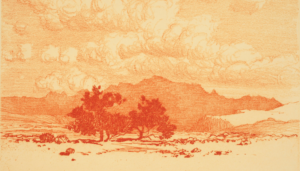
Iran Darroudi, "Border of Burning," oil on canvas 70x70cm, 1968 (courtesy of the artist, irandarroudi.com).

20 JUNE 2025 • By Amir

As Tehran and other Iranian cities experience intense bombing, some people have the means to flee, while those who don’t, sleep outside their high-rise apartment buildings out of fear. Despite the precariousness of the situation, in coffeehouses, grocery stores, and the Persian equivalent of Uber, people remain calm and, above all, realistic about their lives and the country’s prospects. Meanwhile, the Islamic Republic’s propaganda works overtime as our correspondant sits in a café with a failing internet connection and risks life and limb to send his thoughts and observations to TMR.

The situation is very frightening. Every sound, even a passing car or something falling, scares you.

In some Iranian cities, people are sleeping outside their apartments out of fear for their lives. You can see smoke rising from certain parts of the city. People who want to leave Tehran face long lines at gas stations, rationing, even fuel shortages (and this is in a country with nearly ten percent of the world’s oil supplies.) Tunnels leading from Tehran to the north of the country are now one-way only. With weak internet, navigation of the roads has become difficult.

Two hours ago at the time of writing when Trump said, “Leave Tehran,” most people here took his warning seriously, especially since Israel has promised a “surprise” by this weekend. In contrast, Islamic Republic state media continues to push propaganda claiming that “We are winning.” After the Israelis bombed the Iranian State Television building in Tehran late Monday night, the IRIB (Islamic Republic of Iran Broadcasting) presenter on air, reporter Sahar Emami, moved to a nearby studio and started broadcasting live after five minutes.

During these days of war, Tehran feels more crowded than ever — not because of the numbers of people attempting to leave, but because of the flood of news, rumors, anxiety, and unanswered questions. Missiles fall, yet there are no warning sirens, no citywide blackouts. In the 1980s, when the air raid siren blared, everything stopped. Schools would close; the radio issued alerts. We’d rush to underground shelters. But now, life goes on as if nothing has changed: Those who can’t afford to leave Tehran wait in line at the bakery, a motorbike weaves through pedestrians on the street, and everyone’s glued to their phones, watching the latest post by some influencer. 

On Monday, June 17, Israel struck 22 provinces across Iran — targeting nuclear facilities, Revolutionary Guard bases, even the homes of commanders. When I turned on the TV, it showed a building hit with surgical precision. An anchor on an Iranian satellite channel, broadcasting from abroad, exclaimed with excitement, “The commander who preached modesty lived in a luxury tower in uptown Tehran!” And I wondered — how can there be such a vast gap between slogans and reality?

That night I couldn’t sleep. I drank calming herbal tea, but it didn’t help. The night sky was lit with the trails of missiles. The sound of anti-aircraft guns echoed through the half-open window. Sometimes it was so far off, it resembled distant thunder. Other times, it was close enough to make the walls shake.

This morning, while waiting in line at the bakery, I overheard two men arguing. One of them, speaking loudly, said: “Thank God they finally got shaken up. How long are we supposed to suffer while they sleep on oil money?”

The second man replied: “Shaken up? Who got hit except the people? The dollar’s at 90,000 tomans, and my wife can’t even afford her anxiety meds. Yeah, they hit someone — but we’re the ones dying.” 

No one intervened. Everyone kept their heads down, as usual. Sometimes I think this collective indifference is a kind of self-defense. It’s as if Tehran has decided to play dumb in order to survive.


Exhibit of a bombed home in the Islamic Revolution and Holy Defense Museum in Tehran Iran Matyas Rehak S
Exhibit of a bombed home in the Islamic Revolution and Holy Defense Museum in Tehran, Iran (photo Matyas Rehak).


Bitter tea and a t
ricolor monarchy flag

In the afternoon, I visited Nasrin, an old friend. We sat on the carpet, sipping bitter tea without sugar. The satellite TV was on. The host was reading viewers’ messages aloud. One read: “Good job, Israel — take them out one by one.” Another said: “We hate the Islamic Republic, but Iran is still our country. This attack is a humiliation.”

Nasrin gave a bitter smile and said, “Strange, isn’t it? How easily people now celebrate death.” 

I replied: “We’re stuck somewhere in between … between hatred and belonging.”

She nodded. “Exactly.”

“Remember during the war with Iraq?” I added. “When the red sirens went off, we’d run to the basement. I can still hear that sound. My heart still races when I recall it. I’m actually glad there are no sirens now. I don’t want that fear to come back.”

Nasrin: “But those sirens, as terrifying as they were, meant someone was looking out for us. Now there’s nothing. Just silence.”

I thought about it. This new war feels like a silent shadow. You don’t have clear information. There’s no safe place. Everything is hidden beneath a layer of distrust.

After an hour, I got up to leave. I called a Snapp to get home. The driver was a young man with a patchy beard and sleepy eyes. Hanging from the rearview mirror was a small Iranian flag with the old lion and sun emblem. I felt compelled to ask, “Have you had that hanging there for long?”

He smiled. “My dad had it when I was a kid. I don’t know why, but it makes me feel nostalgic.” He was quiet for a moment, then added: “I didn’t sleep at all last night. I kept scrolling through the news, watching videos. Half of it is lies, and the other half is terrifying.”

“And what do you really think?”

He exhaled deeply. “Honestly? A part of me feels satisfied when I hear a Revolutionary Guard commander got blown up. But at the same time, I’m scared it might be my home next. What if a missile hits this very street we’re driving on?”

I looked at him through the mirror. He didn’t say much, but there was a storm inside him. I said: “It’s a kind of split feeling … like we don’t know whether to feel happy or sad.”

He gave a bitter laugh. “That’s life now. Everything’s halfway. No full hope, no full rage. Just a kind of limping along we’ve decided to call normal.”

We stopped at a red light. An old woman sat on the curb, holding a few matchboxes in her hands. No driver even glanced at her. The driver softly said: “In times like this, no one really sees anyone else. Everyone’s just waiting for something to end. But nothing ends. It just stretches on.”


In the cafés

The streets were quiet. Maybe because of the long lines at gas stations, fewer people were using their personal cars. Across the city, banners have gone up with slogans like “Harsh revenge” and “The blood of the martyrs will not go unanswered.” The government is trying to steer people toward vengeance. The atmosphere in the city hovers somewhere between mourning and violence. But behind all this propaganda, people are simply exhausted.

A political analyst on a Persian-language TV channel based in London said: “The Iranian people are tired. You can’t rally a nation to war when they’re this psychologically worn out. They don’t want war — they want a way out.”

The city’s cafés are still open. Life goes on with a kind of stubbornness that resembles pain. There’s a café near my house that I often go to in the evenings. Sometimes I think people go to cafés just to reassure themselves that everything hasn’t completely collapsed yet. Conversations are intense.

I see Mani — a sociology student with thick hair and a trimmed beard. His words are laced with irony: “We thought they were spending all the money on drones, missiles, and air defense, but now it turns out the Iranian sky is full of holes — like Swiss cheese. The most high-ranking security officials couldn’t protect themselves. How can I not be worried about the safety of my own family? Just think how miserable we must be — to feel a kind of joy that another country has attacked us. That’s how much injustice we’ve endured. If our leaders had any real compassion for the people or for this ancient land, we wouldn’t feel this way.”

Another adds: “All the cities have become unsafe. We don’t know where to go.”

A girl who recently came from Italy says anxiously: “I was planning to go back, but there are no flights. I’m even scared to drive to Turkey or Armenia. What if a missile hits on the way? What if that’s how it ends?”

“Mehdi” — a pseudonym for a young man I met at the café — says: “My guess is this war will last one to two weeks. During that time, Iran has to set Israel on fire. Iranians are used to hardship, but Israelis aren’t. They can’t take it. We have to fight smart, get help from Hamas and Yemen. If a few countries join the war against Israel, the rest of the world will worry about their own interests and shut it down. Saudi Arabia shouldn’t get too excited, either — it might get burned too.”

He goes on: “This war is costly because of the distance between the two countries. Israel only seems this precise because of U.S. military support. On its own, it’s nothing — just an American lapdog. We’re fighting the U.S., not Israel.”

“Nahid,” a woman in her 60s sitting nearby, says with a lump in her throat: “I’m not into politics. But I hate politics. I don’t understand why I have to be this scared. I hear noises at night, but I don’t get up. If I’m going to die, I’d rather be gone in an instant — not left disabled and dying slowly.”

In the metro, more than masks, it’s worry you see on people’s faces. Everyone’s on edge. Each phone call or message brings a jolt of fear. A woman stood beside me, wearing a gray chador and holding a baby. The baby was asleep, but the corner of his lip twitched with fear. I pulled a small chocolate from my pocket and offered it with a smile.

She didn’t look at me, just whispered: “He’s asleep. If he wakes up, he’ll start crying again. Last night, he heard an explosion and jolted awake.”

The silence inside the train was heavy. Only the sound of wheels over rails.

Someone said quietly: “Israel said if their civilians are killed, they’ll burn Tehran to the ground.”

No one responded.


Exhibit of a bombed classroom in the Islamic Revolution and Holy Defense Museum in Tehran, Iran (photo Matyas Rehak).


Grocery shopping

At the corner grocery store, the elderly shopkeeper stares at a muted television in the corner. On screen: fire and smoke, a map of Iran, blinking red dots. His name is Rahmat — a man who used to greet every customer with warmth. But now, his voice is quiet, his tone subdued. “May God have mercy,” he says. “I lived through the Iran-Iraq war … back then too, everyone thought it would be over in a week.” 

He’s one of the first people I’ve seen lately who looks truly afraid. His generation knew war firsthand: mortars, sirens, food rations — those memories live in their bones.

The shops are still stocked, but people are starting to wonder if they should begin storing rice, bottled water, canned food — just in case. From the loudspeaker of the neighborhood mosque, revolutionary chants and old war anthems blare on loop. The sounds are familiar — pulling the city back into the 1980s, to the days when Ahangaran’s trembling yet defiant voice sent young men to the frontlines.

It’s as if the city is lost in a fog of the past.

But something feels different now.

This is not a classic war. There are no trenches, no tanks, no soldiers with keffiyehs soaked in blood and dust. Yet, they still call it war — but the commands are typed from behind screens. Drones have replaced soldiers. And missiles arrive without warning — quieter, colder, more sudden than ever.

Tonight I came home earlier than usual. My mother said she heard the sound of anti-aircraft guns. State TV plays nothing but heroic clips — images of recent martyrs, military anthems, and speeches calling people to resistance and war. In contrast, BBC Persian, Iran International, and other foreign outlets run nonstop analyses.

Tired anchors. Endless experts. But none of them can say for sure what will happen tomorrow.

A few nights ago, the Supreme Leader forcefully defended uranium enrichment. He said, “It’s like a country having oil but being banned from building a refinery. Enrichment is our right.” 

The analogy — simple but sharp — stuck with me. Despite all my criticisms of the power structure in Iran, in that moment, it felt like he had a point. The right to knowledge. The right to stand on your own feet. But that night, war still hadn’t arrived.

Just days ago, a friend I’ve known for years said, “Iran must not bow to the U.S. or Israel, even if the whole region goes up in flames.” Now, he’s gone quiet — just staring at his phone and asking, “How long will this go on?”

I have no answer. No one does.

Coming from someone in his 50s who’s seen violence up close, those slogans felt strange. It’s easy to speak in absolutes from behind a safe desk.

My sister calls. She says, “I left a bag by the door. The house deed, some money, a few photos. If something happens, maybe I’ll need it to prove I lived here … Oh, and if a missile hits, how am I supposed to run out in my pajamas?”

I don’t know whether to laugh or cry. Even in the heart of disaster, people still worry about their dignity. I sat in front of my laptop. My fingers were numb. Outside, the noise had vanished, but this silence was worse — the kind that reminds you of the quiet just before an earthquake.

I started writing: The café was still half-empty. A few people spoke quietly about last night’s news. One said, “Drones came from the west, the air defense was late.” Another replied, “They spent so much on Iraq, sent pilgrims to Karbala, called it a brother country — but now Iraq’s airspace is open to Israeli planes.”

I said nothing. Just listened. Like someone recording details that might matter later. The waiter took orders. The aroma of coffee permeated the air, alongside the nonstop news from last night until now.

The city was the same city but its sounds were now woven with a hidden anxiety. War seemed to have crept into the fabric of everyday life, without shouting out its presence.

Two middle-aged men at the next table started talking. One was named Mostafa, a retired bank employee. The other, Nader, said he was a retired political science professor from the University of Tehran. Their conversation was more serious than usual.

Nader, calm but sharp-eyed, began to analyze: “Look, these Israeli attacks clearly show that the Islamic Republic’s intelligence and security have been hit hard. People are only asking one thing now: Where is all that money they said they spent on defense? How could Israeli attacks be this precise?”

He continued, “Right now, you can see three distinct groups among the people. One group still loyal to the regime’s ideology, thinking this is a historic victory over Israel. Another group, mostly active on social media, exposes the regime’s intelligence failures and talks about the security collapse.

“The third group, maybe the largest, just wants to survive — trying to get gas, buy food, leave the city, or find a way to keep their family safe. They’re not analysts or political; they’re just tired and looking for a breath of fresh air.”

Mostafa nodded and sighed, “Yeah. They’re tired. And this weariness isn’t something TV slogans can fix. People aren’t stirred up by ads or rallies anymore.”

Nader went on, “Most people hate the war. They’re under heavy economic, social, and political pressure and don’t want to pay the price of the regime’s regional or ideological politics.”

Many who oppose the policies of the Islamic Republic are by no means supporters of Israel — they condemn Israel for its occupation policies and the killing of civilians in Gaza. That old question stirs again in my mind: Are we supposed to pay such a high price just for our “legitimate rights”? And ordinary people — those who have no access to power, no say in decisions — what are they really paying for?

I don’t know why I’m writing this. Maybe because if I don’t, I feel like I’ll disappear. Not just from the map, but from my own mind. The war is still here, even if we’ve hidden it behind weather reports and TV ads. Even if there’s no siren.

My hand paused on the mouse. I thought maybe tomorrow there won’t be electricity. Or the internet will be cut. Or this text might never reach anywhere.


The Persian psyche

Yesterday evening, on social media, many were posting pictures of their homes: clean, quiet living rooms lit by the soft afternoon light. Beneath the images, they wrote captions like: “I hope you stay safe. I hope we see you again.”

Leaving home wasn’t just a logical decision — it was an emotional one. People wrote about what it meant to walk away from a space filled with memories: from books left on shelves, from houseplants watered one last time that morning, from chairs that might never be sat in again.

But not everyone could leave. Some had no choice. One person wrote on social media: “My father just had open-heart surgery and was recently discharged from the hospital. Only my mother is caring for him, and even we can’t get close to him because he needs to be kept in a sterile environment. How could we possibly leave Tehran in this condition?”

The intensity of the bombing in Tehran and other cities has become terrifying. But even during attacks, the city lights stay on. The government has told people not to leave the capital. Officials announced that metro stations and mosques remain open 24/7, so people can shelter there overnight. But not every neighborhood has a metro station nearby. Tehran’s metro system isn’t as extensive or accessible as it is in other larger cities. In many areas, the closest station might be several kilometers away.

Now, most people spend their nights glued to the television, watching the news, trying to stay updated, listening for the next explosion. And when the bombs hit, no one knows where to run. In the high-rise apartment buildings of Tehran, stairwells are narrow, windows are everywhere, and often there are no basements. All you can do is stand in the middle of your home — or look out the window, staring up at the sky, hoping for a sign, but seeing none. 

Amir

Amir is a writer and artist in Tehran.

Join Our Community

TMR exists thanks to its readers and supporters. By sharing our stories and celebrating cultural pluralism, we aim to counter racism, xenophobia, and exclusion with knowledge, empathy, and artistic expression.

Learn more

RELATED

Fiction

“Tahmina”—a story from Iran

5 DECEMBER 2025 • By Abdollah Nazari
“Tahmina”—a story from Iran
Film Reviews

It Was Just an Accident: A Haunting Tale of Revenge

5 DECEMBER 2025 • By Alex Demyanenko
<em>It Was Just an Accident</em>: A Haunting Tale of Revenge
short story

“Tuesday”—a story from Palestine

5 DECEMBER 2025 • By Majd Aburrub
“Tuesday”—a story from Palestine
Film

10 Noir Films from the Arab world, Iran, and Turkey

5 DECEMBER 2025 • By TMR
10 Noir Films from the Arab world, Iran, and Turkey
Film Reviews

The Woman Who Wouldn’t Break—Cutting Through Rocks’ Sara Shahverdi

28 NOVEMBER 2025 • By Alex Demyanenko
The Woman Who Wouldn’t Break—<em>Cutting Through Rocks’</em> Sara Shahverdi
Book Reviews

Contemporary Kurdish Writers in the Diaspora

14 NOVEMBER 2025 • By Matt Broomfield
Contemporary Kurdish Writers in the Diaspora
Columns

How Much Do We Miss Umm Khulthum?

7 NOVEMBER 2025 • By Amal Ghandour
How Much Do We Miss Umm Khulthum?
Centerpiece

The Grammar of Power: On Journalism, Grief, and the Stories That Break Us

7 NOVEMBER 2025 • By Adam Makary
The Grammar of Power: On Journalism, Grief, and the Stories That Break Us
Essays

Lament For My Dear Cousin and Friend in Tulkarm

3 OCTOBER 2025 • By Thoth
Lament For My Dear Cousin and Friend in Tulkarm
Uncategorized

Reading the Landscape: Cultural Clues and Regime Messages in Iran

12 SEPTEMBER 2025 • By Raha Nik-Andish
Reading the Landscape: Cultural Clues and Regime Messages in Iran
Essays

Remaining in Light: Iranians Search for Solace and Well-Being

5 SEPTEMBER 2025 • By Malu Halasa
Remaining in Light: Iranians Search for Solace and Well-Being
Book Reviews

Hope Without Hope: Rojava and Revolutionary Commitment

11 JULY 2025 • By Arie Amaya-Akkermans
Hope Without Hope: Rojava and Revolutionary Commitment
Essays

Unwritten Stories from Palestine

4 JULY 2025 • By Thoth
Unwritten Stories from Palestine
Columns

The Bullet, the Missile, and the Woman In-Between

4 JULY 2025 • By Alireza Iranmehr, Salar Abdoh
The Bullet, the Missile, and the Woman In-Between
Essays

Life Under the Shadow of Missiles: the View From Iran

20 JUNE 2025 • By Amir
Life Under the Shadow of Missiles: the View From Iran
Book Reviews

The Evin Prison Bakers’ Club — Review

6 JUNE 2025 • By Hannah Kaviani
The Evin Prison Bakers’ Club — Review
Editorial

For Our 50th Issue, Writers Reflect on Going Home

2 MAY 2025 • By TMR
For Our 50th Issue, Writers Reflect on Going Home
Art

Neither Here Nor There

2 MAY 2025 • By Myriam Cohenca
Neither Here Nor There
Essays

Leaving Abdoh, Finding Chamran

2 MAY 2025 • By Salar Abdoh
Leaving Abdoh, Finding Chamran
Essays

Looking for a Job, Living and Dying in Iran: The Logistics of Going Back

2 MAY 2025 • By Raha Nik-Andish
Looking for a Job, Living and Dying in Iran: The Logistics of Going Back
Film

Gaza, Sudan, Israel/Palestine Documentaries Show in Thessaloniki

28 MARCH 2025 • By Iason Athanasiadis
Gaza, Sudan, Israel/Palestine Documentaries Show in Thessaloniki
Centerpiece

Love and Resistance in Online Persian Dating Shows

7 MARCH 2025 • By Malu Halasa
Love and Resistance in Online Persian Dating Shows
Fiction

Manifesto of Love & Revolution

7 MARCH 2025 • By Iskandar Abdalla
Manifesto of Love & Revolution
Art & Photography

Mostafa Nodeh: Featured Artist Interview

7 FEBRUARY 2025 • By Mostafa Nodeh
Mostafa Nodeh: Featured Artist Interview
Book Reviews

Memories of Palestine through Contemporary Media

7 FEBRUARY 2025 • By Malu Halasa
Memories of Palestine through Contemporary Media
Film Reviews

My Favorite Cake, Iranian Cinema’s Bittersweet Ode to Love

17 JANUARY 2025 • By Karim Goury
<em>My Favorite Cake</em>, Iranian Cinema’s Bittersweet Ode to Love
Book Reviews

In Killing Gilda Yahya Gharagozlou Tells an Intriguing Iranian Tale

10 JANUARY 2025 • By Azadeh Moaveni
In <em>Killing Gilda</em> Yahya Gharagozlou Tells an Intriguing Iranian Tale
Essays

A Fragile Ceasefire as Lebanon Survives, Traumatized

29 NOVEMBER 2024 • By Tarek Abi Samra, Lina Mounzer
A Fragile Ceasefire as Lebanon Survives, Traumatized
Essays

A Jewish Meditation on the Palestinian Genocide

15 NOVEMBER 2024 • By Sheryl Ono
A Jewish Meditation on the Palestinian Genocide
Editorial

The Editor’s Letter Following the US 2024 Presidential Election

8 NOVEMBER 2024 • By Jordan Elgrably
The Editor’s Letter Following the US 2024 Presidential Election
Essays

The Felines that Leave Us, and the Humans that Left

1 NOVEMBER 2024 • By Farnaz Haeri, Salar Abdoh
The Felines that Leave Us, and the Humans that Left
Art & Photography

The Palestinian Gazelle

1 NOVEMBER 2024 • By Manal Mahamid
The Palestinian Gazelle
Opinion

Should a Climate-Destroying Dictatorship Host a Climate-Saving Conference?

25 OCTOBER 2024 • By Lucine Kasbarian
Should a Climate-Destroying Dictatorship Host a Climate-Saving Conference?
Book Reviews

The Walls Have Eyes—Surveillance in the Algorithm Age

18 OCTOBER 2024 • By Iason Athanasiadis
<em>The Walls Have Eyes</em>—Surveillance in the Algorithm Age
Film

Freedom is a Combat Sport: On Tatami

11 OCTOBER 2024 • By Karim Goury
Freedom is a Combat Sport: On <em>Tatami</em>
Editorial

A Year of War Without End

4 OCTOBER 2024 • By Lina Mounzer
A Year of War Without End
Book Reviews

Tragic Consequences — On Western Meddling in the Middle East

13 SEPTEMBER 2024 • By Dina Rezk
Tragic Consequences — On Western Meddling in the Middle East
Essays

Meta’s Community Standards as a Tool of Digital Settler Colonialism

6 SEPTEMBER 2024 • By Omar Zahzah
Meta’s Community Standards as a Tool of Digital Settler Colonialism
Book Reviews

All That Rage: On Comma Press’ Egypt +100

2 AUGUST 2024 • By Alex Tan
All That Rage: On Comma Press’ <em>Egypt +100</em>
Book Reviews

Israel’s Black Panthers by Asaf Elia-Shalev—a Review

19 JULY 2024 • By Ilan Benattar
<em>Israel’s Black Panthers</em> by Asaf Elia-Shalev—a Review
Poetry

Hafez, Iran’s Revered Poet, trans. Erfan Mojib & Gary Gach

15 JULY 2024 • By Erfan Mojib, Gary Gach
Hafez, Iran’s Revered Poet, trans. Erfan Mojib & Gary Gach
Fiction

“Firefly”—a short story by Alireza Iranmehr

5 JULY 2024 • By Alireza Iranmehr, Salar Abdoh
“Firefly”—a short story by Alireza Iranmehr
Books

The Mourning Diaries of Atash Shakarami

5 JULY 2024 • By Poupeh Missaghi
The Mourning Diaries of Atash Shakarami
Poetry

Three Poems by Somaia Ramish

12 JUNE 2024 • By Somaia Ramish
Three Poems by Somaia Ramish
Centerpiece

Dare Not Speak—a One-Act Play

7 JUNE 2024 • By Hassan Abdulrazzak
<em>Dare Not Speak</em>—a One-Act Play
Interviews

Nothing is Normal, Nothing Is What it Seems (Underground Theatre in Iran After the Woman, Life, Freedom Movement)

7 JUNE 2024 • By Mehrnaz Daneshvar, Salar Abdoh
Nothing is Normal, Nothing Is What it Seems (Underground Theatre in Iran After the Woman, Life, Freedom Movement)
Essays

The Elephant in the Box

3 MAY 2024 • By Asmaa Elgamal
The Elephant in the Box
Opinion

Equating Critique of Israel with Antisemitism, US Academics are Being Silenced

12 APRIL 2024 • By Maura Finkelstein
Equating Critique of Israel with Antisemitism, US Academics are Being Silenced
Featured Artist

Bani Khoshnoudi: Featured Artist for PARIS

1 APRIL 2024 • By TMR, Jordan Elgrably
Bani Khoshnoudi: Featured Artist for PARIS
Art & Photography

Will Artists Against Genocide Boycott the Venice Biennale?

18 MARCH 2024 • By Hadani Ditmars
Will Artists Against Genocide Boycott the Venice Biennale?
Essays

The Time of Monsters

3 MARCH 2024 • By Layla AlAmmar
The Time of Monsters
Essays

Israel’s Environmental and Economic Warfare on Lebanon

3 MARCH 2024 • By Michelle Eid
Israel’s Environmental and Economic Warfare on Lebanon
Columns

Genocide: “That bell can’t be unrung. That thought can’t be unthunk.”

3 MARCH 2024 • By Amal Ghandour
Genocide: “That bell can’t be unrung. That thought can’t be unthunk.”
Book Reviews

Eyeliner: A Cultural History by Zahra Hankir—A Review

19 FEBRUARY 2024 • By Nazli Tarzi
<em>Eyeliner: A Cultural History</em> by Zahra Hankir—A Review
short story

“Water”—a short story by Salar Abdoh

4 FEBRUARY 2024 • By Salar Abdoh
“Water”—a short story by Salar Abdoh
Essays

A Treatise on Love

4 FEBRUARY 2024 • By Maryam Haidari, Salar Abdoh
A Treatise on Love
Featured article

Israel-Palestine: Peace Under Occupation?

29 JANUARY 2024 • By Laëtitia Soula
Israel-Palestine: Peace Under Occupation?
Books

Illuminated Reading for 2024: Our Anticipated Titles

22 JANUARY 2024 • By TMR
Illuminated Reading for 2024: Our Anticipated Titles
Book Reviews

An Iranian Novelist Seeks the Truth About a Plane Crash

15 JANUARY 2024 • By Sepideh Farkhondeh
An Iranian Novelist Seeks the Truth About a Plane Crash
Books

Inside Hamas: From Resistance to Regime

25 DECEMBER 2023 • By Paola Caridi
Inside <em>Hamas: From Resistance to Regime</em>
Columns

Messages From Gaza Now

11 DECEMBER 2023 • By Hossam Madhoun
Messages From Gaza Now
Film

Religious Misogyny Personified in Ali Abbasi’s Holy Spider

11 DECEMBER 2023 • By Bavand Karim
Religious Misogyny Personified in Ali Abbasi’s <em>Holy Spider</em>
TMR 37 • Endings & Beginnings

“The Summer They Heard Music”—a short story by MK Harb

3 DECEMBER 2023 • By MK Harb
“The Summer They Heard Music”—a short story by MK Harb
Fiction

“The Waiting Bones”—an essay by Maryam Haidari

3 DECEMBER 2023 • By Maryam Haidari, Salar Abdoh
“The Waiting Bones”—an essay by Maryam Haidari
Fiction

“I, Hanan”—a Gazan tale of survival by Joumana Haddad

3 DECEMBER 2023 • By Joumana Haddad
“I, Hanan”—a Gazan tale of survival by Joumana Haddad
Essays

Days of Oranges—Libya’s Thawra

3 DECEMBER 2023 • By Yesmine Abida
Days of Oranges—Libya’s Thawra
Book Reviews

First Kurdish Sci-Fi Collection is Rooted in the Past

28 NOVEMBER 2023 • By Matt Broomfield
First Kurdish Sci-Fi Collection is Rooted in the Past
Opinion

Gaza vs. Mosul from a Medical and Humanitarian Standpoint

27 NOVEMBER 2023 • By Ahmed Twaij
Gaza vs. Mosul from a Medical and Humanitarian Standpoint
Art & Photography

Palestinian Artists & Anti-War Supporters of Gaza Cancelled

27 NOVEMBER 2023 • By Nada Ghosn
Palestinian Artists & Anti-War Supporters of Gaza Cancelled
Fiction

Bahar: 22 years in the Life of a Compulsory Hijabi in Teheran

20 NOVEMBER 2023 • By Joumana Haddad
Bahar: 22 years in the Life of a Compulsory Hijabi in Teheran
Art & Photography

Iranian Women Photographers: Life, Freedom, Music, Art & Hair

20 NOVEMBER 2023 • By Malu Halasa
Iranian Women Photographers: Life, Freedom, Music, Art & Hair
Book Reviews

The Fiction of Palestine’s Ghassan Zaqtan

13 NOVEMBER 2023 • By Cory Oldweiler
The Fiction of Palestine’s Ghassan Zaqtan
Opinion

Beautiful October 7th Art Belies the Horrors of War

13 NOVEMBER 2023 • By Mark LeVine
Beautiful October 7th Art Belies the Horrors of War
Islam

October 7 and the First Days of the War

23 OCTOBER 2023 • By Robin Yassin-Kassab
October 7 and the First Days of the War
Editorial

Palestine and the Unspeakable

16 OCTOBER 2023 • By Lina Mounzer
Palestine and the Unspeakable
Books

The Contemporary Literary Scene in Iran

1 OCTOBER 2023 • By Salar Abdoh
The Contemporary Literary Scene in Iran
Book Reviews

Reza Aslan’s An American Martyr in Persia Argues for US-Iranian Friendship

1 OCTOBER 2023 • By Dalia Sofer
Reza Aslan’s <em>An American Martyr in Persia</em> Argues for US-Iranian Friendship
Art

Special World Picks Sept 15-26 on TMR’s Third Anniversary

14 SEPTEMBER 2023 • By TMR
Special World Picks Sept 15-26 on TMR’s Third Anniversary
Essays

A Day in the Life with Forugh Farrokhzad (and a Tortoise)

3 SEPTEMBER 2023 • By Fargol Malekpoosh
A Day in the Life with Forugh Farrokhzad (and a Tortoise)
Book Reviews

What’s the Solution for Jews and Palestine in the Face of Apartheid Zionism?

21 AUGUST 2023 • By Jonathan Ofir
What’s the Solution for Jews and Palestine in the Face of Apartheid Zionism?
Opinion

The Middle East is Once Again West Asia

14 AUGUST 2023 • By Chas Freeman, Jr.
The Middle East is Once Again West Asia
Book Reviews

Can the Kurdish Women’s Movement Transform the Middle East?

31 JULY 2023 • By Matt Broomfield
Can the Kurdish Women’s Movement Transform the Middle East?
Opinion

The End of the Palestinian State? Jenin Is Only the Beginning

10 JULY 2023 • By Yousef M. Aljamal
The End of the Palestinian State? Jenin Is Only the Beginning
Fiction

Arrival in the Dark—fiction from Alireza Iranmehr

2 JULY 2023 • By Alireza Iranmehr, Salar Abdoh
Arrival in the Dark—fiction from Alireza Iranmehr
Fiction

“Here, Freedom”—fiction from Danial Haghighi

2 JULY 2023 • By Danial Haghighi, Salar Abdoh
“Here, Freedom”—fiction from Danial Haghighi
Essays

“My Mother is a Tree”—a story by Aliyeh Ataei

2 JULY 2023 • By Aliyeh Ataei, Siavash Saadlou
“My Mother is a Tree”—a story by Aliyeh Ataei
Essays

Zahhāk: An Etiology of Evil

2 JULY 2023 • By Omid Arabian
Zahhāk: An Etiology of Evil
Fiction

“The Long Walk of the Martyr”—fiction from Salar Abdoh

2 JULY 2023 • By Salar Abdoh
“The Long Walk of the Martyr”—fiction from Salar Abdoh
Art & Photography

From the City to the Desert—Tahmineh Monzavi

4 JUNE 2023 • By Tahmineh Monzavi
From the City to the Desert—Tahmineh Monzavi
Film

The Majesty and Mystery of Nature: Ali Cherri’s Dam in Sudan

4 JUNE 2023 • By Karim Goury
The Majesty and Mystery of Nature: Ali Cherri’s <em>Dam</em> in Sudan
Essays

Alien Entities in the Desert

4 JUNE 2023 • By Dror Shohet
Alien Entities in the Desert
Featured Artist

Nasrin Abu Baker: The Markaz Review Featured Artist, June 2023

4 JUNE 2023 • By TMR
Nasrin Abu Baker: The Markaz Review Featured Artist, June 2023
Islam

From Pawns to Global Powers: Middle East Nations Strike Back

29 MAY 2023 • By Chas Freeman, Jr.
From Pawns to Global Powers: Middle East Nations Strike Back
Book Reviews

How Bethlehem Evolved From Jerusalem’s Sleepy Backwater to a Global Town

15 MAY 2023 • By Karim Kattan
How Bethlehem Evolved From Jerusalem’s Sleepy Backwater to a Global Town
Book Reviews

Where Are Yesterday’s Dhufar Revolutionaries Today?

15 MAY 2023 • By Tugrul Mende
Where Are Yesterday’s Dhufar Revolutionaries Today?
TMR Conversations

TMR CONVERSATIONS: Amal Ghandour Interviews Raja Shehadeh

11 MAY 2023 • By Amal Ghandour, Raja Shehadeh
TMR CONVERSATIONS: Amal Ghandour Interviews Raja Shehadeh
Photography

Iran on the Move—Photos by Peyman Hooshmandzadeh

1 MAY 2023 • By Peyman Hooshmandzadeh, Malu Halasa
Iran on the Move—Photos by Peyman Hooshmandzadeh
Book Reviews

Hard Work: Kurdish Kolbars or Porters Risk Everything

1 MAY 2023 • By Clive Bell
Hard Work: Kurdish <em>Kolbars</em> or Porters Risk Everything
Art & Photography

TMR Conversations: Mana Neyestani, Graphic Novelist

1 MAY 2023 • By Malu Halasa
TMR Conversations: Mana Neyestani, Graphic Novelist
Film

Seven Winters in Tehran and the Execution of Reyhaneh Jabbari

10 APRIL 2023 • By Malu Halasa
<em>Seven Winters in Tehran</em> and the Execution of Reyhaneh Jabbari
Film Reviews

Yallah Gaza! Presents the Case for Gazan Humanity

10 APRIL 2023 • By Karim Goury
<em>Yallah Gaza!</em> Presents the Case for Gazan Humanity
Poetry Markaz

Yang Lian

4 APRIL 2023 • By Yang Lian
Yang Lian
Beirut

Tel Aviv-Beirut, a Film on War, Love & Borders

20 MARCH 2023 • By Karim Goury
<em>Tel Aviv-Beirut</em>, a Film on War, Love & Borders
Beirut

Interview with Michale Boganim, Director of Tel Aviv-Beirut

20 MARCH 2023 • By Karim Goury
Interview with Michale Boganim, Director of <em>Tel Aviv-Beirut</em>
Book Reviews

In Search of Fathers: Raja Shehadeh’s Palestinian Memoir

13 MARCH 2023 • By Amal Ghandour
In Search of Fathers: Raja Shehadeh’s Palestinian Memoir
Art

Nazanin Pouyandeh

5 MARCH 2023 • By TMR
Nazanin Pouyandeh
Cities

The Odyssey That Forged a Stronger Athenian

5 MARCH 2023 • By Iason Athanasiadis
The Odyssey That Forged a Stronger Athenian
Cities

Coming of Age in a Revolution

5 MARCH 2023 • By Lushik Lotus Lee
Coming of Age in a Revolution
Essays

Home Under Siege: a Palestine Photo Essay

5 MARCH 2023 • By Anam Raheem
Home Under Siege: a Palestine Photo Essay
Art & Photography

Becoming Palestine Imagines a Liberated Future

27 FEBRUARY 2023 • By Katie Logan
<em>Becoming Palestine</em> Imagines a Liberated Future
Book Reviews

White Torture Prison Interviews Condemn Solitary Confinement

13 FEBRUARY 2023 • By Kamin Mohammadi
<em>White Torture</em> Prison Interviews Condemn Solitary Confinement
Columns

Letters From Tehran: Braving Tehran’s Roundabout, Maidan Valiasr

30 JANUARY 2023 • By TMR
Letters From Tehran: Braving Tehran’s Roundabout, Maidan Valiasr
Book Reviews

Editor’s Picks: Magical Realism in Iranian Lit

30 JANUARY 2023 • By Rana Asfour
Editor’s Picks: Magical Realism in Iranian Lit
Art

The Creative Resistance in Palestinian Art

26 DECEMBER 2022 • By Malu Halasa
The Creative Resistance in Palestinian Art
Featured article

Don’t Be a Stooge for the Regime—Iranians Reject State-Controlled Media!

15 DECEMBER 2022 • By Malu Halasa
Don’t Be a Stooge for the Regime—Iranians Reject State-Controlled Media!
Columns

Siri Hustvedt & Ahdaf Souief Write Letters to Imprisoned Writer Narges Mohammadi

15 DECEMBER 2022 • By TMR
Siri Hustvedt & Ahdaf Souief Write Letters to Imprisoned Writer Narges Mohammadi
Music

Revolutionary Hit Parade: 12+1 Protest Songs from Iran

15 DECEMBER 2022 • By Malu Halasa
Revolutionary Hit Parade: 12+1 Protest Songs from Iran
Columns

Music for Tomorrow: Iranians Yearn for Freedom

15 DECEMBER 2022 • By Nazanin Malekan
Music for Tomorrow: Iranians Yearn for Freedom
Essays

Conflict and Freedom in Palestine, a Trip Down Memory Lane

15 DECEMBER 2022 • By Eman Quotah
Film

Imprisoned Director Jafar Panahi’s No Bears

15 DECEMBER 2022 • By Clive Bell
Imprisoned Director Jafar Panahi’s <em>No Bears</em>
Columns

Sudden Journeys: Israel’s Intimate Separations—Part 3

5 DECEMBER 2022 • By Jenine Abboushi
Sudden Journeys: Israel’s Intimate Separations—Part 3
Book Reviews

Fida Jiryis on Palestine in Stranger in My Own Land

28 NOVEMBER 2022 • By Diana Buttu
Fida Jiryis on Palestine in <em>Stranger in My Own Land</em>
Opinion

Historic Game on the Horizon: US Faces Iran Once More

28 NOVEMBER 2022 • By Mireille Rebeiz
Columns

Letter From Tehran: From Hair to Hugs, Times Are Changing

28 NOVEMBER 2022 • By TMR
Essays

Farewell to a Football Love Affair in Iran

15 NOVEMBER 2022 • By Sara Mokhavat
Farewell to a Football Love Affair in Iran
Poetry

5 Poems & a Video—Essential Voices: Poetry of Iran and Its Diaspora

15 NOVEMBER 2022 • By TMR, Sholeh Wolpé
Opinion

Fragile Freedom, Fragile States in the Muslim World

24 OCTOBER 2022 • By I. Rida Mahmood
Fragile Freedom, Fragile States in the Muslim World
Columns

Women Are the Face of Iran’s Leaderless Revolution

24 OCTOBER 2022 • By Mahmood Karimi Hakak
Women Are the Face of Iran’s Leaderless Revolution
Opinion

Letter From Tehran: On the Pain of Others, Once Again

24 OCTOBER 2022 • By Sara Mokhavat
Letter From Tehran: On the Pain of Others, Once Again
Poetry

The Heroine Forugh Farrokhzad—”Only Voice Remains”

15 OCTOBER 2022 • By Sholeh Wolpé
The Heroine Forugh Farrokhzad—”Only Voice Remains”
Art

#MahsaAmini—Art by Rachid Bouhamidi, Los Angeles

15 OCTOBER 2022 • By Rachid Bouhamidi
#MahsaAmini—Art by Rachid Bouhamidi, Los Angeles
Art & Photography

Homage to Mahsa Jhina Amini & the Women-Led Call for Freedom

15 OCTOBER 2022 • By TMR
Homage to Mahsa Jhina Amini & the Women-Led Call for Freedom
Art

Defiance—an essay from Sara Mokhavat

15 OCTOBER 2022 • By Sara Mokhavat, Salar Abdoh
Defiance—an essay from Sara Mokhavat
Book Reviews

Zoulikha, Forgotten Freedom Fighter of the Algerian War

15 OCTOBER 2022 • By Fouad Mami
Zoulikha, Forgotten Freedom Fighter of the Algerian War
Columns

Sudden Journeys: Israel’s Intimate Separations—Part 1

26 SEPTEMBER 2022 • By Jenine Abboushi
Sudden Journeys: Israel’s Intimate Separations—Part 1
Art

My Berlin Triptych: On Museums and Restitution

15 SEPTEMBER 2022 • By Viola Shafik
My Berlin Triptych: On Museums and Restitution
Essays

Phoneless in Filthy Berlin

15 SEPTEMBER 2022 • By Maisan Hamdan, Rana Asfour
Phoneless in Filthy Berlin
Essays

Kairo Koshary, Berlin’s Egyptian Food Truck

15 SEPTEMBER 2022 • By Mohamed Radwan
Kairo Koshary, Berlin’s Egyptian Food Truck
Columns

Unapologetic Palestinians, Reactionary Germans

15 SEPTEMBER 2022 • By Abir Kopty
Unapologetic Palestinians, Reactionary Germans
Art & Photography

Photographer Mohamed Badarne (Palestine) and his U48 Project

15 SEPTEMBER 2022 • By Viola Shafik
Photographer Mohamed Badarne (Palestine) and his U48 Project
Art & Photography

Shirin Mohammad: Portrait of an Artist Between Berlin & Tehran

15 SEPTEMBER 2022 • By Noushin Afzali
Shirin Mohammad: Portrait of an Artist Between Berlin & Tehran
Columns

Salman Rushdie, Aziz Nesin and our Lingering Fatwas

22 AUGUST 2022 • By Sahand Sahebdivani
Salman Rushdie, Aziz Nesin and our Lingering Fatwas
Opinion

Attack on Salman Rushdie is Shocking Tip of the Iceberg

15 AUGUST 2022 • By Jordan Elgrably
Attack on Salman Rushdie is Shocking Tip of the Iceberg
Book Reviews

Questionable Thinking on the Syrian Revolution

1 AUGUST 2022 • By Fouad Mami
Questionable Thinking on the Syrian Revolution
Art

Abundant Middle Eastern Talent at the ’22 Avignon Theatre Fest

18 JULY 2022 • By Nada Ghosn
Abundant Middle Eastern Talent at the ’22 Avignon Theatre Fest
Editorial

Editorial: Is the World Driving Us Mad?

15 JULY 2022 • By TMR
Editorial: Is the World Driving Us Mad?
Centerpiece

Big Laleh, Little Laleh—memoir by Shokouh Moghimi

15 JULY 2022 • By Shokouh Moghimi, Salar Abdoh
Big Laleh, Little Laleh—memoir by Shokouh Moghimi
Film

Lebanon in a Loop: A Retrospective of “Waves ’98”

15 JULY 2022 • By Youssef Manessa
Lebanon in a Loop: A Retrospective of “Waves ’98”
Book Reviews

Traps and Shadows in Noor Naga’s Egypt Novel

20 JUNE 2022 • By Ahmed Naji
Traps and Shadows in Noor Naga’s Egypt Novel
Music

Roxana Vilk’s Personal History of Iranian Music

20 JUNE 2022 • By Melissa Chemam
Roxana Vilk’s Personal History of Iranian Music
Columns

World Refugee Day — What We Owe Each Other

20 JUNE 2022 • By Jordan Elgrably
World Refugee Day — What We Owe Each Other
Fiction

“Buenos Aires of Her Eyes”—a story by Alireza Iranmehr

15 JUNE 2022 • By Alireza Iranmehr, Salar Abdoh
“Buenos Aires of Her Eyes”—a story by Alireza Iranmehr
Featured excerpt

Hawra Al-Nadawi: “Tuesday and the Green Movement”

15 JUNE 2022 • By Hawra Al-Nadawi, Alice Guthrie
Hawra Al-Nadawi: “Tuesday and the Green Movement”
Opinion

Israel and Palestine: Focus on the Problem, Not the Solution

30 MAY 2022 • By Mark Habeeb
Israel and Palestine: Focus on the Problem, Not the Solution
Essays

We, Palestinian Israelis

15 MAY 2022 • By Jenine Abboushi
We, Palestinian Israelis
Book Reviews

In East Jerusalem, Palestinian Youth Struggle for Freedom

15 MAY 2022 • By Mischa Geracoulis
Featured excerpt

Palestinian and Israeli: Excerpt from “Haifa Fragments”

15 MAY 2022 • By khulud khamis
Palestinian and Israeli: Excerpt from “Haifa Fragments”
Latest Reviews

Palestinian Filmmaker, Israeli Passport

15 MAY 2022 • By Jordan Elgrably
Palestinian Filmmaker, Israeli Passport
Opinion

Palestinians and Israelis Will Commemorate the Nakba Together

25 APRIL 2022 • By Rana Salman, Yonatan Gher
Palestinians and Israelis Will Commemorate the Nakba Together
Columns

Not Just Any Rice: Persian Kateh over Chelo

15 APRIL 2022 • By Maryam Mortaz, A.J. Naddaff
Not Just Any Rice: Persian Kateh over Chelo
Book Reviews

Abū Ḥamza’s Bread

15 APRIL 2022 • By Philip Grant
Abū Ḥamza’s Bread
Film Reviews

Palestine in Pieces: Hany Abu-Assad’s Huda’s Salon

21 MARCH 2022 • By Jordan Elgrably
Palestine in Pieces: Hany Abu-Assad’s <em>Huda’s Salon</em>
Opinion

U.S. Sanctions Russia for its Invasion of Ukraine; Now Sanction Israel for its Occupation of Palestine

21 MARCH 2022 • By Yossi Khen, Jeff Warner
U.S. Sanctions Russia for its Invasion of Ukraine; Now Sanction Israel for its Occupation of Palestine
Latest Reviews

Three Love Poems by Rumi, Translated by Haleh Liza Gafori

15 MARCH 2022 • By Haleh Liza Gafori
Three Love Poems by Rumi, Translated by Haleh Liza Gafori
Book Reviews

The Art of Remembrance in Abacus of Loss

15 MARCH 2022 • By Sherine Elbanhawy
The Art of Remembrance in <em>Abacus of Loss</em>
Art

Atia Shafee: Raw and Distant Memories

15 FEBRUARY 2022 • By Atia Shafee
Atia Shafee: Raw and Distant Memories
Art

Farzad Kohan: Love, Migration, Identity

15 FEBRUARY 2022 • By Farzad Kohan
Farzad Kohan: Love, Migration, Identity
Art

Baba Karam Lessons: Artist Amitis Motevalli

15 FEBRUARY 2022 • By Amitis Motevalli
Baba Karam Lessons: Artist Amitis Motevalli
Columns

Getting to the Other Side: a Kurdish Migrant Story

15 JANUARY 2022 • By Iason Athanasiadis
Getting to the Other Side: a Kurdish Migrant Story
Art & Photography

Refugees of Afghanistan in Iran: a Photo Essay by Peyman Hooshmandzadeh

15 JANUARY 2022 • By Peyman Hooshmandzadeh, Salar Abdoh
Refugees of Afghanistan in Iran: a Photo Essay by Peyman Hooshmandzadeh
Book Reviews

Meditations on The Ungrateful Refugee

15 JANUARY 2022 • By Rana Asfour
Meditations on <em>The Ungrateful Refugee</em>
Book Reviews

Temptations of the Imagination: how Jana Elhassan and Samar Yazbek transmogrify the world

10 JANUARY 2022 • By Rana Asfour
Temptations of the Imagination: how Jana Elhassan and Samar Yazbek transmogrify the world
Interviews

The Fabulous Omid Djalili on Good Times and the World

15 DECEMBER 2021 • By Jordan Elgrably
The Fabulous Omid Djalili on Good Times and the World
Essays

Syria Through British Eyes

29 NOVEMBER 2021 • By Rana Haddad
Syria Through British Eyes
Film Reviews

Victims of Discrimination Never Forget in The Forgotten Ones

1 NOVEMBER 2021 • By Jordan Elgrably
Victims of Discrimination Never Forget in <em>The Forgotten Ones</em>
Featured excerpt

Memoirs of a Militant, My Years in the Khiam Women’s Prison

15 OCTOBER 2021 • By Nawal Qasim Baidoun
Memoirs of a Militant, My Years in the Khiam Women’s Prison
Film Reviews

Will Love Triumph in the Midst of Gaza’s 14-Year Siege?

11 OCTOBER 2021 • By Jordan Elgrably
Will Love Triumph in the Midst of Gaza’s 14-Year Siege?
Art & Photography

Hasteem, We Are Here: The Collective for Black Iranians

15 SEPTEMBER 2021 • By Maryam Sophia Jahanbin
Hasteem, We Are Here: The Collective for Black Iranians
Essays

Why Resistance Is Foundational to Kurdish Literature

15 SEPTEMBER 2021 • By Ava Homa
Why Resistance Is Foundational to Kurdish Literature
Featured excerpt

The Harrowing Life of Kurdish Freedom Activist Kobra Banehi

15 SEPTEMBER 2021 • By Kobra Banehi, Jordan Elgrably
The Harrowing Life of Kurdish Freedom Activist Kobra Banehi
Latest Reviews

Women Comic Artists, from Afghanistan to Morocco

15 AUGUST 2021 • By Sherine Hamdy
Women Comic Artists, from Afghanistan to Morocco
Columns

In Flawed Democracies, White Supremacy and Ethnocentrism Flourish

1 AUGUST 2021 • By Mya Guarnieri Jaradat
In Flawed Democracies, White Supremacy and Ethnocentrism Flourish
Essays

Making a Film in Gaza

14 JULY 2021 • By Elana Golden
Making a Film in Gaza
Weekly

The Unfinished Presidency of Jimmy Carter

4 JULY 2021 • By Maryam Zar
The Unfinished Presidency of Jimmy Carter
Book Reviews

ISIS and the Absurdity of War in the Age of Twitter

4 JULY 2021 • By Jessica Proett
ISIS and the Absurdity of War in the Age of Twitter
Columns

The Diplomats’ Quarter: Wasta of the Palestinian Authority

14 JUNE 2021 • By Raja Shehadeh
The Diplomats’ Quarter: Wasta of the Palestinian Authority
Book Reviews

The Triumph of Love and the Palestinian Revolution

16 MAY 2021 • By Fouad Mami
Art

The Murals of “Education is Not a Crime”

14 MAY 2021 • By Saleem Vaillancourt
The Murals of “Education is Not a Crime”
Essays

The Wall We Can’t Tell You About

14 MAY 2021 • By Jean Lamore
The Wall We Can’t Tell You About
TMR 7 • Truth?

The Crash, Covid-19 and Other Iranian Stories

14 MARCH 2021 • By Malu Halasa
The Crash, Covid-19 and Other Iranian Stories
TMR 6 • Revolutions

The Revolution Sees its Shadow 10 Years Later

14 FEBRUARY 2021 • By Mischa Geracoulis
The Revolution Sees its Shadow 10 Years Later

1 thought on “Life Under the Shadow of Missiles: the View From Iran”

  1. This is a reflective piece but wished there was some reflection on what it means that the Iranian government is not trying to protect it’s people by providing sirens and having them ignore evacuation warnings. What would it mean if an authority intentionally doesn’t protect its own people ?

Leave a Comment

Your email address will not be published. Required fields are marked *

two × four =

Scroll to Top