Select Other Languages Français.
Iraqi filmmaker Oday Rasheed’s latest film tackles exile, asylum, and the dangers that follow immigrants across borders. If You See Something takes inspiration from Rasheed's real-life asylum story.
There’s a fine film buried somewhere inside If You See Something, the latest feature from Iraqi filmmaker Oday Rasheed, but it struggles to break through its own construction. Rasheed — best known for Underexposure (the first Iraqi feature made after the fall of Saddam Hussein) and Qarantina — has spent two decades chronicling lives shaped by war, displacement, and the psychic aftershocks of dictatorship. His instincts remain urgent and sincere. But here, in a film co-written by Avram Noble Ludwig and Jess Jacobs (who also stars as the female lead), the execution never fully matches the importance of its themes.
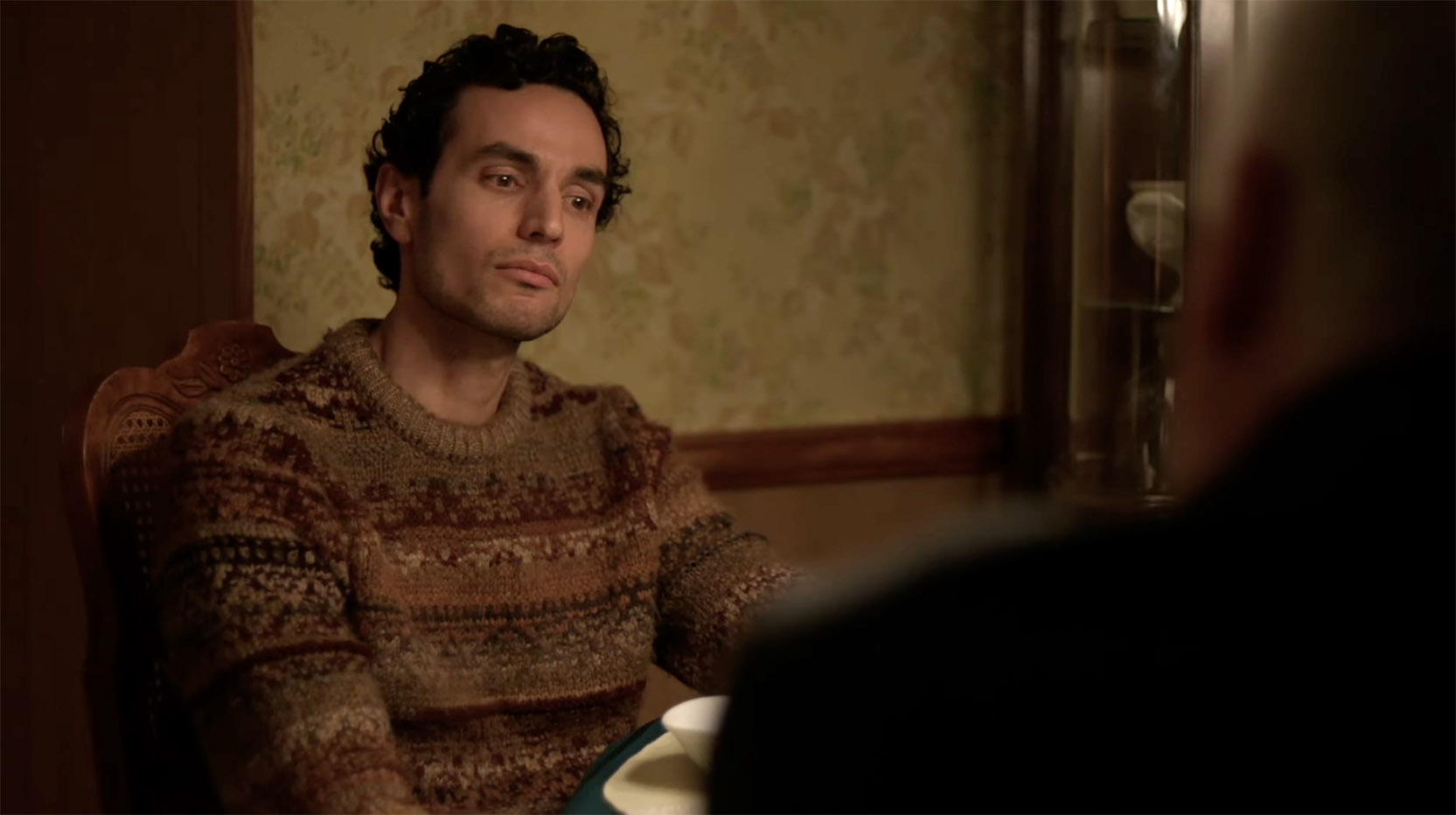
If You See Something follows Adam Bakri as Ali, an Iraqi physician trying to secure political asylum in the United States. His days unfold in a haze of immigration interviews: stern examiners, fluorescent rooms, endless questionnaires, and the bureaucratic demand to prove one’s own suffering with precision. These scenes feel lived-in and authentic, capturing the tense calculus of asylum cases — the scrutiny, the self-doubt, the constant fear of saying one wrong word.
Ali must also soon hide an enormous secret from his girlfriend Katie (Jacobs). His brother Raad (Tarek Bishara) has been kidnapped back in Iraq, and the unseen captors are demanding a five-figure ransom. The danger is never dramatized — we never see the abductors — but the threat hangs over everything. Yet Raad appears only in the film’s first scene, his presence too faint to evoke real emotional weight. So, our sympathy is forced to rely on circumstance rather than character. Ali turns to a small network of Iraqi expats, the only people who intimately understand how violence follows you, even when you cross an ocean. This is where the film hits its thematic core: immigrants don’t simply escape their countries. Their countries follow them — through memory, obligation, and danger that travels without a passport.
It’s powerful material, and Rasheed has built his career exploring exactly this terrain. But the filmmaking here never makes us fully care. The performances aren’t terrible, but the direction sometimes pushes them toward overstatement, as if afraid the audience might miss something subtle. Bakri is handsome, intense, and brooding — and broods and broods so insistently that it becomes its own performance. The U.S. immigration officer interacting with him seems instructed to maintain a single expression the entire scene, flattening moments that should carry nuance. Jacobs’s performance is somewhat one-dimensional, though she brings a grounded warmth the film could use far more of. As a result, Krystina Alabado, in a small role as Katie’s business partner, stands out as the film’s most natural presence.
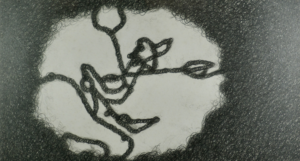
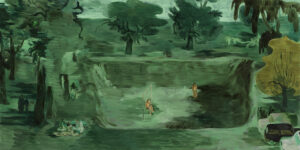
The film also falters structurally. A series of dreamlike flashbacks — clumsily staged and tonally out of sync — jerk the viewer out of the narrative instead of deepening Ali’s interior life. Instead of illuminating trauma, they feel like anxious underlining, the film not trusting us to understand what Ali carries without visual punctuation. Like their mood will supersede Ali’s brood.
Then there’s the matter of the title. If You See Something references the familiar New York MTA subway announcement — “If you see something, say something” — but the phrase appears once, late in the film, without thematic relevance. It never becomes metaphor, commentary, or irony; it’s simply present. A title grasping for resonance it never earns.
Sound is another problem, and perhaps the most glaring recurring issue. Much of the audio feels strangely synthetic, as if dubbed in post. Scenes that should feel intimate instead sound hollow, missing the ambient textures of New York life. It becomes its own distraction.
And yet, for all its missteps, the film is not empty. There is something compelling in its bones. Rasheed understands the psychic drift of exile, how trauma refracts a person’s entire inner life, how silence can be both refuge and prison. He understands the fragile ecosystems of immigrant communities — the way people gather around one another not only for solidarity but for survival. And he certainly understands the absurdities of the American asylum process: a labyrinth where paperwork often outranks pain.
There is a late, quiet scene where Ali finally reveals what he has been hiding. The moment works not because the writing sharpens, but because the actors briefly find an honest emotional frequency: two people suspended between past and future, between countries, between truths they’re afraid to name. It hints at the stronger film for which Rasheed was reaching.
Rasheed himself remains a fascinating figure. One of the first post-Saddam filmmakers to revive Iraqi cinema, he began making films in a country with no functioning industry, no reliable equipment, and enormous personal risk. His work has helped establish a postwar cinematic identity for Iraq — intimate, character-driven, unafraid of political shadow. That commitment to Iraqi stories is visible throughout If You See Something, even when the craft falters. Ludwig and Jacobs, both of whom bring real-world humanitarian credibility — Ludwig through his immigrant-rights activism, protest work, and advocacy around ICE detentions, and Jacobs through years of global-justice and refugee-resettlement work — clearly share that ambition. The intention behind the film is unimpeachable. The execution is simply uneven.
And intention matters. Urgency does, too. The film’s strongest idea, that exile does not end at the border, and that the forces you flee can still shape your days from thousands of miles away, is the one aspect that lingers after the credits. Still the film sits in the shadow of much stronger works tackling similar themes. This year’s No Other Land — a blistering, deeply human chronicle of Palestinian displacement — manages the balance of intimacy and urgency with a precision this film lacks. If You See Something gestures toward a similar truth, but rarely reaches its power.
If you See Something may not be the movie it wants to be, nor the one its subject deserves. But it is reaching for something real: the weight carried by those trying to build new lives while pieces of their old ones crumble behind them. Its heart is in the right place, even when the craft isn’t.
Select Other Languages Français.