Des fragments de Beirut dans <em>Do You Love Me</em> de Lana Daher

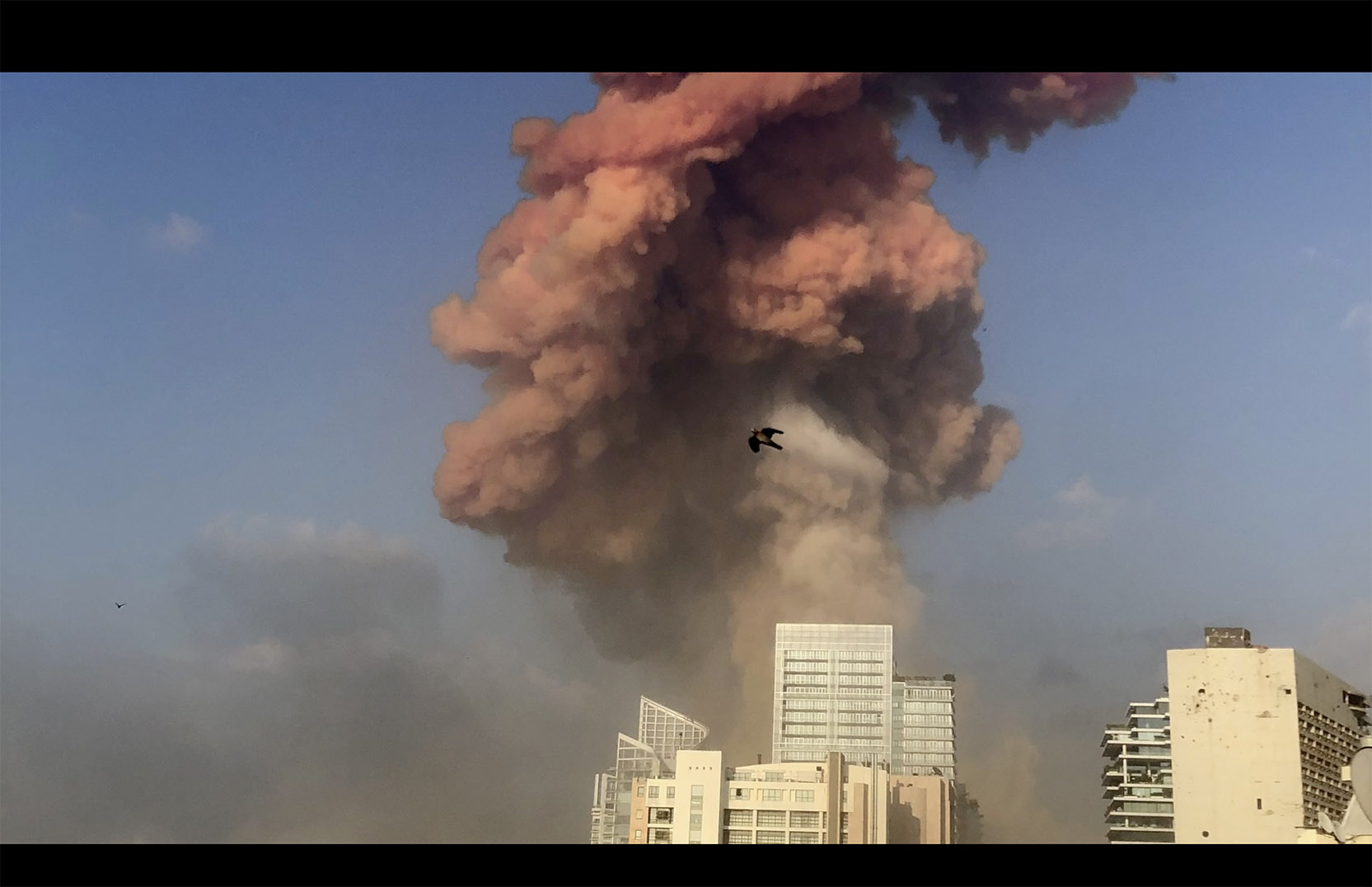
Do You Love Me, "Pink Smoke" (2020) de Ben Hubbard.

10 APRIL 2026 • By Darío Karim Pomar Azar

Select Other Languages English.

Alors qu'Israël poursuit sa guerre contre le Liban, l’ambition de ce film – réunir un peuple fragmenté – semble plus urgente que jamais.

Qu’est-ce qu’un lieu, sinon un hologramme ? Une série de fragments audiovisuels, de représentations de lui-même, copiées, simulées, recyclées ? Sa propre image, à travers des médiations plus ou moins proches. C’est une mémoire héritée.

Beyrouth est l’un de ces lieux, contenu dans quelques images iconiques : ses rues animées, sa mer, les vagues qui se brisent contre la Corniche. Y a-t-il dans cette ville une essence déchiffrable, une vérité à discerner ?

« Dans cette ville, tous nos souvenirs se fondent dans la mer. »

Dans Do You Love Me (2025) de Lana Daher, je cherche Beyrouth.


Lorsque j’appelle Lana Daher, c’est le lendemain matin du bombardement par Israël de la plage de Ramlet al-Baida à Beyrouth, dans lequel ont été tuées et blessées des personnes déplacées de force qui s’y étaient réfugiées après avoir fui les frappes aériennes israéliennes au Sud-Liban et à Dahiyeh, la banlieue sud de Beyrouth. Je me réveille avec la nouvelle du carnage, des scènes de l’explosion mêlées à mes propres souvenirs lumineux sur la promenade du front de mer. Des bribes du film de Daher, aussi, s’infiltrent dans les ruminations derrière mes yeux encore embués – je venais de le revoir en préparation de notre conversation. Dans le film, la plage, la mer et la promenade sont des motifs proéminents.

05 Lana Daher © Mohamad Abdouni
Lana Daher, photographiée par Mohamad Abdouni.

Daher est à Beyrouth. Dans un échange de mails, elle me dit qu’elle attend notre conversation avec impatience, car ce sera une bonne distraction à toute la folie autour d’elle. Je lui demande comment elle va. Elle me raconte comment tous ceux qui l’entourent prennent des microdoses de Xanax pour tenir, et comment elle ne peut pas dormir chez ses parents à cause des bombardements qui y sont bien plus bruyants. Elle me raconte comment, le jour où Dahiyeh a reçu des ordres « d’évacuation » de masse de la part d’Israël, elle s’est retrouvée à faire un voyage absurde pour aller chez le dentiste au milieu du chaos. Pendant le détartrage, elle a imaginé dans un délire comment la dentiste et l’infirmière, courbées au-dessus d’elle comme des « boucliers humains », la protègeraient en cas de frappe aérienne.

Elle me parle de la guerre psychologique que leur mène Israël : comment, avant la guerre de 2024, l’été des Libanais avait été empli du bourdonnement constant des drones et de bangs supersoniques. Comment ils étaient terrifiés en regardant Israël commettre un génocide à Gaza, raser Gaza, la réduire en cendres. Elle me dit combien il est écœurant aujourd’hui de voir Israël menacer de « transformer des quartiers de Beyrouth en nouvelle Gaza ». Et à quel point la (re)découverte de la fragmentation profonde de la société libanaise la dégoûte, quand les appels à la normalisation avec Israël se heurtent à la résistance historique du pays au sionisme.

Nous parlons de la plage. Je lui dis que cette dernière s’est désormais brouillée en un triptyque : la plage de ma mémoire, la plage de son film, et la plage telle qu’elle existe physiquement, à Beyrouth, bombardée. Je lui raconte comment trois séjours à Beyrouth ont suffi pour laisser en moi une empreinte indélébile et que, quand j’ai regardé son film, je n’ai pas pu m’empêcher de m’y projeter, comme si c’étaient mes propres souvenirs que je voyais à l’écran.

Do You Love Me poster
Affiche de Do You Love Me .

Daher me dit qu’elle est heureuse de l’apprendre. C’est exactement le type de réaction qu’elle souhaitait, où « on se connecte, on s’identifie et on crée ses propres associations ». Elle explique que c’est en partie pour cette raison qu’elle a choisi de ne pas poser sa voix sur les images, même si ça aurait été la manière la plus évidente de faire tenir un film entièrement constitué d’archives disparates. Elle savait qu’il ne fallait pas perturber l’identification du spectateur, ou imposer un certain récit de l’histoire libanaise.

Car, comme nous le montre le prologue du film, l’histoire contemporaine n’est pas enseignée dans les écoles libanaises. Il n’y a pas de « d’histoire unifiée dans un manuel ». Daher est convaincue qu’une nouvelle guerre civile éclaterait si l’on tentait d’écrire un tel livre. Plus tard dans le film, on nous dit que l’histoire du Liban s’est arrêtée en 1946, quand les colons français se sont retirés du pays.

Le Liban est une série de caviardages. Des mots biffés, brûlés hors des pages. L’enjeu devient alors de comprendre « ce qui a été effacé ».

Pour Daher, ces vides permettent une ouverture. Sa vision de curatrice est cristallisée dans les mots d’un narrateur anonyme qui dit vers le milieu du film : « L’Histoire n’est pas exhaustive, ce n’est pas une vérité absolue. On collecte des histoires. Des histoires qui représentent un morceau de vérité, à un moment précis, pour des personnes précises. Un manuel d’histoire affirme, il dit : voilà, c’est ça qui s’est passé. Pourtant, il y a beaucoup de choses qui n’ont pas été mentionnées. Des choses qui n’ont jamais été écrites nulle part, mais qui existent dans la mémoire des gens. »

En l’absence d’une collection centralisée d’archives nationales, Daher a décidé de créer la sienne. Elle a puisé dans plus de 20 000 archives privées et publiques dispersées à travers le pays et dans la diaspora – les archives du Liban sont aussi fragmentées que son peuple. Do You Love Me est ainsi tissé de centaines de photographies et d’extraits vidéo, tirés de films, d’émissions télévisées, de vidéos amateurs et de documentaires. La tapisserie sonore du film est tout aussi riche.

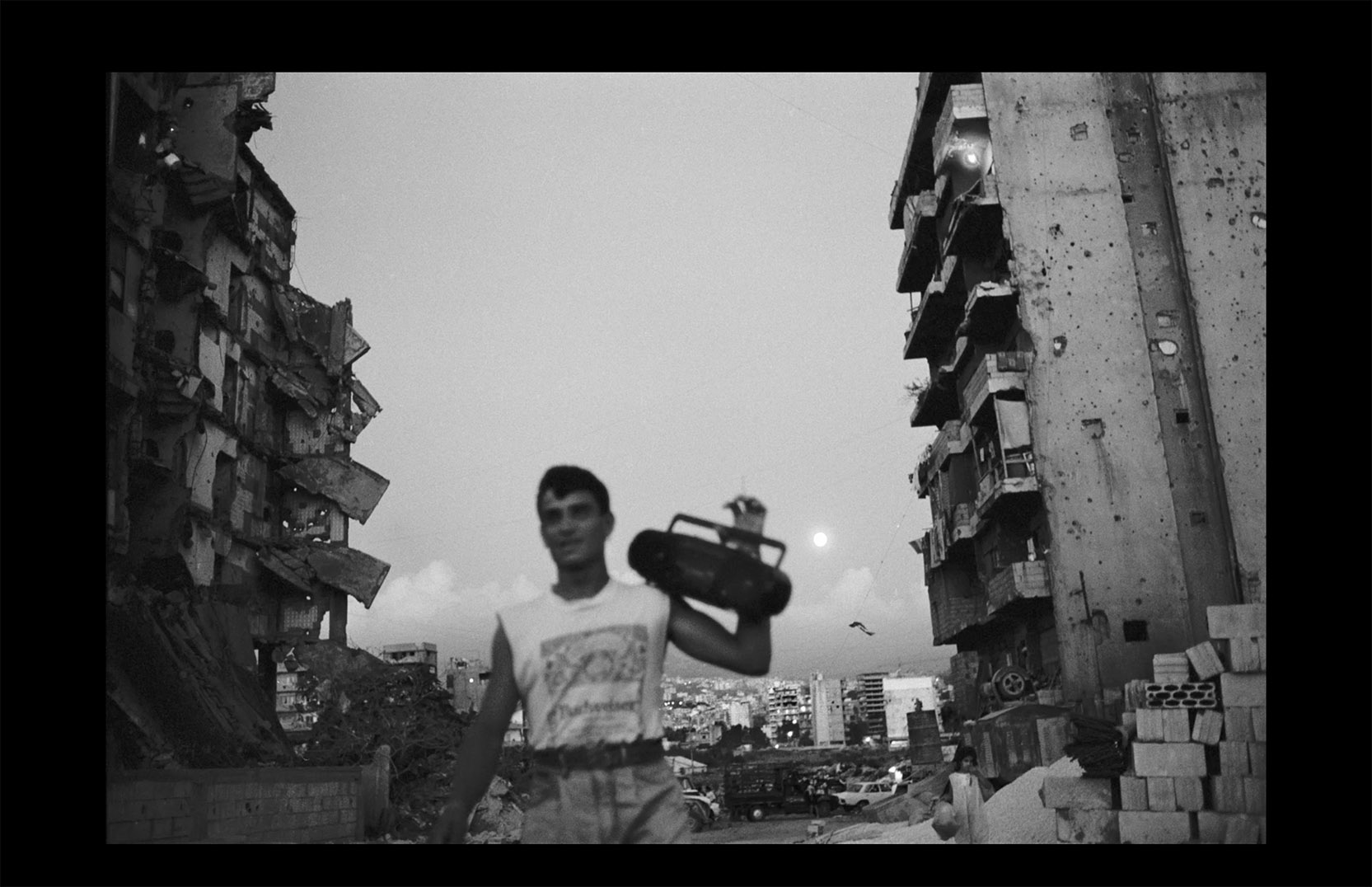
article body slider image "The Boombox", photo de Fouad Elkoury.

article body slider image "Arguileh on the Beach", photo de Patrick Baz.
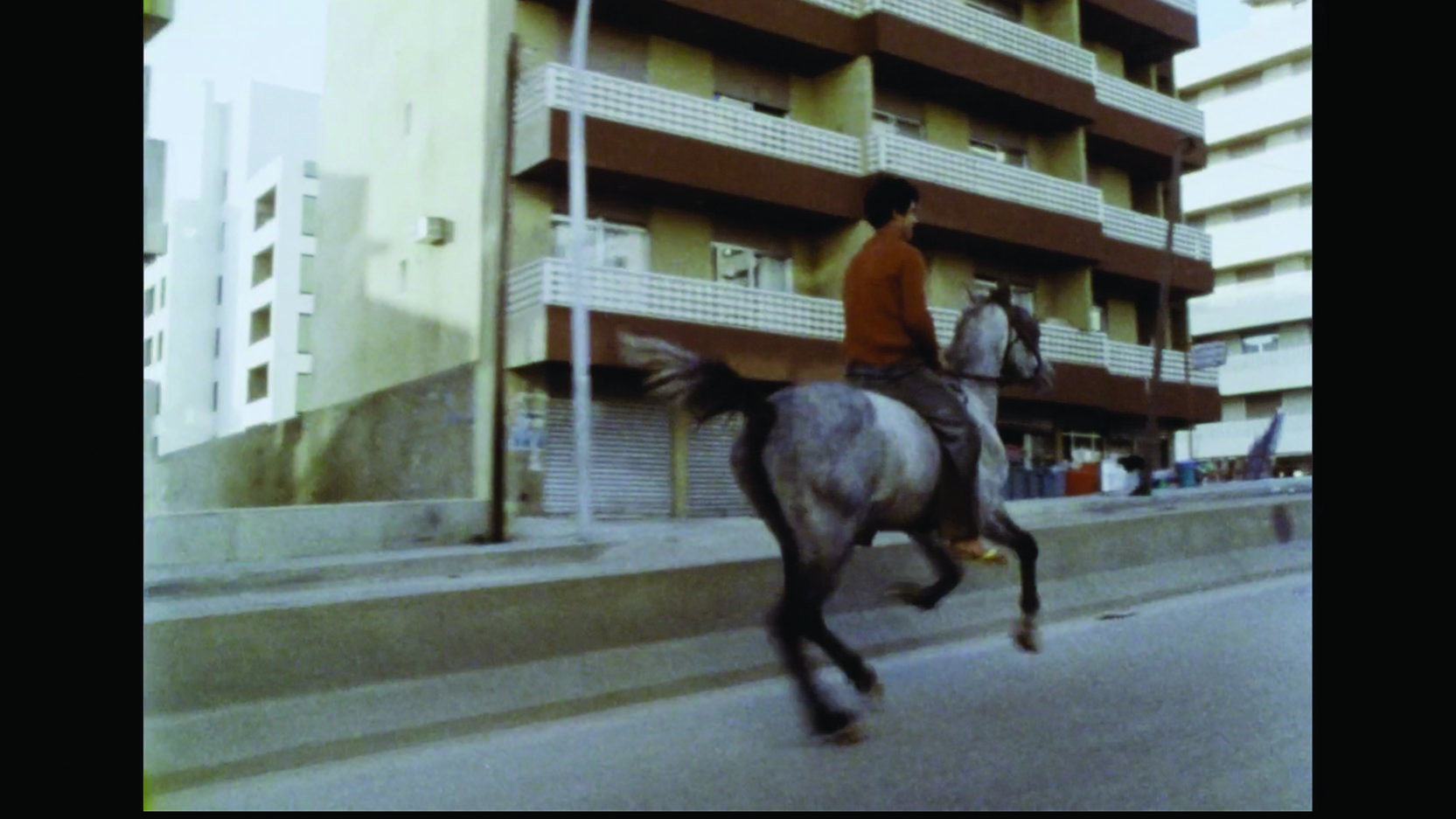
article body slider image "Whispers", photo de Maroun Baghdadi.
article body slider image "Pink Smoke" (2020) de Ben Hubbard.

Daher me dit que le défi de réaliser un film uniquement à partir de matériaux d’archives, ce qui lui permettrait de rendre accessibles des archives oubliées ou abandonnées, l’avait beaucoup enthousiasmée.  

Daher manipule des décennies de traces éphémères en prenant soin de ne pas les ranger dans un ordre chronologique. Elle préfère faire des allers-retours entre les différentes « générations » de séquences glanées. Plutôt que de proposer un récit linéaire de l’histoire du pays, le film attire ainsi notre attention sur les rimes et rythmes internes à la mémoire collective du Liban.

Ces motifs sont mis en relief par la sélection et l’agencement minutieux des archives. Je demande à Daher comment elle et Qutaiba Barhamji, le monteur et co-scénariste du film, ont pensé ce processus. Elle m’explique que l’association d’images est une autre manière de faire tenir un film comme celui-ci. Ils ont identifié les thèmes qui revenaient sans cesse dans les archives, des motifs récurrents qui semblaient résonner à travers la psyché libanaise, puis ont choisi de faire apparaître ces fils conducteurs en les plaçant côte à côte. Beyrouth, c’est une série de mères qui pleurent leurs fils martyrs, veillent sur leurs tombes, prient pour une résurrection miraculeuse. Beyrouth, c’est une série de chambres laissées vides. Beyrouth, c’est une série de bangs supersoniques suivis de silences assourdissants. Beyrouth, c’est la tour Burj El Murr – un monument de guerre, une apparition, une constante.

Mais parfois, l’association d’images devient prévisible, alors Daher et Barhamji jouent avec l’absurdité de certains contrastes et nous tirent brutalement de notre rêverie. Souvent, le son jure avec l’image. Un homme raconte comment il a évité de justesse son exécution ordonnée par des miliciens, tandis que des images de festivités du Nouvel An défilent à l’écran. Beyrouth, c’est une série de mariages, puis une série de funérailles. C’est le souvenir du pistolet qu’un père a furtivement glissé sous la robe blanche de sa fille pour échapper aux gardes d’un checkpoint. C’est des voitures qui avancent et qui s’arrêtent, des étals de fruits et des magasins de fleurs, un bus qu’on attrape, une nuée d’oiseaux : c’est les rythmes du quotidien qui annoncent la prochaine rupture. Beyrouth, c’est les avions qui atterrissent et les nuques tendues pour l’apercevoir depuis le ciel. C’est les avions qui décollent dans la fumée des bombes. C’est la fuite précipitée et le retour anxieux. C’est la brume qui descend du mont Liban. Le sobre matin après une nuit d’attaques aériennes, alors que la poussière retombe et qu’on remercie Dieu, parce que ça aurait pu être pire, et puis de toute façon, tout ça n’est pas nouveau et recommencera probablement.

Daher me dit qu’elle a remarqué que la plupart des films libanais sont « soit à propos de quelqu’un de très déprimé de quitter le Liban, soit à propos de quelqu’un de très déprimé d’y revenir ». Ce n’est pas à cause d’un manque d’imagination des cinéastes libanais que ces thèmes reviennent, dit-elle, mais parce qu’il y a tant de choses encore irrésolues. « Nous sommes encore dans la même boucle de violence », dit-elle. « Tant que nous sommes bloqués dans ce cycle, comment diable pouvons-nous donner naissance à de nouveaux récits ? »

Reconnaissant ce qui a influencé ses choix de réalisatrice – ses origines chiites et de classe moyenne beyrouthine, l’engagement politique de sa famille à gauche, ses propres sensibilités esthétiques –, Daher m’explique qu’elle voulait avant tout « faire quelque chose d’accessible », un film que le plus grand nombre de Libanais puisse voir et assimiler, et non quelque chose qui « appartient à une institution artistique ».

C’est aussi pour cette raison qu’elle a délibérément exclu du film toute image de journaux télévisés avec des politiciens ou des représentants de partis, de milices ou des différentes confessions religieuses. L’un des extraits montre une femme qui pose répétitivement la même question : « Qui est responsable ? ». La réponse implicite se déploie tout au long de Do You Love Me. Dans une scène, la journaliste et réalisatrice Jocelyn Saab le dit clairement : ce qui tue les Libanais, ce sont « les frappes aériennes israéliennes et les combats entre factions ». Autrement dit, c’est à cause de la fragmentation et du sectarisme que la résistance et la lutte contre le sionisme et sa violence ne peuvent se faire efficacement.

Ainsi, face à une fragmentation de la société libanaise aussi profonde qu’ancienne, Daher a voulu créer quelque chose qui puisse rassembler, unifier, ou du moins tendre vers l’unité, bien qu’elle ne soit pas certaine que ça puisse fonctionner – pas dans l’état actuel des choses.

Peut-être que mettre au jour les mémoires enfouies dans ces archives permettrait au Liban de se recomposer et aux Libanais de mieux négocier avec leur deuil. Ou, comme l’écrit l’autrice Wassila Abboud dans son article pour Parapraxis Magazine, The Dining Table and the Drone*, peut-être que cela permettrait de « reconfigurer et réorienter [le deuil] vers un nouveau mode de devenir ; un deuil dans une temporalité qui refuse d’être mesurée, qui se mue en un deuil qui lutte pour sauver ce qui peut encore l’être ».

S’appuyant sur la pensée marxiste libanaise, Abboud distingue deux formes de deuil au Liban. Il y a le deuil qui tue – un deuil défaitiste, qui conduit à la soumission, à se résigner à ce qui est présenté comme le moindre mal. Ce deuil « convainc les colonisés que le bien-être réside dans la stabilité qu’Israël apporte et que la libération elle-même est une pathologie ». Et puis il y a le deuil qui lutte, là où « la perte devient grief, et le deuil devient terrain de la résistance ». De loin, les deux formes de deuil semblent converger, mais quand on y regarde de plus près, elles demeurent fondamentalement distinctes : comme l’écrit Abboud, à l’image du « soleil et de la mer qui se rejoignent sur la ligne imaginaire qui trace l’horizon », elles ne se touchent jamais.

Dans un passage particulièrement bouleversant, Abboud situe le deuil « dans les espaces ordinaires et la cartographie intime de nos vies : […] il nous revient à travers des tables de salle à manger, […] les anfractuosités des roches de Jabal Amel, la mer que nous partageons avec Gaza. Il nous revient comme les tentatives irrésolues de survivre aux conditions du monde sans les accepter ». Je partage ces extraits avec Daher et lui demande où elle situe le deuil dans son film. Elle me dit qu’elle le trouve dans les yeux des jeunes femmes qui regardent leur ville depuis les vitres des voitures. Elle le perçoit avec acuité devant toutes les vidéos de famille, dans l’image d’un bébé que l’on baigne. Elle l’entend lorsque Jocelyn Saab dit, depuis les décombres de sa maison bombardée lors du siège de Beyrouth par Israël en 1982 : « C’est chez moi. Ou ce qu’il en reste. […] Mais ce n’est pas si grave. Ce ne sont que des murs, après tout. Nous en sommes sortis vivants. »

Daher se reconnaît dans le sentiment de Saab : « Nous sommes toujours en vie et nous allons bien ». Au Liban, le deuil est hérité, il s’accumule. Mais à mesure que nous parlons, Daher réalise que faire ce film lui a permis de « transmuer » son deuil, de refuser de se laisser vaincre. C’est le deuil qui lutte. Et bien que Abboud se méfie des « retours maîtrisés » à des « deuils passés », craignant qu’ils ne fassent obstacle à un « nouveau mode de devenir », dans la pratique archivistique de Do You Love Me, il ne s’agit pas de nostalgie pour la nostalgie, ou de l’évidence de la violence cyclique. La finalité ici est bien plus urgente, et Daher l’exprime avec concision à travers un extrait du film Dans les champs de bataille (2008) de Daniella Arbid : « Je ne creuse pas le passé, mais le présent. »

Do You Love Me est actuellement projeté au MoMA de New York. Le film sortira dans les salles françaises le 6 mai, et en Allemagne le 7 mai. Il est actuellement présenté dans divers festivals à travers le monde.

L’index des archives du film peut être consulté ici.


* N. d. T. : En l’absence de traduction en français de cet article, les citations de l’article de Wassila Abboud ont été traduites librement.


Traduit de l’anglais par Alice Nalpas

Darío Karim Pomar Azar

Darío Karim Pomar Azar is a Palestinian Spanish writer, researcher and organiser based in London. He grew up in Amman, Jordan. Pomar Azar’s work is published in Shado Mag, DAZED Middle East, The Markaz Review and elsewhere. He has written on the transnational Palestine... Read more

Join Our Community

TMR exists thanks to its readers and supporters. By sharing our stories and celebrating cultural pluralism, we aim to counter racism, xenophobia, and exclusion with knowledge, empathy, and artistic expression.

Learn more

RELATED

Columns

Civil War In Lebanon? A Mad Prospect Looms Again

24 APRIL 2026 • By Amal Ghandour
Civil War In Lebanon? A Mad Prospect Looms Again
Columns

Dear Souseh: Incandescent with Rage

24 APRIL 2026 • By Lina Mounzer
Dear Souseh: Incandescent with Rage
Essays

The Art of Giving: Relief Efforts in Beirut

17 APRIL 2026 • By Jim Quilty
The Art of Giving: Relief Efforts in Beirut
Interviews

Creating Art in Times of War

10 APRIL 2026 • By TMR
Creating Art in Times of War
Columns

A Ledger of Destruction, A Sisterhood of Grief and Grievance

10 APRIL 2026 • By Amal Ghandour
A Ledger of Destruction, A Sisterhood of Grief and Grievance
Film Reviews

Fragments of Beirut in Lana Daher’s Do You Love Me

10 APRIL 2026 • By Darío Karim Pomar Azar
Fragments of Beirut in Lana Daher’s <em>Do You Love Me</em>
Columns

A Fight to The Death (the Rest of Us In-Between)

27 MARCH 2026 • By Amal Ghandour
A Fight to The Death (the Rest of Us In-Between)
Columns

Dear Souseh: Distressed (& More) by War

27 MARCH 2026 • By Lina Mounzer
Dear Souseh: Distressed (& More) by War
Columns

Lebanon’s Fate in Our Current World Calamity

13 MARCH 2026 • By Amal Ghandour
Lebanon’s Fate in Our Current World Calamity
Poetry

“How to Erase an Armenian Accent in Junior High”

27 FEBRUARY 2026 • By Shahé Mankerian
“How to Erase an Armenian Accent in Junior High”
Columns

On Legal Victories and Human Healing

13 FEBRUARY 2026 • By Amal Ghandour
On Legal Victories and Human Healing
Book Reviews

Controlled Demolition: an Epistolary Review

16 JANUARY 2026 • By Lina Mounzer
<em>Controlled Demolition</em>: an Epistolary Review
Book Reviews

Rewriting Beirut’s “Bad Boy Architect” Bernard Khoury

9 JANUARY 2026 • By Bridget Peak
Rewriting Beirut’s “Bad Boy Architect” Bernard Khoury
Columns

Two Spectacles: A Lebanese Farce, an American Fault Line

2 JANUARY 2026 • By Amal Ghandour
Two Spectacles: A Lebanese Farce, an American Fault Line
Columns

Emm Kamel: The Future Is Here and So Is the Past

19 DECEMBER 2025 • By Amal Ghandour
<em>Emm Kamel</em>: The Future Is Here and So Is the Past
Film

10 Noir Films from the Arab world, Iran, and Turkey

5 DECEMBER 2025 • By TMR
10 Noir Films from the Arab world, Iran, and Turkey
Columns

The Whispers Of Nadia Tueni and Maroun Baghdadi

5 DECEMBER 2025 • By Amal Ghandour
The Whispers Of Nadia Tueni and Maroun Baghdadi
Beirut

In Lebanon, It’s Business as Usual

21 NOVEMBER 2025 • By Amal Ghandour
In Lebanon, It’s Business as Usual
Columns

How Much Do We Miss Umm Khulthum?

7 NOVEMBER 2025 • By Amal Ghandour
How Much Do We Miss Umm Khulthum?
Fiction

Sultana to the Rescue

7 NOVEMBER 2025 • By MK Harb
Sultana to the Rescue
Essays

The Absent Homeland

7 NOVEMBER 2025 • By Maysaa Alajjan
The Absent Homeland
Columns

Dear Souseh: Stuck Between Families

24 OCTOBER 2025 • By Lina Mounzer
Dear Souseh: Stuck Between Families
Film

A Love Letter to the Ghosts of Armenian Cinema

17 OCTOBER 2025 • By Jim Quilty
A Love Letter to the Ghosts of Armenian Cinema
Art

On Bilgé, Time Arrows, and the Indigenous Turn

10 OCTOBER 2025 • By Arie Amaya-Akkermans
On Bilgé, Time Arrows, and the Indigenous Turn
Film Reviews

New Documentaries from Palestine, Sudan, Afghanistan, and Iran

12 SEPTEMBER 2025 • By Yassin El-Moudden
New Documentaries from Palestine, Sudan, Afghanistan, and Iran
Editorial

Why Out of Our Minds?

5 SEPTEMBER 2025 • By Lina Mounzer
Why <em>Out of Our Minds</em>?
Centerpiece

Trauma After Gaza

5 SEPTEMBER 2025 • By Joelle Abi-Rached
Trauma After Gaza
Art & Photography

Ali Cherri’s show at Marseille’s [mac] Is Watching You

15 AUGUST 2025 • By Naima Morelli
Ali Cherri’s show at Marseille’s [mac] Is Watching You
Essays

Ziad Rahbani: The Making of a Lebanese Jazz Legend

8 AUGUST 2025 • By Diran Mardirian
Ziad Rahbani: The Making of a Lebanese Jazz Legend
Art

Architectural Biennale Confronts Brutality of Climate Change

1 AUGUST 2025 • By Iason Athanasiadis
Architectural Biennale Confronts Brutality of Climate Change
Featured Artist

Syria and the Future of Art: an Intimate Portrait

4 JULY 2025 • By Arie Amaya-Akkermans
Syria and the Future of Art: an Intimate Portrait
Book Reviews

Palestine’s Places and Memorials Are Not Forgotten

4 JULY 2025 • By Gabriel Polley
Palestine’s Places and Memorials Are Not <em>Forgotten</em>
Film

From A World Not Ours to a Land Unknown

13 JUNE 2025 • By Jim Quilty
From A World Not Ours to a <em>Land Unknown</em>
Essays

Imagining Ghanem—My Return to Lebanon

6 JUNE 2025 • By Amelia Izmanki
Imagining Ghanem—My Return to Lebanon
Book Reviews

An Intimate History of Violence: Beirut Under Siege in Nejmeh Khalil Habib’s A Spring that Did Not Blossom 

30 MAY 2025 • By Rebecca Ruth Gould
An Intimate History of Violence: Beirut Under Siege in Nejmeh Khalil Habib’s <em>A Spring that Did Not Blossom</em> 
Arabic

Jawdat Fakreddine Presents Three Poems

20 MAY 2025 • By Jawdat Fakhreddine, Huda J. Fakhreddine
Jawdat Fakreddine Presents Three Poems
Film Reviews

Contretemps, a Bold Film on Lebanon’s Crises

16 MAY 2025 • By Jim Quilty
Contretemps, a Bold Film on Lebanon’s Crises
Art

Going Home to South Lebanon: Abdel Hamid Baalbaki

2 MAY 2025 • By Karina El Helou
Going Home to South Lebanon: Abdel Hamid Baalbaki
Film

Exile and Hope: Sudanese creatives and the question of home

2 MAY 2025 • By Ati Metwaly
Exile and Hope: Sudanese creatives and the question of home
Essays

A Letter To My Cruel Lover: Tripoli

2 MAY 2025 • By Lara Kassem
A Letter To My Cruel Lover: Tripoli
Art

Return to Iraq: Sama Alshaibi’s ‘طرس’

2 MAY 2025 • By Yasmine Al Awa, Sama Alshaibi
Return to Iraq: Sama Alshaibi’s ‘طرس’
Art

Between Belief and Doubt: Ramzi Mallat’s Suspended Disbelief

11 APRIL 2025 • By Marta Mendes
Between Belief and Doubt: Ramzi Mallat’s Suspended Disbelief
Essays

Heartbreak and Commemoration in Beirut’s Southern Suburbs

7 MARCH 2025 • By Sabah Haider
Heartbreak and Commemoration in Beirut’s Southern Suburbs
Editorial

Memoir in the Age of Narcissism

7 FEBRUARY 2025 • By TMR
Memoir in the Age of Narcissism
Book Reviews

Maya Abu Al-Hayyat’s Defiant Exploration of Palestinian Life

20 DECEMBER 2024 • By Zahra Hankir
Maya Abu Al-Hayyat’s Defiant Exploration of Palestinian Life
Book Reviews

Barrack Zailaa Rima’s Beirut Resists Categorization

6 DECEMBER 2024 • By Katie Logan
Barrack Zailaa Rima’s <em>Beirut</em> Resists Categorization
Art

In Lebanon, Art is a Matter of Survival

22 NOVEMBER 2024 • By Nada Ghosn
In Lebanon, Art is a Matter of Survival
Editorial

The Editor’s Letter Following the US 2024 Presidential Election

8 NOVEMBER 2024 • By Jordan Elgrably
The Editor’s Letter Following the US 2024 Presidential Election
Film

The Haunting Reality of Beirut, My City

8 NOVEMBER 2024 • By Roger Assaf, Zeina Hashem Beck
The Haunting Reality of <em>Beirut, My City</em>
Essays

Between Two Sieges: Translating Roger Assaf in California

8 NOVEMBER 2024 • By Zeina Hashem Beck
Between Two Sieges: Translating Roger Assaf in California
Art & Photography

Palestinian Artists Reflect on the Role of Art in Catastrophic Times

1 NOVEMBER 2024 • By Nina Hubinet
Palestinian Artists Reflect on the Role of Art in Catastrophic Times
Art & Photography

Beyond Our Gaze: Rethinking Animals in Contemporary Art

1 NOVEMBER 2024 • By Naima Morelli
Beyond Our Gaze: Rethinking Animals in Contemporary Art
Books

November World Picks from the Editors

25 OCTOBER 2024 • By TMR
November World Picks from the Editors
TMR 45 • From Here, One Year On

Witnessing Catastrophe: a Painter in Lebanon

4 OCTOBER 2024 • By Ziad Suidan
Witnessing Catastrophe: a Painter in Lebanon
Essays

Depictions of Genocide: The Un-Imaginable Visibility of Extermination

4 OCTOBER 2024 • By Viola Shafik
Depictions of Genocide: The Un-Imaginable Visibility of Extermination
Opinion

Everything Has Changed, Nothing Has Changed

4 OCTOBER 2024 • By Amal Ghandour
Everything Has Changed, Nothing Has Changed
Fiction

The Last Millefeuille in Beirut

4 OCTOBER 2024 • By MK Harb
The Last Millefeuille in Beirut
Opinion

Lebanon’s Holy Gatekeepers of Free Speech

6 SEPTEMBER 2024 • By Joumana Haddad
Lebanon’s Holy Gatekeepers of Free Speech
Film

Soudade Kaadan: Filmmaker Interview

30 AUGUST 2024 • By Jordan Elgrably
Soudade Kaadan: Filmmaker Interview
Essays

Meditations on Palestinian Exile and Return

16 AUGUST 2024 • By Dana El Saleh
Meditations on Palestinian Exile and Return
Book Reviews

Nabil Kanso: Lebanon and the Split of Life—a Review

2 AUGUST 2024 • By Sophie Kazan Makhlouf
Nabil Kanso: <em>Lebanon and the Split of Life</em>—a Review
Film

World Picks from the Editors: AUGUST

2 AUGUST 2024 • By TMR
World Picks from the Editors: AUGUST
Fiction

“We Danced”—a story by MK Harb

5 JULY 2024 • By MK Harb
“We Danced”—a story by MK Harb
Books

Ripped from Memoirs of a Lebanese Policeman

5 JULY 2024 • By Fawzi Zabyan, Lina Mounzer
Ripped from <em>Memoirs of a Lebanese Policeman</em>
Columns

Creating Community with Community Theatre

21 JUNE 2024 • By Victoria Lupton
Creating Community with Community Theatre
Book Reviews

Is Amin Maalouf’s Latest Novel, On the Isle of Antioch, a Parody?

14 JUNE 2024 • By Farah-Silvana Kanaan
Is Amin Maalouf’s Latest Novel, <em>On the Isle of Antioch</em>, a Parody?
Essays

Wajdi Mouawad’s “Controversial” Wedding Day

7 JUNE 2024 • By Elie Chalala
Wajdi Mouawad’s “Controversial” <em>Wedding Day</em>
Theatre

What Kind Of Liar Am I?—a Short Play

7 JUNE 2024 • By Mona Mansour
<em>What Kind Of Liar Am I?</em>—a Short Play
Essays

Omar Naim Exclusive: Two Films on Beirut & Theatre

7 JUNE 2024 • By Omar Naim
Omar Naim Exclusive: Two Films on Beirut & Theatre
Books

Palestine, Political Theatre & the Performance of Queer Solidarity in Jean Genet’s Prisoner of Love

7 JUNE 2024 • By Saleem Haddad
Palestine, Political Theatre & the Performance of Queer Solidarity in Jean Genet’s <em>Prisoner of Love</em>
Weekly

World Picks From The Editors: June 1 — June 14

31 MAY 2024 • By TMR
World Picks From The Editors: June 1 — June 14
Editorial

Why FORGETTING?

3 MAY 2024 • By Malu Halasa, Jordan Elgrably
Why FORGETTING?
Fiction

“I, Mariam”—a story by Joumana Haddad

26 APRIL 2024 • By Joumana Haddad
“I, Mariam”—a story by Joumana Haddad
Featured Artist

Bani Khoshnoudi: Featured Artist for PARIS

1 APRIL 2024 • By TMR, Jordan Elgrably
Bani Khoshnoudi: Featured Artist for PARIS
Art

Paris, Abstraction and the Art of Yvette Achkar

1 APRIL 2024 • By Arie Amaya-Akkermans
Paris, Abstraction and the Art of Yvette Achkar
Fiction

“Paris of the Middle East”—fiction by MK Harb

1 APRIL 2024 • By MK Harb
“Paris of the Middle East”—fiction by MK Harb
Essays

Israel’s Environmental and Economic Warfare on Lebanon

3 MARCH 2024 • By Michelle Eid
Israel’s Environmental and Economic Warfare on Lebanon
Poetry

“The Scent Censes” & “Elegy With Precious Oil” by Majda Gama

4 FEBRUARY 2024 • By Majda Gama
“The Scent Censes” & “Elegy With Precious Oil” by Majda Gama
Essays

“Double Apple”—a short story by MK Harb

4 FEBRUARY 2024 • By MK Harb
“Double Apple”—a short story by MK Harb
Essays

Don’t Ask me to Reveal my Lover’s Name لا تسألوني ما اسمهُ حبيبي

4 FEBRUARY 2024 • By Mohammad Shawky Hassan
Don’t Ask me to Reveal my Lover’s Name لا تسألوني ما اسمهُ حبيبي
TMR 37 • Endings & Beginnings

“The Summer They Heard Music”—a short story by MK Harb

3 DECEMBER 2023 • By MK Harb
“The Summer They Heard Music”—a short story by MK Harb
Fiction

Huda Fakhreddine’s A Brief Time Under a Different Sun

3 DECEMBER 2023 • By Huda J. Fakhreddine, Rana Asfour
Huda Fakhreddine’s <em>A Brief Time Under a Different Sun</em>
Fiction

“The Followers”—a short story by Youssef Manessa

3 DECEMBER 2023 • By Youssef Manessa
“The Followers”—a short story by Youssef Manessa
Art & Photography

War and Art: A Lebanese Photographer and His Protégés

13 NOVEMBER 2023 • By Nicole Hamouche
War and Art: A Lebanese Photographer and His Protégés
Featured Artist

Mohamed Al Mufti, Architect and Painter of Our Time

5 NOVEMBER 2023 • By Nicole Hamouche
Mohamed Al Mufti, Architect and Painter of Our Time
Book Reviews

The Refugee Ocean—An Intriguing Premise

30 OCTOBER 2023 • By Natasha Tynes
<em>The Refugee Ocean</em>—An Intriguing Premise
Art & Photography

Middle Eastern Artists and Galleries at Frieze London

23 OCTOBER 2023 • By Sophie Kazan Makhlouf
Middle Eastern Artists and Galleries at Frieze London
Fiction

I, SOUAD or the Six Deaths of a Refugee From Aleppo

9 OCTOBER 2023 • By Joumana Haddad
I, SOUAD or the Six Deaths of a Refugee From Aleppo
Theatre

Hartaqât: Heresies of a World with Policed Borders

9 OCTOBER 2023 • By Nada Ghosn
<em>Hartaqât</em>: Heresies of a World with Policed Borders
Theatre

Lebanese Thespian Aida Sabra Blossoms in International Career

9 OCTOBER 2023 • By Nada Ghosn
Lebanese Thespian Aida Sabra Blossoms in International Career
Books

Fairouz: The Peacemaker and Champion of Palestine

1 OCTOBER 2023 • By Dima Issa
Fairouz: The Peacemaker and Champion of Palestine
Fiction

“Kaleidoscope: In Pursuit of the Real in a Virtual World”—fiction from Dina Abou Salem

1 OCTOBER 2023 • By Dina Abou Salem
“Kaleidoscope: In Pursuit of the Real in a Virtual World”—fiction from Dina Abou Salem
Book Reviews

The Mystery of Enayat al-Zayyat in Iman Mersal’s Tour de Force

25 SEPTEMBER 2023 • By Selma Dabbagh
The Mystery of Enayat al-Zayyat in Iman Mersal’s Tour de Force
Amazigh

World Picks: Festival Arabesques in Montpellier

4 SEPTEMBER 2023 • By TMR
World Picks: Festival Arabesques in Montpellier
Books

“Sadness in My Heart”—a story by Hilal Chouman

3 SEPTEMBER 2023 • By Hilal Chouman, Nashwa Nasreldin
“Sadness in My Heart”—a story by Hilal Chouman
Book Reviews

Laila Halaby’s The Weight of Ghosts is a Haunting Memoir

28 AUGUST 2023 • By Thérèse Soukar Chehade
Laila Halaby’s <em>The Weight of Ghosts</em> is a Haunting Memoir
Film

The Soil and the Sea: The Revolutionary Act of Remembering

7 AUGUST 2023 • By Farah-Silvana Kanaan
<em>The Soil and the Sea</em>: The Revolutionary Act of Remembering
Film

We Saw Paris, Texas—a story by Ola Mustapha

2 JULY 2023 • By Ola Mustapha
We Saw <em>Paris, Texas</em>—a story by Ola Mustapha
Beirut

“The City Within”—fiction from MK Harb

2 JULY 2023 • By MK Harb
“The City Within”—fiction from MK Harb
Cities

In Shahrazad’s Hammam—fiction by Ahmed Awadalla

2 JULY 2023 • By Ahmed Awadalla
In Shahrazad’s Hammam—fiction by Ahmed Awadalla
Arabic

Inside the Giant Fish—excerpt from Rawand Issa’s graphic novel

2 JULY 2023 • By Rawand Issa, Amy Chiniara
Inside the Giant Fish—excerpt from Rawand Issa’s graphic novel
Art & Photography

Newly Re-Opened, Beirut’s Sursock Museum is a Survivor

12 JUNE 2023 • By Arie Amaya-Akkermans
Newly Re-Opened, Beirut’s Sursock Museum is a Survivor
Beirut

The Saga of Mounia Akl’s Costa Brava, Lebanon

1 MAY 2023 • By Meera Santhanam
The Saga of Mounia Akl’s <em>Costa Brava, Lebanon</em>
Beirut

Remembering the Armenian Genocide From Lebanon

17 APRIL 2023 • By Mireille Rebeiz
Remembering the Armenian Genocide From Lebanon
Art

The Gaze of the Sci-fi Wahabi

2 APRIL 2023 • By Sophia Al-Maria
The Gaze of the Sci-fi Wahabi
Beirut

Tel Aviv-Beirut, a Film on War, Love & Borders

20 MARCH 2023 • By Karim Goury
<em>Tel Aviv-Beirut</em>, a Film on War, Love & Borders
Beirut

Interview with Michale Boganim, Director of Tel Aviv-Beirut

20 MARCH 2023 • By Karim Goury
Interview with Michale Boganim, Director of <em>Tel Aviv-Beirut</em>
Book Reviews

War and the Absurd in Zein El-Amine’s Watermelon Stories

20 MARCH 2023 • By Rana Asfour
War and the Absurd in Zein El-Amine’s <em>Watermelon</em> Stories
Fiction

“Counter Strike”—a story by MK HARB

5 MARCH 2023 • By MK Harb
“Counter Strike”—a story by MK HARB
Fiction

“Mother Remembered”—Fiction by Samir El-Youssef

5 MARCH 2023 • By Samir El-Youssef
“Mother Remembered”—Fiction by Samir El-Youssef
Essays

More Photographs Taken From The Pocket of a Dead Arab

5 MARCH 2023 • By Saeed Taji Farouky
More Photographs Taken From The Pocket of a Dead Arab
Cities

The Odyssey That Forged a Stronger Athenian

5 MARCH 2023 • By Iason Athanasiadis
The Odyssey That Forged a Stronger Athenian
Beirut

The Curious Case of Middle Lebanon

13 FEBRUARY 2023 • By Amal Ghandour
The Curious Case of Middle Lebanon
Beirut

Arab Women’s War Stories, Oral Histories from Lebanon

13 FEBRUARY 2023 • By Evelyne Accad
Arab Women’s War Stories, Oral Histories from Lebanon
Book Reviews

Sabyl Ghoussoub Heads for Beirut in Search of Himself

23 JANUARY 2023 • By Adil Bouhelal
Sabyl Ghoussoub Heads for Beirut in Search of Himself
Art

On Lebanon and Lamia Joreige’s “Uncertain Times”

23 JANUARY 2023 • By Arie Amaya-Akkermans
On Lebanon and Lamia Joreige’s “Uncertain Times”
Fiction

Broken Glass, a short story

15 DECEMBER 2022 • By Sarah AlKahly-Mills
<em>Broken Glass</em>, a short story
Book Reviews

Fida Jiryis on Palestine in Stranger in My Own Land

28 NOVEMBER 2022 • By Diana Buttu
Fida Jiryis on Palestine in <em>Stranger in My Own Land</em>
Columns

For Electronica Artist Hadi Zeidan, Dance Clubs are Analogous to Churches

24 OCTOBER 2022 • By Melissa Chemam
For Electronica Artist Hadi Zeidan, Dance Clubs are Analogous to Churches
Fiction

“Ride On, Shooting Star”—fiction from May Haddad

15 OCTOBER 2022 • By May Haddad
“Ride On, Shooting Star”—fiction from May Haddad
Film

Ziad Kalthoum: Trajectory of a Syrian Filmmaker

15 SEPTEMBER 2022 • By Viola Shafik
Ziad Kalthoum: Trajectory of a Syrian Filmmaker
Essays

Kairo Koshary, Berlin’s Egyptian Food Truck

15 SEPTEMBER 2022 • By Mohamed Radwan
Kairo Koshary, Berlin’s Egyptian Food Truck
Film

The Mystery of Tycoon Michel Baida in Old Arab Berlin

15 SEPTEMBER 2022 • By Irit Neidhardt
The Mystery of Tycoon Michel Baida in Old Arab Berlin
Essays

Exile, Music, Hope & Nostalgia Among Berlin’s Arab Immigrants

15 SEPTEMBER 2022 • By Diana Abbani
Exile, Music, Hope & Nostalgia Among Berlin’s Arab Immigrants
Art & Photography

16 Formidable Lebanese Photographers in an Abbey

5 SEPTEMBER 2022 • By Nada Ghosn
16 Formidable Lebanese Photographers in an Abbey
Film

Two Syrian Brothers Find Themselves in “We Are From There”

22 AUGUST 2022 • By Angélique Crux
Two Syrian Brothers Find Themselves in “We Are From There”
Music Reviews

Hot Summer Playlist: “Diaspora Dreams” Drops

8 AUGUST 2022 • By Mischa Geracoulis
Hot Summer Playlist: “Diaspora Dreams” Drops
Editorial

Editorial: Is the World Driving Us Mad?

15 JULY 2022 • By TMR
Editorial: Is the World Driving Us Mad?
Film Reviews

War and Trauma in Yemen: Asim Abdulaziz’s “1941”

15 JULY 2022 • By Farah Abdessamad
War and Trauma in Yemen: Asim Abdulaziz’s “1941”
Film

Lebanon in a Loop: A Retrospective of “Waves ’98”

15 JULY 2022 • By Youssef Manessa
Lebanon in a Loop: A Retrospective of “Waves ’98”
Book Reviews

Leaving One’s Country in Mai Al-Nakib’s “An Unlasting Home”

27 JUNE 2022 • By Rana Asfour
Leaving One’s Country in Mai Al-Nakib’s “An Unlasting Home”
Columns

Why I left Lebanon and Became a Transitional Citizen

27 JUNE 2022 • By Myriam Dalal
Why I left Lebanon and Became a Transitional Citizen
Featured excerpt

Joumana Haddad: “Victim #232”

15 JUNE 2022 • By Joumana Haddad, Rana Asfour
Joumana Haddad: “Victim #232”
Fiction

Rabih Alameddine: “Remembering Nasser”

15 JUNE 2022 • By Rabih Alameddine
Rabih Alameddine: “Remembering Nasser”
Film

Saeed Taji Farouky: “Strange Cities Are Familiar”

15 JUNE 2022 • By Saeed Taji Farouky
Saeed Taji Farouky: “Strange Cities Are Familiar”
Fiction

Dima Mikhayel Matta: “This Text Is a Very Lonely Document”

15 JUNE 2022 • By Dima Mikhayel Matta
Dima Mikhayel Matta: “This Text Is a Very Lonely Document”
Fiction

“The Salamander”—fiction from Sarah AlKahly-Mills

15 JUNE 2022 • By Sarah AlKahly-Mills
“The Salamander”—fiction from Sarah AlKahly-Mills
Art & Photography

Film Review: “Memory Box” on Lebanon Merges Art & Cinema

13 JUNE 2022 • By Arie Amaya-Akkermans
Film Review: “Memory Box” on Lebanon Merges Art & Cinema
Book Reviews

Fragmented Love in Alison Glick’s “The Other End of the Sea”

16 MAY 2022 • By Nora Lester Murad
Fragmented Love in Alison Glick’s “The Other End of the Sea”
Beirut

Fairouz is the Voice of Lebanon, Symbol of Hope in a Weary Land

25 APRIL 2022 • By Melissa Chemam
Fairouz is the Voice of Lebanon, Symbol of Hope in a Weary Land
Book Reviews

Joumana Haddad’s The Book of Queens: a Review

18 APRIL 2022 • By Laila Halaby
Joumana Haddad’s <em>The Book of Queens</em>: a Review
Art & Photography

Ghosts of Beirut: a Review of “displaced”

11 APRIL 2022 • By Karén Jallatyan
Ghosts of Beirut: a Review of “displaced”
Columns

Music in the Middle East: Bring Back Peace

21 MARCH 2022 • By Melissa Chemam
Music in the Middle East: Bring Back Peace
Essays

“Gluttony” from Abbas Beydoun’s “Frankenstein’s Mirrors”

15 MARCH 2022 • By Abbas Baydoun, Lily Sadowsky
“Gluttony” from Abbas Beydoun’s “Frankenstein’s Mirrors”
Poetry

Three Poems of Love and Desire by Nouri Al-Jarrah

15 MARCH 2022 • By Nouri Al-Jarrah
Three Poems of Love and Desire by Nouri Al-Jarrah
Fiction

Fiction from “Free Fall”: I fled the city as a murderer whose crime had just been uncovered

15 JANUARY 2022 • By Abeer Esber, Nouha Homad
Fiction from “Free Fall”: I fled the city as a murderer whose crime had just been uncovered
Book Reviews

Temptations of the Imagination: how Jana Elhassan and Samar Yazbek transmogrify the world

10 JANUARY 2022 • By Rana Asfour
Temptations of the Imagination: how Jana Elhassan and Samar Yazbek transmogrify the world
Columns

Sudden Journeys: From Munich with Love and Realpolitik

27 DECEMBER 2021 • By Jenine Abboushi
Sudden Journeys: From Munich with Love and Realpolitik
Columns

My Lebanese Landlord, Lebanese Bankdits, and German Racism

15 DECEMBER 2021 • By Tariq Mehmood
My Lebanese Landlord, Lebanese Bankdits, and German Racism
Fiction

Three Levantine Tales

15 DECEMBER 2021 • By Nouha Homad
Three Levantine Tales
Comix

Lebanon at the Point of Drowning in Its Own…

15 DECEMBER 2021 • By Raja Abu Kasm, Rahil Mohsin
Lebanon at the Point of Drowning in Its Own…
Comix

How to Hide in Lebanon as a Western Foreigner

15 DECEMBER 2021 • By Nadiyah Abdullatif, Anam Zafar
How to Hide in Lebanon as a Western Foreigner
Columns

Sudden Journeys: The Villa Salameh Bequest

29 NOVEMBER 2021 • By Jenine Abboushi
Sudden Journeys: The Villa Salameh Bequest
Music Reviews

Electronic Music in Riyadh?

22 NOVEMBER 2021 • By Melissa Chemam
Electronic Music in Riyadh?
Art

Etel Adnan’s Sun and Sea: In Remembrance

19 NOVEMBER 2021 • By Arie Amaya-Akkermans
Etel Adnan’s Sun and Sea: In Remembrance
Columns

Burning Forests, Burning Nations

15 NOVEMBER 2021 • By Hadani Ditmars
Burning Forests, Burning Nations
Book Reviews

Diary of the Collapse—Charif Majdalani on Lebanon’s Trials by Fire

15 NOVEMBER 2021 • By A.J. Naddaff
<em>Diary of the Collapse</em>—Charif Majdalani on Lebanon’s Trials by Fire
Book Reviews

The Vanishing: Are Arab Christians an Endangered Minority?

15 NOVEMBER 2021 • By Hadani Ditmars
The Vanishing: Are Arab Christians an Endangered Minority?
Interviews

The Anguish of Being Lebanese: Interview with Author Racha Mounaged

18 OCTOBER 2021 • By A.J. Naddaff
The Anguish of Being Lebanese: Interview with Author Racha Mounaged
Book Reviews

Racha Mounaged’s Debut Novel Captures Trauma of Lebanese Civil War

18 OCTOBER 2021 • By A.J. Naddaff
Racha Mounaged’s Debut Novel Captures Trauma of Lebanese Civil War
Featured excerpt

Memoirs of a Militant, My Years in the Khiam Women’s Prison

15 OCTOBER 2021 • By Nawal Qasim Baidoun
Memoirs of a Militant, My Years in the Khiam Women’s Prison
Art & Photography

Displaced: From Beirut to Los Angeles to Beirut

15 SEPTEMBER 2021 • By Ara Oshagan
Displaced: From Beirut to Los Angeles to Beirut
Editorial

Why COMIX? An Emerging Medium of Writing the Middle East and North Africa

15 AUGUST 2021 • By Aomar Boum
Why COMIX? An Emerging Medium of Writing the Middle East and North Africa
Latest Reviews

Rebellion Resurrected: The Will of Youth Against History

15 AUGUST 2021 • By George Jad Khoury
Rebellion Resurrected: The Will of Youth Against History
Latest Reviews

Women Comic Artists, from Afghanistan to Morocco

15 AUGUST 2021 • By Sherine Hamdy
Women Comic Artists, from Afghanistan to Morocco
Weekly

World Picks: August 2021

12 AUGUST 2021 • By Lawrence Joffe
World Picks: August 2021
Columns

Beirut Drag Queens Lead the Way for Arab LGBTQ+ Visibility

8 AUGUST 2021 • By Anonymous
Beirut Drag Queens Lead the Way for Arab LGBTQ+ Visibility
Columns

Remember 18:07 and Light a Flame for Beirut

4 AUGUST 2021 • By Jordan Elgrably
Remember 18:07 and Light a Flame for Beirut
Art & Photography

Gaza’s Shababek Gallery for Contemporary Art

14 JULY 2021 • By Yara Chaalan
Gaza’s Shababek Gallery for Contemporary Art
Columns

The Semantics of Gaza, War and Truth

14 JULY 2021 • By Mischa Geracoulis
The Semantics of Gaza, War and Truth
Columns

Lebanon’s Wasta Has Contributed to the Country’s Collapse

14 JUNE 2021 • By Samir El-Youssef
Lebanon’s Wasta Has Contributed to the Country’s Collapse
Columns

Lebanese Oppose Corruption with a Game of Wasta

14 JUNE 2021 • By Victoria Schneider
Lebanese Oppose Corruption with a Game of Wasta
Weekly

War Diary: The End of Innocence

23 MAY 2021 • By Arie Amaya-Akkermans
War Diary: The End of Innocence
Essays

Reviving Hammam Al Jadeed

14 MAY 2021 • By Tom Young
Reviving Hammam Al Jadeed
Art

The Labyrinth of Memory

14 MAY 2021 • By Ziad Suidan
The Labyrinth of Memory
Weekly

Beirut Brings a Fragmented Family Together in “The Arsonists’ City”

9 MAY 2021 • By Rana Asfour
Columns

Memory and the Assassination of Lokman Slim

14 MARCH 2021 • By Claire Launchbury
Memory and the Assassination of Lokman Slim
Weekly

Hanane Hajj Ali, Portrait of a Theatrical Trailblazer

14 FEBRUARY 2021 • By Nada Ghosn
Hanane Hajj Ali, Portrait of a Theatrical Trailblazer
TMR 6 • Revolutions

Revolution in Art, a review of “Reflections” at the British Museum

14 FEBRUARY 2021 • By Malu Halasa
Revolution in Art, a review of “Reflections” at the British Museum
Film Reviews

Muhammad Malas, Syria’s Auteur, is the subject of a Film Biography

10 JANUARY 2021 • By Rana Asfour
Muhammad Malas, Syria’s Auteur, is the subject of a Film Biography
TMR 4 • Small & Indie Presses

Children of the Ghetto, My Name Is Adam

14 DECEMBER 2020 • By Elias Khoury
Children of the Ghetto, My Name Is Adam
TMR 3 • Racism & Identity

Find the Others: on Becoming an Arab Writer in English

15 NOVEMBER 2020 • By Rewa Zeinati
TMR 3 • Racism & Identity

I am the Hyphen

15 NOVEMBER 2020 • By Sarah AlKahly-Mills
I am the Hyphen
World Picks

World Art, Music & Zoom Beat the Pandemic Blues

28 SEPTEMBER 2020 • By Malu Halasa
World Art, Music & Zoom Beat the Pandemic Blues
Beirut

Wajdi Mouawad, Just the Playwright for Our Dystopian World

15 SEPTEMBER 2020 • By Melissa Chemam
Wajdi Mouawad, Just the Playwright for Our Dystopian World
Beirut

Beirut In Pieces

15 SEPTEMBER 2020 • By Jenine Abboushi
Beirut In Pieces
Art

Beirut Comix Tell the Story

15 SEPTEMBER 2020 • By Lina Ghaibeh & George Khoury
Beirut Comix Tell the Story
Editorial

Beirut, Beirut

15 SEPTEMBER 2020 • By Jordan Elgrably
Beirut

It’s Time for a Public Forum on Lebanon

15 SEPTEMBER 2020 • By Wajdi Mouawad
It’s Time for a Public Forum on Lebanon
Book Reviews

Salvaging the shipwreck of humanity in Amin Maalouf’s Adrift

15 SEPTEMBER 2020 • By Sarah AlKahly-Mills
Salvaging the shipwreck of humanity in Amin Maalouf’s <em>Adrift</em>

Leave a Comment

Your email address will not be published. Required fields are marked *

2 × five =

Scroll to Top