Le paysage en lecture : indices culturels et messages officiels en Iran

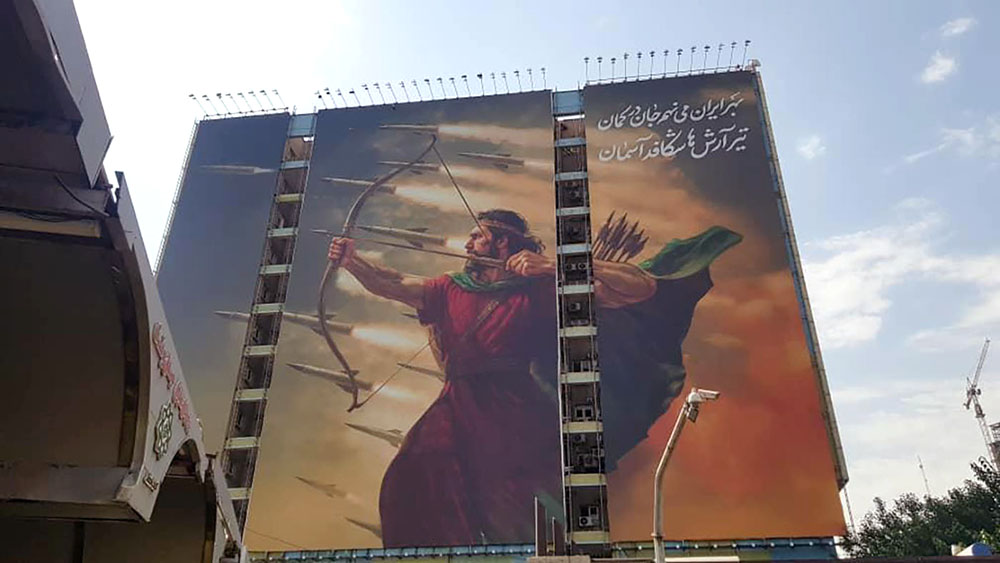
L’archer Arash avec sa flèche, accompagné de missiles iraniens, sur la place Varnak, à Téhéran (toutes les photos sont de Rana Nik-Andish)

12 SEPTEMBER 2025 • By Raha Nik-Andish

Select Other Languages French.

Il est presque impossible de maintenir les apparences et de reconstruire une identité nationale, notamment après avoir perdu une guerre. L'Iran tente pourtant de séduire une population éreintée avec plusieurs expositions et panneaux d'affichage, et même des promesses que les transgressions passées, comme la fuite du pays après la révolution de 1979, peuvent être oubliées et pardonnées.

Suite à la fin de la guerre de 12 jours, de nouvelles créations ont vu le jour dans le paysage culturel et urbain iranien. À première vue, elles pourraient sembler éparses, mais prises dans leur ensemble, elles semblent s’inscrire dans une stratégie plus large visant à relever le moral de la population et à redorer l’image du gouvernement auprès de ses citoyens. Des symboles nationalistes remis en avant dans les espaces publics à l’exposition d’œuvres d’art autrefois interdites ou marginalisées dans les musées, en passant par le retour au pays d’opérateurs culturels expatriés, ces initiatives témoignent des nouveaux efforts déployés par le régime pour redonner espoir à une société encore sous le choc de la guerre avec Israël, qui est advenue il y a moins de trois mois.

L’installation d’une statue et d’une fresque murale représentant l’archer Arash sur la place Vanak, au nord de Téhéran, en est un exemple frappant. Dans la mythologie perse, Arash (dont le nom signifie « brillant » ou « luminescent » en farsi) tire une flèche. Historiquement, l’endroit où elle tombe définit les frontières du pays. La statue en bronze de 15 mètres, réalisée par Mohammad Dehghan Mohammadi, fils du célèbre sculpteur iranien Iraj Mohammadi, a été placée dans un décor imposant. Une fresque murale incontournable, couvrant la majeure partie d’un bâtiment qui surplombe une gare routière et une station de taxis, montre des missiles lancés aux côtés de la flèche intemporelle d’Arash. Cet espace public soigneusement aménagé suggère que les prouesses militaires et les mythes anciens se partagent désormais la tâche de protéger les frontières iraniennes, si cruciales pour l’identité du pays.

C’est dans ce même contexte qu’une interview YouTube entre la pop star d’avant la révolution, Shahram Shabpareh, installé aux États-Unis, et le célèbre animateur de talk-show Ali Zia a suscité de vives réactions. Les commentaires de Shabpareh sur les difficultés de la vie en Amérique, telles que le coût élevé de l’assurance santé ou l’insécurité sociale, ont suscité des réactions mitigées en ligne. Ses détracteurs l’ont accusé d’« ignorer les réalités de la migration ». Ils lui ont également reproché de s’être entretenu avec Zia, un présentateur anciennement affilié aux médias d’État. Dans une interview ultérieure, Shabpareh a réitéré son affection pour la famille royale Pahlavi et son mépris pour le gouvernement qui l’a contraint à l’exil.

Pendant ce temps, dans le pays, le président nouvellement élu Masoud Pezeshkian a évoqué la mise en place de conditions favorables au retour des Iraniens vivant à l’étranger. Malgré l’arrestation des rapatriés dans le passé, Pezeshkian a exhorté le pouvoir judiciaire et les services de renseignement à coordonner leurs efforts afin de permettre à ceux qui ont la nostalgie de l’Iran de revenir dans leur pays après quelque 47 ans d’exil. Ces signaux envoyés par le gouvernement, combinés à des projets culturels tels que de grandes expositions dans les musées nationaux, s’inscrivent dans le cadre d’efforts concertés et combinés. Leur but est d’offrir à la fois une apparence de continuité historique et une certaine stabilité psychologique à une population iranienne qui a non seulement été blessée par la guerre, mais qui a aussi été frappée par les arrestations de certains de ses proches, identifiés à tort par le régime comme des collaborateurs d’Israël.

L’art, mais pas les cheveux, des femmes au TMOCA

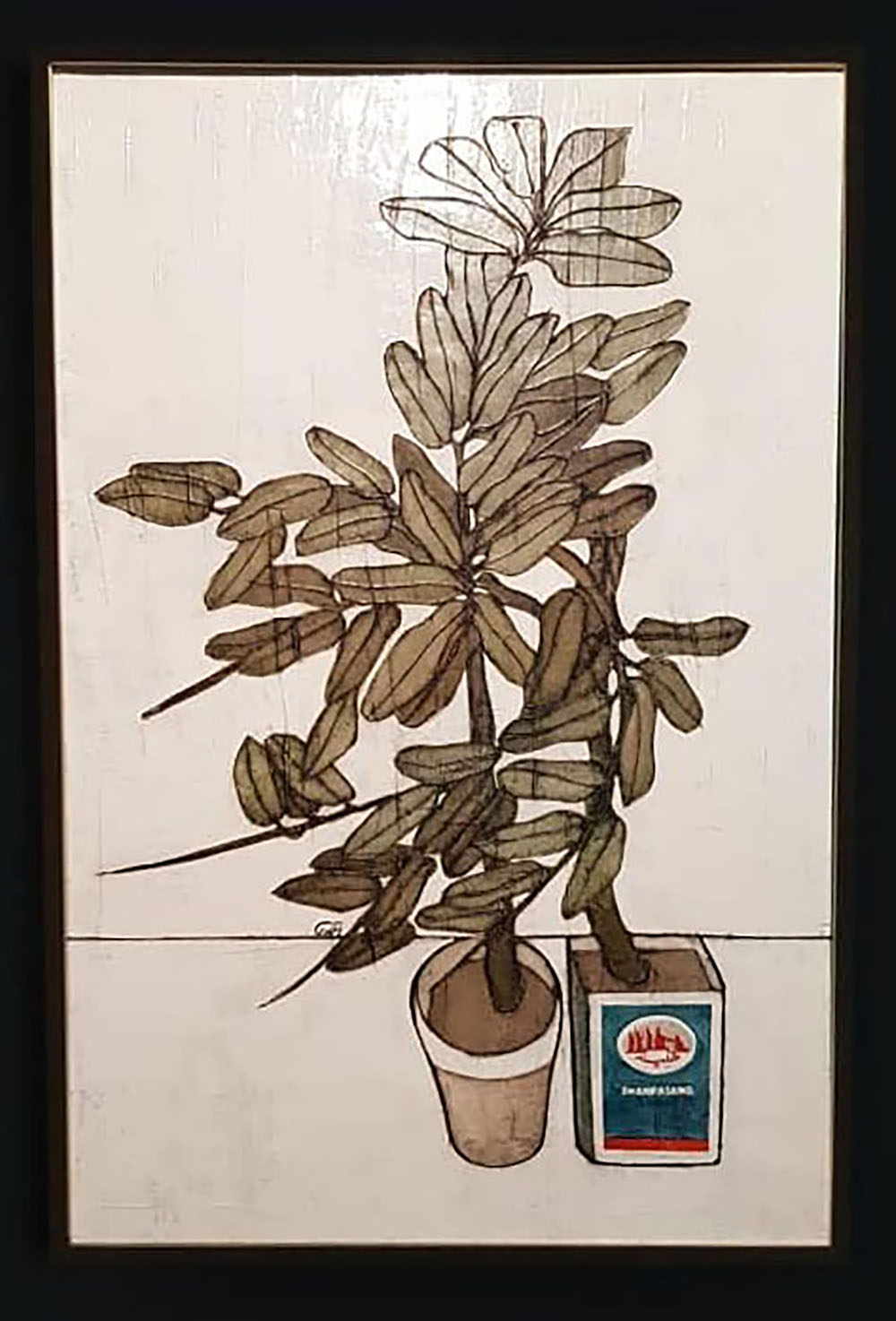
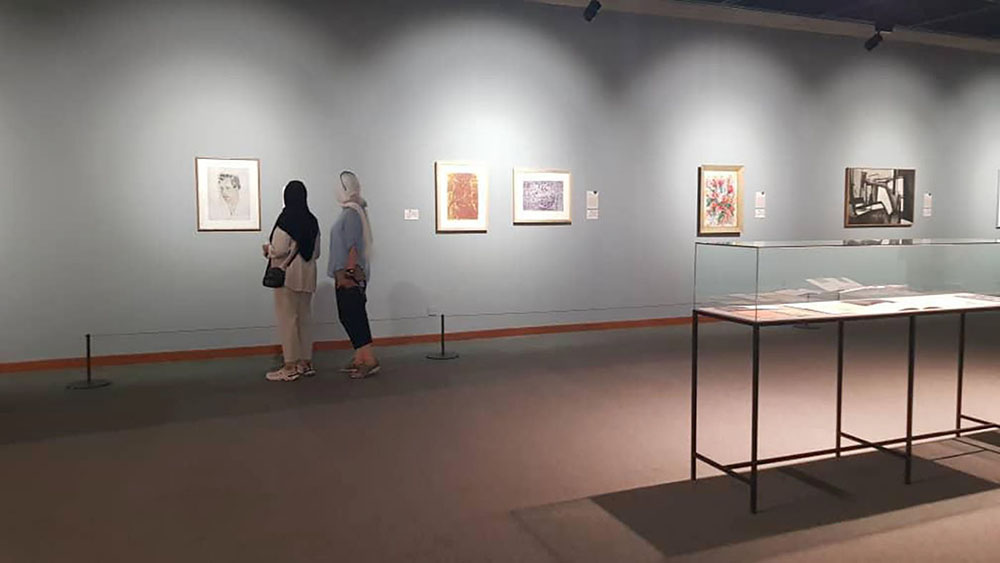
L’une des initiatives culturelles les plus marquantes de ces dernières semaines a été l’exposition « In Women’s Words » (Paroles de femmes) au Musée d’art contemporain de Téhéran (TMOCA). Ouverte jusqu’au 22 septembre, elle présente des œuvres d’artistes iraniennes pionnières, datant des années précédant la révolution iranienne de 1979. Selon la brochure accompagnant l’exposition, « la diversité des œuvres des femmes iraniennes modernes dans les années 1960 et 1970 rappelle une époque de liberté, d’expérimentation et d’audace, marquée par le pluralisme et la domination du modernisme ».

On peut y voir des œuvres de Behjat Sadr (1924-2009), Parvaneh Etemadi (1948-2005), Mansoureh Hosseini (1926-2012) et Farah Ossouli, toutes sont des artistes iraniennes de renom dont les œuvres ont rarement été vues par les jeunes Iraniens eux-mêmes. De nombreux visiteurs du TMOCA ont exprimé leur joie de découvrir ces œuvres précurseures pour la première fois. L’exposition, organisée par Toka Maleki, Afsaneh Kamran et Sajad Baghban Maher, sous la supervision de Reza Dabiri Nejad, rassemble des tableaux, des photographies, des sculptures et des vidéos d’artistes iraniennes, dont certaines ont été mises à l’écart en raison de la position politique ou critique de leur travail.

Le jour de l’inauguration, j’y suis allé avec une amie qui ne portait pas de foulard. Je lui ai dit qu’ils pourraient ne pas la laisser entrer. Elle a haussé les épaules et m’a répondu : « S’il y a un problème, je mettrai simplement mon t-shirt sur ma tête. »

À l’entrée du musée, deux gardiennes vêtues de tchadors ont demandé aux femmes qui ne portaient pas de voile de se couvrir. La plupart se sont conformées à cette demande en mettant un foulard ou un vêtement sur leurs cheveux, pour l’enlever à nouveau une fois à l’intérieur. Cette scène, si brève mais pourtant révélatrice, illustre le dualisme quotidien entre les règles officielles et le comportement des gens. C’est un fossé dans la psyché sociale bifide du pays, que beaucoup tentent de manœuvrer.

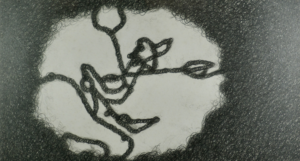
Parmi les œuvres exposées figuraient les vidéos « Turbulent » et « Tooba » de l’artiste en exil Shirin Neshat. Neshat avait quitté l’Iran en 1974 pour étudier l’art en Californie et était revenue brièvement dans son pays en 1990. Dans « Turbulent » (1998), d’un côté d’un écran divisé, le chanteur traditionnel Shoja Azari interprète une chanson d’amour persane devant un auditorium bondé. De l’autre côté, la chanteuse et compositrice expérimentale Sussan Deyhim, vêtue d’un foulard, improvise, et sa voix résonne parmi les sièges vides d’un autre auditorium. Dans « Tooba » (2002), une femme disparaît dans un arbre à l’approche des hommes. Dans ses créations artistiques, Neshat est connue pour ses critiques acerbes de la politique iranienne en matière de genre et de ses structures de pouvoir.

La menace de la guerre et l’imminente catastrophe économique ont sapé la confiance, l’attention et la motivation de la population quant à l’avenir. La société iranienne reste prisonnière d’un état d’incertitude, de son épuisement et de sa fracture psychologique. Dans de telles conditions, de tels projets culturels ainsi précipités semblent servir de sédatifs temporaires, plus que de véritables chemins vers un renouveau durable.

L’exposition comprend également une série de photographies de Yalda Moaieri, arrêtée en 2022 pour avoir couvert les manifestations qui ont suivi la mort de Mahsa Amini. Elle-même a passé plusieurs mois en prison et, pour ajouter l’injure à la blessure, elle a ensuite été forcée de nettoyer les rues. Il est remarquable que non seulement ses photographies aient été exposées au TMOCA, mais aussi que cette artiste, qui avait quitté l’Iran pour les États-Unis sans y trouver son compte, ait pu revenir dans son pays. Elle est désormais en liberté sous caution.

Zohreh Kazemi est une autre artiste présentée dans In Women’s Words, mieux connue sous le nom de Zahra Rahnavard, c’est une artiste, écrivaine, femme politique et l’épouse de Mir Hossein Mousavi. Actuellement en liberté conditionnelle, elle était assignée à résidence avec son mari depuis les élections contestées de 2009. Bien qu’elle ait récemment critiqué publiquement Netanyahu pour les attaques d’Israël contre les femmes et les filles lors du raid sur Gaza, elle est aussi, depuis longtemps, une critique redoutable des politiques de l’État iranien. Sa participation à l’exposition est un symbole notable d’un changement de ton ou, à tout le moins, d’une remise en question par les institutions officielles de la manière de reconfigurer l’espace culturel.

Selon les opérateurs du musée, toutes ces œuvres font partie de la collection du TMOCA depuis des années. Lors du vernissage, certaines artistes m’ont avoué qu’elles ne savaient pas quand le musée avait acheté leurs œuvres, ni si elles n’avaient jamais été rémunérées pour leur travail. L’un des conservateurs aurait déclaré à une artiste participante : « Nous n’avons aucune intention d’exclure qui que ce soit », mais lorsqu’on lui a demandé quelles étaient les restrictions imposées par l’extérieur, c’est-à-dire par le gouvernement, le conservateur n’a pas su répondre.

J’ai appris de certaines artistes à qui j’ai parlé lors du vernissage qu’elles n’avaient été contactées qu’une semaine avant l’ouverture de l’exposition et qu’on leur avait demandé d’envoyer une œuvre, si elles en avaient une de disponible. Une autre artiste dont les œuvres font partie de la collection permanente du musée a déclaré que ce n’est qu’après avoir reçu une invitation pour le vernissage qu’elle s’est rendu compte qu’elle participait à l’exposition. Étant donné que les expositions de cette envergure nécessitent généralement des mois de planification et de coordination, le caractère précipité de cet événement est frappant. Il semble que In Women’s Words ait été conçue comme une réponse culturelle nécessaire, comme un moyen de contribuer à rétablir un sentiment de normalité après le choc de la guerre.

Panneaux urbains

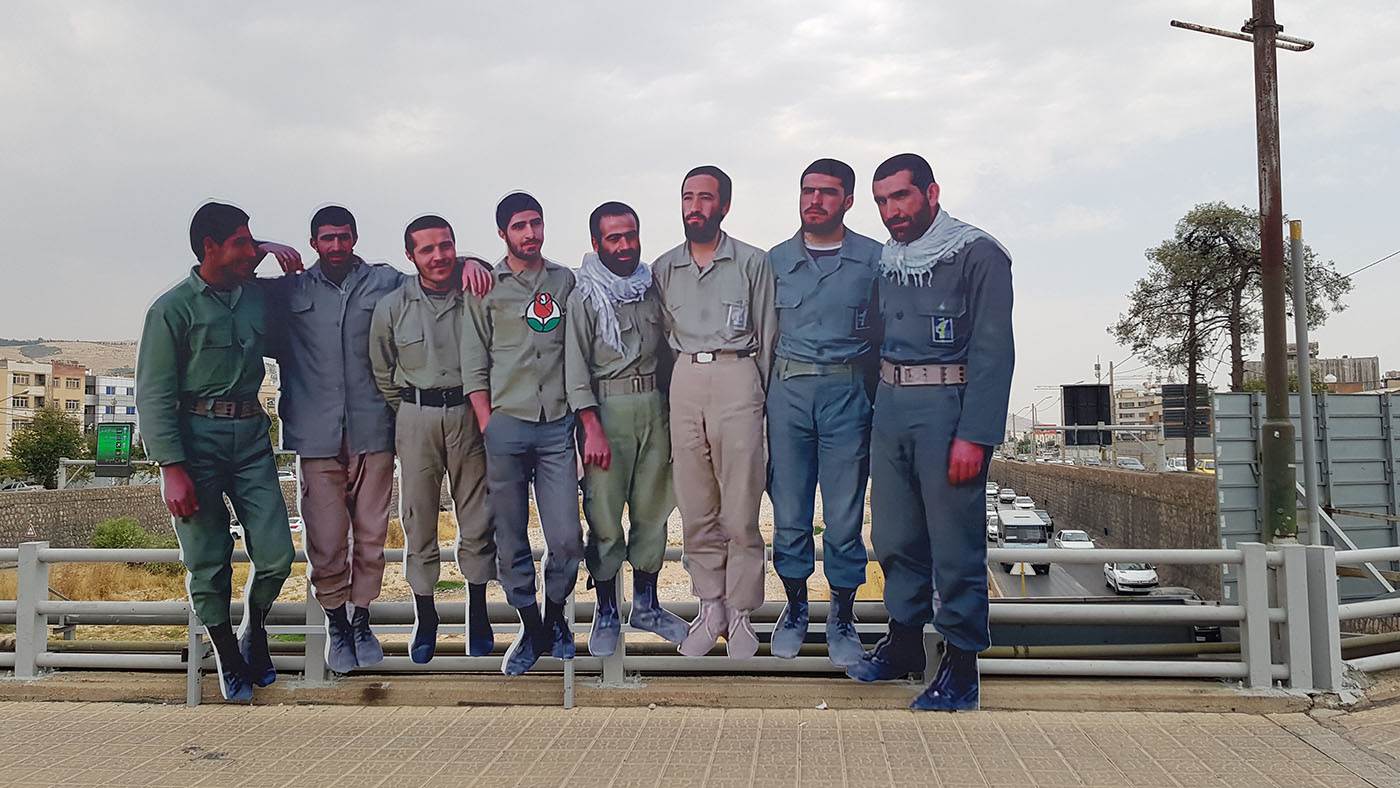
Historiquement, les images à grande échelle placées dans l’espace public ont été l’un des piliers de la communication du gouvernement avec le peuple iranien. Pendant la guerre Iran-Irak (1980-1988), des artistes tels que Khosrow Hassanzadeh (1963-2023) y ont peint les visages des martyrs tués pendant la guerre, ces images sont devenues à la fois des symboles et des célébrations du sacrifice ultime que ces hommes et ces garçons ont fait pour leur pays. Leurs expressions plaintives fixaient les passants depuis les bâtiments de la capitale. Pour beaucoup, cette guerre représente une période où, un an seulement après l’arrivée au pouvoir de l’ayatollah Khomeini, le pays se trouvait dans une situation similaire à celle d’aujourd’hui quand attaqué, il avait réussi à mobiliser des milliers de citoyens volontaires pour protéger le régime islamique naissant. Si les fresques murales représentant les martyrs de cette guerre n’ont pas complètement disparu du paysage urbain, une nouvelle version est apparue très récemment. Des découpes de photos de groupe de combattants des années 1980, les vêtements qu’ils portent témoignent de cette époque, ont été placées sur les côtés des ponts. Certains regardent pensivement les passants, tandis que d’autres semblent presque joyeux.

Le gouvernement tient à souligner le lien entre la politique actuelle et le lointain passé persan. Sur un panneau d’affichage qui est devenu viral en juillet, au lieu de l’empereur romain Valérien à genoux, humilié et vaincu devant un roi sassanide, Netanyahou apparaît en train de s’incliner devant le roi des rois Shapur Ier (240-270) dans un faux relief rocheux inspiré de celui de Naqsh-e-Rostam, près de Persépolis, l’ancienne capitale de l’empire achéménide.

Les panneaux d’affichage politiques changent rapidement. Aujourd’hui, sur une place, un panneau met en avant les commandants militaires et les scientifiques nucléaires tués pendant la guerre de 12 jours, sur fond de monarques issus de différentes dynasties perses, dont Cyrus le Grand (600-530 av. J.-C.). Tous apparaissent sous le slogan : « Nous sommes les gardiens de l’Iran de chaque époque », établissant un lien entre les personnalités contemporaines et les défenseurs historiques du pays. Il est intéressant de noter que ce panneau représente un changement inattendu dans l’utilisation traditionnelle du récit historique par la République islamique. Pendant des décennies, le gouvernement s’est distancié de la monarchie, soulignant sa rupture avec les dynasties passées, en particulier celle de Mohammad Reza Shah et sa célébration de 2 500 ans de monarchie comme d’un héritage continu, qui avait eu lieu à Persépolis. Pourtant, après la guerre de 12 jours, le régime, confronté à l’instabilité sociale dans le pays, semble s’appuyer sur l’histoire royale de l’Iran, établissant un lien entre les héros militaires et scientifiques actuels et les monarques du passé. Il en résulte un jumelage surprenant et inhabituel de deux récits historiquement opposés.

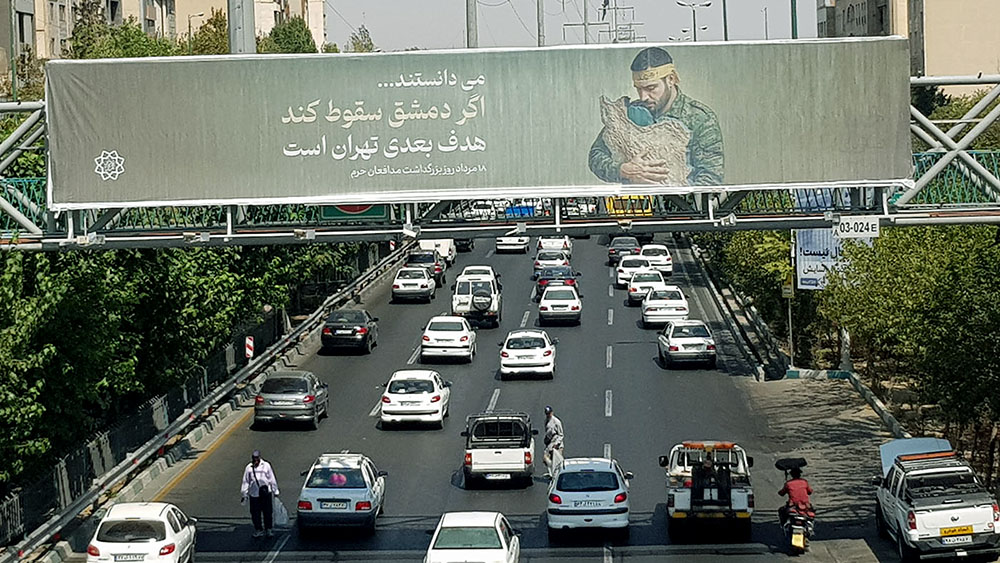
Une autre banderole suspendue au-dessus d’une autoroute à Téhéran montre un combattant serrant contre sa poitrine une carte de l’Iran, avec les mots : « Saviez-vous que si Damas tombe, Téhéran pourrait être la prochaine cible ? » Érigée pour le 18 Mordad du calendrier iranien (le 8 août du calendrier grégorien), cette journée est un jour symbolique de commémoration des « défenseurs des sanctuaires sacrés », c’est-à-dire des martyrs et des vétérans qui ont défendu les lieux sacrés. En effet, le gouvernement répondait ainsi à ses détracteurs qui avaient eu l’audace de demander, pendant la guerre de 12 jours, pourquoi le pays s’investissait-il autant dans les milices et les guerres régionales, comme le Hamas et Gaza, alors que son propre peuple et son économie souffraient ?

De nombreux artistes estiment que l’opinion publique n’est pas encore prête pour un véritable retour au travail et à la créativité. La menace de la guerre et l’imminente catastrophe économique ont sapé la confiance, l’attention et la motivation de la population quant à l’avenir. La société iranienne reste prisonnière d’un état d’incertitude, de son épuisement et de sa fracture psychologique. Dans de telles conditions, de tels projets culturels ainsi précipités semblent servir de sédatifs temporaires, plus que de véritables chemins vers un renouveau durable.


 Traduit de l’anglais par Marion Beauchamp-Levet

Raha Nik-Andish

Raha Nik-Andish is an Iranian art historian and translator in Isfahan. He left his country fourteen years ago and returned last year.

Join Our Community

TMR exists thanks to its readers and supporters. By sharing our stories and celebrating cultural pluralism, we aim to counter racism, xenophobia, and exclusion with knowledge, empathy, and artistic expression.

Learn more

RELATED

Columns

Small Moments and Their Much Larger Meaning

30 JANUARY 2026 • By Amal Ghandour
Small Moments and Their Much Larger Meaning
Essays

Jewish Supremacy and the Making of Genocide in Gaza

30 JANUARY 2026 • By Sheryl Ono
Jewish Supremacy and the Making of Genocide in Gaza
Essays

How Can Palestinians and Israelis Live Together?

30 JANUARY 2026 • By Raja Shehadeh
How Can Palestinians and Israelis Live Together?
Editorial

Why PALESTINE?

30 JANUARY 2026 • By TMR
Why PALESTINE?
Columns

Beyond Black and White: Notes from Tehran

23 JANUARY 2026 • By M. Nateqnuri
Beyond Black and White: Notes from Tehran
Opinion

What Shirin Neshat Taught Me About Iran

16 JANUARY 2026 • By Hassan Abdulrazzak
What Shirin Neshat Taught Me About Iran
Columns

Trump, The Liberator! (and the Fear Wagons)

16 JANUARY 2026 • By Amal Ghandour
Trump, The Liberator! (and the Fear Wagons)
Columns

Emm Kamel: The Future Is Here and So Is the Past

19 DECEMBER 2025 • By Amal Ghandour
<em>Emm Kamel</em>: The Future Is Here and So Is the Past
Film Reviews

If You See Something—an Iraqi Film on Asylum

12 DECEMBER 2025 • By Alex Demyanenko
<em>If You See Something</em>—an Iraqi Film on Asylum
Fiction

“Tahmina”—a story from Iran

5 DECEMBER 2025 • By Abdollah Nazari
“Tahmina”—a story from Iran
short story

“Tuesday”—a story from Palestine

5 DECEMBER 2025 • By Majd Aburrub
“Tuesday”—a story from Palestine
Film

10 Noir Films from the Arab world, Iran, and Turkey

5 DECEMBER 2025 • By TMR
10 Noir Films from the Arab world, Iran, and Turkey
Film Reviews

The Woman Who Wouldn’t Break—Cutting Through Rocks’ Sara Shahverdi

28 NOVEMBER 2025 • By Alex Demyanenko
The Woman Who Wouldn’t Break—<em>Cutting Through Rocks’</em> Sara Shahverdi
Art & Photography

Artist Interview: Corinne Silva on Israeli Settlement Gardens in Palestine

28 NOVEMBER 2025 • By Jelena Sofronijevic
Artist Interview: Corinne Silva on Israeli Settlement Gardens in Palestine
Book Reviews

Contemporary Kurdish Writers in the Diaspora

14 NOVEMBER 2025 • By Matt Broomfield
Contemporary Kurdish Writers in the Diaspora
Columns

How Much Do We Miss Umm Khulthum?

7 NOVEMBER 2025 • By Amal Ghandour
How Much Do We Miss Umm Khulthum?
Centerpiece

The Grammar of Power: On Journalism, Grief, and the Stories That Break Us

7 NOVEMBER 2025 • By Adam Makary
The Grammar of Power: On Journalism, Grief, and the Stories That Break Us
Essays

Lament For My Dear Cousin and Friend in Tulkarm

3 OCTOBER 2025 • By Thoth
Lament For My Dear Cousin and Friend in Tulkarm
Uncategorized

Reading the Landscape: Cultural Clues and Regime Messages in Iran

12 SEPTEMBER 2025 • By Raha Nik-Andish
Reading the Landscape: Cultural Clues and Regime Messages in Iran
Essays

Remaining in Light: Iranians Search for Solace and Well-Being

5 SEPTEMBER 2025 • By Malu Halasa
Remaining in Light: Iranians Search for Solace and Well-Being
Book Reviews

Hope Without Hope: Rojava and Revolutionary Commitment

11 JULY 2025 • By Arie Amaya-Akkermans
Hope Without Hope: Rojava and Revolutionary Commitment
Essays

Unwritten Stories from Palestine

4 JULY 2025 • By Thoth
Unwritten Stories from Palestine
Essays

Life Under the Shadow of Missiles: the View From Iran

20 JUNE 2025 • By Amir
Life Under the Shadow of Missiles: the View From Iran
Book Reviews

The Evin Prison Bakers’ Club — Review

6 JUNE 2025 • By Hannah Kaviani
The Evin Prison Bakers’ Club — Review
Editorial

For Our 50th Issue, Writers Reflect on Going Home

2 MAY 2025 • By TMR
For Our 50th Issue, Writers Reflect on Going Home
Art

Neither Here Nor There

2 MAY 2025 • By Myriam Cohenca
Neither Here Nor There
Essays

Leaving Abdoh, Finding Chamran

2 MAY 2025 • By Salar Abdoh
Leaving Abdoh, Finding Chamran
Essays

Looking for a Job, Living and Dying in Iran: The Logistics of Going Back

2 MAY 2025 • By Raha Nik-Andish
Looking for a Job, Living and Dying in Iran: The Logistics of Going Back
Film

Gaza, Sudan, Israel/Palestine Documentaries Show in Thessaloniki

28 MARCH 2025 • By Iason Athanasiadis
Gaza, Sudan, Israel/Palestine Documentaries Show in Thessaloniki
Centerpiece

Love and Resistance in Online Persian Dating Shows

7 MARCH 2025 • By Malu Halasa
Love and Resistance in Online Persian Dating Shows
Art & Photography

Mostafa Nodeh: Featured Artist Interview

7 FEBRUARY 2025 • By Mostafa Nodeh
Mostafa Nodeh: Featured Artist Interview
Book Reviews

Memories of Palestine through Contemporary Media

7 FEBRUARY 2025 • By Malu Halasa
Memories of Palestine through Contemporary Media
Film Reviews

My Favorite Cake, Iranian Cinema’s Bittersweet Ode to Love

17 JANUARY 2025 • By Karim Goury
<em>My Favorite Cake</em>, Iranian Cinema’s Bittersweet Ode to Love
Book Reviews

In Killing Gilda Yahya Gharagozlou Tells an Intriguing Iranian Tale

10 JANUARY 2025 • By Azadeh Moaveni
In <em>Killing Gilda</em> Yahya Gharagozlou Tells an Intriguing Iranian Tale
Book Reviews

Art History and the United Arab Emirates

10 JANUARY 2025 • By Jelena Sofronijevic
Art History and the United Arab Emirates
Essays

A Fragile Ceasefire as Lebanon Survives, Traumatized

29 NOVEMBER 2024 • By Tarek Abi Samra, Lina Mounzer
A Fragile Ceasefire as Lebanon Survives, Traumatized
Essays

A Jewish Meditation on the Palestinian Genocide

15 NOVEMBER 2024 • By Sheryl Ono
A Jewish Meditation on the Palestinian Genocide
Editorial

The Editor’s Letter Following the US 2024 Presidential Election

8 NOVEMBER 2024 • By Jordan Elgrably
The Editor’s Letter Following the US 2024 Presidential Election
Essays

The Felines that Leave Us, and the Humans that Left

1 NOVEMBER 2024 • By Farnaz Haeri, Salar Abdoh
The Felines that Leave Us, and the Humans that Left
Art & Photography

The Palestinian Gazelle

1 NOVEMBER 2024 • By Manal Mahamid
The Palestinian Gazelle
Opinion

Should a Climate-Destroying Dictatorship Host a Climate-Saving Conference?

25 OCTOBER 2024 • By Lucine Kasbarian
Should a Climate-Destroying Dictatorship Host a Climate-Saving Conference?
Book Reviews

The Walls Have Eyes—Surveillance in the Algorithm Age

18 OCTOBER 2024 • By Iason Athanasiadis
<em>The Walls Have Eyes</em>—Surveillance in the Algorithm Age
Film

Freedom is a Combat Sport: On Tatami

11 OCTOBER 2024 • By Karim Goury
Freedom is a Combat Sport: On <em>Tatami</em>
Editorial

A Year of War Without End

4 OCTOBER 2024 • By Lina Mounzer
A Year of War Without End
Art

Photographer Mohamed Mahdy—Artist at Work

27 SEPTEMBER 2024 • By Marianne Roux
Photographer Mohamed Mahdy—Artist at Work
Book Reviews

Tragic Consequences — On Western Meddling in the Middle East

13 SEPTEMBER 2024 • By Dina Rezk
Tragic Consequences — On Western Meddling in the Middle East
Essays

Meta’s Community Standards as a Tool of Digital Settler Colonialism

6 SEPTEMBER 2024 • By Omar Zahzah
Meta’s Community Standards as a Tool of Digital Settler Colonialism
Book Reviews

Israel’s Black Panthers by Asaf Elia-Shalev—a Review

19 JULY 2024 • By Ilan Benattar
<em>Israel’s Black Panthers</em> by Asaf Elia-Shalev—a Review
Poetry

Hafez, Iran’s Revered Poet, trans. Erfan Mojib & Gary Gach

15 JULY 2024 • By Erfan Mojib, Gary Gach
Hafez, Iran’s Revered Poet, trans. Erfan Mojib & Gary Gach
Fiction

“Firefly”—a short story by Alireza Iranmehr

5 JULY 2024 • By Alireza Iranmehr, Salar Abdoh
“Firefly”—a short story by Alireza Iranmehr
Books

The Mourning Diaries of Atash Shakarami

5 JULY 2024 • By Poupeh Missaghi
The Mourning Diaries of Atash Shakarami
Poetry

Three Poems by Somaia Ramish

12 JUNE 2024 • By Somaia Ramish
Three Poems by Somaia Ramish
Centerpiece

Dare Not Speak—a One-Act Play

7 JUNE 2024 • By Hassan Abdulrazzak
<em>Dare Not Speak</em>—a One-Act Play
Interviews

Nothing is Normal, Nothing Is What it Seems (Underground Theatre in Iran After the Woman, Life, Freedom Movement)

7 JUNE 2024 • By Mehrnaz Daneshvar, Salar Abdoh
Nothing is Normal, Nothing Is What it Seems (Underground Theatre in Iran After the Woman, Life, Freedom Movement)
Opinion

Equating Critique of Israel with Antisemitism, US Academics are Being Silenced

12 APRIL 2024 • By Maura Finkelstein
Equating Critique of Israel with Antisemitism, US Academics are Being Silenced
Featured Artist

Bani Khoshnoudi: Featured Artist for PARIS

1 APRIL 2024 • By TMR, Jordan Elgrably
Bani Khoshnoudi: Featured Artist for PARIS
Art & Photography

Will Artists Against Genocide Boycott the Venice Biennale?

18 MARCH 2024 • By Hadani Ditmars
Will Artists Against Genocide Boycott the Venice Biennale?
Essays

Israel’s Environmental and Economic Warfare on Lebanon

3 MARCH 2024 • By Michelle Eid
Israel’s Environmental and Economic Warfare on Lebanon
Columns

Genocide: “That bell can’t be unrung. That thought can’t be unthunk.”

3 MARCH 2024 • By Amal Ghandour
Genocide: “That bell can’t be unrung. That thought can’t be unthunk.”
Book Reviews

Eyeliner: A Cultural History by Zahra Hankir—A Review

19 FEBRUARY 2024 • By Nazli Tarzi
<em>Eyeliner: A Cultural History</em> by Zahra Hankir—A Review
short story

“Water”—a short story by Salar Abdoh

4 FEBRUARY 2024 • By Salar Abdoh
“Water”—a short story by Salar Abdoh
Essays

A Treatise on Love

4 FEBRUARY 2024 • By Maryam Haidari, Salar Abdoh
A Treatise on Love
Featured article

Israel-Palestine: Peace Under Occupation?

29 JANUARY 2024 • By Laëtitia Soula
Israel-Palestine: Peace Under Occupation?
Books

Illuminated Reading for 2024: Our Anticipated Titles

22 JANUARY 2024 • By TMR
Illuminated Reading for 2024: Our Anticipated Titles
Book Reviews

An Iranian Novelist Seeks the Truth About a Plane Crash

15 JANUARY 2024 • By Sepideh Farkhondeh
An Iranian Novelist Seeks the Truth About a Plane Crash
Columns

Messages From Gaza Now

11 DECEMBER 2023 • By Hossam Madhoun
Messages From Gaza Now
Film

Religious Misogyny Personified in Ali Abbasi’s Holy Spider

11 DECEMBER 2023 • By Bavand Karim
Religious Misogyny Personified in Ali Abbasi’s <em>Holy Spider</em>
TMR 37 • Endings & Beginnings

“The Summer They Heard Music”—a short story by MK Harb

3 DECEMBER 2023 • By MK Harb
“The Summer They Heard Music”—a short story by MK Harb
Fiction

“The Waiting Bones”—an essay by Maryam Haidari

3 DECEMBER 2023 • By Maryam Haidari, Salar Abdoh
“The Waiting Bones”—an essay by Maryam Haidari
Fiction

“I, Hanan”—a Gazan tale of survival by Joumana Haddad

3 DECEMBER 2023 • By Joumana Haddad
“I, Hanan”—a Gazan tale of survival by Joumana Haddad
Book Reviews

First Kurdish Sci-Fi Collection is Rooted in the Past

28 NOVEMBER 2023 • By Matt Broomfield
First Kurdish Sci-Fi Collection is Rooted in the Past
Opinion

Gaza vs. Mosul from a Medical and Humanitarian Standpoint

27 NOVEMBER 2023 • By Ahmed Twaij
Gaza vs. Mosul from a Medical and Humanitarian Standpoint
Art & Photography

Palestinian Artists & Anti-War Supporters of Gaza Cancelled

27 NOVEMBER 2023 • By Nada Ghosn
Palestinian Artists & Anti-War Supporters of Gaza Cancelled
Fiction

Bahar: 22 years in the Life of a Compulsory Hijabi in Teheran

20 NOVEMBER 2023 • By Joumana Haddad
Bahar: 22 years in the Life of a Compulsory Hijabi in Teheran
Art & Photography

Iranian Women Photographers: Life, Freedom, Music, Art & Hair

20 NOVEMBER 2023 • By Malu Halasa
Iranian Women Photographers: Life, Freedom, Music, Art & Hair
Book Reviews

The Fiction of Palestine’s Ghassan Zaqtan

13 NOVEMBER 2023 • By Cory Oldweiler
The Fiction of Palestine’s Ghassan Zaqtan
Opinion

Beautiful October 7th Art Belies the Horrors of War

13 NOVEMBER 2023 • By Mark LeVine
Beautiful October 7th Art Belies the Horrors of War
Islam

October 7 and the First Days of the War

23 OCTOBER 2023 • By Robin Yassin-Kassab
October 7 and the First Days of the War
Editorial

Palestine and the Unspeakable

16 OCTOBER 2023 • By Lina Mounzer
Palestine and the Unspeakable
Book Reviews

Reza Aslan’s An American Martyr in Persia Argues for US-Iranian Friendship

1 OCTOBER 2023 • By Dalia Sofer
Reza Aslan’s <em>An American Martyr in Persia</em> Argues for US-Iranian Friendship
Art

Special World Picks Sept 15-26 on TMR’s Third Anniversary

14 SEPTEMBER 2023 • By TMR
Special World Picks Sept 15-26 on TMR’s Third Anniversary
Essays

A Day in the Life with Forugh Farrokhzad (and a Tortoise)

3 SEPTEMBER 2023 • By Fargol Malekpoosh
A Day in the Life with Forugh Farrokhzad (and a Tortoise)
Book Reviews

What’s the Solution for Jews and Palestine in the Face of Apartheid Zionism?

21 AUGUST 2023 • By Jonathan Ofir
What’s the Solution for Jews and Palestine in the Face of Apartheid Zionism?
Opinion

The Middle East is Once Again West Asia

14 AUGUST 2023 • By Chas Freeman, Jr.
The Middle East is Once Again West Asia
Book Reviews

Can the Kurdish Women’s Movement Transform the Middle East?

31 JULY 2023 • By Matt Broomfield
Can the Kurdish Women’s Movement Transform the Middle East?
Opinion

The End of the Palestinian State? Jenin Is Only the Beginning

10 JULY 2023 • By Yousef M. Aljamal
The End of the Palestinian State? Jenin Is Only the Beginning
Fiction

Arrival in the Dark—fiction from Alireza Iranmehr

2 JULY 2023 • By Alireza Iranmehr, Salar Abdoh
Arrival in the Dark—fiction from Alireza Iranmehr
Fiction

“Here, Freedom”—fiction from Danial Haghighi

2 JULY 2023 • By Danial Haghighi, Salar Abdoh
“Here, Freedom”—fiction from Danial Haghighi
Essays

Zahhāk: An Etiology of Evil

2 JULY 2023 • By Omid Arabian
Zahhāk: An Etiology of Evil
Fiction

“The Long Walk of the Martyr”—fiction from Salar Abdoh

2 JULY 2023 • By Salar Abdoh
“The Long Walk of the Martyr”—fiction from Salar Abdoh
Art & Photography

Newly Re-Opened, Beirut’s Sursock Museum is a Survivor

12 JUNE 2023 • By Arie Amaya-Akkermans
Newly Re-Opened, Beirut’s Sursock Museum is a Survivor
Essays

Alien Entities in the Desert

4 JUNE 2023 • By Dror Shohet
Alien Entities in the Desert
Featured Artist

Nasrin Abu Baker: The Markaz Review Featured Artist, June 2023

4 JUNE 2023 • By TMR
Nasrin Abu Baker: The Markaz Review Featured Artist, June 2023
Islam

From Pawns to Global Powers: Middle East Nations Strike Back

29 MAY 2023 • By Chas Freeman, Jr.
From Pawns to Global Powers: Middle East Nations Strike Back
Book Reviews

How Bethlehem Evolved From Jerusalem’s Sleepy Backwater to a Global Town

15 MAY 2023 • By Karim Kattan
How Bethlehem Evolved From Jerusalem’s Sleepy Backwater to a Global Town
TMR Conversations

TMR CONVERSATIONS: Amal Ghandour Interviews Raja Shehadeh

11 MAY 2023 • By Amal Ghandour, Raja Shehadeh
TMR CONVERSATIONS: Amal Ghandour Interviews Raja Shehadeh
Photography

Iran on the Move—Photos by Peyman Hooshmandzadeh

1 MAY 2023 • By Peyman Hooshmandzadeh, Malu Halasa
Iran on the Move—Photos by Peyman Hooshmandzadeh
Book Reviews

Hard Work: Kurdish Kolbars or Porters Risk Everything

1 MAY 2023 • By Clive Bell
Hard Work: Kurdish <em>Kolbars</em> or Porters Risk Everything
Film Reviews

Yallah Gaza! Presents the Case for Gazan Humanity

10 APRIL 2023 • By Karim Goury
<em>Yallah Gaza!</em> Presents the Case for Gazan Humanity
Beirut

Tel Aviv-Beirut, a Film on War, Love & Borders

20 MARCH 2023 • By Karim Goury
<em>Tel Aviv-Beirut</em>, a Film on War, Love & Borders
Beirut

Interview with Michale Boganim, Director of Tel Aviv-Beirut

20 MARCH 2023 • By Karim Goury
Interview with Michale Boganim, Director of <em>Tel Aviv-Beirut</em>
Book Reviews

In Search of Fathers: Raja Shehadeh’s Palestinian Memoir

13 MARCH 2023 • By Amal Ghandour
In Search of Fathers: Raja Shehadeh’s Palestinian Memoir
Cities

The Odyssey That Forged a Stronger Athenian

5 MARCH 2023 • By Iason Athanasiadis
The Odyssey That Forged a Stronger Athenian
Essays

Home Under Siege: a Palestine Photo Essay

5 MARCH 2023 • By Anam Raheem
Home Under Siege: a Palestine Photo Essay
Art & Photography

Becoming Palestine Imagines a Liberated Future

27 FEBRUARY 2023 • By Katie Logan
<em>Becoming Palestine</em> Imagines a Liberated Future
Book Reviews

White Torture Prison Interviews Condemn Solitary Confinement

13 FEBRUARY 2023 • By Kamin Mohammadi
<em>White Torture</em> Prison Interviews Condemn Solitary Confinement
Columns

Letters From Tehran: Braving Tehran’s Roundabout, Maidan Valiasr

30 JANUARY 2023 • By TMR
Letters From Tehran: Braving Tehran’s Roundabout, Maidan Valiasr
Book Reviews

Editor’s Picks: Magical Realism in Iranian Lit

30 JANUARY 2023 • By Rana Asfour
Editor’s Picks: Magical Realism in Iranian Lit
Art

The Creative Resistance in Palestinian Art

26 DECEMBER 2022 • By Malu Halasa
The Creative Resistance in Palestinian Art
Featured article

Don’t Be a Stooge for the Regime—Iranians Reject State-Controlled Media!

15 DECEMBER 2022 • By Malu Halasa
Don’t Be a Stooge for the Regime—Iranians Reject State-Controlled Media!
Columns

Siri Hustvedt & Ahdaf Souief Write Letters to Imprisoned Writer Narges Mohammadi

15 DECEMBER 2022 • By TMR
Siri Hustvedt & Ahdaf Souief Write Letters to Imprisoned Writer Narges Mohammadi
Music

Revolutionary Hit Parade: 12+1 Protest Songs from Iran

15 DECEMBER 2022 • By Malu Halasa
Revolutionary Hit Parade: 12+1 Protest Songs from Iran
Essays

Conflict and Freedom in Palestine, a Trip Down Memory Lane

15 DECEMBER 2022 • By Eman Quotah
Film

Imprisoned Director Jafar Panahi’s No Bears

15 DECEMBER 2022 • By Clive Bell
Imprisoned Director Jafar Panahi’s <em>No Bears</em>
Columns

Sudden Journeys: Israel’s Intimate Separations—Part 3

5 DECEMBER 2022 • By Jenine Abboushi
Sudden Journeys: Israel’s Intimate Separations—Part 3
Book Reviews

Fida Jiryis on Palestine in Stranger in My Own Land

28 NOVEMBER 2022 • By Diana Buttu
Fida Jiryis on Palestine in <em>Stranger in My Own Land</em>
Opinion

Historic Game on the Horizon: US Faces Iran Once More

28 NOVEMBER 2022 • By Mireille Rebeiz
Opinion

Fragile Freedom, Fragile States in the Muslim World

24 OCTOBER 2022 • By I. Rida Mahmood
Fragile Freedom, Fragile States in the Muslim World
Opinion

Letter From Tehran: On the Pain of Others, Once Again

24 OCTOBER 2022 • By Sara Mokhavat
Letter From Tehran: On the Pain of Others, Once Again
Poetry

The Heroine Forugh Farrokhzad—”Only Voice Remains”

15 OCTOBER 2022 • By Sholeh Wolpé
The Heroine Forugh Farrokhzad—”Only Voice Remains”
Art

#MahsaAmini—Art by Rachid Bouhamidi, Los Angeles

15 OCTOBER 2022 • By Rachid Bouhamidi
#MahsaAmini—Art by Rachid Bouhamidi, Los Angeles
Art & Photography

Homage to Mahsa Jhina Amini & the Women-Led Call for Freedom

15 OCTOBER 2022 • By TMR
Homage to Mahsa Jhina Amini & the Women-Led Call for Freedom
Art

Defiance—an essay from Sara Mokhavat

15 OCTOBER 2022 • By Sara Mokhavat, Salar Abdoh
Defiance—an essay from Sara Mokhavat
Columns

Sudden Journeys: Israel’s Intimate Separations—Part 1

26 SEPTEMBER 2022 • By Jenine Abboushi
Sudden Journeys: Israel’s Intimate Separations—Part 1
Essays

Phoneless in Filthy Berlin

15 SEPTEMBER 2022 • By Maisan Hamdan, Rana Asfour
Phoneless in Filthy Berlin
Columns

Unapologetic Palestinians, Reactionary Germans

15 SEPTEMBER 2022 • By Abir Kopty
Unapologetic Palestinians, Reactionary Germans
Art & Photography

Photographer Mohamed Badarne (Palestine) and his U48 Project

15 SEPTEMBER 2022 • By Viola Shafik
Photographer Mohamed Badarne (Palestine) and his U48 Project
Art & Photography

Shirin Mohammad: Portrait of an Artist Between Berlin & Tehran

15 SEPTEMBER 2022 • By Noushin Afzali
Shirin Mohammad: Portrait of an Artist Between Berlin & Tehran
Columns

Salman Rushdie, Aziz Nesin and our Lingering Fatwas

22 AUGUST 2022 • By Sahand Sahebdivani
Salman Rushdie, Aziz Nesin and our Lingering Fatwas
Opinion

Attack on Salman Rushdie is Shocking Tip of the Iceberg

15 AUGUST 2022 • By Jordan Elgrably
Attack on Salman Rushdie is Shocking Tip of the Iceberg
Art

Abundant Middle Eastern Talent at the ’22 Avignon Theatre Fest

18 JULY 2022 • By Nada Ghosn
Abundant Middle Eastern Talent at the ’22 Avignon Theatre Fest
Editorial

Editorial: Is the World Driving Us Mad?

15 JULY 2022 • By TMR
Editorial: Is the World Driving Us Mad?
Centerpiece

Big Laleh, Little Laleh—memoir by Shokouh Moghimi

15 JULY 2022 • By Shokouh Moghimi, Salar Abdoh
Big Laleh, Little Laleh—memoir by Shokouh Moghimi
Columns

World Refugee Day — What We Owe Each Other

20 JUNE 2022 • By Jordan Elgrably
World Refugee Day — What We Owe Each Other
Art & Photography

Featured Artist: Steve Sabella, Beyond Palestine

15 JUNE 2022 • By TMR
Featured Artist: Steve Sabella, Beyond Palestine
Opinion

Israel and Palestine: Focus on the Problem, Not the Solution

30 MAY 2022 • By Mark Habeeb
Israel and Palestine: Focus on the Problem, Not the Solution
Essays

We, Palestinian Israelis

15 MAY 2022 • By Jenine Abboushi
We, Palestinian Israelis
Book Reviews

In East Jerusalem, Palestinian Youth Struggle for Freedom

15 MAY 2022 • By Mischa Geracoulis
Featured excerpt

Palestinian and Israeli: Excerpt from “Haifa Fragments”

15 MAY 2022 • By khulud khamis
Palestinian and Israeli: Excerpt from “Haifa Fragments”
Latest Reviews

Palestinian Filmmaker, Israeli Passport

15 MAY 2022 • By Jordan Elgrably
Palestinian Filmmaker, Israeli Passport
Opinion

Palestinians and Israelis Will Commemorate the Nakba Together

25 APRIL 2022 • By Rana Salman, Yonatan Gher
Palestinians and Israelis Will Commemorate the Nakba Together
Book Reviews

Abū Ḥamza’s Bread

15 APRIL 2022 • By Philip Grant
Abū Ḥamza’s Bread
Columns

Not Just Any Rice: Persian Kateh over Chelo

15 APRIL 2022 • By Maryam Mortaz, A.J. Naddaff
Not Just Any Rice: Persian Kateh over Chelo
Film Reviews

Palestine in Pieces: Hany Abu-Assad’s Huda’s Salon

21 MARCH 2022 • By Jordan Elgrably
Palestine in Pieces: Hany Abu-Assad’s <em>Huda’s Salon</em>
Opinion

U.S. Sanctions Russia for its Invasion of Ukraine; Now Sanction Israel for its Occupation of Palestine

21 MARCH 2022 • By Yossi Khen, Jeff Warner
U.S. Sanctions Russia for its Invasion of Ukraine; Now Sanction Israel for its Occupation of Palestine
Latest Reviews

Three Love Poems by Rumi, Translated by Haleh Liza Gafori

15 MARCH 2022 • By Haleh Liza Gafori
Three Love Poems by Rumi, Translated by Haleh Liza Gafori
Columns

Getting to the Other Side: a Kurdish Migrant Story

15 JANUARY 2022 • By Iason Athanasiadis
Getting to the Other Side: a Kurdish Migrant Story
Art & Photography

Refugees of Afghanistan in Iran: a Photo Essay by Peyman Hooshmandzadeh

15 JANUARY 2022 • By Peyman Hooshmandzadeh, Salar Abdoh
Refugees of Afghanistan in Iran: a Photo Essay by Peyman Hooshmandzadeh
Book Reviews

Meditations on The Ungrateful Refugee

15 JANUARY 2022 • By Rana Asfour
Meditations on <em>The Ungrateful Refugee</em>
Interviews

The Fabulous Omid Djalili on Good Times and the World

15 DECEMBER 2021 • By Jordan Elgrably
The Fabulous Omid Djalili on Good Times and the World
Essays

Syria Through British Eyes

29 NOVEMBER 2021 • By Rana Haddad
Syria Through British Eyes
Film Reviews

Victims of Discrimination Never Forget in The Forgotten Ones

1 NOVEMBER 2021 • By Jordan Elgrably
Victims of Discrimination Never Forget in <em>The Forgotten Ones</em>
Featured excerpt

Memoirs of a Militant, My Years in the Khiam Women’s Prison

15 OCTOBER 2021 • By Nawal Qasim Baidoun
Memoirs of a Militant, My Years in the Khiam Women’s Prison
Film Reviews

Will Love Triumph in the Midst of Gaza’s 14-Year Siege?

11 OCTOBER 2021 • By Jordan Elgrably
Will Love Triumph in the Midst of Gaza’s 14-Year Siege?
Art & Photography

Hasteem, We Are Here: The Collective for Black Iranians

15 SEPTEMBER 2021 • By Maryam Sophia Jahanbin
Hasteem, We Are Here: The Collective for Black Iranians
Essays

Why Resistance Is Foundational to Kurdish Literature

15 SEPTEMBER 2021 • By Ava Homa
Why Resistance Is Foundational to Kurdish Literature
Featured excerpt

The Harrowing Life of Kurdish Freedom Activist Kobra Banehi

15 SEPTEMBER 2021 • By Kobra Banehi, Jordan Elgrably
The Harrowing Life of Kurdish Freedom Activist Kobra Banehi
Latest Reviews

Women Comic Artists, from Afghanistan to Morocco

15 AUGUST 2021 • By Sherine Hamdy
Women Comic Artists, from Afghanistan to Morocco
Columns

In Flawed Democracies, White Supremacy and Ethnocentrism Flourish

1 AUGUST 2021 • By Mya Guarnieri Jaradat
In Flawed Democracies, White Supremacy and Ethnocentrism Flourish
Essays

Making a Film in Gaza

14 JULY 2021 • By Elana Golden
Making a Film in Gaza
Weekly

The Unfinished Presidency of Jimmy Carter

4 JULY 2021 • By Maryam Zar
The Unfinished Presidency of Jimmy Carter
Book Reviews

ISIS and the Absurdity of War in the Age of Twitter

4 JULY 2021 • By Jessica Proett
ISIS and the Absurdity of War in the Age of Twitter
Columns

The Diplomats’ Quarter: Wasta of the Palestinian Authority

14 JUNE 2021 • By Raja Shehadeh
The Diplomats’ Quarter: Wasta of the Palestinian Authority
Book Reviews

The Triumph of Love and the Palestinian Revolution

16 MAY 2021 • By Fouad Mami
Art

The Murals of “Education is Not a Crime”

14 MAY 2021 • By Saleem Vaillancourt
The Murals of “Education is Not a Crime”
Essays

The Wall We Can’t Tell You About

14 MAY 2021 • By Jean Lamore
The Wall We Can’t Tell You About
TMR 7 • Truth?

The Crash, Covid-19 and Other Iranian Stories

14 MARCH 2021 • By Malu Halasa
The Crash, Covid-19 and Other Iranian Stories
TMR 6 • Revolutions

The Revolution Sees its Shadow 10 Years Later

14 FEBRUARY 2021 • By Mischa Geracoulis
The Revolution Sees its Shadow 10 Years Later

Leave a Comment

Your email address will not be published. Required fields are marked *

four × three =

Scroll to Top