<em>Controlled Demolition</em>: an Epistolary Review

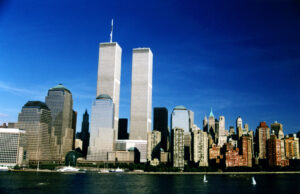
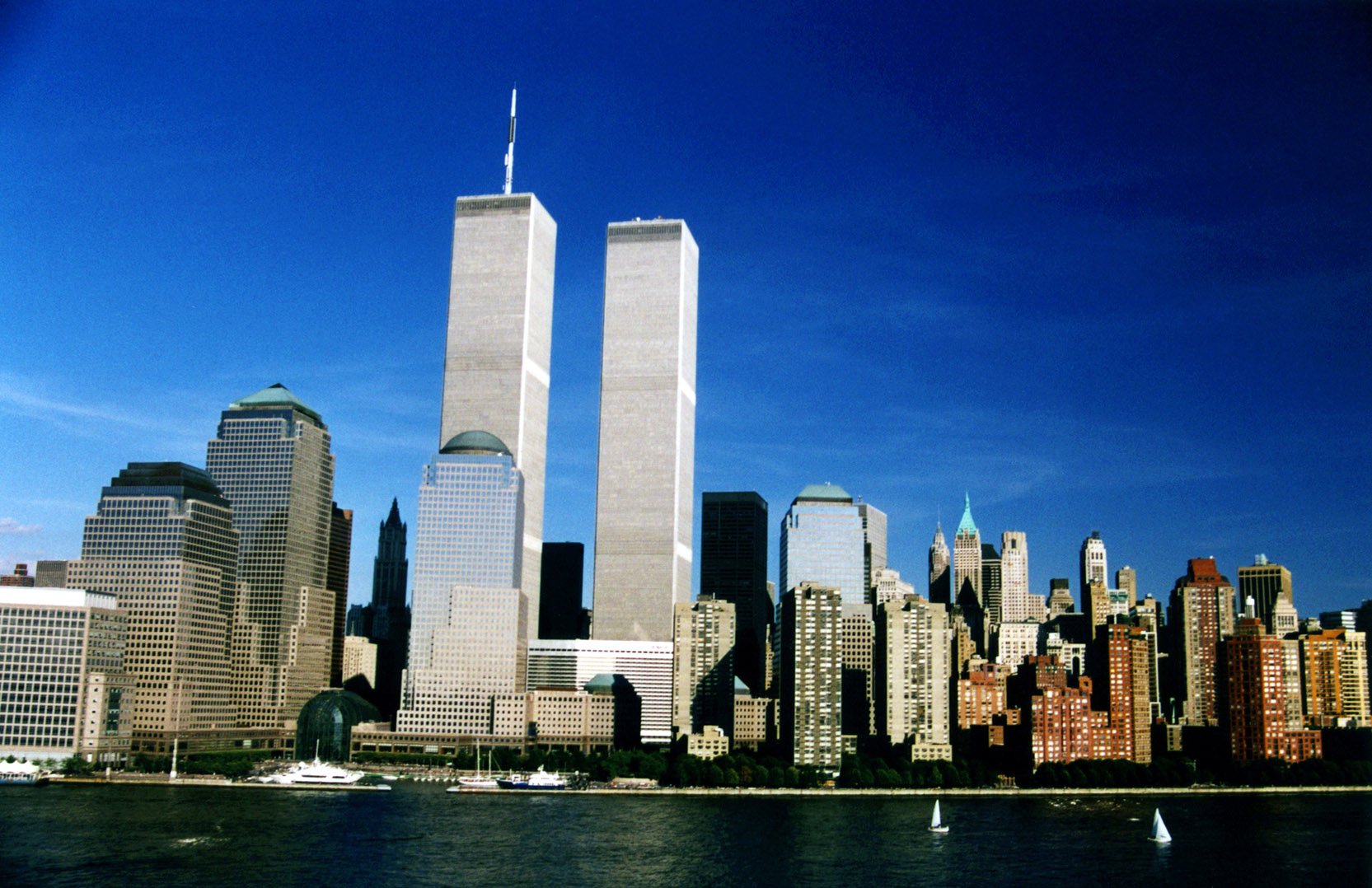
The pristine twin towers in lower Manhattan on a sunny morning before 9/11 (photo Mdfotori).

16 JANUARY 2026 • By Lina Mounzer

Select Other Languages French.

For a book that demands a different, more active, form of engagement, TMR Senior Editor Lina Mounzer offers a different kind of review, penning a letter from reader to author.

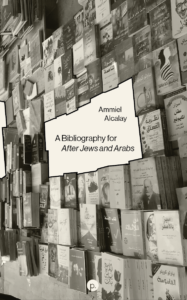
Controlled Demolition, by Ammiel Alcalay
Litmus Press 2025
ISBN 9781933959955


Dear Ammiel,

Halfway through my second read of Controlled Demolition I decided that this review should be in the form of a letter. Initially, I ignored this impulse. I sat down to write something more traditional, beginning as follows:

Ammiel Alcalay is the most important writer you’ve probably never heard of. A writer’s writer, the praise for his new book, Controlled Demolition, which is in fact four books, three already published — Scrapmetal (2007), the cairo notebooks (1993), from the warring factions (2002) — and the new, eponymous Controlled Demolition (2025), is proof of just who considers themselves a fan. No less than Diane di Prima, Etel Adnan, Elias Khoury, and Adrienne Rich.

And yet the tenor of this beginning, true as it is, struck me as too declarative and thus thoroughly inappropriate to the book. Then I realized that the problem was not merely with the tenor but with the entire format.
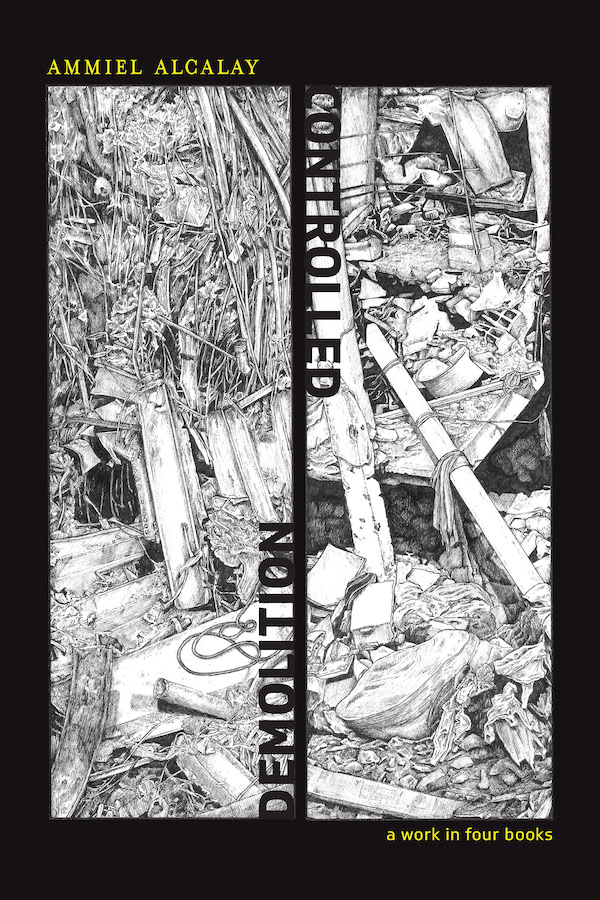

Controlled Demolition is available from Litmus Press.

One might argue that in writing this review as a letter, I risk diluting my critical analysis, especially when the recipient is someone I am privileged to be able to call a friend. It’s a fair question but one that seems beside the point in this case. It’s not that I have no wish to be critical, but rather that the book demands a different kind of response; one that sidesteps the traditional review framework. The work implicates you in its creation, and thus requires a more active form of engagement, without which it feels “unfinished.” Not in the sense that any book can be considered incomplete without a reader, nor in the sense of being “unpolished” or “not-deliberate,” and not even because the two newer books that make up the volume, Scrapmetal and Controlled Demolition are subtitled “work[s] in progress.” No, it’s that the book, as a whole, feels less like a concluded object or a closed system, and more like an ongoing investigation, one that invites you in as participant. It asks you to engage in a mode of thinking, and once you’re inside it — the book; that mode of thinking — any analysis that depends on a more remote and aloof posture, that is, the posture demanded by a conventional review, seems counterproductive.

Did this book engage me in the way I believe it intended? Yes. This letter, the fact that this review is a letter, is proof. For this is a book in constant dialogue — with history, with other books and writers, with film scripts and testimonials and ancient poetry and court transcripts and so many other kinds of texts. In dialogue even with itself, with older and past versions of itself. And what is a letter but that? One side of a dialogue.

“A dialogue” is also the most apt way to describe the book as a whole. Otherwise I would be stuck with an imprecise verbal pastiche, saying things like “a mixture of poetry and prose,” “critical essay meets intellectual memoir,” “a history-in-verse,” or even “a poem made of history.” And all of them too lofty sounding for a book that is ultimately very readable and quite down to earth, grounded in a politics of reciprocity and deep care. For all its return to the ancient past, it is clear, as you write, that “Love of the ruins inflames not my heart // but the love of those who once inhabited them.” As such, I am convinced, too, of the manifestos the book lays out for itself, though you might quibble at calling them that. I read fragments such as “‘to awaken public hope’” which you complete with “’in the tide of human things,’” and felt, in spite of the bleak history the book describes, as though such a thing were indeed possible.

I thought immediately of people to whom I wish to gift this book, chiefly my friend C, who was talking to me about the failure of language before the horror of genocide. I told her language always fails to capture the visceral, always comes as an abstraction after the pulsing/living fact and thus in some ways diminishes its horror, but that wasn’t what she meant at all. She meant something bigger — the failure of language to account for catastrophic violence “in the tide of human things.” That is, the failure of language, or rather writing, to both acknowledge the grievous singularity of certain historical events and at the same time refuse to single them out as exceptional or unprecedented. Which leads me to something I came to understand in the wake of the Beirut port explosion in August 2020 — that we live in systems that use disconnection as a fundamental method of domination. Not just disconnection between people, fomented through political division, but disconnection between ideas and especially events. What these systems seek to obscure is what you’ve called, in your book a little history (2013), “the reciprocal relationship between cause and effect.” Allow me to quote a little further from that book, because these lines became, and remain, fundamental to how I approach my own writing. They are also, I believe, fundamental to understanding the entire effort behind, and impact of, Controlled Demolition:

It is crucial that we weigh and measure our efforts in light of our relationship to, and reception of, things that take place in other parts of the world. Otherwise, no matter how profound the personal impact of such acts of creation and preservation might be, they can revert to mere markers of identity and ownership. They cease to serve as proof of the refusal to let our histories and experiences be administered.

I could parse these few sentences endlessly, but what I found most galvanizing is the warning that if we don’t consider events in connection with each another, if we follow the oftentimes very well-intentioned, if not high-minded, impulse to exceptionalize certain events, we end up using them as “mere markers of identity and ownership.” I think about how Zionists insist that the Holocaust never be universalized or compared to any other genocide, or even how intersectionality was hijacked and made to serve the individualist aims of identity politics, so that people with ostensibly the same progressive goals end up policing one another’s language and infighting over who is most oppressed. Situations that only end up serving the systems of dominance that, like any authority, conquers through division and the imposition of its own interpretative frameworks, which is exactly the mechanism through which it “[administers] our histories and experiences.”

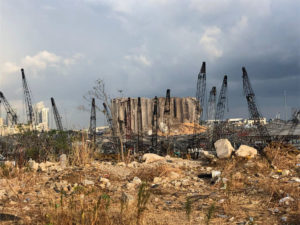
I brought up the Beirut port explosion earlier, referring to the evening of August 4, 2020, when an unknown tonnage of ammonium nitrate, unsafely stored and left to deteriorate for years in a hangar at the Beirut port, ignited — either by accident or through a deliberate act of sabotage, I’m not sure we’ll ever know — causing one of the largest non-nuclear explosions in history, one that decimated entire neighborhoods, killed some 250 people, and left thousands injured and tens of thousands homeless. In many ways, yes, the event was exceptional, and our insistence on that fact — “our” meaning those of us who lived through it — is a way of communicating the scale of its horror. We are a people who have experienced endless iterations of violence; to describe the explosion as something that had until then been unimaginable, even within that extensive knowledge of violence, was fundamental to explaining the impact of the event. And yet to insist on it as exceptional severs its relationship to other things: not only to the history of violence in Lebanon and the way our ruling classes have always treated people’s lives as cheap and expendable, but also to other instances of disasters caused by deliberate negligence, such as the Grenfell tower fire, the catastrophic toll of Hurricane Katrina, and mine and bridge collapses the world over. Therefore, framing it as an isolated event serves to exonerate an entire system; to obscure the fact that said system is engineered so that these sorts of entirely preventable disasters are rules and not exceptions.

How then do we preserve the visceral singularity of experience — which is essential to honoring the dignity of those who lived through extraordinary circumstance — while also preserving the “reciprocal relationship between cause and effect”? What I loved about Controlled Demolition as a whole, what I found so exciting as a reader and instructive as a writer, is the way the form itself is an answer to that question.

By juxtaposing multitudes of texts, collaging them together into a torrent of poetry; by going backwards and forward in time, often without clear markers to situate the reader (and yet one never feels lost or confused); by reassigning the order of your own books so that they proceed non-chronologically; by an accounting of your experiences of various kinds of labor, physical and intellectual; by reflecting on and consistently revisiting the questions that drive your work as reader, writer, translator, teacher; by holding your own words up at an angle to other people’s words — all of this has a cumulative effect, best compared to how, when you hold a prism up to the light at various angles, it comes to refract the light differently and in turn illuminate our surroundings differently.

Like a fractal, this works both on the micro level and the macro level, the same shape repeating itself at myriad scales. I’m thinking here of the pages where you pick out single words and put them together. Separate quotes around mundane words like “mica,” “volcanic glass,” “conch shells,” and “copper” bring to mind walking along a beach, finding various items, and taking them home, to then be displayed as part of a collection. It is in the gathering that they become objects of significance, acquiring the meaning of a totality.

Likewise with the other, longer, texts. The whole book becomes a collection through which we read the history of not only the last thirty years of U.S. intervention in the Middle East, but an entire history of Empire, its active manufacture of disaster — including the obliteration of national sovereignty — for the purpose of conquest and capital gain, as well as its systems of dominance that stretch all the way back to the dawn of so-called Western civilization. The Italian soldiers who, according to the Roman aristocrat turned advocate for the dispossessed Tiberius Gracchus, misguidedly fought to defend the “sepulchers and altars,” of the wealthy “savage beasts” and “were slain… to maintain the luxury and the wealth of other men [while having] not one foot of ground which they could call their own,” become the grunts sent off by the U.S. to fight its imperial wars in Vietnam and Iraq, some of them ending up homeless on the streets while the hegemon grows ever more unrepentantly grotesque on plundered wealth.

And that history in turn becomes one through which we read the present. I know this book was finished before the beginning of the genocide in Gaza (though the accounting of Palestinian dispossession is a thread that runs throughout). And yet portents of the horrors of Gaza are everywhere. Impossible to read the list of items the U.S. barred from entering Iraq as part of its sanctions and not think of Israel’s long blockade of Gaza and its own barbarous list of banned items. Impossible, too, to read about how all the steel and debris from the fallen towers on 9/11 were immediately hauled off and away to other countries as scrap metal and not think of all the cars from October 7 at the music festival and how they were removed before the evidence could be examined. There, we were also meant to believe an unbelievable story, despite the evidence of our own eyes: that somehow Hamas fighters, armed with nothing but their guns, could reduce cars and houses and human bodies into cinder. Empire’s cruelty, its tactics and narratives and shameless attempts at obfuscation remain the same, no matter which entity wears its mask.

I heard the echo of how so many of us talk about the genocide in Gaza when I read how watching “that free fall [of the towers] in real time, drew a curtain over a world we once inhabited, even though it had surely already been drawn.” Here seemed to be an encapsulation of what my friend C was looking for: how the singular event might be acknowledged in a way that is truthful to both past and present.

By the end of the book, I found myself thinking of the title differently. “Controlled demolition” as the way the towers came down, as well as the deliberateness with which the authorities destroy the world, certainly. But the term also seemed to describe the precision with which your words were excised from other texts. In the latter sense, the demolition is undertaken for the purpose of reconstruction and hence offers a prospect that a re-fabulation from the ashes of the former is also possible. This has everything to do with the form of the book. Somehow, that reaching and re-reaching back into history doesn’t create the dismal sense that we are locked into an endless cycle of repetition. Rather, it serves to repair the connections not just between events but also between the sufferings of peoples across time, and this in turn creates a kind of trans-historical solidarity, uniting us in a centuries-long struggle to maintain ourselves in the face of grievous violence and grave injustice. For example, there is the three-page torrent of testimonials in the cairo notebooks, with one person’s account of torture leading into the next without punctuation or warning so that they all become one person: men, women, children, all a single body, and in that joining, the account of suffering becomes an account, also, of untrammeled pride and defiance in the face thereof. And these merge and join with the testimonials and accounts of struggle and suffering across the four books, from Ancient Rome to Bosnia to Iraq to Palestine and back, accounts stretching eons into the past and back again into our present.

It isn’t the sheer number of testimonials that imparts a sense of connection, however, but the fact of their documentation. We are presented with clear evidence of the devotion and commitment, across time, to keep record. The sufferers, then, are the inheritors of history. Of story. And when these records are repurposed into poetry, into art, they are transformed into a restoration of the human. It is akin to what you describe of the Iraqi artist Dia al-Azzawi. How, in painting one of the victims of the carnage of Highway 80, when the U.S. carpet-bombed a massive convoy of Iraqi soldiers retreating after a supposed ceasefire, incinerating them wholesale in their vehicles, al-Azzawi returned color to the soldier’s charred body and “dignity to his mouth.” (Only now, rereading this, do I realize the significance of a close-up on the mouth here, on the body part that speaks). This is what this book of history and poetry does — restore color and dignity, and thus a kind of life, to an entire narrative of human struggle. What you write of al-Azzawi’s painting is equally true of this book: “you can feel the artist’s hand as it moves in rage and love.”

Rage and love. The driving forces behind all revolutionary action; animating all of those who have taken to the streets and the seas over the last two years and counting, as the real-time documentation of the atrocities in Gaza brings forth what seems a collective “struggle to assert consciousness coming into being.” I’m borrowing here your description of poetry from Scrapmetal, because “coming into being” sets up both of these things — poetry and the collective demand for justice — as the opposite of ideology, if we are to define ideology the way Gyorgy Lukacs, by way of Mark Fisher’s Postcapitalist Desire, defines it, as something that “reifies… [turning] what is always a process of becoming — which is open-ended and therefore changeable — into something fixed and permanent.”

I am trying to keep faith that this new awareness of injustice and its ruptures will prove transformative over the long term “in the tide of human things.” That the revolutions loud and quiet taking place in the shadow of violence will have some sort of cumulative effect, however infinitesimal at first, however slow. It seems unbearable to believe otherwise. I think constantly about something you said over dinner once, about how you spend a couple of hours at the end of the day watching footage from Gaza, reading firsthand accounts from Gaza. Most people I know, myself included, watch as a kind of atonement, to assuage the guilt of not living it. We watch to honor the work of those bearing witness and because it “feels wrong” to look away. But guilt or moral duty were nowhere near your realm of consideration. You watch, you explained, so that it might become a part of your daily reality and thus infuse everything you do, every ordinary action you might take, including and especially your writing. And not what you write but how you write. That reframing of awareness seems an instructional on how exactly we might, on a daily basis, “weigh and measure our efforts in light of our relationship to, and reception of, things that take place in other parts of the world.”

I could go on and on, clearly, but I will stop here. This is the beauty of a letter. A dialogue is ongoing and open-ended — perpetually coming into being — even when halted, for it can be taken up again at any point. The other beauty is that it allows me to directly say what I always wish to say to an author upon finishing one of those rare works that are an entire experience unto themselves: Thank you for this book, Ammiel. I wish I could get everyone to read it.

Yours,
Lina

Lina Mounzer

Lina Mounzer is a Lebanese writer and translator. She has been a contributor to many prominent publications including the Paris Review, Freeman’s, Washington Post, and The Baffler, as well as in the anthologies Tales of Two Planets (Penguin 2020), and Best American Essays 2022 (Harper Collins 2022). She is Senior Editor... Read more

Join Our Community

TMR exists thanks to its readers and supporters. By sharing our stories and celebrating cultural pluralism, we aim to counter racism, xenophobia, and exclusion with knowledge, empathy, and artistic expression.

Learn more

RELATED

Book Reviews

Controlled Demolition: an Epistolary Review

16 JANUARY 2026 • By Lina Mounzer
<em>Controlled Demolition</em>: an Epistolary Review
Book Reviews

Rewriting Beirut’s “Bad Boy Architect” Bernard Khoury

9 JANUARY 2026 • By Bridget Peak
Rewriting Beirut’s “Bad Boy Architect” Bernard Khoury
Columns

Two Spectacles: A Lebanese Farce, an American Fault Line

2 JANUARY 2026 • By Amal Ghandour
Two Spectacles: A Lebanese Farce, an American Fault Line
Columns

Emm Kamel: The Future Is Here and So Is the Past

19 DECEMBER 2025 • By Amal Ghandour
<em>Emm Kamel</em>: The Future Is Here and So Is the Past
Film Reviews

If You See Something—an Iraqi Film on Asylum

12 DECEMBER 2025 • By Alex Demyanenko
<em>If You See Something</em>—an Iraqi Film on Asylum
Film

10 Noir Films from the Arab world, Iran, and Turkey

5 DECEMBER 2025 • By TMR
10 Noir Films from the Arab world, Iran, and Turkey
Beirut

In Lebanon, It’s Business as Usual

21 NOVEMBER 2025 • By Amal Ghandour
In Lebanon, It’s Business as Usual
Book Reviews

Contemporary Kurdish Writers in the Diaspora

14 NOVEMBER 2025 • By Matt Broomfield
Contemporary Kurdish Writers in the Diaspora
Columns

How Much Do We Miss Umm Khulthum?

7 NOVEMBER 2025 • By Amal Ghandour
How Much Do We Miss Umm Khulthum?
Fiction

Sultana to the Rescue

7 NOVEMBER 2025 • By MK Harb
Sultana to the Rescue
Essays

The Absent Homeland

7 NOVEMBER 2025 • By Maysaa Alajjan
The Absent Homeland
Book Reviews

Myth and Migration in the Work of Dalia Al-Dujaili

6 NOVEMBER 2025 • By Noshin Bokth
Myth and Migration in the Work of Dalia Al-Dujaili
Columns

Dear Souseh: Stuck Between Families

24 OCTOBER 2025 • By Lina Mounzer
Dear Souseh: Stuck Between Families
Book Reviews

Reading The Orchards of Basra

12 SEPTEMBER 2025 • By Jacob Wirtschafter
Reading <em>The Orchards of Basra</em>
Art & Photography

Ali Cherri’s show at Marseille’s [mac] Is Watching You

15 AUGUST 2025 • By Naima Morelli
Ali Cherri’s show at Marseille’s [mac] Is Watching You
Art

Architectural Biennale Confronts Brutality of Climate Change

1 AUGUST 2025 • By Iason Athanasiadis
Architectural Biennale Confronts Brutality of Climate Change
Book Reviews

Hope Without Hope: Rojava and Revolutionary Commitment

11 JULY 2025 • By Arie Amaya-Akkermans
Hope Without Hope: Rojava and Revolutionary Commitment
Essays

Architecture and Political Memory

4 JULY 2025 • By Meriam Othman
Architecture and Political Memory
Essays

Israel is Today’s Sparta: Middle East Wars Viewed from Iraq

20 JUNE 2025 • By Hassan Abdulrazzak
Israel is Today’s Sparta: Middle East Wars Viewed from Iraq
Film

From A World Not Ours to a Land Unknown

13 JUNE 2025 • By Jim Quilty
From A World Not Ours to a <em>Land Unknown</em>
Essays

Imagining Ghanem—My Return to Lebanon

6 JUNE 2025 • By Amelia Izmanki
Imagining Ghanem—My Return to Lebanon
Book Reviews

An Intimate History of Violence: Beirut Under Siege in Nejmeh Khalil Habib’s A Spring that Did Not Blossom 

30 MAY 2025 • By Rebecca Ruth Gould
An Intimate History of Violence: Beirut Under Siege in Nejmeh Khalil Habib’s <em>A Spring that Did Not Blossom</em> 
Arabic

Jawdat Fakreddine Presents Three Poems

20 MAY 2025 • By Jawdat Fakhreddine, Huda J. Fakhreddine
Jawdat Fakreddine Presents Three Poems
Art

Going Home to South Lebanon: Abdel Hamid Baalbaki

2 MAY 2025 • By Karina El Helou
Going Home to South Lebanon: Abdel Hamid Baalbaki
Essays

A Letter To My Cruel Lover: Tripoli

2 MAY 2025 • By Lara Kassem
A Letter To My Cruel Lover: Tripoli
Book Reviews

Hassan Blasim’s Sololand features Three Novellas on Iraq

25 APRIL 2025 • By Hassan Abdulrazzak
Hassan Blasim’s <em>Sololand</em> features Three Novellas on Iraq
Art

Between Belief and Doubt: Ramzi Mallat’s Suspended Disbelief

11 APRIL 2025 • By Marta Mendes
Between Belief and Doubt: Ramzi Mallat’s Suspended Disbelief
Book Reviews

Frankenstein in Baghdad: A Novel for Our Present Dystopia

21 MARCH 2025 • By Deborah Williams
<em>Frankenstein in Baghdad</em>: A Novel for Our Present Dystopia
short story

Baxtyar Hamasur: “A Strand of Hair Shaped Like the Letter J”

7 FEBRUARY 2025 • By Baxtyar Hamasur, Jiyar Homer, Hannah Fox
Baxtyar Hamasur: “A Strand of Hair Shaped Like the Letter J”
Editorial

The Editor’s Letter Following the US 2024 Presidential Election

8 NOVEMBER 2024 • By Jordan Elgrably
The Editor’s Letter Following the US 2024 Presidential Election
Film

The Haunting Reality of Beirut, My City

8 NOVEMBER 2024 • By Roger Assaf, Zeina Hashem Beck
The Haunting Reality of <em>Beirut, My City</em>
Editorial

Animal Truths

1 NOVEMBER 2024 • By Malu Halasa
Animal Truths
Art & Photography

Lin May Saeed

1 NOVEMBER 2024 • By Arie Amaya-Akkermans
Lin May Saeed
Art & Photography

Beyond Our Gaze: Rethinking Animals in Contemporary Art

1 NOVEMBER 2024 • By Naima Morelli
Beyond Our Gaze: Rethinking Animals in Contemporary Art
TMR 45 • From Here, One Year On

Witnessing Catastrophe: a Painter in Lebanon

4 OCTOBER 2024 • By Ziad Suidan
Witnessing Catastrophe: a Painter in Lebanon
Opinion

Everything Has Changed, Nothing Has Changed

4 OCTOBER 2024 • By Amal Ghandour
Everything Has Changed, Nothing Has Changed
Fiction

The Last Millefeuille in Beirut

4 OCTOBER 2024 • By MK Harb
The Last Millefeuille in Beirut
Opinion

Lebanon’s Holy Gatekeepers of Free Speech

6 SEPTEMBER 2024 • By Joumana Haddad
Lebanon’s Holy Gatekeepers of Free Speech
Fiction

“Dear Sniper” — a short story by Ali Ramthan Hussein

6 SEPTEMBER 2024 • By Ali Ramthan Hussein, Essam M. Al-Jassim
“Dear Sniper” — a short story by Ali Ramthan Hussein
Essays

Beyond Rubble — Cultural Heritage and Healing After Disaster

23 AUGUST 2024 • By Arie Amaya-Akkermans
Beyond Rubble — Cultural Heritage and Healing After Disaster
Essays

Meditations on Palestinian Exile and Return

16 AUGUST 2024 • By Dana El Saleh
Meditations on Palestinian Exile and Return
Essays

SPECIAL KURDISH ISSUE: From Kurmanji to English, an Introduction to Selim Temo

9 AUGUST 2024 • By Zêdan Xelef
SPECIAL KURDISH ISSUE: From Kurmanji to English, an Introduction to Selim Temo
Fiction

“The Doll with the Purple Scarf”—flash fiction from Diaa Jubaili

5 JULY 2024 • By Diaa Jubaili, Chip Rossetti
“The Doll with the Purple Scarf”—flash fiction from Diaa Jubaili
Books

Ripped from Memoirs of a Lebanese Policeman

5 JULY 2024 • By Fawzi Zabyan, Lina Mounzer
Ripped from <em>Memoirs of a Lebanese Policeman</em>
Columns

Creating Community with Community Theatre

21 JUNE 2024 • By Victoria Lupton
Creating Community with Community Theatre
Book Reviews

Is Amin Maalouf’s Latest Novel, On the Isle of Antioch, a Parody?

14 JUNE 2024 • By Farah-Silvana Kanaan
Is Amin Maalouf’s Latest Novel, <em>On the Isle of Antioch</em>, a Parody?
Theatre

What Kind Of Liar Am I?—a Short Play

7 JUNE 2024 • By Mona Mansour
<em>What Kind Of Liar Am I?</em>—a Short Play
Essays

Wajdi Mouawad’s “Controversial” Wedding Day

7 JUNE 2024 • By Elie Chalala
Wajdi Mouawad’s “Controversial” <em>Wedding Day</em>
Essays

Omar Naim Exclusive: Two Films on Beirut & Theatre

7 JUNE 2024 • By Omar Naim
Omar Naim Exclusive: Two Films on Beirut & Theatre
Books

Palestine, Political Theatre & the Performance of Queer Solidarity in Jean Genet’s Prisoner of Love

7 JUNE 2024 • By Saleem Haddad
Palestine, Political Theatre & the Performance of Queer Solidarity in Jean Genet’s <em>Prisoner of Love</em>
Art

Demarcations of Identity: Rushdi Anwar

10 MAY 2024 • By Malu Halasa
Demarcations of Identity: Rushdi Anwar
Editorial

Why FORGETTING?

3 MAY 2024 • By Malu Halasa, Jordan Elgrably
Why FORGETTING?
Essays

Regarding the Photographs of Others—An Iraqi Journey Toward Remembering

3 MAY 2024 • By Nabil Salih
Regarding the Photographs of Others—An Iraqi Journey Toward Remembering
Fiction

“I, Mariam”—a story by Joumana Haddad

26 APRIL 2024 • By Joumana Haddad
“I, Mariam”—a story by Joumana Haddad
Art

Paris, Abstraction and the Art of Yvette Achkar

1 APRIL 2024 • By Arie Amaya-Akkermans
Paris, Abstraction and the Art of Yvette Achkar
Essays

Israel’s Environmental and Economic Warfare on Lebanon

3 MARCH 2024 • By Michelle Eid
Israel’s Environmental and Economic Warfare on Lebanon
Fiction

“The Waiting Bones”—an essay by Maryam Haidari

3 DECEMBER 2023 • By Maryam Haidari, Salar Abdoh
“The Waiting Bones”—an essay by Maryam Haidari
Essays

“My Father’s Last Meal”—a Kurdish Tale

28 NOVEMBER 2023 • By Dilan Qadir
“My Father’s Last Meal”—a Kurdish Tale
Book Reviews

First Kurdish Sci-Fi Collection is Rooted in the Past

28 NOVEMBER 2023 • By Matt Broomfield
First Kurdish Sci-Fi Collection is Rooted in the Past
Opinion

Gaza vs. Mosul from a Medical and Humanitarian Standpoint

27 NOVEMBER 2023 • By Ahmed Twaij
Gaza vs. Mosul from a Medical and Humanitarian Standpoint
Art & Photography

War and Art: A Lebanese Photographer and His Protégés

13 NOVEMBER 2023 • By Nicole Hamouche
War and Art: A Lebanese Photographer and His Protégés
Featured Artist

Mohamed Al Mufti, Architect and Painter of Our Time

5 NOVEMBER 2023 • By Nicole Hamouche
Mohamed Al Mufti, Architect and Painter of Our Time
Book Reviews

The Refugee Ocean—An Intriguing Premise

30 OCTOBER 2023 • By Natasha Tynes
<em>The Refugee Ocean</em>—An Intriguing Premise
Art & Photography

Middle Eastern Artists and Galleries at Frieze London

23 OCTOBER 2023 • By Sophie Kazan Makhlouf
Middle Eastern Artists and Galleries at Frieze London
Poetry

Home: New Arabic Poems in Translation

11 OCTOBER 2023 • By Sarah Coolidge
<em>Home</em>: New Arabic Poems in Translation
Fiction

I, SOUAD or the Six Deaths of a Refugee From Aleppo

9 OCTOBER 2023 • By Joumana Haddad
I, SOUAD or the Six Deaths of a Refugee From Aleppo
Theatre

Hartaqât: Heresies of a World with Policed Borders

9 OCTOBER 2023 • By Nada Ghosn
<em>Hartaqât</em>: Heresies of a World with Policed Borders
Theatre

Lebanese Thespian Aida Sabra Blossoms in International Career

9 OCTOBER 2023 • By Nada Ghosn
Lebanese Thespian Aida Sabra Blossoms in International Career
Fiction

“Kaleidoscope: In Pursuit of the Real in a Virtual World”—fiction from Dina Abou Salem

1 OCTOBER 2023 • By Dina Abou Salem
“Kaleidoscope: In Pursuit of the Real in a Virtual World”—fiction from Dina Abou Salem
Amazigh

World Picks: Festival Arabesques in Montpellier

4 SEPTEMBER 2023 • By TMR
World Picks: Festival Arabesques in Montpellier
Books

“Sadness in My Heart”—a story by Hilal Chouman

3 SEPTEMBER 2023 • By Hilal Chouman, Nashwa Nasreldin
“Sadness in My Heart”—a story by Hilal Chouman
Book Reviews

Laila Halaby’s The Weight of Ghosts is a Haunting Memoir

28 AUGUST 2023 • By Thérèse Soukar Chehade
Laila Halaby’s <em>The Weight of Ghosts</em> is a Haunting Memoir
Book Reviews

On Museums and the Preservation of Cultural Heritage

21 AUGUST 2023 • By Arie Amaya-Akkermans
On Museums and the Preservation of Cultural Heritage
Film

The Soil and the Sea: The Revolutionary Act of Remembering

7 AUGUST 2023 • By Farah-Silvana Kanaan
<em>The Soil and the Sea</em>: The Revolutionary Act of Remembering
Book Reviews

Can the Kurdish Women’s Movement Transform the Middle East?

31 JULY 2023 • By Matt Broomfield
Can the Kurdish Women’s Movement Transform the Middle East?
Film Reviews

A Deaf Boy’s Quest to Find His Voice in a Hearing World

24 JULY 2023 • By Nazli Tarzi
A Deaf Boy’s Quest to Find His Voice in a Hearing World
Book Reviews

Why Isn’t Ghaith Abdul-Ahad a Household Name?

10 JULY 2023 • By Iason Athanasiadis
Why Isn’t Ghaith Abdul-Ahad a Household Name?
Beirut

Neither Explosions Nor Inflation Have Sunk Beirut’s Bookshops

10 JULY 2023 • By Justin Olivier Salhani
Neither Explosions Nor Inflation Have Sunk Beirut’s Bookshops
Fiction

“The Long Walk of the Martyr”—fiction from Salar Abdoh

2 JULY 2023 • By Salar Abdoh
“The Long Walk of the Martyr”—fiction from Salar Abdoh
Arabic

Inside the Giant Fish—excerpt from Rawand Issa’s graphic novel

2 JULY 2023 • By Rawand Issa, Amy Chiniara
Inside the Giant Fish—excerpt from Rawand Issa’s graphic novel
Book Reviews

Wounded Tigris: A River Journey Through the Cradle of Civilisation

12 JUNE 2023 • By Nazli Tarzi
<em>Wounded Tigris: A River Journey Through the Cradle of Civilisation</em>
Islam

From Pawns to Global Powers: Middle East Nations Strike Back

29 MAY 2023 • By Chas Freeman, Jr.
From Pawns to Global Powers: Middle East Nations Strike Back
Book Reviews

The Yellow Birds Author Returns With Iraq War/Noir Mystery

29 MAY 2023 • By Hamilton Cain
<em>The Yellow Birds</em> Author Returns With Iraq War/Noir Mystery
Beirut

The Saga of Mounia Akl’s Costa Brava, Lebanon

1 MAY 2023 • By Meera Santhanam
The Saga of Mounia Akl’s <em>Costa Brava, Lebanon</em>
Film

Hanging Gardens and the New Iraqi Cinema Scene

27 MARCH 2023 • By Laura Silvia Battaglia
<em>Hanging Gardens</em> and the New Iraqi Cinema Scene
Beirut

Tel Aviv-Beirut, a Film on War, Love & Borders

20 MARCH 2023 • By Karim Goury
<em>Tel Aviv-Beirut</em>, a Film on War, Love & Borders
Beirut

Interview with Michale Boganim, Director of Tel Aviv-Beirut

20 MARCH 2023 • By Karim Goury
Interview with Michale Boganim, Director of <em>Tel Aviv-Beirut</em>
Fiction

“Counter Strike”—a story by MK HARB

5 MARCH 2023 • By MK Harb
“Counter Strike”—a story by MK HARB
Fiction

“Mother Remembered”—Fiction by Samir El-Youssef

5 MARCH 2023 • By Samir El-Youssef
“Mother Remembered”—Fiction by Samir El-Youssef
Beirut

The Curious Case of Middle Lebanon

13 FEBRUARY 2023 • By Amal Ghandour
The Curious Case of Middle Lebanon
Columns

Tiba al-Ali: A Death Foretold on Social Media

5 FEBRUARY 2023 • By Malu Halasa
Tiba al-Ali: A Death Foretold on Social Media
Featured excerpt

Fiction: Inaam Kachachi’s The Dispersal, or Tashari

5 FEBRUARY 2023 • By Inaam Kachachi
Fiction: Inaam Kachachi’s <em>The Dispersal</em>, or <em>Tashari</em>
Art

Lahib Jaddo—An Iraqi Artist in the Diaspora

5 FEBRUARY 2023 • By Mischa Geracoulis
Lahib Jaddo—An Iraqi Artist in the Diaspora
Interviews

Zahra Ali, Pioneer of Feminist Studies on Iraq

5 FEBRUARY 2023 • By Nada Ghosn
Zahra Ali, Pioneer of Feminist Studies on Iraq
Book Reviews

 The Watermelon Boys on Iraq, War, Colonization and Familial Love

5 FEBRUARY 2023 • By Rachel Campbell
<em> The Watermelon Boys</em> on Iraq, War, Colonization and Familial Love
Fiction

Broken Glass, a short story

15 DECEMBER 2022 • By Sarah AlKahly-Mills
<em>Broken Glass</em>, a short story
Book Reviews

Fida Jiryis on Palestine in Stranger in My Own Land

28 NOVEMBER 2022 • By Diana Buttu
Fida Jiryis on Palestine in <em>Stranger in My Own Land</em>
Art & Photography

Our Shared Future: Marwa Arsanios’ “Reverse Shot”

28 NOVEMBER 2022 • By Mariam Elnozahy
Our Shared Future: Marwa Arsanios’ “Reverse Shot”
Columns

For Electronica Artist Hadi Zeidan, Dance Clubs are Analogous to Churches

24 OCTOBER 2022 • By Melissa Chemam
For Electronica Artist Hadi Zeidan, Dance Clubs are Analogous to Churches
Fiction

“Ride On, Shooting Star”—fiction from May Haddad

15 OCTOBER 2022 • By May Haddad
“Ride On, Shooting Star”—fiction from May Haddad
Film

The Mystery of Tycoon Michel Baida in Old Arab Berlin

15 SEPTEMBER 2022 • By Irit Neidhardt
The Mystery of Tycoon Michel Baida in Old Arab Berlin
Art & Photography

16 Formidable Lebanese Photographers in an Abbey

5 SEPTEMBER 2022 • By Nada Ghosn
16 Formidable Lebanese Photographers in an Abbey
Book Reviews

After Nine Years in Detention, an Iraqi is Finally Granted Asylum

22 AUGUST 2022 • By Rana Asfour
After Nine Years in Detention, an Iraqi is Finally Granted Asylum
Music Reviews

Hot Summer Playlist: “Diaspora Dreams” Drops

8 AUGUST 2022 • By Mischa Geracoulis
Hot Summer Playlist: “Diaspora Dreams” Drops
Editorial

Editorial: Is the World Driving Us Mad?

15 JULY 2022 • By TMR
Editorial: Is the World Driving Us Mad?
Book Reviews

Leaving One’s Country in Mai Al-Nakib’s “An Unlasting Home”

27 JUNE 2022 • By Rana Asfour
Leaving One’s Country in Mai Al-Nakib’s “An Unlasting Home”
Columns

Why I left Lebanon and Became a Transitional Citizen

27 JUNE 2022 • By Myriam Dalal
Why I left Lebanon and Became a Transitional Citizen
Book Reviews

A Poet and Librarian Catalogs Life in Gaza

20 JUNE 2022 • By Eman Quotah
A Poet and Librarian Catalogs Life in Gaza
Columns

World Refugee Day — What We Owe Each Other

20 JUNE 2022 • By Jordan Elgrably
World Refugee Day — What We Owe Each Other
Fiction

Mai Al-Nakib: “Naaseha’s Counsel”

15 JUNE 2022 • By Mai Al-Nakib
Mai Al-Nakib: “Naaseha’s Counsel”
Featured excerpt

Joumana Haddad: “Victim #232”

15 JUNE 2022 • By Joumana Haddad, Rana Asfour
Joumana Haddad: “Victim #232”
Featured excerpt

Hawra Al-Nadawi: “Tuesday and the Green Movement”

15 JUNE 2022 • By Hawra Al-Nadawi, Alice Guthrie
Hawra Al-Nadawi: “Tuesday and the Green Movement”
Art & Photography

Film Review: “Memory Box” on Lebanon Merges Art & Cinema

13 JUNE 2022 • By Arie Amaya-Akkermans
Film Review: “Memory Box” on Lebanon Merges Art & Cinema
Book Reviews

Fragmented Love in Alison Glick’s “The Other End of the Sea”

16 MAY 2022 • By Nora Lester Murad
Fragmented Love in Alison Glick’s “The Other End of the Sea”
Beirut

Fairouz is the Voice of Lebanon, Symbol of Hope in a Weary Land

25 APRIL 2022 • By Melissa Chemam
Fairouz is the Voice of Lebanon, Symbol of Hope in a Weary Land
Interviews

Conversations on Food and Race with Andy Shallal

15 APRIL 2022 • By Jordan Elgrably
Conversations on Food and Race with Andy Shallal
Book Reviews

Abū Ḥamza’s Bread

15 APRIL 2022 • By Philip Grant
Abū Ḥamza’s Bread
Art

Artist Hayv Kahraman’s “Gut Feelings” Exhibition Reviewed

28 MARCH 2022 • By Melissa Chemam
Artist Hayv Kahraman’s “Gut Feelings” Exhibition Reviewed
Columns

Music in the Middle East: Bring Back Peace

21 MARCH 2022 • By Melissa Chemam
Music in the Middle East: Bring Back Peace
Essays

“Gluttony” from Abbas Beydoun’s “Frankenstein’s Mirrors”

15 MARCH 2022 • By Abbas Baydoun, Lily Sadowsky
“Gluttony” from Abbas Beydoun’s “Frankenstein’s Mirrors”
Book Reviews

Nadia Murad Speaks on Behalf of Women Heroes of War

7 MARCH 2022 • By Maryam Zar
Nadia Murad Speaks on Behalf of Women Heroes of War
Columns

“There’s Nothing Worse Than War”

24 FEBRUARY 2022 • By Jordan Elgrably
“There’s Nothing Worse Than War”
Art

(G)Hosting the Past: On Michael Rakowitz’s “Reapparitions”

7 FEBRUARY 2022 • By Arie Amaya-Akkermans
(G)Hosting the Past: On Michael Rakowitz’s “Reapparitions”
Editorial

Refuge, or the Inherent Dignity of Every Human Being

15 JANUARY 2022 • By Jordan Elgrably
Refuge, or the Inherent Dignity of Every Human Being
Art & Photography

Children in Search of Refuge: a Photographic Essay

15 JANUARY 2022 • By Iason Athanasiadis
Children in Search of Refuge: a Photographic Essay
Columns

Getting to the Other Side: a Kurdish Migrant Story

15 JANUARY 2022 • By Iason Athanasiadis
Getting to the Other Side: a Kurdish Migrant Story
Film Reviews

“Europa,” Iraq’s Entry in the 94th annual Oscars, Frames Epic Refugee Struggle

15 JANUARY 2022 • By Thomas Dallal
“Europa,” Iraq’s Entry in the 94th annual Oscars, Frames Epic Refugee Struggle
Book Reviews

Temptations of the Imagination: how Jana Elhassan and Samar Yazbek transmogrify the world

10 JANUARY 2022 • By Rana Asfour
Temptations of the Imagination: how Jana Elhassan and Samar Yazbek transmogrify the world
Columns

My Lebanese Landlord, Lebanese Bankdits, and German Racism

15 DECEMBER 2021 • By Tariq Mehmood
My Lebanese Landlord, Lebanese Bankdits, and German Racism
Columns

An Arab and a Jew Walk into a Bar…

15 DECEMBER 2021 • By Hadani Ditmars
An Arab and a Jew Walk into a Bar…
Fiction

Three Levantine Tales

15 DECEMBER 2021 • By Nouha Homad
Three Levantine Tales
Comix

How to Hide in Lebanon as a Western Foreigner

15 DECEMBER 2021 • By Nadiyah Abdullatif, Anam Zafar
How to Hide in Lebanon as a Western Foreigner
Art

Etel Adnan’s Sun and Sea: In Remembrance

19 NOVEMBER 2021 • By Arie Amaya-Akkermans
Etel Adnan’s Sun and Sea: In Remembrance
Columns

Burning Forests, Burning Nations

15 NOVEMBER 2021 • By Hadani Ditmars
Burning Forests, Burning Nations
Book Reviews

Diary of the Collapse—Charif Majdalani on Lebanon’s Trials by Fire

15 NOVEMBER 2021 • By A.J. Naddaff
<em>Diary of the Collapse</em>—Charif Majdalani on Lebanon’s Trials by Fire
Book Reviews

The Vanishing: Are Arab Christians an Endangered Minority?

15 NOVEMBER 2021 • By Hadani Ditmars
The Vanishing: Are Arab Christians an Endangered Minority?
Essays

A Street in Marrakesh Revisited

8 NOVEMBER 2021 • By Deborah Kapchan
A Street in Marrakesh Revisited
Art

Guantánamo—The World’s Most Infamous Prison

15 OCTOBER 2021 • By Sarah Mirk
<em>Guantánamo</em>—The World’s Most Infamous Prison
Featured excerpt

Memoirs of a Militant, My Years in the Khiam Women’s Prison

15 OCTOBER 2021 • By Nawal Qasim Baidoun
Memoirs of a Militant, My Years in the Khiam Women’s Prison
Essays

Why Resistance Is Foundational to Kurdish Literature

15 SEPTEMBER 2021 • By Ava Homa
Why Resistance Is Foundational to Kurdish Literature
Featured excerpt

The Harrowing Life of Kurdish Freedom Activist Kobra Banehi

15 SEPTEMBER 2021 • By Kobra Banehi, Jordan Elgrably
The Harrowing Life of Kurdish Freedom Activist Kobra Banehi
Columns

Afghanistan Falls to the Taliban

16 AUGUST 2021 • By Hadani Ditmars
Afghanistan Falls to the Taliban
Editorial

Why COMIX? An Emerging Medium of Writing the Middle East and North Africa

15 AUGUST 2021 • By Aomar Boum
Why COMIX? An Emerging Medium of Writing the Middle East and North Africa
Latest Reviews

Rebellion Resurrected: The Will of Youth Against History

15 AUGUST 2021 • By George Jad Khoury
Rebellion Resurrected: The Will of Youth Against History
Latest Reviews

Women Comic Artists, from Afghanistan to Morocco

15 AUGUST 2021 • By Sherine Hamdy
Women Comic Artists, from Afghanistan to Morocco
Weekly

World Picks: August 2021

12 AUGUST 2021 • By Lawrence Joffe
World Picks: August 2021
Columns

Remember 18:07 and Light a Flame for Beirut

4 AUGUST 2021 • By Jordan Elgrably
Remember 18:07 and Light a Flame for Beirut
Weekly

Summer of ‘21 Reading—Notes from the Editors

25 JULY 2021 • By TMR
Summer of ‘21 Reading—Notes from the Editors
Book Reviews

ISIS and the Absurdity of War in the Age of Twitter

4 JULY 2021 • By Jessica Proett
ISIS and the Absurdity of War in the Age of Twitter
Weekly

World Picks: July 2021

3 JULY 2021 • By TMR
World Picks: July 2021
Weekly

War Diary: The End of Innocence

23 MAY 2021 • By Arie Amaya-Akkermans
War Diary: The End of Innocence
Essays

Reviving Hammam Al Jadeed

14 MAY 2021 • By Tom Young
Reviving Hammam Al Jadeed
Art

The Labyrinth of Memory

14 MAY 2021 • By Ziad Suidan
The Labyrinth of Memory
TMR 7 • Truth?

Truth or Dare? Reinterpreting Al-Harīrī’s Arab Rogue

14 MARCH 2021 • By Farah Abdessamad
Truth or Dare? Reinterpreting Al-Harīrī’s Arab Rogue
TMR 7 • Truth?

Poetry Against the State

14 MARCH 2021 • By Gil Anidjar
Poetry Against the State
Columns

The Truth About Iraq: Memory, Trauma and the End of an Era

14 MARCH 2021 • By Hadani Ditmars
The Truth About Iraq: Memory, Trauma and the End of an Era
Weekly

World Picks, February-March ‘21

21 FEBRUARY 2021 • By TMR
World Picks, February-March ‘21
Weekly

Hanane Hajj Ali, Portrait of a Theatrical Trailblazer

14 FEBRUARY 2021 • By Nada Ghosn
Hanane Hajj Ali, Portrait of a Theatrical Trailblazer
TMR 5 • Water

Watch Water Films & Donate to Water Organizations

16 JANUARY 2021 • By TMR
Watch Water Films & Donate to Water Organizations
TMR 5 • Water

Iraq and the Arab World on the Edge of the Abyss

14 JANUARY 2021 • By Osama Esber
Iraq and the Arab World on the Edge of the Abyss
Columns

On American Democracy and Empire, a Corrective

14 JANUARY 2021 • By I. Rida Mahmood
On American Democracy and Empire, a Corrective
Film Reviews

Muhammad Malas, Syria’s Auteur, is the subject of a Film Biography

10 JANUARY 2021 • By Rana Asfour
Muhammad Malas, Syria’s Auteur, is the subject of a Film Biography
TMR 4 • Small & Indie Presses

Hassan Blasim’s “God 99”

14 DECEMBER 2020 • By Hassan Blasim
Hassan Blasim’s “God 99”
TMR 4 • Small & Indie Presses

Children of the Ghetto, My Name Is Adam

14 DECEMBER 2020 • By Elias Khoury
Children of the Ghetto, My Name Is Adam
Weekly

Kuwait’s Alanoud Alsharekh, Feminist Groundbreaker

6 DECEMBER 2020 • By Nada Ghosn
Kuwait’s Alanoud Alsharekh, Feminist Groundbreaker
TMR 3 • Racism & Identity

I am the Hyphen

15 NOVEMBER 2020 • By Sarah AlKahly-Mills
I am the Hyphen
World Picks

World Art, Music & Zoom Beat the Pandemic Blues

28 SEPTEMBER 2020 • By Malu Halasa
World Art, Music & Zoom Beat the Pandemic Blues
World Picks

Interlink Proposes 4 New Arab Novels

22 SEPTEMBER 2020 • By TMR
Interlink Proposes 4 New Arab Novels
Beirut

An Outsider’s Long Goodbye

15 SEPTEMBER 2020 • By Annia Ciezadlo
An Outsider’s Long Goodbye
Beirut

Wajdi Mouawad, Just the Playwright for Our Dystopian World

15 SEPTEMBER 2020 • By Melissa Chemam
Wajdi Mouawad, Just the Playwright for Our Dystopian World
Beirut

Beirut In Pieces

15 SEPTEMBER 2020 • By Jenine Abboushi
Beirut In Pieces
Book Reviews

Salvaging the shipwreck of humanity in Amin Maalouf’s Adrift

15 SEPTEMBER 2020 • By Sarah AlKahly-Mills
Salvaging the shipwreck of humanity in Amin Maalouf’s <em>Adrift</em>

Leave a Comment

Your email address will not be published. Required fields are marked *

17 − 13 =

Scroll to Top