A Palestinian writer from Gaza arrives in Berlin expecting solitude — and instead finds an unexpected cohort of solidarity...
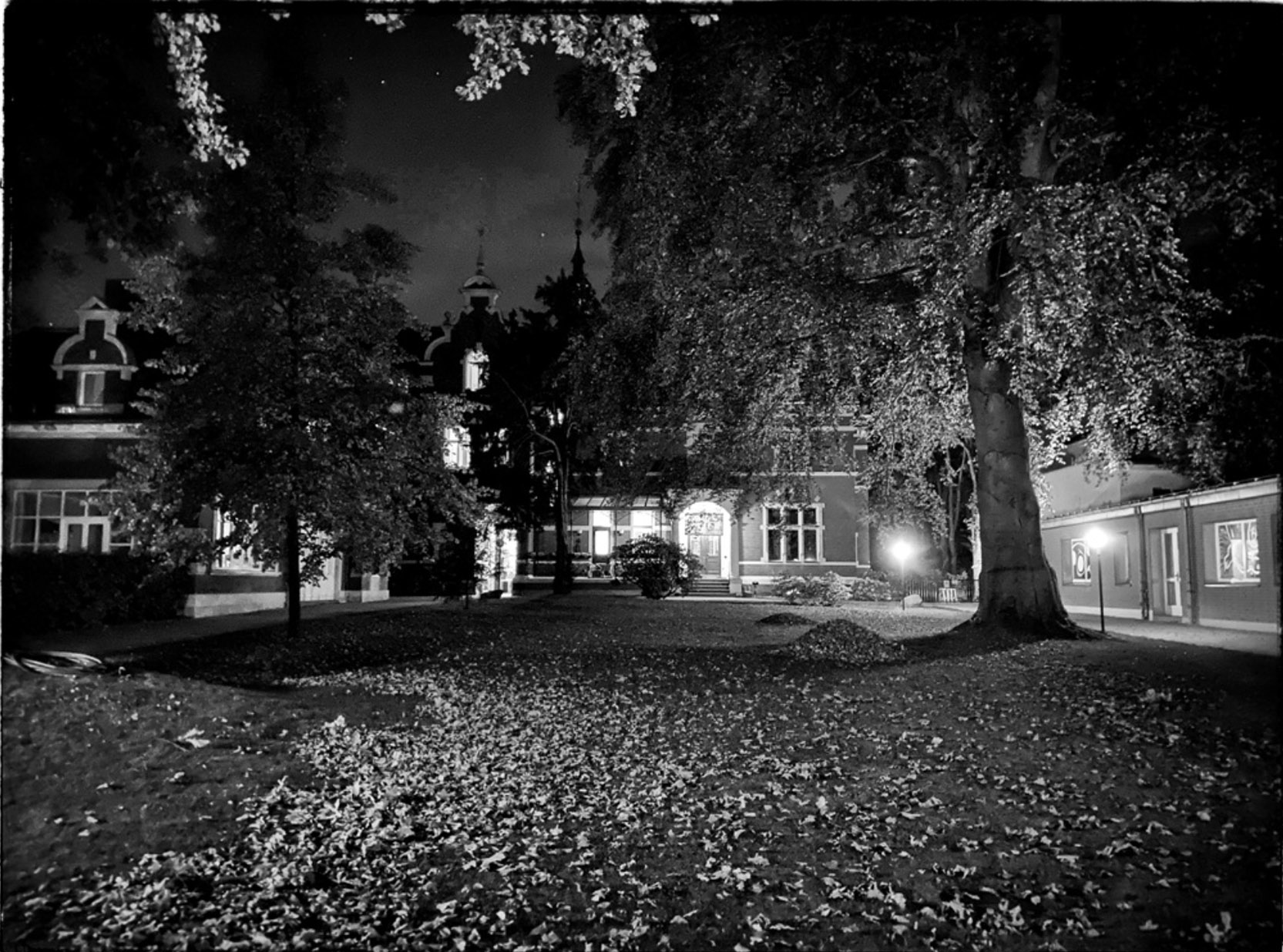
When I think of Wannsee, Berlin, I do not think first of Wannsee lake, or the residency villa, or the cold orderliness of the city. I think of a small house lit by evening. I think of steam rising from food, of songs crossing languages, of women leaning toward one another across a table: a house made tender by what it held. I spent only six weeks there, but some places go on living inside us long after the calendar has moved on.
I went to Berlin for a residency, in Wannsee, expecting what one usually expects from such a stay: a fruitful period of new work, fresh conversations, a sharpened sense of the world. I thought the city would give me ideas, perhaps discipline, a different kind of solitude. I did not know it would give me people.
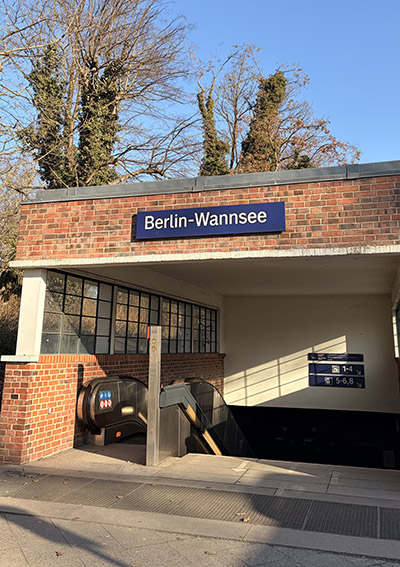
I arrived at the artist residency in early 2026, only months after I fled Gaza in late August 2025. I had learned, by then, how Gaza entered first into my conversations, sat down before I did, and quietly arranged the terms by which I was seen. Sometimes it summoned sympathy, sometimes a ready-made language, or the careful solemnity people adopt when they want to prove themselves morally intact. At times it brought sympathy, a sympathy so weightless it had altered nothing in the life of the person offering it. I had grown used to this strange doubling: to arriving as myself and yet also as the bearer of a place the world insisted on narrating badly. What I did not know was that, in Berlin, that same burden would become a path toward recognition.
What does it mean when a homeland enters the room before you do? I did not yet have an answer. Or rather, the answer did not come to me as revelation. It first crept toward me in the kitchen, on my second day at the residency in Wannsee, while I was making coffee. There I met the Belgian writer, Yelena Schemitz, whose room was on my floor, just opposite mine.
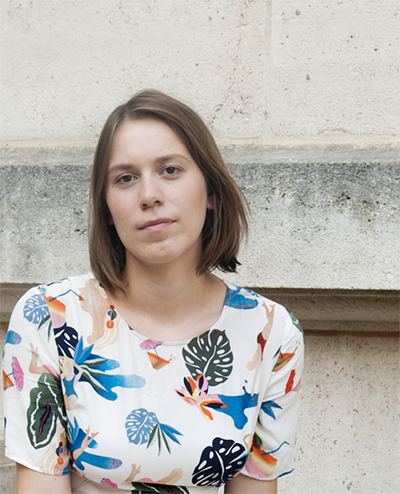
Yelena writes children’s literature. She told me she had visited Palestine, with a Palestinian friend of hers, and as she spoke, I saw Nablus and Hebron and the shore of Acre and Jerusalem in her eyes. She showed me photographs of herself and her friends, participating in demonstrations for Palestine. She told me about a generous Syrian neighbor back home, about the Palestinian flags raised in her country, about her grandmother who had gone out into the streets in protest. She sang Fairuz to me in broken Arabic, the brokenness only deepening the sweetness. I quizzed her on Fairuz songs, and she kept getting them right. She may not have known the full meaning of the lyrics, but her heart carried the salt of the Mediterranean. We made ورق عنب together. We wept together over the film Hamnet; no one else in the cinema did. She told me how she had translated testimonies by children from the 2008 war, during the first months of the genocide in Gaza, and about the version of events on the other side of the world, the version unknown to us, the ones living through the genocide. She told me how her own life, and the lives of those around her had changed, how their scales had shifted, how Gaza had rewritten this world.
And yet what moved me in Yelena was not merely that she cared. Care is too easy a word. I had already learned how Palestine can become, in some mouths, a moral accessory: a place from which to speak well of oneself, a wound admired at just enough distance to remain useful. With her, it entered life. Yelena brought joy into my cold Berlin days. We bought books on Palestine together, and cloth embroidered bags printed with “الحرية لفلسطين”. We explored cafés and shops and Peacock Island, a small island near Wannsee where we once walked through the snow and ended up chased by a peacock. She witnessed my astonishment in the Arab Street area, when I sat by the roadside eating Nabulsi knafeh from a Palestinian vendor’s kiosk, while Umm Kulthum’s “Enta Omri” played behind us. That moment overwhelmed me more than the highrise buildings of Alexanderplatz ever did, and Yelena was happy simply because she could see my happiness. This, too, was part of what Berlin was teaching me: that moral recognition is not made only of slogans, or even of sympathy. Sometimes it is made of attention so exact that another person’s joy becomes yours.
We shared the contours of pain, the experiences of war.
Maybe a week later, as I was returning to my room, walking down the villa corridor, I heard a woman’s voice call out in Arabic, “Are you Alaa?” I froze. She spoke in an accent I first mistook for Palestinian, or perhaps Lebanese, and invited me to come inside. Hanadi Zarqa, a poet, was staying in a small house beside the one I lived in. A house that would become The House.
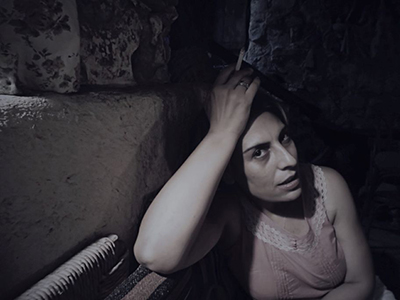
I learned that Hanadi was a Syrian poet from Jableh. It was the first time I had heard of Jableh; now I cannot think of it without thinking of her voice, her warmth, and the life she carried from it into Berlin. We spoke again and again about poetry and literature and criticism. We shared the contours of pain, the experiences of war. The Syrians and the Palestinians have both paid dearly, and this world has never been stingy in its appetite for our undoing.
In Hanadi’s kitchen and in her tea, I found Damascene roses. Along her windowsills stood seedlings, plants, and little flowers. Even in Berlin, in January and all its frost, Syrians plant roses on their balconies. Our griefs, our trials, our poems, and her delicious Syrian food brought us together. She exercised over me that familiar Arab authority of feeding: love in its most persuasive language.
Palestine, too, is what brought me to Hanadi. She would never have called me in, had she not known I was Palestinian. But what grew between us did not rest on resemblance alone. The world has a habit of placing Syrian sorrow and Palestinian sorrow side by side until it begins to mistake proximity for sameness, but grief is not identical simply because it is adjacent. There were things Hanadi and I understood without speaking; we were both separated by borders drawn by colonial treaties. There were other things that remained attached to different ruins, different dead, different histories. That difference did not weaken the intimacy; it gave it contour, kept it honest. What I learned from Hanadi was that one can come very near another people’s wound without trying to claim it as one’s own. There is an ethics in that nearness — a form of love, too.

My stay also coincided with the arrival of an Iranian writer and actress, Lili Farhadpour. Our first meeting took place as we welcomed her into The House. We shook hands in greeting, but the moment she learned that I was from Gaza, her face lit up in a soft smile, and she embraced me. Throughout that gathering, she kept looking at me with an intent, searching gaze, as though my face held something she was trying to understand. Her English was limited, but her mind moved ahead of it, rich with thought it could not always fully carry. Later — and often after that — she would tell me how beautiful she found my face.
Lili told us of her fear and anxiety over what was happening in her country, Iran. She held her phone the whole time, following the news, speaking with the people she loved back home. I understood that posture immediately: the divided attention of those whose bodies are in one place while part of the self remains standing guard elsewhere. I understood the burn of existing in two worlds at once.
I feel that Palestine stood quietly at the center of that gathering, as both wound and compass.
I found delight in tracing the kinships between Persian and Arabic; I learned that the Arabic word for homeland, وطن, is the same in Persian. I still do not know why that left such a deep mark on my heart. Perhaps because some words cross borders more faithfully than people can. Lili pronounced it with a v instead of a w. She would call me “Alaa jan,” dear Alaa. We watched her film My Favorite Cake together, and I was struck by her gift as an actress.
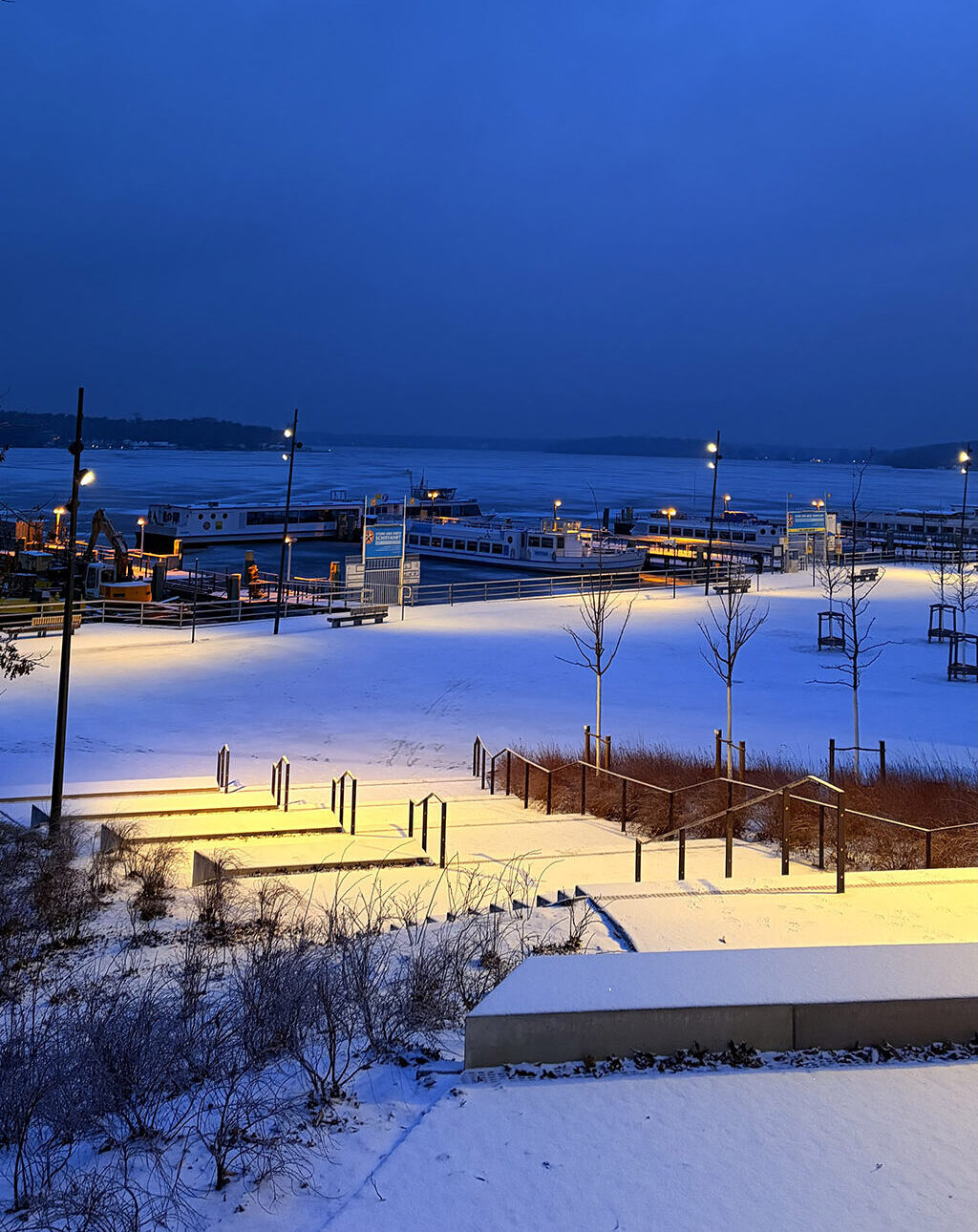
The four of us began to gather every night in that little house, which went on to witness gentle evenings, familial intimacies, and soft, dewy mornings. It became, in time, The House, where Berlin receded at the edges, giving way to expressions of grief, food, song, and companionship: the smells of Belgian and Persian and Syrian food; Lili and Yelena singing “Ramadan Gana”; the pain of homelands divided and wounded.
Of all the things I expected Berlin to leave me with, I did not expect this circle of women. I did not expect that, in a city I had often imagined as orderly, spacious, and emotionally guarded, I would find such closeness. Nothing in those evenings was untouched by burden. We arrived accompanied by our countries, by grief, by fear, by the long educations of war. But looking back now, I feel that Palestine stood quietly at the center of that gathering, as both wound and compass. It was there in what we said, in what we did not need to explain, and in the forms of care that passed between us.
Palestine, which the world keeps trying to deny, has always had this strange and faithful power: it points us toward those who resemble us in feeling, in ethics, in sorrow, in love. It reveals the difference between those who wish to be near a wound and those who know how to keep faith alongside it; between those who speak and those who attend; between symbolic closeness and the harder labor of moral recognition.
This circle of women altered me: Their recognition did not hurry to occupy my wound. They taught me that certain encounters do not necessarily heal but still preserve something essential against the world’s brutality: the possibility of a relation intimate enough to near suffering — yet disciplined enough not to consume it. Yelena had not come out of our histories, yet she entered them with a form of attention so exact, so lived, that it shed any trace of spectatorship; Hanadi, shaped by another shattered country, knew from within the long discipline of sorrow what it means to keep living in the shadow of ruin; and Lili carried, close to the skin, the tremor of her own country’s fear and fracture. What gathered among us did not depend on sameness, nor on the flattening fiction of shared pain, but on a more difficult intimacy: the recognition of grief, exile, and vigilance across different lives. Within that small house, difference remained fully itself, and yet, without ceasing to be difference, became the ground on which refuge briefly stood.
On the day I left, Lili did what Arabs do: she poured a bowl of water with roses in my wake so the road would open before me, and so that, perhaps, I might return. That, too, belonged to this mystery: An Iranian woman, in Berlin, bidding a Palestinian woman farewell — with a gesture I knew from home.