Select Other Languages Français.
For a book that demands a different, more active, form of engagement, TMR Senior Editor Lina Mounzer offers a different kind of review, penning a letter from reader to author.
Controlled Demolition, by Ammiel Alcalay
Litmus Press 2025
ISBN 9781933959955
Dear Ammiel,
Halfway through my second read of Controlled Demolition I decided that this review should be in the form of a letter. Initially, I ignored this impulse. I sat down to write something more traditional, beginning as follows:
Ammiel Alcalay is the most important writer you’ve probably never heard of. A writer’s writer, the praise for his new book, Controlled Demolition, which is in fact four books, three already published — Scrapmetal (2007), the cairo notebooks (1993), from the warring factions (2002) — and the new, eponymous Controlled Demolition (2025), is proof of just who considers themselves a fan. No less than Diane di Prima, Etel Adnan, Elias Khoury, and Adrienne Rich.
And yet the tenor of this beginning, true as it is, struck me as too declarative and thus thoroughly inappropriate to the book. Then I realized that the problem was not merely with the tenor but with the entire format.
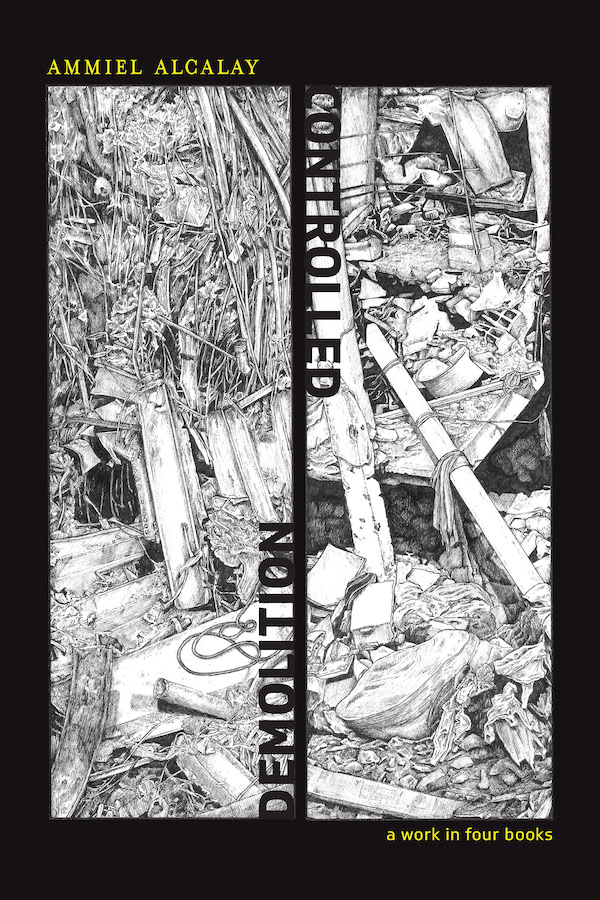
One might argue that in writing this review as a letter, I risk diluting my critical analysis, especially when the recipient is someone I am privileged to be able to call a friend. It’s a fair question but one that seems beside the point in this case. It’s not that I have no wish to be critical, but rather that the book demands a different kind of response; one that sidesteps the traditional review framework. The work implicates you in its creation, and thus requires a more active form of engagement, without which it feels “unfinished.” Not in the sense that any book can be considered incomplete without a reader, nor in the sense of being “unpolished” or “not-deliberate,” and not even because the two newer books that make up the volume, Scrapmetal and Controlled Demolition are subtitled “work[s] in progress.” No, it’s that the book, as a whole, feels less like a concluded object or a closed system, and more like an ongoing investigation, one that invites you in as participant. It asks you to engage in a mode of thinking, and once you’re inside it — the book; that mode of thinking — any analysis that depends on a more remote and aloof posture, that is, the posture demanded by a conventional review, seems counterproductive.
Did this book engage me in the way I believe it intended? Yes. This letter, the fact that this review is a letter, is proof. For this is a book in constant dialogue — with history, with other books and writers, with film scripts and testimonials and ancient poetry and court transcripts and so many other kinds of texts. In dialogue even with itself, with older and past versions of itself. And what is a letter but that? One side of a dialogue.
“A dialogue” is also the most apt way to describe the book as a whole. Otherwise I would be stuck with an imprecise verbal pastiche, saying things like “a mixture of poetry and prose,” “critical essay meets intellectual memoir,” “a history-in-verse,” or even “a poem made of history.” And all of them too lofty sounding for a book that is ultimately very readable and quite down to earth, grounded in a politics of reciprocity and deep care. For all its return to the ancient past, it is clear, as you write, that “Love of the ruins inflames not my heart // but the love of those who once inhabited them.” As such, I am convinced, too, of the manifestos the book lays out for itself, though you might quibble at calling them that. I read fragments such as “‘to awaken public hope’” which you complete with “’in the tide of human things,’” and felt, in spite of the bleak history the book describes, as though such a thing were indeed possible.
I thought immediately of people to whom I wish to gift this book, chiefly my friend C, who was talking to me about the failure of language before the horror of genocide. I told her language always fails to capture the visceral, always comes as an abstraction after the pulsing/living fact and thus in some ways diminishes its horror, but that wasn’t what she meant at all. She meant something bigger — the failure of language to account for catastrophic violence “in the tide of human things.” That is, the failure of language, or rather writing, to both acknowledge the grievous singularity of certain historical events and at the same time refuse to single them out as exceptional or unprecedented. Which leads me to something I came to understand in the wake of the Beirut port explosion in August 2020 — that we live in systems that use disconnection as a fundamental method of domination. Not just disconnection between people, fomented through political division, but disconnection between ideas and especially events. What these systems seek to obscure is what you’ve called, in your book a little history (2013), “the reciprocal relationship between cause and effect.” Allow me to quote a little further from that book, because these lines became, and remain, fundamental to how I approach my own writing. They are also, I believe, fundamental to understanding the entire effort behind, and impact of, Controlled Demolition:
It is crucial that we weigh and measure our efforts in light of our relationship to, and reception of, things that take place in other parts of the world. Otherwise, no matter how profound the personal impact of such acts of creation and preservation might be, they can revert to mere markers of identity and ownership. They cease to serve as proof of the refusal to let our histories and experiences be administered.
I could parse these few sentences endlessly, but what I found most galvanizing is the warning that if we don’t consider events in connection with each another, if we follow the oftentimes very well-intentioned, if not high-minded, impulse to exceptionalize certain events, we end up using them as “mere markers of identity and ownership.” I think about how Zionists insist that the Holocaust never be universalized or compared to any other genocide, or even how intersectionality was hijacked and made to serve the individualist aims of identity politics, so that people with ostensibly the same progressive goals end up policing one another’s language and infighting over who is most oppressed. Situations that only end up serving the systems of dominance that, like any authority, conquers through division and the imposition of its own interpretative frameworks, which is exactly the mechanism through which it “[administers] our histories and experiences.”
I brought up the Beirut port explosion earlier, referring to the evening of August 4, 2020, when an unknown tonnage of ammonium nitrate, unsafely stored and left to deteriorate for years in a hangar at the Beirut port, ignited — either by accident or through a deliberate act of sabotage, I’m not sure we’ll ever know — causing one of the largest non-nuclear explosions in history, one that decimated entire neighborhoods, killed some 250 people, and left thousands injured and tens of thousands homeless. In many ways, yes, the event was exceptional, and our insistence on that fact — “our” meaning those of us who lived through it — is a way of communicating the scale of its horror. We are a people who have experienced endless iterations of violence; to describe the explosion as something that had until then been unimaginable, even within that extensive knowledge of violence, was fundamental to explaining the impact of the event. And yet to insist on it as exceptional severs its relationship to other things: not only to the history of violence in Lebanon and the way our ruling classes have always treated people’s lives as cheap and expendable, but also to other instances of disasters caused by deliberate negligence, such as the Grenfell tower fire, the catastrophic toll of Hurricane Katrina, and mine and bridge collapses the world over. Therefore, framing it as an isolated event serves to exonerate an entire system; to obscure the fact that said system is engineered so that these sorts of entirely preventable disasters are rules and not exceptions.
How then do we preserve the visceral singularity of experience — which is essential to honoring the dignity of those who lived through extraordinary circumstance — while also preserving the “reciprocal relationship between cause and effect”? What I loved about Controlled Demolition as a whole, what I found so exciting as a reader and instructive as a writer, is the way the form itself is an answer to that question.
By juxtaposing multitudes of texts, collaging them together into a torrent of poetry; by going backwards and forward in time, often without clear markers to situate the reader (and yet one never feels lost or confused); by reassigning the order of your own books so that they proceed non-chronologically; by an accounting of your experiences of various kinds of labor, physical and intellectual; by reflecting on and consistently revisiting the questions that drive your work as reader, writer, translator, teacher; by holding your own words up at an angle to other people’s words — all of this has a cumulative effect, best compared to how, when you hold a prism up to the light at various angles, it comes to refract the light differently and in turn illuminate our surroundings differently.
Like a fractal, this works both on the micro level and the macro level, the same shape repeating itself at myriad scales. I’m thinking here of the pages where you pick out single words and put them together. Separate quotes around mundane words like “mica,” “volcanic glass,” “conch shells,” and “copper” bring to mind walking along a beach, finding various items, and taking them home, to then be displayed as part of a collection. It is in the gathering that they become objects of significance, acquiring the meaning of a totality.
Likewise with the other, longer, texts. The whole book becomes a collection through which we read the history of not only the last thirty years of U.S. intervention in the Middle East, but an entire history of Empire, its active manufacture of disaster — including the obliteration of national sovereignty — for the purpose of conquest and capital gain, as well as its systems of dominance that stretch all the way back to the dawn of so-called Western civilization. The Italian soldiers who, according to the Roman aristocrat turned advocate for the dispossessed Tiberius Gracchus, misguidedly fought to defend the “sepulchers and altars,” of the wealthy “savage beasts” and “were slain… to maintain the luxury and the wealth of other men [while having] not one foot of ground which they could call their own,” become the grunts sent off by the U.S. to fight its imperial wars in Vietnam and Iraq, some of them ending up homeless on the streets while the hegemon grows ever more unrepentantly grotesque on plundered wealth.
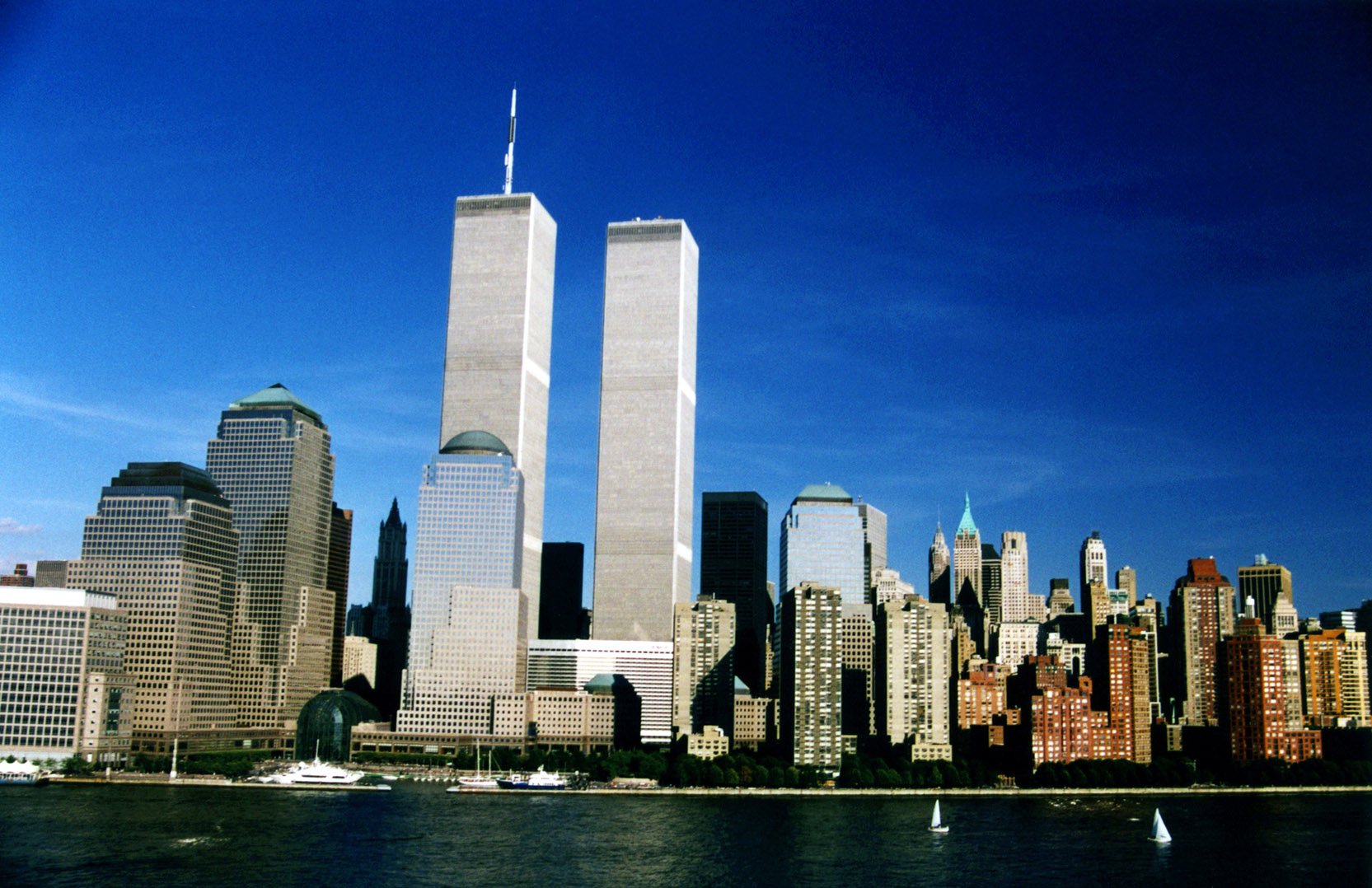
And that history in turn becomes one through which we read the present. I know this book was finished before the beginning of the genocide in Gaza (though the accounting of Palestinian dispossession is a thread that runs throughout). And yet portents of the horrors of Gaza are everywhere. Impossible to read the list of items the U.S. barred from entering Iraq as part of its sanctions and not think of Israel’s long blockade of Gaza and its own barbarous list of banned items. Impossible, too, to read about how all the steel and debris from the fallen towers on 9/11 were immediately hauled off and away to other countries as scrap metal and not think of all the cars from October 7 at the music festival and how they were removed before the evidence could be examined. There, we were also meant to believe an unbelievable story, despite the evidence of our own eyes: that somehow Hamas fighters, armed with nothing but their guns, could reduce cars and houses and human bodies into cinder. Empire’s cruelty, its tactics and narratives and shameless attempts at obfuscation remain the same, no matter which entity wears its mask.
I heard the echo of how so many of us talk about the genocide in Gaza when I read how watching “that free fall [of the towers] in real time, drew a curtain over a world we once inhabited, even though it had surely already been drawn.” Here seemed to be an encapsulation of what my friend C was looking for: how the singular event might be acknowledged in a way that is truthful to both past and present.
By the end of the book, I found myself thinking of the title differently. “Controlled demolition” as the way the towers came down, as well as the deliberateness with which the authorities destroy the world, certainly. But the term also seemed to describe the precision with which your words were excised from other texts. In the latter sense, the demolition is undertaken for the purpose of reconstruction and hence offers a prospect that a re-fabulation from the ashes of the former is also possible. This has everything to do with the form of the book. Somehow, that reaching and re-reaching back into history doesn’t create the dismal sense that we are locked into an endless cycle of repetition. Rather, it serves to repair the connections not just between events but also between the sufferings of peoples across time, and this in turn creates a kind of trans-historical solidarity, uniting us in a centuries-long struggle to maintain ourselves in the face of grievous violence and grave injustice. For example, there is the three-page torrent of testimonials in the cairo notebooks, with one person’s account of torture leading into the next without punctuation or warning so that they all become one person: men, women, children, all a single body, and in that joining, the account of suffering becomes an account, also, of untrammeled pride and defiance in the face thereof. And these merge and join with the testimonials and accounts of struggle and suffering across the four books, from Ancient Rome to Bosnia to Iraq to Palestine and back, accounts stretching eons into the past and back again into our present.
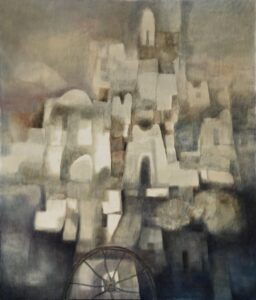
It isn’t the sheer number of testimonials that imparts a sense of connection, however, but the fact of their documentation. We are presented with clear evidence of the devotion and commitment, across time, to keep record. The sufferers, then, are the inheritors of history. Of story. And when these records are repurposed into poetry, into art, they are transformed into a restoration of the human. It is akin to what you describe of the Iraqi artist Dia al-Azzawi. How, in painting one of the victims of the carnage of Highway 80, when the U.S. carpet-bombed a massive convoy of Iraqi soldiers retreating after a supposed ceasefire, incinerating them wholesale in their vehicles, al-Azzawi returned color to the soldier’s charred body and “dignity to his mouth.” (Only now, rereading this, do I realize the significance of a close-up on the mouth here, on the body part that speaks). This is what this book of history and poetry does — restore color and dignity, and thus a kind of life, to an entire narrative of human struggle. What you write of al-Azzawi’s painting is equally true of this book: “you can feel the artist’s hand as it moves in rage and love.”
Rage and love. The driving forces behind all revolutionary action; animating all of those who have taken to the streets and the seas over the last two years and counting, as the real-time documentation of the atrocities in Gaza brings forth what seems a collective “struggle to assert consciousness coming into being.” I’m borrowing here your description of poetry from Scrapmetal, because “coming into being” sets up both of these things — poetry and the collective demand for justice — as the opposite of ideology, if we are to define ideology the way Gyorgy Lukacs, by way of Mark Fisher’s Postcapitalist Desire, defines it, as something that “reifies… [turning] what is always a process of becoming — which is open-ended and therefore changeable — into something fixed and permanent.”
I am trying to keep faith that this new awareness of injustice and its ruptures will prove transformative over the long term “in the tide of human things.” That the revolutions loud and quiet taking place in the shadow of violence will have some sort of cumulative effect, however infinitesimal at first, however slow. It seems unbearable to believe otherwise. I think constantly about something you said over dinner once, about how you spend a couple of hours at the end of the day watching footage from Gaza, reading firsthand accounts from Gaza. Most people I know, myself included, watch as a kind of atonement, to assuage the guilt of not living it. We watch to honor the work of those bearing witness and because it “feels wrong” to look away. But guilt or moral duty were nowhere near your realm of consideration. You watch, you explained, so that it might become a part of your daily reality and thus infuse everything you do, every ordinary action you might take, including and especially your writing. And not what you write but how you write. That reframing of awareness seems an instructional on how exactly we might, on a daily basis, “weigh and measure our efforts in light of our relationship to, and reception of, things that take place in other parts of the world.”
I could go on and on, clearly, but I will stop here. This is the beauty of a letter. A dialogue is ongoing and open-ended — perpetually coming into being — even when halted, for it can be taken up again at any point. The other beauty is that it allows me to directly say what I always wish to say to an author upon finishing one of those rare works that are an entire experience unto themselves: Thank you for this book, Ammiel. I wish I could get everyone to read it.
Yours,
Lina
Select Other Languages Français.