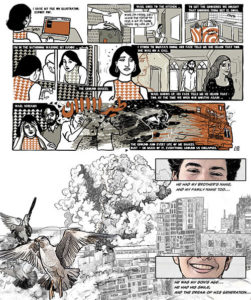
As Israel’s war on Lebanon rages on, this film’s ambition to unite a fragmented people is even more urgent.
What is a place, if not a hologram? A series of audiovisual fragments, representations of itself, copied, simulated, and recycled? It is its own image, as mediated from afar or from up close. It is an inherited memory.
Beirut is one such place, contained in various iconic images: its busy streets, its sea, waves crashing against the Corniche. Does this city have a decipherable essence, a truth to discern?
“In this city all our memories melt into the sea.”
In Lana Daher’s Do You Love Me (2025), I search for Beirut.
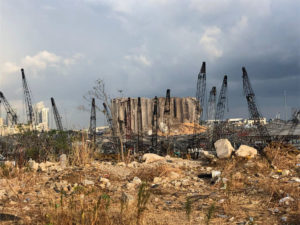
When I call Lana Daher, it is the morning after Israel bombed Beirut’s Ramlet al-Baida beach, killing and injuring forcibly displaced people who had been taking shelter after fleeing Israel’s airstrikes on south Lebanon and on Dahieh, Beirut’s southern suburbs. I wake up to the news of the carnage, scenes of the explosion intermingling with my own brightly-lit memories of the beach-side promenade. Snippets from Daher’s film also bleed into my bleary-eyed rumination, having just rewatched it in preparation for our conversation. In the film, the beach, sea, and promenade are all prominent motifs.

Daher is in Beirut; in an email exchange, she tells me she’s looking forward to chatting, as it’ll be a distraction from the madness surrounding her. I ask her how she’s doing. She tells me how everyone around her is microdosing on Xanax to cope and how she can’t go sleep at her parents’ house because the bombing is much louder there. She tells me how, the day Dahieh received mass “evacuation” orders from Israel, and amidst all the chaos, she took an absurd trip to her dentist’s. As she was having her teeth cleaned, she deliriously imagined the dentist and nurse as “human shields,” hunched over her, protecting her in case of a possible airstrike.
She talks to me about Israel’s psychological warfare, how before the 2024 war, the Lebanese had had a summer filled with the constant humming of drones, of sonic booms. How they were terrified, watching as Israel committed its genocide in Gaza, flattening it and reducing it to rubble. How nauseating it is to now see Israel threaten to “turn parts of Beirut into Gaza.” And how repulsed she is to (re)discover the deep fragmentation within Lebanese society, where calls for normalization with Israel clash with the country’s long-standing resistance to Zionism.
We speak about the beach, and I tell her how it has now blurred into a triptych: the beach in my memory, the beach in her film, and the beach as it materially exists, in Beirut, bombed. I tell her how only three trips to Beirut had made an indelible mark on me and how, while watching the film, I couldn’t help but insert myself into it, as though I were watching my own private recollections projected on screen.
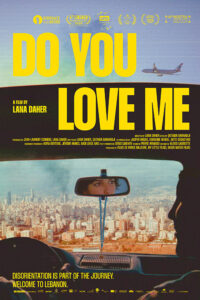
Daher tells me she is pleased to hear this. She wants the film to elicit that exact kind of response, where you “connect and relate and create your own associations.” She explains that this is partly why she chose not to narrate the film with her own voice, although this would have been the most straightforward way of holding together a film made wholly of disparate archival clips. Daher was conscious to not disrupt the viewer’s self-identification with the film’s images or impose a particular narration of Lebanese history.
In any case, as the film’s exposition tells us, contemporary history is not taught at Lebanese schools. There is no “unified history book”; Daher believes another civil war would erupt if this was attempted. Later in the film, we are told that Lebanese history stopped in 1946, when the French colonists withdrew from Lebanon.
Lebanon is a series of redactions. Words blotted, burnt out of pages. The challenge becomes figuring out “what’s been removed.”
For Daher, these blanks provide an opening. Her curatorial vision is encapsulated by an unnamed narrator who, halfway through the film, tells us: “History isn’t exhaustive, it’s not an absolute truth. We collect stories. Stories that represent a piece of truth, at a certain moment, for certain people. A history book claims: this is it, this is what happened. Yet plenty of things aren’t mentioned. Things never written anywhere, but that exist in people’s memory.”
In the absence of a centralized Lebanese national archive, Daher set out to create her own. She drew on over 20,000 sources from private and public archives scattered across the country and in the diaspora — Lebanon’s archives are as fragmented as its people. Do You Love Me is thus woven together by hundreds of photographs and archival clips, from films, TV broadcasts, home videos and documentaries, and paired with an equally rich auditory tapestry.
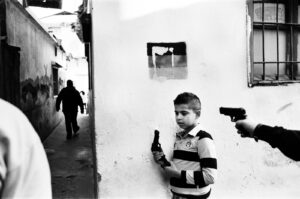
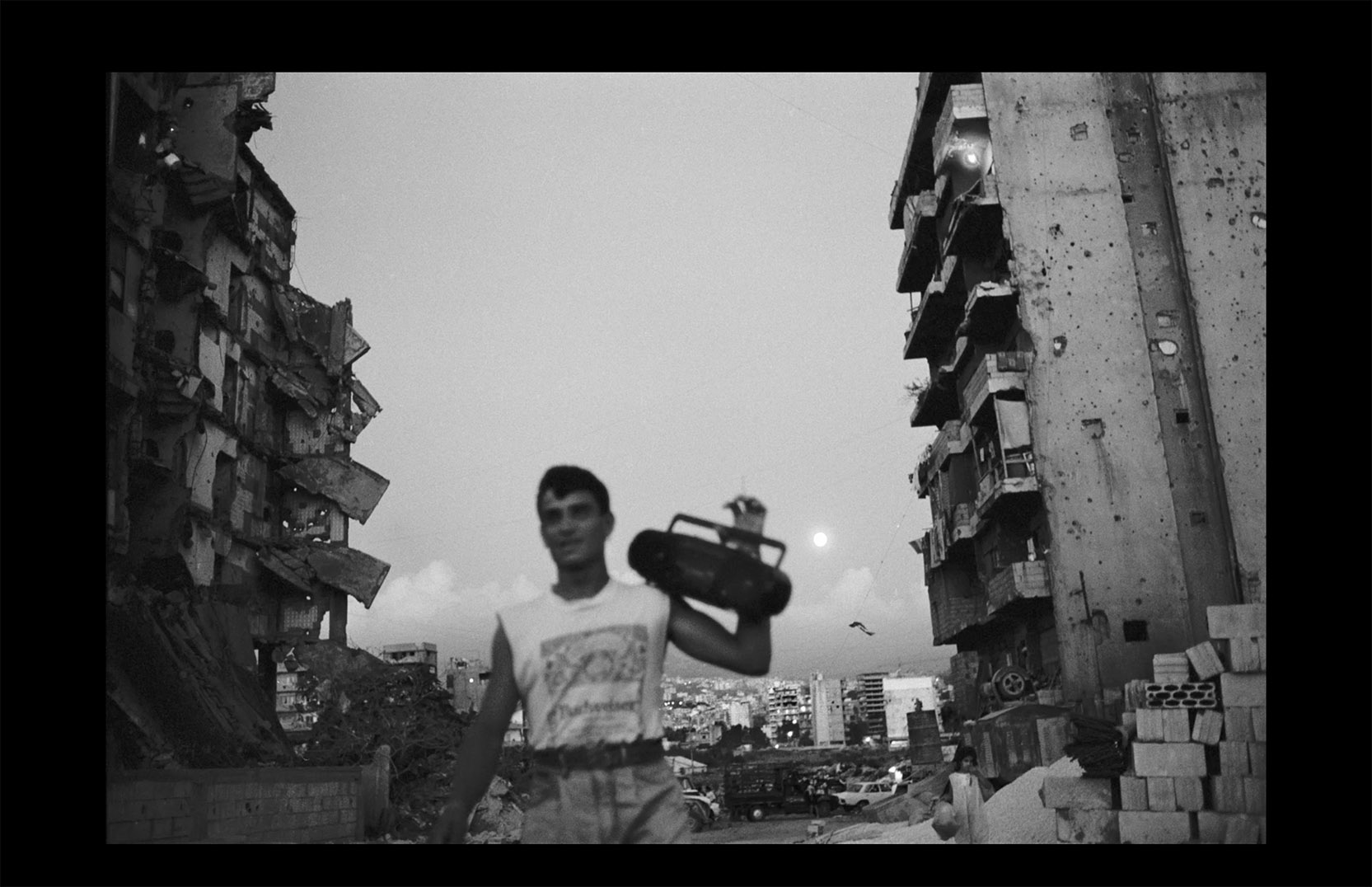 "The Boombox" (photo Fouad Elkoury).
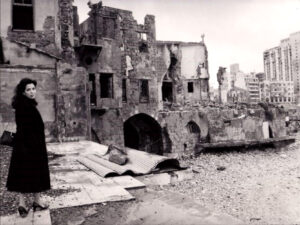
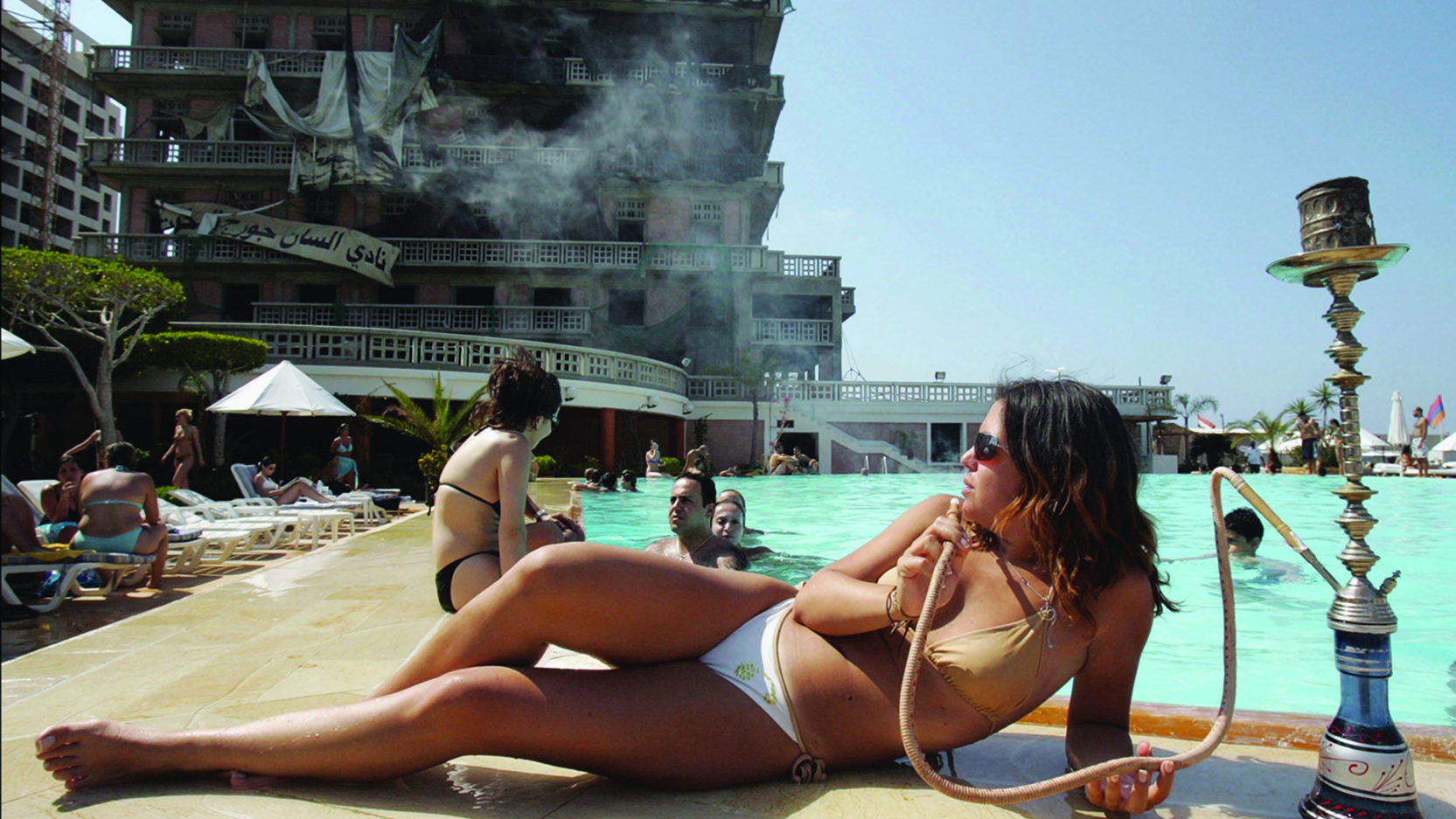 "Arguileh on the Beach" (photo Patrick Baz).
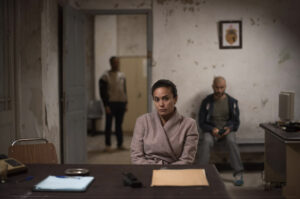
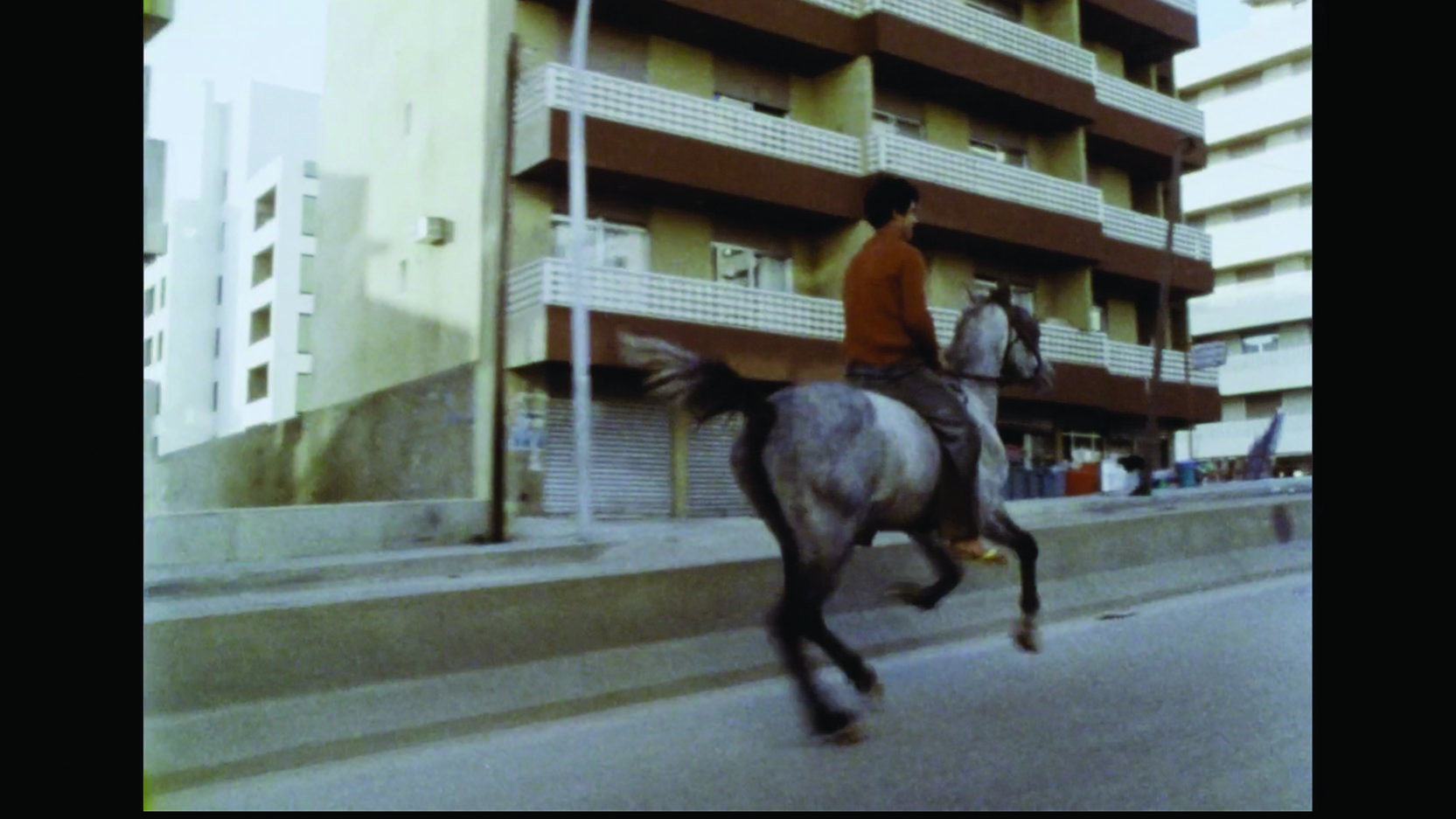 "Whispers" (photo Maroun Baghdadi).
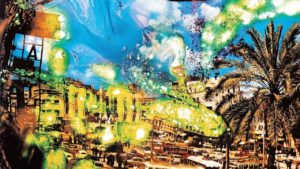
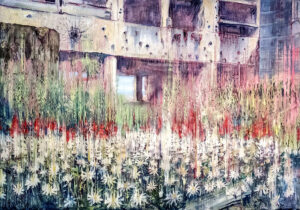
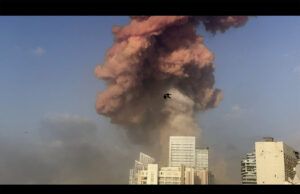
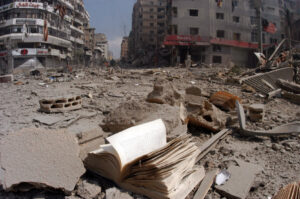
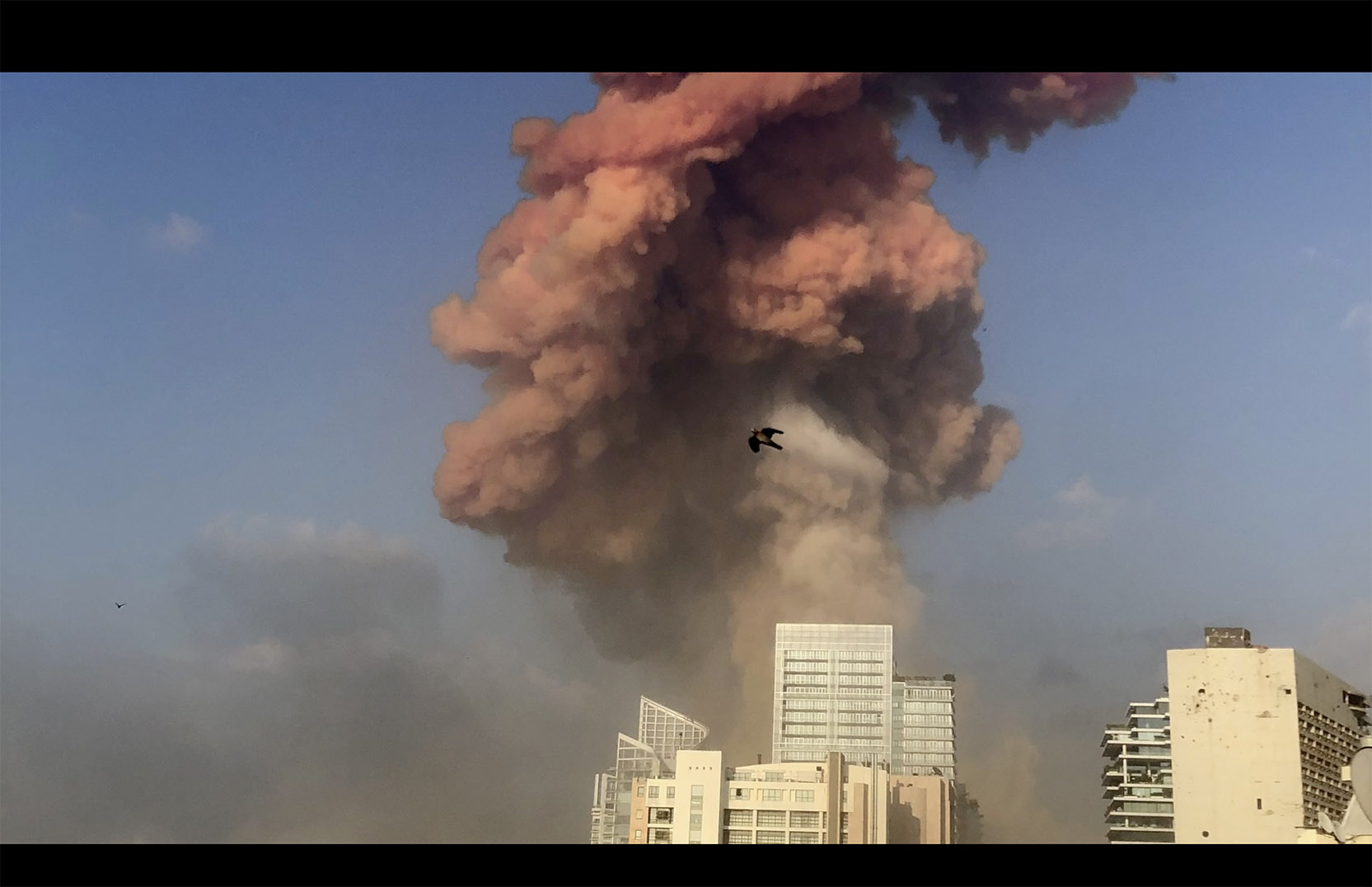 "Pink Smoke" (2020) by Ben Hubbard.
Daher tells me how the challenge of making a film using only archival material excited her, since it allowed her to make accessible archives that had been forgotten or abandoned.
Handling decades’ worth of Lebanese ephemera, Daher takes care to not order any of it chronologically. Instead, she cuts back and forth between different “generations” of found footage. Rather than providing a linear retelling of Lebanon’s history, the film draws our attention to the internal rhymes and rhythms of Lebanon’s collective memory.
These patterns are put into bas-relief through the meticulous selection and ordering of the archival material. I ask Daher how she and editor and co-writer Qutaiba Barhamji approached this process. She explains how image association is another way to hold a film like this together. They identified recurrent themes that cropped up over and over again in the archives, motifs that seem to echo through the Lebanese psyche. They chose to highlight these throughlines by putting them side by side. Beirut is a series of mothers crying over martyred sons, tending to their graves, praying for miraculous resurrection. Beirut is a series of rooms left empty. Beirut is a series of sonic booms, followed by ringing silence. Beirut is Burj El Murr, the war monument, an apparition, a constant.
But sometimes image association becomes predictable, so Daher and Barhamji play with absurdist contrasts, jolting you awake from your reverie. Often the audio does not match the visual. A man recounts his close call with militiamen who ordered his killing, while footage of New Year’s celebrations plays on screen. Beirut is a series of weddings, followed by a series of funerals. It is the memory of a father’s gun, furtively hidden under his young daughter’s white dress, evading the checkpoint guards. It is the stop-and-start traffic, the fruit stands and flower shops, a bus you jump on, a murmuration of birds: it is the rhythms of mundanity anticipating the next inevitable rupture. Beirut is the airplanes landing, necks craned to catch a glimpse from above. It is the airplanes taking off, amidst the smoke of bombs. It is the hurried escape and the anxious return. It is the fog rolling in from Mount Lebanon. The sober morning after a flurry of airstrikes, when the dust settles, and you thank god, for things could have been worse, and anyway, none of this is new and all of it will probably happen again.
In Lebanon, grief is inherited, it is accumulated. But as we speak, Daher realizes that making this film allowed her to “transmute” her grief, to refuse to be defeated by it. This is the grief that fights.
Daher tells me that she’s noticed that most Lebanese films are “either about somebody who is very depressed to leave Lebanon, or somebody who is very depressed to come back to Lebanon.” They lack imagination, she says, not because Lebanese filmmakers are not imaginative but because there is so much that is still unresolved. “We are still in the same loop of violence,” she says. “As long as we can’t get out of this cycle, how the hell are we supposed to birth new narratives?”
•
Acknowledging that her social positioning as a Shiite, middle-class Beiruti, her family’s leftist politics, and her particular aesthetic sensibilities have naturally influenced her directorial decisions, Daher also explains to me that she wanted to “make something that was consumable,” a film that the widest possible Lebanese audience could watch and digest and not something that “belongs in an art institution.”
That’s also why she purposefully excluded news broadcasts of specific politicians or representatives of different religious confessions, parties, and militias. One of the film’s many clips features a woman repeatedly asking “who’s to blame?” and the question is implicitly answered throughout Do You Love Me. In one scene, journalist and director Jocelyn Saab puts it clearly: the Lebanese are killed by “Israeli airstrikes and fights between factions.” In other words, Zionism and its violence cannot be resisted or confronted effectively due to fragmentation and sectarianism.
So, in the face of such deep fragmentation within Lebanese society, both historically and presently, Daher wanted to create something that could unify, or at least approximate unity, although she doubts that it’ll work, not with the way things are looking right now.
•
Perhaps uncovering the memories hidden in these archives would allow Lebanon to reconstitute itself and allow its people to negotiate with their grief. Or, as writer Wassila Abboud puts it in her essay for Parapraxis Magazine, “The Dining Table and the Drone,” to “reconfigure and redirect [grief] to a new mode of becoming; a grief in a temporality that refuses to be measured, which moves into grief that fights to save what can be saved.”
Drawing on Lebanese Marxist thought, Abboud differentiates between two kinds of grief in Lebanon. There is the grief that kills — a defeatist grief, one that tricks you into submission, into consigning yourself to what is sold as the lesser of two evils. This grief “convinces the colonized that health resides in the stability that Israel brings and that liberation itself is a pathology.” And then there is the grief that fights, where “loss becomes grievance, and grief becomes the ground of resistance.” From afar, the two kinds of grief appear to converge, but upon closer inspection remain fundamentally separate: much like “the sun and the sea meeting at the illusory line that marks the horizon,” as Abboud writes, they never touch.
In a particularly moving passage, Abboud locates grief “in the ordinary spaces and intimate cartographies of our lives: […] it returns to us through dining room tables, […] the clefts in the rocks of Jabal Amel, the sea we share with Gaza. It comes back to us as the unresolved attempts to survive the conditions of the world without accepting them.” I share this with Daher, asking her where she locates grief within the contours of her film. She tells me she sees grief in the eyes of the young women looking out onto their city from car windows. She feels it acutely when watching all the home videos, in the clip of a baby being bathed. She hears it when Jocelyn Saab says, from within the wreckage of her home, bombed during Israel’s 1982 siege of Beirut, “This is my home. Or what’s left of it. […] But it’s not so bad. They’re just walls after all. We made it out alive.”
Daher relates to Saab’s sentiment: “We’re still alive and we’re okay.” In Lebanon, grief is inherited, it is accumulated. But as we speak, Daher realizes that making this film allowed her to “transmute” her grief, to refuse to be defeated by it. This is the grief that fights. And although Abboud is suspicious of “controlled returns” to “past griefs,” worried that they might stand in the way of a “new mode of becoming,” Do You Love Me’s archival praxis is not about nostalgia for its own sake or the truism of cyclical violence. It has a far more urgent purpose, which Daher expresses succinctly using a clip from Daniella Arbid’s 2008 film Dans les champs de bataille: “I’m not digging into the past, but into the present.”
•
Do You Love Me is currently screening at the ICA in London and across Copenhagen. It is being presented in festivals across the globe. In April, the film will be screened at the MoMA in New York City.
The film’s index of archival material can be browsed here.




![Ali Cherri’s show at Marseille’s [mac] Is Watching You](https://themarkaz.org/wp-content/uploads/2025/09/Ali-Cherri-22Les-Veilleurs22-at-the-mac-Musee-dart-contemporain-de-Marseille-photo-Gregoire-Edouard-Ville-de-Marseille-300x200.jpg)