Not Even the Dead Rest in Palestine

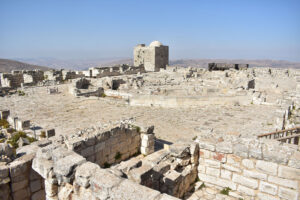
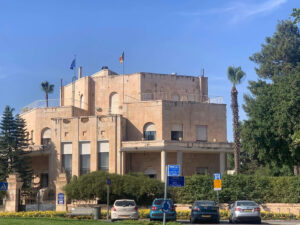
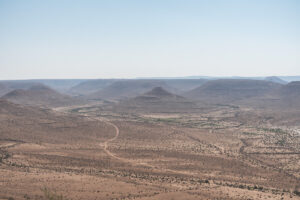
A view of the Cremisan Monastery near Beit Jala (courtesy Travel Palestine).

30 JANUARY 2026 • By A Mom from Bethlehem

Coveted by the Israelis, the vast green area between Jerusalem and Bethlehem, which belongs to the Cremisan Monastery, is considered “contested land.”

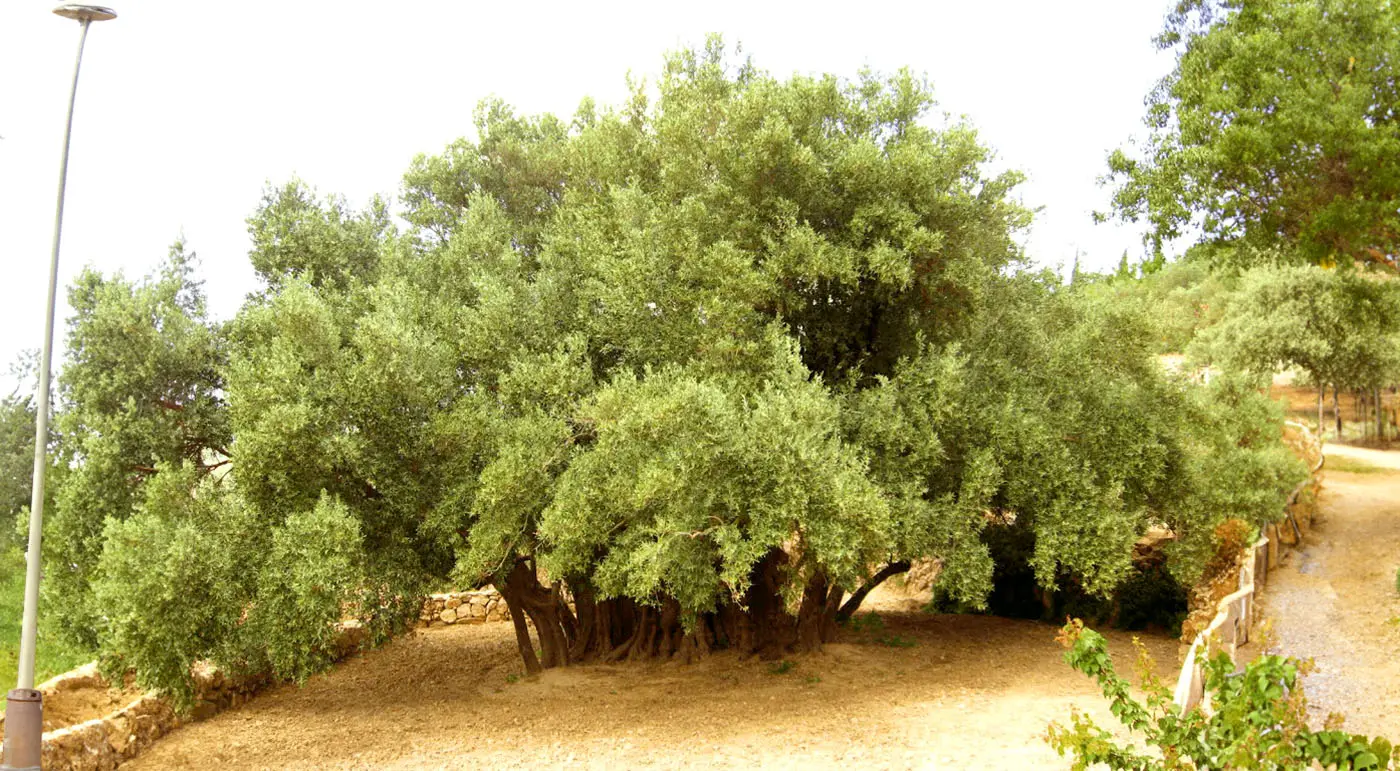
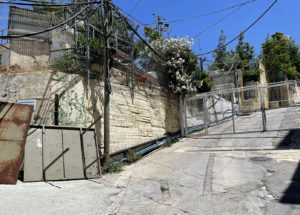
After passing the historic, still-inhabited al-Najjar family home in Beit Jala, we see a large concrete block on the road, marking the beginning of “Area C.” It feels like a bad omen. This is one year before October 7. I was on a walk with two friends, Madeline and Samar, to the Cremisan Monastery, which sits atop a hill in Beit Jala — Aramaic for “green carpet” — five miles north of Bethlehem. We made our way down a narrow dirt road that winds between a few inhabited houses and the Salesian Sisters Convent and School, and alongside an ancient olive grove laden with fruit. Our reward: stunning views of the northern and western Jerusalem Hills. Wadi Ahmad, the dry wadi in the steep valley between us and those hills, flows eastward through the hilly terrain of Bethlehem and Beit Jala to lower ground, ending near Rachel’s Tomb on Bethlehem’s northern edge.

Over a decade ago, Israeli occupation authorities illegally annexed and partially cordoned off this whole area — Palestinian land within the Beit Jala town boundaries — to Jerusalem. Today, this area, which includes the neighborhood of Bir Ouna,  is a grey zone with limited access. This lack of clarity is especially problematic as Bir Ouna is a significant landmark for the Christian residents of Beit Jala, who believe the Virgin Mary appeared there. When Israeli authorities seize more land, as is planned, the life of Beit Jala’s Palestinian residents will irrevocably change yet again.

As we walked on that sunny and peaceful October afternoon, my companions recalled stories their grandparents had told, such as how hyenas used to roam the wadi decades earlier. I remember leaning over a low stone wall and peering down at the old, twisting road at the bottom of the fertile Wadi Ahmad Valley. Samar sighed. “We used to come here on religious holidays in the spring and summer months.”

Madeline continued the thought. “This area was Beit Jala’s favorite playground for families only four decades ago. We often came for picnics. While our parents picked luscious fruit, we, the children, roamed and fearlessly explored the hills. Now it’s off limits.” She continued. “Almost every single Bajalli over forty has fond memories of this beautiful valley.” Samar agreed, before adding with bitter sarcasm: “And they say that this is ‘contested’ land!”

In the past, Bajjalis, often women, had a daily routine of drawing water from the Bir Ouna well in Wadi Ahmad. They would carry a 20-liter tanake or jerrycan on their heads or shoulders as they climbed up the steep hill to fetch water for their families. Before homes were connected to water and sanitation systems, women also did their weekly laundry at the Bir Ouna well.

Samar and I recently returned to the monastery grounds, almost three years exactly after that stroll with her and Madeline. Not much had changed, in appearance at least. Most of Bethlehem’s Palestinian residents, and Palestinians across the Occupied West Bank, remain deeply connected to their land, its heritage, and their inherited memories. Despite increasing Israeli political and economic repression, land theft, economic squeezing, and restrictions on free movement, Palestinians continue to resist, make a living, and raise their families in hope of a better future. We still hold engagement parties and celebrate weddings, some of which are held on the grounds of the Cremisan Monastery. This resilience is Palestinian sumūd. But we all fear the consequences of what’s coming next.


Cremisan Monastery and terraced garden (courtesy Travel Palestine).

The western “suburbs” of Jerusalem

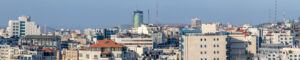
On the other side of Wadi Ahmad, clearly visible on the opposing hill, are numerous Israeli residential areas that were built on Palestinian land. These “suburbs,” or more precisely settlements, in the western hills of Jerusalem, consist mainly of high-rises. The largest is Gilo, a stone’s throw across the valley. It was constructed on land appropriated from the villages of Sharafat and Slaieb, after they were annexed following the 1967 war. Many of the homes and farms in these villages were destroyed to make way for this satellite “suburb.” Today, Gilo is overwhelmingly Jewish-Israeli (approximately 30,000 residents).

Further north of Gilo lies Al-Malha, formally Al-Maliha, another Palestinian village whose residents were ethnically cleansed during the 1948 Nakba. Many Malhi refugees now live in an area called Jabal Al-Mawaleh (Mountain of the Malhis), in Bethlehem. Their former land is the current site of an upscale Israeli neighborhood and one of Jerusalem’s largest shopping malls, the Kanyon Hazahav (Grand Canyon). The few remaining grand Palestinian houses are usually eagerly bought up and inhabited by wealthy Israeli residents.

The monastery grounds

To reach the Cremisan Monastery, you must pass through well-guarded metal gates, after being screened by the guard on duty. One can’t help but feel a profound sense of awe upon entering the monastery grounds. The beautiful Italianate buildings were constructed in 1885 on the remains of an ancient Byzantine monastery that dates back to the seventh century. Besides its religious significance, the Cremisan Monastery is cherished by the local community for its stunning agricultural landscape, which boasts olive trees and carefully arranged terraced vineyards that slope down into the Wadi Ahmad Valley. For thousands of years, local farmers have maximized cultivation and available water by terracing the hills. The monastery grounds also host a youth cultural center and a large children’s playground, which is unusual — there are hardly any public playgrounds in the nearby Palestinian cities. Even the air is cleaner here, as compared to that in the traffic-heavy Bethlehem Triangle: the three cities of Bethlehem, Beit Jala, and Beit Sahur located on lower ground.

Once atop Cremisan Hill, you can see the neighboring village of Al-Walaja, which can be accessed via the monastery on foot. For the past ten years, however, Israeli authorities have blocked vehicle access. Walajis now have to use alternative roads through Israeli-annexed territory to access their village by car.


Cremisan monastery grounds


West Jerusalem, too, is visible: from this vantage point, you can see how close those hills really are. Al Quds, the Arabic name for Jerusalem, holds profound religious and national importance for all Palestinians, regardless of their religion; it is the beating heart of Palestine. In recent years, Israeli restrictions have made it harder for most Palestinians to visit their Holy City. This small glimpse of Palestine’s most sacred city is always an emotional experience, stirring a complex mix of joy and sadness.

Scattered along the Cremisan Hill slopes are a few old houses still inhabited by Palestinian families. Some stay there year-round, while others visit only in the summer or occasionally; most of the owners now reside in Beit Jala. Israeli restrictions and sealed areas make accessing the region difficult.

Settlers and the state of Israel have been engaged in a continuous battle to change the original face of the land, in a relentless pursuit to supplant Palestine’s rugged and arid Mediterranean terrain with an imagined European-like landscape.

As I walked, I couldn’t help but think back to my previous visit to Cremisan, accompanied by my dear friends, at a time that has since tragically become defined by a hyphen: pre-October 7. Samar, Madeline and I had eventually reached a small forest with dense vegetation. The trees here are indigenous — including a local oak species called ballut and a native variety of hawthorn known as za’rur, among other wild shrubs — and produce fruits traditionally eaten by Palestinians. Seeing this Palestinian forest was already rare, but then we spotted something even rarer: women and children enjoying a picnic under the trees. In a common gesture of Arab hospitality, the women invited us to join them. Samar told me that, during the summer, fruit pickers often offer fruit to people on the grounds, especially those who arrive early in the morning.

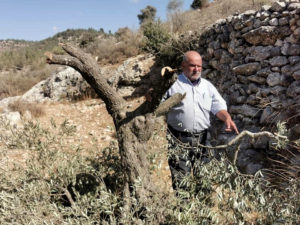
Sadly, a picnic has become a rare sight nowadays; Palestinians can hardly find places to gather outdoors. All the open spaces outside our West Bank towns and villages have either been confiscated or placed off-limits by the Israeli authorities, who are intent on building more settlements (and roads leading to these settlements). Jewish settlers frequently uproot old olive trees and other native trees that once dominated the landscape and replace them with different species of pine. They and the state of Israel have been engaged in a continuous battle to change the original face of the land, in a relentless pursuit to supplant Palestine’s rugged and arid Mediterranean terrain with an imagined European-like landscape.

From our vantage point just behind Cremisan Hill, we could see a strategically located Israeli settlement: Har Gilo, on Beit Jala’s highest hill, called “Ras Beit Jala.” This outpost was established shortly after the Israeli occupation of the West Bank in 1967 on land belonging to the residents of Beit Jala and Al-Walaja. With its population of about 2,000, it looms ominously close, just behind the monastery grounds but not directly visible. The residents of Al-Walaja, however, situated on even higher ground, observe the steadily expanding hilltop settlement with growing apprehension.

Keep going, and you’ll stumble upon a winery, where Italian monks have been producing some of Palestine’s best white and red wines since 1885; the path then ascends towards Al-Walaja. The Jerusalem Municipality illegally annexed this village’s land, yet its residents remain under the jurisdiction of the Palestinian National Authority (PNA). This bizarre arrangement illustrates underlying Israeli intent: to acquire more Palestinian land, but not its indigenous inhabitants. Such a policy could explain why strong opposition to Israeli apartheid originated specifically from this village, namely in the figure of the environmental activist Basel Al-Araj (1984–2017), who inspired many with his nonviolent resistance.

The encroachment continues

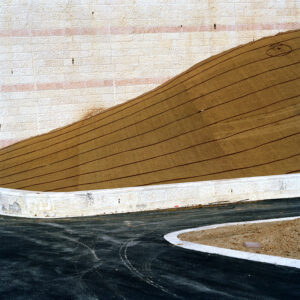
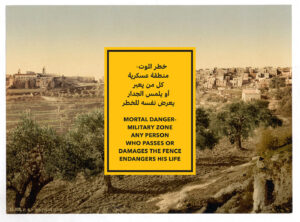
Still today, the standalone sections of a wall mar the otherwise serene walk to the monastery. They may one day become part of the existing Segregation Wall, which has been under construction since 2002. It’s hard not to feel outrage at such a sight. Namely at the increasingly blatant disrespect for the land and its Palestinian inhabitants, who have lived here for thousands of years. Sadness, too, at one of its many consequences — the “bleeding of Beit Jala,” to borrow Madeline’s words. Together with Samar, we have eight children between us, only three of whom remain in Beit Jala. Some have immigrated to Canada, others to the UK. In the summer, or over Christmas, the remainder of our brood try their best to visit us during their vacations. Families are the backbone of Palestinian society, and the separation of families takes a toll on all of us, financially, socially, and emotionally.

A little over a decade ago, construction for Highway 60 tore through Beit Jala like a juggernaut. Repeated explosions shook the ground, weakening the foundations of many homes. Today, a tunnel bridge (jisr al-nafaq), hangs in close proximity, directly outside many people’s windows and balconies; settlers peer in as they drive past, invading Palestinian privacy. The concave walls on both sides of the bridge are lined with ugly rows of barbed wire and bright spotlights to boost security for settler vehicles. All of these incursions have turned the formerly peaceful town of Beit Jala into something that increasingly feels like a concentration camp.

More ominous, if possible, is a plan for a new settlement east of Jerusalem called E1, which would effectively break up the West Bank into two separate parts, one north and one south of Jerusalem. The E1 settlement, planned to be annexed to the Ma’ale Adumim settlement on the eastern hills of Jerusalem, would also effectively disconnect East Jerusalem from the West Bank. Samar, aware of the plan, which was already in development three years ago, warned us of how travel to Ramallah (our current capital), or Jericho (our gateway to Jordan), would now be through “Israeli-annexed,” not “Israeli-occupied” Palestinian land. Worse, Palestinians would be barred from traveling on normal roads to reach those places; the plan supposedly entails a system of underground tunnels using tax money confiscated from the Palestinian Authority.

“They are stealing our land, chunk by chunk,” she concluded. “The projected E1 settlement would cover a 12-kilometer square area or roughly 3,000 acres that would be built over a Muslim cemetery and a garbage dump.” She repeated the words as though she herself could not quite believe it. “Just imagine, a cemetery!”

More loss to come

Samar was right, it turns out: new expansion plans for Gilo are already underway, according to a report published by the POICA Project on May 12, 2025.  The two-pronged expansion envisions establishing a new settlement east of Gilo by constructing 805 new residential units. It also involves building a bus parking lot south of Gilo/north of Bethlehem on land belonging to Bethlehemite families, supposedly to handle “increasing traffic demands.”

If implemented, the plan would effectively isolate Bethlehem from the West Bank, specifically from Jerusalem, thereby severing historic spiritual, cultural, and economic ties between the two sister cities, both of which have been important sites of Christian pilgrimage for over 2,000 years. In the past, it took ten minutes to drive between the two cities. In later years, that same trip became a nightmare, taking hours due to an increasingly complex system of crossings, permits, and the Segregation Wall. Since October 7, 2023, this trip has become virtually impossible for Palestinians.

It has become increasingly clear that with the Israeli land annexation to the west, east, and north of the Bethlehem Triangle, the three cities might become completely choked off and enclosed. For those of us living here, this could mean the three-city complex is erased as an entity. Israeli systematic and unilateral annexation measures, meant to consolidate the total fragmentation of the West Bank’s geography, will make a future Palestinian state untenable.

The Cremisan Monastery’s sprawling grounds stand in the way of a possible planned merger between Har Gilo, located in Beit Jala, and the larger settlement of Gilo on the western outskirts of Jerusalem. If it were to be implemented, the Cremisan Monastery might lose its terraced vineyards and its mini-forest and be reduced to just a few beautiful old Italianate buildings surrounded by a very tall wall.

Samar, Madeline, and I remain friends, still meet for strolls, still share our joys and worries, still continually ask one other, in reference to our beloved monastery — “For how long?”

This TMR contributor, a “mom from Bethlehem,” prefers to remain anonymous. 
 

Join Our Community

TMR exists thanks to its readers and supporters. By sharing our stories and celebrating cultural pluralism, we aim to counter racism, xenophobia, and exclusion with knowledge, empathy, and artistic expression.

Learn more

RELATED

Columns

Small Moments and Their Much Larger Meaning

30 JANUARY 2026 • By Amal Ghandour
Small Moments and Their Much Larger Meaning
Fiction

“Tiny Suns”—a short story

30 JANUARY 2026 • By Sahar Mustafah
“Tiny Suns”—a short story
Essays

Jewish Supremacy and the Making of Genocide in Gaza

30 JANUARY 2026 • By Sheryl Ono
Jewish Supremacy and the Making of Genocide in Gaza
Essays

Not Even the Dead Rest in Palestine

30 JANUARY 2026 • By A Mom from Bethlehem
Not Even the Dead Rest in Palestine
Essays

How Can Palestinians and Israelis Live Together?

30 JANUARY 2026 • By Raja Shehadeh
How Can Palestinians and Israelis Live Together?
Film Reviews

With Hasan in Gaza: Salvaged Palestine

30 JANUARY 2026 • By Jim Quilty
<em>With Hasan in Gaza</em>: Salvaged Palestine
TMR 57 • PALESTINE

In Two New Books, Palestinian Writing Bears Witness

30 JANUARY 2026 • By Gabriel Polley
In Two New Books, Palestinian Writing Bears Witness
Book Reviews

You Must Live: A Collection of Palestinian Poetry

30 JANUARY 2026 • By Sholeh Wolpé
<em>You Must Live</em>: A Collection of Palestinian Poetry
TMR 57 • PALESTINE

Letter from Gaza: Our Long Wait for Gas

30 JANUARY 2026 • By Esraa Abo Qamar
Letter from Gaza: Our Long Wait for Gas
TMR 57 • PALESTINE

Letter from Gaza: Stuck in Place

30 JANUARY 2026 • By Mariam Mushtaha
Letter from Gaza: Stuck in Place
Editorial

Why PALESTINE?

30 JANUARY 2026 • By TMR
Why PALESTINE?
Columns

Trump, The Liberator! (and the Fear Wagons)
16 JANUARY 2026 • By Amal Ghandour
Trump, The Liberator! (and the Fear Wagons)
Film

The Palestinian Legacy of Mohammad Bakri

2 JANUARY 2026 • By Hadani Ditmars
The Palestinian Legacy of Mohammad Bakri
Columns

Emm Kamel: The Future Is Here and So Is the Past

19 DECEMBER 2025 • By Amal Ghandour
<em>Emm Kamel</em>: The Future Is Here and So Is the Past
Fiction

A Bomb for Personal Use—an excerpt

5 DECEMBER 2025 • By Mirna Al-Mahdi
<em>A Bomb for Personal Use</em>—an excerpt
short story

“Tuesday”—a story from Palestine

5 DECEMBER 2025 • By Majd Aburrub
“Tuesday”—a story from Palestine
Film

10 Noir Films from the Arab world, Iran, and Turkey

5 DECEMBER 2025 • By TMR
10 Noir Films from the Arab world, Iran, and Turkey
Art & Photography

Artist Interview: Corinne Silva on Israeli Settlement Gardens in Palestine

28 NOVEMBER 2025 • By Jelena Sofronijevic
Artist Interview: Corinne Silva on Israeli Settlement Gardens in Palestine
Centerpiece

The Grammar of Power: On Journalism, Grief, and the Stories That Break Us

7 NOVEMBER 2025 • By Adam Makary
The Grammar of Power: On Journalism, Grief, and the Stories That Break Us
Film

Birth of an Occupation: Annemarie Jacir’s Palestine 36

31 OCTOBER 2025 • By Jim Quilty
Birth of an Occupation: Annemarie Jacir’s <em>Palestine 36</em>
Essays

The War on Palestinians Didn’t Start on October 7

10 OCTOBER 2025 • By Taqwa Ahmed Al-Wawi
The War on Palestinians Didn’t Start on October 7
Columns

Chutzpah! Observations On Trump’s Peace Plan

10 OCTOBER 2025 • By Amal Ghandour
Chutzpah! Observations On Trump’s Peace Plan
Editorial

Why FRIENDSHIP?

3 OCTOBER 2025 • By Rana Asfour
Why <em>FRIENDSHIP</em>?
Essays

Lament For My Dear Cousin and Friend in Tulkarm

3 OCTOBER 2025 • By Thoth
Lament For My Dear Cousin and Friend in Tulkarm
Columns

Longing for Love in a Time of Genocide

26 SEPTEMBER 2025 • By Lina Mounzer
Longing for Love in a Time of Genocide
Fiction

Diba’s House

26 SEPTEMBER 2025 • By Sara Masry
Diba’s House
Featured article

Together for Palestine — Truly Historic

19 SEPTEMBER 2025 • By TMR
Together for Palestine — Truly Historic
Book Reviews

How the Media Fails Armenia and Palestine

19 SEPTEMBER 2025 • By Gabriel Polley
How the Media Fails Armenia and Palestine
Film Reviews

New Documentaries from Palestine, Sudan, Afghanistan, and Iran

12 SEPTEMBER 2025 • By Yassin El-Moudden
New Documentaries from Palestine, Sudan, Afghanistan, and Iran
Film

Once Upon a Time in Gaza Wants to Be an Indie Western

29 AUGUST 2025 • By Karim Goury
<em>Once Upon a Time in Gaza</em> Wants to Be an Indie Western
Essays

From Stitch to Symbol: The Power of Palestinian Tatreez

22 AUGUST 2025 • By Joanna Barakat
From Stitch to Symbol: The Power of Palestinian Tatreez
Essays

Amal Doesn’t Even Know What a Banana Is: Child Malnutrition in Gaza

1 AUGUST 2025 • By Asem Al Jerjawi
Amal Doesn’t Even Know What a Banana Is: Child Malnutrition in Gaza
Essays

“A Love That Endures”: How Tamer and Sabreen Defied War and Death

25 JULY 2025 • By Husam Maarouf
“A Love That Endures”: How Tamer and Sabreen Defied War and Death
Art & Photography

August World Picks from the Editors

25 JULY 2025 • By TMR
August World Picks from the Editors
Featured article

“Silence is Not the Way”—Arab Writers Against Israel’s Genocide

18 JULY 2025 • By Jordan Elgrably
“Silence is Not the Way”—Arab Writers Against Israel’s Genocide
Art

Taqi Spateen Paints Palestine Museum Mural of Aaron Bushnell

11 JULY 2025 • By Hadani Ditmars
Taqi Spateen Paints Palestine Museum Mural of Aaron Bushnell
Book Reviews

Palestine’s Places and Memorials Are Not Forgotten

4 JULY 2025 • By Gabriel Polley
Palestine’s Places and Memorials Are Not <em>Forgotten</em>
Essays

Unwritten Stories from Palestine

4 JULY 2025 • By Thoth
Unwritten Stories from Palestine
Essays

A Voice That Defied Silence: The Legacy of Dr. Refaat Al-Areer

4 JULY 2025 • By Taqwa Ahmed Al-Wawi
A Voice That Defied Silence: The Legacy of Dr. Refaat Al-Areer
Essays

Doaa: From a Dreamworld to the Ashes of Displacement

30 MAY 2025 • By Taqwa Ahmed Al-Wawi
Doaa: From a Dreamworld to the Ashes of Displacement
Featured article

Arrested and Rearrested: Palestinian Women in the West Bank

16 MAY 2025 • By Lynzy Billing
Arrested and Rearrested: Palestinian Women in the West Bank
Books

Editors’ 2025 Palestinian Lit List

15 MAY 2025 • By TMR
Editors’ 2025 Palestinian Lit List
Books

Poet Mosab Abu Toha Wins Pulitzer Prize for Essays on Gaza

9 MAY 2025 • By Jordan Elgrably
Poet Mosab Abu Toha Wins Pulitzer Prize for Essays on Gaza
Editorial

For Our 50th Issue, Writers Reflect on Going Home

2 MAY 2025 • By TMR
For Our 50th Issue, Writers Reflect on Going Home
Art

Neither Here Nor There

2 MAY 2025 • By Myriam Cohenca
Neither Here Nor There
Film

Gaza, Sudan, Israel/Palestine Documentaries Show in Thessaloniki

28 MARCH 2025 • By Iason Athanasiadis
Gaza, Sudan, Israel/Palestine Documentaries Show in Thessaloniki
Essays

A Conversation Among My Homeland’s Trees

7 MARCH 2025 • By Alia Yunis
A Conversation Among My Homeland’s Trees
Art

Finding Emptiness: Gaza Artist Taysir Batniji in Beirut

21 FEBRUARY 2025 • By Jim Quilty
Finding Emptiness: Gaza Artist Taysir Batniji in Beirut
Book Reviews

Omar El Akkad & Mohammed El-Kurd: Liberalism in a Time of Genocide

14 FEBRUARY 2025 • By Rebecca Ruth Gould
Omar El Akkad & Mohammed El-Kurd: Liberalism in a Time of Genocide
Centerpiece

Ravaged by Fire

7 FEBRUARY 2025 • By Francisco Letelier
Ravaged by Fire
Book Reviews

Memories of Palestine through Contemporary Media

7 FEBRUARY 2025 • By Malu Halasa
Memories of Palestine through Contemporary Media
Essays

Flight Plans: From Gaza to Singapore

7 FEBRUARY 2025 • By Chin-chin Yap
Flight Plans: From Gaza to Singapore
Books

“Culinary Palestine” — Fadi Kattan in an excerpt from Sumud

31 JANUARY 2025 • By Fadi Kattan
“Culinary Palestine” — Fadi Kattan in an excerpt from <em>Sumud</em>
Arabic

Huda Fakhreddine & Yasmeen Hanoosh: Translating Arabic & Gaza

17 JANUARY 2025 • By Yasmeen Hanoosh, Huda J. Fakhreddine
Huda Fakhreddine & Yasmeen Hanoosh: Translating Arabic & Gaza
Book Reviews

Radwa Ashour’s Classic Granada Now in a New English Edition

17 JANUARY 2025 • By Guy Mannes-Abbott
Radwa Ashour’s Classic <em>Granada</em> Now in a New English Edition
Uncategorized

Malu Halasa and Jordan Elgrably publish Sumūd: a New Palestinian Reader

4 JANUARY 2025 • By TMR
Malu Halasa and Jordan Elgrably publish Sumūd: a New Palestinian Reader
Book Reviews

Maya Abu Al-Hayyat’s Defiant Exploration of Palestinian Life

20 DECEMBER 2024 • By Zahra Hankir
Maya Abu Al-Hayyat’s Defiant Exploration of Palestinian Life
Featured Artist

Palestine Features in Larissa Sansour’s Sci-Fi Future

6 DECEMBER 2024 • By Larissa Sansour
Palestine Features in Larissa Sansour’s Sci-Fi Future
Opinion

Susan Abulhawa at Oxford Union on Palestine/Israel

6 DECEMBER 2024 • By Susan Abulhawa
Susan Abulhawa at Oxford Union on Palestine/Israel
Art

Basel Abbas & Ruanne Abou-Rahme: Palestinian artists at Copenhagen’s Glyptotek

22 NOVEMBER 2024 • By Arie Amaya-Akkermans
Basel Abbas & Ruanne Abou-Rahme: Palestinian artists at Copenhagen’s Glyptotek
Art & Photography

The Palestinian Gazelle

1 NOVEMBER 2024 • By Manal Mahamid
The Palestinian Gazelle
Interviews

The Hybrid — The Case of Michael Vatikiotis

18 OCTOBER 2024 • By Rana Haddad
The Hybrid — The Case of Michael Vatikiotis
Essays

Palestine, the Land of Grapes and Wine

11 OCTOBER 2024 • By Fadi Kattan, Anna Patrowicz
Palestine, the Land of Grapes and Wine
TMR 45 • From Here, One Year On

Witnessing Catastrophe: a Painter in Lebanon

4 OCTOBER 2024 • By Ziad Suidan
Witnessing Catastrophe: a Painter in Lebanon
Art & Photography

Visuals and Voices: Palestine Will Not Be a Palimpsest

4 OCTOBER 2024 • By Malu Halasa
Visuals and Voices: Palestine Will Not Be a Palimpsest
Essays

Shamrocks & Watermelons: Palestine Politics in Belfast

4 OCTOBER 2024 • By Stuart Bailie
Shamrocks & Watermelons: Palestine Politics in Belfast
Opinion

Everything Has Changed, Nothing Has Changed

4 OCTOBER 2024 • By Amal Ghandour
Everything Has Changed, Nothing Has Changed
Art

Activism in the Landscape: Environmental Arts & Resistance in Palestine

4 OCTOBER 2024 • By Katie Logan
Activism in the Landscape: Environmental Arts & Resistance in Palestine
Poetry

Poems by Nasser Rabah, Amanee Izhaq and Mai Al-Nakib

4 OCTOBER 2024 • By Nasser Rabah, Amanee Izhaq, Mai Al-Nakib, Wiam El-Tamami
Poems by Nasser Rabah, Amanee Izhaq and Mai Al-Nakib
Books

“Kill the Music”—an excerpt from a new novel by Badar Salem

16 AUGUST 2024 • By Badar Salem
“Kill the Music”—an excerpt from a new novel by Badar Salem
Film

World Picks from the Editors: AUGUST

2 AUGUST 2024 • By TMR
World Picks from the Editors: AUGUST
Art & Photography

World Picks from the Editors: July 15 — August 2

12 JULY 2024 • By TMR
World Picks from the Editors: July 15 — August 2
Fiction

“The Cockroaches”—flash fiction

5 JULY 2024 • By Stanko Uyi Srsen
“The Cockroaches”—flash fiction
Centerpiece

Dare Not Speak—a One-Act Play

7 JUNE 2024 • By Hassan Abdulrazzak
<em>Dare Not Speak</em>—a One-Act Play
Books

Palestine, Political Theatre & the Performance of Queer Solidarity in Jean Genet’s Prisoner of Love

7 JUNE 2024 • By Saleem Haddad
Palestine, Political Theatre & the Performance of Queer Solidarity in Jean Genet’s <em>Prisoner of Love</em>
Essays

A Small Kernel of Human Kindness: Some Notes on Solidarity and Resistance

24 MAY 2024 • By Nancy Kricorian
A Small Kernel of Human Kindness: Some Notes on Solidarity and Resistance
Art

Demarcations of Identity: Rushdi Anwar

10 MAY 2024 • By Malu Halasa
Demarcations of Identity: Rushdi Anwar
Editorial

Why FORGETTING?

3 MAY 2024 • By Malu Halasa, Jordan Elgrably
Why FORGETTING?
Centerpiece

Memory Archive: Between Remembering and Forgetting

3 MAY 2024 • By Mai Al-Nakib
Memory Archive: Between Remembering and Forgetting
Art & Photography

Not Forgotten, Not (All) Erased: Palestine’s Sacred Shrines

3 MAY 2024 • By Gabriel Polley
Not Forgotten, Not (All) Erased: Palestine’s Sacred Shrines
Book Reviews

Palestinian Culture, Under Assault, Celebrated in New Cookbook

3 MAY 2024 • By Mischa Geracoulis
Palestinian Culture, Under Assault, Celebrated in New Cookbook
Art & Photography

Malak Mattar: No Words, Only Scenes of Ruin

26 APRIL 2024 • By Nadine Nour el Din
Malak Mattar: No Words, Only Scenes of Ruin
Opinion

Censorship over Gaza and Palestine Roils the Arts Community

12 APRIL 2024 • By Hassan Abdulrazzak
Censorship over Gaza and Palestine Roils the Arts Community
Art

Past Disquiet at the Palais de Tokyo in Paris

1 APRIL 2024 • By Kristine Khouri, Rasha Salti
<em>Past Disquiet</em> at the Palais de Tokyo in Paris
Essays

Undoing Colonial Geographies from Paris with Ariella Aïsha Azoulay

1 APRIL 2024 • By Sasha Moujaes, Jordan Elgrably
Undoing Colonial Geographies from Paris with Ariella Aïsha Azoulay
Book Reviews

Fady Joudah’s […] Dares Us to Listen to Palestinian Words—and Silences

25 MARCH 2024 • By Eman Quotah
Fady Joudah’s <em>[…]</em> Dares Us to Listen to Palestinian Words—and Silences
Art & Photography

Will Artists Against Genocide Boycott the Venice Biennale?

18 MARCH 2024 • By Hadani Ditmars
Will Artists Against Genocide Boycott the Venice Biennale?
Film

Israeli & Palestinian Filmmakers Accused of Anti-semitism at Berlinale

11 MARCH 2024 • By Viola Shafik
Israeli & Palestinian Filmmakers Accused of Anti-semitism at Berlinale
Books

Four Books to Revolutionize Your Thinking

3 MARCH 2024 • By Rana Asfour
Four Books to Revolutionize Your Thinking
Essays

The Story of the Keffiyeh

3 MARCH 2024 • By Rajrupa Das
The Story of the Keffiyeh
Essays

Messages from Gaza Now / 5

26 FEBRUARY 2024 • By Hossam Madhoun
Messages from Gaza Now / 5
Weekly

World Picks from the Editors: Feb 23 — Mar 7

23 FEBRUARY 2024 • By TMR
World Picks from the Editors: Feb 23 — Mar 7
Art & Photography

The Body, Intimacy and Technology in the Middle East

4 FEBRUARY 2024 • By Naima Morelli
The Body, Intimacy and Technology in the Middle East
Columns

Driving in Palestine Now is More Dangerous Than Ever

29 JANUARY 2024 • By TMR
Driving in Palestine Now is More Dangerous Than Ever
Featured article

Israel-Palestine: Peace Under Occupation?

29 JANUARY 2024 • By Laëtitia Soula
Israel-Palestine: Peace Under Occupation?
Essays

Nothing out of the Ordinary: A Journalist’s West Bank Memories

22 JANUARY 2024 • By Chloé Benoist
Nothing out of the Ordinary: A Journalist’s West Bank Memories
Books

Illuminated Reading for 2024: Our Anticipated Titles

22 JANUARY 2024 • By TMR
Illuminated Reading for 2024: Our Anticipated Titles
Fiction

“New Reasons”—a short story by Samira Azzam

15 JANUARY 2024 • By Samira Azzam, Ranya Abdelrahman
“New Reasons”—a short story by Samira Azzam
Essays

Jesus Was Palestinian, But Bethlehem Suspends Christmas

25 DECEMBER 2023 • By Ahmed Twaij
Jesus Was Palestinian, But Bethlehem Suspends Christmas
Columns

Messages from Gaza Now / 2

18 DECEMBER 2023 • By Hossam Madhoun
Messages from Gaza Now / 2
Music

We Will Sing Until the Pain Goes Away—a Palestinian Playlist

18 DECEMBER 2023 • By Brianna Halasa
We Will Sing Until the Pain Goes Away—a Palestinian Playlist
Featured excerpt

The Palestine Laboratory and Gaza: An Excerpt

4 DECEMBER 2023 • By Antony Loewenstein
<em>The Palestine Laboratory</em> and Gaza: An Excerpt
Book Reviews

The Fiction of Palestine’s Ghassan Zaqtan

13 NOVEMBER 2023 • By Cory Oldweiler
The Fiction of Palestine’s Ghassan Zaqtan
Arabic

Poet Ahmad Almallah

9 NOVEMBER 2023 • By Ahmad Almallah
Poet Ahmad Almallah
Opinion

Palestine’s Pen against Israel’s Swords of Injustice

6 NOVEMBER 2023 • By Mai Al-Nakib
Palestine’s Pen against Israel’s Swords of Injustice
Essays

On Fathers, Daughters and the Genocide in Gaza 

30 OCTOBER 2023 • By Deema K Shehabi
On Fathers, Daughters and the Genocide in Gaza 
Islam

October 7 and the First Days of the War

23 OCTOBER 2023 • By Robin Yassin-Kassab
October 7 and the First Days of the War
Editorial

Palestine and the Unspeakable

16 OCTOBER 2023 • By Lina Mounzer
Palestine and the Unspeakable
Art

The Ongoing Nakba—Rasha Al-Jundi’s Embroidery Series

16 OCTOBER 2023 • By Rasha Al Jundi
The Ongoing Nakba—Rasha Al-Jundi’s Embroidery Series
Art

Vera Tamari’s Lifetime of Palestinian Art

16 OCTOBER 2023 • By Taline Voskeritchian
Vera Tamari’s Lifetime of Palestinian Art
Book Reviews

A Day in the Life of Abed Salama: A Palestine Story

16 OCTOBER 2023 • By Dalia Hatuqa
<em>A Day in the Life of Abed Salama</em>: A Palestine Story
Weekly

World Picks from the Editors, Oct 13 — Oct 27, 2023

12 OCTOBER 2023 • By TMR
World Picks from the Editors, Oct 13 — Oct 27, 2023
Poetry

Home: New Arabic Poems in Translation

11 OCTOBER 2023 • By Sarah Coolidge
<em>Home</em>: New Arabic Poems in Translation
Books

Edward Said: Writing in the Service of Life 

9 OCTOBER 2023 • By Layla AlAmmar
Edward Said: Writing in the Service of Life 
Books

Fairouz: The Peacemaker and Champion of Palestine

1 OCTOBER 2023 • By Dima Issa
Fairouz: The Peacemaker and Champion of Palestine
Book Reviews

Saqi’s Revenant: Sahar Khalifeh’s Classic Nablus Novel Wild Thorns

25 SEPTEMBER 2023 • By Noshin Bokth
Saqi’s Revenant: Sahar Khalifeh’s Classic Nablus Novel <em>Wild Thorns</em>
Book Reviews

Laila Halaby’s The Weight of Ghosts is a Haunting Memoir

28 AUGUST 2023 • By Thérèse Soukar Chehade
Laila Halaby’s <em>The Weight of Ghosts</em> is a Haunting Memoir
Book Reviews

What’s the Solution for Jews and Palestine in the Face of Apartheid Zionism?

21 AUGUST 2023 • By Jonathan Ofir
What’s the Solution for Jews and Palestine in the Face of Apartheid Zionism?
Book Reviews

Ilan Pappé on Tahrir Hamdi’s Imagining Palestine

7 AUGUST 2023 • By Ilan Pappé
Ilan Pappé on Tahrir Hamdi’s <em> Imagining Palestine</em>
Art

What Palestine Brings to the World—a Major Paris Exhibition

31 JULY 2023 • By Sasha Moujaes
<em>What Palestine Brings to the World</em>—a Major Paris Exhibition
Opinion

The End of the Palestinian State? Jenin Is Only the Beginning

10 JULY 2023 • By Yousef M. Aljamal
The End of the Palestinian State? Jenin Is Only the Beginning
Fiction

Tears from a Glass Eye—a story by Samira Azzam

2 JULY 2023 • By Samira Azzam, Ranya Abdelrahman
Tears from a Glass Eye—a story by Samira Azzam
Arabic

Arab Theatre Grapples With Climate Change, Borders, War & Love

4 JUNE 2023 • By Hassan Abdulrazzak
Arab Theatre Grapples With Climate Change, Borders, War & Love
Essays

Alien Entities in the Desert

4 JUNE 2023 • By Dror Shohet
Alien Entities in the Desert
Featured Artist

Nasrin Abu Baker: The Markaz Review Featured Artist, June 2023

4 JUNE 2023 • By TMR
Nasrin Abu Baker: The Markaz Review Featured Artist, June 2023
Book Reviews

How Bethlehem Evolved From Jerusalem’s Sleepy Backwater to a Global Town

15 MAY 2023 • By Karim Kattan
How Bethlehem Evolved From Jerusalem’s Sleepy Backwater to a Global Town
TMR Conversations

TMR CONVERSATIONS: Amal Ghandour Interviews Raja Shehadeh

11 MAY 2023 • By Amal Ghandour, Raja Shehadeh
TMR CONVERSATIONS: Amal Ghandour Interviews Raja Shehadeh
Book Reviews

In Search of Fathers: Raja Shehadeh’s Palestinian Memoir

13 MARCH 2023 • By Amal Ghandour
In Search of Fathers: Raja Shehadeh’s Palestinian Memoir
Centerpiece

Broken Home: Britain in the Time of Migration

5 MARCH 2023 • By Malu Halasa
Broken Home: Britain in the Time of Migration
Essays

More Photographs Taken From The Pocket of a Dead Arab

5 MARCH 2023 • By Saeed Taji Farouky
More Photographs Taken From The Pocket of a Dead Arab
Essays

Home Under Siege: a Palestine Photo Essay

5 MARCH 2023 • By Anam Raheem
Home Under Siege: a Palestine Photo Essay
Fiction

“Holy Land”—short fiction from Asim Rizki

27 FEBRUARY 2023 • By Asim Rizki
“Holy Land”—short fiction from Asim Rizki
Columns

Sudden Journeys: Deluge at Wadi Feynan

6 FEBRUARY 2023 • By Jenine Abboushi
Sudden Journeys: Deluge at Wadi Feynan
TV Review

Palestinian Territories Under Siege But Season 4 of Fauda Goes to Brussels and Beirut Instead

6 FEBRUARY 2023 • By Brett Kline
Palestinian Territories Under Siege But Season 4 of <em>Fauda</em> Goes to Brussels and Beirut Instead
Art

The Creative Resistance in Palestinian Art

26 DECEMBER 2022 • By Malu Halasa
The Creative Resistance in Palestinian Art
Art

Art World Picks: Albraehe, Kerem Yavuz, Zeghidour, Amer & Tatah

12 DECEMBER 2022 • By TMR
Art

Museums in Exile—MO.CO’s show for Chile, Sarajevo & Palestine

12 DECEMBER 2022 • By Jordan Elgrably
Museums in Exile—MO.CO’s show for Chile, Sarajevo & Palestine
Art

Where is the Palestinian National Museum of Modern and Contemporary Art?

12 DECEMBER 2022 • By Nora Ounnas Leroy
Where is the Palestinian National Museum of Modern and Contemporary Art?
Columns

Sudden Journeys: Israel’s Intimate Separations—Part 3

5 DECEMBER 2022 • By Jenine Abboushi
Sudden Journeys: Israel’s Intimate Separations—Part 3
Book Reviews

Fida Jiryis on Palestine in Stranger in My Own Land

28 NOVEMBER 2022 • By Diana Buttu
Fida Jiryis on Palestine in <em>Stranger in My Own Land</em>
Fiction

“Eleazar”—a short story by Karim Kattan

15 NOVEMBER 2022 • By Karim Kattan
“Eleazar”—a short story by Karim Kattan
Opinion

Fragile Freedom, Fragile States in the Muslim World

24 OCTOBER 2022 • By I. Rida Mahmood
Fragile Freedom, Fragile States in the Muslim World
Interviews

Interview with Ahed Tamimi, an Icon of the Palestinian Resistance

15 OCTOBER 2022 • By Nora Lester Murad
Interview with Ahed Tamimi, an Icon of the Palestinian Resistance
Columns

Sudden Journeys: Israel’s Intimate Separations—Part 1

26 SEPTEMBER 2022 • By Jenine Abboushi
Sudden Journeys: Israel’s Intimate Separations—Part 1
Essays

Phoneless in Filthy Berlin

15 SEPTEMBER 2022 • By Maisan Hamdan, Rana Asfour
Phoneless in Filthy Berlin
Art & Photography

Photographer Mohamed Badarne (Palestine) and his U48 Project

15 SEPTEMBER 2022 • By Viola Shafik
Photographer Mohamed Badarne (Palestine) and his U48 Project
Editorial

Editorial: Is the World Driving Us Mad?

15 JULY 2022 • By TMR
Editorial: Is the World Driving Us Mad?
Book Reviews

A Poet and Librarian Catalogs Life in Gaza

20 JUNE 2022 • By Eman Quotah
A Poet and Librarian Catalogs Life in Gaza
Art & Photography

Featured Artist: Steve Sabella, Beyond Palestine

15 JUNE 2022 • By TMR
Featured Artist: Steve Sabella, Beyond Palestine
Essays

Sulafa Zidani: “Three Buses and the Rhythm of Remembering”

15 JUNE 2022 • By Sulafa Zidani
Sulafa Zidani: “Three Buses and the Rhythm of Remembering”
Film

Saeed Taji Farouky: “Strange Cities Are Familiar”

15 JUNE 2022 • By Saeed Taji Farouky
Saeed Taji Farouky: “Strange Cities Are Familiar”
Fiction

Selma Dabbagh: “Trash”

15 JUNE 2022 • By Selma Dabbagh
Selma Dabbagh: “Trash”
Opinion

Palestinians and Israelis Will Commemorate the Nakba Together

25 APRIL 2022 • By Rana Salman, Yonatan Gher
Palestinians and Israelis Will Commemorate the Nakba Together
Columns

Green Almonds in Ramallah

15 APRIL 2022 • By Wafa Shami
Green Almonds in Ramallah
Columns

Libyan, Palestinian and Syrian Family Dinners in London

15 APRIL 2022 • By Layla Maghribi
Libyan, Palestinian and Syrian Family Dinners in London
Film Reviews

Palestine in Pieces: Hany Abu-Assad’s Huda’s Salon

21 MARCH 2022 • By Jordan Elgrably
Palestine in Pieces: Hany Abu-Assad’s <em>Huda’s Salon</em>
Opinion

U.S. Sanctions Russia for its Invasion of Ukraine; Now Sanction Israel for its Occupation of Palestine

21 MARCH 2022 • By Yossi Khen, Jeff Warner
U.S. Sanctions Russia for its Invasion of Ukraine; Now Sanction Israel for its Occupation of Palestine
Columns

“There’s Nothing Worse Than War”

24 FEBRUARY 2022 • By Jordan Elgrably
“There’s Nothing Worse Than War”
Fiction

Three Levantine Tales

15 DECEMBER 2021 • By Nouha Homad
Three Levantine Tales
Columns

Sudden Journeys: The Villa Salameh Bequest

29 NOVEMBER 2021 • By Jenine Abboushi
Sudden Journeys: The Villa Salameh Bequest
Featured article

Killing Olive Trees Fails to Push Palestinians Out

15 NOVEMBER 2021 • By Basil Al-Adraa
Killing Olive Trees Fails to Push Palestinians Out
Columns

Sacred Fire, Profane Fire: From Ritual to Barbecue

15 NOVEMBER 2021 • By Fadi Kattan
Sacred Fire, Profane Fire: From Ritual to Barbecue
Centerpiece

The Untold Story of Zakaria Zubeidi

15 OCTOBER 2021 • By Ramzy Baroud
The Untold Story of Zakaria Zubeidi
Film Reviews

Will Love Triumph in the Midst of Gaza’s 14-Year Siege?

11 OCTOBER 2021 • By Jordan Elgrably
Will Love Triumph in the Midst of Gaza’s 14-Year Siege?
Essays

Gaza, You and Me

14 JULY 2021 • By Abdallah Salha
Gaza, You and Me
Columns

Wasta Tawla, or how the Wastafarians Fared at Fawda

14 JUNE 2021 • By Fadi Kattan
Wasta Tawla, or how the Wastafarians Fared at Fawda
Book Reviews

The Triumph of Love and the Palestinian Revolution

16 MAY 2021 • By Fouad Mami
Latest Reviews

Maqloubeh Behind the Wall in Bethlehem

14 MAY 2021 • By Fadi Kattan
Maqloubeh Behind the Wall in Bethlehem
Essays

Is Tel Aviv’s Neve Tzedek, Too, Occupied Territory?

14 MAY 2021 • By Taylor Miller, TMR
Is Tel Aviv’s Neve Tzedek, Too, Occupied Territory?
Essays

Between Thorns and Thistles in Bil’in

14 MAY 2021 • By Francisco Letelier
Between Thorns and Thistles in Bil’in
My Favorite Things

Covid and Zaatar

18 APRIL 2021 • By Fadi Kattan
Covid and Zaatar
Weekly

“I Advance in Defeat”, the Poems of Najwan Darwish

28 MARCH 2021 • By Patrick James Dunagan
“I Advance in Defeat”, the Poems of Najwan Darwish
TMR 7 • Truth?

Poetry Against the State

14 MARCH 2021 • By Gil Anidjar
Poetry Against the State
Poetry

A visual poem from Hala Alyan: Gaza

14 MARCH 2021 • By TMR
A visual poem from Hala Alyan: Gaza
Book Reviews

The Howling of the Dog: Adania Shibli’s “Minor Detail”

30 DECEMBER 2020 • By Layla AlAmmar
The Howling of the Dog: Adania Shibli’s “Minor Detail”
TMR 4 • Small & Indie Presses

Children of the Ghetto, My Name Is Adam

14 DECEMBER 2020 • By Elias Khoury
Children of the Ghetto, My Name Is Adam
My Favorite Things

Freekeh, freekeh, freekeh!

16 NOVEMBER 2020 • By Fadi Kattan
Freekeh, freekeh, freekeh!
Centerpiece

The Road to Jerusalem, Then and Now

15 NOVEMBER 2020 • By Raja Shehadeh
The Road to Jerusalem, Then and Now
My Favorite Things

Eating in Palestine in the Time of Corona

20 OCTOBER 2020 • By Fadi Kattan
Eating in Palestine in the Time of Corona
World Picks

Interlink Proposes 4 New Arab Novels

22 SEPTEMBER 2020 • By TMR
Interlink Proposes 4 New Arab Novels

Leave a Comment

Your email address will not be published. Required fields are marked *

seven − 1 =

Scroll to Top