Terms of Servitude ou les menaces de l’occupation coloniale numérique

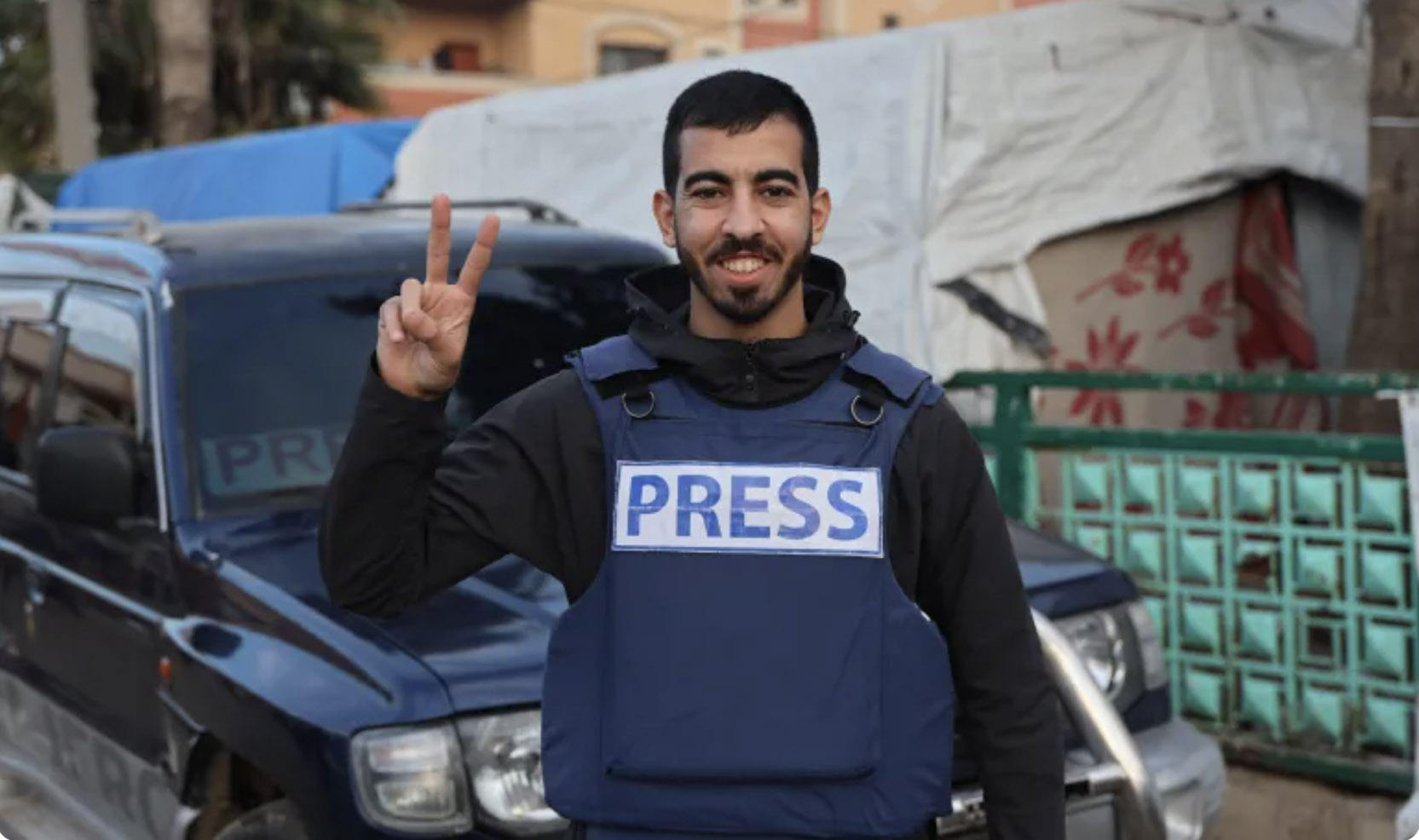
Saleh Al-Jafarawi (photo d’Abdelhakim Abu Riash, avec l’aimable autorisation d’Al Jazeera)

28 NOVEMBER 2025 • By Maura Finkelstein

Select Other Languages French.

Alors qu’à Gaza, plus d’un million de Palestiniens endurent les déplacements, le froid, l’absence de tout refuge et l’attente de l’aide humanitaire, les entreprises de la Big Tech continue leur campagne d’effacement numérique.

Terms of Servitude: Zionism, Silicon Valley, and Digital Settler Colonialism in the Palestinian Liberation Struggle, d’Omar Zahzah
Seven Stories Press 2025
ISBN 9781644214800


Le 12 octobre 2025, une semaine après le dernier accord de « cessez-le-feu », et alors même qu’Israël poursuivait ses bombardements génocidaires à Gaza, je me suis connectée sur X et j’ai appris que Saleh Al-Jafarawi avait été assassiné par un gang lié à Israël. Les vidéos, photos et reportages de ce journaliste palestinien de 28 ans faisaient régulièrement le buzz, il contribuait ainsi à diffuser, dans le monde entier, des informations sur le génocide perpétré par Israël à Gaza, et ce, malgré les multiples formes de censure et l’utilisation de la propagande israélienne, que l’on appelle également hasbara, à son encontre. Al-Jafarawi avait déjà reçu de nombreuses menaces de la part de l’armée sioniste. Son assassinat fait de lui l’un des quelques 270 journalistes palestiniens (au moins) pris pour cible et assassinés par l’État israélien à Gaza. En janvier 2025, il déclarait à Al Jazeera : « Honnêtement, je vivais dans la peur à chaque seconde, surtout après avoir entendu ce que l’occupation israélienne disait à mon sujet. Je vivais au jour le jour, sans savoir ce que l’instant suivant me réservait. »

Imaginez un diagramme de Venn dont les deux sphères seraient le colonialisme numérique et le colonialisme de peuplement. L’occupation coloniale numérique est la zone formée par le chevauchement de ces deux sphères.

Le lendemain, Drop Site News a rapporté que, quelques heures seulement après son assassinat, Meta a discrètement commencé à supprimer toutes les publications d’Al-Jafarawi sur toutes ses plateformes. Il s’agissait simplement d’une accélération de la censure dont Al-Jafarawi faisait l’objet. Le 9 mars 2025, The New Arab rapportait que les deux comptes Instagram d’Al-Jafarawi, qui comptaient au total 9,5 millions d’abonnés, avaient été « suspendus indéfiniment ». Quelques jours après la révélation des actes de censure flagrants opérés par Meta, l’écrivain et universitaire Omar Zahzah a intitulé un article pour The Palestine Chronicle : « La suppression par Meta du compte Instagram de Saleh al-Jafarawi est un exemple d’occupation coloniale numérique en pleine action ».
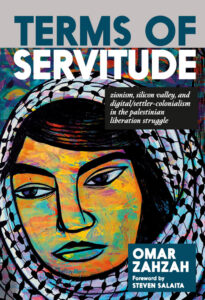
Terms_Servitude
Terms of Servitude est publié par Seven Stories.

Le jour du meurtre d’Al-Jafarawi, je lisais l’excellent et indispensable nouvel ouvrage de Zahzah, Terms of Servitude: Zionism, Silicon Valley, and Digital Settler Colonialism in the Palestinian Liberation Struggle (Conditions générales de servitude : sionisme, Silicon Valley et occupation coloniale numérique dans la lutte pour la libération de la Palestine – NdT). Tout au long de son ouvrage, Zahzah définit l’occupation coloniale numérique comme « la convergence du colonialisme numérique des grandes entreprises technologiques américaines et du colonialisme de peuplement israélien ». Il explique : « L’utilisation que je fais de ce terme met en avant la nature agrégée des conditions matérielles qui s’opposent à la souveraineté numérique palestinienne. Imaginez un diagramme de Venn dont les deux sphères seraient le colonialisme numérique et le colonialisme de peuplement. L’occupation coloniale numérique est la zone formée par le chevauchement de ces deux sphères ». L’exemple de la suppression du compte d’Al-Jafarawi opérée par Meta quelques heures après sa mort en est un bon exemple. Mais Zahzah va au-delà des suspects habituels que sont Meta et X, géants des réseaux sociaux, pour inclure à la liste l’utilisation de la technologie de l’intelligence artificielle (IA) par les grandes entreprises technologiques telles qu’Amazon et Google (notamment le Projet Nimbus, Where’s Daddy et Lavender) et les campagnes de divulgation des données personnelles en ligne telles que Canary Mission, JewBelong et StopAntiSemitism (pour ne citer que quelques-unes des études de cas de Zahzah).

Comme des millions de personnes à travers le monde, le meurtre d’Al-Jafarawi m’a dévastée, et je me suis joint à la condamnation mondiale contre le géant technologique qu’est Meta et contre son effacement des archives du journaliste. Ces actes publics et hypervisibles d’effacement colonial numérique sont liés à des milliers d’attaques personnelles, car Meta et X, en utilisant leurs « conditions générales d’utilisation » comme une arme, surveillent constamment les plateformes des Palestiniens à Gaza, en Cisjordanie occupée et dans la diaspora, ainsi que leurs alliés antisionistes à travers le monde.

Une semaine après le meurtre d’Al-Jafarawi, je me suis reconnectée sur X pour partager les campagnes GoFundMe et Chuffed lancées par des amis de Gaza, eux sont toujours déplacés, transis de froid, sans abri, et attendent encore l’aide humanitaire promise. Une amie, qui m’envoyait d’habitude des messages privés tous les jours, avec les mots qu’elle voulait que j’utilise dans mes publications, restait étrangement silencieuse. Lorsque j’ai vérifié les mises à jour sur sa page X, j’ai reçu cet avertissement : « Attention : ce compte est temporairement restreint. Vous voyez cet avertissement car une activité inhabituelle a été détectée sur ce compte. Voulez-vous le consulter ? »

J’ai cliqué sur « Continuer », mais j’ai remarqué qu’elle n’avait rien publié depuis trois jours, ce qui était très inhabituel. Je lui ai envoyé un message sur Instagram et j’ai attendu. Quand elle s’est enfin connectée et m’a répondu, elle m’a dit qu’elle était restreinte par X depuis plusieurs jours. Comme c’était le site principal sur lequel elle partageait sa propre page GoFundMe, sa campagne était au point mort et elle n’avait reçu aucun don depuis qu’elle avait perdu l’accès à son compte. Elle était paniquée et ne savait pas pourquoi son compte avait été restreint. De la même manière, elle n’a pas compris pourquoi il avait été réactivé plusieurs jours plus tard. Cette histoire est la même dans tous les espaces en ligne qui ont à voir avec la Palestine : l’ « occupation coloniale numérique » nous fournit le concept et le vocabulaire nécessaires pour décrire les multiples façons dont ces plateformes technologiques contribuent à faciliter le génocide israélien à travers leur traitement des Palestiniens en ligne. Zahzah nous rappelle avec beaucoup de pertinence que : « Ce n’est pas à Meta[1] de normaliser l’oppression des Palestiniens ou de dicter la manière dont les Palestiniens doivent se comporter envers leur colonisateur. » Et pourtant, ces plateformes sont devenues le prolongement de ces mêmes intérêts violents.

Pour ceux d’entre nous qui sont engagés dans l’organisation, l’entraide, la production et la consommation de connaissances liées à la lutte pour la libération de la Palestine, les plateformes offertes par les réseaux sociaux sont des espaces ambivalents. Comme beaucoup d’autres, je compte sur ces plateformes pour m’informer, militer, créer des liens et communiquer. Instagram, WhatsApp et X me permettent de rester en contact avec mes amis à Gaza et, de la même manière, ces plateformes comptent parmi les espaces les plus importants pour les habitants de Gaza, car, grâce à elles, ils peuvent rester en contact les uns avec les autres, et avec le reste du monde. Ces espaces numériques ont été essentiels pour les collectifs d’entraide tels que The Sameer Project et Lifeline4Gaza, ainsi que pour tous les particuliers qui ont lancé des campagnes GoFundMe et Chuffed afin de collecter des fonds pour aider des individus, des familles et des communautés à survivre. Leur utilisation n’est pourtant pas sans complications, car elle a également créé un monde où ceux qui vivent un génocide sont contraints de devenir à la fois de véritables influenceurs sur les réseaux sociaux et des survivants de cette télé-réalité dystopique. Leur survie est, d’ailleurs, directement liée à leur capacité à monétiser leurs tragédies et histoires personnelles. Les parents qui luttent pour garder leurs enfants en vie doivent simultanément publier et republier leurs besoins de manière à capter l’attention des Occidentaux. À condition, bien sûr, qu’ils aient la chance de disposer d’un téléphone, d’un ordinateur, d’une tablette et d’une eSim. De plus, comme Ramzy Baroud le fait remarquer (il est cité par Zahzah), « les Palestiniens de Gaza utilisent ces plateformes pour communiquer entre eux, savoir qui est mort et qui est vivant, et sensibiliser l’opinion publique à certains massacres qui se produisent souvent à l’écart des regards, en particulier dans le nord de la bande de Gaza ». Dans ces deux cas, les géants de la tech ont créé un paradoxe pervers dans lequel les utilisateurs qui dépendent de leur technologie pour survivre sont également ceux qui génèrent indirectement les profits que ces entreprises utilisent ensuite pour couvrir le génocide. Comme Zahzah le montre tout au long de son livre, ces entreprises ont le sang de dizaines, voire de centaines de milliers de Palestiniens sur les mains.

J’écris ces lignes au 785e jour du génocide des Palestiniens de Gaza perpétré par Israël. Il est possible qu’entre 700 000 et un million de Palestiniens aient été tués par Israël à Gaza[2], et aujourd’hui, alors que l’hiver arrive dans la région, plus d’un million de personnes se retrouvent sans nourriture, sans eau, sans abri, sans électricité, sans médicaments, sans vêtements chauds et sans moyens de subsistance pour reconstruire leur vie. Des vies que nous, Occidentaux, avons contribué à détruire par nos impôts, nos idées fallacieuses sur le fait qu’il y ait « deux perspectives », nos modes de consommation et notre silence.

Il est difficile d’être optimiste aujourd’hui, après plus de deux ans d’un génocide retransmis en direct. Cependant, Omar Zahzah offre une lueur d’espoir dans la postface du livre, en écrivant :

Travailler sur ce livre m’a rendu plus critique à l’égard des grandes entreprises technologiques et plus optimiste quant aux capacités des militants et des organisateurs. La créativité et l’ingéniosité individuelles favorisent les utilisations contre-hégémoniques des médias numériques. Ce sont les personnes, et non les plateformes, qui garantissent la liberté. La Palestine ne fait pas exception.

Tout comme des organisations telles que la Hind Rajab Foundation sont le fruit de la créativité et de l’ingéniosité individuelles face à tant d’acteurs étatiques qui n’ont pas réussi à traduire en justice les criminels de guerre, nous devons également remettre en question et rejeter les géants de la tech. Cela nécessite une décentralisation d’Internet grâce à des approches anarchistes visant à créer des collectifs et des communautés autonomes fonctionnant en dehors de la logique du capitalisme, de la carcéralité et de l’exclusion, comme le montre clairement le livre de Zahzah. Ce travail s’inspire des recherches et des efforts d’organisation entrepris par des collectifs tels que le Surveillance Resistance Lab. De tels travaux révèlent comment le cadre de l’occupation coloniale numérique mis en place par la Big Tech repose sur le consumérisme capitaliste centralisé, la dégradation de l’environnement et les hiérarchies politiques, qui sont inévitablement des espaces de surveillance, de violence et de dépossession. Le livre de Zahzah nous rappelle qu’il existe un monde au-delà de ces frontières numériques. En imaginant, en construisant et en maintenant un monde décentralisé basé sur la créativité, les possibilités et la libération, nous pouvons tous nous diriger vers un horizon numérique décolonial.

traduit de l’anglais par Marion Beauchamp-Levet

[1] Ou toute autre plateforme technologique.

[2] Selon les modèles statistiques publiés par The Lancet, il est possible qu’un million de Palestiniens aient été tués par Israël à Gaza. En juillet 2025, une étude publiée dans Arena Online estimait le nombre de morts à près de 700 000, un chiffre qui serait, lui aussi, beaucoup plus élevé aujourd’hui.

Maura Finkelstein

Maura Finkelstein is a writer, ethnographer, and Associate Professor of Anthropology. She is the author of The Archive of Loss: Lively Ruination in Mill Land Mumbai, published by Duke University Press in 2019.

Join Our Community

TMR exists thanks to its readers and supporters. By sharing our stories and celebrating cultural pluralism, we aim to counter racism, xenophobia, and exclusion with knowledge, empathy, and artistic expression.

Learn more

RELATED

Columns

Emm Kamel: The Future Is Here and So Is the Past

19 DECEMBER 2025 • By Amal Ghandour
<em>Emm Kamel</em>: The Future Is Here and So Is the Past
Book Reviews

Terms of Servitude and the Threats of Digital Settler Colonialism

28 NOVEMBER 2025 • By Maura Finkelstein
<em>Terms of Servitude</em> and the Threats of Digital Settler Colonialism
Interviews

Novelist Jadd Hilal on Being French and Palestinian

7 NOVEMBER 2025 • By Lara Vergnaud
Novelist Jadd Hilal on Being French and Palestinian
Centerpiece

The Grammar of Power: On Journalism, Grief, and the Stories That Break Us

7 NOVEMBER 2025 • By Adam Makary
The Grammar of Power: On Journalism, Grief, and the Stories That Break Us
Book Reviews

Myth and Migration in the Work of Dalia Al-Dujaili

6 NOVEMBER 2025 • By Noshin Bokth
Myth and Migration in the Work of Dalia Al-Dujaili
Film

In Raoul Peck’s Orwell: 2+2=5, Truth is Revolutionary

17 OCTOBER 2025 • By Alex Demyanenko
In Raoul Peck’s <em>Orwell: 2+2=5</em>, Truth is Revolutionary
Essays

Blue, The Arabian Red Fox

3 OCTOBER 2025 • By Noura Ali-Ramahi
Blue, The Arabian Red Fox
Featured article

Together for Palestine — Truly Historic

19 SEPTEMBER 2025 • By TMR
Together for Palestine — Truly Historic
Book Reviews

How the Media Fails Armenia and Palestine

19 SEPTEMBER 2025 • By Gabriel Polley
How the Media Fails Armenia and Palestine
Film Reviews

New Documentaries from Palestine, Sudan, Afghanistan, and Iran

12 SEPTEMBER 2025 • By Yassin El-Moudden
New Documentaries from Palestine, Sudan, Afghanistan, and Iran
Editorial

Why Out of Our Minds?

5 SEPTEMBER 2025 • By Lina Mounzer
Why <em>Out of Our Minds</em>?
Centerpiece

Trauma After Gaza

5 SEPTEMBER 2025 • By Joelle Abi-Rached
Trauma After Gaza
Film

Once Upon a Time in Gaza Wants to Be an Indie Western

29 AUGUST 2025 • By Karim Goury
<em>Once Upon a Time in Gaza</em> Wants to Be an Indie Western
Essays

Amal Doesn’t Even Know What a Banana Is: Child Malnutrition in Gaza

1 AUGUST 2025 • By Asem Al Jerjawi
Amal Doesn’t Even Know What a Banana Is: Child Malnutrition in Gaza
Essays

“A Love That Endures”: How Tamer and Sabreen Defied War and Death

25 JULY 2025 • By Husam Maarouf
“A Love That Endures”: How Tamer and Sabreen Defied War and Death
TMR Interviews

Aida Šehović on the 30th Anniversary of the Srebrenica Genocide

18 JULY 2025 • By Claudia Mende
Aida Šehović on the 30th Anniversary of the Srebrenica Genocide
Fiction

Hiding From Dragons—a short story set in Gaza

18 JULY 2025 • By Richie Billing
Hiding From Dragons—a short story set in Gaza
Featured article

“Silence is Not the Way”—Arab Writers Against Israel’s Genocide

18 JULY 2025 • By Jordan Elgrably
“Silence is Not the Way”—Arab Writers Against Israel’s Genocide
Art

Taqi Spateen Paints Palestine Museum Mural of Aaron Bushnell

11 JULY 2025 • By Hadani Ditmars
Taqi Spateen Paints Palestine Museum Mural of Aaron Bushnell
Poetry

Nasser Rabah on Poetry and Gaza

4 JULY 2025 • By Nasser Rabah
Nasser Rabah on Poetry and Gaza
Columns

Afraid for Our Children’s Future, How Do We Talk About War?

20 JUNE 2025 • By Lina Mounzer
Afraid for Our Children’s Future, How Do We Talk About War?
Essays

Doaa: From a Dreamworld to the Ashes of Displacement

30 MAY 2025 • By Taqwa Ahmed Al-Wawi
Doaa: From a Dreamworld to the Ashes of Displacement
Interviews

23 Hours Inside State Dept. Press Briefings on the Gaza Genocide

23 MAY 2025 • By Malu Halasa
23 Hours Inside State Dept. Press Briefings on the Gaza Genocide
Featured article

Arrested and Rearrested: Palestinian Women in the West Bank

16 MAY 2025 • By Lynzy Billing
Arrested and Rearrested: Palestinian Women in the West Bank
Books

Algerian-French Author Kamel Daoud on the Defensive

16 MAY 2025 • By Lara Vergnaud
Algerian-French Author Kamel Daoud on the Defensive
Books

Poet Mosab Abu Toha Wins Pulitzer Prize for Essays on Gaza

9 MAY 2025 • By Jordan Elgrably
Poet Mosab Abu Toha Wins Pulitzer Prize for Essays on Gaza
Essays

A Kashmiri in Cashmere

2 MAY 2025 • By Nafeesa Syeed
A Kashmiri in Cashmere
Literature

The Pen and the Sword — Censorship Threatens Us All

2 MAY 2025 • By Anna Badkhen
The Pen and the Sword — Censorship Threatens Us All
Art

Between Belief and Doubt: Ramzi Mallat’s Suspended Disbelief

11 APRIL 2025 • By Marta Mendes
Between Belief and Doubt: Ramzi Mallat’s Suspended Disbelief
Advice

Dear Souseh: Existential Advice for Third World Problems

4 APRIL 2025 • By Lina Mounzer
Dear Souseh: Existential Advice for Third World Problems
Film

Gaza, Sudan, Israel/Palestine Documentaries Show in Thessaloniki

28 MARCH 2025 • By Iason Athanasiadis
Gaza, Sudan, Israel/Palestine Documentaries Show in Thessaloniki
Fiction

Manifesto of Love & Revolution

7 MARCH 2025 • By Iskandar Abdalla
Manifesto of Love & Revolution
Art

Finding Emptiness: Gaza Artist Taysir Batniji in Beirut

21 FEBRUARY 2025 • By Jim Quilty
Finding Emptiness: Gaza Artist Taysir Batniji in Beirut
Book Reviews

Omar El Akkad & Mohammed El-Kurd: Liberalism in a Time of Genocide

14 FEBRUARY 2025 • By Rebecca Ruth Gould
Omar El Akkad & Mohammed El-Kurd: Liberalism in a Time of Genocide
Editorial

Memoir in the Age of Narcissism

7 FEBRUARY 2025 • By TMR
Memoir in the Age of Narcissism
Centerpiece

Ravaged by Fire

7 FEBRUARY 2025 • By Francisco Letelier
Ravaged by Fire
Book Reviews

Memories of Palestine through Contemporary Media

7 FEBRUARY 2025 • By Malu Halasa
Memories of Palestine through Contemporary Media
Essays

Flight Plans: From Gaza to Singapore

7 FEBRUARY 2025 • By Chin-chin Yap
Flight Plans: From Gaza to Singapore
Books

“Culinary Palestine” — Fadi Kattan in an excerpt from Sumud

31 JANUARY 2025 • By Fadi Kattan
“Culinary Palestine” — Fadi Kattan in an excerpt from <em>Sumud</em>
Book Reviews

Yassini Girls—a Powerful Yet Flawed Account of Historical Trauma

31 JANUARY 2025 • By Natasha Tynes
<em>Yassini Girls</em>—a Powerful Yet Flawed Account of Historical Trauma
Arabic

Huda Fakhreddine & Yasmeen Hanoosh: Translating Arabic & Gaza

17 JANUARY 2025 • By Yasmeen Hanoosh, Huda J. Fakhreddine
Huda Fakhreddine & Yasmeen Hanoosh: Translating Arabic & Gaza
Uncategorized

Malu Halasa and Jordan Elgrably publish Sumūd: a New Palestinian Reader

4 JANUARY 2025 • By TMR
Malu Halasa and Jordan Elgrably publish Sumūd: a New Palestinian Reader
Book Reviews

Criticizing a Militaristic Israel is not Inherently Antisemitic

20 DECEMBER 2024 • By Stephen Rohde
Criticizing a Militaristic Israel is not Inherently Antisemitic
Opinion

Susan Abulhawa at Oxford Union on Palestine/Israel

6 DECEMBER 2024 • By Susan Abulhawa
Susan Abulhawa at Oxford Union on Palestine/Israel
Essays

A Fragile Ceasefire as Lebanon Survives, Traumatized

29 NOVEMBER 2024 • By Tarek Abi Samra, Lina Mounzer
A Fragile Ceasefire as Lebanon Survives, Traumatized
Essays

Beirut War Diary: 8 Days in October

22 NOVEMBER 2024 • By Rima Rantisi
Beirut War Diary: 8 Days in October
Essays

A Jewish Meditation on the Palestinian Genocide

15 NOVEMBER 2024 • By Sheryl Ono
A Jewish Meditation on the Palestinian Genocide
Essays

Between Two Sieges: Translating Roger Assaf in California

8 NOVEMBER 2024 • By Zeina Hashem Beck
Between Two Sieges: Translating Roger Assaf in California
Art & Photography

Palestinian Artists Reflect on the Role of Art in Catastrophic Times

1 NOVEMBER 2024 • By Nina Hubinet
Palestinian Artists Reflect on the Role of Art in Catastrophic Times
Centerpiece

“Habib”—a story by Ghassan Ghassan

1 NOVEMBER 2024 • By Ghassan Ghassan
“Habib”—a story by Ghassan Ghassan
Books

“The Ballad of Lulu and Amina” — from Jerusalem to Gaza

1 NOVEMBER 2024 • By Izzeldin Bukhari
“The Ballad of Lulu and Amina” — from Jerusalem to Gaza
Opinion

Should a Climate-Destroying Dictatorship Host a Climate-Saving Conference?

25 OCTOBER 2024 • By Lucine Kasbarian
Should a Climate-Destroying Dictatorship Host a Climate-Saving Conference?
Books

November World Picks from the Editors

25 OCTOBER 2024 • By TMR
November World Picks from the Editors
Editorial

A Year of War Without End

4 OCTOBER 2024 • By Lina Mounzer
A Year of War Without End
Art & Photography

Visuals and Voices: Palestine Will Not Be a Palimpsest

4 OCTOBER 2024 • By Malu Halasa
Visuals and Voices: Palestine Will Not Be a Palimpsest
Featured article

Censorship and Cancellation Fail to Camouflage the Ugly Truth

4 OCTOBER 2024 • By Jordan Elgrably
Censorship and Cancellation Fail to Camouflage the Ugly Truth
Essays

Shamrocks & Watermelons: Palestine Politics in Belfast

4 OCTOBER 2024 • By Stuart Bailie
Shamrocks & Watermelons: Palestine Politics in Belfast
Essays

Depictions of Genocide: The Un-Imaginable Visibility of Extermination

4 OCTOBER 2024 • By Viola Shafik
Depictions of Genocide: The Un-Imaginable Visibility of Extermination
Opinion

Everything Has Changed, Nothing Has Changed

4 OCTOBER 2024 • By Amal Ghandour
Everything Has Changed, Nothing Has Changed
Book Reviews

Don’t Look Left: A Diary of Genocide by Atif Abu Saif

20 SEPTEMBER 2024 • By Selma Dabbagh
<em>Don’t Look Left: A Diary of Genocide</em> by Atif Abu Saif
Editorial

Why GATEKEEPERS?

6 SEPTEMBER 2024 • By Jordan Elgrably
Why GATEKEEPERS?
Featured Artist

Featured Artists: “Barred From Home”

6 SEPTEMBER 2024 • By Malu Halasa
Featured Artists: “Barred From Home”
Centerpiece

Mohammad Hafez Ragab: Upsetting the Guards of Cairo

6 SEPTEMBER 2024 • By Maha Al Aswad, Rana Asfour
Mohammad Hafez Ragab: Upsetting the Guards of Cairo
Essays

Meta’s Community Standards as a Tool of Digital Settler Colonialism

6 SEPTEMBER 2024 • By Omar Zahzah
Meta’s Community Standards as a Tool of Digital Settler Colonialism
Book Reviews

Egypt’s Gatekeeper — President or Despot?

6 SEPTEMBER 2024 • By Elias Feroz
Egypt’s Gatekeeper — President or Despot?
Essays

My Life Among the Gatekeepers

6 SEPTEMBER 2024 • By Ammiel Alcalay
My Life Among the Gatekeepers
Fiction

“Fragments from a Gaza Nightmare”—fiction from Sama Hassan

30 AUGUST 2024 • By Sama Hassan, Rana Asfour
“Fragments from a Gaza Nightmare”—fiction from Sama Hassan
Essays

Beyond Rubble — Cultural Heritage and Healing After Disaster

23 AUGUST 2024 • By Arie Amaya-Akkermans
Beyond Rubble — Cultural Heritage and Healing After Disaster
short story

“Deferred Sorrow”—fiction from Haidar Al Ghazali

5 JULY 2024 • By Haidar Al Ghazali, Rana Asfour
“Deferred Sorrow”—fiction from Haidar Al Ghazali
Book Reviews

Is Amin Maalouf’s Latest Novel, On the Isle of Antioch, a Parody?

14 JUNE 2024 • By Farah-Silvana Kanaan
Is Amin Maalouf’s Latest Novel, <em>On the Isle of Antioch</em>, a Parody?
Centerpiece

Dare Not Speak—a One-Act Play

7 JUNE 2024 • By Hassan Abdulrazzak
<em>Dare Not Speak</em>—a One-Act Play
Essays

Wajdi Mouawad’s “Controversial” Wedding Day

7 JUNE 2024 • By Elie Chalala
Wajdi Mouawad’s “Controversial” <em>Wedding Day</em>
Books

Palestine, Political Theatre & the Performance of Queer Solidarity in Jean Genet’s Prisoner of Love

7 JUNE 2024 • By Saleem Haddad
Palestine, Political Theatre & the Performance of Queer Solidarity in Jean Genet’s <em>Prisoner of Love</em>
Essays

Postscript: Disrupting the Colonial Gaze—Gaza and Israel after October 7th

17 MAY 2024 • By Sara Roy, Ivar Ekeland
Postscript: Disrupting the Colonial Gaze—Gaza and Israel after October 7th
Art

This Year in Venice, it’s the “Palestine Biennale”

10 MAY 2024 • By Hadani Ditmars
This Year in Venice, it’s the “Palestine Biennale”
Centerpiece

Memory Archive: Between Remembering and Forgetting

3 MAY 2024 • By Mai Al-Nakib
Memory Archive: Between Remembering and Forgetting
Essays

The Elephant in the Box

3 MAY 2024 • By Asmaa Elgamal
The Elephant in the Box
Art & Photography

Malak Mattar: No Words, Only Scenes of Ruin

26 APRIL 2024 • By Nadine Nour el Din
Malak Mattar: No Words, Only Scenes of Ruin
Opinion

Equating Critique of Israel with Antisemitism, US Academics are Being Silenced

12 APRIL 2024 • By Maura Finkelstein
Equating Critique of Israel with Antisemitism, US Academics are Being Silenced
Art & Photography

Will Artists Against Genocide Boycott the Venice Biennale?

18 MARCH 2024 • By Hadani Ditmars
Will Artists Against Genocide Boycott the Venice Biennale?
Editorial

Why “Burn It all Down”?

3 MARCH 2024 • By Lina Mounzer
Why “Burn It all Down”?
Essays

The Time of Monsters

3 MARCH 2024 • By Layla AlAmmar
The Time of Monsters
Books

Four Books to Revolutionize Your Thinking

3 MARCH 2024 • By Rana Asfour
Four Books to Revolutionize Your Thinking
Fiction

“The Map of a Genocide Victim”—fiction from Faris Lounis

3 MARCH 2024 • By Faris Lounis, Jordan Elgrably
“The Map of a Genocide Victim”—fiction from Faris Lounis
Columns

Genocide: “That bell can’t be unrung. That thought can’t be unthunk.”

3 MARCH 2024 • By Amal Ghandour
Genocide: “That bell can’t be unrung. That thought can’t be unthunk.”
Essays

Messages from Gaza Now / 5

26 FEBRUARY 2024 • By Hossam Madhoun
Messages from Gaza Now / 5
Poetry

“WE” and “4978 and One Nights” by Ghayath Almadhoun

4 FEBRUARY 2024 • By Ghayath Al Madhoun
“WE” and “4978 and One Nights” by Ghayath Almadhoun
Editorial

Shoot That Poison Arrow to My Heart: The LSD Editorial

4 FEBRUARY 2024 • By Malu Halasa
Shoot That Poison Arrow to My Heart: The LSD Editorial
Featured article

Israel-Palestine: Peace Under Occupation?

29 JANUARY 2024 • By Laëtitia Soula
Israel-Palestine: Peace Under Occupation?
Books

Illuminated Reading for 2024: Our Anticipated Titles

22 JANUARY 2024 • By TMR
Illuminated Reading for 2024: Our Anticipated Titles
Art

Palestinian Artists

12 JANUARY 2024 • By TMR
Palestinian Artists
Essays

Messages from Gaza Now / 3

8 JANUARY 2024 • By Hossam Madhoun
Messages from Gaza Now / 3
Essays

Gaza Sunbirds: the Palestinian Para-Cyclists Who Won’t Quit

25 DECEMBER 2023 • By Malu Halasa
Gaza Sunbirds: the Palestinian Para-Cyclists Who Won’t Quit
Books

Inside Hamas: From Resistance to Regime

25 DECEMBER 2023 • By Paola Caridi
Inside <em>Hamas: From Resistance to Regime</em>
Columns

Messages From Gaza Now

11 DECEMBER 2023 • By Hossam Madhoun
Messages From Gaza Now
Featured excerpt

The Palestine Laboratory and Gaza: An Excerpt

4 DECEMBER 2023 • By Antony Loewenstein
<em>The Palestine Laboratory</em> and Gaza: An Excerpt
Editorial

Why Endings & Beginnings?

3 DECEMBER 2023 • By Jordan Elgrably
Why Endings & Beginnings?
Fiction

“I, Hanan”—a Gazan tale of survival by Joumana Haddad

3 DECEMBER 2023 • By Joumana Haddad
“I, Hanan”—a Gazan tale of survival by Joumana Haddad
Opinion

Gaza vs. Mosul from a Medical and Humanitarian Standpoint

27 NOVEMBER 2023 • By Ahmed Twaij
Gaza vs. Mosul from a Medical and Humanitarian Standpoint
Art & Photography

Palestinian Artists & Anti-War Supporters of Gaza Cancelled

27 NOVEMBER 2023 • By Nada Ghosn
Palestinian Artists & Anti-War Supporters of Gaza Cancelled
Opinion

What’s in a Ceasefire?

20 NOVEMBER 2023 • By Adrian Kreutz, Enzo Rossi, Lillian Robb
What’s in a Ceasefire?
Opinion

Beautiful October 7th Art Belies the Horrors of War

13 NOVEMBER 2023 • By Mark LeVine
Beautiful October 7th Art Belies the Horrors of War
Books

Domicide—War on the City

5 NOVEMBER 2023 • By Ammar Azzouz
<em>Domicide</em>—War on the City
Islam

October 7 and the First Days of the War

23 OCTOBER 2023 • By Robin Yassin-Kassab
October 7 and the First Days of the War
Editorial

Palestine and the Unspeakable

16 OCTOBER 2023 • By Lina Mounzer
Palestine and the Unspeakable
Art

The Ongoing Nakba—Rasha Al-Jundi’s Embroidery Series

16 OCTOBER 2023 • By Rasha Al Jundi
The Ongoing Nakba—Rasha Al-Jundi’s Embroidery Series
Poetry

Three Poems from Pantea Amin Tofangchi’s Glazed With War

3 AUGUST 2023 • By Pantea Amin Tofangchi
Three Poems from Pantea Amin Tofangchi’s <em>Glazed With War</em>
Art

What Palestine Brings to the World—a Major Paris Exhibition

31 JULY 2023 • By Sasha Moujaes
<em>What Palestine Brings to the World</em>—a Major Paris Exhibition
Opinion

The End of the Palestinian State? Jenin Is Only the Beginning

10 JULY 2023 • By Yousef M. Aljamal
The End of the Palestinian State? Jenin Is Only the Beginning
Columns

The Rite of Flooding: When the Land Speaks

19 JUNE 2023 • By Bint Mbareh
The Rite of Flooding: When the Land Speaks
Film Reviews

Yallah Gaza! Presents the Case for Gazan Humanity

10 APRIL 2023 • By Karim Goury
<em>Yallah Gaza!</em> Presents the Case for Gazan Humanity
Essays

Home Under Siege: a Palestine Photo Essay

5 MARCH 2023 • By Anam Raheem
Home Under Siege: a Palestine Photo Essay
TV Review

Palestinian Territories Under Siege But Season 4 of Fauda Goes to Brussels and Beirut Instead

6 FEBRUARY 2023 • By Brett Kline
Palestinian Territories Under Siege But Season 4 of <em>Fauda</em> Goes to Brussels and Beirut Instead
Art

The Creative Resistance in Palestinian Art

26 DECEMBER 2022 • By Malu Halasa
The Creative Resistance in Palestinian Art
Columns

Moroccans Triumph at World Cup While Press Freedom Suffers

15 DECEMBER 2022 • By Samia Errazzouki
Moroccans Triumph at World Cup While Press Freedom Suffers
Columns

Free Alaa Now

7 NOVEMBER 2022 • By Jordan Elgrably
Free Alaa Now
Essays

Yemen’s Feminist Trailblazer Flees Death Threats for a New Life in the UK

15 OCTOBER 2022 • By Nadia Al-Sakkaf
Yemen’s Feminist Trailblazer Flees Death Threats for a New Life in the UK
Book Reviews

Alaa Abd El-Fattah—the Revolutionary el-Sissi Fears Most?

11 JULY 2022 • By Fouad Mami
Alaa Abd El-Fattah—the Revolutionary el-Sissi Fears Most?
Book Reviews

A Poet and Librarian Catalogs Life in Gaza

20 JUNE 2022 • By Eman Quotah
A Poet and Librarian Catalogs Life in Gaza
Art & Photography

Featured Artist: Steve Sabella, Beyond Palestine

15 JUNE 2022 • By TMR
Featured Artist: Steve Sabella, Beyond Palestine
Art & Photography

Steve Sabella: Excerpts from “The Parachute Paradox”

15 JUNE 2022 • By Steve Sabella
Steve Sabella: Excerpts from “The Parachute Paradox”
Book Reviews

Fragmented Love in Alison Glick’s “The Other End of the Sea”

16 MAY 2022 • By Nora Lester Murad
Fragmented Love in Alison Glick’s “The Other End of the Sea”
Latest Reviews

Food in Palestine: Five Videos From Nasser Atta

15 APRIL 2022 • By Nasser Atta
Food in Palestine: Five Videos From Nasser Atta
Opinion

U.S. Sanctions Russia for its Invasion of Ukraine; Now Sanction Israel for its Occupation of Palestine

21 MARCH 2022 • By Yossi Khen, Jeff Warner
U.S. Sanctions Russia for its Invasion of Ukraine; Now Sanction Israel for its Occupation of Palestine
Essays

Mariupol, Ukraine and the Crime of Hospital Bombing

17 MARCH 2022 • By Neve Gordon, Nicola Perugini
Mariupol, Ukraine and the Crime of Hospital Bombing
Book Reviews

The Vanishing: Are Arab Christians an Endangered Minority?

15 NOVEMBER 2021 • By Hadani Ditmars
The Vanishing: Are Arab Christians an Endangered Minority?
Film Reviews

Will Love Triumph in the Midst of Gaza’s 14-Year Siege?

11 OCTOBER 2021 • By Jordan Elgrably
Will Love Triumph in the Midst of Gaza’s 14-Year Siege?
Weekly

Heba Hayek’s Gaza Memories

1 AUGUST 2021 • By Shereen Malherbe
Heba Hayek’s Gaza Memories
Memoir

“Guns and Figs” from Heba Hayek’s new Gaza book

1 AUGUST 2021 • By Heba Hayek
“Guns and Figs” from Heba Hayek’s new Gaza book
Weekly

Wafa Shami’s Palestinian Mulukhiyah

25 JULY 2021 • By Wafa Shami
Wafa Shami’s Palestinian Mulukhiyah
Weekly

Fadi Kattan’s Fatteh Ghazawiya الفتة الغزاوية

25 JULY 2021 • By Fadi Kattan
Fadi Kattan’s Fatteh Ghazawiya الفتة الغزاوية
Columns

When War is Just Another Name for Murder

15 JULY 2021 • By Norman G. Finkelstein
When War is Just Another Name for Murder
Fiction

Gazan Skies, from the novel “Out of It”

14 JULY 2021 • By Selma Dabbagh
Gazan Skies, from the novel “Out of It”
Art

Malak Mattar — Gaza Artist and Survivor

14 JULY 2021 • By Jordan Elgrably
Malak Mattar — Gaza Artist and Survivor
Essays

The Gaza Mythologies

14 JULY 2021 • By Ilan Pappé
The Gaza Mythologies
Columns

The Semantics of Gaza, War and Truth

14 JULY 2021 • By Mischa Geracoulis
The Semantics of Gaza, War and Truth
Latest Reviews

No Exit

14 JULY 2021 • By Allam Zedan
No Exit
Essays

Gaza, You and Me

14 JULY 2021 • By Abdallah Salha
Gaza, You and Me
Essays

Sailing to Gaza to Break the Siege

14 JULY 2021 • By Greta Berlin
Sailing to Gaza to Break the Siege
Columns

Gaza’s Catch-22s

14 JULY 2021 • By Khaled Diab
Gaza’s Catch-22s
Essays

Making a Film in Gaza

14 JULY 2021 • By Elana Golden
Making a Film in Gaza
Essays

Gaza IS Palestine

14 JULY 2021 • By Jenine Abboushi
Gaza IS Palestine
Latest Reviews

A Response to “Gaza: Mowing the Lawn” 2014-15

14 JULY 2021 • By Tony Litwinko
A Response to “Gaza: Mowing the Lawn” 2014-15
Centerpiece

“Gaza: Mowing the Lawn” by Artist Jaime Scholnick

14 JULY 2021 • By Sagi Refael
“Gaza: Mowing the Lawn” by Artist Jaime Scholnick
Weekly

A New Book on Music, Palestine-Israel & the “Three State Solution”

28 JUNE 2021 • By Mark LeVine
A New Book on Music, Palestine-Israel & the “Three State Solution”
Editorial

Why TRUTH? الحقيقه

15 MARCH 2021 • By Jordan Elgrably
Why TRUTH? الحقيقه
Essays

The New Gatekeepers: How proprietary algorithms increasingly determine the news we see

14 MARCH 2021 • By Andy Lee Roth
The New Gatekeepers: How proprietary algorithms increasingly determine the news we see
Poetry

A visual poem from Hala Alyan: Gaza

14 MARCH 2021 • By TMR
A visual poem from Hala Alyan: Gaza
TMR 6 • Revolutions

Ten Years of Hope and Blood

14 FEBRUARY 2021 • By Robert Solé
Ten Years of Hope and Blood

Leave a Comment

Your email address will not be published. Required fields are marked *

fifteen − 8 =

Scroll to Top