

“Call After Her”—a short story

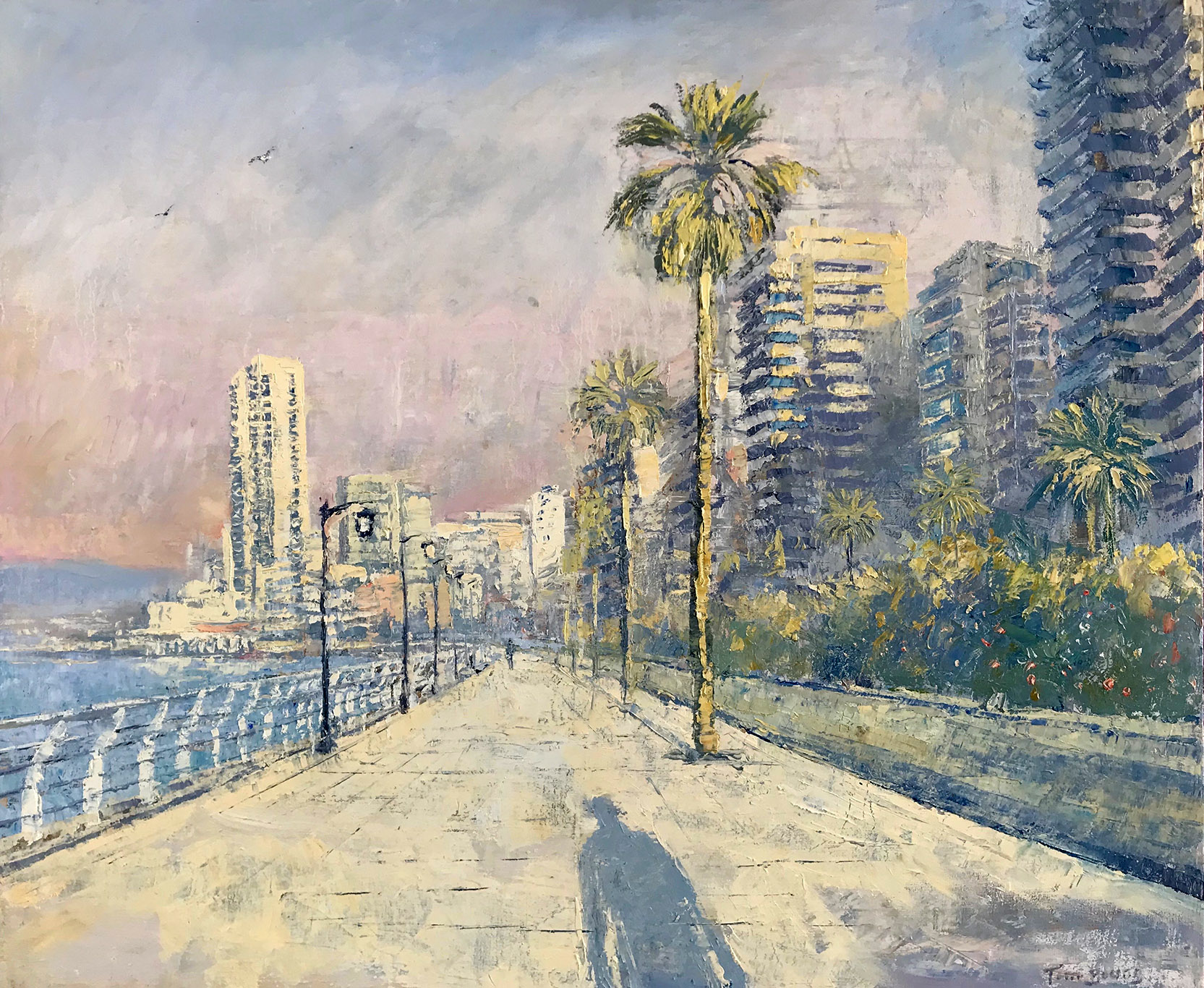
Tom Young, "Corniche" (detail).

8 MAY 2026 • By Nur Turkmani

In Beirut, a solitary man finds unexpected companionship in the woman who cleans his apartment each week. But as small intimacies deepen, the fragile line between kindness and desire begins to blur.

Mirvat first arrived in early January. The days were damp and short, and she giggled while cleaning the floors. Even though I protested, she unpacked the boxes I’d left on the balcony. “I don’t like to leave things halfway,” she said. Her voice was strange, birdlike.

My neighbor, a widowed woman in her sixties, gave me Mirvat’s number after I moved into the old building in Sanayeh. I chose it over the others because it had these nice green shutters and a large rubber tree at the entrance. But it smelled like wet socks and needed a thorough cleaning. The old widow warned me that Mirvat babbled a lot. “At least she’s Lebanese,” my neighbor said. “And cheaper than the Syrians, even the Bangladeshis.”

Mirvat began coming every Sunday. I’d open the door to find her in her little shoes. She would take off her cream-colored anorak and march past me, hiking up her velvety sweatpants, and begin in the bathroom, where she scrubbed the tiles with Eau de Javel Plus.

She mixed a cup of laundry softener into all the cleaning products — the glass cleaner, the all-purpose spray, the limescale remover, even the bleach. Because of Mirvat, my apartment began to smell of lilac flowers. Hours later, after she finished wiping the kitchen counters, she’d look at me and shake her head wistfully.  

“Bye, Khalil, bye.” My name sounded like toffee in her mouth.

The old widow was right, some days Mirvat spoke a lot. She referred to herself in the third person and discussed Princess Diana’s death at length, as though they were close friends. She said I was a photocopy of Muhannad from the Turkish soap opera. When I mentioned my insomnia, she flapped her arms about and said this was very worrying. She told me the solution was to boil rosemary and inhale it before sleep. She went on about rosemary, how it cured baldness and improved memory and prevented cancer.

Other days she was quieter, more solemn. She’d straighten the cushions on my couch with an air of aristocracy. “My brother lives in Ukraine and his son plays the piano,” she said during one of her more elusive days. She showed me photos and it was true. Her brother’s wife was a Ukrainian woman with thousands of followers on Instagram.

Throughout the week Mirvat sent rose emojis and Qur’anic verses on WhatsApp. She wished me a steadfast week at the office. When I took my laptop out on the balcony to watch Formula One, she shook her head.  

“You work so hard,” she said.

~

One evening in mid-March, Mirvat sent two pictures. The first was of her friend, a bride in an overly sequined white dress, holding a bouquet of roses. The second was a close-up of Mirvat smiling with her mouth closed. She wore gold earrings and had bright pink lipstick on. Her breasts filled the frame.

I felt myself getting hard. I stood up and walked to the kitchen, washed my face with cold water. I opened the fridge and stared at the lemons and yogurt and leftover bamyeh, at the rosemary concoction Mirvat had left for me in a plastic bottle the Sunday before. I sat in bed and tried to watch Breaking Bad.

My throat felt tight with anger. Not at Mirvat, I thought, but someone else. Maybe God, or my dead uncle Khalil. I couldn’t speak to anyone about her. I imagined people would point at me and laugh. Of course I didn’t care that Mirvat was a cleaner from Aicha Bakkar. All women are good women, as my uncle, the legendary philosopher and womanizer of Saida, used to say.

My uncle wasn’t even handsome. There was something frail about his frame, as though the wind might sweep him away at any moment. But then he’d look at you with his olive eyes like he knew what you were thinking. My mother always said there wasn’t a woman he spoke to who didn’t end up coming back.

When I was a boy, he took me and my cousins to a super nightclub in Maameltein. The club was smoky, lit by flashing red lights. My uncle ordered a whiskey bottle. Women in heavy makeup moved around our table and my cousins seemed exhilarated. I forced myself to drink a beer. But then the women circled closer, and I swallowed a peanut the wrong way and began to choke. I coughed and cried. Afterwards, I begged my uncle to take me home. He patted my shoulders. He told me not to worry. We drove back to Saida on an empty highway with all four windows rolled down, my cousins recounting the story as they convulsed with laughter louder than the wind.

Until his last days, my uncle would slap my shoulders whenever I visited and ask how it was with the women in Beirut. “He’s not named after me for no reason,” he’d announce to whoever else was in the room.

But there have been no women in Beirut, not since Layal. I was turning thirty soon and I was still a virgin. 

Layal only allowed me to rub against her with clothes on. Everyone on campus had wanted to do her favors but it was me she picked. Maybe because I came from a good family, or maybe Mirvat was right, and I really did look like Muhannad from the Turkish soap opera. The day after we graduated, she let me look at her naked. It was the unhappiest day of her life. She sobbed for hours after I tried to touch her. “My mother will never forgive me if she finds out,” Layal cried. A couple of weeks later, Layal broke up with me and moved to London. She said she wanted to become an actress.
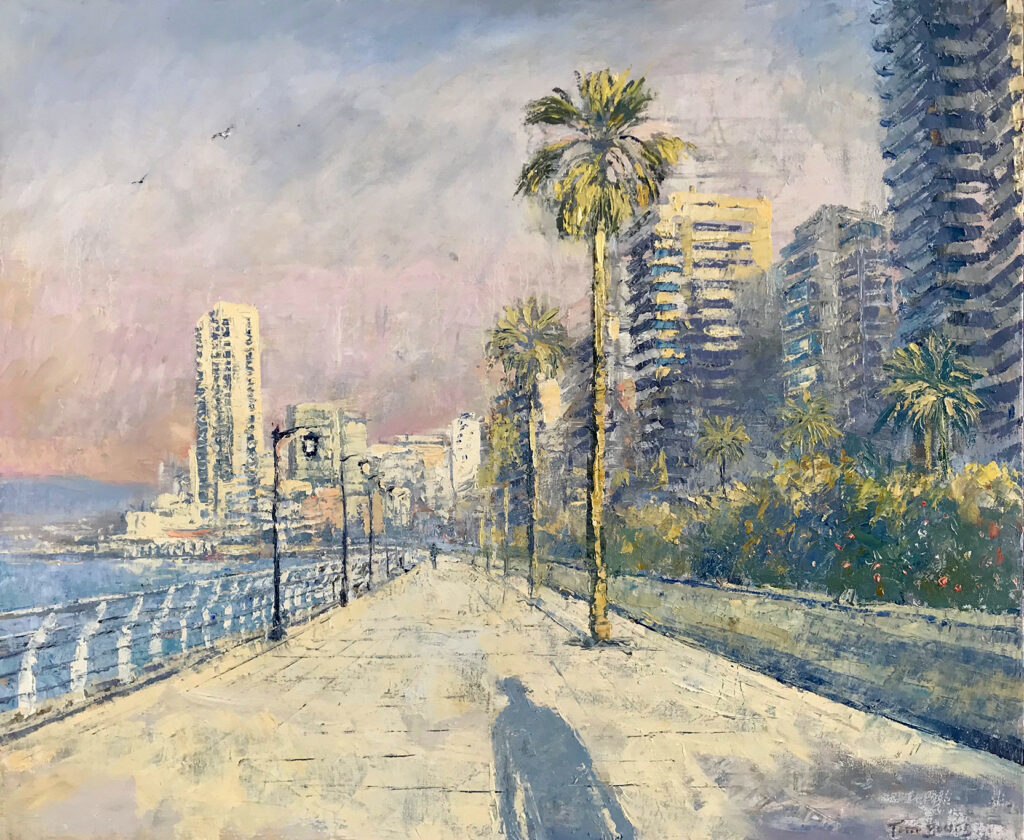

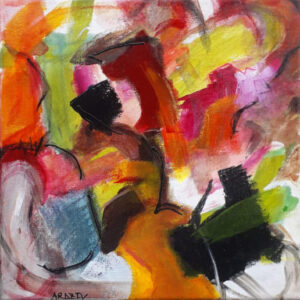
Tom Young, "Corniche (Shadow)," oil on canvas, 50x60cm, 2020 (courtesy of the artist).
Tom Young, “Corniche (Shadow),” oil on canvas, 50x60cm, 2020 (courtesy of the artist).

I ran into Layal in the supermarket last summer. It had been six years since we’d seen each other. She pretended not to see me, disappearing into the sweets aisle. She was on the phone, her condescending voice drifting across the shelves.

I unlocked my phone and opened my chat with Mirvat. Mirvat, who spoke like a bird. Underneath her last photo, I replied: You look nice. 

Looked? She messaged back with a sad face. 

No, I responded immediately, you are nice.

She sent some more emojis: a peacock, a blushing kitten, and two blue hearts. Something in my throat loosened.

The following Sunday Mirvat arrived at my apartment in her cream-colored anorak, as though nothing had changed, as though she were there simply to stack my plates in the kitchen cabinet. But throughout the week she would send romantic songs by Sherine Abdel Wahab and I’d respond with pictures of the traffic on my drive to work. 

One morning, during the Easter holiday, she texted: Where are you? 

At home, I replied.

Do you want to go for a walk?

I sat up in bed and wondered what to do.

~

I parked my car near the Manara lighthouse. It was afternoon and Mirvat stood by the rails, looking out at the sea. I noticed her hair for the first time because it was often up when she cleaned. It was swinging on her lower back like a horse’s tail. Above her the sky was mint blue with pollution. I tapped her on the shoulder and she turned around. Her eyes widened like she was surprised to see me.

“Why is it so easy to hurt other people?” Mirvat asked. She seemed upset. She continued, “Or maybe it’s not easy to hurt other people, but it is easy to be hurt by others.”

We walked along the Corniche. Mirvat discussed the weather, how wonderful it was in April when there happened to be sun and wind at the same time. She pointed at the sea and said she hoped to one day learn how to swim. She pointed at a Starbucks across the street and said she craved hot chocolate. We waited for a break in the traffic then quickly crossed.

“You’re not wearing your anorak,” I said while the barista prepared our hot chocolates.

“Do you mean to say you don’t like this?” She pulled down her jean jacket and tilted from side to side as if she wanted me to find her cute. 

I handed her the drink, then took a sip of mine. 

“Be careful, Mirvat,” I said. “It’s hot.”

She smiled and shook her head, wistful.

We stepped out of the coffee shop and onto the Corniche, which was more crowded than before. Mirvat continued to point at everything, like she didn’t want me to miss any of it. The fishermen, the young boys diving from rocks into the sea, a woman in large sunglasses being propelled forward by her dog. We stopped to watch a couple, who appeared to be having an argument. The man addressed the woman in a hushed, reprimanding tone. The woman had tears in her eyes and kept looking at her phone.

“Why is it so easy to hurt other people?” Mirvat asked. She seemed upset. She continued, “Or maybe it’s not easy to hurt other people, but it is easy to be hurt by others.”

It was very hard to understand Mirvat sometimes. 

We walked past a group of friends sharing a hookah. The fruity smoke blew in our direction. Mirvat crossed her arms over her large chest and turned to me. 

“You don’t smoke, do you?” 

I shook my head. 

“The number of people who smoke weed in this country,” she whispered, although no one was particularly close. “No one would believe the things Mirvat has seen in people’s houses.”

I felt a pang in my chest. I didn’t want to imagine Mirvat cleaning anyone else’s house. But if there was a change in my demeanor, Mirvat didn’t notice. She continued speaking. She said people were filthy, especially girls. She said my neighbor, the old widow, took very long showers and often sang to herself, that she left her chewed gum on the bedside table. She said she found all sorts of unusual things under people’s beds.

“What sorts of things?”

“Oh, I can’t even describe them.” She shuddered dramatically. Behind her, the sky turned purple and the air cooled. Around us, people walked as though nothing had the power to affect them.

“This is how I knew you were different,” Mirvat turned to look at me. 

“In what way?”

“Your house is neat. And no one knows what happens inside.”

~

A couple of Sundays later, Mirvat was sick and did not come to clean the apartment. I got out of bed and put the kettle on. I fried eggs and cut up a tomato into small pieces, then sat in the living room. I kept adding sugar to my tea until it was undrinkable. The curtains were wide open. The summer light fell over the buildings of Sanayeh. I watched it shift and thought of the office the next morning, how I would have to drive there, write code, debug something, push an update. All those lives being lived, and what was I doing with mine? I dozed on the couch until the evening, with a sickly feeling in my mouth.

Not long after, Mirvat called me for the first time. She asked me how I had planned to spend my birthday. I was surprised because I didn’t remember mentioning the date.

“You’re turning thirty,” she chirped. “Isn’t that a big deal?”

That night I did push-ups and flossed my teeth. I washed my sheets and sat in bed to practice wearing a condom. The room was very warm although the air-conditioning was on. I turned from one side to another, unable to sleep. My mind was like a building crammed with old faces.

Sunday arrived and brought with it Mirvat’s triple tap. I opened the door without meeting her eyes and she marched in, a white box in her hands, a woman on a mission. She opened the fridge and placed the box inside. I watched her from the corridor as she brought in the mop and bucket from the balcony. She gathered the cleaning products from under the sink. She ran the tap in the kitchen, then slid on her yellow latex gloves.

“Your house is neat. And no one knows what happens inside.”

I sat in the living room and waited. Perhaps today would be a day like any other. Perhaps once everything had dried, Mirvat would head to her house in Aicha Bakkar only to return to mine the Sunday after. I heard her pouring water over the tiles. The only way to clean anything is to use a lot of water, Mirvat had once said. Other cleaners use hoovers and wipes and brooms but none of that works, believe me. You must pour water over everything.

“Khalil?” Mirvat’s voice drifted from the corridor. I sat up quickly, almost knocking over my laptop. She popped her head into the room and I felt the sudden urge to run down the stairs and leave this building.

“You’re almost out of fabric softener.” She pointed at the pink bottle in her hand.

“Okay,” I said. The bottle was not even half empty.

“Okay,” she said. 

She returned to the kitchen and ran the tap. I felt dizzy. I thought of something my uncle used to say — the only way to get a woman was to get her. He was like that, my dead uncle. He spoke simple and brave things.

I walked into the kitchen. She was still at the sink. 

“Mirvat,” I said with authority.

“Yes, Khalil?”

“What’s inside the box?”

She laughed, her mouth wide open. She turned to me, slowly taking off her yellow latex gloves. Sometimes I thought of a chick when she laughed. Her teeth were yellow, and terrible. 

“I don’t want to say.” Then, throwing up her hands, she said, “Fine! Fine. I got gâteau for your birthday.”

“Mirvat,” I said. I steadied myself on the kitchen counter.

“Yes?” She narrowed her eyes and looked at her feet. 

“I thought maybe we could do something today. Order food, cut the cake together. The house is fine. Enough with the cleaning. Tell me. What would you like to eat?”

She thought for a while. “Why not some Italian?”

I ordered a pizza for myself, and some spaghetti for Mirvat. When the food arrived, she went to the bathroom and washed her hands for a long time. Then we sat like strangers at the small table in my living room. 

She placed the cutlery around her plate, then lifted some spaghetti with her fork before setting it down again.

“Can I tell you something, Khalil?” she asked. I felt her legs near mine. “I do believe God loves Mirvat. He’s always watching over her.”

She unfolded a paper napkin over the table and pressed down its four corners. I tried to move my feet closer to hers.

“Have I told you about the dream?” she continued. “The story of when I was nearly evicted? I don’t think I have. Well, it was over a year ago — rent was rising, remember, that was when they began to change prices from lira to dollars. My landlady called every night and said: Mirvat, if the Syrians are paying in dollars, why can’t you?

“But the United Nations stands behind Syrians. So do the Americans. Who is behind me?” Mirvat wondered aloud.

I squeezed ketchup over a slice. I’d finished half of my pizza and Mirvat still hadn’t taken a bite of her spaghetti. I watched her hands fold the paper napkin into one small triangle after another.

“One day,” she continued, “my mother’s cousin, the rich one, called out of nowhere. He said he dreamt of my mother —” Mirvat coughed. She looked very emotional. “He said he dreamt of my mother who, as you know, has been dead for decades now. He said he dreamt of my mother —”

“He said he dreamt of your mother?” I said.

“He dreamt that my mother asked him to check in on me, on her Mirvat.”

“Oh.”

“My mother’s cousin sent the money for my rent, several months of it, immediately. Of course it was God who sent the money. Indeed, He is ever, over you, an Observer.”

I reached out to stroke her face. She didn’t seem surprised by this so I moved closer to her. Our chairs formed a lopsided triangle around the table. She was still going on about God and how much he understood her when I brought my lips close to hers.

She pushed me away. “And do you remember January? The first time I came to your house, more than half a year ago? Well, on New Year’s, a couple days before, it was Mirvat’s turn to dream. My mother appeared in my sleep. She was wearing a long grey robe, like a Greek god from the books, and she flew above me, she told me to keep my eyes open because she was sending a blessing. Someone to keep Mirvat safe,” she sniffed at me, then smiled. “Someone to protect her.”

I leaned in, and this time she allowed me. She smelled like a garden and it felt nice, so nice, to kiss Mirvat, to hold Mirvat, to breathe in Mirvat, my Mirvat, until she gulped for air and I realized she was crying.

“Mirvat!” I said. I gave her some Diet Coke.

“I need to know, do you —would you, would you have —if something had happened — in a serious way — me?” she hiccoughed.

I was very flustered. I wondered what it was about me and women, why I caused tears and reminded them of their mothers. “Drink some Coke,” I said.

“I want to do things the proper way,” she said after a while. She blew her nose with her napkin. She wiped her eyes with my napkin. She took a very long sip. “I don’t want to do anything wrong.”

“There is nothing wrong with what we’re doing,” I said. “Aren’t you enjoying it?”

I caressed her velvety sweatpants. I wanted to put on jazzy tunes, but I was afraid that if I stood up, Mirvat would evaporate. 

“How do you feel?” she asked after a while. “Where is this going?” She moved my hand from her lap to the table. She sounded calm, as though she was suddenly a different person. 

“What do you think of Mirvat?” she asked. 

“But, why are you asking such questions?”

She cackled and I found her cruel.

“I thought what we had was nice,” I muttered. “I thought you enjoyed it.”

“No,” she frowned. She had the loveliest mouth, small and pink. “This isn’t right. I don’t deserve to be here, in this place.” She gestured as though I were a place. “How could I have forgotten that God was watching?”

“You should eat your spaghetti, Mirvat,” I said. “It’s getting cold. And there’s cake — there’s cake in the fridge, it’s for my birthday, did you forget?”

She pushed her plate away and shook her head. She was quiet for some time, as if waiting for someone to arrive. Then she unfolded the paper, discarded it in the delivery bag under the table, and stood up.

“Please wait,” I croaked. My jaw felt brittle. There was such weight to my bones.

“No, Khalil,” she sighed. “I waited a long time.”

“I’m here,” I said. I wanted her to remember our kiss. I wanted to say how nice it was to sit with her.

“You either do this the proper way,” she said, “or you don’t.”

I wanted to ask her what the proper way was, but my throat had already tightened with the same old panic.

She sat for a while, unmoving. When I said nothing, she scraped her untouched spaghetti back into the plastic box. She got a cloth and wiped down the table. She didn’t respond when I asked what she was doing. She stacked my plate over hers and washed them in the kitchen sink. I kept repeating, “Mirvat what are you doing?” But it was as though she could no longer hear me. She dried her hands on a towel and picked up her bag from the couch, where it had been sitting. I followed her into the corridor like a child, mumbling words that were no longer coherent. I tried to reach for her hands but she shook her head.

“You never once picked me up or dropped me home,” she said. Her voice sounded far, like she’d already left. “You never once took a picture of me.” 

And then she shut the door behind her. I heard the elevator open, then close. I listened to the elevator descend six floors, and then I knew Mirvat had stepped out of the building and past the large rubber tree into the night.

~

She did not return the following Sunday. I called a week later but her phone was off. The cake was still in the fridge, the box unopened. Behind it, the rosemary she’d boiled for my sleep had turned the color of old tea. I wasn’t sleeping at all. I tried to call for a while, every morning, then every morning and every night, but it never went through.

When Layal left, I spent months, maybe years, agonizing over what had happened, if I’d said something wrong or behaved in ways beneath her mighty standards. But with Mirvat, a complete blankness enveloped me. I was like a particle in the air.

A month later I ran into my neighbor outside the building. She complained about the weather, how insufferable the August heat was. I took the grocery bags from her hands and we trudged towards the elevator. Her bags were heavy with milk and fruits, laundry detergent.

“Has Mirvat been answering you?” she asked out of nowhere as we passed the third floor.

“No,” I said.

“Poor girl. I hope she’s alright. You know, she spoke of you often.”

“Oh,” I said.

“Maybe she’s finally gone to her brother in Ukraine,” she said.

“Maybe,” I said.

Before going to bed, I opened the half-empty bottle of lilac fabric softener and inhaled it for some time. I thought of all the Sundays before. And then I imagined Mirvat in Ukraine, fluttering through the large, grey, empty streets in her cream-colored anorak and little shoes. Her mouth was wide open, her hair long and restless in the wind, and I wanted to call after her, to take her picture, but she’d already turned into a corner to disappear.
Nur Turkmani

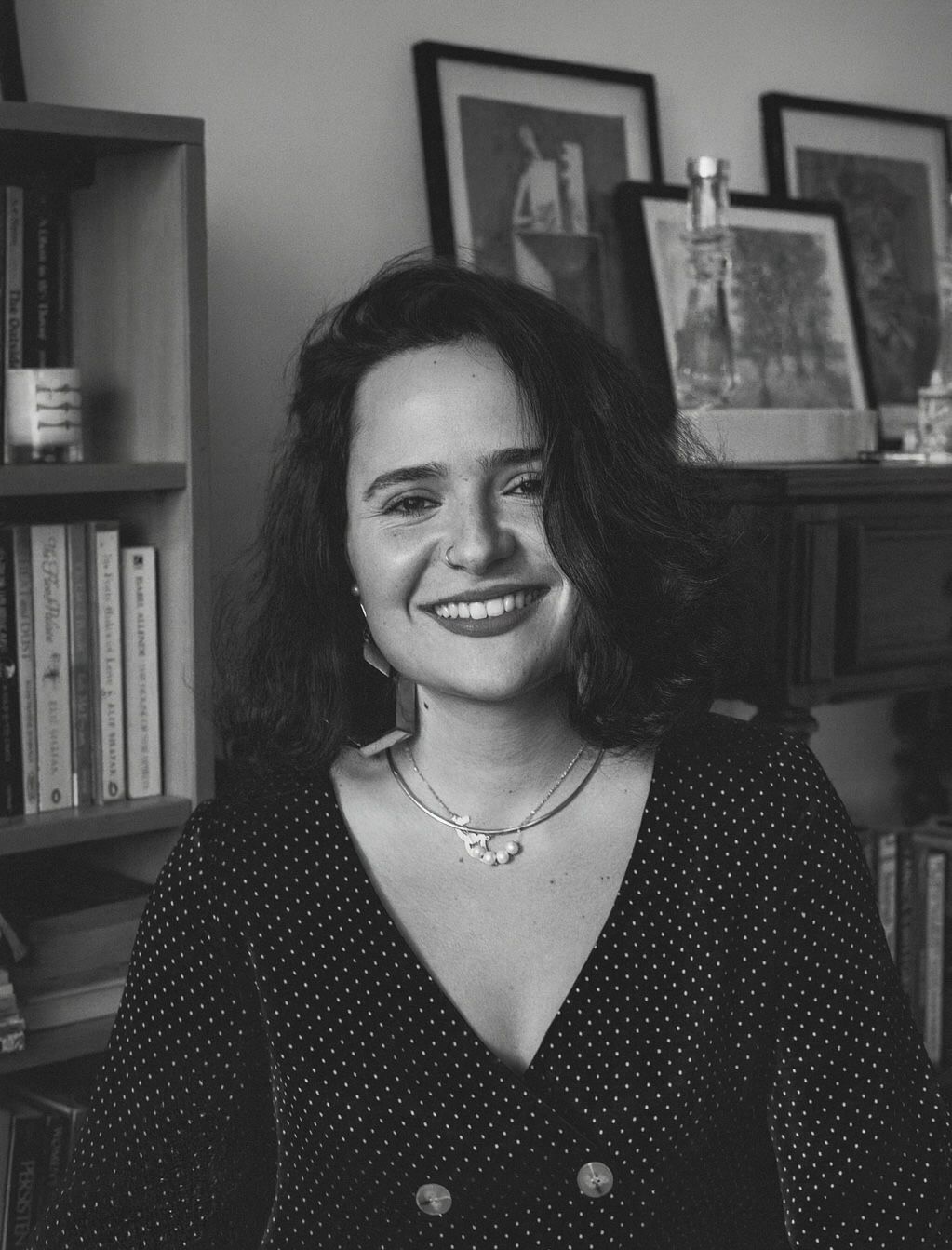
Nur Turkmani is a writer from Beirut. Her debut poetry collection, October, is out with Hajar Press. She has work in New England Review, Poetry, The Rumpus, and others. She received the Anthony Veasna So Award for Fiction from The Adroit Journal. She lives in Lisbon. Instagram: @nurturkmani

Join Our Community

TMR exists thanks to its readers and supporters. By sharing our stories and celebrating cultural pluralism, we aim to counter racism, xenophobia, and exclusion with knowledge, empathy, and artistic expression.

Learn more

RELATED

Fiction

“The House Dog”—fiction

8 MAY 2026 • By Rebecca Lloyd
“The House Dog”—fiction
Fiction

“Tarragon”—a short story

8 MAY 2026 • By Erfan Mojib
“Tarragon”—a short story
Fiction

“Call After Her”—a short story

8 MAY 2026 • By Nur Turkmani
“Call After Her”—a short story
TMR 59 • MEDITERRANEANS

The Many Mediterraneans

1 MAY 2026 • By Saleem Haddad
The Many Mediterraneans
TMR 59 • MEDITERRANEANS

“Last Glance at the Bosphorus”—a short story

1 MAY 2026 • By Nektaria Anastasiadou
“Last Glance at the Bosphorus”—a short story
TMR 59 • MEDITERRANEANS

Tangerinn—an excerpt

1 MAY 2026 • By Emanuela Anechoum
<em>Tangerinn</em>—an excerpt
Film Reviews

Fragments of Beirut in Lana Daher’s Do You Love Me

10 APRIL 2026 • By Darío Karim Pomar Azar
Fragments of Beirut in Lana Daher’s <em>Do You Love Me</em>
TMR 58 • MOTHER TONGUE

“Words That Don’t Sink”—a short story

6 MARCH 2026 • By Zeinab Ghassan Khaddour
“Words That Don’t Sink”—a short story
TMR 58 • MOTHER TONGUE

The Mother Tongue Booklist

5 MARCH 2026 • By Rana Asfour
The Mother Tongue Booklist
Fiction

Three Parties—excerpt from a debut novel by Ziyad Saadi

6 FEBRUARY 2026 • By Ziyad Saadi
<em>Three Parties</em>—excerpt from a debut novel by Ziyad Saadi
Fiction

“Tiny Suns”—a short story

30 JANUARY 2026 • By Sahar Mustafah
“Tiny Suns”—a short story
Book Reviews

Rewriting Beirut’s “Bad Boy Architect” Bernard Khoury

9 JANUARY 2026 • By Bridget Peak
Rewriting Beirut’s “Bad Boy Architect” Bernard Khoury
Fiction

“Tahmina”—a story from Iran

5 DECEMBER 2025 • By Abdollah Nazari
“Tahmina”—a story from Iran
Books

10 Noir Novels to Kill For

5 DECEMBER 2025 • By Rana Asfour
10 Noir Novels to Kill For
Fiction

A Bomb for Personal Use—an excerpt

5 DECEMBER 2025 • By Mirna Al-Mahdi
<em>A Bomb for Personal Use</em>—an excerpt
Columns

The Whispers Of Nadia Tueni and Maroun Baghdadi

5 DECEMBER 2025 • By Amal Ghandour
The Whispers Of Nadia Tueni and Maroun Baghdadi
Book Reviews

Contemporary Kurdish Writers in the Diaspora

14 NOVEMBER 2025 • By Matt Broomfield
Contemporary Kurdish Writers in the Diaspora
Columns

Dear Souseh: Stuck Between Families

24 OCTOBER 2025 • By Lina Mounzer
Dear Souseh: Stuck Between Families
Film

A Love Letter to the Ghosts of Armenian Cinema

17 OCTOBER 2025 • By Jim Quilty
A Love Letter to the Ghosts of Armenian Cinema
Film Reviews

New Documentaries from Palestine, Sudan, Afghanistan, and Iran

12 SEPTEMBER 2025 • By Yassin El-Moudden
New Documentaries from Palestine, Sudan, Afghanistan, and Iran
Editorial

Why Out of Our Minds?

5 SEPTEMBER 2025 • By Lina Mounzer
Why <em>Out of Our Minds</em>?
Centerpiece

Trauma After Gaza

5 SEPTEMBER 2025 • By Joelle Abi-Rached
Trauma After Gaza
Art & Photography

Ali Cherri’s show at Marseille’s [mac] Is Watching You

15 AUGUST 2025 • By Naima Morelli
Ali Cherri’s show at Marseille’s [mac] Is Watching You
Essays

Ziad Rahbani: The Making of a Lebanese Jazz Legend

8 AUGUST 2025 • By Diran Mardirian
Ziad Rahbani: The Making of a Lebanese Jazz Legend
Featured Artist

Syria and the Future of Art: an Intimate Portrait

4 JULY 2025 • By Arie Amaya-Akkermans
Syria and the Future of Art: an Intimate Portrait
Arabic

Jawdat Fakreddine Presents Three Poems

20 MAY 2025 • By Jawdat Fakhreddine, Huda J. Fakhreddine
Jawdat Fakreddine Presents Three Poems
Film Reviews

Contretemps, a Bold Film on Lebanon’s Crises

16 MAY 2025 • By Jim Quilty
Contretemps, a Bold Film on Lebanon’s Crises
Book Reviews

A World in Crisis: Deep Vellum’s Best Literary Translations 2025

9 MAY 2025 • By Lara Vergnaud
A World in Crisis: Deep Vellum’s <em>Best Literary Translations 2025</em>
Essays

Heartbreak and Commemoration in Beirut’s Southern Suburbs

7 MARCH 2025 • By Sabah Haider
Heartbreak and Commemoration in Beirut’s Southern Suburbs
Editorial

Memoir in the Age of Narcissism

7 FEBRUARY 2025 • By TMR
Memoir in the Age of Narcissism
Book Reviews

Maya Abu Al-Hayyat’s Defiant Exploration of Palestinian Life

20 DECEMBER 2024 • By Zahra Hankir
Maya Abu Al-Hayyat’s Defiant Exploration of Palestinian Life
Book Reviews

Barrack Zailaa Rima’s Beirut Resists Categorization

6 DECEMBER 2024 • By Katie Logan
Barrack Zailaa Rima’s <em>Beirut</em> Resists Categorization
Art

In Lebanon, Art is a Matter of Survival

22 NOVEMBER 2024 • By Nada Ghosn
In Lebanon, Art is a Matter of Survival
Film

The Haunting Reality of Beirut, My City

8 NOVEMBER 2024 • By Roger Assaf, Zeina Hashem Beck
The Haunting Reality of <em>Beirut, My City</em>
Essays

Between Two Sieges: Translating Roger Assaf in California

8 NOVEMBER 2024 • By Zeina Hashem Beck
Between Two Sieges: Translating Roger Assaf in California
Centerpiece

“Habib”—a story by Ghassan Ghassan

1 NOVEMBER 2024 • By Ghassan Ghassan
“Habib”—a story by Ghassan Ghassan
Fiction

The Last Millefeuille in Beirut

4 OCTOBER 2024 • By MK Harb
The Last Millefeuille in Beirut
Film

Soudade Kaadan: Filmmaker Interview

30 AUGUST 2024 • By Jordan Elgrably
Soudade Kaadan: Filmmaker Interview
Fiction

“Common Types of Melancholy”—fiction from Shalaw Habiba

9 AUGUST 2024 • By Shalaw Habiba, Savan Abdulrahman
“Common Types of Melancholy”—fiction from Shalaw Habiba
Book Reviews

Nabil Kanso: Lebanon and the Split of Life—a Review

2 AUGUST 2024 • By Sophie Kazan Makhlouf
Nabil Kanso: <em>Lebanon and the Split of Life</em>—a Review
Fiction

“We Danced”—a story by MK Harb

5 JULY 2024 • By MK Harb
“We Danced”—a story by MK Harb
Fiction

“Cotton Flower”—a short story by Areej Gamal

3 MAY 2024 • By Areej Gamal, Manal Shalaby
“Cotton Flower”—a short story by Areej Gamal
Fiction

“Paris of the Middle East”—fiction by MK Harb

1 APRIL 2024 • By MK Harb
“Paris of the Middle East”—fiction by MK Harb
Book Reviews

How Fragile We Are: Hisham Matar’s My Friends

25 MARCH 2024 • By Adib Rahhal
How Fragile We Are: Hisham Matar’s <em>My Friends</em>
Poetry

“The Scent Censes” & “Elegy With Precious Oil” by Majda Gama

4 FEBRUARY 2024 • By Majda Gama
“The Scent Censes” & “Elegy With Precious Oil” by Majda Gama
Essays

“Double Apple”—a short story by MK Harb

4 FEBRUARY 2024 • By MK Harb
“Double Apple”—a short story by MK Harb
TMR 37 • Endings & Beginnings

“The Summer They Heard Music”—a short story by MK Harb

3 DECEMBER 2023 • By MK Harb
“The Summer They Heard Music”—a short story by MK Harb
Fiction

Huda Fakhreddine’s A Brief Time Under a Different Sun

3 DECEMBER 2023 • By Huda J. Fakhreddine, Rana Asfour
Huda Fakhreddine’s <em>A Brief Time Under a Different Sun</em>
Fiction

“The Followers”—a short story by Youssef Manessa

3 DECEMBER 2023 • By Youssef Manessa
“The Followers”—a short story by Youssef Manessa
Art & Photography

War and Art: A Lebanese Photographer and His Protégés

13 NOVEMBER 2023 • By Nicole Hamouche
War and Art: A Lebanese Photographer and His Protégés
Interviews

My Love for Derna: Interview with Libyan Writer Mahbuba Khalifa

13 NOVEMBER 2023 • By Naima Morelli
My Love for Derna: Interview with Libyan Writer Mahbuba Khalifa
Featured Artist

Mohamed Al Mufti, Architect and Painter of Our Time

5 NOVEMBER 2023 • By Nicole Hamouche
Mohamed Al Mufti, Architect and Painter of Our Time
Art & Photography

Middle Eastern Artists and Galleries at Frieze London

23 OCTOBER 2023 • By Sophie Kazan Makhlouf
Middle Eastern Artists and Galleries at Frieze London
Theatre

Lebanese Thespian Aida Sabra Blossoms in International Career

9 OCTOBER 2023 • By Nada Ghosn
Lebanese Thespian Aida Sabra Blossoms in International Career
Books

Fairouz: The Peacemaker and Champion of Palestine

1 OCTOBER 2023 • By Dima Issa
Fairouz: The Peacemaker and Champion of Palestine
Fiction

“Kaleidoscope: In Pursuit of the Real in a Virtual World”—fiction from Dina Abou Salem

1 OCTOBER 2023 • By Dina Abou Salem
“Kaleidoscope: In Pursuit of the Real in a Virtual World”—fiction from Dina Abou Salem
Books

“Sadness in My Heart”—a story by Hilal Chouman

3 SEPTEMBER 2023 • By Hilal Chouman, Nashwa Nasreldin
“Sadness in My Heart”—a story by Hilal Chouman
Fiction

“Sweet Tea”—a classic Kurdish story by Hussein Arif

3 SEPTEMBER 2023 • By Hussein Arif, Jiyar Homer
“Sweet Tea”—a classic Kurdish story by Hussein Arif
Film

The Soil and the Sea: The Revolutionary Act of Remembering

7 AUGUST 2023 • By Farah-Silvana Kanaan
<em>The Soil and the Sea</em>: The Revolutionary Act of Remembering
Book Reviews

Literature Takes Courage: on Ahmet Altan’s Lady Life

24 JULY 2023 • By Kaya Genç
Literature Takes Courage: on Ahmet Altan’s <em>Lady Life</em>
Editorial

Stories From The Markaz, Stories From the Center

2 JULY 2023 • By Malu Halasa
Stories From The Markaz, Stories From the Center
Fiction

“The Agency”—a story by Natasha Tynes

2 JULY 2023 • By Natasha Tynes
“The Agency”—a story by Natasha Tynes
Film

We Saw Paris, Texas—a story by Ola Mustapha

2 JULY 2023 • By Ola Mustapha
We Saw <em>Paris, Texas</em>—a story by Ola Mustapha
Fiction

Rich and Poor People—fiction by Farah Ahamed

2 JULY 2023 • By Farah Ahamed
Rich and Poor People—fiction by Farah Ahamed
Essays

“My Mother is a Tree”—a story by Aliyeh Ataei

2 JULY 2023 • By Aliyeh Ataei
“My Mother is a Tree”—a story by Aliyeh Ataei
Beirut

“The City Within”—fiction from MK Harb

2 JULY 2023 • By MK Harb
“The City Within”—fiction from MK Harb
Fiction

“The Burden of Inheritance”—fiction from Mai Al-Nakib

2 JULY 2023 • By Mai Al-Nakib
“The Burden of Inheritance”—fiction from Mai Al-Nakib
Fiction

STAMP ME—a monologue by Yussef El Guindi

2 JULY 2023 • By Yussef El Guindi
STAMP ME—a monologue by Yussef El Guindi
Cities

In Shahrazad’s Hammam—fiction by Ahmed Awadalla

2 JULY 2023 • By Ahmed Awadalla
In Shahrazad’s Hammam—fiction by Ahmed Awadalla
Arabic

Inside the Giant Fish—excerpt from Rawand Issa’s graphic novel

2 JULY 2023 • By Rawand Issa, Amy Chiniara
Inside the Giant Fish—excerpt from Rawand Issa’s graphic novel
Fiction

Abortion Tale: On Our Ground

2 JULY 2023 • By Ghadeer Ahmed, Hala Kamal
Abortion Tale: On Our Ground
Fiction

On Ice—fiction from Malu Halasa

2 JULY 2023 • By Malu Halasa
On Ice—fiction from Malu Halasa
Fiction

Hayat and the Rain—fiction from Mona Alshammari

2 JULY 2023 • By Mona Al-Shammari, Ibrahim Fawzy
Hayat and the Rain—fiction from Mona Alshammari
Art & Photography

Newly Re-Opened, Beirut’s Sursock Museum is a Survivor

12 JUNE 2023 • By Arie Amaya-Akkermans
Newly Re-Opened, Beirut’s Sursock Museum is a Survivor
TMR Interviews

The Markaz Review Interview—Leila Aboulela, Writing Sudan

29 MAY 2023 • By Yasmine Motawy
The Markaz Review Interview—Leila Aboulela, Writing Sudan
Beirut

Remembering the Armenian Genocide From Lebanon

17 APRIL 2023 • By Mireille Rebeiz
Remembering the Armenian Genocide From Lebanon
Art

The Gaze of the Sci-fi Wahabi

2 APRIL 2023 • By Sophia Al-Maria
The Gaze of the Sci-fi Wahabi
Cities

“The Icarist”—a short story by Omar El Akkad

2 APRIL 2023 • By Omar El Akkad
“The Icarist”—a short story by Omar El Akkad
Book Reviews

War and the Absurd in Zein El-Amine’s Watermelon Stories

20 MARCH 2023 • By Rana Asfour
War and the Absurd in Zein El-Amine’s <em>Watermelon</em> Stories
Fiction

“Counter Strike”—a story by MK HARB

5 MARCH 2023 • By MK Harb
“Counter Strike”—a story by MK HARB
Fiction

“Mother Remembered”—Fiction by Samir El-Youssef

5 MARCH 2023 • By Samir El-Youssef
“Mother Remembered”—Fiction by Samir El-Youssef
Essays

More Photographs Taken From The Pocket of a Dead Arab

5 MARCH 2023 • By Saeed Taji Farouky
More Photographs Taken From The Pocket of a Dead Arab
Cities

The Odyssey That Forged a Stronger Athenian

5 MARCH 2023 • By Iason Athanasiadis
The Odyssey That Forged a Stronger Athenian
Beirut

The Curious Case of Middle Lebanon

13 FEBRUARY 2023 • By Amal Ghandour
The Curious Case of Middle Lebanon
Beirut

Arab Women’s War Stories, Oral Histories from Lebanon

13 FEBRUARY 2023 • By Evelyne Accad
Arab Women’s War Stories, Oral Histories from Lebanon
Book Reviews

Sabyl Ghoussoub Heads for Beirut in Search of Himself

23 JANUARY 2023 • By Adil Bouhelal
Sabyl Ghoussoub Heads for Beirut in Search of Himself
Art

On Lebanon and Lamia Joreige’s “Uncertain Times”

23 JANUARY 2023 • By Arie Amaya-Akkermans
On Lebanon and Lamia Joreige’s “Uncertain Times”
Book Reviews

Mohamed Makhzangi Despairs at Man’s Cruelty to Animals

26 DECEMBER 2022 • By Saliha Haddad
Mohamed Makhzangi Despairs at Man’s Cruelty to Animals
Fiction

Broken Glass, a short story

15 DECEMBER 2022 • By Sarah AlKahly-Mills
<em>Broken Glass</em>, a short story
Book Reviews

Fida Jiryis on Palestine in Stranger in My Own Land

28 NOVEMBER 2022 • By Diana Buttu
Fida Jiryis on Palestine in <em>Stranger in My Own Land</em>
Columns

For Electronica Artist Hadi Zeidan, Dance Clubs are Analogous to Churches

24 OCTOBER 2022 • By Melissa Chemam
For Electronica Artist Hadi Zeidan, Dance Clubs are Analogous to Churches
Film

Ziad Kalthoum: Trajectory of a Syrian Filmmaker

15 SEPTEMBER 2022 • By Viola Shafik
Ziad Kalthoum: Trajectory of a Syrian Filmmaker
Essays

Kairo Koshary, Berlin’s Egyptian Food Truck

15 SEPTEMBER 2022 • By Mohamed Radwan
Kairo Koshary, Berlin’s Egyptian Food Truck
Essays

Exile, Music, Hope & Nostalgia Among Berlin’s Arab Immigrants

15 SEPTEMBER 2022 • By Diana Abbani
Exile, Music, Hope & Nostalgia Among Berlin’s Arab Immigrants
Art & Photography

16 Formidable Lebanese Photographers in an Abbey

5 SEPTEMBER 2022 • By Nada Ghosn
16 Formidable Lebanese Photographers in an Abbey
Film

Two Syrian Brothers Find Themselves in “We Are From There”

22 AUGUST 2022 • By Angélique Crux
Two Syrian Brothers Find Themselves in “We Are From There”
Film

Lebanon in a Loop: A Retrospective of “Waves ’98”

15 JULY 2022 • By Youssef Manessa
Lebanon in a Loop: A Retrospective of “Waves ’98”
Columns

Why I left Lebanon and Became a Transitional Citizen

27 JUNE 2022 • By Myriam Dalal
Why I left Lebanon and Became a Transitional Citizen
Book Reviews

Traps and Shadows in Noor Naga’s Egypt Novel

20 JUNE 2022 • By Ahmed Naji
Traps and Shadows in Noor Naga’s Egypt Novel
Centerpiece

“Asha and Haaji”—a story by Hanif Kureishi

15 JUNE 2022 • By Hanif Kureishi
“Asha and Haaji”—a story by Hanif Kureishi
Fiction

Rabih Alameddine: “Remembering Nasser”

15 JUNE 2022 • By Rabih Alameddine
Rabih Alameddine: “Remembering Nasser”
Film

Saeed Taji Farouky: “Strange Cities Are Familiar”

15 JUNE 2022 • By Saeed Taji Farouky
Saeed Taji Farouky: “Strange Cities Are Familiar”
Fiction

Nektaria Anastasiadou: “Gold in Taksim Square”

15 JUNE 2022 • By Nektaria Anastasiadou
Nektaria Anastasiadou: “Gold in Taksim Square”
Fiction

Dima Mikhayel Matta: “This Text Is a Very Lonely Document”

15 JUNE 2022 • By Dima Mikhayel Matta
Dima Mikhayel Matta: “This Text Is a Very Lonely Document”
Fiction

“The Salamander”—fiction from Sarah AlKahly-Mills

15 JUNE 2022 • By Sarah AlKahly-Mills
“The Salamander”—fiction from Sarah AlKahly-Mills
Art & Photography

Film Review: “Memory Box” on Lebanon Merges Art & Cinema

13 JUNE 2022 • By Arie Amaya-Akkermans
Film Review: “Memory Box” on Lebanon Merges Art & Cinema
Beirut

Fairouz is the Voice of Lebanon, Symbol of Hope in a Weary Land

25 APRIL 2022 • By Melissa Chemam
Fairouz is the Voice of Lebanon, Symbol of Hope in a Weary Land
Book Reviews

Joumana Haddad’s The Book of Queens: a Review

18 APRIL 2022 • By Laila Halaby
Joumana Haddad’s <em>The Book of Queens</em>: a Review
Art & Photography

Ghosts of Beirut: a Review of “displaced”

11 APRIL 2022 • By Karén Jallatyan
Ghosts of Beirut: a Review of “displaced”
Columns

Music in the Middle East: Bring Back Peace

21 MARCH 2022 • By Melissa Chemam
Music in the Middle East: Bring Back Peace
Poetry

Three Poems of Love and Desire by Nouri Al-Jarrah

15 MARCH 2022 • By Nouri Al-Jarrah
Three Poems of Love and Desire by Nouri Al-Jarrah
Fiction

Fiction from “Free Fall”: I fled the city as a murderer whose crime had just been uncovered

15 JANUARY 2022 • By Abeer Esber, Nouha Homad
Fiction from “Free Fall”: I fled the city as a murderer whose crime had just been uncovered
Columns

Sudden Journeys: From Munich with Love and Realpolitik

27 DECEMBER 2021 • By Jenine Abboushi
Sudden Journeys: From Munich with Love and Realpolitik
Fiction

“Turkish Delights”—fiction from Omar Foda

15 DECEMBER 2021 • By Omar Foda
“Turkish Delights”—fiction from Omar Foda
Interviews

The Fabulous Omid Djalili on Good Times and the World

15 DECEMBER 2021 • By Jordan Elgrably
The Fabulous Omid Djalili on Good Times and the World
Comix

Lebanon at the Point of Drowning in Its Own…

15 DECEMBER 2021 • By Raja Abu Kasm, Rahil Mohsin
Lebanon at the Point of Drowning in Its Own…
Comix

How to Hide in Lebanon as a Western Foreigner

15 DECEMBER 2021 • By Nadiyah Abdullatif, Anam Zafar
How to Hide in Lebanon as a Western Foreigner
Columns

Sudden Journeys: The Villa Salameh Bequest

29 NOVEMBER 2021 • By Jenine Abboushi
Sudden Journeys: The Villa Salameh Bequest
Music Reviews

Electronic Music in Riyadh?

22 NOVEMBER 2021 • By Melissa Chemam
Electronic Music in Riyadh?
Art

Etel Adnan’s Sun and Sea: In Remembrance

19 NOVEMBER 2021 • By Arie Amaya-Akkermans
Etel Adnan’s Sun and Sea: In Remembrance
Book Reviews

Diary of the Collapse—Charif Majdalani on Lebanon’s Trials by Fire

15 NOVEMBER 2021 • By A.J. Naddaff
<em>Diary of the Collapse</em>—Charif Majdalani on Lebanon’s Trials by Fire
Interviews

The Anguish of Being Lebanese: Interview with Author Racha Mounaged

18 OCTOBER 2021 • By A.J. Naddaff
The Anguish of Being Lebanese: Interview with Author Racha Mounaged
Book Reviews

Racha Mounaged’s Debut Novel Captures Trauma of Lebanese Civil War

18 OCTOBER 2021 • By A.J. Naddaff
Racha Mounaged’s Debut Novel Captures Trauma of Lebanese Civil War
Art & Photography

Displaced: From Beirut to Los Angeles to Beirut

15 SEPTEMBER 2021 • By Ara Oshagan
Displaced: From Beirut to Los Angeles to Beirut
Columns

Beirut Drag Queens Lead the Way for Arab LGBTQ+ Visibility

8 AUGUST 2021 • By Anonymous
Beirut Drag Queens Lead the Way for Arab LGBTQ+ Visibility
Art & Photography

Gaza’s Shababek Gallery for Contemporary Art

14 JULY 2021 • By Yara Chaalan
Gaza’s Shababek Gallery for Contemporary Art
Columns

The Semantics of Gaza, War and Truth

14 JULY 2021 • By Mischa Geracoulis
The Semantics of Gaza, War and Truth
Columns

Lebanon’s Wasta Has Contributed to the Country’s Collapse

14 JUNE 2021 • By Samir El-Youssef
Lebanon’s Wasta Has Contributed to the Country’s Collapse
Columns

Lebanese Oppose Corruption with a Game of Wasta

14 JUNE 2021 • By Victoria Schneider
Lebanese Oppose Corruption with a Game of Wasta
Weekly

War Diary: The End of Innocence

23 MAY 2021 • By Arie Amaya-Akkermans
War Diary: The End of Innocence
Fiction

A Home Across the Azure Sea

14 MAY 2021 • By Aida Y. Haddad
A Home Across the Azure Sea
Weekly

Beirut Brings a Fragmented Family Together in “The Arsonists’ City”

9 MAY 2021 • By Rana Asfour
Columns

Memory and the Assassination of Lokman Slim

14 MARCH 2021 • By Claire Launchbury
Memory and the Assassination of Lokman Slim
Weekly

Hanane Hajj Ali, Portrait of a Theatrical Trailblazer

14 FEBRUARY 2021 • By Nada Ghosn
Hanane Hajj Ali, Portrait of a Theatrical Trailblazer
TMR 6 • Revolutions

Revolution in Art, a review of “Reflections” at the British Museum

14 FEBRUARY 2021 • By Malu Halasa
Revolution in Art, a review of “Reflections” at the British Museum
TMR 3 • Racism & Identity

Find the Others: on Becoming an Arab Writer in English

15 NOVEMBER 2020 • By Rewa Zeinati
Book Reviews

An American in Istanbul Between Muslim and Christian Worlds

15 NOVEMBER 2020 • By Anne-Marie O'Connor
An American in Istanbul Between Muslim and Christian Worlds
TMR 3 • Racism & Identity

I am the Hyphen

15 NOVEMBER 2020 • By Sarah AlKahly-Mills
I am the Hyphen
World Picks

World Art, Music & Zoom Beat the Pandemic Blues

28 SEPTEMBER 2020 • By Malu Halasa
World Art, Music & Zoom Beat the Pandemic Blues
Beirut

Wajdi Mouawad, Just the Playwright for Our Dystopian World

15 SEPTEMBER 2020 • By Melissa Chemam
Wajdi Mouawad, Just the Playwright for Our Dystopian World
Art

Beirut Comix Tell the Story

15 SEPTEMBER 2020 • By Lina Ghaibeh & George Khoury
Beirut Comix Tell the Story
Editorial

Beirut, Beirut

15 SEPTEMBER 2020 • By Jordan Elgrably
Beirut

It’s Time for a Public Forum on Lebanon

15 SEPTEMBER 2020 • By Wajdi Mouawad
It’s Time for a Public Forum on Lebanon
Book Reviews

Salvaging the shipwreck of humanity in Amin Maalouf’s Adrift

15 SEPTEMBER 2020 • By Sarah AlKahly-Mills
Salvaging the shipwreck of humanity in Amin Maalouf’s <em>Adrift</em>

Leave a Comment

Your email address will not be published. Required fields are marked *

eighteen + six =

Scroll to Top