<em>Tangerinn</em>—an excerpt

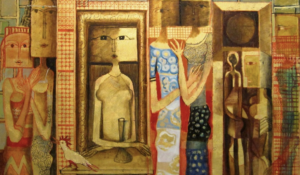
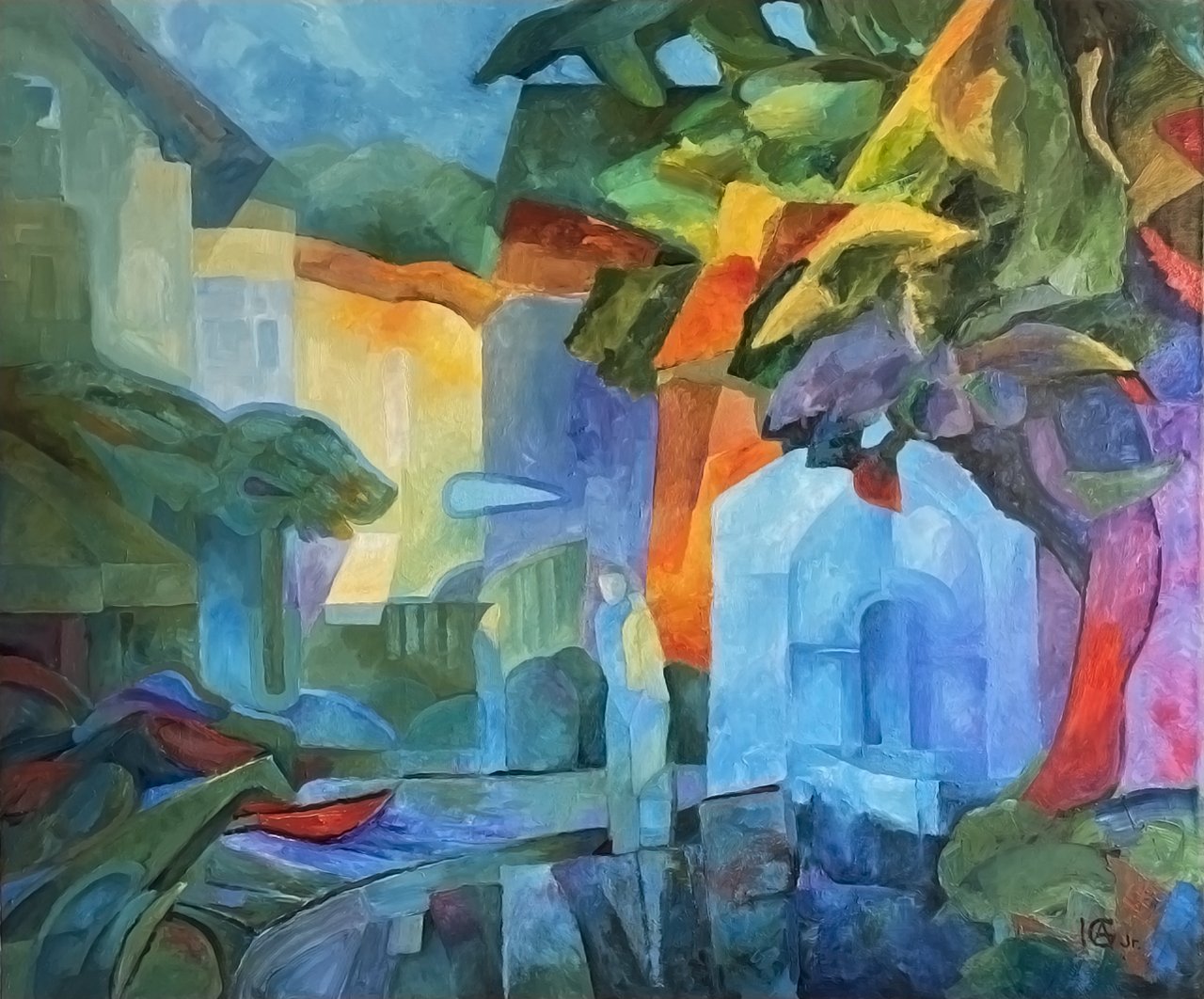
Gostev, "Tanger" (detail).

1 MAY 2026 • By Emanuela Anechoum

A crowded immigrant bar on the Mediterranean coast becomes the backdrop for a young girl’s shifting sense of self.
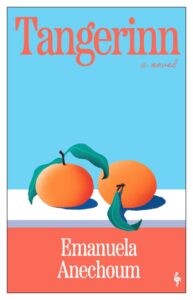
Published by Europa Editions, 2026. Translated by Lucy Rand. Purchase here.

Set in a coastal Mediterranean town shaped as much by the sea as by the people who pass through it, Tangerinn is a tender and unsparing meditation on migration, belonging, and the quiet violence of assimilation. Following the death of her Moroccan-born father, Mina returns from London to the Calabrian coast, where her father ran a bar called Tangerinn. There, she is confronted with her fractured sense of identity. In this excerpt, Mina reflects on her father’s bar, which her sister Aisha struggles to keep alive. A haven for migrants and misfits, the bar is a place of warmth, shared memory, and cultural continuity, but also where Mina first absorbs the shame and hierarchies that will shape her sense of self. What emerges is a portrait of a Mediterranean community held together by shared exile, where food, memory, and language become acts of preservation, even as the pressure to belong threatens to erode them. — Saleem Haddad, Fiction Editor


The bar was called Tangerinn. It was a few blocks from home and opened out onto the beach. From what I recall, it has always been noisy, crowded, and full of smells that were always new. It was frequented by all the immigrants in the area—and only as I got older did I grasp that if a place is frequented by immigrants it is not frequented by anyone else. I wonder if this ever bothered you, but you certainly didn’t make a big deal out of it. It allowed you to recreate the atmosphere of the home that you’d lost, you tried to reproduce its smells. In the mornings you served msemmen with cheese and honey, at lunchtime koftas, tagine with chicken, lemon and olives, and on Fridays you made cous-cous. You were cooking all day and all night, handing down secrets. Mint thrived in our garden, meaning you could always have a pot of tea on the go.

 To be and to belong at the same time is a privilege.

At the beginning, the bar was my favorite place, purely because the people there didn’t look like Berta, like my teachers, or like my classmates. They looked more like us, like you and me who had inherited your skin. But as I grew up, I understood that you and I and those like us were wrong. Your friends seemed dirty, and I felt dirty too. So I washed obsessively. I didn’t understand why Aisha and Berta were lighter and you and I were darker, but I knew that, whatever the reason, it was bad. Your friends wore old, threadbare clothes and smelled of the market, of fish. But they were always laughing and when I came to the bar they embraced me like I was the daughter of all of them. I was scared that their smell was also mine. They taught me to play chess and rummy. They loved me and I loved them too. But they were different, and I didn’t want to be different. I didn’t want to be like them, like you. I wanted to be normal. 

In the eyes of the people from the town, immigrants were all the same. But being different from the whites didn’t mean they were all the same. The people who came to the bar had lived a huge variety of lives, spoke languages that were nothing like one another, sometimes as distant as Italian from Finnish—yet they were all bundled into the same box. The members of a minority don’t have the luxury of being themselves: in the face of power, they become only difference. To contain multitudes is a privilege, to be incoherent is a privilege, to be unique and unrepeatable is a privilege. To be and to belong at the same time is a privilege.

Gostev Tanger 100x120 cm 2025 courtesy of the artist.jpg
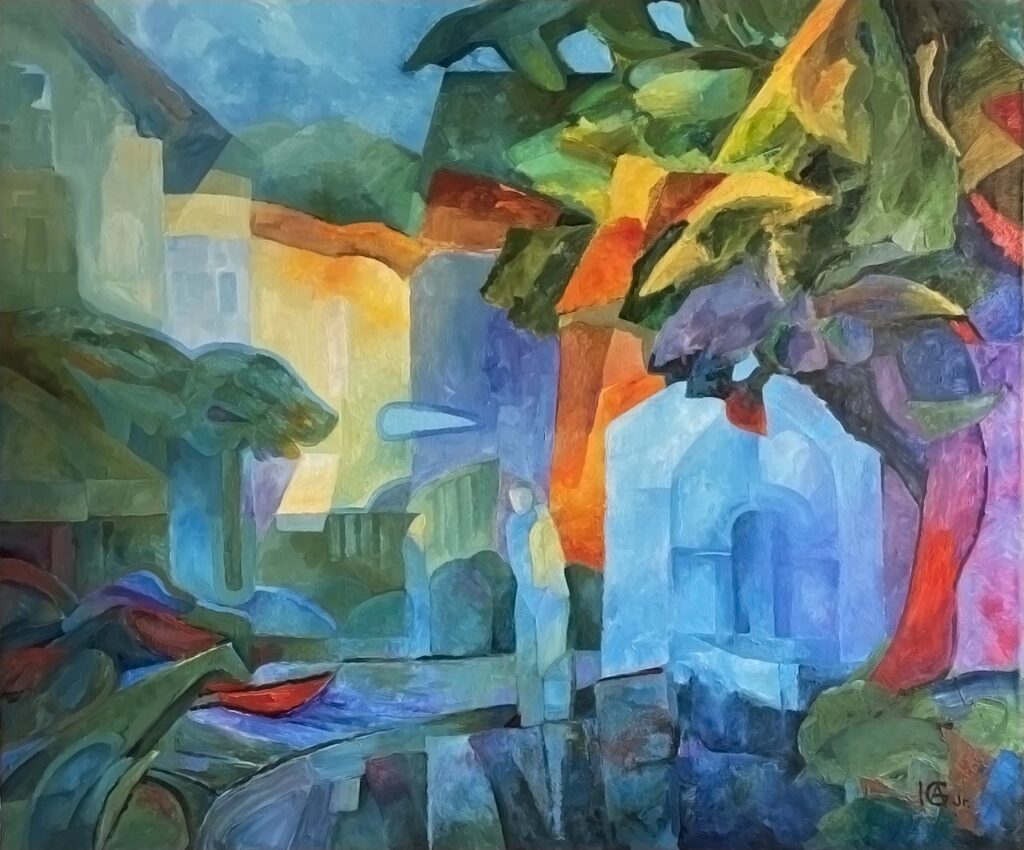
Gostev, “Tanger,” acrylic on canvas, 100x120cm, 2025 (courtesy Gostev).

When Aisha and I were little, you were an “extracomunitario.” That’s what people from outside the EU were called then. At that time “extracomunitari” immigrants were mostly Albanian or Moroccan, by which I mean that anyone who came from the former Yugoslavia was Albanian and anyone from North Africa was Moroccan. The women who came from Eastern Europe looked after everybody’s grandparents, because they were white but cost little. The Arab women struggled to find work because the rich people in town didn’t want them in their houses: they said they wasted too much time praying and refused to do the dishes or clean their bar carts. At best they found work cleaning the stairwells of apartment buildings. The Moroccans sold tissues at traffic lights or, if they were lucky, had a stall on the market. Some were passing through—heading north—but most stayed because they recognized, in the ambiguities of the sea, a place in which they could live, suffer, and die in peace. Interactions between immigrants and locals happened only at the market, and nowhere else. People who lived by the sea were welcoming, but only to those who feared their own God: they were suspicious of all the others. The fact that their God was the same God as the God of those other people they didn’t even want to hear.

We didn’t know what was going on—fish don’t know they’re in water.

After all, they had their own problems, what with the trash in the streets and the illegal building sites and the pizzo to pay and the shops randomly blowing up. The people who got shot at random, for being in the wrong place at the wrong time. And then the trials, always unjust, they said, always making an example of someone, even if he had nothing to do with it: acquaintances, neighbors, good people, small fish. Businessmen can’t do anything without ending up inside, people would say. A mere signature could fuck you over. Then everything would return to usual. Every so often a film or TV show would come out. Middle-class people would talk about it indignantly: we’re not bad people, they’re always bad-mouthing us, this is why tourism isn’t coming down here, there’s beauty here too. The pride of the community seemed to be awakened only when it was criticized, never to defend itself from itself.

It sometimes happened that some immigrants ended up embroiled in these things, because easy money is appealing to anyone. Then a Moroccan disappeared, and nobody asked questions. 

We didn’t know what was going on—fish don’t know they’re in water. You were no different. You believed in survival at all costs. I never asked you about the compromises you had made, because I didn’t want to sully my conscience with the truth. And you never talked about it. You never talked about anything.

 

Emanuela Anechoum

Emanuela Anechoum was born in Reggio Calabria in 1991 and lives in Rome. After completing her studies, she began working in publishing in London before relocating to Italy. Her writing has appeared in Vice, Doppiozero, and Marvin Rivista. Tangerinn is her debut novel. Check her out on Instagram and Facebook.

Join Our Community

TMR exists thanks to its readers and supporters. By sharing our stories and celebrating cultural pluralism, we aim to counter racism, xenophobia, and exclusion with knowledge, empathy, and artistic expression.

Learn more

RELATED

TMR 59 • MEDITERRANEANS

The Many Mediterraneans

1 MAY 2026 • By Saleem Haddad
The Many Mediterraneans
TMR 59 • MEDITERRANEANS

Visions of the Mediterranean from Morocco

1 MAY 2026 • By Mohamed El Metmari
Visions of the Mediterranean from Morocco
TMR 59 • MEDITERRANEANS

Life and Death in the Art of Dalel Ouasli

1 MAY 2026 • By Jordan Elgrably
Life and Death in the Art of Dalel Ouasli
TMR 59 • MEDITERRANEANS

“Last Glance at the Bosphorus”—a short story

1 MAY 2026 • By Nektaria Anastasiadou
“Last Glance at the Bosphorus”—a short story
TMR 59 • MEDITERRANEANS

Tangerinn—an excerpt

1 MAY 2026 • By Emanuela Anechoum
<em>Tangerinn</em>—an excerpt
TMR 59 • MEDITERRANEANS

Zones of Exclusion

1 MAY 2026 • By Xloi Karnezi
Zones of Exclusion
Centerpiece

Don’t Forget to Say I Love You: Notes on Water

1 MAY 2026 • By Gabriela Mitrushi
Don’t Forget to Say I Love You: Notes on Water
TMR 59 • MEDITERRANEANS

The Dying Seas—What Have We Done?

1 MAY 2026 • By Iason Athanasiadis
The Dying Seas—What Have We Done?
Music Reviews

Algerian Mother Tongues—the Music of Amel Zen and IWAL

24 APRIL 2026 • By Sana Herireche
Algerian Mother Tongues—the Music of Amel Zen and IWAL
TMR 58 • MOTHER TONGUE

Three Artists, Five Writers on Mother Tongues

6 MARCH 2026 • By Jordan Elgrably
Three Artists, Five Writers on Mother Tongues
TMR 58 • MOTHER TONGUE

Language and the Mother Eternal

6 MARCH 2026 • By Farah Ahamed
Language and the Mother Eternal
TMR 58 • MOTHER TONGUE

“Words That Don’t Sink”—a short story

6 MARCH 2026 • By Zeinab Ghassan Khaddour
“Words That Don’t Sink”—a short story
TMR 58 • MOTHER TONGUE

The Mother Tongue Booklist

5 MARCH 2026 • By Rana Asfour
The Mother Tongue Booklist
Fiction

Three Parties—excerpt from a debut novel by Ziyad Saadi

6 FEBRUARY 2026 • By Ziyad Saadi
<em>Three Parties</em>—excerpt from a debut novel by Ziyad Saadi
Books

10 Noir Novels to Kill For

5 DECEMBER 2025 • By Rana Asfour
10 Noir Novels to Kill For
Fiction

A Bomb for Personal Use—an excerpt

5 DECEMBER 2025 • By Mirna Al-Mahdi
<em>A Bomb for Personal Use</em>—an excerpt
Book Reviews

Contemporary Kurdish Writers in the Diaspora

14 NOVEMBER 2025 • By Matt Broomfield
Contemporary Kurdish Writers in the Diaspora
Fiction

Always Beware of Dogs by Samir Kacimi — An Excerpt

6 JUNE 2025 • By Samir Kacimi, Rana Asfour
<em>Always Beware of Dogs</em> by Samir Kacimi — An Excerpt
Book Reviews

A World in Crisis: Deep Vellum’s Best Literary Translations 2025

9 MAY 2025 • By Lara Vergnaud
A World in Crisis: Deep Vellum’s <em>Best Literary Translations 2025</em>
Book Reviews

Djinns Unveils Silence in the Home

9 MAY 2025 • By Elena Pare
<em>Djinns</em> Unveils Silence in the Home
Art

Neither Here Nor There

2 MAY 2025 • By Myriam Cohenca
Neither Here Nor There
Essays

Strangers at Home: Young Palestinians in Israel

2 MAY 2025 • By Sophia Didinova
Strangers at Home: Young Palestinians in Israel
Essays

Four Gates to the Hereafter: On The Dissenters

4 APRIL 2025 • By Youssef Rakha
Four Gates to the Hereafter: On The Dissenters
Editorial

Memoir in the Age of Narcissism

7 FEBRUARY 2025 • By TMR
Memoir in the Age of Narcissism
Poetry

Gregory Pardlo presents Two Poems

24 NOVEMBER 2024 • By Gregory Pardlo
Gregory Pardlo presents Two Poems
Centerpiece

“Habib”—a story by Ghassan Ghassan

1 NOVEMBER 2024 • By Ghassan Ghassan
“Habib”—a story by Ghassan Ghassan
Books

“The Man Who Loves Ducks” from Freedom, Only Freedom

1 NOVEMBER 2024 • By Omid Tofighian, Moones Mansoubi
“The Man Who Loves Ducks” from <em>Freedom, Only Freedom</em>
Interviews

The Hybrid — The Case of Michael Vatikiotis

18 OCTOBER 2024 • By Rana Haddad
The Hybrid — The Case of Michael Vatikiotis
Fiction

“Common Types of Melancholy”—fiction from Shalaw Habiba

9 AUGUST 2024 • By Shalaw Habiba, Savan Abdulrahman
“Common Types of Melancholy”—fiction from Shalaw Habiba
Book Reviews

This Strange Eventful History by Claire Messud —A Review

31 MAY 2024 • By Katherine A. Powers
<em>This Strange Eventful History</em> by Claire Messud —A Review
Featured Artist

Bani Khoshnoudi: Featured Artist for PARIS

1 APRIL 2024 • By TMR, Jordan Elgrably
Bani Khoshnoudi: Featured Artist for PARIS
Book Reviews

How Fragile We Are: Hisham Matar’s My Friends

25 MARCH 2024 • By Adib Rahhal
How Fragile We Are: Hisham Matar’s <em>My Friends</em>
Interviews

My Love for Derna: Interview with Libyan Writer Mahbuba Khalifa

13 NOVEMBER 2023 • By Naima Morelli
My Love for Derna: Interview with Libyan Writer Mahbuba Khalifa
Book Reviews

What We Write About When We (Arabs) Write About Love

23 OCTOBER 2023 • By Eman Quotah
What We Write About When We (Arabs) Write About Love
Art

The Ongoing Nakba—Rasha Al-Jundi’s Embroidery Series

16 OCTOBER 2023 • By Rasha Al Jundi
The Ongoing Nakba—Rasha Al-Jundi’s Embroidery Series
Books

Edward Said: Writing in the Service of Life 

9 OCTOBER 2023 • By Layla AlAmmar
Edward Said: Writing in the Service of Life 
Fiction

“Kaleidoscope: In Pursuit of the Real in a Virtual World”—fiction from Dina Abou Salem

1 OCTOBER 2023 • By Dina Abou Salem
“Kaleidoscope: In Pursuit of the Real in a Virtual World”—fiction from Dina Abou Salem
Book Reviews

Literature Takes Courage: on Ahmet Altan’s Lady Life

24 JULY 2023 • By Kaya Genç
Literature Takes Courage: on Ahmet Altan’s <em>Lady Life</em>
Book Reviews

The Failure of Postcolonial Modernity in Siddhartha Deb’s Light

17 JULY 2023 • By Anis Shivani
The Failure of Postcolonial Modernity in Siddhartha Deb’s <em>Light</em>
Editorial

Stories From The Markaz, Stories From the Center

2 JULY 2023 • By Malu Halasa
Stories From The Markaz, Stories From the Center
Fiction

“The Agency”—a story by Natasha Tynes

2 JULY 2023 • By Natasha Tynes
“The Agency”—a story by Natasha Tynes
Film

We Saw Paris, Texas—a story by Ola Mustapha

2 JULY 2023 • By Ola Mustapha
We Saw <em>Paris, Texas</em>—a story by Ola Mustapha
Fiction

Rich and Poor People—fiction by Farah Ahamed

2 JULY 2023 • By Farah Ahamed
Rich and Poor People—fiction by Farah Ahamed
Essays

Being Without Belonging: A Jewish Wedding in Abu Dhabi

2 JULY 2023 • By Deborah Kapchan
Being Without Belonging: A Jewish Wedding in Abu Dhabi
Essays

“My Mother is a Tree”—a story by Aliyeh Ataei

2 JULY 2023 • By Aliyeh Ataei
“My Mother is a Tree”—a story by Aliyeh Ataei
Fiction

“The Afghan and the Persian”—a short story by Jordan Elgrably

2 JULY 2023 • By Jordan Elgrably
“The Afghan and the Persian”—a short story by Jordan Elgrably
Beirut

“The City Within”—fiction from MK Harb

2 JULY 2023 • By MK Harb
“The City Within”—fiction from MK Harb
Fiction

“The Burden of Inheritance”—fiction from Mai Al-Nakib

2 JULY 2023 • By Mai Al-Nakib
“The Burden of Inheritance”—fiction from Mai Al-Nakib
Fiction

STAMP ME—a monologue by Yussef El Guindi

2 JULY 2023 • By Yussef El Guindi
STAMP ME—a monologue by Yussef El Guindi
Fiction

Abortion Tale: On Our Ground

2 JULY 2023 • By Ghadeer Ahmed, Hala Kamal
Abortion Tale: On Our Ground
Fiction

Hayat and the Rain—fiction from Mona Alshammari

2 JULY 2023 • By Mona Al-Shammari, Ibrahim Fawzy
Hayat and the Rain—fiction from Mona Alshammari
Fiction

On Ice—fiction from Malu Halasa

2 JULY 2023 • By Malu Halasa
On Ice—fiction from Malu Halasa
Art & Photography

Garden of Africa: Interview with Rachid Koraïchi

4 JUNE 2023 • By Rose Issa
Garden of Africa: Interview with Rachid Koraïchi
TMR Interviews

The Markaz Review Interview—Leila Aboulela, Writing Sudan

29 MAY 2023 • By Yasmine Motawy
The Markaz Review Interview—Leila Aboulela, Writing Sudan
Art

The Gaze of the Sci-fi Wahabi

2 APRIL 2023 • By Sophia Al-Maria
The Gaze of the Sci-fi Wahabi
Book Reviews

To Receive Asylum, You First Have to be Believed, and Accepted

5 MARCH 2023 • By Mischa Geracoulis
To Receive Asylum, You First Have to be Believed, and Accepted
Poetry

Poet Erik Lindner, Words Are the Worst

5 MARCH 2023 • By Erik Lindner
Poet Erik Lindner, <em>Words Are the Worst</em>
Poetry Markaz

Poet Mihaela Moscaliuc—a “Permanent Immigrant”

5 FEBRUARY 2023 • By Mihaela Moscaliuc
Poet Mihaela Moscaliuc—a “Permanent Immigrant”
Book Reviews

Mohamed Makhzangi Despairs at Man’s Cruelty to Animals

26 DECEMBER 2022 • By Saliha Haddad
Mohamed Makhzangi Despairs at Man’s Cruelty to Animals
Art

Where is the Palestinian National Museum of Modern and Contemporary Art?

12 DECEMBER 2022 • By Nora Ounnas Leroy
Where is the Palestinian National Museum of Modern and Contemporary Art?
Book Reviews

Changing Colors — Reflections on The Last White Man

15 NOVEMBER 2022 • By Jordan Elgrably
Changing Colors — Reflections on <em>The Last White Man</em>
Featured article

Thousands of Tunisians Are Attempting the “Harga”

31 OCTOBER 2022 • By Sarah Ben Hamadi
Thousands of Tunisians Are Attempting the “Harga”
Film

Two Syrian Brothers Find Themselves in “We Are From There”

22 AUGUST 2022 • By Angélique Crux
Two Syrian Brothers Find Themselves in “We Are From There”
Columns

Tunisia’s Imed Alibi Crosses Borders in new “Frigya” Electronica Album

18 JULY 2022 • By Melissa Chemam
Tunisia’s Imed Alibi Crosses Borders in new “Frigya” Electronica Album
Art

Abundant Middle Eastern Talent at the ’22 Avignon Theatre Fest

18 JULY 2022 • By Nada Ghosn
Abundant Middle Eastern Talent at the ’22 Avignon Theatre Fest
Book Reviews

Traps and Shadows in Noor Naga’s Egypt Novel

20 JUNE 2022 • By Ahmed Naji
Traps and Shadows in Noor Naga’s Egypt Novel
Centerpiece

“Asha and Haaji”—a story by Hanif Kureishi

15 JUNE 2022 • By Hanif Kureishi
“Asha and Haaji”—a story by Hanif Kureishi
Fiction

Nektaria Anastasiadou: “Gold in Taksim Square”

15 JUNE 2022 • By Nektaria Anastasiadou
Nektaria Anastasiadou: “Gold in Taksim Square”
Fiction

“The Salamander”—fiction from Sarah AlKahly-Mills

15 JUNE 2022 • By Sarah AlKahly-Mills
“The Salamander”—fiction from Sarah AlKahly-Mills
Book Reviews

Joumana Haddad’s The Book of Queens: a Review

18 APRIL 2022 • By Laila Halaby
Joumana Haddad’s <em>The Book of Queens</em>: a Review
Art

Atia Shafee: Raw and Distant Memories

15 FEBRUARY 2022 • By Atia Shafee
Atia Shafee: Raw and Distant Memories
Essays

“Where Are You From?” Identity and the Spirit of Ethno-Futurism

15 FEBRUARY 2022 • By Bavand Karim
“Where Are You From?” Identity and the Spirit of Ethno-Futurism
Art

Silver Stories from Artist Micaela Amateau Amato

15 FEBRUARY 2022 • By Micaela Amateau Amato
Silver Stories from Artist Micaela Amateau Amato
Fiction

“Turkish Delights”—fiction from Omar Foda

15 DECEMBER 2021 • By Omar Foda
“Turkish Delights”—fiction from Omar Foda
Interviews

The Fabulous Omid Djalili on Good Times and the World

15 DECEMBER 2021 • By Jordan Elgrably
The Fabulous Omid Djalili on Good Times and the World
Fiction

“Tattoos,” an excerpt from Karima Ahdad’s Amazigh-Moroccan novel “Cactus Girls”

15 SEPTEMBER 2021 • By Karima Ahdad
“Tattoos,” an excerpt from Karima Ahdad’s Amazigh-Moroccan novel “Cactus Girls”
Essays

Gaza, You and Me

14 JULY 2021 • By Abdallah Salha
Gaza, You and Me
Editorial

Why WALLS?

14 MAY 2021 • By Jordan Elgrably
Why WALLS?
Essays

The Bathing Partition

14 MAY 2021 • By Sheana Ochoa
The Bathing Partition
Latest Reviews

Fever Dreams / Gold Fever

17 APRIL 2021 • By gethan&myles
Fever Dreams / Gold Fever
Columns

Remember 2020 Not for Covid-19 or Trump Chaos, But Climate Change

10 JANUARY 2021 • By Iason Athanasiadis
Remember 2020 Not for Covid-19 or Trump Chaos, But Climate Change
Book Reviews

Are Iranians—Restricted by the Trump Era Muslim-Country Ban—White?

15 NOVEMBER 2020 • By Rebecca Allamey
Are Iranians—Restricted by the Trump Era Muslim-Country Ban—White?
Book Reviews

An American in Istanbul Between Muslim and Christian Worlds

15 NOVEMBER 2020 • By Anne-Marie O'Connor
An American in Istanbul Between Muslim and Christian Worlds

Leave a Comment

Your email address will not be published. Required fields are marked *

nineteen − two =

Scroll to Top