Bani Khoshnoudi: Featured Artist for PARIS

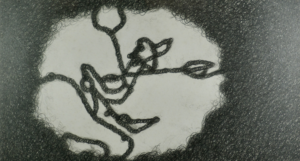
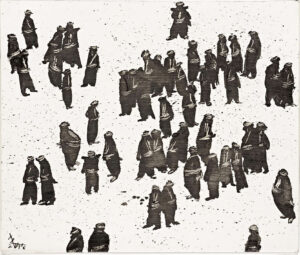
Bani Khoshnoudi, "Fille d'Immigrés," "Daughter of Immigrants," (courtesy of the artist).

1 APRIL 2024 • By TMR, Jordan Elgrably

The capital of France has always attracted immigrants and refugees from the world over, and the work of Bani Khoshnoudi, like many of her immigrant compatriots — foreign filmmakers who make France their home — is more expansive for being open to the world.

Bani Khoshnoudi is a filmmaker and visual artist born in Tehran, Iran, who divides her time between Mexico City and Montreuil, France. She lived in Paris from 1999 to 2007 and returned in 2021. The 2022 Recipient of the prestigious Herb Alpert Award in the Arts for Film and Video, she was raised in the United States, in Texas. She studied architecture, photography and film at the University of Texas at Austin, and later continued her studies in the visual arts at the prestigious Whitney Museum of American Art Independent Study Program in New York City.

Her works, inhabited by displacement and uprooting, explore themes of exile, modernity and its violences, memory and the invisible. While her main documentary and fiction films Transit (2005), A People in the Shadows (2008), The Silent Majority Speaks (2010-14), Fireflies (2018); dig into the layers, stories and experiences related to global migrations, nomadisms and historical struggles for freedom, her photographs and installations also work with the textures and traces of these stories; architecture and ruins. Her most well known film, the documentary essay The Silent Majority Speaks, was banned in Lebanon in 2014 and considered “offensive to the Iranian regime.” This political fresco about 100 years of political revolt in Iran was included in Georges Didi-Huberman’s exhibition book, Uprisings for the Jeu de Paume Museum in Paris, and was named by French curator and critic, Nicole Brenez, as one of ten essential films of the century. In 2014 she collaborated with filmmaker Harun Farocki and Antje Ehmann on their project Labor in a Single Shot in Mexico City. Her second feature fiction, Fireflies won the HBO Best Ibero-American Feature at the Miami International Film Festival and was shown worldwide. Her work has been shown at the Centre Pompidou, Fondation Serralves in Porto, Fondation Cartier, MUAC and Museo Experimental El Eco in Mexico City, the Museum of Contemporary Art Zagreb, among others.


ARTIST INTERVIEW WITH BANI KHOSHNOUDI

You were born in Iran and raised in the United States, but you’ve been coming to Paris at least since 1999 and have lived in Paris off and on since then. What originally brought you to Paris, and why do you continue to leave it?

Part of my family had moved here after the revolution, and I started coming to visit when I was a teenager. I was born in Iran, but basically grew up and was formed, let’s say, in the US. When I started coming to Europe, I realized that relationships between people and society didn’t have to be based so much around money as they are in the States. This was what  really drew me more to Europe.

Actually, I studied Italian and later, during university, I lived in Rome for a short while. When I finished my studies [in the US], I decided I wanted to come back to Europe. And so I first I went to Italy, actually. But after a while, despite the fact that Italy had always interested me through its cinema and literature, all of the things I had studied, and that I felt deeply connected to the cutlure there, something about the post colonial context in France at the time felt more right. I was drawn to this society made up of people from so many different places, living here and battling out the political and historical issues through debates and discussions. I found that Paris offered a healthy, intellectual context for me to be able to also flourish, whereas in the US, I felt already very jaded by political correctness, and these things that I still find, have exacerbated free thinking there. It was important for me to get out of the US in the first place, and Paris became my home. Then I left again…

Let me go back to one point you began to make about French culture and the French relationship with money. This is something that I also noticed when I first came to France, years ago, which is that, for example, the French venerate writers, whereas in the US, if you say I’m a writer, the first thing people ask is, Well, what have you published? And have you had a best seller? How much money do you make? It’s invariably a capitalist environment; everything is related to your success and  the monetary value of your work, whereas in France, it seems that people are much more concerned or interested in intellectual ideas, in what you have to say. No one wants to talk about money here.

Yes, that’s definitely a point and also there’s the supportive social system — which, okay, for 20-something years now, the government has been trying to break  that down, but still, there’s basic health care and social support; the things that kind of make it known that we are equal at the base. In the US, you know, it’s “you get what you deserve,” as they say. And I think that’s such a wrong way to see life.

Bani Khoshnoudi
Bani Khoshnoudi.

How has life in Paris has lent itself to your creative work? Or do you think it hasn’t had any influence at all?

Yeah, I think it has because precisely I have felt a lot of this freedom from commercial ways of thinking. At least when I was beginning to make work (I’ve made very little work actually about France itself), whether I woudl shoot here or was just based here, I did feel very early on that I was able to write and express what I wanted, whether about Iran, or migration, and that I was able to find support for that. And also after my first films were made, it has been the place of highest interest for my work. I realized that in the US, I actually don’t have much of a following. I rarely show work there, let’s say, in the festival or art circuit, although I did receive important recognition through the Whitney ISP program, or more recently with the Herb Alpert Award in the Arts, a prestigious mid-career prize, which I had been nominated for. Despite this, it is in Europe and more so in France, or even in Mexico, where I have been appreciated the most; where more people have written about my work.

When I wanted to make films in Iran, it was a bit difficult because I don’t fall into a national model, either, as an Iranian filmmaker, but nor I am considered a French nor American filmmaker. Mexico was an interesting revelation for me, and I lived there for many years; I still have a foothold there. As a place where its filmmakers have many times come from a context of exile (Spanish exiles, but also Ukrainians, Jewish, or more recently Argentinian), I was easily seen as an Iranian-American who had emigrated to Mexico. It allowed me to freely propose my projects, because it seemed that people were very interested in my vision. And within that context, I didn’t necessarily “have to” make Iranian films, whereas here in Europe sometimes, people expect me to make Iranian work, whatever that is. And that’s a also a bit confusing as Iranians are dispersed and have left in masses, even recently  because of censorship and threats.

I consider myself a transnational filmmaker.  All these places are a part of me and vice versa.


Bani Khoshnoudi, Protest for immigrants at République, Paris (courtesy of the artist).

Several of your films deal with migration and exile, are you drawn to these subjects because your own life seems to have been so uprooted?

Definitely. I think it’s probably something that impacted me, although I was never that interested in diaspora stories or stories about integration and assimilation. I think that the political part of migration is what interests me the most. And so I got involved early on when I was younger in issues and activism around this, even in the United States. But when I moved here to France, I was going often to Sangatte where back then the migrants were gathering into the Red Cross camp close to Calais, before trying to cross the English Channel.  This was later torn down and became the makeshift camps called the “Jungle,” ironically based on the Farsi term “Jangal.” (Most of the migrants then were from Kurdistan or Afghanistan, thus the Farsi/Dari term).

That is when I was doing activist work with some organizations, and while hearing testimonies, I was always very touched by how pure the story of the migrant is, because really, you leave everything behind, and even if you have people back home, you don’t know if you will ever see them again. I have always found this really tragic yet inspiring at the same time, because I find that we are all very attached to our nations and identities, but that this is also what has become our demise.

There is something about migrants, living together while on the road, with different cultures mixing, which has always been very important and inspiring to me. And I think it’s the very huge modern tragedy that we don’t really want to embrace this as something that’s part of us. We want to condemn it and look at it in a sensational way, or make it into a question of numbers or economy, whereas it’s part of all of us and our pasts.

There’s already a term for climate change refugees. From the Global South, people are leaving Africa and other parts of the world, to reach places that are cooler, or for a better life economically, and we’re going to hear more and more about them.

I wanted to ask in terms of other artists and filmmakers, who inspires you most? Are there certain people whose work continues to matter to you?

That’s a difficult question because there are so many. There’s James Benning, who I respect a lot because as an American, he has always done things differently, in the  way he wanted, and his films develop a sort of slow cinema that makes us stop and observe, with very little editing. He inspires me a lot because his work does not really look like anybody else’s, and he’s not worried about it falling into a certain category. I think that a lot of his films can be extremely challenging, because they take time to watch and I really like that about his films.  He makes one sit and watch what he is showing at a slow pace. You must have that patience, or learn to.
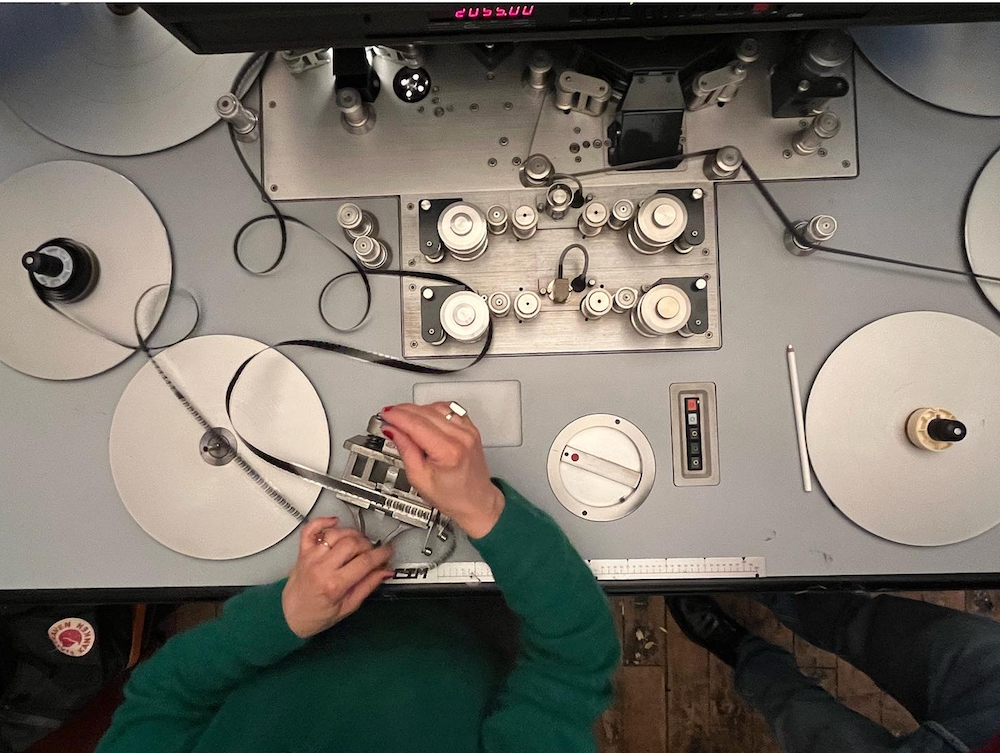

Bani in the editing bay.
In the editing bay.

What about some of the other Middle Eastern filmmaker artists who live in Paris like Ali Cherri or Elia Suleiman?

I know Ali quite well.  We work with the same producer.  There are Iranians living in Paris whom I also feel close to. Mehran Tamadon is a friend, and he is also always grappling with the fact that he cannot go back to Iran or that the dictatorship there has impacted so many lives. There are many other artists, under the radar who are also very inspiring for me. About Elia Suleiman…I do like his work a lot. There is not so much fiction work coming from Palestine, and I like that he also has a way of making us look at things in a different way.  We have become accustomed to watching things with so many a priori, politically but also in terms of cinema form, and I like that he shifts that… also looking at violence in a different way.

I wish Elia Suleiman had a film coming out right now on Gaza…

If you were a book or a film, which would you be?

Oh, that’s difficult. I was a book or film. Gosh, that’s such a difficult question. Okay. I’ll think about it.

I mean, it could be Crime and Punishment, or it could be the Shanameh. Or it could be the poems of Forugh Farrokhzad. Or, who knows?

I don’t feel like one thing, either book or film could represent… I would just say that recently I rewatched a film by Dariush Mehrjui that I loved from when I was younger, that really hit me hard again, The Pear Tree from 1998. It has so many layers and reflections, on time, on country, on culture, on nature. It is a melancholic ballad, and from such an important director for us.

He was just assassinated in October 2023. At 84 years of age, the regime found a way to brutally murder him and send this signal to all artists in Iran who are part of the opposition. A threat, as so many other threats have been lived over the last 45 years. The film is a masterpiece actually, and after the revolution, so much of his cinema didn’t make it beyond the Iranian border, and the European world became infatuated with Abbas Kiarostami and that’s about it.

What do you do to unwind, to relieve stress, besides smoking opium (kidding)?

I’m very fortunate to have a beautiful and very inspiring daughter. Which, funnily enough, we think that having children is very stressful — it is stressful, because thinking of her future and this terrible world that, we’ve created, but it’s something that allows me to get out of my own head. I think that is very important, too. Because, okay, friendships and relationships, you know, with our peers, also help with stress; in general being in touch with other people allows us to share and hear stories and think less about ourselves. But to be in touch with the youth and to have a child is for me, very enriching. This is something that forces me to see myself, how stressed I may be and try to bring that down. Too much stress is useless, and I think that it’s a kind of a mirror when we have children. It is not a easy thing to do, but something we must feel fortunate about. Of course, I wouldn’t be able to do it without my partner who also helps me to lower stress. And reading of course. I think it’s so important to get out of our own heads.

You read in English, but you also read in French or even in Farsi?

I read in five languages. Spanish, of course, and French. I read mostly French and English. Farsi I read slowly because I taught myself how to read, but I can read so I enjoy to read especially poetry in Farsi.

If you could travel anywhere, where would you go?

If I could travel anywhere? I would go to Iran because I haven’t been able to go for ten years now, because of the films I made. It is dangerous for me. After that I would go to Japan because I’ve never been, and I have a passion for Japanese film and also their literature and food. Somewhere very different than the contexts I have known.

Bani, what is your favorite breakfast?

Ah, I always eat fruit, that is for sure. And bread with goat cheese (like feta cheese). It’s what I grew up eating, with black tea, that’s the breakfast that feels most like home.

Jordan Elgrably

PARIS PARIS
TMR
Jordan Elgrably

Jordan Elgrably is an American, French, and Moroccan writer and translator. His stories and creative nonfiction have appeared in many anthologies and reviews, including Apulée, Salmagundi, and the Paris Review. Editor-in-chief and founder of The Markaz Review, he is the cofounder and... Read more

Join Our Community

TMR exists thanks to its readers and supporters. By sharing our stories and celebrating cultural pluralism, we aim to counter racism, xenophobia, and exclusion with knowledge, empathy, and artistic expression.

Learn more

RELATED

Film Reviews

If You See Something—an Iraqi Film on Asylum

12 DECEMBER 2025 • By Alex Demyanenko
<em>If You See Something</em>—an Iraqi Film on Asylum
Fiction

“Tahmina”—a story from Iran

5 DECEMBER 2025 • By Abdollah Nazari
“Tahmina”—a story from Iran
Film Reviews

It Was Just an Accident: A Haunting Tale of Revenge

5 DECEMBER 2025 • By Alex Demyanenko
<em>It Was Just an Accident</em>: A Haunting Tale of Revenge
Film

10 Noir Films from the Arab world, Iran, and Turkey

5 DECEMBER 2025 • By TMR
10 Noir Films from the Arab world, Iran, and Turkey
Film Reviews

The Woman Who Wouldn’t Break—Cutting Through Rocks’ Sara Shahverdi

28 NOVEMBER 2025 • By Alex Demyanenko
The Woman Who Wouldn’t Break—<em>Cutting Through Rocks’</em> Sara Shahverdi
Art

The Three-Legged Cat—Istanbul’s 18th Biennale

14 NOVEMBER 2025 • By Nat Muller
<em>The Three-Legged Cat</em>—Istanbul’s 18th Biennale
Book Reviews

Contemporary Kurdish Writers in the Diaspora

14 NOVEMBER 2025 • By Matt Broomfield
Contemporary Kurdish Writers in the Diaspora
Featured Artist

We, the Wanderers—Featured Artist El Mehdi Largo

7 NOVEMBER 2025 • By Naima Morelli
We, the Wanderers—Featured Artist El Mehdi Largo
Art

On Identity—Ayşegül Savaş’ Long Distance

7 NOVEMBER 2025 • By Amy Omar
On Identity—Ayşegül Savaş’ <em>Long Distance</em>
Art

On Bilgé, Time Arrows, and the Indigenous Turn

10 OCTOBER 2025 • By Arie Amaya-Akkermans
On Bilgé, Time Arrows, and the Indigenous Turn
Featured Artist

Lamia Fakhoury: Holding Space and Working Together

3 OCTOBER 2025 • By Jordan Elgrably
Lamia Fakhoury: Holding Space and Working Together
Uncategorized

Reading the Landscape: Cultural Clues and Regime Messages in Iran

12 SEPTEMBER 2025 • By Raha Nik-Andish
Reading the Landscape: Cultural Clues and Regime Messages in Iran
Essays

Remaining in Light: Iranians Search for Solace and Well-Being

5 SEPTEMBER 2025 • By Malu Halasa
Remaining in Light: Iranians Search for Solace and Well-Being
Art & Photography

Ali Cherri’s show at Marseille’s [mac] Is Watching You

15 AUGUST 2025 • By Naima Morelli
Ali Cherri’s show at Marseille’s [mac] Is Watching You
Art & Photography

August World Picks from the Editors

25 JULY 2025 • By TMR
August World Picks from the Editors
Book Reviews

Hope Without Hope: Rojava and Revolutionary Commitment

11 JULY 2025 • By Arie Amaya-Akkermans
Hope Without Hope: Rojava and Revolutionary Commitment
Essays

Life Under the Shadow of Missiles: the View From Iran

20 JUNE 2025 • By Amir
Life Under the Shadow of Missiles: the View From Iran
Book Reviews

The Evin Prison Bakers’ Club — Review

6 JUNE 2025 • By Hannah Kaviani
The Evin Prison Bakers’ Club — Review
Book Reviews

Djinns Unveils Silence in the Home

9 MAY 2025 • By Elena Pare
<em>Djinns</em> Unveils Silence in the Home
Editorial

For Our 50th Issue, Writers Reflect on Going Home

2 MAY 2025 • By TMR
For Our 50th Issue, Writers Reflect on Going Home
Essays

Leaving Abdoh, Finding Chamran

2 MAY 2025 • By Salar Abdoh
Leaving Abdoh, Finding Chamran
Film

Exile and Hope: Sudanese creatives and the question of home

2 MAY 2025 • By Ati Metwaly
Exile and Hope: Sudanese creatives and the question of home
Essays

Looking for a Job, Living and Dying in Iran: The Logistics of Going Back

2 MAY 2025 • By Raha Nik-Andish
Looking for a Job, Living and Dying in Iran: The Logistics of Going Back
Editorial

Why Love, War & Resistance?

7 MARCH 2025 • By Malu Halasa, Jordan Elgrably
Why <em>Love, War & Resistance</em>?
Centerpiece

Love and Resistance in Online Persian Dating Shows

7 MARCH 2025 • By Malu Halasa
Love and Resistance in Online Persian Dating Shows
Art & Photography

Afghanistan’s Histories of Conflict, Resistance & Desires

7 MARCH 2025 • By Jelena Sofronijevic
Afghanistan’s Histories of Conflict, Resistance & Desires
Art & Photography

Mostafa Nodeh: Featured Artist Interview

7 FEBRUARY 2025 • By Mostafa Nodeh
Mostafa Nodeh: Featured Artist Interview
Film Reviews

My Favorite Cake, Iranian Cinema’s Bittersweet Ode to Love

17 JANUARY 2025 • By Karim Goury
<em>My Favorite Cake</em>, Iranian Cinema’s Bittersweet Ode to Love
Book Reviews

In Killing Gilda Yahya Gharagozlou Tells an Intriguing Iranian Tale

10 JANUARY 2025 • By Azadeh Moaveni
In <em>Killing Gilda</em> Yahya Gharagozlou Tells an Intriguing Iranian Tale
Art & Photography

Mounir Fatmi—Where Art Meets Technology

28 DECEMBER 2024 • By Sophie Kazan Makhlouf
Mounir Fatmi—Where Art Meets Technology
Featured Artist

Palestine Features in Larissa Sansour’s Sci-Fi Future

6 DECEMBER 2024 • By Larissa Sansour
Palestine Features in Larissa Sansour’s Sci-Fi Future
Art & Photography

Traveling Crafts: The Moon and Science Fiction in Modern & Contemporary Middle Eastern Art

6 DECEMBER 2024 • By Elizabeth L. Rauh
Traveling Crafts:  The Moon and Science Fiction in Modern & Contemporary Middle Eastern Art
Poetry

Gregory Pardlo presents Two Poems

24 NOVEMBER 2024 • By Gregory Pardlo
Gregory Pardlo presents Two Poems
Editorial

The Editor’s Letter Following the US 2024 Presidential Election

8 NOVEMBER 2024 • By Jordan Elgrably
The Editor’s Letter Following the US 2024 Presidential Election
Essays

Between Two Sieges: Translating Roger Assaf in California

8 NOVEMBER 2024 • By Zeina Hashem Beck
Between Two Sieges: Translating Roger Assaf in California
Art & Photography

Palestinian Artists Reflect on the Role of Art in Catastrophic Times

1 NOVEMBER 2024 • By Nina Hubinet
Palestinian Artists Reflect on the Role of Art in Catastrophic Times
Essays

The Felines that Leave Us, and the Humans that Left

1 NOVEMBER 2024 • By Farnaz Haeri, Salar Abdoh
The Felines that Leave Us, and the Humans that Left
Books

November World Picks from the Editors

25 OCTOBER 2024 • By TMR
November World Picks from the Editors
Interviews

The Hybrid — The Case of Michael Vatikiotis

18 OCTOBER 2024 • By Rana Haddad
The Hybrid — The Case of Michael Vatikiotis
Film

Freedom is a Combat Sport: On Tatami

11 OCTOBER 2024 • By Karim Goury
Freedom is a Combat Sport: On <em>Tatami</em>
TMR Interviews

Aïda Nosrat of Atine: Artist at Work

11 OCTOBER 2024 • By Jordan Elgrably
Aïda Nosrat of Atine: Artist at Work
Editorial

A Year of War Without End

4 OCTOBER 2024 • By Lina Mounzer
A Year of War Without End
Art & Photography

Visuals and Voices: Palestine Will Not Be a Palimpsest

4 OCTOBER 2024 • By Malu Halasa
Visuals and Voices: Palestine Will Not Be a Palimpsest
Essays

Depictions of Genocide: The Un-Imaginable Visibility of Extermination

4 OCTOBER 2024 • By Viola Shafik
Depictions of Genocide: The Un-Imaginable Visibility of Extermination
Book Reviews

Tragic Consequences — On Western Meddling in the Middle East

13 SEPTEMBER 2024 • By Dina Rezk
Tragic Consequences — On Western Meddling in the Middle East
Book Reviews

Nabil Kanso: Lebanon and the Split of Life—a Review

2 AUGUST 2024 • By Sophie Kazan Makhlouf
Nabil Kanso: <em>Lebanon and the Split of Life</em>—a Review
Film

World Picks from the Editors: AUGUST

2 AUGUST 2024 • By TMR
World Picks from the Editors: AUGUST
Poetry

Hafez, Iran’s Revered Poet, trans. Erfan Mojib & Gary Gach

15 JULY 2024 • By Erfan Mojib, Gary Gach
Hafez, Iran’s Revered Poet, trans. Erfan Mojib & Gary Gach
Art & Photography

World Picks from the Editors: July 15 — August 2

12 JULY 2024 • By TMR
World Picks from the Editors: July 15 — August 2
Fiction

“Firefly”—a short story by Alireza Iranmehr

5 JULY 2024 • By Alireza Iranmehr, Salar Abdoh
“Firefly”—a short story by Alireza Iranmehr
Books

The Mourning Diaries of Atash Shakarami

5 JULY 2024 • By Poupeh Missaghi
The Mourning Diaries of Atash Shakarami
Columns

Creating Community with Community Theatre

21 JUNE 2024 • By Victoria Lupton
Creating Community with Community Theatre
Poetry

Three Poems by Somaia Ramish

12 JUNE 2024 • By Somaia Ramish
Three Poems by Somaia Ramish
Theatre

As We Near the End (or What Adorno Said)

7 JUNE 2024 • By Yussef El Guindi
As We Near the End (or What Adorno Said)
Interviews

Nothing is Normal, Nothing Is What it Seems (Underground Theatre in Iran After the Woman, Life, Freedom Movement)

7 JUNE 2024 • By Mehrnaz Daneshvar, Salar Abdoh
Nothing is Normal, Nothing Is What it Seems (Underground Theatre in Iran After the Woman, Life, Freedom Movement)
Weekly

World Picks From The Editors: June 1 — June 14

31 MAY 2024 • By TMR
World Picks From The Editors: June 1 — June 14
Featured Artist

Bani Khoshnoudi: Featured Artist for PARIS

1 APRIL 2024 • By TMR, Jordan Elgrably
Bani Khoshnoudi: Featured Artist for PARIS
Music

Nass El Ghiwane’s Moroccan Folk, Radical Politics, Forged in Paris

1 APRIL 2024 • By Benjamin Jones
Nass El Ghiwane’s Moroccan Folk, Radical Politics, Forged in Paris
Art

When Fatma Haddad Became “Baya”—a Paris Art Story

1 APRIL 2024 • By Naima Morelli
When Fatma Haddad Became “Baya”—a Paris Art Story
Fiction

“Paris of the Middle East”—fiction by MK Harb

1 APRIL 2024 • By MK Harb
“Paris of the Middle East”—fiction by MK Harb
Essays

Holding Back the Bobos: Portrait of Paris’ Belleville

1 APRIL 2024 • By Cole Stangler
Holding Back the Bobos: Portrait of Paris’ Belleville
Essays

Undoing Colonial Geographies from Paris with Ariella Aïsha Azoulay

1 APRIL 2024 • By Sasha Moujaes, Jordan Elgrably
Undoing Colonial Geographies from Paris with Ariella Aïsha Azoulay
Essays

Happy as an Arab in Paris

1 APRIL 2024 • By Wanis El Kabbaj, Jordan Elgrably
Happy as an Arab in Paris
Book Reviews

Feurat Alani: Paris, Fallujah and Recovered Memory

1 APRIL 2024 • By Nada Ghosn, Rana Asfour
Feurat Alani: Paris, Fallujah and Recovered Memory
Columns

They/Them: Identify Yourself Immediately

1 APRIL 2024 • By Sabah Haider
They/Them: Identify Yourself Immediately
Poetry

Two Poems from Maram Al-Masri

3 MARCH 2024 • By Maram Al-Masri, Hélène Cardona
Two Poems from Maram Al-Masri
Art & Photography

New Palestinian Poster Art Responds to War and Apartheid

26 FEBRUARY 2024 • By Nadine Aranki
New Palestinian Poster Art Responds to War and Apartheid
Book Reviews

Eyeliner: A Cultural History by Zahra Hankir—A Review

19 FEBRUARY 2024 • By Nazli Tarzi
<em>Eyeliner: A Cultural History</em> by Zahra Hankir—A Review
Art

Issam Kourbaj’s Love Letter to Syria in Cambridge

12 FEBRUARY 2024 • By Sophie Kazan Makhlouf
Issam Kourbaj’s Love Letter to Syria in Cambridge
short story

“Water”—a short story by Salar Abdoh

4 FEBRUARY 2024 • By Salar Abdoh
“Water”—a short story by Salar Abdoh
Essays

A Treatise on Love

4 FEBRUARY 2024 • By Maryam Haidari, Salar Abdoh
A Treatise on Love
Essays

Don’t Ask me to Reveal my Lover’s Name لا تسألوني ما اسمهُ حبيبي

4 FEBRUARY 2024 • By Mohammad Shawky Hassan
Don’t Ask me to Reveal my Lover’s Name لا تسألوني ما اسمهُ حبيبي
Books

Illuminated Reading for 2024: Our Anticipated Titles

22 JANUARY 2024 • By TMR
Illuminated Reading for 2024: Our Anticipated Titles
Art

Colors of the Diaspora: Alia Farid

22 JANUARY 2024 • By Sophie Kazan Makhlouf
Colors of the Diaspora: Alia Farid
Book Reviews

An Iranian Novelist Seeks the Truth About a Plane Crash

15 JANUARY 2024 • By Sepideh Farkhondeh
An Iranian Novelist Seeks the Truth About a Plane Crash
Art & Photography

Cyprus: Return to Petrofani with Ali Cherri & Vicky Pericleous

8 JANUARY 2024 • By Arie Amaya-Akkermans
Cyprus: Return to Petrofani with Ali Cherri & Vicky Pericleous
Art & Photography

The Apocalypse is a Dance Party

8 JANUARY 2024 • By Sena Başöz
The Apocalypse is a Dance Party
Film

Religious Misogyny Personified in Ali Abbasi’s Holy Spider

11 DECEMBER 2023 • By Bavand Karim
Religious Misogyny Personified in Ali Abbasi’s <em>Holy Spider</em>
Fiction

“The Waiting Bones”—an essay by Maryam Haidari

3 DECEMBER 2023 • By Maryam Haidari, Salar Abdoh
“The Waiting Bones”—an essay by Maryam Haidari
Art

Hanan Eshaq

3 DECEMBER 2023 • By Hanan Eshaq
Hanan Eshaq
Book Reviews

First Kurdish Sci-Fi Collection is Rooted in the Past

28 NOVEMBER 2023 • By Matt Broomfield
First Kurdish Sci-Fi Collection is Rooted in the Past
Fiction

Bahar: 22 years in the Life of a Compulsory Hijabi in Teheran

20 NOVEMBER 2023 • By Joumana Haddad
Bahar: 22 years in the Life of a Compulsory Hijabi in Teheran
Art & Photography

Iranian Women Photographers: Life, Freedom, Music, Art & Hair

20 NOVEMBER 2023 • By Malu Halasa
Iranian Women Photographers: Life, Freedom, Music, Art & Hair
Islam

October 7 and the First Days of the War

23 OCTOBER 2023 • By Robin Yassin-Kassab
October 7 and the First Days of the War
Book Reviews

Reza Aslan’s An American Martyr in Persia Argues for US-Iranian Friendship

1 OCTOBER 2023 • By Dalia Sofer
Reza Aslan’s <em>An American Martyr in Persia</em> Argues for US-Iranian Friendship
Art & Photography

Art Curators as Public Intellectuals

1 OCTOBER 2023 • By Naima Morelli
Art Curators as Public Intellectuals
Art

Special World Picks Sept 15-26 on TMR’s Third Anniversary

14 SEPTEMBER 2023 • By TMR
Special World Picks Sept 15-26 on TMR’s Third Anniversary
Essays

A Day in the Life with Forugh Farrokhzad (and a Tortoise)

3 SEPTEMBER 2023 • By Fargol Malekpoosh
A Day in the Life with Forugh Farrokhzad (and a Tortoise)
Art

What Palestine Brings to the World—a Major Paris Exhibition

31 JULY 2023 • By Sasha Moujaes
<em>What Palestine Brings to the World</em>—a Major Paris Exhibition
Book Reviews

Can the Kurdish Women’s Movement Transform the Middle East?

31 JULY 2023 • By Matt Broomfield
Can the Kurdish Women’s Movement Transform the Middle East?
Fiction

Arrival in the Dark—fiction from Alireza Iranmehr

2 JULY 2023 • By Alireza Iranmehr, Salar Abdoh
Arrival in the Dark—fiction from Alireza Iranmehr
Fiction

“Here, Freedom”—fiction from Danial Haghighi

2 JULY 2023 • By Danial Haghighi, Salar Abdoh
“Here, Freedom”—fiction from Danial Haghighi
Fiction

We Saw Paris, Texas—a story by Ola Mustapha

2 JULY 2023 • By Ola Mustapha
We Saw <em>Paris, Texas</em>—a story by Ola Mustapha
Essays

“My Mother is a Tree”—a story by Aliyeh Ataei

2 JULY 2023 • By Aliyeh Ataei, Siavash Saadlou
“My Mother is a Tree”—a story by Aliyeh Ataei
Essays

Zahhāk: An Etiology of Evil

2 JULY 2023 • By Omid Arabian
Zahhāk: An Etiology of Evil
Fiction

“The Burden of Inheritance”—fiction from Mai Al-Nakib

2 JULY 2023 • By Mai Al-Nakib
“The Burden of Inheritance”—fiction from Mai Al-Nakib
Fiction

“The Long Walk of the Martyr”—fiction from Salar Abdoh

2 JULY 2023 • By Salar Abdoh
“The Long Walk of the Martyr”—fiction from Salar Abdoh
Fiction

“Nadira of Tlemcen”—fiction from Abdellah Taïa

2 JULY 2023 • By Abdellah Taïa
“Nadira of Tlemcen”—fiction from Abdellah Taïa
Featured Artist

Artist at Work: Syrian Filmmaker Afraa Batous

26 JUNE 2023 • By Dima Hamdan
Artist at Work: Syrian Filmmaker Afraa Batous
Art & Photography

Earth Strikes Back

4 JUNE 2023 • By Malu Halasa
Earth Strikes Back
Art & Photography

And Yet Our Brothers: Portraits of France

22 MAY 2023 • By Laëtitia Soula
And Yet Our Brothers: Portraits of France
Columns

Yogurt, Surveillance and Book Covers

1 MAY 2023 • By Malu Halasa
Yogurt, Surveillance and Book Covers
Photography

Iran on the Move—Photos by Peyman Hooshmandzadeh

1 MAY 2023 • By Peyman Hooshmandzadeh, Malu Halasa
Iran on the Move—Photos by Peyman Hooshmandzadeh
Book Reviews

Hard Work: Kurdish Kolbars or Porters Risk Everything

1 MAY 2023 • By Clive Bell
Hard Work: Kurdish <em>Kolbars</em> or Porters Risk Everything
Book Reviews

Squire, the Provocative Graphic Novel That Channels Edward Said

24 APRIL 2023 • By Katie Logan
<em>Squire</em>, the Provocative Graphic Novel That Channels Edward Said
Art

The Gaze of the Sci-fi Wahabi

2 APRIL 2023 • By Sophia Al-Maria
The Gaze of the Sci-fi Wahabi
Arabic

Making Movies with the Maestro at the Doha Film Institute

2 APRIL 2023 • By Suzannah Mirghani
Making Movies with the Maestro at the Doha Film Institute
Art

Doha Street Artist Mubarak Al-Malik’s Fabulous Journey

2 APRIL 2023 • By Christina Paschyn
Doha Street Artist Mubarak Al-Malik’s Fabulous Journey
Art

The Skinny on Qatar’s National Museum

2 APRIL 2023 • By TMR
The Skinny on Qatar’s National Museum
Columns

Sudden Journeys: Paris Arabe

27 MARCH 2023 • By Jenine Abboushi
Sudden Journeys: Paris Arabe
Beirut

Interview with Michale Boganim, Director of Tel Aviv-Beirut

20 MARCH 2023 • By Karim Goury
Interview with Michale Boganim, Director of <em>Tel Aviv-Beirut</em>
Essays

More Photographs Taken From The Pocket of a Dead Arab

5 MARCH 2023 • By Saeed Taji Farouky
More Photographs Taken From The Pocket of a Dead Arab
Cities

The Odyssey That Forged a Stronger Athenian

5 MARCH 2023 • By Iason Athanasiadis
The Odyssey That Forged a Stronger Athenian
Book Reviews

To Receive Asylum, You First Have to be Believed, and Accepted

5 MARCH 2023 • By Mischa Geracoulis
To Receive Asylum, You First Have to be Believed, and Accepted
Book Reviews

White Torture Prison Interviews Condemn Solitary Confinement

13 FEBRUARY 2023 • By Kamin Mohammadi
<em>White Torture</em> Prison Interviews Condemn Solitary Confinement
Art

Displacement, Migration are at the Heart of Istanbul Exhibit

13 FEBRUARY 2023 • By Jennifer Hattam
Displacement, Migration are at the Heart of Istanbul Exhibit
Poetry Markaz

Poet Mihaela Moscaliuc—a “Permanent Immigrant”

5 FEBRUARY 2023 • By Mihaela Moscaliuc
Poet Mihaela Moscaliuc—a “Permanent Immigrant”
Featured excerpt

Fiction: Inaam Kachachi’s The Dispersal, or Tashari

5 FEBRUARY 2023 • By Inaam Kachachi
Fiction: Inaam Kachachi’s <em>The Dispersal</em>, or <em>Tashari</em>
Columns

Letters From Tehran: Braving Tehran’s Roundabout, Maidan Valiasr

30 JANUARY 2023 • By TMR
Letters From Tehran: Braving Tehran’s Roundabout, Maidan Valiasr
Film

The End of Innocence in Panah Panahi’s Hit the Road?

30 JANUARY 2023 • By Bavand Karim
The End of Innocence in Panah Panahi’s <em>Hit the Road</em>?
Book Reviews

Editor’s Picks: Magical Realism in Iranian Lit

30 JANUARY 2023 • By Rana Asfour
Editor’s Picks: Magical Realism in Iranian Lit
Book Reviews

Sabyl Ghoussoub Heads for Beirut in Search of Himself

23 JANUARY 2023 • By Adil Bouhelal
Sabyl Ghoussoub Heads for Beirut in Search of Himself
Featured article

Don’t Be a Stooge for the Regime—Iranians Reject State-Controlled Media!

15 DECEMBER 2022 • By Malu Halasa
Don’t Be a Stooge for the Regime—Iranians Reject State-Controlled Media!
Columns

Siri Hustvedt & Ahdaf Souief Write Letters to Imprisoned Writer Narges Mohammadi

15 DECEMBER 2022 • By TMR
Siri Hustvedt & Ahdaf Souief Write Letters to Imprisoned Writer Narges Mohammadi
Music

Revolutionary Hit Parade: 12+1 Protest Songs from Iran

15 DECEMBER 2022 • By Malu Halasa
Revolutionary Hit Parade: 12+1 Protest Songs from Iran
Film

Imprisoned Director Jafar Panahi’s No Bears

15 DECEMBER 2022 • By Clive Bell
Imprisoned Director Jafar Panahi’s <em>No Bears</em>
Opinion

Historic Game on the Horizon: US Faces Iran Once More

28 NOVEMBER 2022 • By Mireille Rebeiz
Book Reviews

Changing Colors — Reflections on The Last White Man

15 NOVEMBER 2022 • By Jordan Elgrably
Changing Colors — Reflections on <em>The Last White Man</em>
Art

Abu Dhabi Shows Noura Ali-Ramahi’s “Allow Me Not to Explain”

7 NOVEMBER 2022 • By Rana Asfour
Abu Dhabi Shows Noura Ali-Ramahi’s “Allow Me Not to Explain”
Opinion

Fragile Freedom, Fragile States in the Muslim World

24 OCTOBER 2022 • By I. Rida Mahmood
Fragile Freedom, Fragile States in the Muslim World
Opinion

Letter From Tehran: On the Pain of Others, Once Again

24 OCTOBER 2022 • By Sara Mokhavat
Letter From Tehran: On the Pain of Others, Once Again
Columns

For Electronica Artist Hadi Zeidan, Dance Clubs are Analogous to Churches

24 OCTOBER 2022 • By Melissa Chemam
For Electronica Artist Hadi Zeidan, Dance Clubs are Analogous to Churches
Poetry

The Heroine Forugh Farrokhzad—”Only Voice Remains”

15 OCTOBER 2022 • By Sholeh Wolpé
The Heroine Forugh Farrokhzad—”Only Voice Remains”
Art

#MahsaAmini—Art by Rachid Bouhamidi, Los Angeles

15 OCTOBER 2022 • By Rachid Bouhamidi
#MahsaAmini—Art by Rachid Bouhamidi, Los Angeles
Art & Photography

Homage to Mahsa Jhina Amini & the Women-Led Call for Freedom

15 OCTOBER 2022 • By TMR
Homage to Mahsa Jhina Amini & the Women-Led Call for Freedom
Art

Defiance—an essay from Sara Mokhavat

15 OCTOBER 2022 • By Sara Mokhavat, Salar Abdoh
Defiance—an essay from Sara Mokhavat
Art

Marrakesh Artist Mo Baala Returns to Galerie 127 with Collage

3 OCTOBER 2022 • By El Habib Louai
Marrakesh Artist Mo Baala Returns to Galerie 127 with Collage
Art & Photography

Shirin Mohammad: Portrait of an Artist Between Berlin & Tehran

15 SEPTEMBER 2022 • By Noushin Afzali
Shirin Mohammad: Portrait of an Artist Between Berlin & Tehran
Art & Photography

In Tunis, Art Reinvents and Liberates the City

29 AUGUST 2022 • By Sarah Ben Hamadi
In Tunis, Art Reinvents and Liberates the City
Film

Two Syrian Brothers Find Themselves in “We Are From There”

22 AUGUST 2022 • By Angélique Crux
Two Syrian Brothers Find Themselves in “We Are From There”
Columns

Salman Rushdie, Aziz Nesin and our Lingering Fatwas

22 AUGUST 2022 • By Sahand Sahebdivani
Salman Rushdie, Aziz Nesin and our Lingering Fatwas
Columns

Tunisia’s Imed Alibi Crosses Borders in new “Frigya” Electronica Album

18 JULY 2022 • By Melissa Chemam
Tunisia’s Imed Alibi Crosses Borders in new “Frigya” Electronica Album
Art

Abundant Middle Eastern Talent at the ’22 Avignon Theatre Fest

18 JULY 2022 • By Nada Ghosn
Abundant Middle Eastern Talent at the ’22 Avignon Theatre Fest
Editorial

Editorial: Is the World Driving Us Mad?

15 JULY 2022 • By TMR
Editorial: Is the World Driving Us Mad?
Centerpiece

Big Laleh, Little Laleh—memoir by Shokouh Moghimi

15 JULY 2022 • By Shokouh Moghimi, Salar Abdoh
Big Laleh, Little Laleh—memoir by Shokouh Moghimi
Film Reviews

War and Trauma in Yemen: Asim Abdulaziz’s “1941”

15 JULY 2022 • By Farah Abdessamad
War and Trauma in Yemen: Asim Abdulaziz’s “1941”
Columns

World Refugee Day — What We Owe Each Other

20 JUNE 2022 • By Jordan Elgrably
World Refugee Day — What We Owe Each Other
Art & Photography

Steve Sabella: Excerpts from “The Parachute Paradox”

15 JUNE 2022 • By Steve Sabella
Steve Sabella: Excerpts from “The Parachute Paradox”
Art

Lisa Teasley: “Death is Beautiful”

15 JUNE 2022 • By Lisa Teasley
Lisa Teasley: “Death is Beautiful”
Book Reviews

Abū Ḥamza’s Bread

15 APRIL 2022 • By Philip Grant
Abū Ḥamza’s Bread
Columns

Not Just Any Rice: Persian Kateh over Chelo

15 APRIL 2022 • By Maryam Mortaz, A.J. Naddaff
Not Just Any Rice: Persian Kateh over Chelo
Art

The Scandal of Ronit Baranga’s “All Things Sweet and Painful”

15 APRIL 2022 • By David Capps
The Scandal of Ronit Baranga’s “All Things Sweet and Painful”
Art

Hand-Written Love Letters and Words of the Great Arab Poets

15 MARCH 2022 • By Reem Mouasher
Hand-Written Love Letters and Words of the Great Arab Poets
Latest Reviews

Three Love Poems by Rumi, Translated by Haleh Liza Gafori

15 MARCH 2022 • By Haleh Liza Gafori
Three Love Poems by Rumi, Translated by Haleh Liza Gafori
Art & Photography

On “True Love Leaves No Traces”

15 MARCH 2022 • By Arie Amaya-Akkermans
On “True Love Leaves No Traces”
Columns

Getting to the Other Side: a Kurdish Migrant Story

15 JANUARY 2022 • By Iason Athanasiadis
Getting to the Other Side: a Kurdish Migrant Story
Art & Photography

Refugees of Afghanistan in Iran: a Photo Essay by Peyman Hooshmandzadeh

15 JANUARY 2022 • By Peyman Hooshmandzadeh, Salar Abdoh
Refugees of Afghanistan in Iran: a Photo Essay by Peyman Hooshmandzadeh
Book Reviews

Meditations on The Ungrateful Refugee

15 JANUARY 2022 • By Rana Asfour
Meditations on <em>The Ungrateful Refugee</em>
Interviews

The Fabulous Omid Djalili on Good Times and the World

15 DECEMBER 2021 • By Jordan Elgrably
The Fabulous Omid Djalili on Good Times and the World
Art

Etel Adnan’s Sun and Sea: In Remembrance

19 NOVEMBER 2021 • By Arie Amaya-Akkermans
Etel Adnan’s Sun and Sea: In Remembrance
Art & Photography

Hasteem, We Are Here: The Collective for Black Iranians

15 SEPTEMBER 2021 • By Maryam Sophia Jahanbin
Hasteem, We Are Here: The Collective for Black Iranians
Essays

Why Resistance Is Foundational to Kurdish Literature

15 SEPTEMBER 2021 • By Ava Homa
Why Resistance Is Foundational to Kurdish Literature
Featured excerpt

The Harrowing Life of Kurdish Freedom Activist Kobra Banehi

15 SEPTEMBER 2021 • By Kobra Banehi, Jordan Elgrably
The Harrowing Life of Kurdish Freedom Activist Kobra Banehi
Weekly

Palestinian Akram Musallam Writes of Loss and Memory

29 AUGUST 2021 • By khulud khamis
Palestinian Akram Musallam Writes of Loss and Memory
Latest Reviews

Puigaudeau & Sénones: a Graphic Novel on Mauritania Circa 1933

15 AUGUST 2021 • By Paraska Tolan-Szkilnik 
Puigaudeau & Sénones: a Graphic Novel on Mauritania Circa 1933
Latest Reviews

Women Comic Artists, from Afghanistan to Morocco

15 AUGUST 2021 • By Sherine Hamdy
Women Comic Artists, from Afghanistan to Morocco
Weekly

The Unfinished Presidency of Jimmy Carter

4 JULY 2021 • By Maryam Zar
The Unfinished Presidency of Jimmy Carter
Book Reviews

ISIS and the Absurdity of War in the Age of Twitter

4 JULY 2021 • By Jessica Proett
ISIS and the Absurdity of War in the Age of Twitter
Art

The Murals of “Education is Not a Crime”

14 MAY 2021 • By Saleem Vaillancourt
The Murals of “Education is Not a Crime”
Latest Reviews

Fever Dreams / Gold Fever

17 APRIL 2021 • By gethan&myles
Fever Dreams / Gold Fever
TMR 7 • Truth?

The Crash, Covid-19 and Other Iranian Stories

14 MARCH 2021 • By Malu Halasa
The Crash, Covid-19 and Other Iranian Stories
TMR 6 • Revolutions

The Revolution Sees its Shadow 10 Years Later

14 FEBRUARY 2021 • By Mischa Geracoulis
The Revolution Sees its Shadow 10 Years Later
TMR 5 • Water

The Sea Remembers

14 JANUARY 2021 • By TMR
The Sea Remembers
TMR 4 • Small & Indie Presses

Algiers, Algeria in the novel “Our Riches”

14 DECEMBER 2020 • By Kaouther Adimi
Algiers, Algeria in the novel “Our Riches”
Beirut

Wajdi Mouawad, Just the Playwright for Our Dystopian World

15 SEPTEMBER 2020 • By Melissa Chemam
Wajdi Mouawad, Just the Playwright for Our Dystopian World
Art & Photography

Arts in the Pandemic Age

15 SEPTEMBER 2020 • By Melissa Chemam
Arts in the Pandemic Age

Leave a Comment

Your email address will not be published. Required fields are marked *

16 + nineteen =

Scroll to Top