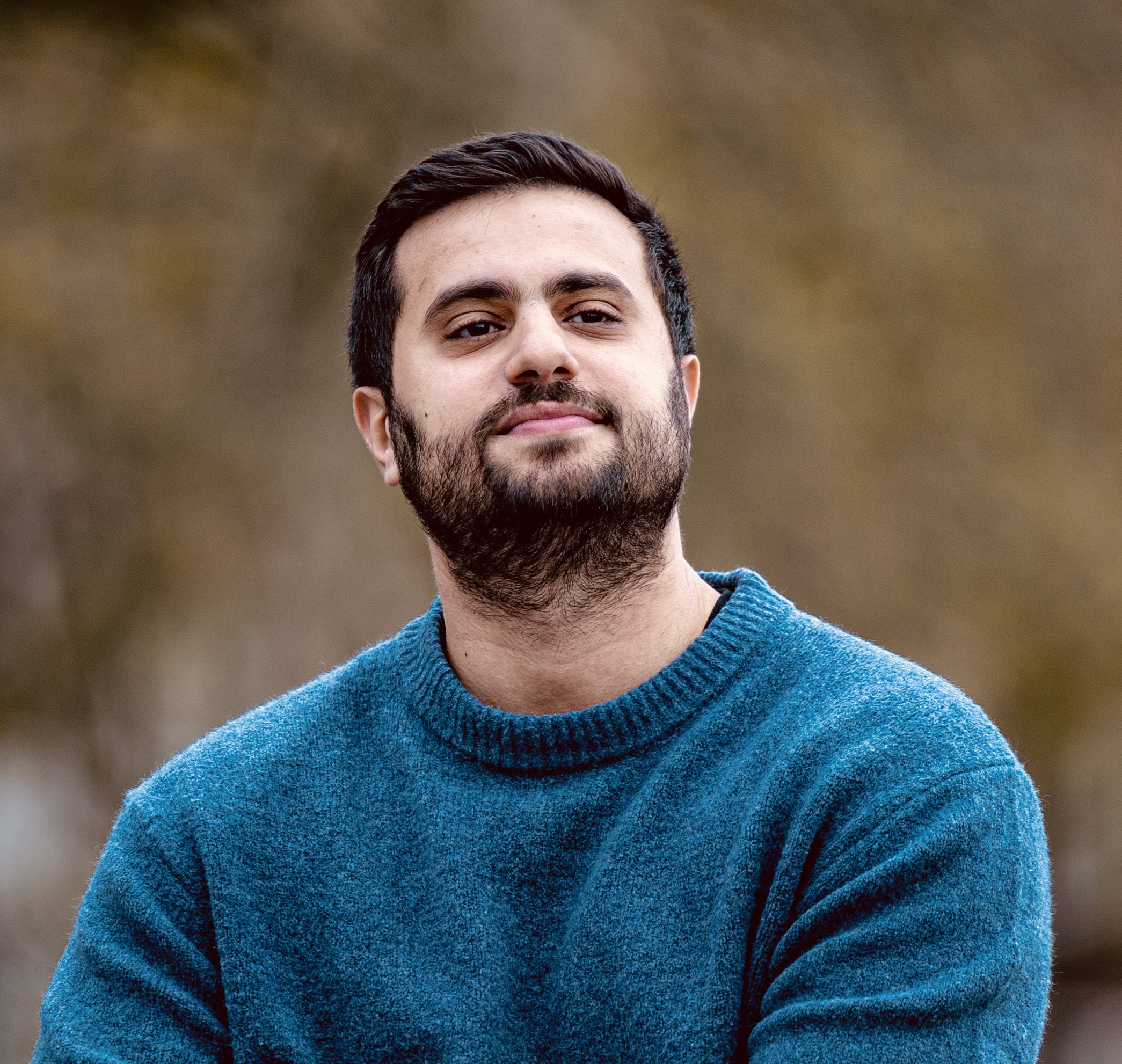
A Lebanese poet in California, Zeina Hashem Beck tends to the tension between Arabic and English, grief and joy, and the inheritance of our mother tongues.
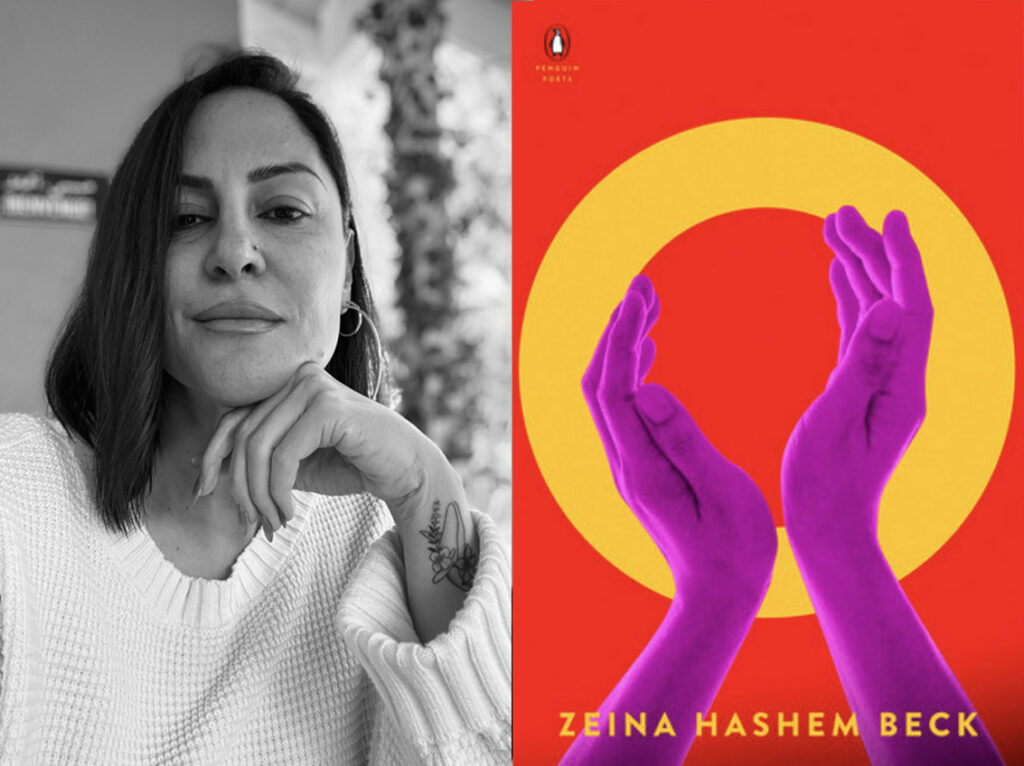
In the poetry of Zeina Hashem Beck, language is never neutral. It carries the weight of childhood and exile, intimacy and history, the body and the homeland. A Lebanese poet whose voice has travelled from Tripoli to Beirut to Dubai and now California, Zeina inhabits the friction of languages. Her latest collection, O — named one of the best books of its year and winner of the 2023 Arab American Book Award for Poetry — maps anger, grief, love, and survival: the sacred and profane intertwined, the personal and the political inseparable.
TMR Literary Editor Abdelrahman ElGendy spoke with Hashem Beck last month over Zoom. A conversation around mother tongue as a site of desire, tension, and responsibility. Arabic is the tongue Hashem Beck brings to her children; English is the language in which she writes; and poetry, that liminal space where she lives, is the medium in which the dissonance between these tongues is never resolved but rather made into music, argument, and witness.
Only weeks after this interview, the Israeli occupation has launched another vicious bombing campaign on Hashem Beck’s country, Lebanon. Yesterday, March 5, the occupation ordered an evacuation unprecedented in its scale of Beirut’s southern suburbs, displacing what amounts to over half a million of the population from their homes. A minister of the occupation promised that the suburbs of Beirut will become like Khan Younis, the section of Gaza that has been almost eradicated by Israeli strikes.
As TMR publishes Hashem Beck’s conversation today, we are faced anew with the failure of language in holding this horror.
The conversation has been condensed and edited for clarity.
The Markaz Review: When you hear the phrase “mother tongue,” do you immediately think of Arabic, or does the phrase feel more complicated than that?
Zeina Hashem Beck: Yes, I immediately think of Arabic. It feels strange to be switching to English with you now. I feel like I want to continue in Arabic. For me, this is not debatable. I know that for other people it might be, and that is legitimate. But my experience is that I grew up inside Arabic.
I grew up in Tripoli, Lebanon. I was mothered, fathered, befriended, beloved, and be-enemied in Arabic. The sounds of the city were Arabic. The cartoons and shows I watched on TV were in Arabic. Music and dance were in Arabic. Even now, if you really want me to dance, you better put on some Arabic music! My humor, to this day, is mostly in Arabic. For all these reasons, I feel that I grew up inside the language in so many ways. So, there is no debate in my mind about what my mother tongue is.
TMR: What is your relationship to English? Is writing in English ever an act of exile? Do you think longing for a mother tongue is a form of longing for a motherland?
ZHB: My relationship to English is, to say the least, complicated. For many of us who grew up in Arab states within postcolonial education systems (in my case, I was French educated), it was instilled in us from a very young age, both consciously and subconsciously, that access to a foreign language meant access, period. It meant more doors would open for you. If I am honest with myself, that belief was instilled in me early on. And alongside the push to learn a foreign language, there was something else. Even as a young Arab, you feel the Western gaze. You feel that the West is reading you and reading your country.
That does not mean love of Arabic was not also instilled in me. At school, I loved reading and reciting poetry in Arabic. But at the same time, fusha, modern standard Arabic, is often deified. My fear of writing in Arabic comes from that deification, which I think creates an unhealthy relationship with the language. I think that was one factor that moved me away from Arabic in writing, specifically poetry. There is this belief that Arabic is the greatest language ever, and that you will never be as good as Al-Mutanabbi. So, I thought I would not even try.
Chronologically, it does not even make sense that I ended up writing in English. I learned Arabic first, started French at three when I began school, and learned English at twelve, which is relatively late. It is not the most natural progression for me to write in English.
Another contributing factor is that I attended an American university. When I was applying to universities, I wanted (like any teenager) to move out of my parents’ house, and I wanted to move from Tripoli to Beirut. Beirut felt like the big city, the unknown, so I was excited when I got into the American University of Beirut. It was a dream for my seventeen-year-old self.
I was accepted into several majors at AUB, including English literature, and it was my mother who advised me to choose literature. I remember her telling me, “You are a writer. Study literature.” But of course, it matters what language you end up studying literature in.
At AUB, I began moving away from Arabic as a language of writing. This distinction matters because I was still living inside Arabic. I spoke Arabic with my friends. I was never someone who spoke French or English socially. But I was studying in English, writing papers in English, and gradually thinking in English.
There is a false sense of hierarchy of languages in the world, one created by empires and colonialism.
It was not easy to train myself to read and write in English. In my first year, I would sit in Jafet Library with a large dictionary and look up words like “slumber.” This was difficult and took time. But I love difficulty, and I love learning languages.
At the same time, I realize now that this is never innocent; it is not simply about loving languages. There is a false sense of hierarchy of languages in the world, one created by empires and colonialism.
By the time I completed my master’s degree, I felt it was too late to begin writing in Arabic. I still had not dared, because there was an Arab critic in my head attacking me whenever I tried to write in Arabic. So, I decided to write in English.
Somehow, decades later, it has sadly become the language in which I feel most comfortable writing poems.
TMR: How do you feel about English now? Reflecting on your current relationship to it today.
ZHB: If we were to think of exile the way Edward Said describes it, as something never easy or secure, as a contrapuntal, liminal space, then one could say I’ve somehow become an exile in both English and Arabic.
The exile is different in each language, though. In Arabic, specifically in writing rather than speaking it, I feel like an exile because I am trying to return to writing Arabic poetry. When I try, I almost feel as though I have to translate from English, which is strange. I have to make myself relearn and remember. That is one form of exile.
In English, you are aware that you are writing in the language of a country, of an empire, that is funding a genocide in Palestine and supporting Israel bombing Lebanon daily. That awareness creates another kind of discomfort, another form of exile.
Right now, it feels like I am an exile in both. That is not necessarily a bad thing, because poetry thrives on discomfort. It thrives on that kind of tension.
TMR: Have you ever written a poem in English and later realized it was disguising an Arabic poem beneath it? Do you experience a kind of osmosis between languages that bilingual writers sometimes describe?
ZHB: I think that to a certain extent every poem I write in English has Arabic underneath it. Not an Arabic poem exactly, but Arabic is there. Even if the theme is not explicitly Arabic, simply by virtue of who I am, how could it not have Arabic beneath it? In that sense, every poem I write carries Arabic within it.
As for osmosis, I wouldn’t describe it as that. I experience it more as a constant tension, even a contradiction, between the two languages. That feels more real and more interesting to me. I do not think I will ever, or even aspire to, arrive at a place where I feel completely at home in both languages or where I feel I’ve harmonized them, that they seep in and out of each other smoothly. They are always in tension. I prefer the imbalance to the balance.
TMR: You publish primarily in English. What does English allow you to say that Arabic does not? Even more, what does English allow you to say about Arabic that Arabic does not?
ZHB: I want to reframe this and say that, for me at least, I am much more careful in English — almost self-censoring.
English was never a language in which I could dare to say more. As I continued writing and, more importantly, as I got published and realized people from different parts of the world were reading my poetry, I understood that I had to be very careful, even protective, of Arabic in English. I tend to withhold more in English because I know there might be a reader who will immediately stereotype me if I say this or that.
So, when I write in English, I almost self-censor out of protectiveness: protectiveness of myself, of my culture, of being misread, of being stereotyped. Writing in English has never allowed me to say things I would not have said in Arabic. I’m trying to think about it, but I don’t believe so. I think I’m the kind of person who would have said whatever needed to be said in Arabic as well.
What I am interested in is this: if I begin writing more and more in Arabic, which is something I am seriously considering, what would that allow me to say about Arabic? That might be a space where I could be more critical. I almost feel kinder to my own country in English than I am to it in Arabic.
TMR: You have developed the Duet, a bilingual poetic form in which English and Arabic exist as parallel, interwoven texts on the page, to be read separately; yet when read together, a third poem emerges. What does the Duet offer you that a fully English or fully Arabic poem does not? On the other hand, what does it cost you, what is lost in the hybridity? I’m also curious: which language arrives first for you in that form? And do you experience English and Arabic in the Duets as being in harmony, in tension, or both?
ZHB: To go back to the term hybridity, for me, and I might be wrong, I interpret it as something that contains many elements and somehow emerges harmoniously from them. I don’t see the Duet as a hybrid poem. I’m not even sure what to call it. Maybe “Duet” is the wrong word, because a duet implies harmonious singing. Sometimes I rethink whether I should have called it that.
If I trace it back, the first Duet came fully in Arabic. That was during a period when I was reading more Arabic poetry and thinking about it deeply. It may have also been a time when the idea of doing a podcast in Arabic about Arabic poetry was forming in my head. (I would later co-host two seasons of Maqsouda with Farah Chamma.)
I remember clearly that I sat down to write, and the first line came to me in Arabic:“وطني الصغير لا يكفيني” I followed it and wrote the whole poem in Arabic. Then I became afraid of it, which goes back to my fear of Arabic. I thought this might not be a good poem. So, I decided to translate it into English. I translated the whole thing, and when I looked at the English version, I thought, no, this isn’t it.
That’s how the idea emerged: maybe the two languages could speak to each other without being translations of one another. What would I say in terms of “وطني الصغير لا يكفيني” in Arabic versus “my little country is not enough” in English? That’s how the Duet began.
I haven’t written many of them — seven in total — because they are difficult to write. Arabic and English are always in tension. I read them out loud several times to see how they flow. Some of them flow, some of them don’t; I test them through sound.
In terms of what the Duet offers, I wrote them fully aware that I publish mainly in English. I knew that if they found a home, it would be in a book primarily in English. That was important. The Duet confronts the English-only reader with untranslatability. I deliberately did not translate the Arabic. I could have added notes explaining what the Arabic says, but the point was that if you only read English, you face the fact that your lack of access to Arabic means you cannot fully access the culture.
At the same time, I was thinking of bilingual readers, who can experience the pleasure of reading both languages and seeing the links and contradictions. It creates a shared space for bilingual readers who would experience these poems in a mostly English-language book.
TMR: You are a mother yourself. In what tongue do you mother, and how do you see motherhood and mother tongue intersecting?
ZHB: I hope that I mother in Arabic! Ever since we moved to the U.S. four years ago, I’ve seen the language loss very clearly. My kids used less and less Arabic, and now they barely use it with me at all.
I try to speak to them only in Arabic. Their father does the same. But they refuse to reply in Arabic, which is a huge grief for me. I’ll say, “Speak to me in Arabic,” and they retreat. I think they hear it as an accusation, which is unfair because we brought them here.
I would say ninety percent of my mothering is in Arabic. Sadly, they reply in English most of the time. They don’t understand my humor or my references, but I want to believe that something will seep in. We haven’t been back to Lebanon for four years, and that absence matters. When they’re in Lebanon, seeing their grandparents and living inside the sounds of Arabic, that is the real education.
But there is also a failure on my part to teach them fusha. Every now and then, I gather energy and tell myself, “This weekend we’re going to sit down and read.” My mom sent Arabic textbooks, which are on the dining room table. Sometimes I manage to sit them down and go through them. It’s always a fight, even if it’s just 40 minutes or half an hour.
I know I have a responsibility to be consistent, and the truth is I haven’t been. Mothering is hard. Life is hard. Sometimes I would rather have my coffee on the weekend or read a poem. Then I push myself, thinking, “If you want them to read Arabic, you must teach it. You are the mother. You are responsible.” And then I fail again.
Even sadder, I’ve become the person who always announces death. I’m always saying, “Did you see what happened in Palestine today? Did you see what happened in Lebanon?” They are teenagers, and they ask, “Mama, why do you always talk about death while we’re eating lunch? Why are you showing us this video?” It feels like I want to push grief into their faces, so they understand where I’m coming from. Of course, they care — I know they do — but they also resist me as their mother.
I caught myself explaining the word Merkava to my child and thought, “What am I doing? Why do I want my child to know this word?” But if we are to teach them how to dance, we also must teach them how to grieve. Teaching them Arabic is not just teaching a language; it’s a whole world. Those of us born and raised in Arabic cannot escape history. I feel lucky to have all these perspectives, these lenses, these languages, this joy, this rage, this grief, this rootedness and uprootedness in connection to Lebanon. And I feel sad that they didn’t get that in the way I did. It’s strange, isn’t it, wishing your trauma on your children? But the grief comes with the joy. How can joy exist without it? My husband tells me, half-joking, “Zeina, they’ve inherited some of it already. Don’t worry.”
It’s such a big question. You know the opening line in the Philip Larkin poem, “They fuck you up, your mum and dad”? I think, yes, probably. I’m just hoping I didn’t fuck them up too much.
TMR: How have the past years of Israeli genocide in Palestine, along with the still ongoing aggressions of the settler-colonial project against Lebanon, changed your relationship to poetry and language?
ZHB: I don’t think we’ve even begun to realize the psychological effects of witnessing genocide.
If I attempt to answer, the first thing I notice is that this is the first time I’ve witnessed Israeli aggression from outside the Arab world. Before, I witnessed it from within the Arab world. Being here in America, the dissociation is brutal. You carry all this grief and rage, and your immediate environment doesn’t carry it, doesn’t understand it, can’t read it — that is, if it is not actively trying to repress it. I’m not saying there aren’t allies or activists for Palestinian liberation here in the U.S. and so I keep returning to the necessity of intersectionality.
But when you live in the Arab world, even if you are censored, people around you get it. They understand the rage, the grief. From here, there’s a rift. I found myself longing to be back in Lebanon, because at least the wreck inside me would be in sync with the wreck outside me. Instead, stepping out into California, it’s dissonant.
During these past few years, one of the things I’ve returned to in poetry — and I’m still processing why — is Mahmoud Darwish’s reading of مديح الظل العالي from 1983, after the Palestinians left Beirut following the Israeli siege. It’s a 45-minute performance, and I keep returning to it, watching it. Maybe that’s how I’ve been thinking about language lately: listening, letting it carry the weight, the grief, and the resistance.
The genocide has also made me less tolerant of empty language. Less tolerant of people who speak about peace without justice, freedom without liberation. As a poet and someone who works in language, especially as an Arab poet writing in English while living in the U.S., I feel the daily need to remind myself of Ghassan Kanafani’s insistence: “It’s not ‘whatever.’” Here, in academia, publishing, and writing spaces, everything pushes you to dilute yourself. You have to resist that — it’s not whatever.