Beyond Black and White: Notes from Tehran

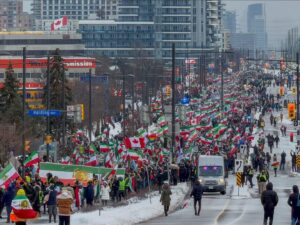
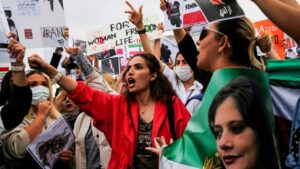
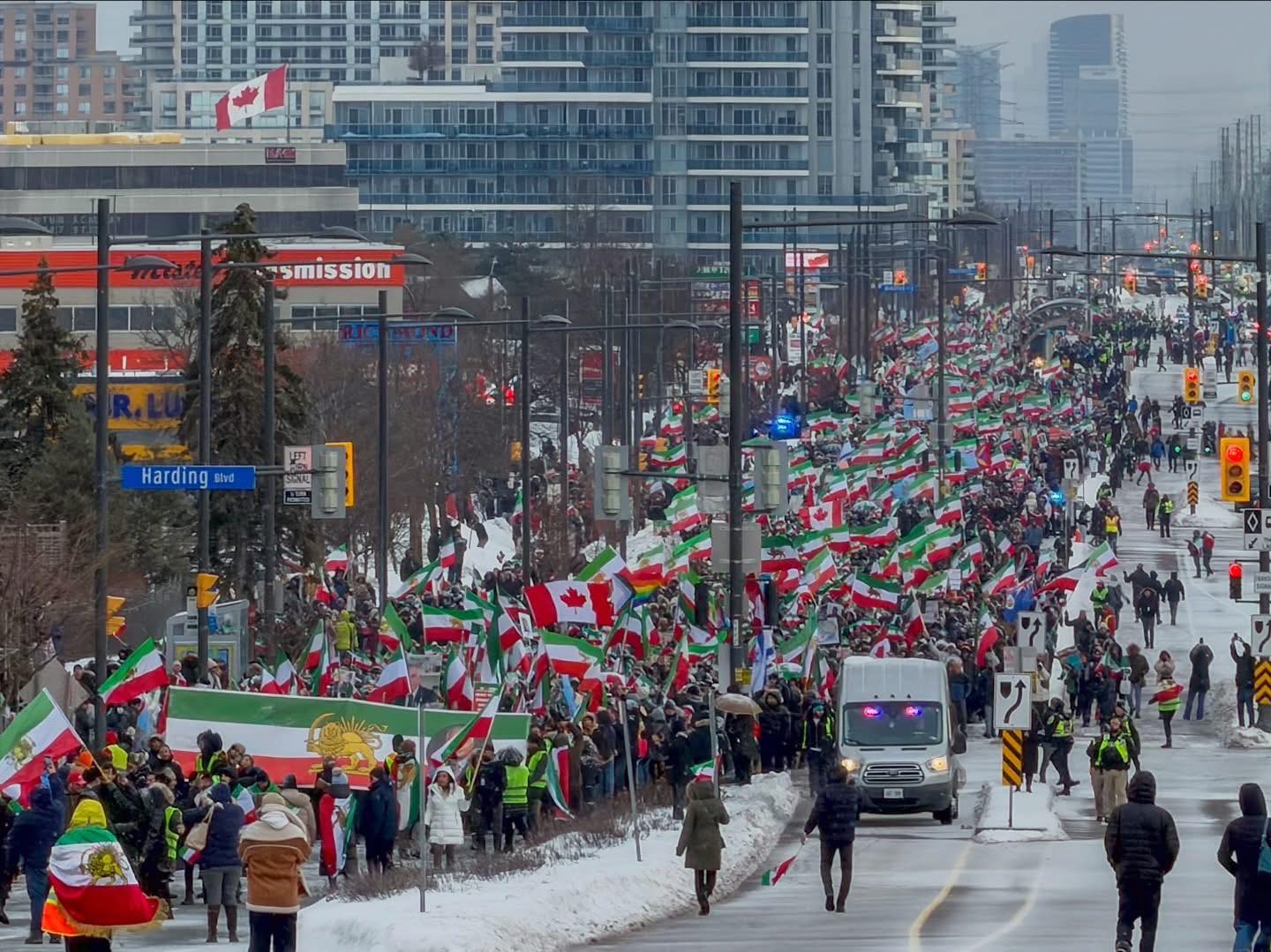
The world marches in solidarity with Iranians—here, over 100,000 people in January joined an anti–Islamic regime protest in Toronto (Iran in Photos).

23 JANUARY 2026 • By M. Nateqnuri

Amid the droves of protestors, TMR's contributor notes trained individuals with malevolent agendas on the streets.

I returned from Iran on January 14, after three weeks there. Consider this a social media post that I refuse to post on social media because it is toxic terrain, heavily surveilled by our own authoritarian powers, and what I write is too long anyway. I usually avoid being some self-appointed spokesperson in the Anglosphere for what happens in Iran. The ideological terrain is fraught and many in the diaspora speak from places of deep trauma. But when I first opened Facebook, I was repelled by the discussions in a language of simplified binaries, though much of it is well meaning. I write here as a person with a deep love for the country and the people, and after decades of research into its culture and history. I ask that you hold all of the pieces below together, not in opposition to each other, as so many of the narratives I’ve read do.


1.

People in Iran are extremely angry at the government for its corruption, which they consider responsible for the economic conditions that are making life increasingly unliveable for so many.

2.

Economic corruption is partly tied to decades of increasingly suffocating sanctions, which in my mind are human rights violations. This doesn’t exonerate the IRI, but they aren’t terribly unique. U.S. and European-led sanctions have impoverished and outright destroyed the middle class, the very people that they claim to want to save from the government and whose organizing abilities they undercut. This doesn’t exonerate the regime elite from squeezing the population, but again, they aren’t terribly unique in an age of global oligarchy.

3.

Angry people were out in droves protesting. Among them were also a lot of other groups, some of whom had specific kinds of training that set them apart from ordinary people protesting. I heard from people in at least half a dozen cities of various sizes. Many people I talked to in the days after January 8 and 9 told me they felt these protests were different, that there were trained people with very particular agendas on the street, trying to take over and manipulate protests (one friend was threatened for not chanting “Javid Shah,” long live the king — a reference to Reza Pahlavi). I saw someone deftly and quickly scale a 20-foot wall. This was no ordinary demonstrator. I heard a lot of other examples.

4.

Various theories that I find credible about who was mixed in with angry protestors: Israeli government agents, Israeli-backed monarchists, U.S. government-backed MEK (Mujaheddin-e Khalq, widely considered terrorists inside Iran), and U.S.- and Israeli-armed separatists. These people were attempting to guide protests to their ends and much of the violence on the protesting side came from them. Some ordinary people, watching too much Iran International (a satellite TV channel with a staunch monarchist bent that often garbles information or outright misinforms) seemed to think that Israeli and US intervention was going to save them. “This isn’t living,” they told me. They seemed under the impression that Israel and the U.S. are in the business of making things better for people around the world and of saving lives. There was little thought of what comes next. “Just get rid of this government, anything is better than this, it can’t get worse.” Oh, but it can, I told them. These governments (and significant swathes of their voters) don’t care about our lives, as their recent activities in the region show. Look at previous U.S. interventions, which have generated death, destruction, instability, and massive refugee populations. But people are so desperate, hopeless, and pushed beyond the max that they can’t hear this.

Starting on Thursday, January 8, everything went nuclear.

5.

These protests were violent in an unprecedented way. I heard this from many people who have been protesting since 2009. In many cities and towns, government offices and banks were burned, but also a lot of stores were looted, public buses burned, metro stops vandalized. Security forces or suspected security forces (some of whom were regular people) brutally attacked people in the street — hacked apart, burned, beaten badly and sometimes to death. This violence was shocking to many, in spite of their opposition to the regime, and was part of what made this feel different.

Some cities and neighborhoods were worse than others. At a hotel in a southern port city, I saw and heard tear gas, flash bang grenades, and even rapid gunfire from semi-automatic weapons. The next day I saw all the burned shops and banks, looted stores, and even found shotgun shells in the street next to “Javid Shah” scrawled on the walls. People there were shocked at the violence and one store owner who had confronted the people setting fires (he begged them not to set his store on fire because his family lived above it — instead, they just broke the windows and looted it) said, “This is a small place and we know everyone. We didn’t know these people.” A friend living in Rasht told me horrifying stories of torched buildings, gun fights, and disturbingly high death tolls. Friends who work in Tehran hospitals told me that people reported protesters and security personnel with strange accents, giving credence to the presence of foreign boots on the ground. If it sounds confusing, it is. A real mess.

6.

There is layer upon layer. The protests that began in the Tehran bazaar were fueled by economic discontent. But violence soon took over, especially in small towns no one in Tehran had heard of. In the beginning the protests appeared localized and the government seemed to show restraint. Yet Western media did what it always does, blow everything up into an incipient revolution, with no context. For instance, government corruption is always mentioned, but conveniently amputated from the context of decades of ever more crippling economic sanctions, which have made it so that the trade that provides many goods of daily life flows through a giant black market. As sanctions keep tightening, elites scramble for the ever more difficult to get U.S. dollar, printing more and more domestic money that becomes increasingly worthless, pinching ordinary people in the process. To complicate matters, not all the mafias that control the flow of goods are under government control. This doesn’t exonerate the regime from the responsibility it has for the well-being of its citizens, but context as always remains distorted or nonexistent.

7.

Starting on Thursday, January 8, everything went nuclear. I asked more than one person whether I had just not been paying attention or things actually had gone completely next level, and everyone confirmed the latter. After Thursday night, the government decided to crack down hard. The 12-day war with Israel seemed not over, but merely paused and continued by other means. The regime is like a wounded animal that feels cornered by the obvious foreign elements lacing these protests, which escalated in the streets on Thursday and was met with gloves off on Friday. It was like war in some places. Thousands were gunned down or arrested — many young people in despair over the future, bludgeoned between the authoritarian state’s fist, their own rage, and the machinations of various outside groups. After Friday night, which was truly horrible on every level, things quieted down. By Saturday, I was back in Tehran. Though I heard from people that in virtually all neighborhoods there were chants and localized protests, most people closed up shop to make it home by dark. This was partly out of fear and shock at the violent escalation of recent days. Sunday, there were some chants of “Death to the Dictator” in my central Tehran neighborhood. After that, nothing. As of Tuesday night, unlike international news reports of massive security presence in public areas, I didn’t see more than several clusters of police here and there.

8.

In the days that followed, until I left Iran on Wednesday, the city was subdued. People kept trying to live their lives and attend to their day-to-day business. Nights were more deserted, though people began to come back into the streets. I went out Monday and Tuesday in the early evening. The lack of internet made business and everyday life difficult, as we all struggled to function like it was 1999. It was also strangely calming, in that it helped us be present with ourselves and each other. The intranet was restored by Saturday for things like banking and car service. By Sunday evening the government stopped cutting the phone lines at night. We couldn’t text each other, but we could call. And we did. Reaching out, talking, listening. For me, that was amazing and something I miss in the U.S., where when something hard happens it’s not okay to talk about it, or doing so actually makes people uncomfortable. Or there is just no time/energy because of never-ending work that is life here.

By Monday, I had hit a wall of hurt, literally.

9.

By Tuesday, some people (again, those watching Iran International), seemed to think that Donald Trump or Reza Pahlavi was going to swoop in and bloodlessly save them from the regime. But others, even those in northern Tehran whom you would not think would say this, were cursing the former crown prince. “How dare he call for protests and get all those young people killed. What is his plan? He has no plan.” I think all the magical thinking about Pahlavi and Israeli/U.S. intervention is a sign of just how fed up with the regime wide swaths of people are, desperate for something better than the current conditions of economic collapse.

10.

Others, the more educated and/or thoughtful, were fearful of what is to happen. Of civil war, of a massive destabilization that would bode ill for the basic security of society. Literally no one I talked to defended the regime. But they feared, in the current domestic context of a lack of viable opposition and the international context of nefarious foreign forces, that there was little hope of a peaceful transition to a better government. I share this fear. Things could get much worse and many are just too knee-jerk against the regime to see the real dangers and limitations of this moment. There doesn’t seem to be any kind of viable plan, either on the part of any opposition or on the part of any short-sighted government.

It’s hard to be hopeful about anything, but the real beauty of Iranian society when things go bad is the way people come together. By Monday, I had hit a wall of hurt, literally. Muscles along my back and sides kept cramping painfully. It was sunny so I thought it would help to take a walk to a nearby park. I started crying halfway there. At some point in the park, another painful cramp hit and I was bent over a bench trying to breathe through it. I sat and tried to gather myself, breathing slowly as several men walked by rhythmically passing beads along their tasbih strands. Just watching them soothed me enough to call a dear friend.

I didn’t even try to pretend, “I’m not doing very well.” She talked me through it, we made plans to meet up in a couple of hours where she worked. We gathered with her colleagues, had tea, talked with them, before going off on our own for dinner and a stroll through central Tehran. These interactions were ni’mat, a grace, a blessing. It was really difficult for me to leave those so dear to me behind a wall of silence. We don’t know what is going to happen. But I learned from being there with friends and family (and the kind woman who comforted me as I broke down on the flight out of Iran) that we just have to continue to try to live as best we can.

That’s all I’ve got for now.
M. Nateqnuri
M. Nateqnuri was born in Iran, raised in the U.S., and has studied Iranian history and Persian culture for decades.
Join Our Community

TMR exists thanks to its readers and supporters. By sharing our stories and celebrating cultural pluralism, we aim to counter racism, xenophobia, and exclusion with knowledge, empathy, and artistic expression.

Learn more

RELATED

Columns

Beyond Black and White: Notes from Tehran

23 JANUARY 2026 • By M. Nateqnuri
Beyond Black and White: Notes from Tehran
Opinion

What Shirin Neshat Taught Me About Iran

16 JANUARY 2026 • By Hassan Abdulrazzak
What Shirin Neshat Taught Me About Iran
Columns

Trump, The Liberator! (and the Fear Wagons)

16 JANUARY 2026 • By Amal Ghandour
Trump, The Liberator! (and the Fear Wagons)
Film Reviews

If You See Something—an Iraqi Film on Asylum

12 DECEMBER 2025 • By Alex Demyanenko
<em>If You See Something</em>—an Iraqi Film on Asylum
Fiction

“Tahmina”—a story from Iran

5 DECEMBER 2025 • By Abdollah Nazari
“Tahmina”—a story from Iran
Film Reviews

It Was Just an Accident: A Haunting Tale of Revenge

5 DECEMBER 2025 • By Alex Demyanenko
<em>It Was Just an Accident</em>: A Haunting Tale of Revenge
Film

10 Noir Films from the Arab world, Iran, and Turkey

5 DECEMBER 2025 • By TMR
10 Noir Films from the Arab world, Iran, and Turkey
Film Reviews

The Woman Who Wouldn’t Break—Cutting Through Rocks’ Sara Shahverdi

28 NOVEMBER 2025 • By Alex Demyanenko
The Woman Who Wouldn’t Break—<em>Cutting Through Rocks’</em> Sara Shahverdi
Book Reviews

Contemporary Kurdish Writers in the Diaspora

14 NOVEMBER 2025 • By Matt Broomfield
Contemporary Kurdish Writers in the Diaspora
Uncategorized

Reading the Landscape: Cultural Clues and Regime Messages in Iran

12 SEPTEMBER 2025 • By Raha Nik-Andish
Reading the Landscape: Cultural Clues and Regime Messages in Iran
Essays

Remaining in Light: Iranians Search for Solace and Well-Being

5 SEPTEMBER 2025 • By Malu Halasa
Remaining in Light: Iranians Search for Solace and Well-Being
Book Reviews

Hope Without Hope: Rojava and Revolutionary Commitment

11 JULY 2025 • By Arie Amaya-Akkermans
Hope Without Hope: Rojava and Revolutionary Commitment
Columns

The Bullet, the Missile, and the Woman In-Between

4 JULY 2025 • By Alireza Iranmehr, Salar Abdoh
The Bullet, the Missile, and the Woman In-Between
Essays

Life Under the Shadow of Missiles: the View From Iran

20 JUNE 2025 • By Amir
Life Under the Shadow of Missiles: the View From Iran
Book Reviews

The Evin Prison Bakers’ Club — Review

6 JUNE 2025 • By Hannah Kaviani
The Evin Prison Bakers’ Club — Review
Editorial

For Our 50th Issue, Writers Reflect on Going Home

2 MAY 2025 • By TMR
For Our 50th Issue, Writers Reflect on Going Home
Essays

Leaving Abdoh, Finding Chamran

2 MAY 2025 • By Salar Abdoh
Leaving Abdoh, Finding Chamran
Essays

Looking for a Job, Living and Dying in Iran: The Logistics of Going Back

2 MAY 2025 • By Raha Nik-Andish
Looking for a Job, Living and Dying in Iran: The Logistics of Going Back
Essays

Germany’s Most Rightwing Parliament Since WWII—Liberals Panic, Immigrants Roll Their Eyes

25 APRIL 2025 • By Laila Abdalla
Germany’s Most Rightwing Parliament Since WWII—Liberals Panic, Immigrants Roll Their Eyes
Centerpiece

Love and Resistance in Online Persian Dating Shows

7 MARCH 2025 • By Malu Halasa
Love and Resistance in Online Persian Dating Shows
Art & Photography

Mostafa Nodeh: Featured Artist Interview

7 FEBRUARY 2025 • By Mostafa Nodeh
Mostafa Nodeh: Featured Artist Interview
Film Reviews

My Favorite Cake, Iranian Cinema’s Bittersweet Ode to Love

17 JANUARY 2025 • By Karim Goury
<em>My Favorite Cake</em>, Iranian Cinema’s Bittersweet Ode to Love
Book Reviews

In Killing Gilda Yahya Gharagozlou Tells an Intriguing Iranian Tale

10 JANUARY 2025 • By Azadeh Moaveni
In <em>Killing Gilda</em> Yahya Gharagozlou Tells an Intriguing Iranian Tale
Editorial

The Editor’s Letter Following the US 2024 Presidential Election

8 NOVEMBER 2024 • By Jordan Elgrably
The Editor’s Letter Following the US 2024 Presidential Election
Essays

The Felines that Leave Us, and the Humans that Left

1 NOVEMBER 2024 • By Farnaz Haeri, Salar Abdoh
The Felines that Leave Us, and the Humans that Left
Film

Freedom is a Combat Sport: On Tatami

11 OCTOBER 2024 • By Karim Goury
Freedom is a Combat Sport: On <em>Tatami</em>
Editorial

A Year of War Without End

4 OCTOBER 2024 • By Lina Mounzer
A Year of War Without End
Book Reviews

Tragic Consequences — On Western Meddling in the Middle East

13 SEPTEMBER 2024 • By Dina Rezk
Tragic Consequences — On Western Meddling in the Middle East
Poetry

Hafez, Iran’s Revered Poet, trans. Erfan Mojib & Gary Gach

15 JULY 2024 • By Erfan Mojib, Gary Gach
Hafez, Iran’s Revered Poet, trans. Erfan Mojib & Gary Gach
Fiction

“Firefly”—a short story by Alireza Iranmehr

5 JULY 2024 • By Alireza Iranmehr, Salar Abdoh
“Firefly”—a short story by Alireza Iranmehr
Books

The Mourning Diaries of Atash Shakarami

5 JULY 2024 • By Poupeh Missaghi
The Mourning Diaries of Atash Shakarami
Poetry

Three Poems by Somaia Ramish

12 JUNE 2024 • By Somaia Ramish
Three Poems by Somaia Ramish
Interviews

Nothing is Normal, Nothing Is What it Seems (Underground Theatre in Iran After the Woman, Life, Freedom Movement)

7 JUNE 2024 • By Mehrnaz Daneshvar, Salar Abdoh
Nothing is Normal, Nothing Is What it Seems (Underground Theatre in Iran After the Woman, Life, Freedom Movement)
Featured Artist

Bani Khoshnoudi: Featured Artist for PARIS

1 APRIL 2024 • By TMR, Jordan Elgrably
Bani Khoshnoudi: Featured Artist for PARIS
Book Reviews

Eyeliner: A Cultural History by Zahra Hankir—A Review

19 FEBRUARY 2024 • By Nazli Tarzi
<em>Eyeliner: A Cultural History</em> by Zahra Hankir—A Review
short story

“Water”—a short story by Salar Abdoh

4 FEBRUARY 2024 • By Salar Abdoh
“Water”—a short story by Salar Abdoh
Essays

A Treatise on Love

4 FEBRUARY 2024 • By Maryam Haidari, Salar Abdoh
A Treatise on Love
Books

Illuminated Reading for 2024: Our Anticipated Titles

22 JANUARY 2024 • By TMR
Illuminated Reading for 2024: Our Anticipated Titles
Book Reviews

An Iranian Novelist Seeks the Truth About a Plane Crash

15 JANUARY 2024 • By Sepideh Farkhondeh
An Iranian Novelist Seeks the Truth About a Plane Crash
Film

Religious Misogyny Personified in Ali Abbasi’s Holy Spider

11 DECEMBER 2023 • By Bavand Karim
Religious Misogyny Personified in Ali Abbasi’s <em>Holy Spider</em>
Fiction

“The Waiting Bones”—an essay by Maryam Haidari

3 DECEMBER 2023 • By Maryam Haidari, Salar Abdoh
“The Waiting Bones”—an essay by Maryam Haidari
Book Reviews

First Kurdish Sci-Fi Collection is Rooted in the Past

28 NOVEMBER 2023 • By Matt Broomfield
First Kurdish Sci-Fi Collection is Rooted in the Past
Fiction

Bahar: 22 years in the Life of a Compulsory Hijabi in Teheran

20 NOVEMBER 2023 • By Joumana Haddad
Bahar: 22 years in the Life of a Compulsory Hijabi in Teheran
Art & Photography

Iranian Women Photographers: Life, Freedom, Music, Art & Hair

20 NOVEMBER 2023 • By Malu Halasa
Iranian Women Photographers: Life, Freedom, Music, Art & Hair
Islam

October 7 and the First Days of the War

23 OCTOBER 2023 • By Robin Yassin-Kassab
October 7 and the First Days of the War
Books

The Contemporary Literary Scene in Iran

1 OCTOBER 2023 • By Salar Abdoh
The Contemporary Literary Scene in Iran
Book Reviews

Reza Aslan’s An American Martyr in Persia Argues for US-Iranian Friendship

1 OCTOBER 2023 • By Dalia Sofer
Reza Aslan’s <em>An American Martyr in Persia</em> Argues for US-Iranian Friendship
Art

Special World Picks Sept 15-26 on TMR’s Third Anniversary

14 SEPTEMBER 2023 • By TMR
Special World Picks Sept 15-26 on TMR’s Third Anniversary
Essays

A Day in the Life with Forugh Farrokhzad (and a Tortoise)

3 SEPTEMBER 2023 • By Fargol Malekpoosh
A Day in the Life with Forugh Farrokhzad (and a Tortoise)
Book Reviews

Can the Kurdish Women’s Movement Transform the Middle East?

31 JULY 2023 • By Matt Broomfield
Can the Kurdish Women’s Movement Transform the Middle East?
Fiction

Arrival in the Dark—fiction from Alireza Iranmehr

2 JULY 2023 • By Alireza Iranmehr, Salar Abdoh
Arrival in the Dark—fiction from Alireza Iranmehr
Fiction

“Here, Freedom”—fiction from Danial Haghighi

2 JULY 2023 • By Danial Haghighi, Salar Abdoh
“Here, Freedom”—fiction from Danial Haghighi
Essays

“My Mother is a Tree”—a story by Aliyeh Ataei

2 JULY 2023 • By Aliyeh Ataei
“My Mother is a Tree”—a story by Aliyeh Ataei
Essays

Zahhāk: An Etiology of Evil

2 JULY 2023 • By Omid Arabian
Zahhāk: An Etiology of Evil
Fiction

“The Long Walk of the Martyr”—fiction from Salar Abdoh

2 JULY 2023 • By Salar Abdoh
“The Long Walk of the Martyr”—fiction from Salar Abdoh
Art & Photography

From the City to the Desert—Tahmineh Monzavi

4 JUNE 2023 • By Tahmineh Monzavi
From the City to the Desert—Tahmineh Monzavi
Photography

Iran on the Move—Photos by Peyman Hooshmandzadeh

1 MAY 2023 • By Peyman Hooshmandzadeh, Malu Halasa
Iran on the Move—Photos by Peyman Hooshmandzadeh
Book Reviews

Hard Work: Kurdish Kolbars or Porters Risk Everything

1 MAY 2023 • By Clive Bell
Hard Work: Kurdish <em>Kolbars</em> or Porters Risk Everything
Art & Photography

TMR Conversations: Mana Neyestani, Graphic Novelist

1 MAY 2023 • By Malu Halasa
TMR Conversations: Mana Neyestani, Graphic Novelist
Film

Seven Winters in Tehran and the Execution of Reyhaneh Jabbari

10 APRIL 2023 • By Malu Halasa
<em>Seven Winters in Tehran</em> and the Execution of Reyhaneh Jabbari
Art

Nazanin Pouyandeh

5 MARCH 2023 • By TMR
Nazanin Pouyandeh
Cities

The Odyssey That Forged a Stronger Athenian

5 MARCH 2023 • By Iason Athanasiadis
The Odyssey That Forged a Stronger Athenian
Book Reviews

White Torture Prison Interviews Condemn Solitary Confinement

13 FEBRUARY 2023 • By Kamin Mohammadi
<em>White Torture</em> Prison Interviews Condemn Solitary Confinement
Columns

Letters From Tehran: Braving Tehran’s Roundabout, Maidan Valiasr

30 JANUARY 2023 • By TMR
Letters From Tehran: Braving Tehran’s Roundabout, Maidan Valiasr
Book Reviews

Editor’s Picks: Magical Realism in Iranian Lit

30 JANUARY 2023 • By Rana Asfour
Editor’s Picks: Magical Realism in Iranian Lit
Featured article

Don’t Be a Stooge for the Regime—Iranians Reject State-Controlled Media!

15 DECEMBER 2022 • By Malu Halasa
Don’t Be a Stooge for the Regime—Iranians Reject State-Controlled Media!
Columns

Siri Hustvedt & Ahdaf Souief Write Letters to Imprisoned Writer Narges Mohammadi

15 DECEMBER 2022 • By TMR
Siri Hustvedt & Ahdaf Souief Write Letters to Imprisoned Writer Narges Mohammadi
Music

Revolutionary Hit Parade: 12+1 Protest Songs from Iran

15 DECEMBER 2022 • By Malu Halasa
Revolutionary Hit Parade: 12+1 Protest Songs from Iran
Columns

Music for Tomorrow: Iranians Yearn for Freedom

15 DECEMBER 2022 • By Nazanin Malekan
Music for Tomorrow: Iranians Yearn for Freedom
Film

Imprisoned Director Jafar Panahi’s No Bears

15 DECEMBER 2022 • By Clive Bell
Imprisoned Director Jafar Panahi’s <em>No Bears</em>
Opinion

Historic Game on the Horizon: US Faces Iran Once More

28 NOVEMBER 2022 • By Mireille Rebeiz
Columns

Letter From Tehran: From Hair to Hugs, Times Are Changing

28 NOVEMBER 2022 • By TMR
Essays

Farewell to a Football Love Affair in Iran

15 NOVEMBER 2022 • By Sara Mokhavat
Farewell to a Football Love Affair in Iran
Poetry

5 Poems & a Video—Essential Voices: Poetry of Iran and Its Diaspora

15 NOVEMBER 2022 • By TMR, Sholeh Wolpé
Opinion

Fragile Freedom, Fragile States in the Muslim World

24 OCTOBER 2022 • By I. Rida Mahmood
Fragile Freedom, Fragile States in the Muslim World
Columns

Women Are the Face of Iran’s Leaderless Revolution

24 OCTOBER 2022 • By Mahmood Karimi Hakak
Women Are the Face of Iran’s Leaderless Revolution
Opinion

Letter From Tehran: On the Pain of Others, Once Again

24 OCTOBER 2022 • By Sara Mokhavat
Letter From Tehran: On the Pain of Others, Once Again
Poetry

The Heroine Forugh Farrokhzad—”Only Voice Remains”

15 OCTOBER 2022 • By Sholeh Wolpé
The Heroine Forugh Farrokhzad—”Only Voice Remains”
Art

#MahsaAmini—Art by Rachid Bouhamidi, Los Angeles

15 OCTOBER 2022 • By Rachid Bouhamidi
#MahsaAmini—Art by Rachid Bouhamidi, Los Angeles
Art & Photography

Homage to Mahsa Jhina Amini & the Women-Led Call for Freedom

15 OCTOBER 2022 • By TMR
Homage to Mahsa Jhina Amini & the Women-Led Call for Freedom
Art

Defiance—an essay from Sara Mokhavat

15 OCTOBER 2022 • By Sara Mokhavat, Salar Abdoh
Defiance—an essay from Sara Mokhavat
Art & Photography

Shirin Mohammad: Portrait of an Artist Between Berlin & Tehran

15 SEPTEMBER 2022 • By Noushin Afzali
Shirin Mohammad: Portrait of an Artist Between Berlin & Tehran
Columns

Salman Rushdie, Aziz Nesin and our Lingering Fatwas

22 AUGUST 2022 • By Sahand Sahebdivani
Salman Rushdie, Aziz Nesin and our Lingering Fatwas
Art

Abundant Middle Eastern Talent at the ’22 Avignon Theatre Fest

18 JULY 2022 • By Nada Ghosn
Abundant Middle Eastern Talent at the ’22 Avignon Theatre Fest
Editorial

Editorial: Is the World Driving Us Mad?

15 JULY 2022 • By TMR
Editorial: Is the World Driving Us Mad?
Centerpiece

Big Laleh, Little Laleh—memoir by Shokouh Moghimi

15 JULY 2022 • By Shokouh Moghimi, Salar Abdoh
Big Laleh, Little Laleh—memoir by Shokouh Moghimi
Music

Roxana Vilk’s Personal History of Iranian Music

20 JUNE 2022 • By Melissa Chemam
Roxana Vilk’s Personal History of Iranian Music
Columns

World Refugee Day — What We Owe Each Other

20 JUNE 2022 • By Jordan Elgrably
World Refugee Day — What We Owe Each Other
Fiction

“Buenos Aires of Her Eyes”—a story by Alireza Iranmehr

15 JUNE 2022 • By Alireza Iranmehr, Salar Abdoh
“Buenos Aires of Her Eyes”—a story by Alireza Iranmehr
Featured excerpt

Hawra Al-Nadawi: “Tuesday and the Green Movement”

15 JUNE 2022 • By Hawra Al-Nadawi, Alice Guthrie
Hawra Al-Nadawi: “Tuesday and the Green Movement”
Columns

Not Just Any Rice: Persian Kateh over Chelo

15 APRIL 2022 • By Maryam Mortaz, A.J. Naddaff
Not Just Any Rice: Persian Kateh over Chelo
Book Reviews

Abū Ḥamza’s Bread

15 APRIL 2022 • By Philip Grant
Abū Ḥamza’s Bread
Latest Reviews

Three Love Poems by Rumi, Translated by Haleh Liza Gafori

15 MARCH 2022 • By Haleh Liza Gafori
Three Love Poems by Rumi, Translated by Haleh Liza Gafori
Book Reviews

The Art of Remembrance in Abacus of Loss

15 MARCH 2022 • By Sherine Elbanhawy
The Art of Remembrance in <em>Abacus of Loss</em>
Art

Atia Shafee: Raw and Distant Memories

15 FEBRUARY 2022 • By Atia Shafee
Atia Shafee: Raw and Distant Memories
Art

Farzad Kohan: Love, Migration, Identity

15 FEBRUARY 2022 • By Farzad Kohan
Farzad Kohan: Love, Migration, Identity
Art

Baba Karam Lessons: Artist Amitis Motevalli

15 FEBRUARY 2022 • By Amitis Motevalli
Baba Karam Lessons: Artist Amitis Motevalli
Columns

Getting to the Other Side: a Kurdish Migrant Story

15 JANUARY 2022 • By Iason Athanasiadis
Getting to the Other Side: a Kurdish Migrant Story
Art & Photography

Refugees of Afghanistan in Iran: a Photo Essay by Peyman Hooshmandzadeh

15 JANUARY 2022 • By Peyman Hooshmandzadeh, Salar Abdoh
Refugees of Afghanistan in Iran: a Photo Essay by Peyman Hooshmandzadeh
Book Reviews

Meditations on The Ungrateful Refugee

15 JANUARY 2022 • By Rana Asfour
Meditations on <em>The Ungrateful Refugee</em>
Interviews

The Fabulous Omid Djalili on Good Times and the World

15 DECEMBER 2021 • By Jordan Elgrably
The Fabulous Omid Djalili on Good Times and the World
Art & Photography

Hasteem, We Are Here: The Collective for Black Iranians

15 SEPTEMBER 2021 • By Maryam Sophia Jahanbin
Hasteem, We Are Here: The Collective for Black Iranians
Essays

Why Resistance Is Foundational to Kurdish Literature

15 SEPTEMBER 2021 • By Ava Homa
Why Resistance Is Foundational to Kurdish Literature
Featured excerpt

The Harrowing Life of Kurdish Freedom Activist Kobra Banehi

15 SEPTEMBER 2021 • By Kobra Banehi, Jordan Elgrably
The Harrowing Life of Kurdish Freedom Activist Kobra Banehi
Latest Reviews

Women Comic Artists, from Afghanistan to Morocco

15 AUGUST 2021 • By Sherine Hamdy
Women Comic Artists, from Afghanistan to Morocco
Weekly

The Unfinished Presidency of Jimmy Carter

4 JULY 2021 • By Maryam Zar
The Unfinished Presidency of Jimmy Carter
Book Reviews

ISIS and the Absurdity of War in the Age of Twitter

4 JULY 2021 • By Jessica Proett
ISIS and the Absurdity of War in the Age of Twitter
Art

The Murals of “Education is Not a Crime”

14 MAY 2021 • By Saleem Vaillancourt
The Murals of “Education is Not a Crime”
TMR 7 • Truth?

The Crash, Covid-19 and Other Iranian Stories

14 MARCH 2021 • By Malu Halasa
The Crash, Covid-19 and Other Iranian Stories
TMR 6 • Revolutions

The Revolution Sees its Shadow 10 Years Later

14 FEBRUARY 2021 • By Mischa Geracoulis
The Revolution Sees its Shadow 10 Years Later

Leave a Comment

Your email address will not be published. Required fields are marked *

twenty − five =

Scroll to Top