Of Mother Tongues and Sleeping Orchids

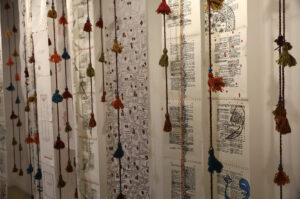
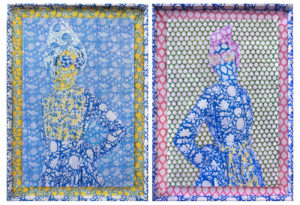
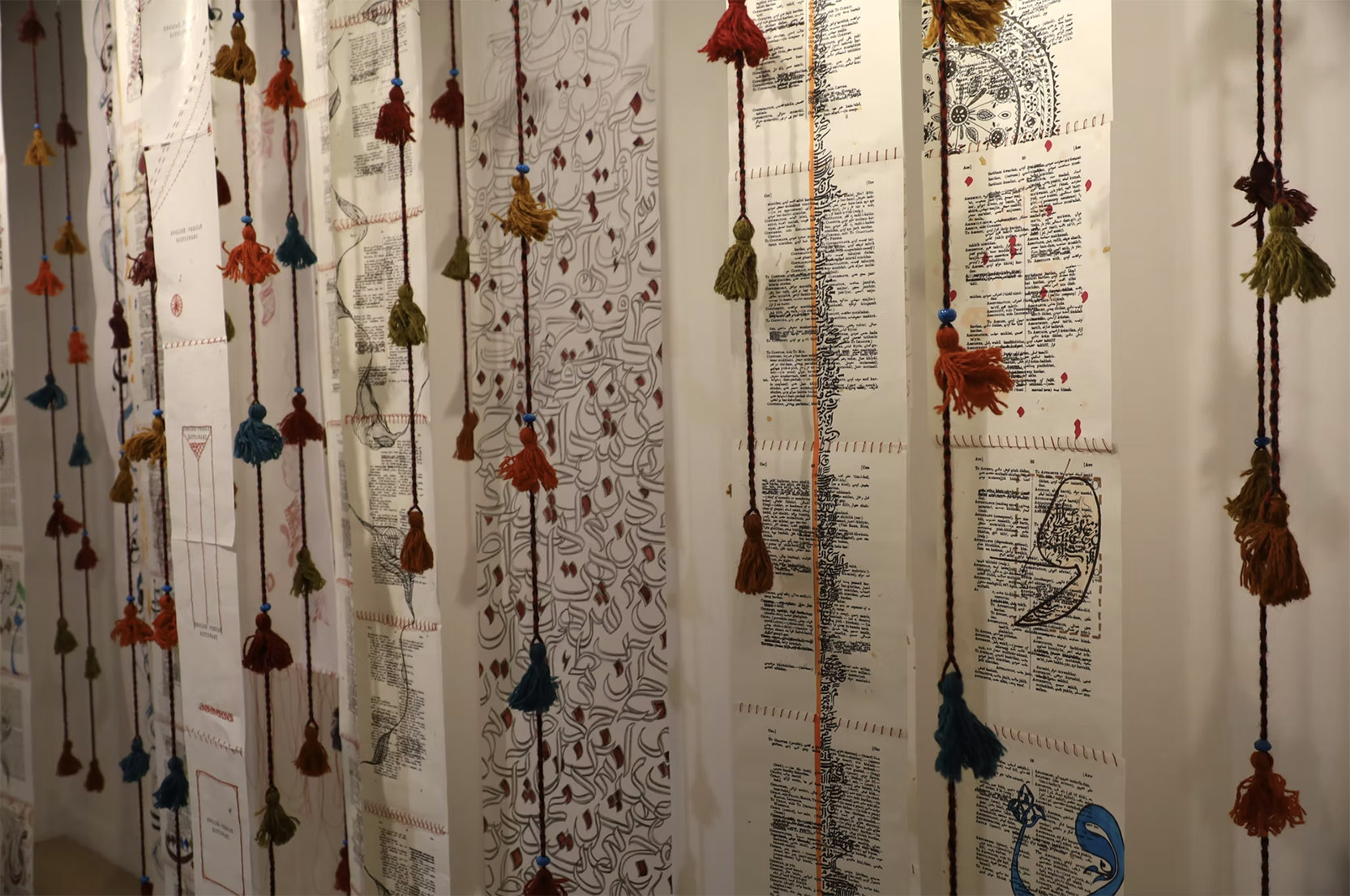
Nakisa Beigi, Mother Tongue installation, Farsi ink on English dictionary pages, 2022 (courtesy of the artist).

6 MARCH 2026 • By Lara Vergnaud

TMR received a deluge of submissions for our newest issue, demonstrating that mother tongues, whether they elicit yearning, pride, grief, or shame, are never neutral.

Here at The Markaz Review, we are all translators, whether by profession or proclivity, choice or circumstance of life. We have all lived in foreign countries and spoken foreign languages, forever navigating the push-pull of competing cultures. How, then, could we not be intrigued, if not obsessed, by the amorphous notion that is a mother tongue? Of the pairing of the vehicle of language and the happenstance of birth, and the turmoil so often wrought by such an encounter?

There are so many ways to lose a mother tongue, though surely displacement is among the most common. Leaving one’s home, through migration, forced exile, or voluntarily, in search of a new beginning or, quite simply, a better life, can also mean leaving one’s language behind as well. For the better you speak your new tongue, the easier, in theory, is access to your new country. “In theory,” because as we all know — however snug the blinders worn, we all see — this is often not the case at all. Mother tongues can then become both dangerous baggage and precious commodity.

Regardless of country, region, or language, “mother tongue” has come to mean “original tongue,” and by extension, for far too many, “legitimate tongue.” Perhaps some of our readers will be well acquainted with one manifestation of this poisonous belief, in the form of two questions, the second invariably following the first: Where are you from? … No, where are you really from?

Perhaps others will know the depth of yearning for a mother tongue, forever out of reach — forbidden, repressed, or merely, irrevocably, forgotten. In my own case, that language is Arabic, a tongue I have grieved for, however silently, for most of my adulthood. For although my first four years of life were spent in Tunisia, hearing Arabic around me — or rather the cajoling blend of French and Tunisian, speakers effortlessly switching between the two — this was not enough of a safeguard. At home, and especially after leaving the country, we spoke English, the shared language between my Tunisian father and my American mother.

For years, I hoped, again silently, that this language — my father tongue — was simply lying in wait. That it had been imprinted in my mind at a young age and could be more or less easily awakened later in life, like one of those rare orchids that lie dormant in the soil for years. Rip Van Winkle orchids, they’re called. But today, more than thirty years after leaving my birth country for the United States, and currently residing in yet another country (France), I’m well aware that my Arabic is gone, though perhaps not forever. There is always time, until there isn’t. I can still learn. As my father would say — as I might say — bi shwaya bi shwaya. Slowly, slowly.

In any case, my lost tongue is forever returning to me in precious scraps, in the books I am inclined to read and translate, mainly by authors of North African origin, a WhatsApp message from a beloved uncle (a mix of French, Tunisian, English, and emoji), or, as of late, during staff meetings peppered with a mix of accents and dialects, expressions from Jordan, Egypt, and Lebanon, alongside Americanisms, Moroccanisms, and countless other -isms. The shared tongue is English, a language that, despite its faults, namely the well-deserved burden of being the colonial tongue par excellence, is delightfully flexible and yielding. Welcoming even. At least to neologisms.

Of course, we’re not alone in feeling the urge to share and express this sense of linguistic multiplicity. We received a deluge of submissions for our MOTHER TONGUE issue, written in or about languages as far ranging as Arabic, Farsi, Pashto, Hindi, Italian, French, Yoruba, Turkish, and English. Every piece differed, many moving, some surprising, a few delightfully strange, but they all had the same through line — language is what makes us. It forms the core of our identities, whether absent or present, wanted or unwanted.

As Mai Al-Nakib writes, in her essay “English and My Mother’s Ghost,” which explores English as her Kuwaiti mother’s gift to her, “Trace a person’s linguistic heritage and you know the story of their life.” Writer Majd Aburrub impressively distills this same notion to a single word in “Sara,” a short story about a Palestinian woman living in an unnamed U.S. city, haunted by the invisible yet weighty “H” English speakers unknowingly append to her given name. In “Language and Mother Eternal,” Farah Ahamed describes the multiplicity of tongues she inherited from her mother, and how language itself can be the conduit for acceptance in the face of deep grief. Amy Omar, in “Culture Got Your Tongue,” unpacks how physical ailments — numbness, stuttering, uncontrollable trembling — may in fact be manifestations of linguistic and cultural silencing.

Poetry is unsurprisingly an excellent medium for thoughts about tongues, maternal, paternal, or otherwise. This issue includes, then, a hybrid piece by Sheeshaka (Farsi for “witches”), a collective of seven Afghan American women, as well as new poems by Namal Siddiqui and Hajer Requiq, the latter of whom sardonically notes, “I never thought my Arabic could last this long against the beatbox backdrop of ‘byes’ and ‘babes’ and ‘Bath & Body Works.’”

Our centerpiece is an essay by Sarah Aziza, author of The Hollow Half. “Ojalá: Toward an Illiteracy of Liberation” is a lyrical meditation on grief, language, and political solidarity, tracing one Palestinian writer’s silence in the wake of genocide in Gaza and her gradual return to language through learning Spanish. Other highlights include two interviews — “Three Artists, Five Writers on Mother Tongues,” conducted by our founding editor Jordan Elgrably, and another with Lebanese poet Zeina Hashem Beck, conducted by TMR’s new Literary Editor, Abdelrahman ElGendy. There’s also new fiction in translation by Zeinab Ghassan Khaddour, “Words That Don’t Sink,” a book list compiled by Executive Editor Rana Asfour, a profile of Egyptian artist Mariem Abutaleb , and finally, because we couldn’t help ourselves, a literal interpretation of the theme in the form of recipes for… tongue, by acclaimed chef Anissa Helou.

All these pieces feel especially pertinent now, amid renewed violence in the very regions these voices speak from and to. Some writers noted the failure of language, in the face of horror, and others, its endless power. Both can be true, though the latter thought is surely what keeps us all going.

We invite you to take your time, read this selection of stories, essays, interviews, and poems, and let us know what you think. We plan to keep the conversation going, first with an upcoming round table with a few of the featured authors, hosted by TMR Senior Editor Lina Mounzer, and pieces related to the theme throughout the year — there were too many gems that we couldn’t bear to discard. Happy reading.

Lara Vergnaud
TMR Managing Editor
Lara Vergnaud

Lara Vergnaud is a writer and a French-English literary translator with a focus on North African writing. She has translated over a dozen novels, including works by Fatima Daas, Mohamed Leftah, and Zahia Rahmani. Born in Tunisia and raised in the United States, she is currently based in France. 

Join Our Community

TMR exists thanks to its readers and supporters. By sharing our stories and celebrating cultural pluralism, we aim to counter racism, xenophobia, and exclusion with knowledge, empathy, and artistic expression.

Learn more

RELATED

TMR 58 • MOTHER TONGUE

Of Mother Tongues and Sleeping Orchids

6 MARCH 2026 • By Lara Vergnaud
Of Mother Tongues and Sleeping Orchids
TMR 58 • MOTHER TONGUE

Three Artists, Five Writers on Mother Tongues

6 MARCH 2026 • By Jordan Elgrably
Three Artists, Five Writers on Mother Tongues
TMR 58 • MOTHER TONGUE

Language and the Mother Eternal

6 MARCH 2026 • By Farah Ahamed
Language and the Mother Eternal
TMR 58 • MOTHER TONGUE

Ojalá: Toward an Illiteracy of Liberation

6 MARCH 2026 • By Sarah Aziza
<em>Ojalá</em>: Toward an Illiteracy of Liberation
TMR 58 • MOTHER TONGUE

English and My Mother’s Ghost

6 MARCH 2026 • By Mai Al-Nakib
English and My Mother’s Ghost
TMR 58 • MOTHER TONGUE

“Sorry about the Typos”—two Poems by Hajer Requiq

6 MARCH 2026 • By Hajer Requiq
“Sorry about the Typos”—two Poems by Hajer Requiq
TMR 58 • MOTHER TONGUE

“Urdu,” a poem—Language as Heirloom

6 MARCH 2026 • By Namal Siddiqui
“Urdu,” a poem—Language as Heirloom
TMR 58 • MOTHER TONGUE

New Poems: “bey-zubaan; without a tongue”

6 MARCH 2026 • By Sheeshaka
New Poems: “bey-zubaan; without a tongue”
TMR 58 • MOTHER TONGUE

“Sara”—a short story

6 MARCH 2026 • By Majd Aburrub
“Sara”—a short story
Poetry

“How to Erase an Armenian Accent in Junior High”
27 FEBRUARY 2026 • By Shahé Mankerian
“How to Erase an Armenian Accent in Junior High”
Profile

The Markaz Review Welcomes New Fellow, Lara Vergnaud

29 AUGUST 2025 • By TMR
The Markaz Review Welcomes New Fellow, Lara Vergnaud
Theatre Reviews

Arabic Was the Guest at This Year’s Avignon Festival

15 AUGUST 2025 • By Georgina Van Welie
Arabic Was the Guest at This Year’s Avignon Festival
Poetry

Nasser Rabah on Poetry and Gaza

4 JULY 2025 • By Nasser Rabah
Nasser Rabah on Poetry and Gaza
Arabic

Jawdat Fakreddine Presents Three Poems

20 MAY 2025 • By Jawdat Fakhreddine, Huda J. Fakhreddine
Jawdat Fakreddine Presents Three Poems
Book Reviews

A World in Crisis: Deep Vellum’s Best Literary Translations 2025

9 MAY 2025 • By Lara Vergnaud
A World in Crisis: Deep Vellum’s <em>Best Literary Translations 2025</em>
Featured excerpt

“Return to Ramallah,” an excerpt from Too Soon by Betty Shamieh

2 MAY 2025 • By Betty Shamieh
“Return to Ramallah,” an excerpt from <em>Too Soon</em> by Betty Shamieh
Art & Photography

Traveling Crafts: The Moon and Science Fiction in Modern & Contemporary Middle Eastern Art

6 DECEMBER 2024 • By Elizabeth L. Rauh
Traveling Crafts:  The Moon and Science Fiction in Modern & Contemporary Middle Eastern Art
Art & Photography

The Palestinian Gazelle

1 NOVEMBER 2024 • By Manal Mahamid
The Palestinian Gazelle
Interviews

The Hybrid — The Case of Michael Vatikiotis

18 OCTOBER 2024 • By Rana Haddad
The Hybrid — The Case of Michael Vatikiotis
Theatre Reviews

Festival Arabesques Fetes Arab Arts for Cultural Diversity

30 AUGUST 2024 • By Laëtitia Soula
Festival Arabesques Fetes Arab Arts for Cultural Diversity
Essays

SPECIAL KURDISH ISSUE: From Kurmanji to English, an Introduction to Selim Temo

9 AUGUST 2024 • By Zêdan Xelef
SPECIAL KURDISH ISSUE: From Kurmanji to English, an Introduction to Selim Temo
Essays

The Butcher’s Assistant—a true story set in Alexandria

5 JULY 2024 • By Bel Parker
The Butcher’s Assistant—a true story set in Alexandria
Essays

A Treatise on Love

4 FEBRUARY 2024 • By Maryam Haidari, Salar Abdoh
A Treatise on Love
Fiction

“The Waiting Bones”—an essay by Maryam Haidari

3 DECEMBER 2023 • By Maryam Haidari, Salar Abdoh
“The Waiting Bones”—an essay by Maryam Haidari
Essays

Days of Oranges—Libya’s Thawra

3 DECEMBER 2023 • By Yesmine Abida
Days of Oranges—Libya’s Thawra
Arabic

Unshackling Language in Arabic Children’s Literature

3 DECEMBER 2023 • By Nada Sabet
Unshackling Language in Arabic Children’s Literature
Arabic

ADONIS in Translation—Kareem Abu-Zeid with Ivan Eubanks

9 NOVEMBER 2023 • By Kareem James Abu-Zeid, Ivan Eubanks
ADONIS in Translation—Kareem Abu-Zeid with Ivan Eubanks
Book Reviews

The Maghreb Generation—North African Creatives for a Postcolonial Future

30 OCTOBER 2023 • By Tugrul Mende
The Maghreb Generation—North African Creatives for a Postcolonial Future
Poetry

Home: New Arabic Poems in Translation

11 OCTOBER 2023 • By Sarah Coolidge
<em>Home</em>: New Arabic Poems in Translation
Amazigh

World Picks: Festival Arabesques in Montpellier

4 SEPTEMBER 2023 • By TMR
World Picks: Festival Arabesques in Montpellier
Arabic

The End of Arabic and the Dumbing Down of America

28 AUGUST 2023 • By Jordan Elgrably
The End of Arabic and the Dumbing Down of America
Interviews

Musical Artists at Work: Naïssam Jalal, Fazil Say & Azu Tiwaline

17 JULY 2023 • By Jordan Elgrably
Musical Artists at Work: Naïssam Jalal, Fazil Say & Azu Tiwaline
Art & Photography

Garden of Africa: Interview with Rachid Koraïchi

4 JUNE 2023 • By Rose Issa
Garden of Africa: Interview with Rachid Koraïchi
Interviews

The Artist at Work—a Conversation with Souad Massi

1 MAY 2023 • By Jordan Elgrably
The Artist at Work—a Conversation with Souad Massi
Arabic

Meet Ghoula—Arabic Music Remixed Via Tunisia

20 MARCH 2023 • By Melissa Chemam
Meet Ghoula—Arabic Music Remixed Via Tunisia
Fiction

“Raise Your Head High”—new fiction from Leila Aboulela

5 MARCH 2023 • By Leila Aboulela
“Raise Your Head High”—new fiction from Leila Aboulela
Cities

Nabeul, Mon Amour

5 MARCH 2023 • By Yesmine Abida
Nabeul, Mon Amour
Books

The Markaz Review Interview—Hisham Bustani

5 MARCH 2023 • By Rana Asfour
The Markaz Review Interview—Hisham Bustani
Columns

TMR’s Multilingual Lexicon of Love for Valentine’s Day

13 FEBRUARY 2023 • By TMR
TMR’s Multilingual Lexicon of Love for Valentine’s Day
Music

Berlin-Based Palestinian Returns to Arabic in new Amrat Album

23 JANUARY 2023 • By Melissa Chemam
Berlin-Based Palestinian Returns to Arabic in new <em>Amrat</em> Album
Featured Artist

Benjemy : The unclassifiable Tunisian DJ

16 JANUARY 2023 • By Sarah Ben Hamadi
Benjemy : The unclassifiable Tunisian DJ
Columns

Sudden Journeys: Morocco Encore

9 JANUARY 2023 • By Jenine Abboushi
Sudden Journeys: Morocco Encore
Essays

Sexploitation or Cinematic Art? The Case of Abdellatif Kechiche

15 DECEMBER 2022 • By Viola Shafik
Sexploitation or Cinematic Art? The Case of Abdellatif Kechiche
Featured article

Thousands of Tunisians Are Attempting the “Harga”

31 OCTOBER 2022 • By Sarah Ben Hamadi
Thousands of Tunisians Are Attempting the “Harga”
Essays

Celebrating Mawlid An-Nabaoui with Stambeli Trance in Tunis

31 OCTOBER 2022 • By Shreya Parikh
Celebrating Mawlid An-Nabaoui with Stambeli Trance in Tunis
Poetry

Faces Hidden in the Dust by Ghalib—Two Ghazals

16 OCTOBER 2022 • By Tony Barnstone, Bilal Shaw
<em>Faces Hidden in the Dust by Ghalib</em>—Two Ghazals
Film Reviews

44th CINEMED fest to Fête Simone Bitton & Abdellatif Kéchiche

5 OCTOBER 2022 • By Jordan Elgrably
44th CINEMED fest to Fête Simone Bitton & Abdellatif Kéchiche
Essays

Translating Walter Benjamin on Berlin, a German-Arabic Journey

15 SEPTEMBER 2022 • By Ahmed Farouk
Translating Walter Benjamin on Berlin, a German-Arabic Journey
Art & Photography

Two Women Artists Dialogue with Berlin and the Biennale

15 SEPTEMBER 2022 • By Viola Shafik
Two Women Artists Dialogue with Berlin and the Biennale
Art & Photography

In Tunis, Art Reinvents and Liberates the City

29 AUGUST 2022 • By Sarah Ben Hamadi
In Tunis, Art Reinvents and Liberates the City
Poetry

Poem for Tunisia: “Court of Nothing”

1 AUGUST 2022 • By Farah Abdessamad
Poem for Tunisia: “Court of Nothing”
Featured excerpt

Libyan Stories from the novel “Bread on Uncle Milad’s Table”

18 JULY 2022 • By Mohammed Alnaas, Rana Asfour
Libyan Stories from the novel “Bread on Uncle Milad’s Table”
Columns

Tunisia’s Imed Alibi Crosses Borders in new “Frigya” Electronica Album

18 JULY 2022 • By Melissa Chemam
Tunisia’s Imed Alibi Crosses Borders in new “Frigya” Electronica Album
Film

Tunisians On the Couch in “Arab Blues”

15 JULY 2022 • By Mischa Geracoulis
Tunisians On the Couch in “Arab Blues”
Essays

“Disappearance/Muteness”—Tales from a Life in Translation

11 JULY 2022 • By Ayelet Tsabari
“Disappearance/Muteness”—Tales from a Life in Translation
Fiction

Rabih Alameddine: “Remembering Nasser”

15 JUNE 2022 • By Rabih Alameddine
Rabih Alameddine: “Remembering Nasser”
Fiction

Dima Mikhayel Matta: “This Text Is a Very Lonely Document”

15 JUNE 2022 • By Dima Mikhayel Matta
Dima Mikhayel Matta: “This Text Is a Very Lonely Document”
Fiction

“The Salamander”—fiction from Sarah AlKahly-Mills

15 JUNE 2022 • By Sarah AlKahly-Mills
“The Salamander”—fiction from Sarah AlKahly-Mills
Essays

Can the Bilingual Speak?

15 MAY 2022 • By Anton Shammas
Can the Bilingual Speak?
Art

“A Tunisian Revolt” — the Rebel Power of Arab Comics

21 FEBRUARY 2022 • By Nada Ghosn
“A Tunisian Revolt” — the Rebel Power of Arab Comics
Essays

Taming the Immigrant: Musings of a Writer in Exile

15 JANUARY 2022 • By Ahmed Naji, Rana Asfour
Taming the Immigrant: Musings of a Writer in Exile
Book Reviews

From Jerusalem to a Kingdom by the Sea

29 NOVEMBER 2021 • By Rana Asfour
From Jerusalem to a Kingdom by the Sea
Interviews

The Anguish of Being Lebanese: Interview with Author Racha Mounaged

18 OCTOBER 2021 • By A.J. Naddaff
The Anguish of Being Lebanese: Interview with Author Racha Mounaged
Essays

My Amazigh Indigeneity (the Bifurcated Roots of a Native Moroccan)

15 SEPTEMBER 2021 • By Brahim El Guabli
My Amazigh Indigeneity (the Bifurcated Roots of a Native Moroccan)
Editorial

Why COMIX? An Emerging Medium of Writing the Middle East and North Africa

15 AUGUST 2021 • By Aomar Boum
Why COMIX? An Emerging Medium of Writing the Middle East and North Africa
Latest Reviews

Rebellion Resurrected: The Will of Youth Against History

15 AUGUST 2021 • By George Jad Khoury
Rebellion Resurrected: The Will of Youth Against History
Latest Reviews

Beginnings, the Life & Times of “Slim” aka Menouar Merabtene

15 AUGUST 2021 • By Menouar Merabtene
Beginnings, the Life & Times of “Slim” aka Menouar Merabtene
Art & Photography

Walls, Graffiti and Youth Culture in Egypt, Libya & Tunisia

14 MAY 2021 • By Claudia Wiens
Walls, Graffiti and Youth Culture in Egypt, Libya & Tunisia
Book Reviews

Being Jewish and Muslim Together: Remembering Our Legacy

28 MARCH 2021 • By Joyce Zonana
Being Jewish and Muslim Together: Remembering Our Legacy
Weekly

Francofeminism: a Postcolonial History

14 FEBRUARY 2021 • By TMR
Francofeminism: a Postcolonial History
TMR 6 • Revolutions

The Revolution Sees its Shadow 10 Years Later

14 FEBRUARY 2021 • By Mischa Geracoulis
The Revolution Sees its Shadow 10 Years Later
TMR 6 • Revolutions

Ten Years of Hope and Blood

14 FEBRUARY 2021 • By Robert Solé
Ten Years of Hope and Blood
TMR 3 • Racism & Identity

Why is Arabic Provoking such Controversy in France?

15 NOVEMBER 2020 • By Melissa Chemam
Why is Arabic Provoking such Controversy in France?
TMR 3 • Racism & Identity

Systemic Racism in Tunisia Hasn’t Gone Away

15 NOVEMBER 2020 • By TMR, Khawla Ksiksi
Systemic Racism in Tunisia Hasn’t Gone Away
World Picks

World Art, Music & Zoom Beat the Pandemic Blues

28 SEPTEMBER 2020 • By Malu Halasa
World Art, Music & Zoom Beat the Pandemic Blues
Music

Emel Mathlouthi Returns with The Tunis Diaries

22 SEPTEMBER 2020 • By TMR
Emel Mathlouthi Returns with The Tunis Diaries
Book Reviews

Poetic Exploration of Illness Conveys Trauma

14 SEPTEMBER 2020 • By India Hixon Radfar
Poetic Exploration of Illness Conveys Trauma

Leave a Comment

Your email address will not be published. Required fields are marked *

2 × two =

Scroll to Top