There are 7,000 living languages today, and while Arabic as a spoken language dates back some 2,000 years, English only began to be spoken about 1,500 years ago, while French is even younger. Yet in some ways, as a result of colonialism, Arabic, French, and English have evolved in parallel during the past one hundred years, as if their destinies were intertwined.
We live in words. Our very lives are governed by the politics of words: written rules, laws, texts, traditions, and the languages we speak. We live in our mother tongue, and others we acquire along the way. It goes without saying that there are many words and expressions in each language that are difficult to translate. While I feel a kind of contentment with the languages I speak, and remain attached to individual words and phrases that perfectly fit their situations (such as kakistocracy in English, querencia or tertulia in Spanish, or dépaysement in French), I feel the absence of my father’s Arabic, his and my grandparents’ Darija. I mourn the loss of my grandmother’s Tashelhit (Hassibah was born and raised in Essaouira), and confess to the absolute ignorance of my mother’s grandparents’ native Lithuanian. I swim in one of the world’s largest languages, willy-nilly my mother tongue, yet feel the absence of smaller languages that should be my own, but by dint of migration, fell by the wayside.
Curious about how people negotiate their identity swimming between their mother tongue and languages that followed, I asked a few questions.

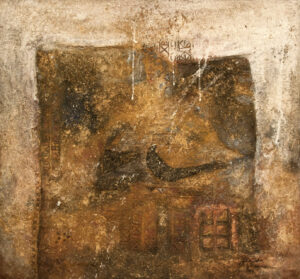
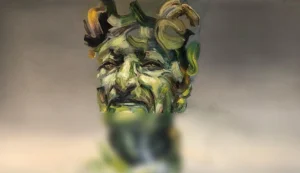
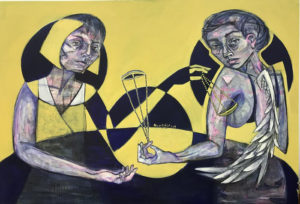
ABDULHAMID ABDALLA • artist
TMR: As an artist from Syria living in Hamburg, Germany, I wonder how you negotiate between your mother tongue and other languages you speak?
I speak Arabic, Kurdish, German, and English. Unfortunately, I no longer speak Armenian fluently. My grandfather was of Armenian origin, and as a child I learned some Armenian from him. After his passing, I no longer had the opportunity to continue speaking the language, and over time I forgot it.
My mother tongue is Kurdish. I began learning Arabic in school in Syria in first grade, when I was six years old. After moving to Germany, I learned German, which has since become an important part of my daily and professional life.
There is a significant difference between each language, even in tone of voice and ways of thinking. Every language carries its own culture, its own emotional rhythm, and its own strength. Sometimes the languages mix naturally, which I find beautiful. Even more beautiful is that speaking multiple languages allows you to build bridges to more people and different worlds.
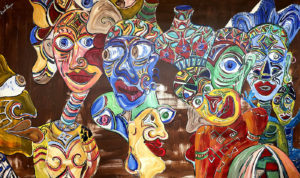
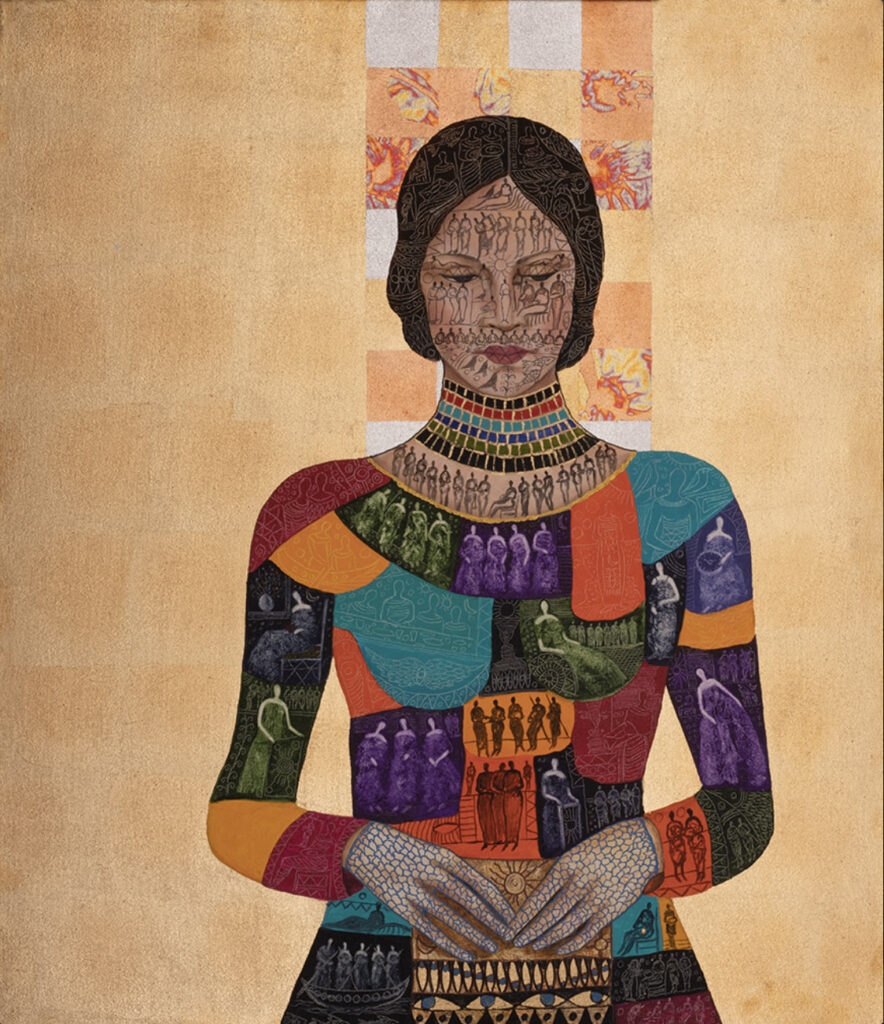
As an artist, I feel that art itself is another language, one that expresses what lies within, beyond spoken words. It is a universal language. Each viewer experiences a painting through their own perspective, which makes art simultaneously personal and collective.
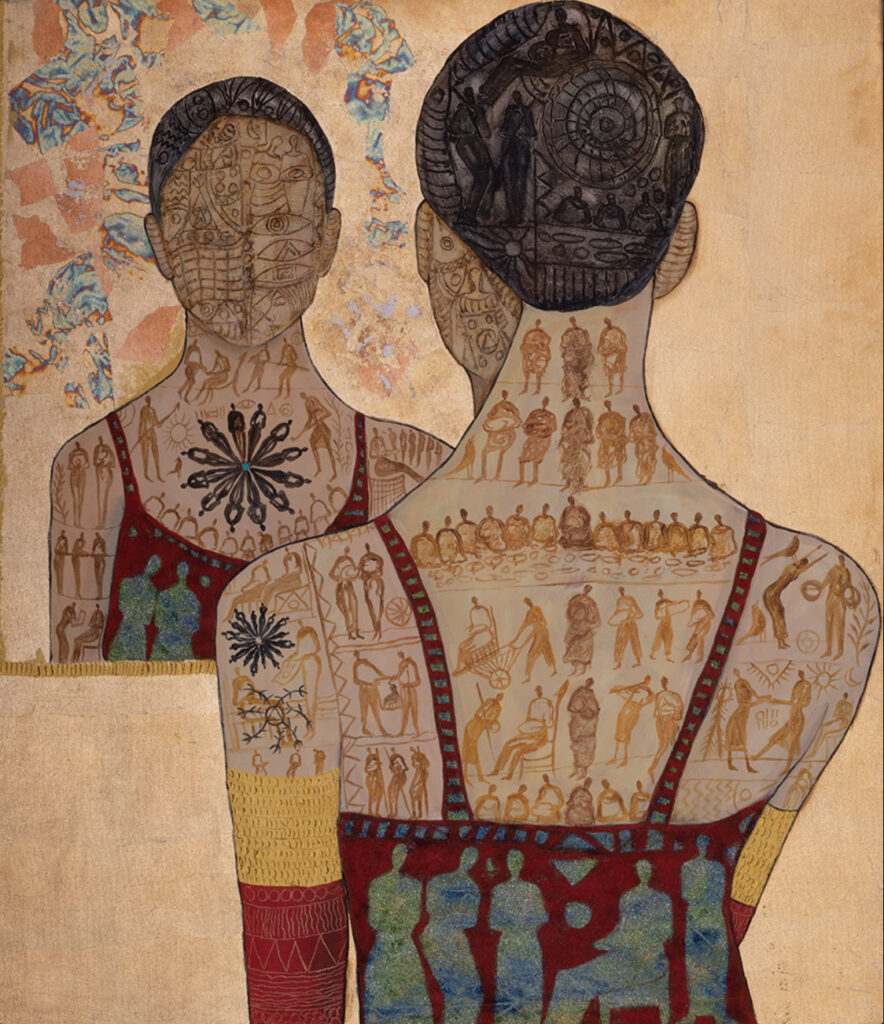
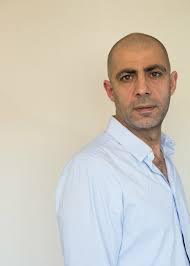 Abdulhamid Abdalla is an Armenian and Kurdish artist born in a village near Al-Hasakah in Syria. He lives and works in Hamburg, Germany. Abdalla discovered art as a form of expression in his childhood, long before he learned the language. It was during this time that he created his first works on clay walls. Later he studied fine arts in Damascus. During his studies, he exhibited his work both nationally and internationally. Abdalla’s artistic development is characterized by an intercultural perspective. Through his art, he aims to build bridges between the individual and society, and between inside and outside. In his practice, he combines precision craftsmanship with conceptual openness. He explores and rethinks the body, identity, and the current social present.
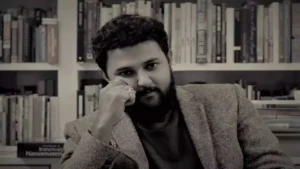
SALAR ABDOH • writer
TMR: At what point did you begin thinking that you were going to become an English-language writer? And what was the evolution from expressing yourself in Persian in Iran, and becoming a fluent English speaker in the US? I’m also wondering about you as a reader. These days, what percentage of the time are you reading in Persian? Speaking in your first language? Is there ever a feeling of dépaysement, of a kind of strangeness, when you’re in Iran, being Iranian and leaving your American self behind? Does that sometimes reverse itself when you’re home in New York, outside of the daily Persian environment, where you feel strange in English?
The evolution was something of a default, I think. I melded linguistically into the geography in which I happened to find myself. I did not think about it, nor did I have much of a choice at the time. It was the same with accents. For instance, when I arrived in the United States from the UK, my entire English came from England, not the US; I had just completed two years of schooling there. For the first year of my life in America, I pretty much spoke with a British accent. Then it faded. As it did, I tried to hold onto it, which was ridiculous.
What this question of accents has revealed for me is interesting. A few hours in the UK, and my accent begins to revert. But it doesn’t stop there. I also lived in the south of the United States as a teenager for a while. In certain situations, places, or conversations, I unconsciously fall into that lingo. It is very strange. When I speak with my Black American sister on the phone or in person, I naturally drift towards her accent. There’s a certain ease in cushioning your speech to match the person. It is, in a sense, a question of degrees of intimacy.
I suppose this mostly happens to someone whose first language was not English but who, during critical and formative periods, happened to live in different linguistic environments. I have a cousin, for example, who has a similar relationship with French, despite never having spoken Persian. They simply grew up in different parts of the Francophone world and adopt the accent wherever they happen to be. Extend this example from accents to the broader question of language, and there you have it. Sometimes one just swims into a language; the river’s there and then there’s the sea. There’s not another sea, just the one you happen to swim into.
Now as a reader, as I have grown older, I have turned more and more to Persian, particularly the classics. Reading them offers a scale of pleasure that simply does not exist in English. It is not English’s fault. Some languages excelled at certain things at certain times. Not all languages are equal. At the same time, trying to write in Persian makes me aware of the monumental breadth of English vocabulary — how varied, immense, and rich it is. Persian simply does not have that. Each language has its own merits.
And yes, I do experience that dépaysement that you speak of. It does, however, quickly resolve itself, because after all, we are used to moving between languages. Especially because in the last decade, I have also devoted a lot of time to the act of translation. When inside the skin of the act of translation, one inhabits a kind of strangeness — though probably a better word than “strangeness” exists for it. And that’s the crux of it: a better word always exists for anything. But in which language? This is the eternal question I’m always asking myself.
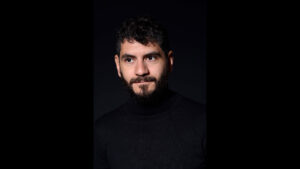
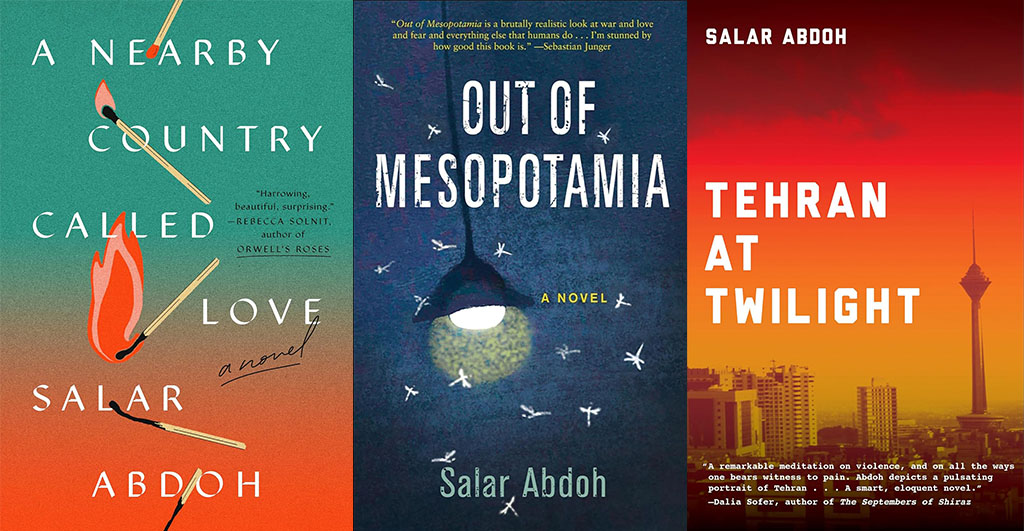
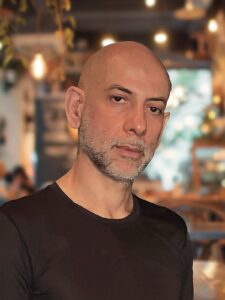 Salar Abdoh is an Iranian novelist, essayist, and translator who divides his time between New York and Tehran. He is the author of the novels Poet Game (2000), Opium (2004), Tehran at Twilight (2014), and Out of Mesopotamia (2020), and the editor of the short story collection Tehran Noir (2014). His latest novel, A Nearby Country Called Love, published in 2023, was described by the New York Times as “a complex portrait of interpersonal relationships in contemporary Iran.” Salar Abdoh also teaches in the graduate program in Creative Writing at the City College of New York at the City University of New York.
LEILA ABOULELA • writer
TMR: I wondered how and when you came to English, and did you start out in life with Arabic as your mother tongue? Do you only write in English, or do you sometimes go back to Arabic? Finally, how has Arabic has influenced the way you write?
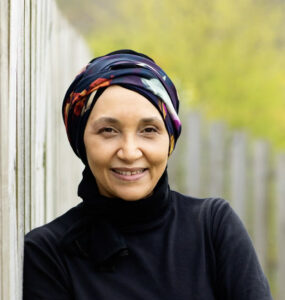
My mother tongue is Egyptian colloquial Arabic, which is a spoken rather than written dialect. Writing in Arabic means writing in classical Arabic. I can easily read classical Arabic, especially Islamic texts, but my writing skills are considerably weaker. This is because throughout my whole education, English was the language I used. So in a way, when I came to writing, there was no choice. It was either English or nothing at all. I have no plans to write in Arabic. I do, however, work very closely with my Arabic translators. I read the translated manuscript thoroughly and then go over it, making extensive changes. I have strong opinions on how I want to sound in Arabic. Sometimes in my own writing, especially with dialogue, I “hear” the characters speak in Arabic and then translate/write their words in English. When working on the Arabic translation, I am very keen to render such dialogue back to how originally I had heard it.
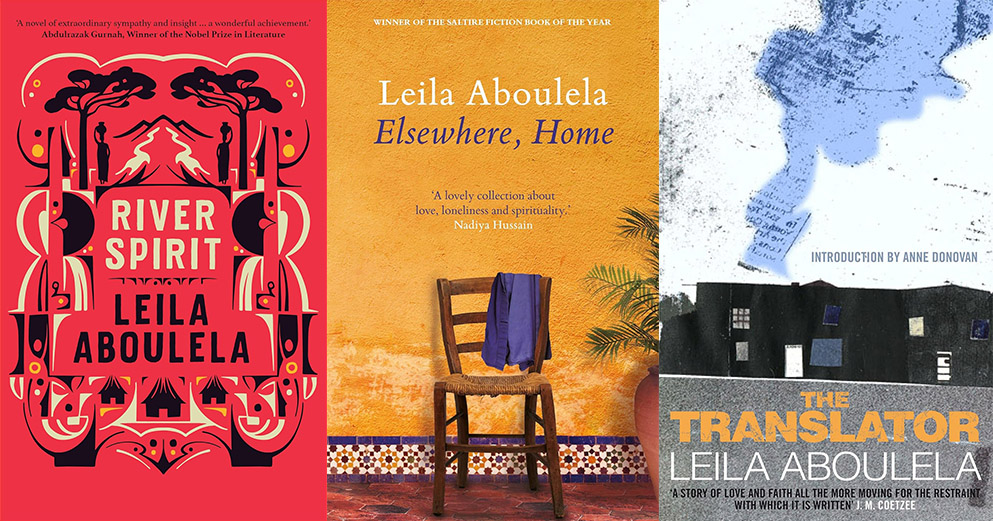
 Leila Aboulela is an award-winning novelist celebrated for her distinctive exploration of identity, migration, and Islamic spirituality. A Fellow of the Royal Society of Literature, Aboulela was awarded the inaugural Caine Prize for African Writing and the PEN Pinter Prize in 2025. Her novels – including Bird Summons, Minaret, The Translator, and The Kindness of Enemies – have been translated into fifteen languages. Aboulela’s most recent works include the novella A New Year, selected as a World Book Night title in 2025, and River Spirit, shortlisted for the HWA Gold Crown Award and named a Best Book of the Year at The Herald and The New York Times. Born and raised in Sudan, Aboulela moved to Scotland in her mid-twenties, where she continues to live and write. Leila Aboulela talks more about these mother tongue issues in The Shallow Tales Review and in an interview with Borders Literature.
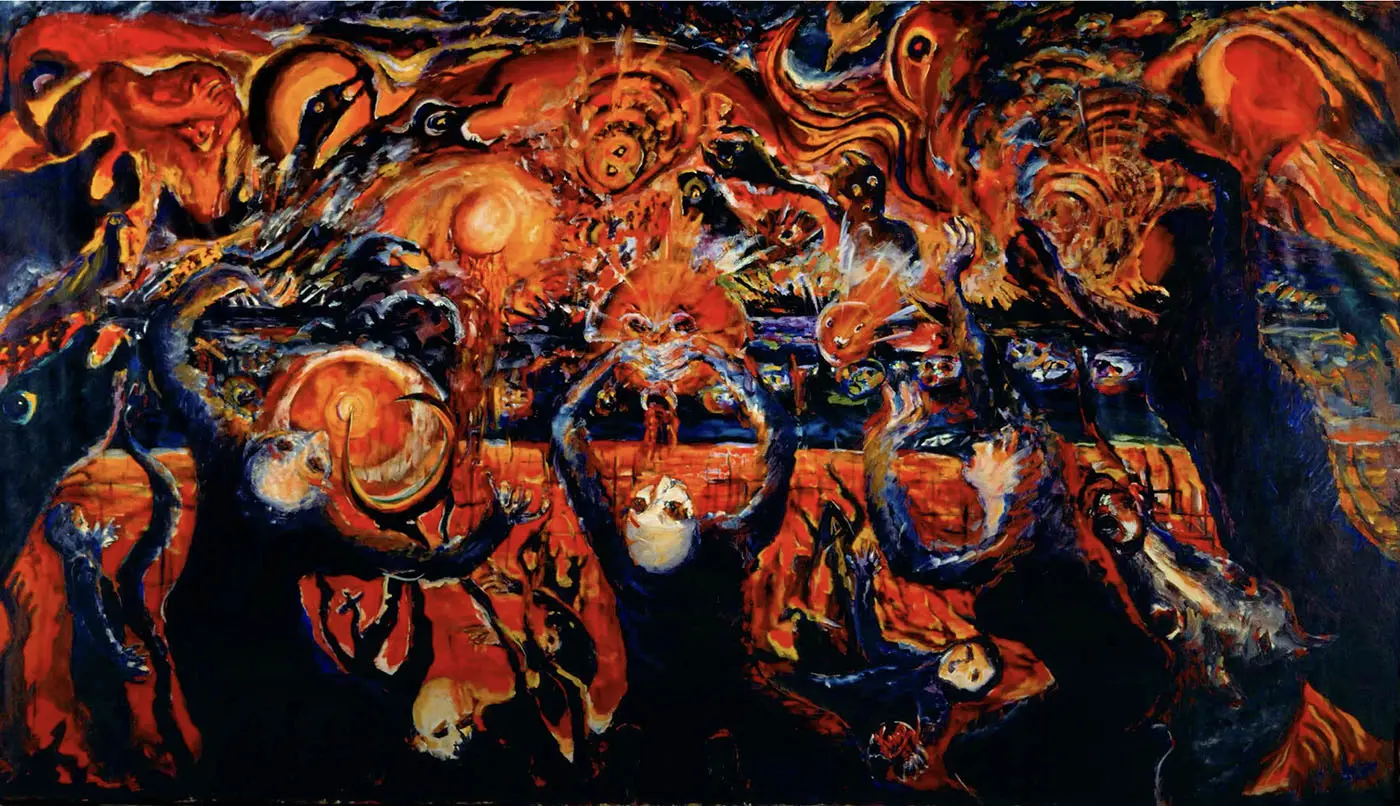
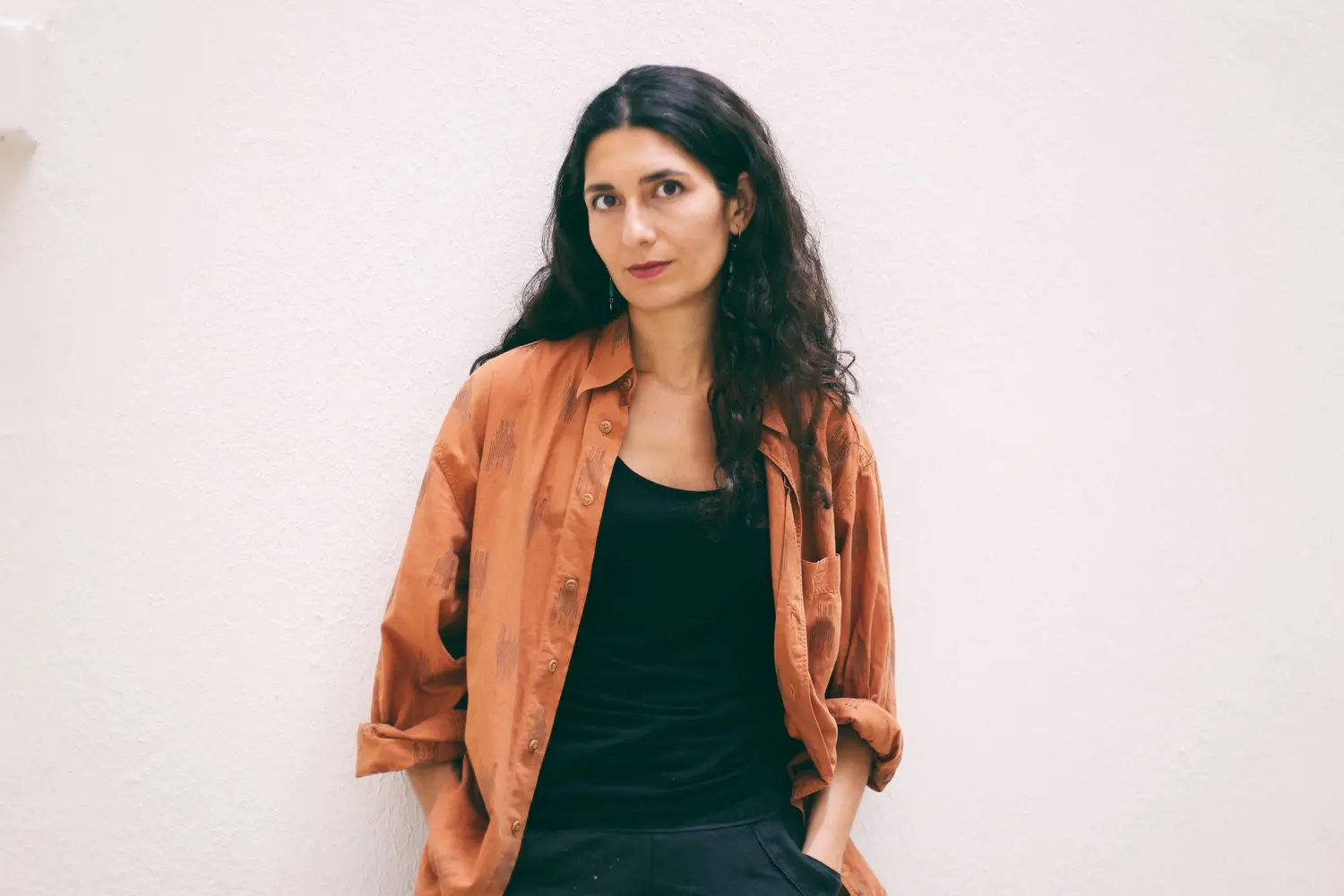
NAKISA BEIGI • artist
TMR: Were you born and raised in Iran? Or were you born in the US? Was Farsi your first language, or did you learn it at the same time as English?
I was born and raised in Iran, and Farsi is my first language. I moved to the United States when I was 29, so I learned English as an adult. That time profoundly shaped my experience. By then, my personality, my education, and even the way I think were already formed in Farsi.
Farsi is the language of my childhood, my family, my emotions. It’s the language I feel in. English is the language I had to grow into (I am still struggling to learn it), the language of school, work, and everyday survival here. Learning it wasn’t just about grammar; it changed how I express myself and sometimes even how confident I feel.
As an artist, I’m very aware of this in-between space. Sometimes I feel like I’m translating not just words, but parts of myself. There are things that feel fuller and more emotional in Farsi, and things that feel clearer or more analytical in English. Living between the two has shaped my identity in a complicated but meaningful way. Leaving Iran didn’t take my identity away, but it did stretch it. Now I feel like I carry both languages inside me. That tension and that connection often shows up in my work.
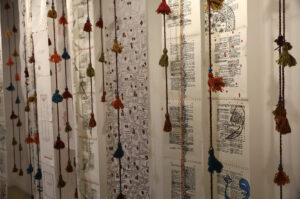
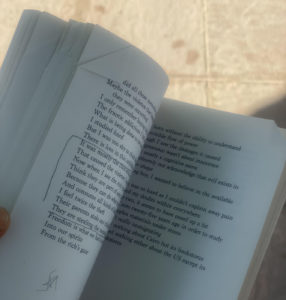
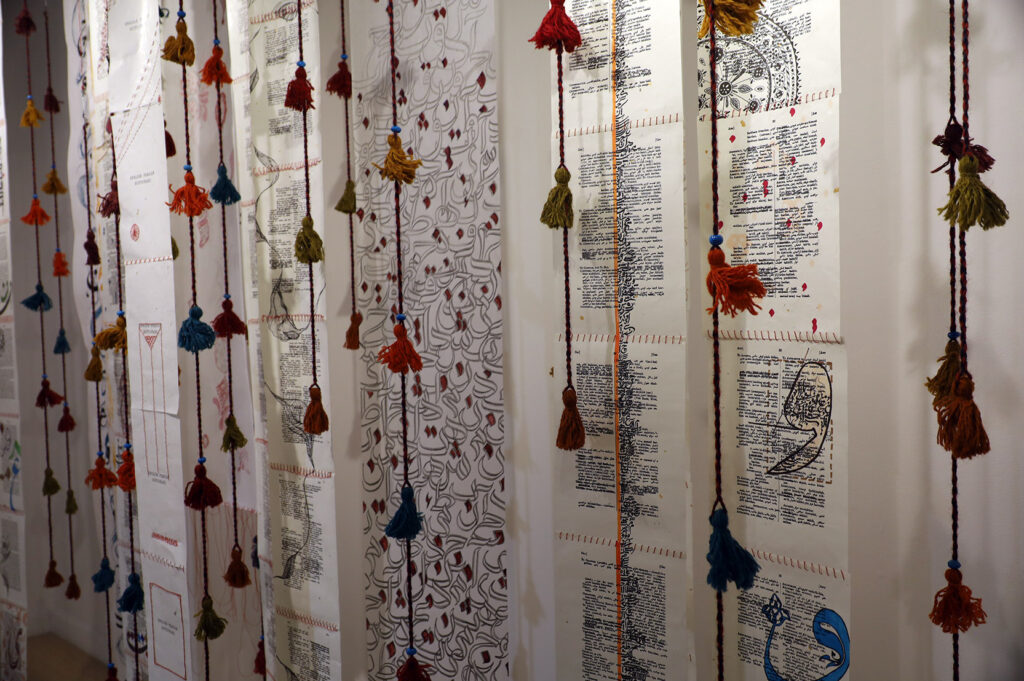
In my exhibition Mother Tongue, with marker and ink on dictionary pages, I explore the emotional terrain of immigration through language — both as a bridge and a barrier. By drawing directly onto dictionary pages, I highlight the tension between words acquired and words forgotten, between translation and silence. The dictionary, a tool for learning and assimilation, becomes a symbolic ground where identity is negotiated through borrowed vocabulary.
Themes of homesickness, isolation, and longing for belonging are embedded in each mark. The work invites viewers to reflect on how language shapes memory, identity, and our understanding of home. For me, Mother Tongue functions as both a personal meditation and an open conversation about cultural displacement and the fragile space between languages.
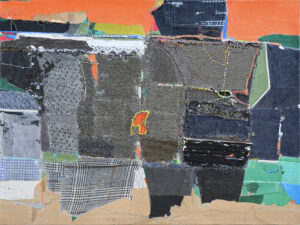
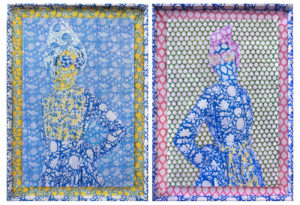
 Nakisa Beigi is an artist who lives in South Carolina. Her work explores community, history, and storytelling, engaging viewers through collaborative processes and the use of tactile materials. Deeply inspired by traditions, Beigi sees art as a transformative force that bridges cultural divides, connecting individuals across time and space through the sharing of personal and collective narratives. This notion of art as a communal experience is central to her practice, where participants are invited to contribute to the creation of artworks by stitching together fragments of their own stories. At the heart of her approach is a commitment to the idea that art is not only an object but a social process — a tool for creating dialogue and forging connections between people.
RAAZA JAMSHED • writer and editor
TMR: I’m curious about your relationship between Urdu and English, and how Arabic fits in. Is Urdu your first language, and does it live comfortably alongside English? There are many connections, of course, between Urdu and Arabic and so I’m wondering how you negotiate your identity as a writer and editor, between these three languages.
Regarding mother tongue, Urdu, alongside Punjabi, is mine. English is the colonizer’s language in Pakistan, taught at a very early age, and still treated like a trophy. Arabic is the language of the sacred, and I learned it in Pakistan first, and then in Malaysia, where I lived for six years. For me, all four languages live beside one another with ease. I’ve often said I love in English—it’s the language I share with my husband and children—weep in Urdu, and pray in Arabic. But lately, I find myself returning to Urdu in moments of rage, and when I want to utter something scathing, Urdu slips out of my mouth. It never lands in my current circumstances because no one around me shares the language; I’ve been thinking a lot about how distance from one’s mother tongue risks making one feel defanged. Ha!
This perhaps is the topic of a book, or a whole series! Though I write primarily in English, it’s always laced unapologetically with Urdu and Arabic. I think of myself as a multilingual writer for that reason. I find it extremely important that readers enter the world the writer inhabits rather than the writer performing a different one for the sake of readability. I think that thought fuels both my writing life and my editorial practice.
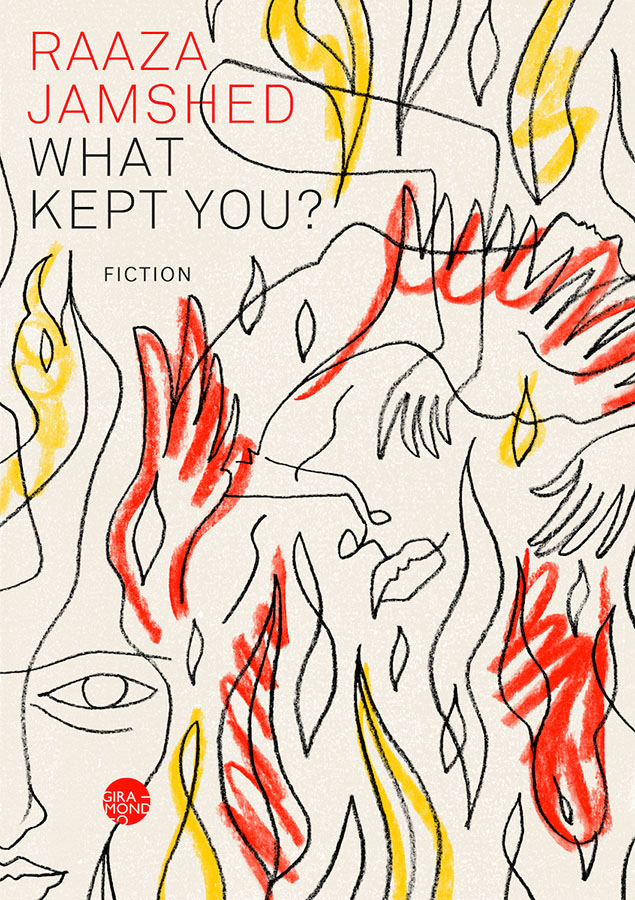
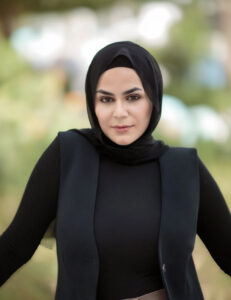 Raaza Jamshed is the Editor-in-Chief of Guernica. Born and raised in Pakistan, she has lived in Australia and Lebanon. She holds a Doctor of Creative Arts from Western Sydney University. Her debut novel, What Kept You?, was released by Giramondo in July 2025 in Australia and New Zealand. @raazajamshed
Raaza Jamshed further reflects on mother tongue issues in Liminal Magazine and Guernica.
AHMED MASOUD • writer
TMR: You’re from Gaza, but you live in the UK and you’re known for your work in English.
I studied English literature in Gaza, so I was always writing in English. I wrote very few things in Arabic, a couple of poems and a play, but nothing significant. Arabic is my mother tongue and it is so beautiful. I have so much respect for it, and I love to read it, but I wouldn’t be able to do it justice.
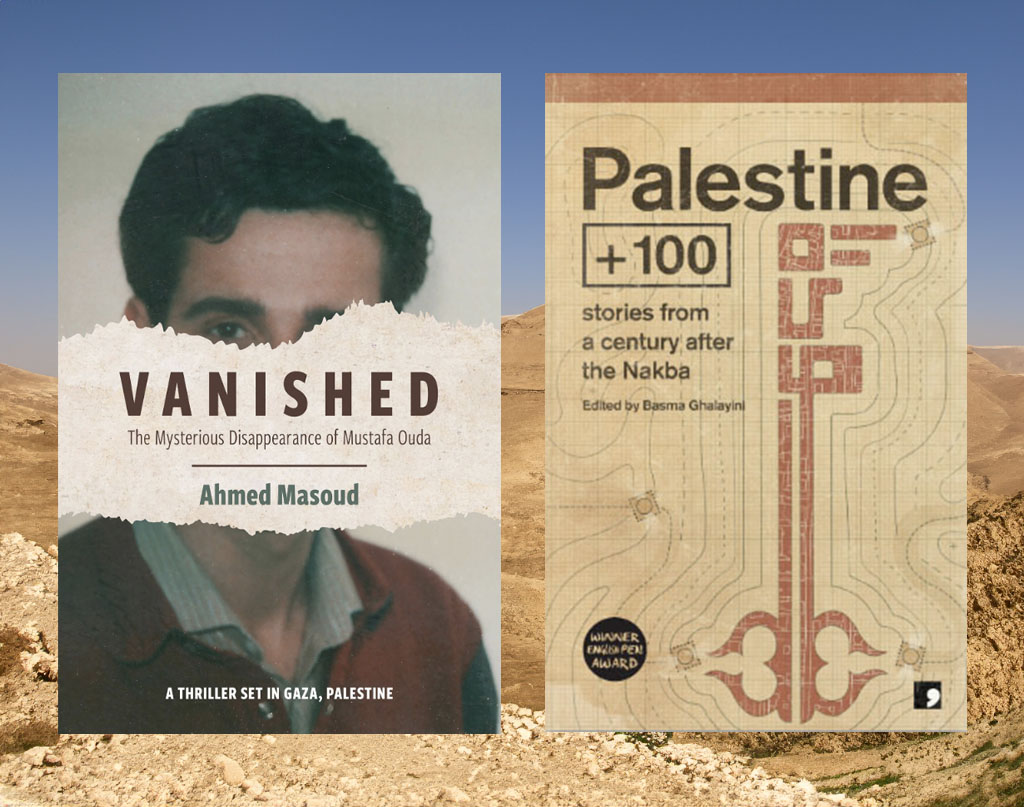
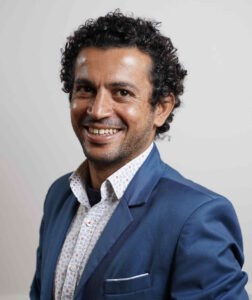 Ahmed Masoud is a writer and theatre director who grew up in Palestine and moved to the UK in 2002. His debut novel Vanished: The Mysterious Disappearance of Mustafa Ouda won the Muslim Writers Award. His theatre credits include The Shroud Maker, Camouflage, Walaa, Loyalty, Go to Gaza, Drink the Sea, and Escape from Gaza. His family is originally from Dayr Sunayd. His fiction appears in the anthologies Palestine +100 from Comma Press and in Sumūd: A New Palestinian Reader from Seven Stories.
NOUR SALAMÉ • publisher
TMR: Excuse me for not knowing your back story, Nour. I wondered how and when you came to English? Did you start out in life with Arabic as your mother tongue? You turned to French as a result of the Lebanese civil war. How does English fit it in?
As a Lebanese born in 1978 during the civil war, I lived in Lebanon until the age of eight, shaped by the languages that filled Beirut at the time. Arabic was the language of home and school. French was equally present at home and in the classroom. English echoed in our daily lives. Egyptian Arabic came gently through my nanny’s voice.
When we were forced to leave Lebanon for France, Paris became home. French grew into my most fluent language. Yet I never stopped studying Arabic. Every Saturday morning, like a quiet ritual, I attended Arabic classes, which allowed me to remain fluent in both languages. English followed closely, strengthened when I returned to Lebanon in 1993 to study at a bilingual Franco-Arabic school, and later pursued my university education exclusively in English at the American University of Beirut.
My life has unfolded between Paris and Beirut, moving back and forth according to the tremors of history.
So I cannot say with certainty what my mother tongue is. It is Arabic. It is French. It is English. It is, perhaps, what many of us are in this troubled part of the world: suspended between languages, always slightly lost in translation.
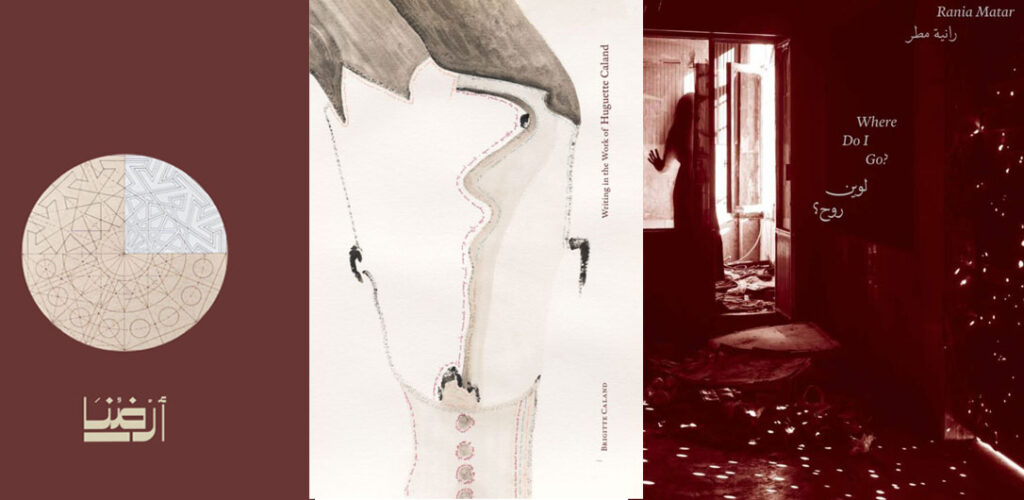
Nour Salamé is a publisher, editor, and writer. She is the founder of Kaph Books in Beirut, one of the Arab world’s leading houses for fine arts and photography books, but also poetry.
JANA TRABOULSI • artist designer
TMR: Can you talk about how you lost and recovered your native Arabic?
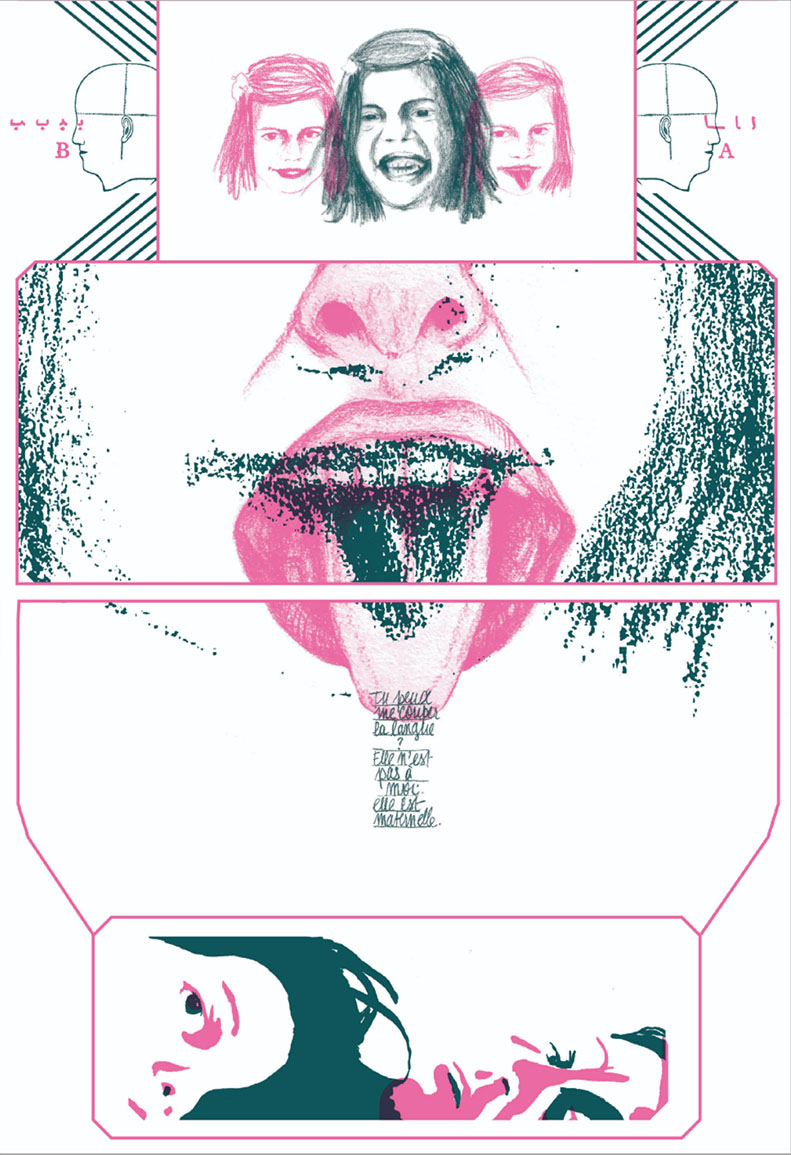
It was in kindergarten in Paris that I lost my mother tongue (école maternelle, mother tongue: langue maternelle). We had left Beirut, it was 1982 during the Israeli siege. Because the other kids would not play with me, I let go of that mother tongue, Arabic, for another one: French. I must have been five or six when Isabelle’s mother called my mom to tell her that I was a liar, that I went around saying I was French. My mother answered that all children lie, and if it makes me feel better to say that, it was none of her business. I later cut off that mother tongue. Which one, then, is my mother tongue?
My mother’s mother tongue, French, is a language she speaks with an accent. It is not the language of her country, nor the language she used to speak at home, nor her own mother’s language. It was the one she was taught at the Catholic boarding school she attended in Beirut.
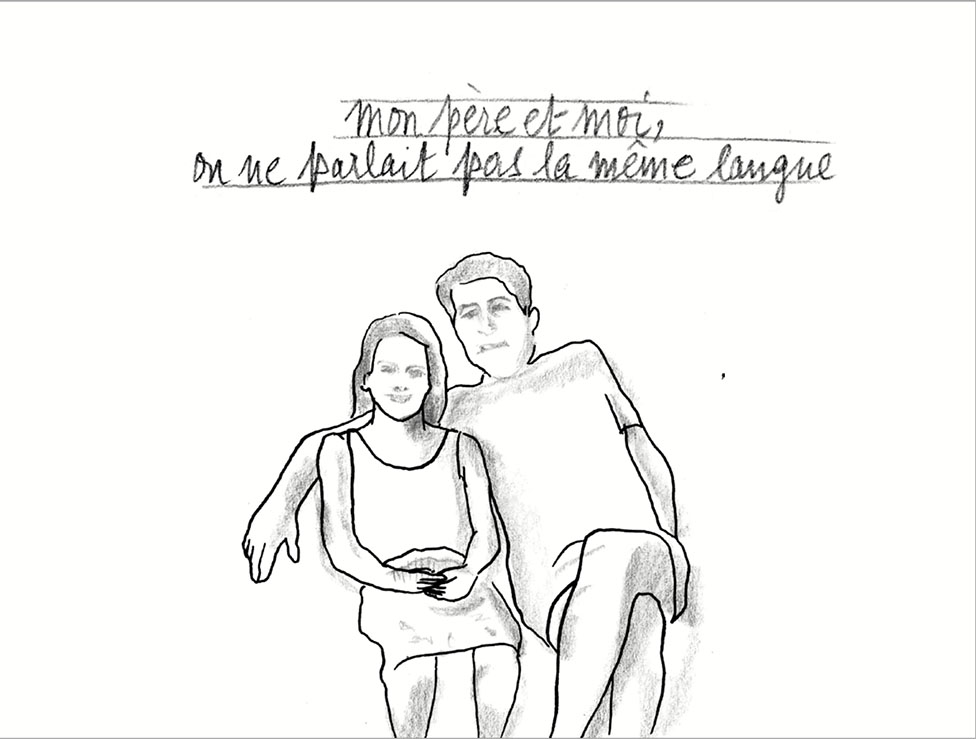
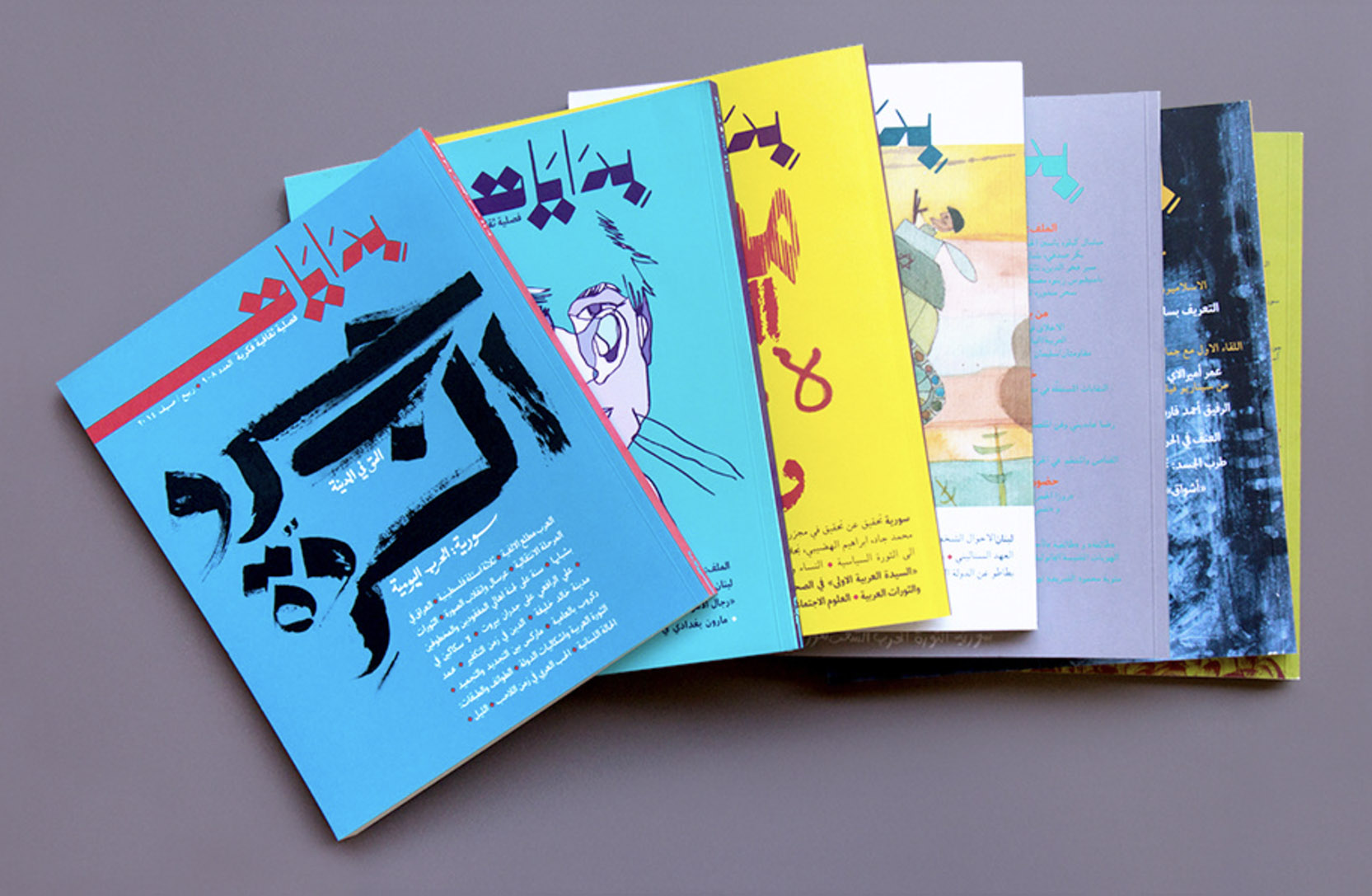
I refused to speak Arabic, and when my father joined us in France after a few years, he and I did not speak the same language. He eventually learned French, and I had to return to Arabic in 1993, at the end of the war when we moved back to Beirut. Over the years, I moved from not speaking a word to becoming a designer who almost only works with Arabic. I made friends and had boyfriends whose first language was Arabic. I slowly built a relationship with music, and also with calligraphy and design, my profession. I drew in the newspaper and for children’s books, and then designed books and worked in publishing, and art directed a magazine, and had friends, family, and lovers help me translate, or re-word or understand Arabic. I had existential questions about my identity, and some more professional questions about what it means to draw in Arabic. During those years, English had also become the language I studied and taught at university.
I also made a detour into Spanish and learned it in a few years, mainly because of long repeated stays in South America and Spain. Throughout all of this, Arabic remained blocked, as I struggled with not being fluent in the language that was my own. And still, I struggle with reading and do not dare write. I can now say that I had Arabic adopt me so I can call it a mother tongue. It remains an intense and complex relationship, as it often is with mothers.
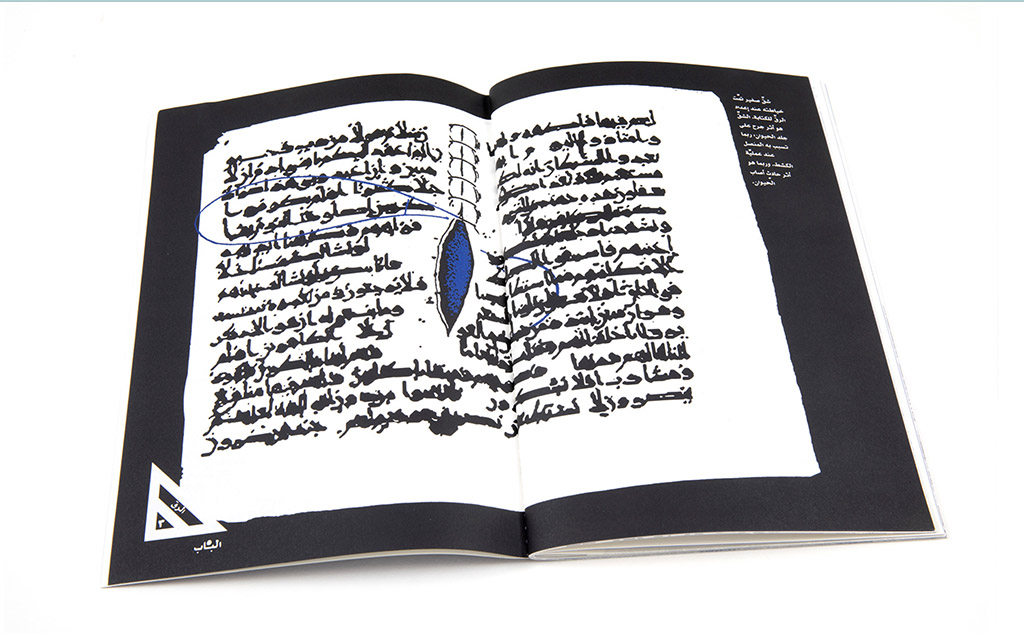
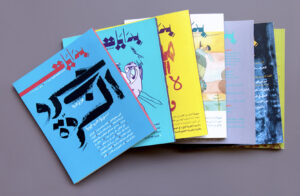
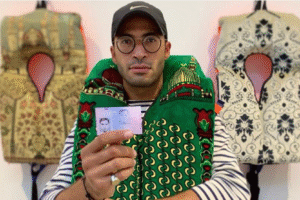
 Jana Traboulsi is a visual artist, graphic designer, and academic. She created Kitab Al Hawamesh (The Book of Margins) which uses graphics, illustration, and text to retell stories of the history of Arabic book arts. She also created Lengua Fantasma which talks about the amputation of her mother tongue (Arabic) through a series of illustrated narratives in limited edition riso printed poster formats — some are childhood stories of her relation to languages when her family left Lebanon for France in 1982. Others are etymological and linguistic graphic games between French, Arabic, English, and Spanish. She is the co-founder and creative director of the pan-Arab quarterly Bidayat and artistic director of Snoubar Bayrout Publishing House. She is an assistant professor at the American University of Beirut.