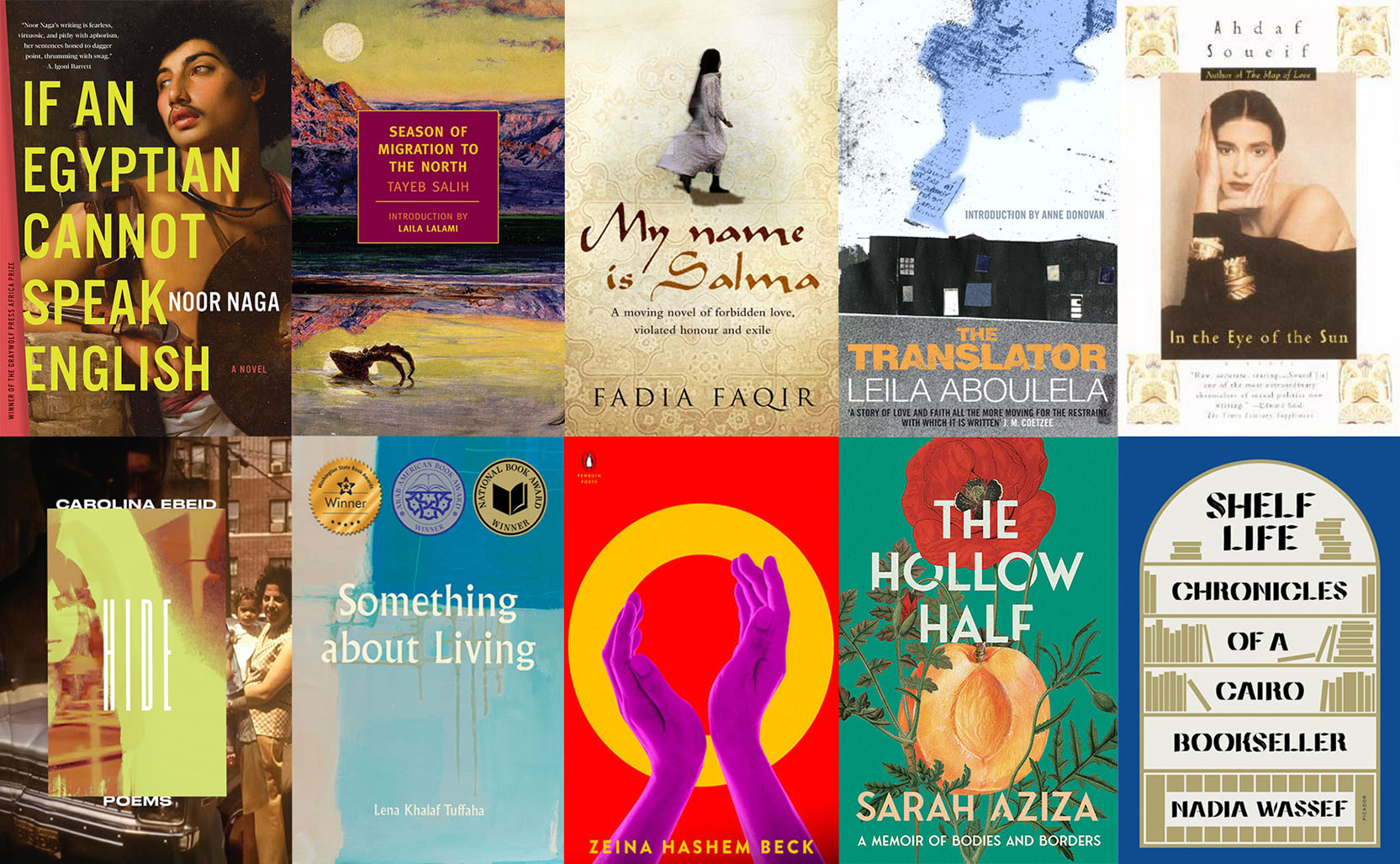
A curated collection of books that explore how our language shapes who we are and how we connect with the world.
FICTION:
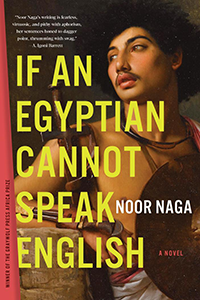
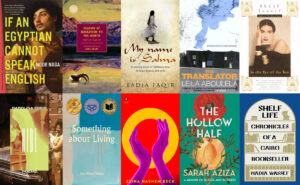
If an Egyptian Cannot Speak English by Noor Naga, Graywolf Press, 2022
Winner of the Graywolf Press African Fiction Prize and the 2023 Arab American Book Award for Fiction, this novel by Egyptian writer Noor Naga is a dark romance set in Cairo after the 2011 Egyptian Revolution. The novel centers on two unnamed Egyptians who begin a relationship in a country where those who speak English are seen as cosmopolitan or modern, whereas those who, by contrast, speak Arabic are made to feel less valuable and less globally relevant. As language creates division between the two lovers, the novel questions what all this means for Egypt’s future.
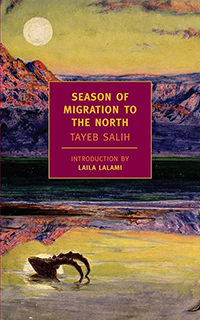
Season of Migration to the North by Tayib Saleh, translated by Denys Johnson-Davies, NYRB Classics, 2009
First published in 1969, this brilliant novel brings into focus a Sudanese student’s affairs with women obsessed with the “mysterious” East. Here the protagonist moves between linguistic worlds, and language stands as a metaphor for colonial power, masculinity, and fractured identity — and what it means to “think” and “exist” between Arabic and English. In 2001, Season of Migration to the North was selected by the Arab Literary Academy in Damascus as the most important Arab novel of the twentieth century.
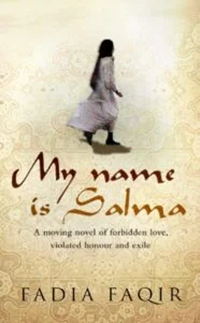
My Name is Salma by Fadia Faqir, Doubleday, 2007
This novel, published as The Cry of the Dove in the US, narrates the story of a Jordanian Bedouin refugee named Salma, living in the UK. As she adjusts to her new surroundings, she is haunted by the reason she had to flee her home country, and longs for the child forcibly taken from her at birth, all while she hatches a plan to return. The writer allows her readers to explore untranslated words, particularly through dialogue that immerses them in the linguistic interplay between East and West.
The Translator by Leila Aboulela, Grove Press, 2006
Praised for its authenticity, its nuanced portrayal of Islam, and exploration of both Sudanese and Scottish temperaments, The Translator by Sudanese writer Aboulela unfurls from the perspective of Sammar, a widowed mother living in Scotland, who falls in love with Rae, a Scottish Islamic scholar, at the university where she works as a translator. Despite her work, Sammar feels disconnected from “practical” English. For her, Arabic is the language of her faith and her memory, and where her sense of identity lies. As the couple falls in love, the novel shows that while love can bring different people together, a relationship can only succeed when a space is made for differences; that mother tongue is not just what we were raised to speak, but also how we understand ourselves.
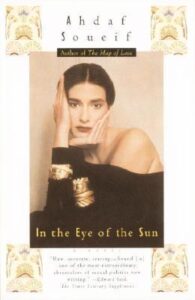 In the Eye of the Sun by Ahdaf Soueif, Knopf, 2000
Set amid the turmoil of contemporary Middle Eastern politics, this highly acclaimed novel by Egyptian journalist and novelist Ahdaf Soueif is an intimate look at the lives of Arab women and provides important context on the Third and Fourth Arab-Israeli wars, and the rise of Islamism. Asya is an Egyptian woman who studies English and later moves to England to pursue an affair with an Englishman. As she gradually loses touch with her mother tongue, she unravels amid cultural hybridity and displacement.
POETRY
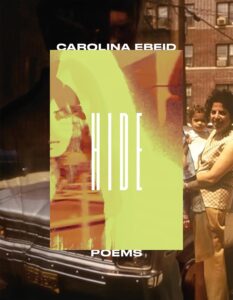 Hide by Carolina Ebeid, Graywolf Press, 2026
Hide is a restless innovation of form and multimodal expression breaking open words across Arabic, English, and Spanish to release hidden meanings. Poems trace the letter M back to the Phoenician pictograph of waves, while technological “glitches” are portals that summon oracular voices across the family archive. In swirling “spell” poems, Ebeid conjures Cuban American artist Ana Mendieta, whose Siluetas write the human shape upon the earth.
Ebeid’s title is prismatic: Hide as in concealment, as in animal skin, as in to secret oneself away. Hide commands attention like a whispering voice, prompting readers to lean in, to listen for transmissions from ancestors and futurity both.
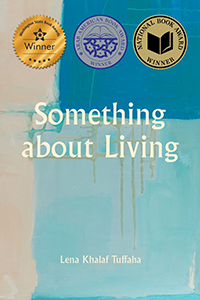 Something About Living by Lena Khalaf Tuffaha, University of Akron Press, 2024
Poet, essayist, and translator Lena Khalaf Tuffaha’s award-winning third collection explores Palestinian life through the lens of language, revealing a legacy of obfuscation and erasure. Tuffaha conveys how her poetry can feel like a battleground in which, as a Palestinian American who engages with English, the dominant language, she addresses the personal and political challenges of living in the margins as a Palestinian, particularly in the aftermath of October 7. What happens when language only permits ongoing disasters to be packaged neatly for consumption and subsequent disposal? And yet, despite the shattering pain in the verses, also lies a message that hope, even love, can (and should), in acts of defiance, survive the violence.
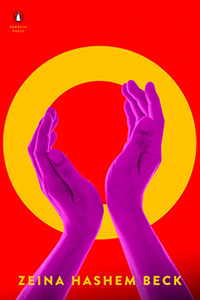
O by Zeina Hashem Beck, Penguin, 2022
Lebanese American Zeina Hashem Beck appears intent on exploring one central question: Can one fully express oneself in a language that is not one’s first? From lyrics and triptychs to ghazals and her own duets, in which English and Arabic echo and contradict each other, it appears that writing in English for Zeina is both empowering and slightly displacing. Living outside of Lebanon, Beck frequently explores homesickness, war and memory, and distance from homeland using code-switching (Arabic and English in the same text) to demonstrate her bilingual identity. O explores the limits of language, notions of home and exile, and stirring visions of motherhood, memory, and faith.
NON FICTION
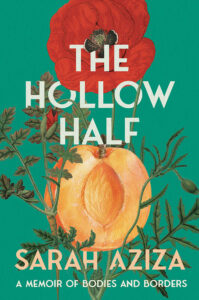 The Hollow Half by Sarah Aziza, Catapult, 2025
In October 2019, Palestinian American writer, translator, and artist Sarah Aziza, daughter and granddaughter of Gazan refugees, is narrowly saved after being hospitalized for an eating disorder. Embarking on a long path of therapy, she comes to the realization that explores how her trauma and anorexia were the result of a disconnection from her Palestinian identity and family history while growing up in the US, where “like Palestine, Arabic was delineated, secondary, subset.” Perfect for fans of Ocean Vuong’s On Earth We’re Briefly Gorgeous.
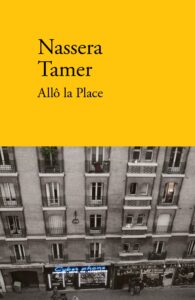 Allô la Place (Hello Place) by Nassera Tamer, Verdier, 2025
“For a long time, Arabic was associated with bitterness for me. I rejected it with my whole being, and it returns to me in waves. I never truly lost it, and I find it hard to believe that one can lose a language. I live in the language of my parents as it lives in me.” This chimera-language, with which the narrator tries to reconnect, is Darija, aka Moroccan Arabic. Away from her parents, the author searches for her mother tongue: she hangs out in Parisian phone booths, on the street, on public transport, and takes courses at the Arab World Institute. Ultimately, she forms an online linguistic connection with Mer, who lives in Morocco. From Paris to Le Havre, from Casablanca to Toronto, emotional and cultural threads are woven, unraveled, and then rewoven.
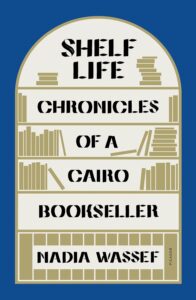 Shelf Life: Chronicles of a Cairo Bookseller by Nadia Wassef, Farrar, Straus & Girroux, 2021
In 2002, Nadia Wassef co-founded Diwan, a bookstore that sold English and Arabic titles, in a postcolonial Cairo in which English dominated the intellectual and commercial spaces. Raised in an educated, upper middle-class family in Cairo, Wassef became multilingual through private schooling, which lent her a certain degree of access to social power and privilege. Embracing both linguistic spaces, Diwan’s objective was to promote Arabic literature, make reading accessible, and create a space for all Egyptian voices. Wassef details the business’s evolution over her fourteen years running it, from an audacious dream to the national success and household name it remains today, with several locations operating across Egypt. The memoir also explores publishing (Egyptian and global), the movement of ideas across languages, and whether global (often English-language) literature overshadows local tongues.