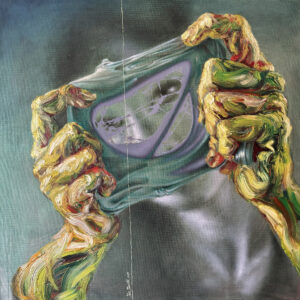
With Pharmakon State, Syrian artists attempted to reclaim a scarred past. Months later, as instability ripples again though the country, their gesture looks more precarious — proof of how fragile cultural revival remains.
The floor still remembers. It remembers the stomping boots, the confessions whispered beneath flickering fluorescent lights, and the silence — not of peace, but of pressure. Now, that same floor bears something else: art. Fragile. Furious. Unflinching.
In Pharmakon State, the past isn’t cleaned up — it’s carved into. This is no white cube. It is a decommissioned narcotics control center in Jaramana, a suburb of Damascus. Once a detention site, its rusted cells and scorched walls held bodies deemed disposable. But between April and July 2025, those rooms carried installations, sculptures, and testimonies — traces of resistance that don’t erase what happened here, but instead ask: What happens after the collapse, when even the ruin has stories to tell?
“We didn’t change the space,” says curator Khaled Barakeh. “We exposed it.” The rust remains. The echo of keys. The architecture of punishment. “We chose not to cover the wound but to work inside it.”
The exhibition, organized by the Jaramana-based grassroots collective Tarakum in collaboration with Barakeh’s Shared Cultural Spaces, assembled works by more than 40 Syrian artists. The title draws from the Greek word pharmakon, meaning both “poison” and “remedy” — a fitting paradox in a country where addiction has become currency, weapon, and symptom of systemic breakdown.
As we moved from room to room, the building itself began to feel complicit — less a backdrop and more an accomplice.
Rather than illustrating the crisis, the artists here performed a kind of diagnosis: of captivity, trauma, dependency, and survival. “We asked them to confront the contradictions of the pharmakon,” Barakeh says. “The drug and the system. The body and the state. The stimulant and the sedative.”
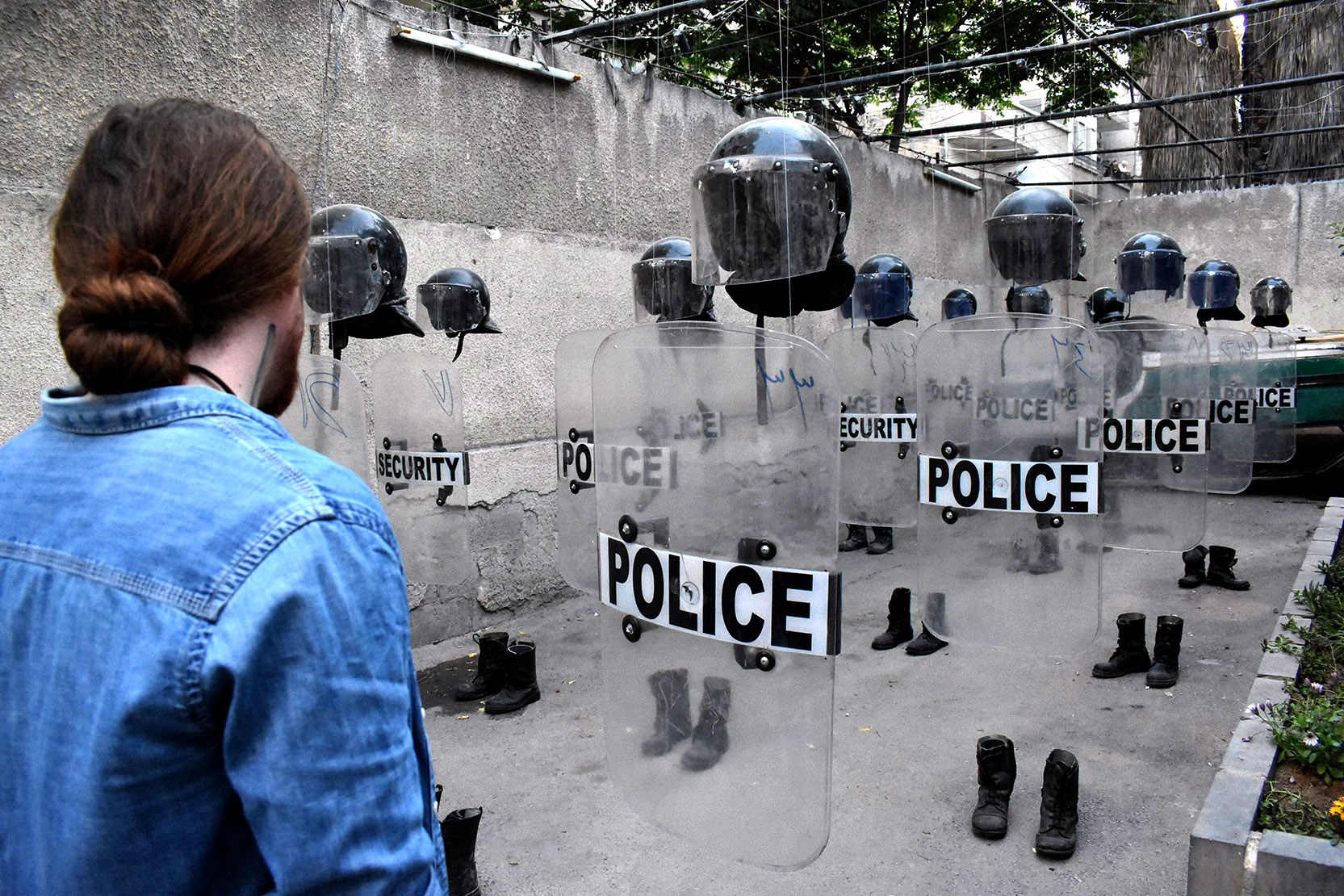
That diagnosis begins not with spectacle, but with trace. The viewer steps before a row of abandoned boots and riot gear: remnants of the security forces that once operated in this space. There is no explanatory plaque, no velvet rope to separate these objects from the present. They are not props; they’re residues — unmistakable evidence of control, left exactly as it was found.
From that point on, the exhibition unfolds like a nervous system jolted by electricity. Each work doesn’t merely speak — it convulses, responds, remembers. Suspended in mid-air, the scorched, twisted forms of “Remnants of Iron” evoke bodies caught in the aftermath of violence — no longer whole, yet not entirely erased. Nour Alkhateeb’s installation conjures a haunting choreography of wire figures that dangle in dim light, their shadows trembling against the wall like echoes of pain. These are not representations of torture, but remnants of flesh and memory contorted into fragile, defiant shapes.
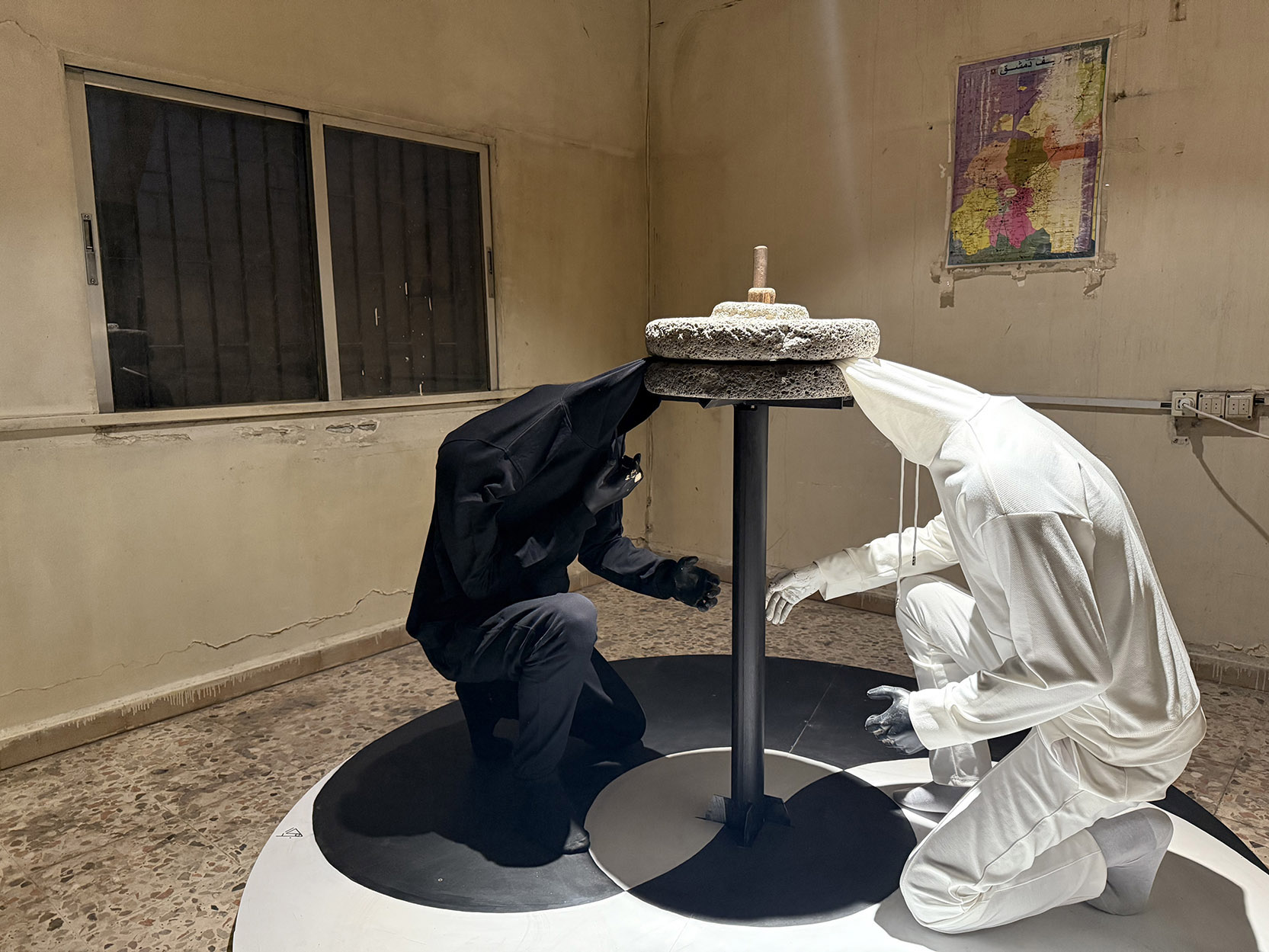 Majed Al Atrash, “Imprisonment,” fabric and plastic, 2025 (courtesy of the artist).
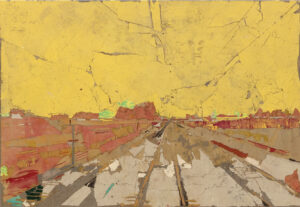
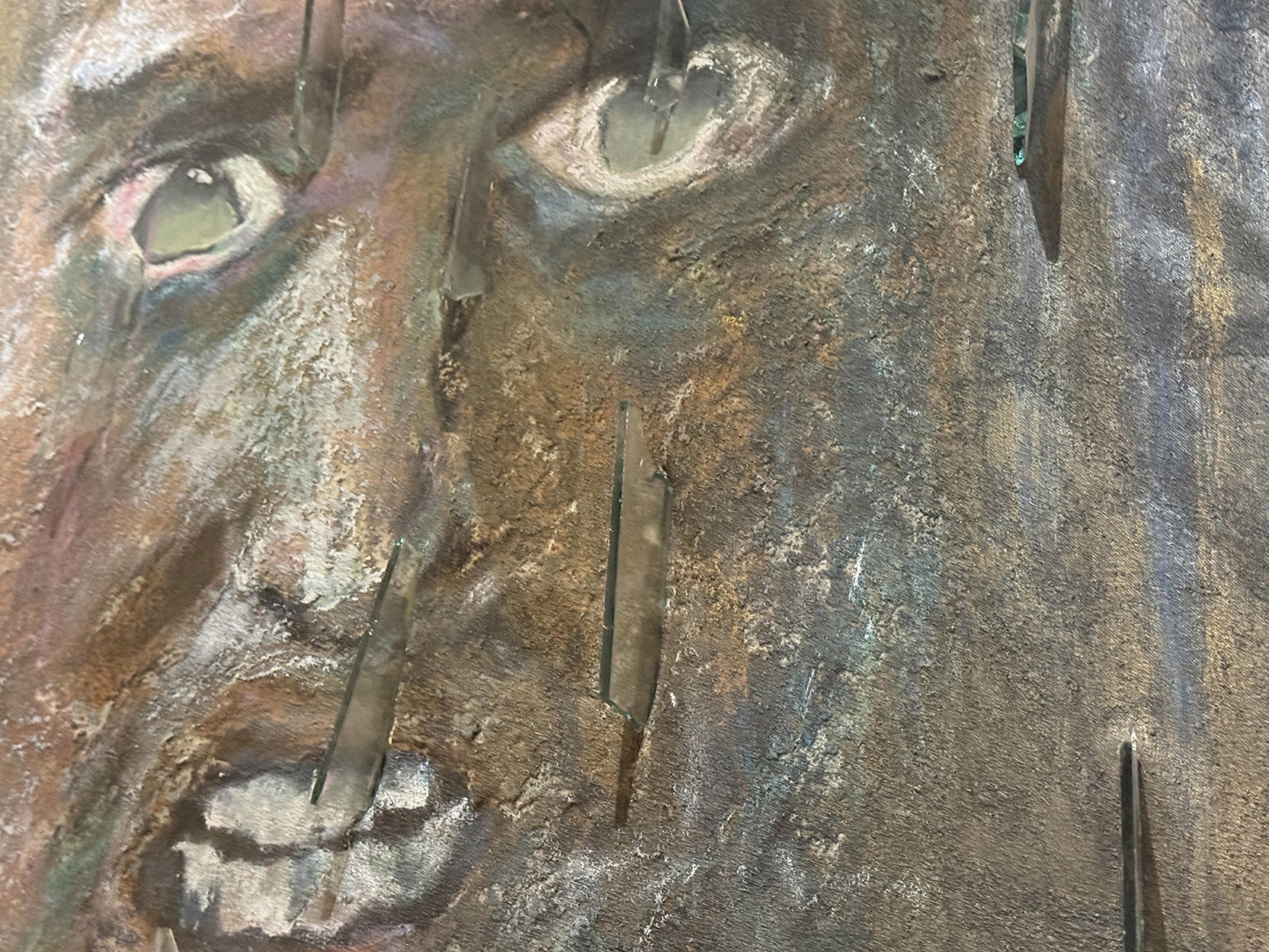 Aida Hindi, “Prisoner,” paint and glass pieces, 2025 (courtesy of the artist).
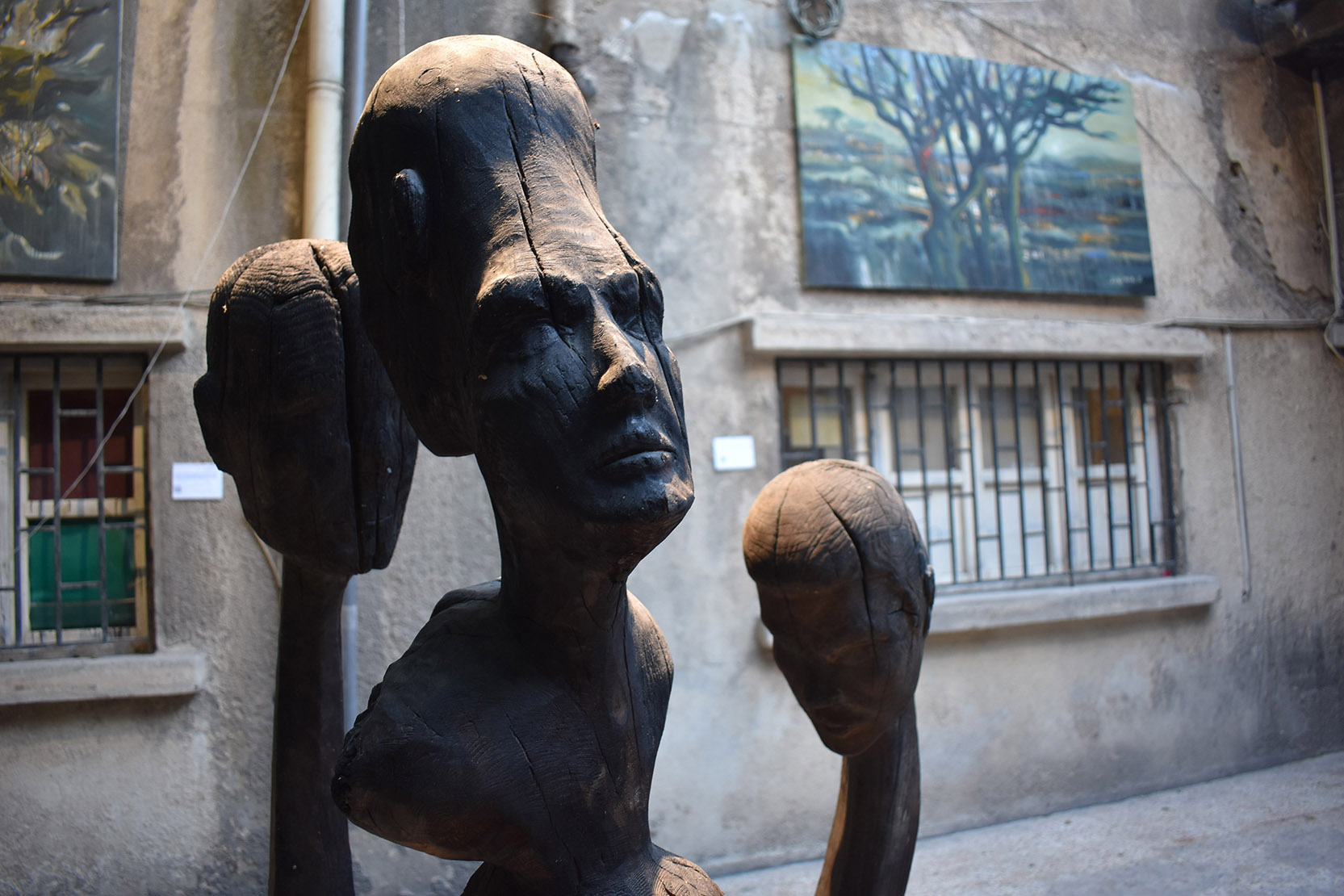 Rabee Khalil, “Matchstick,” wood, 2025 (courtesy of the artist).
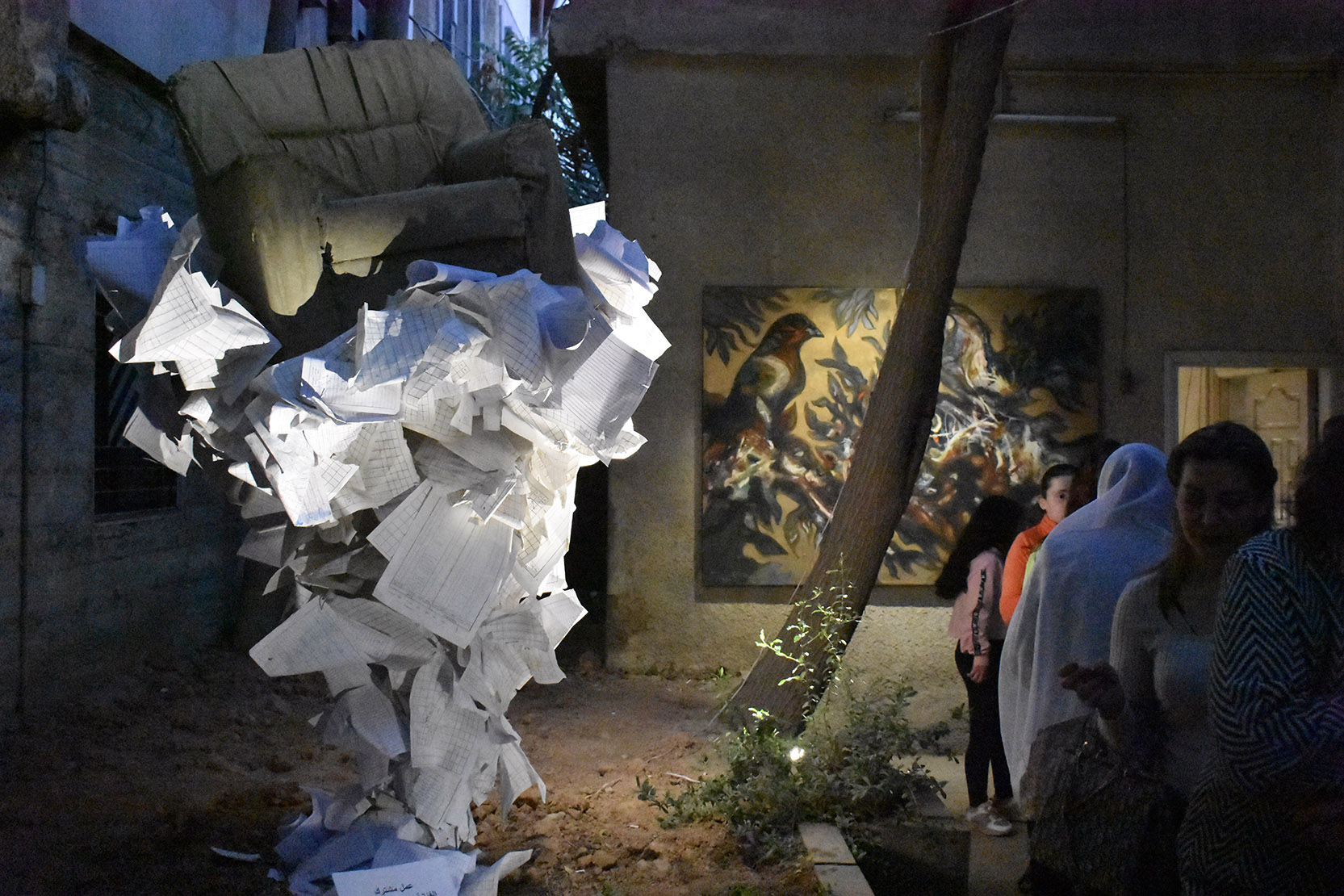 Nada Aql, Report, 2025 (A branch-chief’s chair coated with cement, accompanied by report papers sourced from the same place where the work was exhibited (the former Narcotics Control Center).
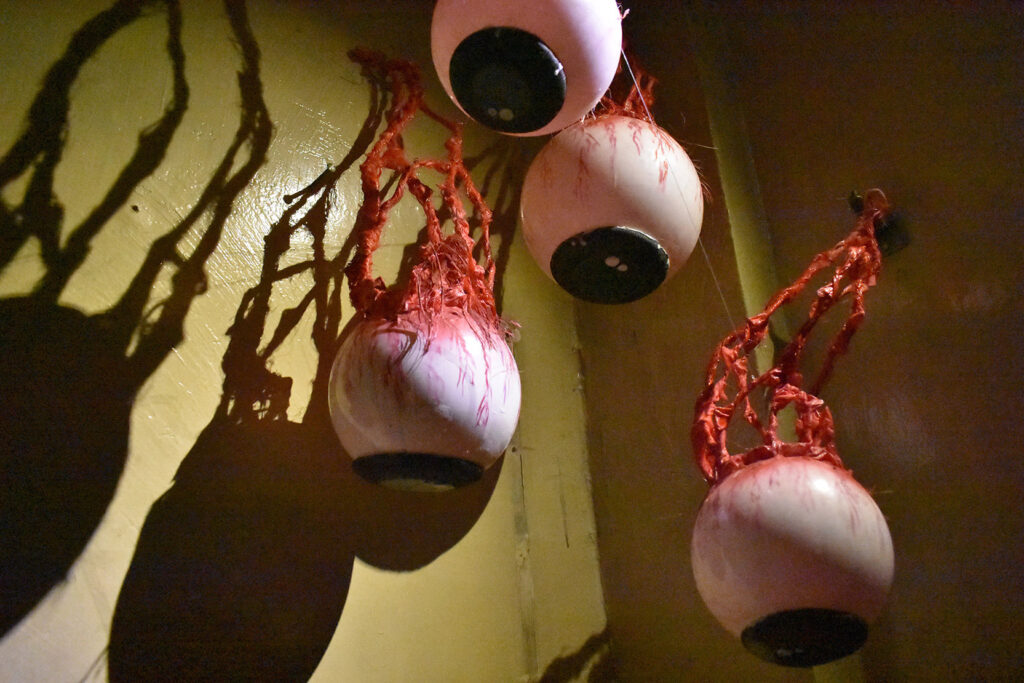
Not far away, the grotesquely oversized eyeballs of Dareen Al-Hallaq’s “The Eyes from the Depths of Darkness and Time” hang from red cords like severed nerves. Their shadows stretch across the wall like interrogation lamps that never shut off. You walk through their gaze, but there is no relief. Al-Hallaq’s work, installed just inches from where detainees were once held, renders surveillance bodily and brutally.
In the corner cell, two hooded figures kneel beneath a concrete disc in “The Prisoner” by Majid Al-Atrash. Their heads are forced upward into the mechanism, as if crushed by the very system they’re trapped within. The black-and-white suits, devoid of faces, suggest anonymity in suffering. Here, violence is not metaphorical. It’s mechanical. It repeats.
The body returns like a heartbeat throughout the show — dismembered, distorted, hollowed out. Logan Ghnem’s “Isolation” presents a mutilated female form, cast in blood-toned resin and wrapped in barbed wire. Sprouting from the neck are iron vines, spiraling upward like neural static. This is not a monument.
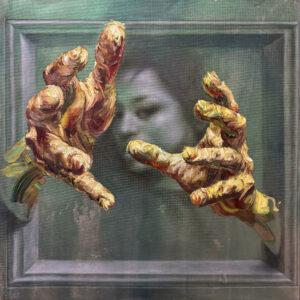
Ramzi Brak’s “Isolation,” however, captures the brutal geometry of confinement with devastating simplicity, notably by placing a hazy figure behind a black metal grid. The figure becomes both prisoner and specimen, sealed away, portraying a condition of suspended existence between silence and suffocation.
Outside, the earth has been scraped bare. An overturned armchair lies impaled in a burst of tattered documents — actual school records, report cards, state memos — now crumpled and spilling like intestines. This is “Report,” a collaborative work by Nada Aql and Wassim Al-Humaidi. What once upheld bureaucratic power is now weightless and scattered. The system collapses not with fire, but with quiet rot.
In “Sulphur,” Rabee Khalil sculpts a tortured metamorphosis: human heads blooming like mutations from a single spine of charred flesh. The material, dark and cracked like burnt wood or dried blood, evokes something chemical and ancient, as though the body had ignited from within. There’s no clear beginning or end, only eruption. The faces, half-formed and overgrown, seem to argue with one another — conflicted selves battling for coherence, memory, or release. Like sulphur, each head lingers in the air: heavy, elemental, and impossible to ignore.
As we moved from room to room, the building itself began to feel complicit — less a backdrop and more an accomplice. Barakeh speaks of it as a “co-author.” Its broken tiles, exposed wiring, and iron bars aren’t obstacles to exhibition; they’re part of it. Even the flickering lights seem choreographed. They stutter like nerves.
This ethic of improvisation defines not just the artworks but how they came together. There were no grants, no funding cycles.
“This happened through WhatsApp groups, basements, and late-night visits,” Barakeh says. “In post-collapse Syria, where institutions have either crumbled or been co-opted by violence, collaboration is no longer a choice. It’s the only infrastructure we have.”
The fragility of that infrastructure was made stark when the exhibition was interrupted for several days due to sectarian unrest that left multiple people dead in late April and early May, forcing Jaramana into lockdown. Though the exhibition later reopened, the moment underscored just how precarious public gathering remains in places where security and collapse coexist.
Still, months later, the show lives on — in fragments. In photos. In messages sent across encrypted apps. In the bodies of those who walked through it. “Healing doesn’t begin in sanitized galleries,” Barakeh says. “It starts in the wound.”
That wound is not metaphorical. It is geographic, political, and cellular. Pharmakon State doesn’t aim to soothe. It refuses the balm of resolution. Instead, it confronts us with what remains after the systems collapse and only survival is left.
“This isn’t about representing suffering,” Barakeh says. “It’s about assembling around what’s still possible in the ruins.”
The state, perhaps, endures on paper. But here — where walls crumble, where eyes hang from threads, where forests scream — another republic has been declared.
A republic of ruins. A ritual of return.
All photos courtesy Robert Bociaga.