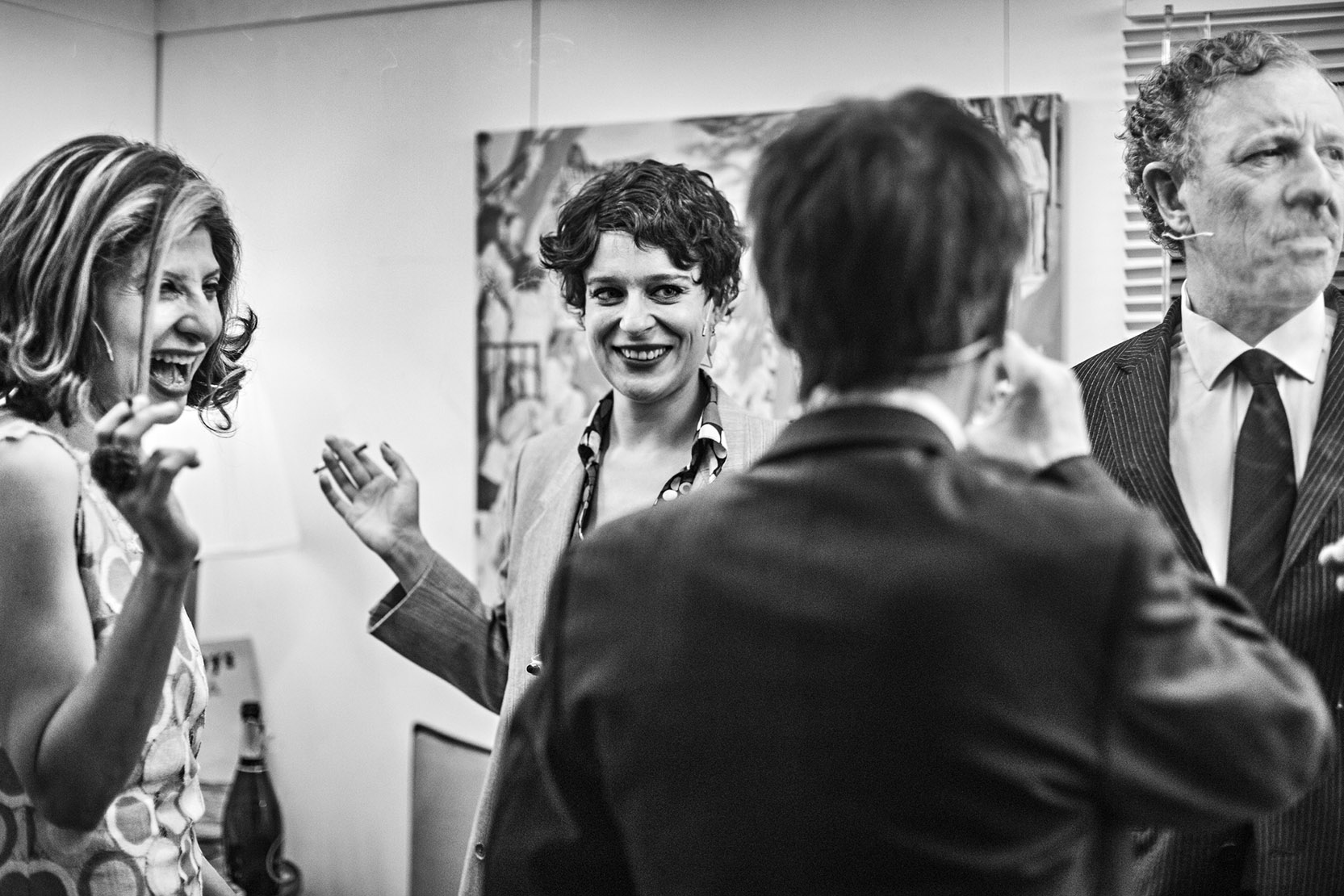
Pétrole moved from the Odéon Théâtre de l’Europe in Paris and the Comédie de Saint-Étienne to Lyon. Catch it next at the Comédie de Reims, centre dramatique national, May 20 and 21, 2026, and at the Théâtre Vidy-Lausanne, Switzerland, June 3 to 5, 2026.
When recently I heard the name Kuwait announced emphatically on stage at the prestigious Odéon Théâtre de l’Europe in Paris, I sat up immediately. The production was based on acclaimed Italian filmmaker Pier Paolo Pasolini’s unfinished text Petrolio, adapted for the stage by the French director Sylvain Creuzevault. The title, Pétrole, should have been a clue that the play might contain some reference to a Gulf state, and indeed, about forty minutes in, the word Kuwait was repeated loudly on mics and projected in giant Roman letters (in its French spelling, Koweit) on a screen above the stage.
Next came a grainy photograph of a generic camel against a desert background, which then cut to the blown-up projection of the live action on stage. The audience laughed away as the same actress who had played an intelligent, sophisticated Italian society hostess in the previous scene now posed as a “Sheikha.” (In the program she has the ominous first name Medée). She was dressed in a male bisht, lasciviously offering a tray of Moroccan biscuits to her Italian male visitor, so consumed with desire that she was ready to sell him her country. Her father, Emir Abdullah III — referred to not with his rightful title, but as the generic “Sheikh” Al Sabah and costumed like Joseph in a nativity play — happily agreed to the outrageously bad financial deal. All this against an orientalist music-washing, whose tones bore little resemblance to actual Gulf music. This was the first time in thirty years of theatre-going that I have ever heard Kuwait named on stage, in French, English, or Arabic. I sat stunned at this representation, doubly alienated by an audience who seemed to find it hilarious and totally normal.
Sylvain Creuzevault’s Pétrole — a masterful and daring stage adaptation of Pier Paolo Pasolini’s unfinished book — is nevertheless a missed opportunity to give a rare voice to the people at the epicenter of Petromania.
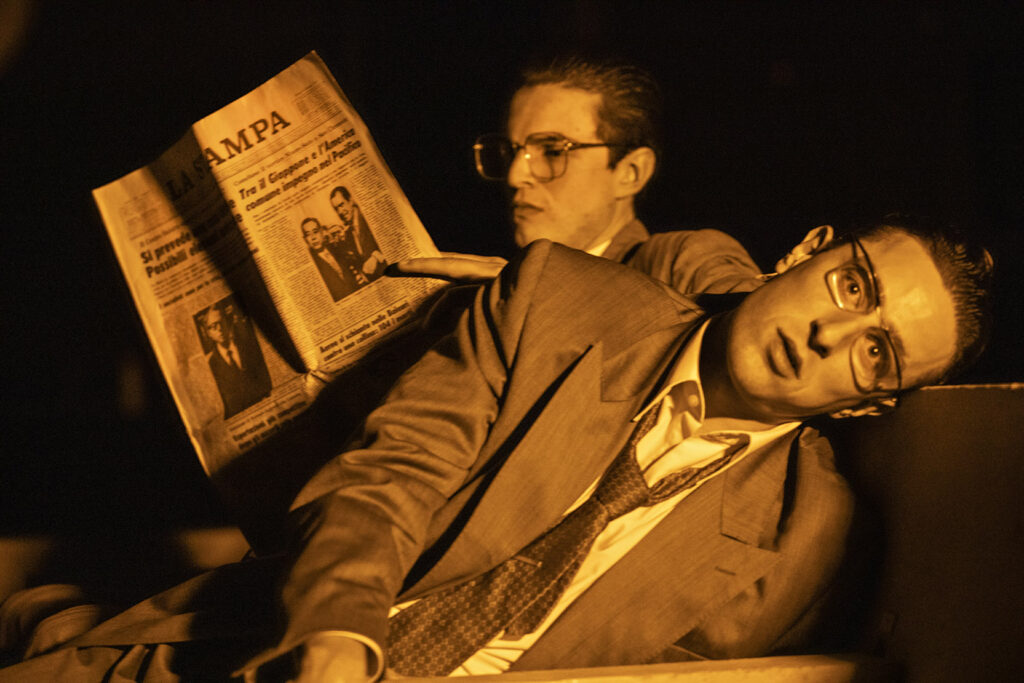
Pasolini was assassinated in 1975 under mysterious circumstances, during a time of exceptional and violent political turmoil in Italy. He left behind fragments for a book that was published in 1992 under the title Petrolio (Petrol in English). Written in the form of notes and letters to himself, the text interweaves narrative fragments, symbolic visions, and political and aesthetic reflections. This is not a narrative-driven novel, nor does it aspire to psychological realism. A sort of Divine Comedy re-envisioned by Kafka and Henry Miller, it tells the story of a middle-class Italian engineer, Carlo Valletti, split into two personalities, whose dual journeys gradually intertwine. Carlo I is driven by political lust and has a rapid rise within Italy’s National Petrochemical Company, travelling to Kuwait and to Syria to strike deals with their leaders. Carlo II is driven by sexual insatiability that he tries to satisfy with illicit trysts in Rome’s train stations and wastelands. It is a personal, impressionistic portrait, written in an experimental style, of Italy in the 1960s and ‘70s, which at the time was a country torn between extreme right- and left-wing politics, and between modernism and tradition.
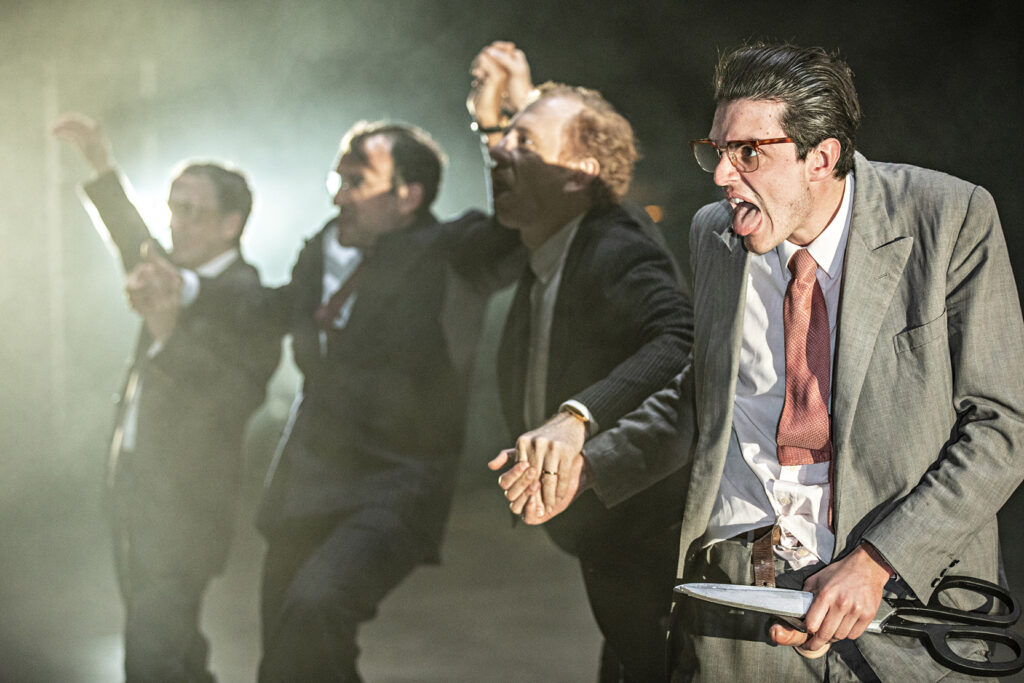
Fifty years after Pasolini’s death, French theatre director Sylvain Creuzevault has adapted and staged the text in Paris, in a masterful co-production from Odéon Théâtre de l’Europe and Festival d’Automne. Both venerable institutions, whose programming this year showcased some of the most unequivocally daring and sophisticated portraits of contemporary European malaise to be seen in Paris. It was clear that one of the adaptation’s aims was to draw parallels between the political turmoil of 1960-70s Italy and today’s European crisis: the resurgence of the far right, and a left in disarray.
And yet one must account for the distance between a work now fifty years old and any contemporary theatrical interpretation. It could be argued that Pasolini’s portrait of Kuwait is a product of its time, when Arabs were so often presented as shadows or romantic fantasies in European literature. The work also plays with some elements of fiction, for while there are real Italian political figures mentioned, in my research I could find no evidence that ENI, Italy’s state oil company, ever succeeded in making any deal with Kuwait. And while the work does not pretend at journalism, it does aspire to real political critique. Creuzevault defends the contemporary relevance of the original text in his program note (written in French; translated here and throughout by me): “…because it’s always the same shady dealings, the same corruption, the same suitcases, the same budgets, etc.” Except that in Pasolini’s time, European and U.S. oil companies were still reaping the lion’s share of the region’s oil revenue; Iran was yet to have its Islamic Revolution, Iraq had not been invaded by the U.S., and China was largely absent from the geopolitics of the region.
Pasolini was interested in Italy’s post-war economic miracle, and the transformation it engendered in his country. “In the modernization of Italy,” writes Creuzevault, “there is something which, in [Pasolini’s] eyes, advances under the mask of progress, but in reality embodies the progress of catastrophe.” While I cannot disagree with this statement about Italy, it is worth pausing to consider the bigger transformation wrought by petrodollars on the tiny state of Kuwait.
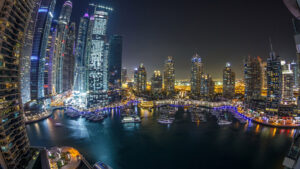
In the space of forty years, Kuwait went from being one of the poorest countries in the world to one of the wealthiest. The country used this windfall to create a Sovereign Wealth Fund for future generations, and a welfare system providing innumerable benefits to its citizens, from full overseas scholarships to the best in modern health care, to free land and housing. The total opposite, one could argue, of the European avarice and greed that troubled Pasolini. Over the course of that time, the country went through a radical process of modernization and its urban plan was almost entirely redrawn. Today, little of pre-oil Kuwait is left standing. Although the scene in Kuwait is only a small part of a much bigger performance, it is relevant to ask why the director did not consider challenging Pasolini’s orientalist portrait and explore, at least in passing, the idea that what might be corrupting for one country is not implicitly corrupting for another.
In his program note, Creuzevault claims that Pasolini observed the political superstructure of the time, but I would argue and add that he did so only from the western position. The stage adaptation contained no criticism that I could see of how European (and U.S.) companies benefited disproportionately from oil revenues in countries like Kuwait from the late 1940s until the 1970s. And despite the production’s 1970s setting, there was no mention of the 1973 OPEC oil crisis, when oil-producing states began to rebalance power with the West. Later in the production, passing references to the ongoing suffering of the Palestinians were no doubt intended to show that the writer and director are of course sympathetic towards some Arabs, or Arab causes. And while some Arabic was spoken by two actors in a later scene set in Syria, an inclusion of the language is no defense against caricature. Since when is the presence of female actors in a performance any guarantee against sexism?
Creuzevault describes the arid style of Pasolini’s writing, referring to it, in French, as a “style désertique.” One has the impression, he writes, “that from Rome to Athens, to Beirut, to Damascus, there is a shared light, a shared dust, carried along by the southern winds, etc.” And yet there is no desert in Beirut or Damascus, and whatever dust there is comes from the traffic rather than wafting in from some poetic south. The “etc” at the end of the sentence is likely a reference to Kuwait — the one country that really does have plenty of sand and lots of oil beneath it — but for some reason is not worth naming here.
Despite the brevity of the scene set in Kuwait — approximately eight minutes in the midst of a three-and-a-half-hour show — its treatment seems a missed opportunity. Creuzevault’s portrait of Europe is sophisticated and compelling, the staging bold and aesthetically gripping, and the play’s critical success in Paris attests to this. He made clear the outrageous positions of the characters on stage, resulting in a satire both complex and sophisticated, inhabiting a place between then and now, rooted in detailed layers and specific references. There were no cliched representations — a man singing opera from a gondola, for example, or a woman hanging up laundry while cooking pasta, images which approximate the level of stereotype with which Kuwait is represented. The characters were rather allowed to speak and share their dark dilemmas and ambitions.
I found myself wishing that he’d applied the same sophistication to his portrait of the Gulf State. Contrasted against this nuanced satire of Europe and the parallels deftly created between the fascism of the 1970s and our own day, the caricature of Kuwait appears particularly stark. Especially when considering that few groups in Europe today are the subject of more misunderstanding and extreme rightwing prejudice than its Arab communities.
It’s also worth examining the sexual metaphor of “petrol,” present in both the writing and the staging. One of the text’s main themes, in fact, is sexual insatiability. As Creuzevault writes, “Pasolini is consistent: oil and those who own it shape industrial society just as much as they create those who exploit it. An exploitation that describes the violence of digging, extracting, penetrating the earth…” The rape of the earth by Occidentals to produce the gushing black liquid, the ultimate symbol of desire and greed, is an image given powerful aesthetic expression in this production. But what of the people who technically own the petrol, such as Kuwait? Are they by association corrupted? Is this what we are meant to read through the lust of the Emir’s daughter for the Italian? This question is never explored. We do not see Norwegians or Russians — also citizens of oil-producing countries — portrayed in such stereotypes in film and theatre. So why does it remain acceptable, still today, to present the citizens of the Gulf in such a one-dimensional and prejudiced manner?
Programming choices at a theatre like the Odéon happen at least one, often two or more, years in advance. No one could have imagined then the crisis in the Gulf and wider region that is unfolding in the middle of the play’s tour. And in this current context, the caricatural portrait of a country like Kuwait feels both unpalatable and unfortunate.
As a theatre-maker and avid theatre-goer, as well as someone with an extensive personal history attaching me to the Gulf, I have long been troubled by the fact that I’ve encountered few, if any, intelligent representations of the Gulf States on the European stage and screen. The Gulf is an object, never a subject.
For example, while Arabic was the invited language at the Avignon Festival last summer, the Gulf states weren’t included except as sponsors of two events. Whenever I’ve asked programmers about this choice, their responses vary, but all fall into easy assumptions about the Gulf. Some suggest that there couldn’t possibly be any interesting work coming from the Gulf, as the people themselves are “uninteresting.” Some express concern that if they program work from the Gulf they might be seen to be doing so purely for money. On occasion they agree that it should be included but argue that work from Lebanon, Syria, Palestine, or Iraq is more “important” and as such must take priority. Even now, much of the art press coverage of the ongoing war has focused on galleries withdrawing from Qatar and the Emirates en masse, lamenting the fact that this region is not “just” the low-tax, high-income luxury paradise that people thought it was. Seeing images in British tabloids of bikini-clad influencers fleeing Dubai, one is left with the impression there are no local citizens at all, that the countries of the Gulf are mere fabulous backdrops against which expats amuse themselves or follow an ethic of “get-rich-quick.”
While much is said about European colonization elsewhere in the region, far less is acknowledged about the Gulf and the long history of questionable profit-sharing of oil revenues. This may be because the overarching belief is that the citizens of the Gulf enjoy higher standards of living than others in the region, which somehow mitigates any need for Europeans to question their past history with the region. And yet it seems to me that many of the stereotypes about the Gulf come from some of the same dark inversions of desire that Pasolini explores in his play. Perhaps it is that Europeans, uncomfortable with their own avarice, their own greed for the Gulf’s riches, project it onto the very people whose resources they sought to exploit. Today, the relationship may not be exploitative in the same way, but in seeking funding for their artworks and partnerships for their museums, many western artists and academics mask their need by approaching their Gulf partners, the Gulf as a whole, with an air of cultural superiority. The Gulf may have the money they covet, but they will never have the “European” cachet. And so on the rare occasion that artists from outside the Gulf – western and also non-Gulf Arabs – do represent local citizens, they are too often characterized as idiots who don’t deserve their privileges. Citizens of the Gulf are portrayed as obsessed with shopping, expensive cars, and restaurants, thrust into a modernity they neither understand nor manage. Earlier this year at the aforementioned Avignon Festival, Joris Lacoste’s otherwise excellent theatre show “Nexus,” which included a poem in literary Arabic by the late Palestinian poet Hiba Abu Nada, killed in Gaza, had the actress who recited it exclaim later in French, “I’m in a film about Ghaddafi funded by the Qataris!” Oh, how the audience laughed!
While other forms of prejudice against the Arab region and Arab diaspora such as anti-Palestine racism are clearly identifiable, anti-Khalijism (Arabic for Gulf) is more subtle and difficult to address. For the most part it takes the form of an absence of representation, but it also includes less benign caricature disguised as satire. If you call this out, you risk being told they have nothing to complain about: the Gulf is aligned with the West, the states enjoy power as a result of their vast wealth, so they are apparently fair game. However, the recent war may have tested some aspects of the Gulf’s relationship to the West, and it remains to be seen how perspectives in the cultural sphere might shift after the ongoing conflict. Many European writers, artists and theatre-makers have showcased their work in the Gulf over the last decade. Isn’t it about time to reciprocate and bring the work of Gulf artists to Europe?
Creuzevault writes: “Between intelligibility and sensitivity, between ‘exposing a suspended work in progress’ and ‘making living theatre,’ I am searching for a shared space.” His portrait of Europe was sophisticated and complex, but his depiction of Kuwait and its relationship to Europe fifty years ago at a critical moment of change was not. Perhaps it can serve as an unwitting catalyst for change. At a time when all forms of prejudice are on the rise again within Europe, a shared space, in my opinion, should be a space where all stereotypes are challenged and where those at the receiving end of them should be allowed to be heard.