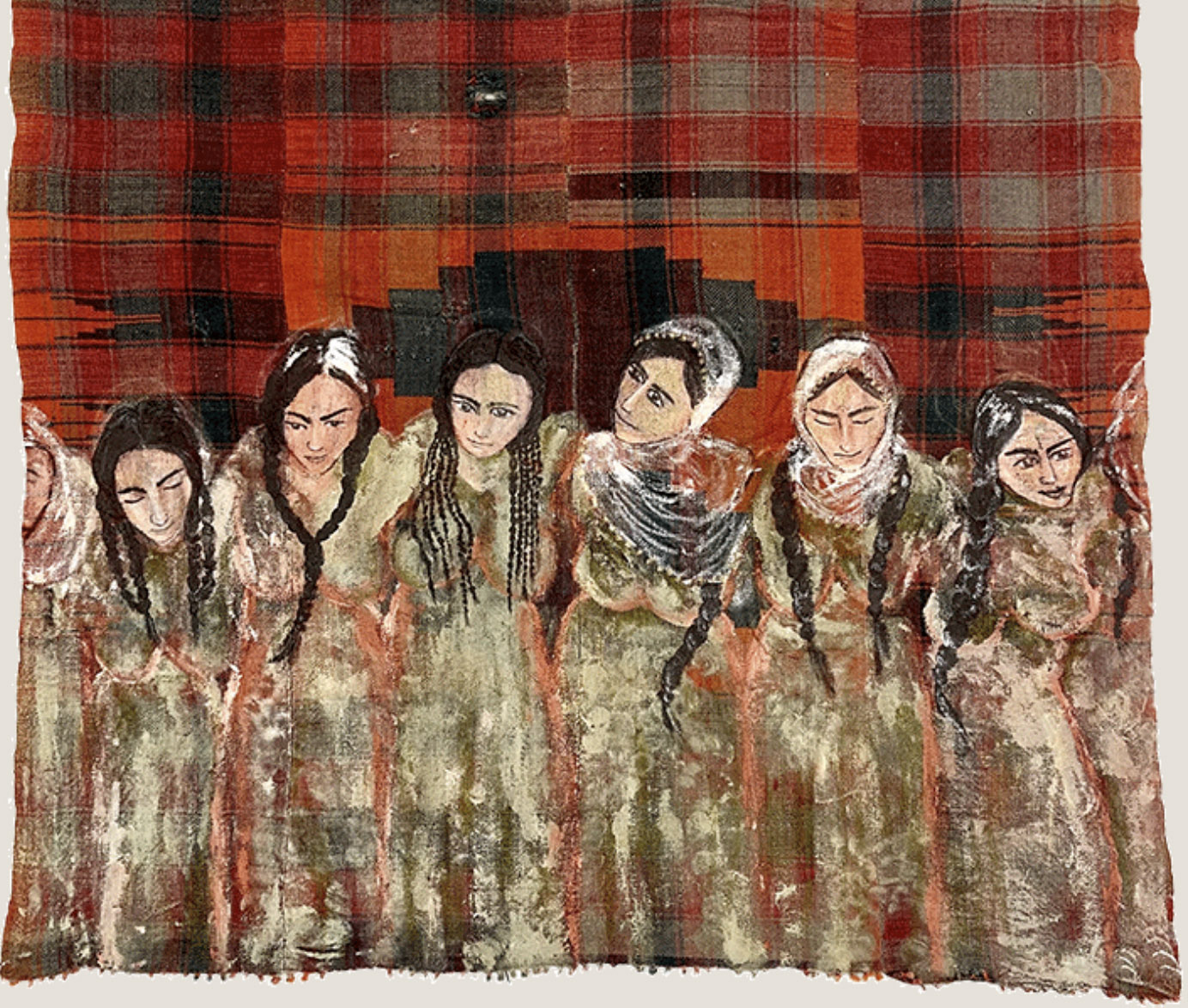
A murder during a raid on a Kurdish village is transformed into myth through the voices of seven children struggling to make sense of what they witnessed.
Translator’s Note: When I first read Hoshang Waziri’s “The Great Mother’s Vigil “(originally “Seven Little Narrators”), I was immediately reminded of Ryūnosuke Akutagawa’s Rashomon, most familiar through Akira Kurosawa’s landmark 1950 film, in which a single violent event is refracted through multiple witnesses, each account partial. Waziri employs a similar technique: seven individuals, each bearing a distinctly Kurdish name, standing at a different vantage point on the day soldiers raid their village and kill the Mother. What emerges is a shared recollection of one woman’s murder as well as a communal reckoning with trauma. Yet whereas Akutagawa’s narrators contradict one another, Waziri’s seven voices weave into a single, devastating testimony, as if the community itself is the true narrator. The reader, piecing eveything together, becomes the eighth witness.
—Hassan Abdulrazzak
Bakhtiyar
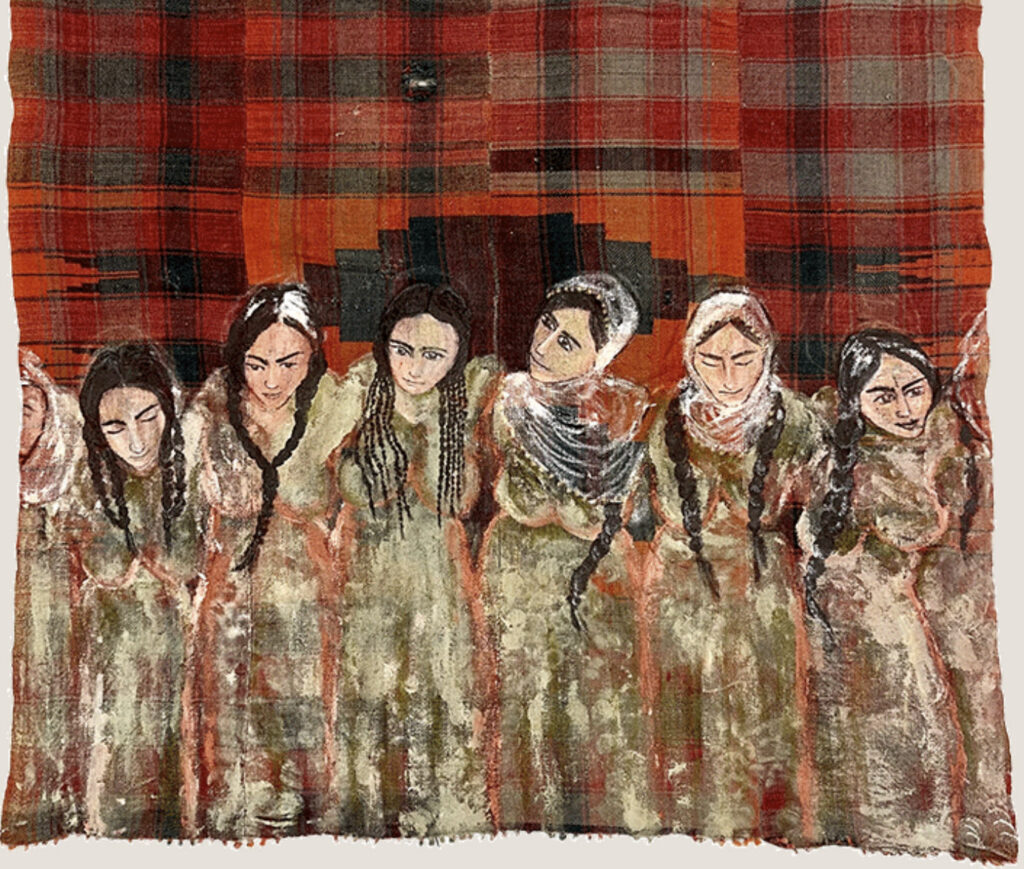
* We stood for seven days and seven nights after her death; we, the seven children, because the village elders and notables had placed upon our shoulders the task of recounting what had happened to the Mother, whom we had never seen dressed in anything but black. The seven of us stood in silence in a single straight line, unmoving as though carved from stone, in the overcrowded cemetery that had been thrown into confusion by the splendor of her funeral rites; we stood reverent before the sacred fires, lit in honor of the first day of the New Year, and tried to summon the details of her face, the enchantment of her eternal stillness, and the echo of the seven bullets that had pierced her aging body on that blessed Thursday.
Diyako
* When the crowd dispersed, carrying the ten corpses to be buried in the old cemetery, the Mother had not moved. The mourners were stunned when they untied the bonds from her son’s body and lifted it, for she remained in place, frozen and rigid as a statue, her gaze fixed upon some point in the vast emptiness that stretched before her. She stood there, unchanged in her posture, for three full days, despite the many attempts made by my mother, Hajj Mahmoud, and others to dissuade her from her resolve; despite the powerful winds that swept in on the first night of her vigil and scattered her white hair in every direction; despite the rain that struck her body without pause; and despite the pack of dogs that gathered, drawn by some ill omen we could neither name nor comprehend. She remained until we believed she had died on her feet, though we never saw her fall; until the moment my mother, known as Badriyya the Widow, the Eternal Mourner, began murmuring incomprehensible things, startling my siblings and I in the early hours with a terrified voice, raving as though gripped by fever: I too shall plant myself… perhaps I will stiffen, but I will stand there… I will stand directly before her. I understood nothing of my mother’s delirium until I saw her running toward the village square and planting herself like a stake directly in front of the Mother.
Sherzad
* I, Sherzad the Blind, had to see things through my ears, for people were forever shouting at my sightless eyes whenever I stumbled over things and fell. Because of this, my ears were the sole means by which I perceived the world, through which I came to understand everything that happened on that day.
I was the first to hear the commotion that broke out near the Mother’s house, sounds colliding in the air, grappling like hands. At the time she had been watering her small garden as usual, I heard the sound of water hitting the leaves then trickling down to the grass, the air suffused with the smell of wet soil. At first, she could make nothing of the commotion, though the sounds were no more foreign to her ears than they were to mine.
I caught the acrid stench of military trucks and realized the soldiers were raiding again. My father, who was never without his threadbare prayer rug, called them a mob of heretics.
Panic swept through the neighborhood as they descended upon the houses, the shops, and the mosques; I heard doors shattering under the force of violent kicks; the shrieking of women; screams and commands. I heard their exhilarated cacophony at the surprise assault.
My father came rushing back. I heard him fall flat on his face as he crossed the threshold, his prayer rug sinking into the mud with a wet thud. Though blind, I sensed his bewildered gaze as he stared upon his mud-stained rug. He let out a strangled cry to my elder brother, urging him to hide. A moment later, Badriyya the Widow, the Eternal Mourner, stormed in weeping and crying out: What do these godless men want?
It was a day of terror, as though the End of Days had arrived, unleashing its horrors upon our tiny souls.
Outside, conflicting voices clashed, the most dominant among them a strange tongue I had heard only from my father Hajj Mahmoud when he prayed, and in that booming tone it urged the young killers to ransack everything they could lay eyes and hands on: Search the wardrobes, the books, the clothes, the papers, the rubbish bins; dig up the garden soil and don’t forget the coat pockets… search even the backsides… come on, don’t be shy. This was the voice of a man I was certain was short and fat, judging by his effeminate voice with its long, sharp waves, the many colorings of which indicated that he gestured with agitated hands as he barked his orders.
Hawar
* It was a day of terror, as though the End of Days had arrived, unleashing its horrors upon our tiny souls. None of us knew how this mob had arrived, whether by road or through a crack in the sky, disgorging from its bowels these broad-shouldered, bulging-eyed, swarthy-skinned men.
I was returning from school when I saw them, angels of the apocalypse spreading through the village like a flood; four on every rooftop, their rifles clanking against their uniform; a group of them lurked at the corner of every street, lying in wait for prey, and between every two houses stood two armed men, poised to pounce.
The Mother, who was a mother to all of us, remained calm; each time the men raided, she retreated to her son’s room, which she insisted on preserving as it was, in the belief that he would one day return.
She rummaged through wardrobes, drawers, and old chests in a mechanical, detached way, as if the search had become a habit she had trained herself to perform without expecting anything from it. After searching for some time, she found in the pocket of one of her son’s old shirts a photograph of a beautiful girl, which was wrapped in a piece of green cloth. She studied the photograph for a long time, turning it over gently in her palms as though turning a small infant, prodding her memory to conjure up images, faces, lost worlds, but she couldn’t identify her. On the back of the photograph, someone had written a single word. She must have been deeply saddened at that moment by her inability to read. Dozens of times she must have asked, Who could she be? and while this question occupied her mind, I made my way to her house, arriving just as five armed men kicked down her front door with brutal force, behind them a short, fat man glancing left and right as he issued orders to the air.
Diyako
* None of us little ones, dumbstruck by this scene, could guess what it was the men were searching for. Sherzad the Blind, the youngest among us, said: Last night my father said that someone has been hiding weapons and bombs. I remember how Hawar glared at Sherzad and shouted into his sightless eyes: Shut up, you know nothing! It’s not weapons and bombs but books and papers that they are afraid of, and they will hang in public view anyone found keeping books in their home, especially the thick and heavy ones.
Speculation spread through the neighborhood, but my mother Badriyya the Widow alone knew the answer. Later, when I asked her what these men wanted, minutes before blood gushed out of her right cheek that morning, she told me in her calm, measured voice: Nothing, my son. They are not searching for anything at all. They are simply entertaining themselves.
The Mother stood planted like a stake, watching the devils tear through the house.
Faridoon
* Led by the short man, the five armed men entered the house and, without uttering a word, began overturning everything: they threw the clothes about and tore them apart; they smashed plates; they dug up the garden soil. Their movement was swift and devilish as they swept from room to room, drawing their bayonets to slash pillows, quilts, and blankets.
And still they found nothing.
The Mother stood planted like a stake, watching the devils tear through the house; she was silent, at peace that there was nothing for them to find, no matter how deep they searched and pried; and more than that, she had nothing more to lose. All that concerned her was the face of the girl in the photograph, wrapped in a piece of blessed cloth.
The previous year, during one of these sudden raids, they had lined up her son along with nine other young men and executed them before the entire village. When the bullets pierced her son’s body, she did not cry out or scream; she simply stood, motionless, staring at her son’s corpse. And when the crowd untied the bonds and blindfolds from the bodies, the Mother made no movement. At the time, I stood behind my father; he was the mosque’s imam, known for his piety and dread, not just of God but of everything. I clung to the hem of his robe, forever soiled with mud and dung, gripped with terror at my first sight of dead people, their bodies riddled like sieves. When the crowd lifted the ten corpses and headed toward the old cemetery, my father drew close to the great Mother and asked her to lead the procession, but she gave no answer. He repeated his request, and as a violent gust swept away his turban, the Mother continued staring at the empty spot where, moments before, her son’s body had fallen.
Sherzad
* Rising at dawn on the second day to perform the morning prayer, my father stopped cold at the sight of the Mother standing exactly where she had been the night before; her mouth was agape and her eyes vacant, her right hand over her heart, her left clenched in a tense fist, and her white hair ravaged by the wind.
My father went to her, implored her to stop this vigil and return home to no avail. When he tried to touch her or carry her away, he felt what he called an invisible force, like pure sorcery, repel me and make my body shudder with fright. For three days she stood under rain and storm and the barking of dogs, until people believed she had died on her feet.
Farhad
* On the third day of her stubborn vigil, Badriyya the Widow made a decision that surprised us: she resolved to stand directly before the Mother to bring her back from her madness. Badriyya the Widow stood there, face-to-face, tears streaming from her eyes, until her strength gave out and she collapsed at precisely five-fifteen in the afternoon (according to her son Diyako who recorded this event in his book The Chronicle of Fire). Men rushed over and carried her away, while others wrenched the feet of the black-draped Mother from the earth; but her knees would not bend. So they carried her on their shoulders as one carries the trunk of a tree.
From that moment on, she returned to that same spot each day, standing for more than an hour as she gazed at a point in the void; perhaps staring at her son’s body, perhaps waiting for the Day of Judgement to hold God to account — as she was always repeating — for the unjust and mysterious things that had befallen her in a life filled with prayer, fasting, and other devotions, the things she had never been able to understand. No one ever saw her bend her knees again.
Media
* After the soldiers turned the house upside down and destroyed the wardrobe, the chests, and the chairs, their leader approached the Mother; in his hands was a piece of paper found by one of his soldiers, hidden amongst old books and papers in a plastic bag buried underneath the fig tree in the garden.
Listen here, old woman; don’t stand there like a post and don’t trouble us with your silence. All we want is a small photograph; a photograph of a girl your son was in love with. Don’t deny it and don’t play dumb, her name is written here on this piece of paper, which is one of her letters to your son.
The Mother understood nothing. Could they be talking about the photograph she had just found in one of her son’s old shirts, wrapped in a piece of green cloth? And if what this creature spoke about was true, why had her son never mentioned this girl, so that she might seek her hand for him?
These questions surged in her mind as she stood, sunken in silence and stillness.
Finally she spoke, and with great calm said: I don’t know of any girl you speak of. I am a decent mother, and if my son had a love affair, he would have told me so that I could arrange his marriage. You are a liar.
The argument between them continued, growing so heated that we, the little ones — who in our terror had piled ourselves like a heap of dirty laundry inside Badriyya the Widow’s wardrobe — could hear the obscene words flying through the air, curses we had thought were our own private invention. Then a sudden and strange roar ripped all six doors of the wardrobe off at once, shattering the windows and sending glass flying through every corner of the room; the sound stretched across the neighborhood as if the whole world was a wretched being of glass collapsing under the force of this furious shriek.
The chaos of shattering glass continued for some time, and when the world finally fell silent, the villagers discovered the Mother’s body pierced with seven bullets.
Bakhtiyar
* Much was said about the day of the Mother’s killing at the hands of a handful of godless men; about the conversation that passed between her and the officer, and about how she completely lost control of her voice when the officer directed at her, laughing, the full arsenal of his obscenities while straightening his military uniform before the mirror. Her voice surged, sweeping everything before it, until the mirror through which the officer was admiring his splendid, star-studded reflection shattered into a thousand pieces; and the windows of her house broke; and the kitchen utensils fell to the ground, one after another.
Badriyya the Widow, who had been spying on what was happening from the window of her house, recounted the final moments of the black-draped Mother’s life like this: In the last moment, when that depraved heretic tried to lay his hands on her under the pretext of searching her clothes, she slapped him with all the strength she possessed. Her right hand became a howling gale that sent blood gushing from that heretic’s mouth. Then he drew his pistol and fired seven bullets into her.
Diyako
* My mother’s furtive witnessing of what had passed from behind her curtained window had cost her. A glass splinter pierced her right cheek, and though the village nurse stitched the wound with four haphazard sutures, her face remained forever disfigured. My mother saw the Mother topple after being shot, saw the officer — the heretic, as she called him — pick up a shard of broken mirror from the floor to look at his face and wipe the blood from his nose and mouth, before straightening his military uniform. He ordered his soldiers to search the Mother’s clothes piece by piece until they found the hidden photograph. The Mother had hidden it on the left side of her chest, precisely over her heart. One of the bullets had passed straight through the middle of it, making it impossible to identify who the girl in the image was.