Select Other Languages French.
Writing biography is always treacherous, for you are treading upon sacred ground. But what of fiction, then, when the line blurs between fact and invention?
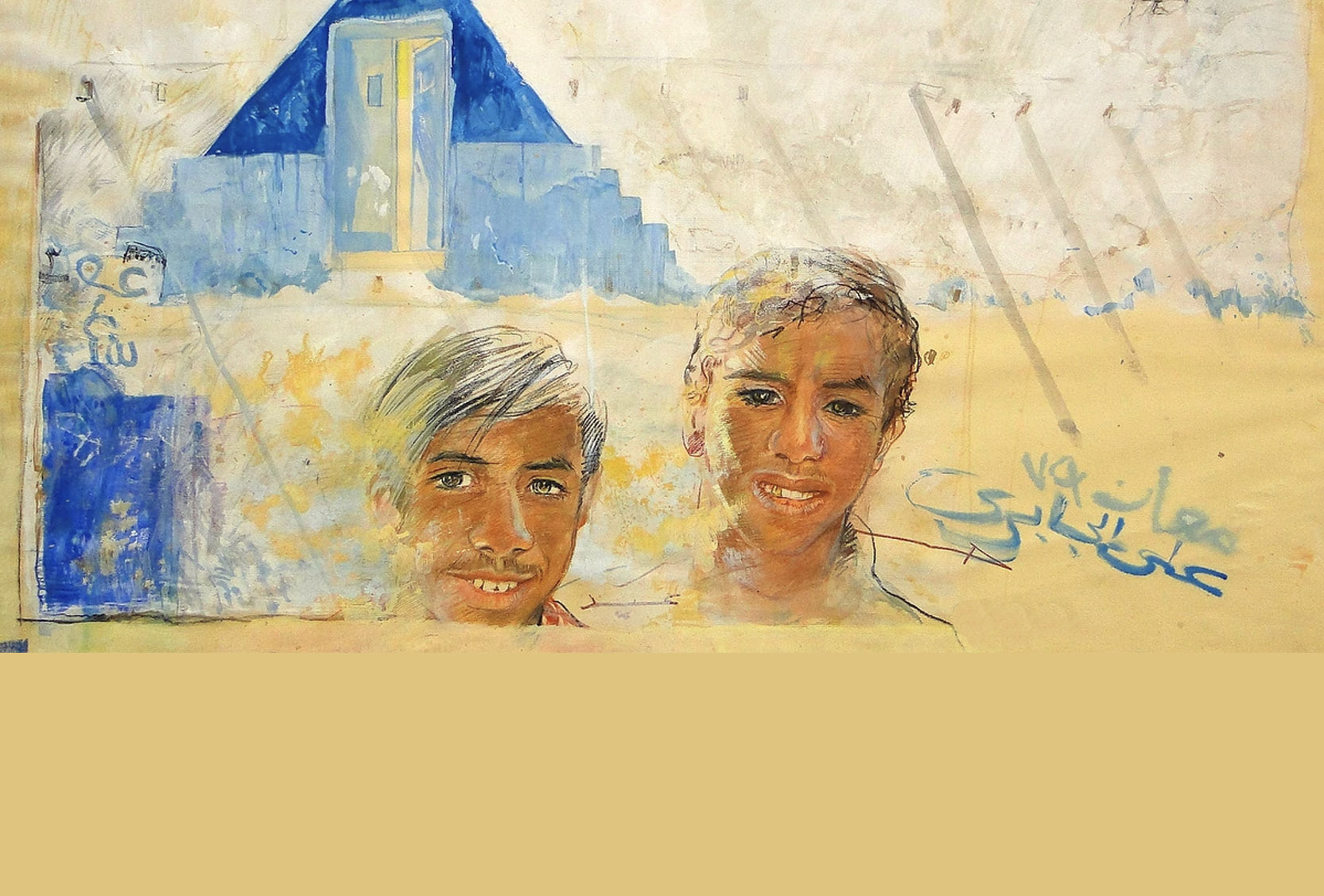
Field research for About This Man Called Ali, my first book, was an upheaval. It was the interviews. Ali al-Jabri was murdered in 2002. A year later, after extensive work on his letters and diaries, I reached out to family in Amman and Aleppo, and friends from the 1960s and ‘70s in California, Bristol, London, Paris, Cairo, and Kuwait, to hone the rich texture of his life. I was part of Ali’s circle in Amman, so I left us to the end.
Because I knew Ali, I suspected that the man would have enraptured those who inhabited his other worlds, much as he had done to us in Jordan. I will happily use the old cliché, because it so fits Ali: he was a tour de force. Magisterial. A master of the brush and the pen. A sophisticate and a naïf. As much of an enigma to a lover as he was to distant acquaintances. Elegant and earthy, with a distinct taste for the rough soil of life. A cosmopolitan with such yearnings for an anchor in identity. A hedonist with a peculiar awe for tradition and ritual. At once, a queen, a pauper, and a prince.
My suspicions were correct. Those who knew Ali decades earlier remembered him with the vividness of yesterday. There was still love and laughter and tears and mystification, the need to own the whole of him, when he would only gift himself in fragments.
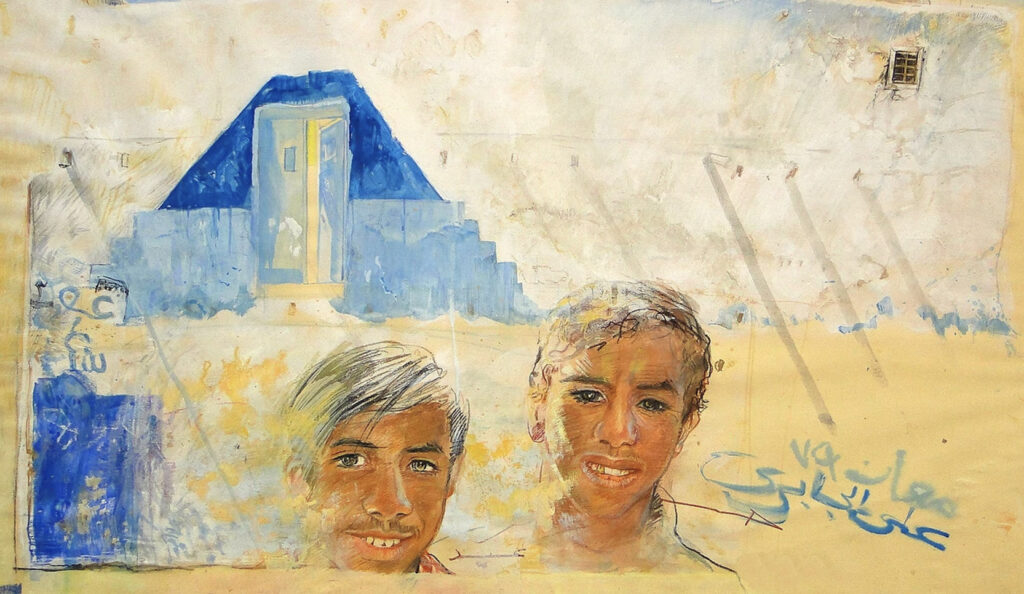
Time, I also thought, would have done its handiwork in quieting what furies might have raged then. I would have expected his tragic death to infuse new charity into old antagonisms. I was wrong. Simple questions, unbeknownst to me, were minefields laid across still very raw emotions, difficult memories, disappointments, heartbreak. My notes became much more than the material of a memoir. They were a study in how we possessively claim the dead.
When she first read the finished manuscript, his sister Diala called me a nissra, an eagle. As she read and reread it, obsessing about this and that revelation, she denounced me as a witch. Antonia, his best friend during his Bristol and London years, thanked me for bringing him so to life. So did Diana. John, his mate from the same period, didn’t see his Ali in the book. There was much joy in the man, John wrote to me. But you wallow in the tragic. A few years later, he had a change of mind.
There are others who, I am sure, read the memoir but never shared their thoughts. I cannot know whether there was simply too much pain in encountering him for the first time in all his fugitive magnificence, or whether the book, in the end, wasn’t strictly about him. He was a real-life character through whom I channeled a history of the region. Perhaps they chafed at that.
When I shared my experience with the late Christopher Dickey, a dear friend and celebrated journalist and writer, he smiled: “Thankless, aren’t they, memoirs and biographies?” Chris’s gripping Summer of Deliverance: A Memoir of Father and Son was a rendition of love, betrayal, anger, estrangement, and reconciliation between him and his father, James Dickey, the acclaimed poet and author of the bestseller Deliverance. Chris spent a long time repairing the family ruptures occasioned by the book.
My novelist friend and second cousin Hanan Al-Shaykh would encounter the same family ire when she published The Locust and the Bird, a memoir of her mother, Kamelah, narrated in the voice of Kamelah herself. But if Hanan thought she would escape opprobrium by having Kamelah tell her own story with surprising candor about her sins and failings, she was mistaken. The book was published in 2009. To this very day, many in the family mutter under their breath at her and her mother.
The intimate sense of loved ones is sacred ground. Trespass and you risk more than you are willing to sacrifice. Such are the hazards of writing about real lives. It’s no different when one finds one’s own life the object of prying interest, even (or especially) if it is rendered in fiction. Novelists are thieves of people’s stories, Philip Roth liked to say. Become friends with one and you might just find yourself on their page.

The case of Algerian author Kamel Daoud, who won the 2024 Prix Goncourt for Houris, and Saâda Arbane, the woman suing him for alleged theft of her story, is one such fraught tale. She is a survivor of a massacre by Islamist forces during Algeria’s civil war in the 1990s. She was six years old at the time. Daoud’s wife was her psychiatrist. He told Saâda twice he would like to write about her. She declined the invitations, only to see imprints of her story in Houris.
Daoud, of course, is a mighty storyteller. In The Meursault Investigation, he skillfully flips Albert Camus’s The Stranger, giving life and voice to Musa, who was slain by Meursault, Camus’s protagonist. Through the novel, he retrieves for the native his formidable presence in the discourse on colonialism and empire.
But this Algerian intellectual, who now resides in Paris, is also quite the political maverick. Islamism and the Algerian regime are, for Daoud, twin villains; identity, a straightjacket. In Algeria, he is revered less; in France, more so. The trajectory of many an exiled writer. “I refuse to read novels with a passport in my head,” he told Robert Pogue Harrison in an interview in 2024. A wonderful quote. An enviable feat if he has achieved it.
I have not read Houris, but it’s not hard to see the novelist in Daoud alighting when he encountered Saâda. One can imagine he could not resist having her on his page. “Betrayed, naked,” is her response. Not hard to fathom either. “The entire world was reading something that was mine,” is the essence of her complaint. This is a story, and it is hers — at least, in her telling, on far too many pages of Houris.
Would that this were simply about literary sovereignty, though. Because this is Algeria, its brutal civil war, France, and Kamel Daoud, we end up in much wider, prickly territory. Two quotes, one by him, the other by Saâda’s first Algerian lawyer, illuminate the thorns:
“This victim of the civil war is being manipulated to achieve a goal: to kill a writer, defame his family and save the deal between this regime and these killers.”
“He built his success on Saâda’s misery. For a second time, he strangled my client’s voice. He stole her life, her story and her pain and he leaves her without any life at all.”
But for all these complexities, at the heart of this battle royale is the question: whose life is it anyway? The French courts will deliver a legal verdict, but I am not certain it will be satisfying. The essence of the debate runs far deeper than law.
On Another Note
Does political Zionism speak for Jews? Since 1967, Zionism has become central to Jewish life in the West. But well before the establishment of Israel in 1948 and the ascendance of a hegemonic Zionism, many Jewish movements explored the meaning of Jewishness and its aspirations. In the aftermath of the genocide in Gaza, these traditions are reviving and causing serious fractures within western Jewish communities. The consensus on territorial Zionism is clearly eroding.
Joseph Dana, writing in The Nation, revisits that suppressed history and traces how growing dissent is reshaping Jewish support for territorial Zionism. Read the essay here.
Amal Ghandour’s biweekly column, “This Arab Life,” appears in The Markaz Review every other Friday, as well as in her Substack, and is syndicated in Arabic in Al Quds Al Arabi.
Opinions published in The Markaz Review reflect the perspective of their authors and do not necessarily represent TMR.