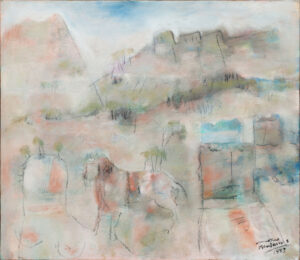
On a visit to her ancestral homeland of Dersim, a woman finds herself at a gathering where every musical performance is followed by an unexpected round of criticism.
We need one another,
but what we need, even more, is to respect one another’s pain.
—Hrant Dink
When the music on the minibus stopped, the passengers fell silent all at once. The vehicle slowed to a halt. A red-and-white barrier from the gendarmerie checkpoint on the right-hand side of the road had blocked the entrance to the city. Only moments before, the passengers had been lurching back and forth every time the minibus stopped and started, brushing against one another without ever breaking off their conversations. Now they quietly composed themselves. Hands slipped instinctively into pockets and bags. Identity cards began appearing one by one. One of the soldiers waiting outside the checkpoint climbed aboard. With him came the smell of sweat, dust, and steel, abruptly changing the air inside. The passengers handed over their identity cards. An elderly woman in the back seat muttered to herself while frantically rummaging through the bag on her lap. The smell of fresh bread drifted through the vehicle, briefly lightening the air. After collecting the last identity card, the soldier stepped outside and handed them all to a gendarmerie sergeant holding a mobile device. Meanwhile, the driver absent-mindedly fiddled with his phone, and the passengers settled into the familiar vacancy of waiting. Only one passenger on the minibus was coming to Dersim for the first time. With her suitcase wedged between her legs, Şeyma watched with curiosity the familiar resignation on the passengers’ faces. Their ease with it all stirred a faint familiarity in her, though she could not yet place its source. More vehicles lined up behind the minibus and the smell of exhaust fumes thickened with the rumble of idling engines. Waiting itself gradually assumed an identity, becoming—as though nothing could be more ordinary—simply another human condition. The mountains they had travelled through, the endless plains, the sharp light scattered across the reservoir, all dissolved, leaving behind only the mechanical rasp peculiar to that moment.
As the soldier handed the identity cards back to the driver, the sergeant called out to Şeyma. “You. What have you come for?”
“Me?”
“Yes, I’m asking you. What brought you to Tunceli?”
“I was invited to a literary event.”
“Have you been here before?”
“No, it’s my first time.”
“Where will you be staying?”
Under the barrage of questions, Şeyma’s voice sharpened slightly, and all the passengers turned towards her. The restless silence from before gave way to a smooth, unbroken hush. Even the shift from one tone of silence to another had an identity of its own. The guy sitting next to her pulled his suitcase a little closer, making more room for her legs. Şeyma understood this as a kind gesture meant to calm her. These were customary questions. They shouldn’t be difficult to answer.
“They booked me a hotel room.”
The sergeant tapped the side of the minibus, signaling that everything was in order. As the driver accelerated, the barrier slowly lifted. The passengers lurched forward in their seats, and the music began again.
Waiting itself gradually assumed an identity, becoming—as though nothing could be more ordinary—simply another human condition.
When she got off at the last stop in the city center, Şeyma tried to make sense of her surroundings through a foggy mind. The hour-long flight delay, followed by two hours of jolting in the minibus, had left a lingering pressure in her ears and the growl of the engine echoing inside her head. After so much movement, it seemed that everything in the city had come to a standstill. In front of a coffeehouse where men sat on low, folding stools, she settled down to wait for Dilek, who had asked her to come into town. Now and then, amid the murmurs in which Zaza and Turkish mingled, she caught a familiar cadence; just as in childhood, she could not understand the language her grandmother had once spoken, but she recognized its music.
Her attention was drawn to two young women approaching. She caught the eye of one of them. That must be Dilek, she thought. The young woman gave her a faint smile and walked straight past. Wrong-footed, Şeyma looked carefully around her. A little farther on stood a pharmacy, with a coffeehouse shaded by a canopy of vines just behind it, then a hardware store and a shop selling dried fruit and nuts. Cars approached one another at speed, then hesitated as they squeezed past. The town had a measured bustle of its own. And judging from the yellow dogs sprawled on their backs along the pavement, bellies exposed to the street, it also possessed a slowness that was not immediately apparent. A slight dizziness came over Şeyma, and she felt an urgent need to sit down. The journey had left her thoroughly dazed. Before she could approach one of the men in the coffeehouse and ask for a stool, he sprang to his feet and offered her his own. Either Dilek was running late, or Şeyma was counting the minutes too slowly.
Then she heard an excited voice. An affectionate warmth lingered in the last syllable of the greeting: “Welcome!”
Dilek was a small, plainly dressed woman. She wore a T-shirt and jeans and carried nothing but her phone. How had the journey been? To describe the passage from one climate into another would have sounded both absurd and beside the point. Şeyma simply said she’d arrived without any trouble. Dilek picked up her suitcase and pointed to the hotel across the street. As they walked toward the lobby together, she announced with great satisfaction that thirty people would be attending the following day’s seminar. Thirty wasn’t bad at all. It had been worth coming all this way. Only then did Şeyma realize they had neither kissed nor shaken hands. The familiar rituals of a first meeting mattered less to Dilek than making sure Şeyma could get to her room and rest. They had reserved the hotel’s nicest room for her, the one overlooking the Munzur River. Dilek made no attempt to conceal the care she had taken in preparing for her guest.
“This is your first visit to Dersim. I want everything to be just right.”
Before they parted ways in the lobby, Dilek invited her to dinner at her home that evening. Şeyma hesitated. As a guest invited to someone’s table, it would appear inappropriate to ask who else would be there. It had been so long since she’d visited the home of someone she didn’t know. Especially here, where she had come for a cultural event; meeting in the intimacy of a private home rather than going out somehow felt overly familiar, and she found herself quietly embarrassed by the thought. Should she bring something? A bottle of liquor, perhaps, or a box of sweets. Was there a florist nearby? Courtesy, which had long since become a rule in her mind, now weighed heavily on her shoulders. Şeyma arrived at Dilek’s door just as dinner was about to begin. When the door opened, the two women looked at each other in astonishment. The woman who had greeted her earlier in the day, smiling in her ordinary clothes, was gone. In her place stood a dignified woman in a heavy velvet caftan embroidered with gold thread. She seemed at once powerful, splendid, and proud, as though embodying one of the region’s ancient tribes. Şeyma, meanwhile, stood there holding a modest paper bag filled with pistachios. Just as she was about to offer her gift, she hesitated.
“You really shouldn’t have brought anything,” Dilek said, throwing the door wide open and ushering her inside with a sweeping gesture, as though bestowing the entire house upon her.
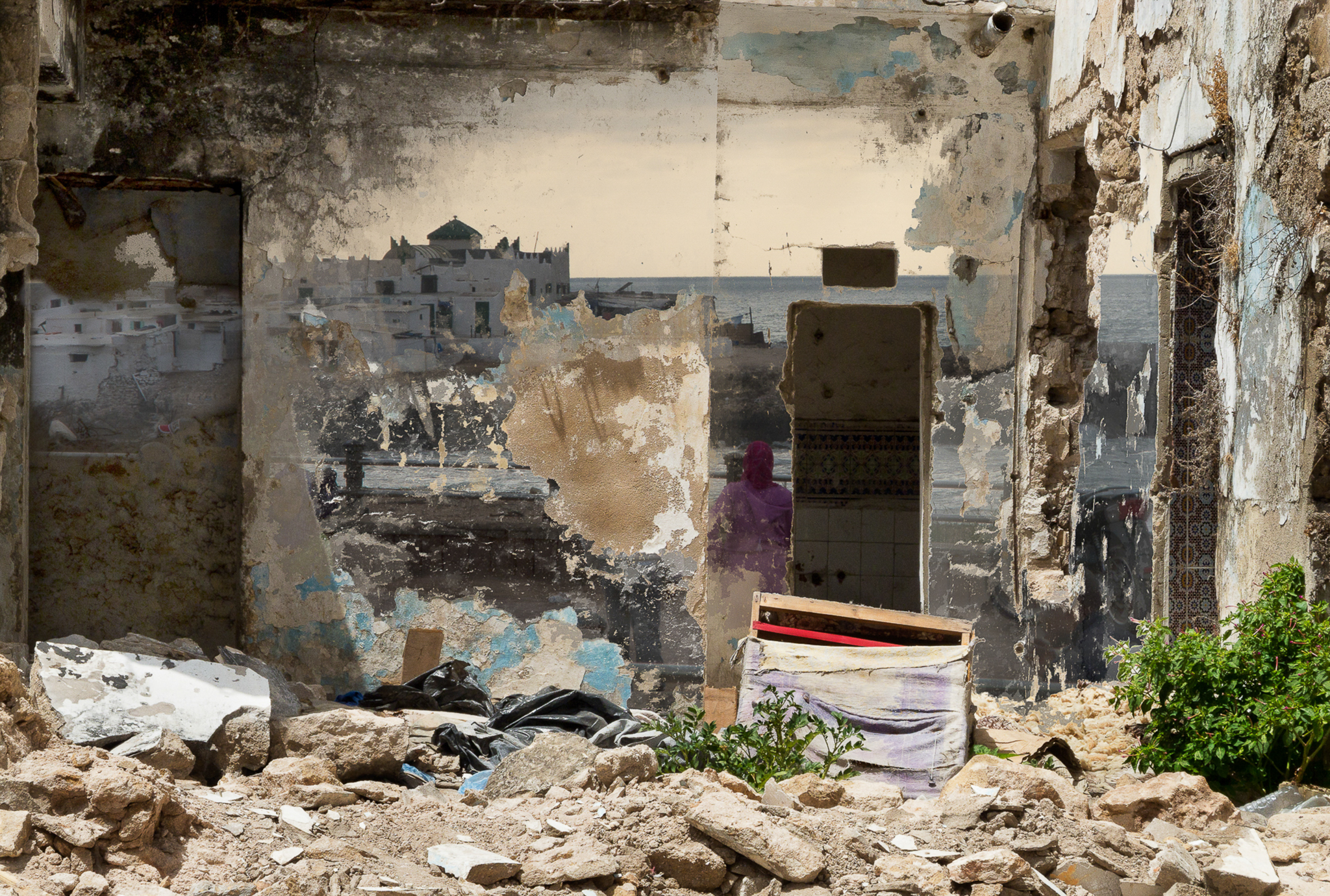
The apartment was unexpectedly spacious, with high ceilings. Judging by the hum of voices spilling from the living room, it was already crowded. As she followed Dilek down the hallway, Şeyma could not take her eyes off the silver-embossed plates adorning the walls, which were papered in a lilac pattern, its colors shifting from violet to pink. Her eyes lingered on the Shahmaran painting—clearly the work of a master craftsman from Mardin.
The moment she stepped into the living room, every head turned quietly toward her. The faces were warm, but neither overly attentive nor distant. Their welcomes rippled through the room in gentle succession. “Welcome, hocam.” Her place had already been set at the head of a table laden with carefully prepared dishes and bottles of rakı. With nowhere to put the paper bag in her hand, she left it in her lap. Those who could not fit around the table had settled onto the sofas, balancing their dinner plates on their knees. Everyone was hungry enough that, without lingering over formalities, glasses were raised. Bottles of rakı traveled from one end of the table to the other. The ice bucket passed from hand to hand. Dish after dish of meze seemed to float through the air, then end up shared on plates. Şeyma felt as though she had taken her place at the table of an old friend. Courtesy here was neither an extra effort nor a posture one assumed. Buoyed by the ease of an affection that already felt familiar, Şeyma relaxed a little more with each sip of rakı. Within minutes she found herself serving liver onto the plate of the person beside her. She was no longer a guest. If only for the evening, she had become one of them.
Once the initial hunger subsided, small conversations began. With a table so large it filled the entire living room, it was inevitable that people would split into smaller clusters, all talking at once. Sitting beside Şeyma was someone named Kemal—or rather, Kemal “Teyze,” “Auntie” Kemal, as everyone called him, since he had prepared most of the dishes. Kemal Teyze asked Şeyma where she was from.
“I’m from here, originally,” Şeyma said, “but this is my first visit.”
A brief silence settled over the room. It was a story everyone knew too well. They could already guess what would come next. Wanting to say it once and be done with it, Şeyma gently broke the silence. “My grandmother was exiled after the massacre. That’s all I know. I was born in another city, grew up in others.”
From the far end of the table, Dilek called out, “Is your mother’s side from Dersim too?”
“My mother’s family is from Greece.”
The questions then came in quick succession. Which part of Dersim? Mazgirt? Ovacık? Pülümür? She knew very little. Did she at least know her tribe? She didn’t.
“She has the look of the Demenan.”
“No, no, look at those big eyes. Definitely Haydaran. If her grandmother was exiled, they must have belonged to one of the warrior tribes.”
“Or maybe she’s Armenian, dear. The Mirakyans were exiled too.”
“From the bridge of her nose down she’s pure Abasan. Just like my aunt.”
“The one with the moustache? Oh, come on. That woman belongs to a tribe of one, armed with nothing but a machete.”
Laughter rippled around the table. A few of them slipped into Kurdish as they joked among themselves, but as soon as they realized Şeyma couldn’t understand a word, they switched back to Turkish. The introductions were over almost before she knew it.
After a while, as plates began to empty and fresh bottles were opened—the first threshold of satiety—an unexpected sound rose from the sitting area. At the first summons of the strings, the murmur in the room stopped as though cut by a knife. Seated on one of the sofas was a man cradling a three-stringed Dersim tambur that looked tiny against his broad frame. From it he drew a nimble melody in which the sound of water mingled with the moaning of the wind, a melody that nursed sorrow with joy. Those whose backs were turned toward the sitting room lifted their glasses and turned their chairs toward the instrument. Everyone’s attention focused on that single source.
It was a mournful tune, as though a dervish withdrawn into some hidden fold of the mountains were whispering softly to himself. Şeyma sat motionless, eager to imprint in her mind the spell of this spare music pouring from only three strings, unable to take her eyes off the musician’s fingers striking them without a plectrum. The instrument itself was, by nature, impatient. Its frets lay so close together that it was astonishing to watch the fingers effortlessly find their way through such narrow passages. At one point, the musician drew a deep breath. An impossibly shrill cry burst from the strings. His fingers darted from fret to fret, the sound like the beating wings of a partridge rising from the plain. He let the melody pour forth in a torrent, playful yet carrying a profound ache. When the piece came to an end, one final emphatic stroke set the strings trembling for a long while. By the time the last vibration faded, something churned inside Şeyma’s chest. She could hardly contain her amazement.
Yet this was no recital. Nor was it a musical performance opened by applause and lifted by admiration. It was simply the natural extension of a gathering steeped in food, drink, and conversation. As the musician set his saz aside, those in the room simply said, “Health to your hands, health to your heart,” in a gentle wave of harmony. They sipped their rakı. Then they waited for the pleasure that had flowed from the saz into the glass, and from the glass into the body, to settle within them.
It was a mournful tune, as though a dervish withdrawn into some hidden fold of the mountains were whispering softly to himself. Şeyma sat motionless, eager to imprint in her mind the spell of this spare music pouring from only three strings, unable to take her eyes off the musician’s fingers.
One of the listeners, a grey-haired man, cleared his throat. “My dear Musa, what’s the hurry? You’re racing as though horsemen were at your heels. This isn’t a meydan sazı, and it doesn’t cry out like a divan sazı, either. The one in your hands is a humble thing, happiest tucked away in its own quiet corner. Don’t strike the strings so anxiously. Let the sound linger in the air awhile. Let it steep. Touch it gently, slowly, as though uttering the word of God.”
Musa had been about to take a sip of rakı. He received the criticism with quiet composure, set the glass down on the side table, and placed his free hand over his heart. “Eyvallah,” he said. Nothing more. A faint smile crossed his face.
Of everyone present, Şeyma was the only one startled by such direct criticism. She straightened in her chair, looking first at the grey-haired man, then at the musician. Was he Musa’s master? she wondered. Unless he held real authority, surely he wouldn’t speak so openly, so decisively. Yet no one objected; several people were even nodding in agreement.
Then the young man in the leather vest beside Musa slipped his own saz from its case and settled it across his knees. Before beginning the türkü, he brushed the strings several times, smiling in turn at the guests. He caught the eye of a brunette sitting cross-legged on the sofa by the window. An understanding passed between them. The moment his plectrum touched the strings, the woman drew a deep breath. Without the slightest showmanship, the young musician began moving his plectrum across the strings with an unhurried, wise measure. With every stroke, bass notes reverberated through the room from the instrument’s tiny body. As his nimble fingers pressed the strings into the microtonal frets, bending them by the smallest imaginable degrees, each quarter tone sent a pang through everyone listening.
Then his voice emerged, deep and resonant. He sang in Zazaki, the words scorched and inward-looking. “Elqajiye, Elqajiye…“
The brunette joined him, her voice a nightingale’s. The woman, the young man, and the saz found one another at a shared depth. It became impossible to tell which sound belonged to the resonance of wood and which to human breath. They blended so completely they seemed to be whispering a secret. One by one, the words became singular. When the türkü came to its end, the final bass note released by the plectrum slowly faded inside the bowl of the instrument, while the woman released the last words as though tearing them from her lungs. It was impossible to know exactly when they had finished. It was as though everyone were waiting for the saz itself to grow tired. The türkü gradually withdrew from the room, leaving the gathering utterly silent in its reverence.
After several seconds, glasses were quietly raised. Again, in voices rising one after another, they offered the same blessing: “Health to your mouth, health to your heart.” Before long, the solemn stillness was broken by the commanding voice of a middle-aged woman wearing layers of silver necklaces.
“My dear Zülfü,” she said, “I’d give my life for your enthusiasm. But why have you tightened the strings so much? You’ve hurt the poor saz. Loosen them a little. Let it flow like water. Let it rumble from its depths.”
Zülfü accepted the criticism with a smile. As though obediently taking her advice, he reached for the tuning pegs and, if only for show, loosened them ever so slightly.
Only Şeyma was unsettled by these relentless shifts of feeling. She alone seemed to grow tense. And yet there was no tension in the air, no discernible friction. She couldn’t understand what was happening. Fortunately, before the criticism could go any further, the brunette began an unaccompanied lament in another dialect: a long-air lament, an entirely different türkü, woven with complex rhythms, gradually gaining body as her voice descended effortlessly. The woman paused for the briefest moment before the refrain, and the two saz masters entered with a great swell of sound. All three sang from the same wounded place, drawing the türkü up from their hearts.
Şeyma listened open-mouthed. She couldn’t take her eyes off the woman. Though she understood none of the words, each sudden burst of vocal ornamentation set her ablaze even as it sent a cool wind across her back. When the woman finished, the saz fell silent with quiet grace. It took several seconds for the resonance filling the room to pass through their bodies and finally fade. Once again complete silence settled, and glasses were raised. As a woman moved among them on tiptoe, refilling them, the same blessing came once more from every corner of the room, each voice carrying it in its own tone: “Health to your mouth, health to your heart.”
A thin man who had perched on the edge of his chair throughout the türküs, never once leaning back, gently cleared his throat. Şeyma braced herself. Turning to the woman who had just sung, he said with exquisite courtesy, “Ms. Aynur, you were magnificent. When you sing, it scorches a person’s soul. And that long phrase you carried through in a single breath—that’s where you got me.” Then, without the slightest change in his voice, he added, “Only… I’m sure you’ll agree that the Sorani dialect isn’t your own. In trying to pronounce every word correctly, you end up falling behind.”
That was more than Şeyma could bear. She turned to Kemal Teyze and whispered irritably, “For heaven’s sake, why do they keep picking everything apart?”
Kemal’s eyes were bloodshot from the drink and the türküs. With a weary smile, he rested his elbows on the table and pointed with his left hand around the room, one person at a time. His speech had begun to slur. “You see these people? Veysel… Sakine… Musa… Zeynel… all of them. Their grandfathers and grandmothers, their uncles, aunts, sisters-in-law—they all died on the same day, in the same place, at the same time.” He paused. “Now every one of them needs a flaw.” “If we don’t find fault, we can’t find what makes each of us different.”
With all their flaws and differences, they wandered from one türkü to another, traversing an entire geography until dawn. They gathered every Kurdish dialect into a single room—from Sorani to Kurmanji, alongside the Armenian once spoken in Diyarbakır. Through laments, qılams, wedding songs, and deyiş, they surrendered themselves to the saz, leaving not a single human feeling untouched. The bottles emptied. The meze disappeared. When nothing remained, they turned to fruit. Spiral ribbons of peel piled up on one side, seeds, shells, and stems on the other. A sweet fragrance gradually filled the room. Outside, with the first light of day, the birds began to sing.
With all their flaws and differences, they wandered from one türkü to another, traversing an entire geography until dawn. They gathered every Kurdish dialect into a single room—from Sorani to Kurmanji, alongside the Armenian once spoken in Diyarbakır.
At dawn, just as one türkü came to an end, Aynur turned to Şeyma with an unexpected tenderness. “Hocam, you don’t understand a word of these türküs, do you?”
“It’s not that,” Şeyma replied. She paused, searching for the truer answer. “I don’t understand what it is that I understand.”
“That’s not enough,” Aynur said. “We’ve been tearing our hearts open all night. Now let us do something beautiful for you.” She signaled to Dilek with a glance. Gathering up the skirts of her caftan, Dilek disappeared from the room at once. When she returned, she was carrying a third saz, enormous beside the others. Slender as she was, she shifted her body around the instrument, as though hoisting the trunk of a young tree. It was a divan sazı—long-necked, thick-stringed, broad-bodied. Beside Musa’s and Zülfü’s instruments, it seemed as large and heavy as a wise old woman. The moment Dilek touched the strings, the sound came from beneath the earth: a deep, weighty rumble that rested against the breastbone.
The moment Dilek began to play, Aynur entered. This time she began a deyiş in Turkish. Like the chants of a semahceremony, it seemed to seep in from another realm where melody and prayer were indistinguishable. As the words rose, every head bowed of its own accord in quiet reverence. No one moved. Every living and lifeless thing in the room seemed to have joined a slow turning. The words spun through the air like an invisible wheel, drawing every object into their orbit.
“Even an elephant cannot carry the ant’s burden,” Aynur sang, and they entered a world where all measures had been reversed, a mystical world where the strongest could not bear the burden of the smallest, where hills were greater than mountains. At the end of every verse, the same invocation returned. The words opened and closed like a door. Ya Hızır. Ya Hızır.
The words touched Şeyma’s skin. Without thinking, she closed her eyes. For hours, she had listened intently, trying to inscribe each türkü within herself, determined not to let a single one slip away. Now she was utterly exhausted. This time she surrendered. Like a tree caught in the wind, she swayed. She listened without listening. Rather than hearing the music, she breathed it in. Then a single line flowed into her heart: The eyes shed tears and began to weep blood. An ache stirred in her chest. Tears slipped down her face. What began as silent weeping gave way into involuntary sobs, each carried by a sharp intake of breath. Şeyma could no longer contain herself. The more she tried to suppress her tears, the more violent her sobs became. Not one person in the room looked at her. Without so much as meeting her eyes, they left her alone with her grief, honoring it by leaving it untouched.
When the deyiş came to an end, the divan sazı gradually grew still, the way a living body settles into sleep. Still no one looked at Şeyma. Kemal Teyze simply handed her a napkin. This time, no one objected to the way the deyiş had been played or sung. Musa gave a courteous yawn, gently signaling that it was time to leave. Just then Kemal noticed the forgotten paper bag resting in Şeyma’s lap.
“Hocam, what’s this?”
“Pistachios,” Şeyma replied, her voice cracked with tears.
“Well, would you look at that,” Kemal Teyze announced to the whole room. With a playful tone that scattered the lingering sorrow, he said, “Hocam has been hiding the pistachios.”
He snatched the paper bag and passed it around the room. Handful after handful of pistachios quickly disappeared. Soon the room filled with the rhythmic crack of shells. With the first hunger of morning upon them, everyone delighted in the rich, salty taste of roasted pistachios. Aynur shelled them one after another until she had gathered a small handful of kernels, then popped them into her mouth. A crisp smile crossed her face.
“They’re just a little stale,” she said. “Bless your generosity—but these pistachios have picked up a bit of damp.”
Kemal Teyze nudged Şeyma gently and gave her a wink. “Next time you’ll bring fresh ones.”
Şeyma broke into a broad smile of wholehearted surrender. At last, she had become part of Dersim.
Read an interview with Sema Kaygusuz about “The Ant’s Burden.”