<em>Stolen Nation</em> : un argumentaire en faveur des réparations pour les Palestiniens

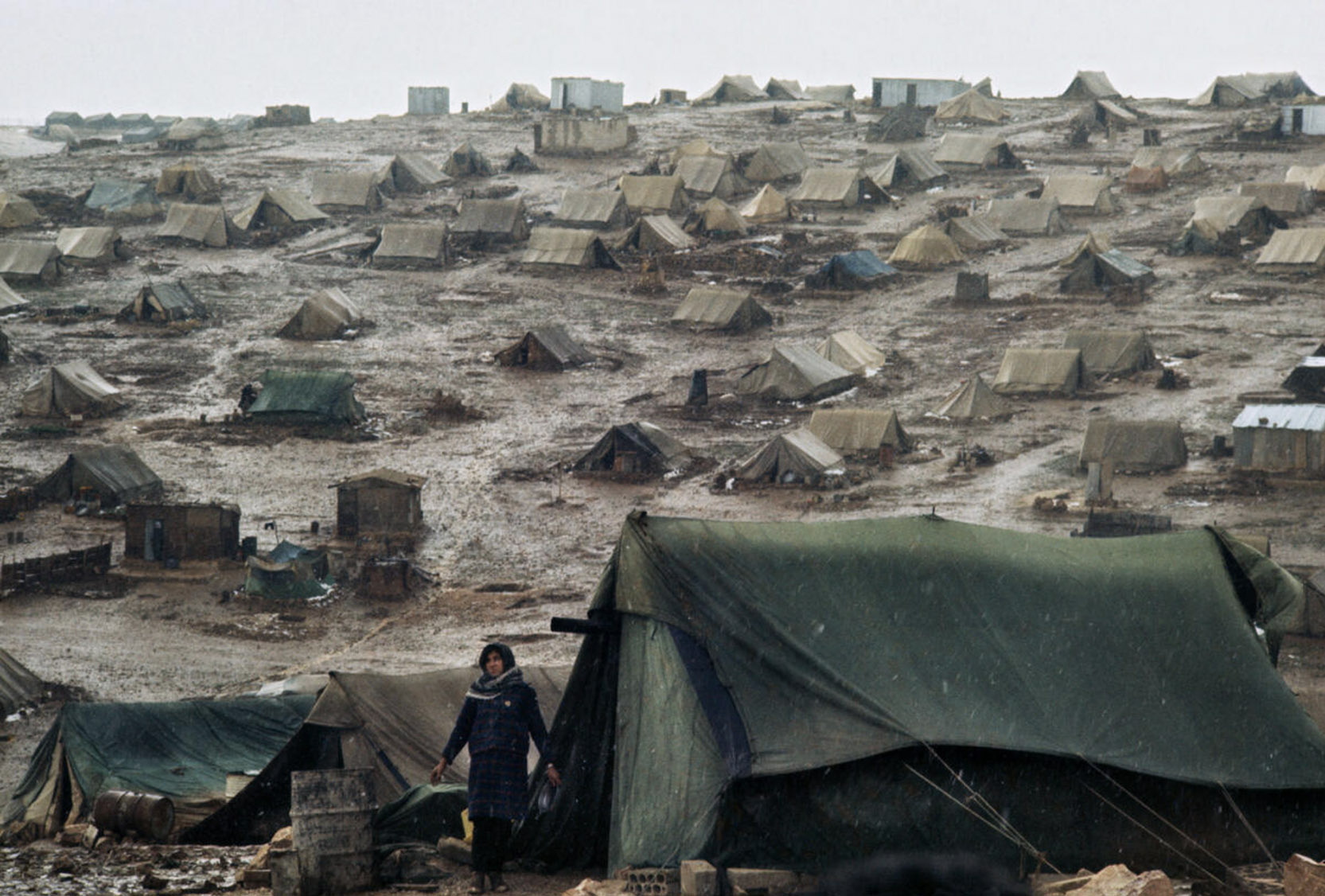
Un camp de réfugiés palestiniens, Jordanie, 1969 (photo Bruno Barbey/Magnum Photos)

6 FEBRUARY 2026 • By Selma Dabbagh

Select Other Languages English.

Les réfugiés palestiniens n’ont historiquement été considérés qu’en dernier lieu, ou pire, ils n’ont été vus que comme une inévitabilité.

Stolen Nation: The Right to Reparation of Palestinian Refugees, by Lena El-Malak
I.B. Tauris/Bloomsbury December 2024
ISBN 9780755652792

Quelle restitution ? 

Entre 1948 et 1967, l’Occident considérait communément la lutte palestinienne comme « le problème des réfugiés arabes », comme s’il ne s’agissait ni plus ni moins que d’une question d’aide humanitaire et de programmes de réinstallation, nécessaires à un groupe de personnes aux contours mal défini dans la région. L’UNRWA était alors, comme aujourd’hui, près de 80 ans plus tard, la bouée de sauvetage d’environ 750 000 Palestiniens déplacés de force par la Nakba de 1948, auxquels se sont ajoutés 325 000 autres lors de la Naksa de 1967.
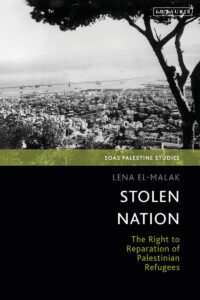
Stolen Nation 9780755652792
Stolen Nation est publié par I.B. Tauris/Bloomsbury.

Au cours des 15 dernières années, le nombre de réfugiés et de personnes déplacées de force dans le monde a augmenté de manière spectaculaire, avec 123,2 millions de personnes déplacées (1 personne sur 67) fin 2024, chiffre qui comprend 42,7 millions de réfugiés déplacés au-delà des frontières de leur pays d’origine. En 2003, Al-Awda, la coalition palestinienne pour le droit au retour, rapportait qu’« un réfugié sur trois dans le monde est palestinien ». Ce n’est probablement plus le cas aujourd’hui, non pas parce que le nombre de réfugiés palestiniens dans le monde a diminué (on estime actuellement à 5,9 millions le nombre de personnes pouvant bénéficier des services de l’UNWRA), mais parce que la situation mondiale en général s’est considérablement détériorée.

Cependant, lors des négociations concernant la Palestine, les droits des réfugiés ont été mis de côté pendant plusieurs décennies. Au cours du processus de paix d’Oslo, ils ont été relégués aux négociations sur le statut final, traités de manière pragmatique, puis abandonnés. Bien que d’excellents rapports et études aient été préparés pour les négociations, rien n’a jamais abouti. La « question » de millions de vies, de leurs droits, de leurs pertes et de leurs aspirations a été mise de côté. Les conditions de vie exiguës et insalubres dans les 58 camps de Cisjordanie, de la bande de Gaza et des États arabes voisins, où près de six millions de Palestiniens mènent une existence précaire, se sont détériorées d’année en année. La vulnérabilité des réfugiés palestiniens est aussi prononcée que l’intransigeance dans la résolution de leur sort.

La violence et les sièges ont entraîné des déplacements massifs : à Nahr el Bared, dans le nord du Liban, en 2007 (où vivaient 31 000 réfugiés), de même que les massacres dans le camp de Yarmouk en Syrie en 2015 (où vivaient 18 000 personnes) et les récents massacres dans le camp d’Ein el Helwah, dans le sud du Liban, où de nombreux habitants de Nahr el Bared avaient déjà été déplacés en 2007. Tout cela sans parler de la destruction des camps (Jénine, Tulkarem, Naplouse) en Cisjordanie depuis 2023 et du génocide à Gaza, où 66 % de la population est composée de réfugiés.

La réinstallation, ou « tawteen » en arabe, est devenue un mot tabou, car elle est vue comme une négation du droit au retour.

Dans son dernier rapport daté de juillet 2025, l’UNRWA a détaillé la « réponse dévastatrice d’Israël » après le 7 octobre 2023, « et la catastrophe humanitaire qui en a résulté », au cours de laquelle « au moins 315 membres du personnel de l’UNRWA ont été tués à Gaza et plus de 300 installations ont été endommagées ou détruites ». Le rapport énumère ensuite les autres mesures prises par Israël dans le but d’asphyxier l’agence : fermeture du bureau de Jérusalem-Est, imposition d’une politique de « non-contact », exclusion du personnel et obstruction à l’acheminement de l’aide. La crise actuelle des financements est d’une ampleur radicalement différente, suite à la suspension ou à la réduction de ces derniers par plusieurs donateurs clés, poursuit le rapport avec sobriété. Ce qui est décrit ici, c’est une politique de liquidation, non seulement d’une agence, mais aussi des personnes qui n’ont d’autre choix que d’en dépendre. Au moment où j’écris ces lignes, les plans américains pour Gaza excluent l’UNRWA des propositions d’aide humanitaire pour la bande de Gaza.

Historiquement, les solutions face au problème des réfugiés palestiniens se sont divisées en deux camps principaux : le retour ou la réinstallation. Ces deux options se sont heurtées à une intransigeance politique considérable. Alors qu’Israël a catégoriquement rejeté l’idée du retour, les États où se trouvent la plupart des camps de réfugiés ont, pour la plupart, interdit la réinstallation. La réinstallation, ou « tawteen » en arabe, est devenue un mot tabou, car elle est vue comme une négation du droit au retour. La Ligue arabe a pris position dans les années 1950 en déclarant que les Palestiniens avaient à la fois l’aspiration et le droit de retourner sur leurs terres, donnant ainsi aux États arabes d’accueil une base idéologique pour ne pas naturaliser les Palestiniens sur leur sol. L’idée était de préserver leur identité politique tout en leur accordant des droits économiques et sociaux dans les pays arabes qui les accueillaient. Et pourtant, la plupart des États ont souvent manqué à la seconde partie de cet engagement. Seule la Jordanie a choisi d’accorder la nationalité à la plupart des Palestiniens qui vivent à l’intérieur de ses frontières.

Dans ce contexte, Stolen Nation, l’ouvrage de Lena El-Malak, est une analyse rafraîchissante, solide et complète d’un aspect négligé et souvent mal compris de la « question » des réfugiés palestiniens : celui des réparations. Le livre s’appuie en partie sur l’ouvrage de Sami Hadawi publié en 1988, Palestinian Rights and Losses in 1948, ainsi que sur divers travaux de Salman Abu Sitta qui explorent la possibilité d’un retour. El-Malak utilise l’évaluation des pertes matérielles palestiniennes réalisée par Atif Kubursi, qui les estimait à 22,5 milliards de dollars américains en 2000. Les études fondatrices de Raja Shehadeh sur les lois israéliennes qui régissent l’expropriation des terres en Palestine sont également citées dans les premiers chapitres.

Avocate spécialisée dans les technologies et la confidentialité des données à Londres, El-Malak est également experte en droit international public et en droit des réfugiés. Elle définit clairement l’objet de ses recherches dans l’introduction. Seuls les réfugiés de 1948 sont pris en considération et les questions sont formulées comme suit :

Comment Israël a-t-il procédé à l’expropriation des biens appartenant aux réfugiés palestiniens de 1948 ? Quels sont les fondements juridiques du droit des réfugiés palestiniens à obtenir réparation pour la perte ou la détérioration de leurs biens ? Quelles voies juridiques ces réfugiés, ou leur représentant légitime, l’État observateur de Palestine, peuvent-ils emprunter pour faire valoir leur droit aux réparations ? Quelles sont les formes de réparations disponibles en vertu du droit international et quels sont les obstacles juridiques à l’application du droit aux réparations ? Et enfin : comment les négociations israélo-palestiniennes ont-elles abordé la question des revendications foncières des réfugiés palestiniens ?

Les deux principales formes de réparations pour les pertes foncières sont la restitution et l’indemnisation, la restitution étant l’option privilégiée en vertu du droit international. L’indemnisation « ne peut être considérée comme une alternative à la restitution que si les réfugiés choisissent volontairement l’indemnisation plutôt que la restitution ou lorsque la restitution est “factuellement impossible” », écrit El-Malak. Et pourtant, elle poursuit en affirmant que « la résistance d’Israël à mettre en œuvre une restitution fondée sur le retour et la réticence de la communauté internationale à soutenir les droits à la restitution ne font pas automatiquement de l’indemnisation une alternative acceptable à la restitution des biens ».

Le droit à la restitution va au-delà du propriétaire initial et est transmis à ses descendants. El-Malak fait ici référence aux principes Pinheiro du Haut-Commissariat des Nations unies pour les réfugiés (HCR), qui exhortent les États à inclure dans leurs lois foncières tous les demandeurs légalement habilités à obtenir la restitution de leur logement, de leurs terres et de leurs biens, y compris les demandeurs subsidiaires, tels que « les membres de la famille résidant au moment du déplacement, les conjoints, les partenaires domestiques, les personnes à charge, les héritiers légaux et autres ». La Bosnie, le Kosovo et l’Afrique du Sud sont des exemples d’application de ces principes. Quant à la manière dont les mécanismes de réparations pourraient être utilisés, El-Malak souligne que les tribunaux chargés des demandes collectives constituent le meilleur moyen de résoudre les demandes de restitution de biens des réfugiés palestiniens. Les chapitres du livre qui traitent de la mise en œuvre de la restitution des biens, de ses possibilités et de ses défis, et qui présentent les différents leviers à la disposition des demandeurs, y compris les poursuites judiciaires potentielles, sont instructifs et servent de base à des recherches plus approfondies.

Selon El-Malak, les obstacles juridiques ne sont pas insurmontables, mais ce sont « les obstacles politiques et idéologiques à la restitution fondée sur le retour qui sont beaucoup plus difficiles à surmonter, d’autant plus que l’idéologie des colons israéliens continue d’être celle de l’expansion territoriale et du transfert ». Créer un précédent en érodant le droit des Palestiniens à la restitution risque de compromettre les droits d’autres communautés dépossédées. À l’inverse, l’octroi de réparations peut avoir un effet dissuasif sur d’autres injustices à l’échelle mondiale.

Ce livre, qui est le fruit d’une recherche approfondie, présente de nombreux aspects admirables, qui ne sont pas seulement dus au fait que le sujet lui-même incarne un optimisme empli de volonté, étant donné qu’il a été publié en pleine période du génocide de Gaza. El-Malak démêle l’approche du gouvernement israélien à l’égard de la Nakba et des expulsions de 1948, qui sont pour le moins complexes. Les responsables israéliens nient et célèbrent à la fois la Nakba, l’utilisant souvent comme une menace pour l’avenir de la région en affirmant qu’ils devront « finir le travail ». Récemment, le juriste international Rabae Eghbariah a fait valoir que la Nakba en cours fournit un cadre juridique pour l’autodétermination des Palestiniens. Eghbariah insiste pour revenir aux racines du problème, soulignant que même si 1948 s’éloigne dans le temps, ce qui s’est passé cette année-là est plus pertinent que jamais. Lena El-Malak semble être d’accord. Le récent rapport de l’UNWRA de juillet 2025, lui, en revanche, omet toute mention de 1948, soulignant non seulement l’ampleur du fossé entre les agences des Nations unies, même sympathisantes, et les revendications palestiniennes, mais aussi le gouffre entre les aspirations juridiques palestiniennes et l’hostilité ouverte du gouvernement américain, qui s’est ouvertement opposé à l’ONU en général et à l’UNWRA en particulier.

Les réparations devraient constituer un élément essentiel de la lutte palestinienne pour la reconnaissance internationale, l’autodétermination, la justice et la libération, ce qui implique de renforcer l’idée que la Nakba est une injustice originelle sur laquelle justice doit être rendue. Le livre d’El-Malak, qui constitue à ce jour l’étude contemporaine la plus complète à ce sujet, soutient que même si le droit international privilégie la restitution plutôt que l’indemnisation comme réparation pour les pertes matérielles, le refus politique d’autoriser la restitution « ne rend pas automatiquement l’indemnisation acceptable comme alternative ». Et « cela est particulièrement vrai lorsque le déplacement et la dépossession des réfugiés s’inscrivent dans le cadre d’une campagne plus large de nettoyage ethnique ». Dans ces situations, écrit-elle, « tous les efforts visant à obtenir une restitution fondée sur le retour et à inverser le nettoyage ethnique doivent être épuisés avant de poursuivre toute initiative ultérieure qui pourrait reposer sur des solutions durables fondées sur l’indemnisation pour le déplacement ».

À une époque où il y a peu de signes d’une volonté politique de trouver une solution qui inclut les Palestiniens comme partenaires égaux dans la recherche, de nombreux lecteurs peuvent s’interroger sur la pertinence même du droit international. El-Malak anticipe cette hésitation. « L’un des objectifs de ce livre », écrit-elle, « est d’intégrer le droit international dans un cadre de négociation réaliste sur les droits des réfugiés palestiniens, bien que le droit international et la politique soient inévitablement liés. Il ne s’agit pas de prétendre que le droit international est la formule magique qui mènera à la libération. En fait, le rôle du droit international suscite beaucoup de scepticisme et fait l’objet de critiques valables quant à la manière dont il est utilisé comme un outil par l’oppresseur. Il s’agit toutefois d’un outil qui doit être déployé plus efficacement et qui ne peut être marginalisé dans le contexte des négociations de “paix”, si et quand celles-ci reprendront sous prétexte de réalisme politique. »

Stolen Nation mérite d’être lu par un large public, non seulement pour ceux qui s’intéressent à la Palestine et aux communautés dépossédées, mais aussi pour les lecteurs non-juristes qui cherchent l’inspiration pour trouver de nouvelles voies afin de développer des mécanismes de justice dans un monde de plus en plus violent et raciste. Il est rédigé avec une concision et une clarté qui contrastent avec les nombreuses sources utilisées pour parvenir à ses conclusions. Selon El-Malak, la restitution est une revendication qui doit être formulée, prouvée et défendue. Comme elle l’explique, l’érosion de ces droits pour les Palestiniens aura des conséquences bien plus larges pour l’ordre mondial tel qu’il est consacré dans le droit international. Cela fait des droits des Palestiniens une question d’une importance fondamentale pour le monde entier.


Traduit de l’anglais par Marion Beauchamp-Levet 

Selma Dabbagh

Selma Dabbagh is a British-Palestinian writer and lawyer. She holds an LLM from SOAS and a PhD from Goldsmiths University. She has worked for human rights organizations in Jerusalem, Cairo, and London. Selma’s debut novel Out of It (Bloomsbury 2011) is set... Read more

Join Our Community

TMR exists thanks to its readers and supporters. By sharing our stories and celebrating cultural pluralism, we aim to counter racism, xenophobia, and exclusion with knowledge, empathy, and artistic expression.

Learn more

RELATED

Book Reviews

Art and Disillusionment in Saleem Haddad’s Floodlines

20 FEBRUARY 2026 • By Layla AlAmmar
Art and Disillusionment in Saleem Haddad’s <em>Floodlines</em>
Book Reviews

Two New Books Show How Gaza Changed the World

13 FEBRUARY 2026 • By Rebecca Ruth Gould
Two New Books Show How Gaza Changed the World
Book Reviews

Stolen Nation: An Argument for Palestinian Reparations

6 FEBRUARY 2026 • By Selma Dabbagh
<em>Stolen Nation</em>: An Argument for Palestinian Reparations
Columns

Small Moments and Their Much Larger Meaning

30 JANUARY 2026 • By Amal Ghandour
Small Moments and Their Much Larger Meaning
Fiction

“Tiny Suns”—a short story

30 JANUARY 2026 • By Sahar Mustafah
“Tiny Suns”—a short story
Essays

Jewish Supremacy and the Making of Genocide in Gaza

30 JANUARY 2026 • By Sheryl Ono
Jewish Supremacy and the Making of Genocide in Gaza
Essays

Not Even the Dead Rest in Palestine

30 JANUARY 2026 • By A Mom from Bethlehem
Not Even the Dead Rest in Palestine
Essays

How Can Palestinians and Israelis Live Together?

30 JANUARY 2026 • By Raja Shehadeh
How Can Palestinians and Israelis Live Together?
Interviews

Prison and the Writer: Interview with Palestinian Nasser Abu Srour

30 JANUARY 2026 • By Rebecca Ruth Gould
Prison and the Writer: Interview with Palestinian Nasser Abu Srour
Film Reviews

With Hasan in Gaza: Salvaged Palestine

30 JANUARY 2026 • By Jim Quilty
<em>With Hasan in Gaza</em>: Salvaged Palestine
TMR 57 • PALESTINE

In Two New Books, Palestinian Writing Bears Witness

30 JANUARY 2026 • By Gabriel Polley
In Two New Books, Palestinian Writing Bears Witness
Book Reviews

You Must Live: A Collection of Palestinian Poetry

30 JANUARY 2026 • By Sholeh Wolpé
<em>You Must Live</em>: A Collection of Palestinian Poetry
TMR 57 • PALESTINE

Letter from Gaza: Our Long Wait for Gas

30 JANUARY 2026 • By Esraa Abo Qamar
Letter from Gaza: Our Long Wait for Gas
TMR 57 • PALESTINE

Letter from Gaza: Stuck in Place

30 JANUARY 2026 • By Mariam Mushtaha
Letter from Gaza: Stuck in Place
Editorial

Why PALESTINE?

30 JANUARY 2026 • By TMR
Why PALESTINE?
Columns

Trump, The Liberator! (and the Fear Wagons)

16 JANUARY 2026 • By Amal Ghandour
Trump, The Liberator! (and the Fear Wagons)
Film

The Palestinian Legacy of Mohammad Bakri

2 JANUARY 2026 • By Hadani Ditmars
The Palestinian Legacy of Mohammad Bakri
Columns

Emm Kamel: The Future Is Here and So Is the Past

19 DECEMBER 2025 • By Amal Ghandour
<em>Emm Kamel</em>: The Future Is Here and So Is the Past
Fiction

A Bomb for Personal Use—an excerpt

5 DECEMBER 2025 • By Mirna Al-Mahdi
<em>A Bomb for Personal Use</em>—an excerpt
short story

“Tuesday”—a story from Palestine

5 DECEMBER 2025 • By Majd Aburrub
“Tuesday”—a story from Palestine
Film

10 Noir Films from the Arab world, Iran, and Turkey

5 DECEMBER 2025 • By TMR
10 Noir Films from the Arab world, Iran, and Turkey
Art & Photography

Artist Interview: Corinne Silva on Israeli Settlement Gardens in Palestine

28 NOVEMBER 2025 • By Jelena Sofronijevic
Artist Interview: Corinne Silva on Israeli Settlement Gardens in Palestine
Essays

Home — a State of Restlessness?

7 NOVEMBER 2025 • By Neemah Ahamed
Home — a State of Restlessness?
Centerpiece

The Grammar of Power: On Journalism, Grief, and the Stories That Break Us

7 NOVEMBER 2025 • By Adam Makary
The Grammar of Power: On Journalism, Grief, and the Stories That Break Us
Editorial

Why NATIONALITY?

7 NOVEMBER 2025 • By Jordan Elgrably, Malu Halasa
Why NATIONALITY?
Essays

The War on Palestinians Didn’t Start on October 7

10 OCTOBER 2025 • By Taqwa Ahmed Al-Wawi
The War on Palestinians Didn’t Start on October 7
Essays

Lament For My Dear Cousin and Friend in Tulkarm

3 OCTOBER 2025 • By Thoth
Lament For My Dear Cousin and Friend in Tulkarm
Columns

Longing for Love in a Time of Genocide

26 SEPTEMBER 2025 • By Lina Mounzer
Longing for Love in a Time of Genocide
Fiction

Diba’s House

26 SEPTEMBER 2025 • By Sara Masry
Diba’s House
Featured article

Together for Palestine — Truly Historic

19 SEPTEMBER 2025 • By TMR
Together for Palestine — Truly Historic
Book Reviews

How the Media Fails Armenia and Palestine

19 SEPTEMBER 2025 • By Gabriel Polley
How the Media Fails Armenia and Palestine
Film Reviews

New Documentaries from Palestine, Sudan, Afghanistan, and Iran

12 SEPTEMBER 2025 • By Yassin El-Moudden
New Documentaries from Palestine, Sudan, Afghanistan, and Iran
Film

Once Upon a Time in Gaza Wants to Be an Indie Western

29 AUGUST 2025 • By Karim Goury
<em>Once Upon a Time in Gaza</em> Wants to Be an Indie Western
Essays

From Stitch to Symbol: The Power of Palestinian Tatreez

22 AUGUST 2025 • By Joanna Barakat
From Stitch to Symbol: The Power of Palestinian Tatreez
Essays

Amal Doesn’t Even Know What a Banana Is: Child Malnutrition in Gaza

1 AUGUST 2025 • By Asem Al Jerjawi
Amal Doesn’t Even Know What a Banana Is: Child Malnutrition in Gaza
Art & Photography

August World Picks from the Editors

25 JULY 2025 • By TMR
August World Picks from the Editors
Essays

“A Love That Endures”: How Tamer and Sabreen Defied War and Death

25 JULY 2025 • By Husam Maarouf
“A Love That Endures”: How Tamer and Sabreen Defied War and Death
Featured article

“Silence is Not the Way”—Arab Writers Against Israel’s Genocide

18 JULY 2025 • By Jordan Elgrably
“Silence is Not the Way”—Arab Writers Against Israel’s Genocide
Book Reviews

Palestine’s Places and Memorials Are Not Forgotten

4 JULY 2025 • By Gabriel Polley
Palestine’s Places and Memorials Are Not <em>Forgotten</em>
Essays

Unwritten Stories from Palestine

4 JULY 2025 • By Thoth
Unwritten Stories from Palestine
Essays

A Voice That Defied Silence: The Legacy of Dr. Refaat Al-Areer

4 JULY 2025 • By Taqwa Ahmed Al-Wawi
A Voice That Defied Silence: The Legacy of Dr. Refaat Al-Areer
Essays

Israel is Today’s Sparta: Middle East Wars Viewed from Iraq

20 JUNE 2025 • By Hassan Abdulrazzak
Israel is Today’s Sparta: Middle East Wars Viewed from Iraq
Film

From A World Not Ours to a Land Unknown

13 JUNE 2025 • By Jim Quilty
From A World Not Ours to a <em>Land Unknown</em>
Essays

Doaa: From a Dreamworld to the Ashes of Displacement

30 MAY 2025 • By Taqwa Ahmed Al-Wawi
Doaa: From a Dreamworld to the Ashes of Displacement
Featured article

Arrested and Rearrested: Palestinian Women in the West Bank

16 MAY 2025 • By Lynzy Billing
Arrested and Rearrested: Palestinian Women in the West Bank
Books

Editors’ 2025 Palestinian Lit List

15 MAY 2025 • By TMR
Editors’ 2025 Palestinian Lit List
Books

Poet Mosab Abu Toha Wins Pulitzer Prize for Essays on Gaza

9 MAY 2025 • By Jordan Elgrably
Poet Mosab Abu Toha Wins Pulitzer Prize for Essays on Gaza
Editorial

For Our 50th Issue, Writers Reflect on Going Home

2 MAY 2025 • By TMR
For Our 50th Issue, Writers Reflect on Going Home
Art

Neither Here Nor There

2 MAY 2025 • By Myriam Cohenca
Neither Here Nor There
Film

Exile and Hope: Sudanese creatives and the question of home

2 MAY 2025 • By Ati Metwaly
Exile and Hope: Sudanese creatives and the question of home
Film

Gaza, Sudan, Israel/Palestine Documentaries Show in Thessaloniki

28 MARCH 2025 • By Iason Athanasiadis
Gaza, Sudan, Israel/Palestine Documentaries Show in Thessaloniki
Essays

A Conversation Among My Homeland’s Trees

7 MARCH 2025 • By Alia Yunis
A Conversation Among My Homeland’s Trees
Art & Photography

Afghanistan’s Histories of Conflict, Resistance & Desires

7 MARCH 2025 • By Jelena Sofronijevic
Afghanistan’s Histories of Conflict, Resistance & Desires
Art

Finding Emptiness: Gaza Artist Taysir Batniji in Beirut

21 FEBRUARY 2025 • By Jim Quilty
Finding Emptiness: Gaza Artist Taysir Batniji in Beirut
Book Reviews

Omar El Akkad & Mohammed El-Kurd: Liberalism in a Time of Genocide

14 FEBRUARY 2025 • By Rebecca Ruth Gould
Omar El Akkad & Mohammed El-Kurd: Liberalism in a Time of Genocide
Centerpiece

Ravaged by Fire

7 FEBRUARY 2025 • By Francisco Letelier
Ravaged by Fire
Book Reviews

Memories of Palestine through Contemporary Media

7 FEBRUARY 2025 • By Malu Halasa
Memories of Palestine through Contemporary Media
Essays

Flight Plans: From Gaza to Singapore

7 FEBRUARY 2025 • By Chin-chin Yap
Flight Plans: From Gaza to Singapore
Books

“Culinary Palestine” — Fadi Kattan in an excerpt from Sumud

31 JANUARY 2025 • By Fadi Kattan
“Culinary Palestine” — Fadi Kattan in an excerpt from <em>Sumud</em>
Book Reviews

Yassini Girls—a Powerful Yet Flawed Account of Historical Trauma

31 JANUARY 2025 • By Natasha Tynes
<em>Yassini Girls</em>—a Powerful Yet Flawed Account of Historical Trauma
Arabic

Huda Fakhreddine & Yasmeen Hanoosh: Translating Arabic & Gaza

17 JANUARY 2025 • By Yasmeen Hanoosh, Huda J. Fakhreddine
Huda Fakhreddine & Yasmeen Hanoosh: Translating Arabic & Gaza
Book Reviews

Radwa Ashour’s Classic Granada Now in a New English Edition

17 JANUARY 2025 • By Guy Mannes-Abbott
Radwa Ashour’s Classic <em>Granada</em> Now in a New English Edition
Book Reviews

Maya Abu Al-Hayyat’s Defiant Exploration of Palestinian Life

20 DECEMBER 2024 • By Zahra Hankir
Maya Abu Al-Hayyat’s Defiant Exploration of Palestinian Life
Essays

Return to Damascus…the Long Road Home

13 DECEMBER 2024 • By Zaher Omareen, Rana Asfour
Return to Damascus…the Long Road Home
Featured Artist

Palestine Features in Larissa Sansour’s Sci-Fi Future

6 DECEMBER 2024 • By Larissa Sansour
Palestine Features in Larissa Sansour’s Sci-Fi Future
Opinion

Susan Abulhawa at Oxford Union on Palestine/Israel

6 DECEMBER 2024 • By Susan Abulhawa
Susan Abulhawa at Oxford Union on Palestine/Israel
Art

Basel Abbas & Ruanne Abou-Rahme: Palestinian artists at Copenhagen’s Glyptotek

22 NOVEMBER 2024 • By Arie Amaya-Akkermans
Basel Abbas & Ruanne Abou-Rahme: Palestinian artists at Copenhagen’s Glyptotek
Art & Photography

The Palestinian Gazelle

1 NOVEMBER 2024 • By Manal Mahamid
The Palestinian Gazelle
Interviews

The Hybrid — The Case of Michael Vatikiotis

18 OCTOBER 2024 • By Rana Haddad
The Hybrid — The Case of Michael Vatikiotis
Essays

Palestine, the Land of Grapes and Wine

11 OCTOBER 2024 • By Fadi Kattan, Anna Patrowicz
Palestine, the Land of Grapes and Wine
TMR 45 • From Here, One Year On

Witnessing Catastrophe: a Painter in Lebanon

4 OCTOBER 2024 • By Ziad Suidan
Witnessing Catastrophe: a Painter in Lebanon
Art & Photography

Visuals and Voices: Palestine Will Not Be a Palimpsest

4 OCTOBER 2024 • By Malu Halasa
Visuals and Voices: Palestine Will Not Be a Palimpsest
Essays

Shamrocks & Watermelons: Palestine Politics in Belfast

4 OCTOBER 2024 • By Stuart Bailie
Shamrocks & Watermelons: Palestine Politics in Belfast
Opinion

Everything Has Changed, Nothing Has Changed

4 OCTOBER 2024 • By Amal Ghandour
Everything Has Changed, Nothing Has Changed
Art

Activism in the Landscape: Environmental Arts & Resistance in Palestine

4 OCTOBER 2024 • By Katie Logan
Activism in the Landscape: Environmental Arts & Resistance in Palestine
Poetry

Poems by Nasser Rabah, Amanee Izhaq and Mai Al-Nakib

4 OCTOBER 2024 • By Nasser Rabah, Amanee Izhaq, Mai Al-Nakib, Wiam El-Tamami
Poems by Nasser Rabah, Amanee Izhaq and Mai Al-Nakib
Featured Artist

Featured Artists: “Barred From Home”

6 SEPTEMBER 2024 • By Malu Halasa
Featured Artists: “Barred From Home”
Books

“Kill the Music”—an excerpt from a new novel by Badar Salem

16 AUGUST 2024 • By Badar Salem
“Kill the Music”—an excerpt from a new novel by Badar Salem
Film

World Picks from the Editors: AUGUST

2 AUGUST 2024 • By TMR
World Picks from the Editors: AUGUST
Book Reviews

Israel’s Black Panthers by Asaf Elia-Shalev—a Review

19 JULY 2024 • By Ilan Benattar
<em>Israel’s Black Panthers</em> by Asaf Elia-Shalev—a Review
Art & Photography

World Picks from the Editors: July 15 — August 2

12 JULY 2024 • By TMR
World Picks from the Editors: July 15 — August 2
Fiction

“The Cockroaches”—flash fiction

5 JULY 2024 • By Stanko Uyi Srsen
“The Cockroaches”—flash fiction
Centerpiece

Dare Not Speak—a One-Act Play

7 JUNE 2024 • By Hassan Abdulrazzak
<em>Dare Not Speak</em>—a One-Act Play
Books

Palestine, Political Theatre & the Performance of Queer Solidarity in Jean Genet’s Prisoner of Love

7 JUNE 2024 • By Saleem Haddad
Palestine, Political Theatre & the Performance of Queer Solidarity in Jean Genet’s <em>Prisoner of Love</em>
Art & Photography

What Is Home?—Gazans Redefine Place Amid Displacement

31 MAY 2024 • By Nadine Aranki
What Is Home?—Gazans Redefine Place Amid Displacement
Essays

A Small Kernel of Human Kindness: Some Notes on Solidarity and Resistance

24 MAY 2024 • By Nancy Kricorian
A Small Kernel of Human Kindness: Some Notes on Solidarity and Resistance
Art

Demarcations of Identity: Rushdi Anwar

10 MAY 2024 • By Malu Halasa
Demarcations of Identity: Rushdi Anwar
Editorial

Why FORGETTING?

3 MAY 2024 • By Malu Halasa, Jordan Elgrably
Why FORGETTING?
Centerpiece

Memory Archive: Between Remembering and Forgetting

3 MAY 2024 • By Mai Al-Nakib
Memory Archive: Between Remembering and Forgetting
Art & Photography

Not Forgotten, Not (All) Erased: Palestine’s Sacred Shrines

3 MAY 2024 • By Gabriel Polley
Not Forgotten, Not (All) Erased: Palestine’s Sacred Shrines
Book Reviews

Palestinian Culture, Under Assault, Celebrated in New Cookbook

3 MAY 2024 • By Mischa Geracoulis
Palestinian Culture, Under Assault, Celebrated in New Cookbook
Art & Photography

Malak Mattar: No Words, Only Scenes of Ruin

26 APRIL 2024 • By Nadine Nour el Din
Malak Mattar: No Words, Only Scenes of Ruin
Opinion

Censorship over Gaza and Palestine Roils the Arts Community

12 APRIL 2024 • By Hassan Abdulrazzak
Censorship over Gaza and Palestine Roils the Arts Community
Art

Past Disquiet at the Palais de Tokyo in Paris

1 APRIL 2024 • By Kristine Khouri, Rasha Salti
<em>Past Disquiet</em> at the Palais de Tokyo in Paris
Essays

Undoing Colonial Geographies from Paris with Ariella Aïsha Azoulay

1 APRIL 2024 • By Sasha Moujaes, Jordan Elgrably
Undoing Colonial Geographies from Paris with Ariella Aïsha Azoulay
Book Reviews

Fady Joudah’s […] Dares Us to Listen to Palestinian Words—and Silences

25 MARCH 2024 • By Eman Quotah
Fady Joudah’s <em>[…]</em> Dares Us to Listen to Palestinian Words—and Silences
Art & Photography

Will Artists Against Genocide Boycott the Venice Biennale?

18 MARCH 2024 • By Hadani Ditmars
Will Artists Against Genocide Boycott the Venice Biennale?
Books

Four Books to Revolutionize Your Thinking

3 MARCH 2024 • By Rana Asfour
Four Books to Revolutionize Your Thinking
Essays

The Story of the Keffiyeh

3 MARCH 2024 • By Rajrupa Das
The Story of the Keffiyeh
Essays

Messages from Gaza Now / 5

26 FEBRUARY 2024 • By Hossam Madhoun
Messages from Gaza Now / 5
Weekly

World Picks from the Editors: Feb 23 — Mar 7

23 FEBRUARY 2024 • By TMR
World Picks from the Editors: Feb 23 — Mar 7
Art & Photography

The Body, Intimacy and Technology in the Middle East

4 FEBRUARY 2024 • By Naima Morelli
The Body, Intimacy and Technology in the Middle East
Columns

Driving in Palestine Now is More Dangerous Than Ever

29 JANUARY 2024 • By TMR
Driving in Palestine Now is More Dangerous Than Ever
Featured article

Israel-Palestine: Peace Under Occupation?

29 JANUARY 2024 • By Laëtitia Soula
Israel-Palestine: Peace Under Occupation?
Books

Illuminated Reading for 2024: Our Anticipated Titles

22 JANUARY 2024 • By TMR
Illuminated Reading for 2024: Our Anticipated Titles
Fiction

“New Reasons”—a short story by Samira Azzam

15 JANUARY 2024 • By Samira Azzam, Ranya Abdelrahman
“New Reasons”—a short story by Samira Azzam
Essays

Jesus Was Palestinian, But Bethlehem Suspends Christmas

25 DECEMBER 2023 • By Ahmed Twaij
Jesus Was Palestinian, But Bethlehem Suspends Christmas
Columns

Messages from Gaza Now / 2

18 DECEMBER 2023 • By Hossam Madhoun
Messages from Gaza Now / 2
Music

We Will Sing Until the Pain Goes Away—a Palestinian Playlist

18 DECEMBER 2023 • By Brianna Halasa
We Will Sing Until the Pain Goes Away—a Palestinian Playlist
Featured excerpt

The Palestine Laboratory and Gaza: An Excerpt

4 DECEMBER 2023 • By Antony Loewenstein
<em>The Palestine Laboratory</em> and Gaza: An Excerpt
Arabic

Poet Ahmad Almallah

9 NOVEMBER 2023 • By Ahmad Almallah
Poet Ahmad Almallah
Opinion

Palestine’s Pen against Israel’s Swords of Injustice

6 NOVEMBER 2023 • By Mai Al-Nakib
Palestine’s Pen against Israel’s Swords of Injustice
Essays

On Fathers, Daughters and the Genocide in Gaza 

30 OCTOBER 2023 • By Deema K Shehabi
On Fathers, Daughters and the Genocide in Gaza 
Book Reviews

The Refugee Ocean—An Intriguing Premise

30 OCTOBER 2023 • By Natasha Tynes
<em>The Refugee Ocean</em>—An Intriguing Premise
Editorial

Palestine and the Unspeakable

16 OCTOBER 2023 • By Lina Mounzer
Palestine and the Unspeakable
Art

The Ongoing Nakba—Rasha Al-Jundi’s Embroidery Series

16 OCTOBER 2023 • By Rasha Al Jundi
The Ongoing Nakba—Rasha Al-Jundi’s Embroidery Series
Art

Vera Tamari’s Lifetime of Palestinian Art

16 OCTOBER 2023 • By Taline Voskeritchian
Vera Tamari’s Lifetime of Palestinian Art
Book Reviews

A Day in the Life of Abed Salama: A Palestine Story

16 OCTOBER 2023 • By Dalia Hatuqa
<em>A Day in the Life of Abed Salama</em>: A Palestine Story
Weekly

World Picks from the Editors, Oct 13 — Oct 27, 2023

12 OCTOBER 2023 • By TMR
World Picks from the Editors, Oct 13 — Oct 27, 2023
Poetry

Home: New Arabic Poems in Translation

11 OCTOBER 2023 • By Sarah Coolidge
<em>Home</em>: New Arabic Poems in Translation
Books

Edward Said: Writing in the Service of Life 

9 OCTOBER 2023 • By Layla AlAmmar
Edward Said: Writing in the Service of Life 
Theatre

Lebanese Thespian Aida Sabra Blossoms in International Career

9 OCTOBER 2023 • By Nada Ghosn
Lebanese Thespian Aida Sabra Blossoms in International Career
Books

Fairouz: The Peacemaker and Champion of Palestine

1 OCTOBER 2023 • By Dima Issa
Fairouz: The Peacemaker and Champion of Palestine
Book Reviews

Saqi’s Revenant: Sahar Khalifeh’s Classic Nablus Novel Wild Thorns

25 SEPTEMBER 2023 • By Noshin Bokth
Saqi’s Revenant: Sahar Khalifeh’s Classic Nablus Novel <em>Wild Thorns</em>
Book Reviews

Laila Halaby’s The Weight of Ghosts is a Haunting Memoir

28 AUGUST 2023 • By Thérèse Soukar Chehade
Laila Halaby’s <em>The Weight of Ghosts</em> is a Haunting Memoir
Book Reviews

What’s the Solution for Jews and Palestine in the Face of Apartheid Zionism?

21 AUGUST 2023 • By Jonathan Ofir
What’s the Solution for Jews and Palestine in the Face of Apartheid Zionism?
Book Reviews

Ilan Pappé on Tahrir Hamdi’s Imagining Palestine

7 AUGUST 2023 • By Ilan Pappé
Ilan Pappé on Tahrir Hamdi’s <em> Imagining Palestine</em>
Art

What Palestine Brings to the World—a Major Paris Exhibition

31 JULY 2023 • By Sasha Moujaes
<em>What Palestine Brings to the World</em>—a Major Paris Exhibition
Essays

“My Mother is a Tree”—a story by Aliyeh Ataei

2 JULY 2023 • By Aliyeh Ataei
“My Mother is a Tree”—a story by Aliyeh Ataei
Fiction

“The Afghan and the Persian”—a short story by Jordan Elgrably

2 JULY 2023 • By Jordan Elgrably
“The Afghan and the Persian”—a short story by Jordan Elgrably
Fiction

The Ship No One Wanted—a story by Hassan Abdulrazak

2 JULY 2023 • By Hassan Abdulrazzak
The Ship No One Wanted—a story by Hassan Abdulrazak
Fiction

Tears from a Glass Eye—a story by Samira Azzam

2 JULY 2023 • By Samira Azzam, Ranya Abdelrahman
Tears from a Glass Eye—a story by Samira Azzam
Featured Artist

Artist at Work: Syrian Filmmaker Afraa Batous

26 JUNE 2023 • By Dima Hamdan
Artist at Work: Syrian Filmmaker Afraa Batous
Essays

Turkey’s Earthquake as a Generational Disaster

4 JUNE 2023 • By Sanem Su Avci
Turkey’s Earthquake as a Generational Disaster
Arabic

Arab Theatre Grapples With Climate Change, Borders, War & Love

4 JUNE 2023 • By Hassan Abdulrazzak
Arab Theatre Grapples With Climate Change, Borders, War & Love
Essays

Alien Entities in the Desert

4 JUNE 2023 • By Dror Shohet
Alien Entities in the Desert
Featured Artist

Nasrin Abu Baker: The Markaz Review Featured Artist, June 2023

4 JUNE 2023 • By TMR
Nasrin Abu Baker: The Markaz Review Featured Artist, June 2023
Book Reviews

How Bethlehem Evolved From Jerusalem’s Sleepy Backwater to a Global Town

15 MAY 2023 • By Karim Kattan
How Bethlehem Evolved From Jerusalem’s Sleepy Backwater to a Global Town
TMR Conversations

TMR CONVERSATIONS: Amal Ghandour Interviews Raja Shehadeh

11 MAY 2023 • By Amal Ghandour, Raja Shehadeh
TMR CONVERSATIONS: Amal Ghandour Interviews Raja Shehadeh
Opinion

Nurredin Amro’s Epic Battle to Save His Home From Demolition

24 APRIL 2023 • By Nora Lester Murad
Nurredin Amro’s Epic Battle to Save His Home From Demolition
Book Reviews

In Search of Fathers: Raja Shehadeh’s Palestinian Memoir

13 MARCH 2023 • By Amal Ghandour
In Search of Fathers: Raja Shehadeh’s Palestinian Memoir
Centerpiece

Broken Home: Britain in the Time of Migration

5 MARCH 2023 • By Malu Halasa
Broken Home: Britain in the Time of Migration
Cities

For Those Who Dwell in Tents, Home is Temporal—Or Is It?

5 MARCH 2023 • By Arie Amaya-Akkermans
For Those Who Dwell in Tents, Home is Temporal—Or Is It?
Essays

More Photographs Taken From The Pocket of a Dead Arab

5 MARCH 2023 • By Saeed Taji Farouky
More Photographs Taken From The Pocket of a Dead Arab
Cities

The Odyssey That Forged a Stronger Athenian

5 MARCH 2023 • By Iason Athanasiadis
The Odyssey That Forged a Stronger Athenian
Book Reviews

To Receive Asylum, You First Have to be Believed, and Accepted

5 MARCH 2023 • By Mischa Geracoulis
To Receive Asylum, You First Have to be Believed, and Accepted
Essays

Home Under Siege: a Palestine Photo Essay

5 MARCH 2023 • By Anam Raheem
Home Under Siege: a Palestine Photo Essay
Art

Displacement, Migration are at the Heart of Istanbul Exhibit

13 FEBRUARY 2023 • By Jennifer Hattam
Displacement, Migration are at the Heart of Istanbul Exhibit
Columns

Sudden Journeys: Deluge at Wadi Feynan

6 FEBRUARY 2023 • By Jenine Abboushi
Sudden Journeys: Deluge at Wadi Feynan
TV Review

Palestinian Territories Under Siege But Season 4 of Fauda Goes to Brussels and Beirut Instead

6 FEBRUARY 2023 • By Brett Kline
Palestinian Territories Under Siege But Season 4 of <em>Fauda</em> Goes to Brussels and Beirut Instead
Featured excerpt

Fiction: Inaam Kachachi’s The Dispersal, or Tashari

5 FEBRUARY 2023 • By Inaam Kachachi
Fiction: Inaam Kachachi’s <em>The Dispersal</em>, or <em>Tashari</em>
Fiction

“The Truck to Berlin”—Fiction from Hassan Blasim

5 FEBRUARY 2023 • By Hassan Blasim
“The Truck to Berlin”—Fiction from Hassan Blasim
Art

The Creative Resistance in Palestinian Art

26 DECEMBER 2022 • By Malu Halasa
The Creative Resistance in Palestinian Art
Film

The Swimmers and the Mardini Sisters: a True Liberation Tale

15 DECEMBER 2022 • By Rana Haddad
<em>The Swimmers</em> and the Mardini Sisters: a True Liberation Tale
Art

Art World Picks: Albraehe, Kerem Yavuz, Zeghidour, Amer & Tatah

12 DECEMBER 2022 • By TMR
Art

Museums in Exile—MO.CO’s show for Chile, Sarajevo & Palestine

12 DECEMBER 2022 • By Jordan Elgrably
Museums in Exile—MO.CO’s show for Chile, Sarajevo & Palestine
Art

Where is the Palestinian National Museum of Modern and Contemporary Art?

12 DECEMBER 2022 • By Nora Ounnas Leroy
Where is the Palestinian National Museum of Modern and Contemporary Art?
Columns

Sudden Journeys: Israel’s Intimate Separations—Part 3

5 DECEMBER 2022 • By Jenine Abboushi
Sudden Journeys: Israel’s Intimate Separations—Part 3
Book Reviews

Fida Jiryis on Palestine in Stranger in My Own Land

28 NOVEMBER 2022 • By Diana Buttu
Fida Jiryis on Palestine in <em>Stranger in My Own Land</em>
Fiction

“Eleazar”—a short story by Karim Kattan

15 NOVEMBER 2022 • By Karim Kattan
“Eleazar”—a short story by Karim Kattan
Film Reviews

Why Muslim Palestinian “Mo” Preferred Catholic Confession to Therapy

7 NOVEMBER 2022 • By Sarah Eltantawi
Why Muslim Palestinian “Mo” Preferred Catholic Confession to Therapy
Opinion

Fragile Freedom, Fragile States in the Muslim World

24 OCTOBER 2022 • By I. Rida Mahmood
Fragile Freedom, Fragile States in the Muslim World
Poetry

We Say Salt from To Speak in Salt

15 OCTOBER 2022 • By Becky Thompson
We Say Salt from <em>To Speak in Salt</em>
Interviews

Interview with Ahed Tamimi, an Icon of the Palestinian Resistance

15 OCTOBER 2022 • By Nora Lester Murad
Interview with Ahed Tamimi, an Icon of the Palestinian Resistance
Columns

Sudden Journeys: Israel’s Intimate Separations—Part 1

26 SEPTEMBER 2022 • By Jenine Abboushi
Sudden Journeys: Israel’s Intimate Separations—Part 1
Fiction

“Another German”—a short story by Ahmed Awadalla

15 SEPTEMBER 2022 • By Ahmed Awadalla
“Another German”—a short story by Ahmed Awadalla
Essays

Phoneless in Filthy Berlin

15 SEPTEMBER 2022 • By Maisan Hamdan, Rana Asfour
Phoneless in Filthy Berlin
Art & Photography

Photographer Mohamed Badarne (Palestine) and his U48 Project

15 SEPTEMBER 2022 • By Viola Shafik
Photographer Mohamed Badarne (Palestine) and his U48 Project
Film

Two Syrian Brothers Find Themselves in “We Are From There”

22 AUGUST 2022 • By Angélique Crux
Two Syrian Brothers Find Themselves in “We Are From There”
Editorial

Editorial: Is the World Driving Us Mad?

15 JULY 2022 • By TMR
Editorial: Is the World Driving Us Mad?
Art & Photography

Featured Artist: Steve Sabella, Beyond Palestine

15 JUNE 2022 • By TMR
Featured Artist: Steve Sabella, Beyond Palestine
Essays

Sulafa Zidani: “Three Buses and the Rhythm of Remembering”

15 JUNE 2022 • By Sulafa Zidani
Sulafa Zidani: “Three Buses and the Rhythm of Remembering”
Film

Saeed Taji Farouky: “Strange Cities Are Familiar”

15 JUNE 2022 • By Saeed Taji Farouky
Saeed Taji Farouky: “Strange Cities Are Familiar”
Fiction

Selma Dabbagh: “Trash”

15 JUNE 2022 • By Selma Dabbagh
Selma Dabbagh: “Trash”
Fiction

“The Salamander”—fiction from Sarah AlKahly-Mills

15 JUNE 2022 • By Sarah AlKahly-Mills
“The Salamander”—fiction from Sarah AlKahly-Mills
Opinion

Palestinians and Israelis Will Commemorate the Nakba Together

25 APRIL 2022 • By Rana Salman, Yonatan Gher
Palestinians and Israelis Will Commemorate the Nakba Together
Book Reviews

Joumana Haddad’s The Book of Queens: a Review

18 APRIL 2022 • By Laila Halaby
Joumana Haddad’s <em>The Book of Queens</em>: a Review
Columns

Green Almonds in Ramallah

15 APRIL 2022 • By Wafa Shami
Green Almonds in Ramallah
Columns

Libyan, Palestinian and Syrian Family Dinners in London

15 APRIL 2022 • By Layla Maghribi
Libyan, Palestinian and Syrian Family Dinners in London
Film Reviews

Palestine in Pieces: Hany Abu-Assad’s Huda’s Salon

21 MARCH 2022 • By Jordan Elgrably
Palestine in Pieces: Hany Abu-Assad’s <em>Huda’s Salon</em>
Opinion

U.S. Sanctions Russia for its Invasion of Ukraine; Now Sanction Israel for its Occupation of Palestine

21 MARCH 2022 • By Yossi Khen, Jeff Warner
U.S. Sanctions Russia for its Invasion of Ukraine; Now Sanction Israel for its Occupation of Palestine
Columns

Music in the Middle East: Bring Back Peace

21 MARCH 2022 • By Melissa Chemam
Music in the Middle East: Bring Back Peace
Opinion

Ukraine War Reminds Refugees Some Are More Equal Than Others

7 MARCH 2022 • By Anna Lekas Miller
Ukraine War Reminds Refugees Some Are More Equal Than Others
Columns

“There’s Nothing Worse Than War”

24 FEBRUARY 2022 • By Jordan Elgrably
“There’s Nothing Worse Than War”
Editorial

Refuge, or the Inherent Dignity of Every Human Being

15 JANUARY 2022 • By Jordan Elgrably
Refuge, or the Inherent Dignity of Every Human Being
Film Reviews

“Europa,” Iraq’s Entry in the 94th annual Oscars, Frames Epic Refugee Struggle

15 JANUARY 2022 • By Thomas Dallal
“Europa,” Iraq’s Entry in the 94th annual Oscars, Frames Epic Refugee Struggle
Art & Photography

Refugees of Afghanistan in Iran: a Photo Essay by Peyman Hooshmandzadeh

15 JANUARY 2022 • By Peyman Hooshmandzadeh, Salar Abdoh
Refugees of Afghanistan in Iran: a Photo Essay by Peyman Hooshmandzadeh
Book Reviews

Meditations on The Ungrateful Refugee

15 JANUARY 2022 • By Rana Asfour
Meditations on <em>The Ungrateful Refugee</em>
Fiction

Fiction: Refugees in Serbia, an excerpt from “Silence is a Sense” by Layla AlAmmar

15 JANUARY 2022 • By Layla AlAmmar
Fiction: Refugees in Serbia, an excerpt from “Silence is a Sense” by Layla AlAmmar
Fiction

Three Levantine Tales

15 DECEMBER 2021 • By Nouha Homad
Three Levantine Tales
Columns

Sudden Journeys: The Villa Salameh Bequest

29 NOVEMBER 2021 • By Jenine Abboushi
Sudden Journeys: The Villa Salameh Bequest
Book Reviews

From Jerusalem to a Kingdom by the Sea

29 NOVEMBER 2021 • By Rana Asfour
From Jerusalem to a Kingdom by the Sea
Columns

Refugees Detained in Thessonaliki’s Diavata Camp Await Asylum

1 NOVEMBER 2021 • By Iason Athanasiadis
Refugees Detained in Thessonaliki’s Diavata Camp Await Asylum
Centerpiece

The Untold Story of Zakaria Zubeidi

15 OCTOBER 2021 • By Ramzy Baroud
The Untold Story of Zakaria Zubeidi
Interviews

Interview With Prisoner X, Accused by the Bashar Al-Assad Regime of Terrorism

15 OCTOBER 2021 • By Jordan Elgrably
Interview With Prisoner X, Accused by the Bashar Al-Assad Regime of Terrorism
Film Reviews

Will Love Triumph in the Midst of Gaza’s 14-Year Siege?

11 OCTOBER 2021 • By Jordan Elgrably
Will Love Triumph in the Midst of Gaza’s 14-Year Siege?
Essays

Voyage of Lost Keys, an Armenian art installation

15 SEPTEMBER 2021 • By Aimée Papazian
Voyage of Lost Keys, an Armenian art installation
Weekly

Palestinian Akram Musallam Writes of Loss and Memory

29 AUGUST 2021 • By khulud khamis
Palestinian Akram Musallam Writes of Loss and Memory
Weekly

Summer of ‘21 Reading—Notes from the Editors

25 JULY 2021 • By TMR
Summer of ‘21 Reading—Notes from the Editors
Latest Reviews

No Exit

14 JULY 2021 • By Allam Zedan
No Exit
Essays

Gaza, You and Me

14 JULY 2021 • By Abdallah Salha
Gaza, You and Me
Weekly

Palestine in the World: “Palestine: A Socialist Introduction”

6 JUNE 2021 • By Jenine Abboushi
Palestine in the World: “Palestine: A Socialist Introduction”
Book Reviews

The Triumph of Love and the Palestinian Revolution

16 MAY 2021 • By Fouad Mami
Editorial

Why WALLS?

14 MAY 2021 • By Jordan Elgrably
Why WALLS?
Essays

Is Tel Aviv’s Neve Tzedek, Too, Occupied Territory?

14 MAY 2021 • By Taylor Miller, TMR
Is Tel Aviv’s Neve Tzedek, Too, Occupied Territory?
Essays

Between Thorns and Thistles in Bil’in

14 MAY 2021 • By Francisco Letelier
Between Thorns and Thistles in Bil’in
Fiction

A Home Across the Azure Sea

14 MAY 2021 • By Aida Y. Haddad
A Home Across the Azure Sea
Essays

From Damascus to Birmingham, a Selected Glossary

14 MAY 2021 • By Frances Zaid
From Damascus to Birmingham, a Selected Glossary
Weekly

“I Advance in Defeat”, the Poems of Najwan Darwish

28 MARCH 2021 • By Patrick James Dunagan
“I Advance in Defeat”, the Poems of Najwan Darwish
TMR 7 • Truth?

Poetry Against the State

14 MARCH 2021 • By Gil Anidjar
Poetry Against the State
Poetry

A visual poem from Hala Alyan: Gaza

14 MARCH 2021 • By TMR
A visual poem from Hala Alyan: Gaza
Book Reviews

The Howling of the Dog: Adania Shibli’s “Minor Detail”

30 DECEMBER 2020 • By Layla AlAmmar
The Howling of the Dog: Adania Shibli’s “Minor Detail”
TMR 4 • Small & Indie Presses

Children of the Ghetto, My Name Is Adam

14 DECEMBER 2020 • By Elias Khoury
Children of the Ghetto, My Name Is Adam
TMR 4 • Small & Indie Presses

Hassan Blasim’s “God 99”

14 DECEMBER 2020 • By Hassan Blasim
Hassan Blasim’s “God 99”
Centerpiece

The Road to Jerusalem, Then and Now

15 NOVEMBER 2020 • By Raja Shehadeh
The Road to Jerusalem, Then and Now
World Picks

Interlink Proposes 4 New Arab Novels

22 SEPTEMBER 2020 • By TMR
Interlink Proposes 4 New Arab Novels

Leave a Comment

Your email address will not be published. Required fields are marked *

4 × 4 =

Scroll to Top