For one Kurdish scholar, the future of the Kurds depends on mother-tongue education, literacy, and — possibly — digital tools.
For Kurds, language is more than communication; it is one of the strongest expressions of an identity that has survived repression, displacement, and political fragmentation. In Turkey, Syria, and Iran, schools do not allow Kurdish to be taught (or authorities make it very difficult to learn). Despite decades of linguistic pressure and political marginalization, the Kurdish language remains a key marker of identity, sustained through resilience and daily use.
In diaspora communities such as Canada, concerns about language loss are growing as new generations navigate dominant languages and cultural belonging. At the same time, artificial intelligence and the global reach of English raise new questions about the future of minority languages and the preservation of linguistic diversity.
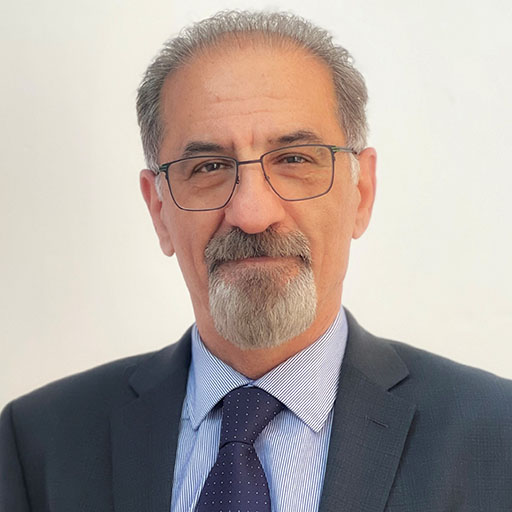
To learn more about this crossroads of the Kurdish language, I reached out to Dr. Jaffer Sheyholislami, a Kurdish scholar of applied linguistics and discourse studies at Carleton University in Canada. His research spans critical discourse studies and sociolinguistics, focusing on media discourse, political communication, identity, language policy, and the representation of marginalized groups. He also works on language variation, language attitudes, linguistic rights, and heritage language maintenance, with a strong focus on Kurdish.
After years of radio broadcasting in Iran, he moved to Canada and completed a degree in Library and Information Science at Fanshawe College in London, Ontario, in 1993. He later earned a B.A. in general linguistics, while his M.A. research used Systemic Functional Linguistics-informed critical discourse analysis to study North American news coverage of international events. He continued this approach in his PhD, focusing on Kurdish identity formation in satellite television and the internet.
His published his findings in Kurdish Identity, Discourse and New Media (Palgrave Macmillan, 2011) as well as in peer-reviewed journals and edited volumes across North America, Europe, and the Middle East. He is also co-editor of the forthcoming Oxford Handbook of Kurdish Linguistics.
Our conversation, which took place in English, explored why language remains central to Kurdish identity, the pressures shaping Kurdish language use in Kurdistan and the diaspora, and whether minority languages face new risks in the age of AI and global English. For Sheyholislami, the future of the Kurds depends on mother-tongue education, literacy, and whether digital tools can support language revitalization rather than marginalization.
•
DIARY MARIF : Why do you think the Kurdish language matters more for Kurdish identity than other cultural or political elements?
JAFFER SHEYHOLISLAMI: All identities are relational and grow over time. Having shared space with neighboring ethnic groups for thousands of years, the Kurds naturally overlap in many historical and cultural traits. Most Kurds are Muslim, and many famous Muslim scholars and military leaders, like Salahaddin Eyubi, have Kurdish roots. For over a century, the Kurds have lived in modern nation-states where Arabic, Persian, and Turkish are the main languages. So, nearly every aspect of Kurdish life has been impacted. Language is no exception; these languages have influenced Kurdish vocabulary, speech, and even grammar. Yet despite a long history of oppression and linguistic discrimination, Kurdish has remained distinct from the region’s other languages. That is why it remains vital to Kurdish identity and culture.
TMR: Why are Kurds in countries like Turkey and Iran often unable to study their mother tongue, and do you think this creates a risk for the language in the future?
SHEYHOLISLAMI: Denying mother-tongue education to Kurdish children greatly threatens the future of Kurdish in Turkey and Iran. It makes the language harder to pass down through generations and affects literacy, social status, and daily use. Research consistently shows mother-tongue education as the most reliable way to keep a language alive across generations, despite it being prohibited in Iran or Turkey, as confirmed by renowned experts Jim Cummins, Nancy Hornberger, Joshua Fishman, Tove Skutnabb-Kangas, and UNESCO. When children are educated in a different language, they tend to think and become literate in it, using it more outside the home. As they become parents, they often default to that dominant language, gradually causing the original to disappear.
In Turkey, studies over the past 15 years reveal that in cities like Diyarbakir, only elders speak Kurdish fluently. Today’s parents may speak Kurdish with their own non-Turkish-speaking parents, but operate mainly in Turkish during daily life, so their children often have a limited knowledge of Kurdish.
Since 2012, Kurdish children in Turkey can choose Kurdish as a high school elective, though not from kindergarten or elementary school. Participation has been low but is rising, with about 60,000 students taking the elective in 2025, modest given a Kurdish population of ten to fifteen million. Still, offering Kurdish only as a subject isn’t enough; the best approach is mother-tongue instruction for at least the first five to eight years, starting in kindergarten.
In Iran, no such initiatives exist. In March 2025, parliament considered a bill to include Kurdish and other minority languages as subjects, similar to Turkey’s approach, but it didn’t receive enough votes to pass.
TMR: Why does Iran restrict Kurdish language education more than Kurdish cultural practices?
SHEYHOLISLAMI: Language is such a vital part of being human. It’s not just because it’s the first complex system we understand, or because it’s our main way of communicating. More importantly, all other human institutions are built upon language. It’s almost impossible to imagine developing and running any part of human life, everyday conversations, relationships, education, business, or prayer, without language. Over time, states that ignore human rights (linguistic rights are human rights) have realized that one of the most effective ways to unify populations is to promote a national language. This often involves imposing it on those who don’t speak it as their mother tongue. They also understand that once a language is established, people will gradually adopt the associated cultural, social, and political norms.
TMR: In the diaspora, especially in Canada, there are fewer opportunities to learn Kurdish. Do you think this is a concern for the younger generation?
SHEYHOLISLAMI: Heritage languages often face challenges in places like Canada because they aren’t used in formal or prestigious areas. When a language isn’t used often, especially under restrictive policies, speakers tend to abandon it. Research shows first-generation speakers usually keep their language alive while also using the dominant language, since they brought their language from their homeland. By the second generation, the heritage language weakens as children attend school and primarily speak highly valued languages such as English or French. Dominant languages overshadow heritage ones across playgrounds, schools, cinemas, and other social spaces. By the third generation, most communities lose their heritage language altogether.
Some communities, especially for those where language has religious significance, manage to maintain their language and culture for several generations. But such cases are rare. For minority languages like Kurdish, the situation is even more difficult. While Arabic, Turkish, and Persian are supported through embassies and cultural centers, Kurdish communities in places like Canada are doubly marginalized: minorities in their homeland and minoritized abroad. A few Kurdish classes exist, but they’re usually short-lived, run by volunteers rather than official institutions.
TMR: Why do some Kurds in the diaspora continue to speak dominant languages like Arabic, Turkish, or Persian instead of Kurdish? Could this be linked to past trauma, fear, or social pressure, or are there other reasons as well?
SHEYHOLISLAMI: Yes, past trauma, fear, and social pressure can contribute to this, especially since many people speak the language imposed on them through education, government, and the military. Many were educated only in Turkish in Turkey or Persian in Iran. Kurdish is often absent from public spaces which leads to stigmatization and control over their use. Even highly educated Kurds might not be literate in Kurdish, making it hard to discuss many topics in their native language. Some are self-taught or, if from Iraq, have learned in their mother tongue, but economic pressures often push them to the dominant language since it carries more social capital. Imagine spending twelve or sixteen years in school speaking the dominant language, with little chance to use Kurdish in everyday life; naturally the dominant language becomes their default. Even Kurdish speakers who know basic phrases may have internalized the dominant language’s grammatical, and fear making mistakes. So, they default to where they feel confident. There’s also no single standardized Kurdish, which complicates communication across different regions. As such, they default to the dominant language, which everyone shares via education to simplify conversation. If there had been a unified standard Kurdish, it probably would have been easier to use that instead. However, standardizing language involves teaching and establishing it through education, which is why most feel comfortable using the language they know best.
TMR: As an academic and linguist, do you see a real fear that the Kurdish language could be lost over time?
SHEYHOLISLAMI: Yes, Kurdish communities face a real challenge of erosion and partial loss over the long term, particularly in Turkey and Iran. This is largely because children are often not receiving education in their mother-tongue, literacy rates are low, and there is significant pressure from the dominant languages.
TMR: Drawing on Ngũgĩ wa Thiong’o, how do you see the idea of writing in mother tongues applying to Kurdish scholarship today, in the age of AI and global English dominance?
SHEYHOLISLAMI: Ngũgĩ wa Thiong’o’s insights in Decolonizing the Mind were truly ahead of their time, and they are even more meaningful for Kurdish scholarship today. This is especially true in our current world, where English dominates globally, and AI systems are trained mainly on English data. Ngũgĩ wa Thiong’o emphasized that writing in one’s mother-tongue is a powerful act of intellectual independence: a way to safeguard unique ways of knowing that can’t be fully translated and are deeply rooted in indigenous communities. This attitude is also a stand against colonial languages controlling what we consider knowledge. With this in mind, we can see that Kurdish isn’t just a language code: it embodies concepts of kinship, political memory, oral traditions, land struggles, and a sense of belonging; things that Turkish, Persian, Arabic, or English might not fully express. Having spent the past forty years writing and translating in Kurdish and between Kurdish and other languages, I have repeatedly seen these ideas come to life.
TMR: How do AI and the global dominance of English create pressure on minority languages like Kurdish, and do you think this increases the fear of language loss?
SHEYHOLISLAMI: AI’s impact on Kurdish is complex. Today, AI systems are primarily trained on English and major languages like French, German, and Russian, as well as languages that politics has made rivals to Kurdish. Unfortunately, Kurdish is very underrepresented or absent. If Kurdish isn’t in the training data, AI can’t generate, understand, translate, or accurately share knowledge in Kurdish. A language that isn’t digitally visible becomes epistemically invisible. When languages aren’t equally represented in AI, it reinforces the same hierarchies we’ve seen online and on social media, making AI a new gatekeeper: the most valuable information appears in English while Kurdish remains unsupported. As a result, institutions may invest even less in Kurdish, seeing it as less valuable. This can accelerate a language shift, as people notice more reliable information in English, Turkish, or Persian, whereas Kurdish responses might be inaccurate or poorly organized. Consequently, people often turn to these other languages for better trustworthiness. Over time, digital habits shape linguistic habits.
However, Kurds themselves have the power to intervene. In Iraqi Kurdistan, where there is autonomous governance, AI could significantly boost Kurdish literacy, with the impact spreading across Kurdistan, Syria, Iran, and Turkey. AI offers a real chance to democratize Kurdish publishing, a hope tied to the internet that has, to some extent, come true, as I have explored in my own work. When used thoughtfully, AI can also help preserve endangered Kurdish dialects such as Hawrami, Laki, and Zazaki. Digital tools make documenting and digitizing these dialects easier, paving the way for revitalization efforts. Tasks like recording, transcribing, and analyzing can now be completed in hours rather than weeks or months, with fewer researchers involved. Still, it remains to be seen how much the Kurds want and can make of these digital opportunities.