L’IA et la bataille pour le contrôle de la Terre du Milieu dans la guerre américano-israélienne en Iran

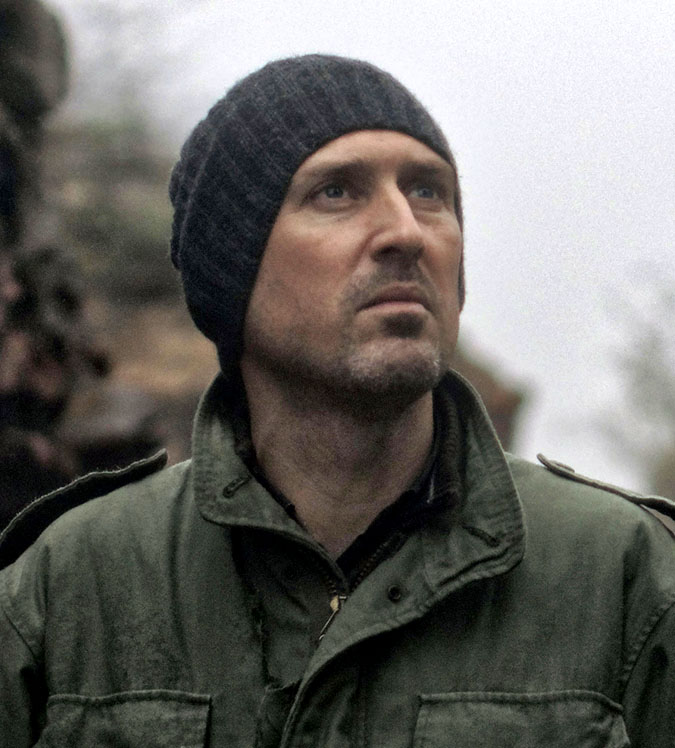
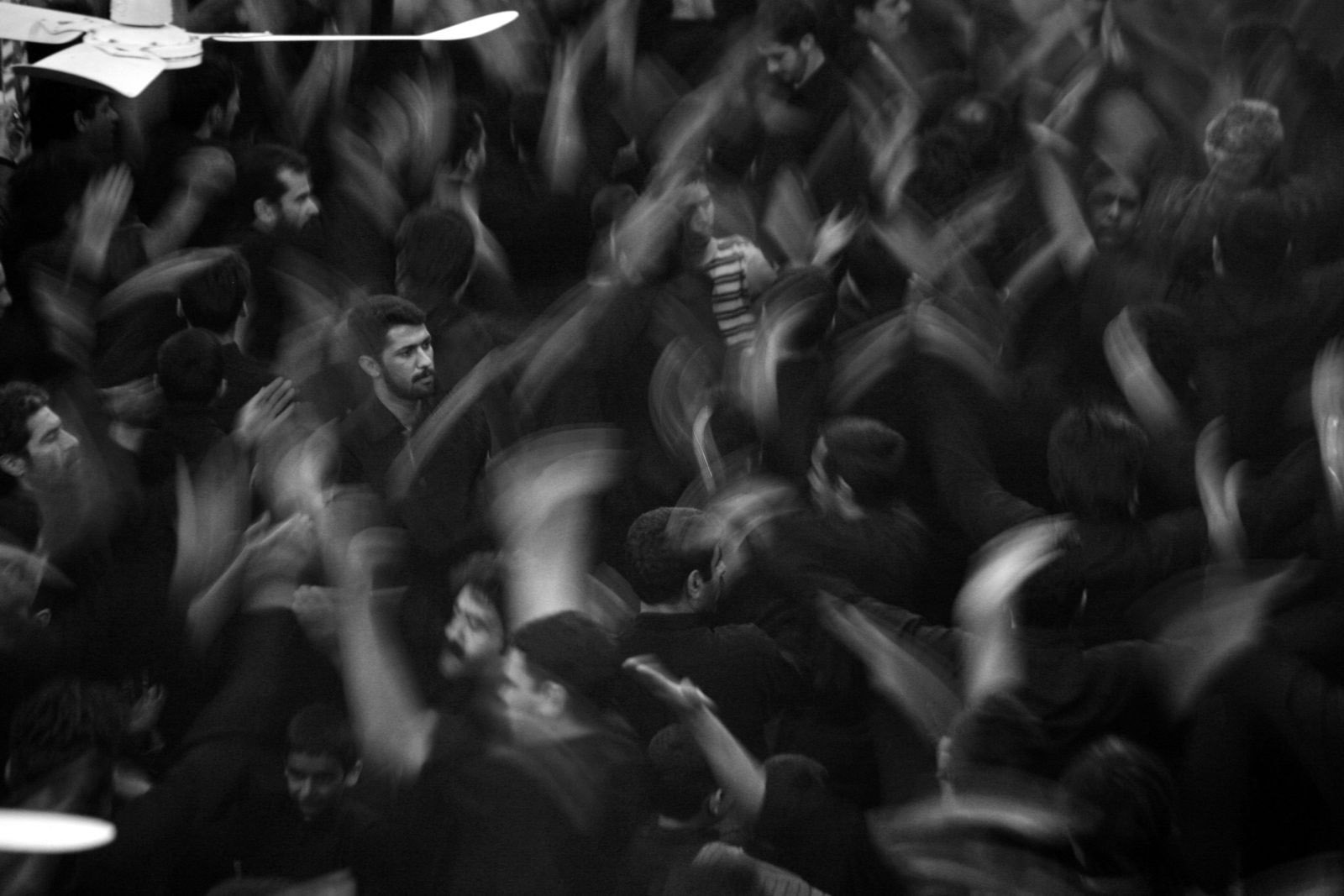
Iason Athanasiadis, « Shia Endurance » (avec l’aimable autorisation de Iason Athanasiadis).

13 MARCH 2026 • By Iason Athanasiadis

Select Other Languages English.

Comment les produits d’un groupe de sociétés de technologie de défense, aux noms inspirés de personnages de Tolkien, en sont venus à se disputer le contrôle de l’Eurasie ?

Un événement sans précédent dans l’histoire de la guerre s’est produit au troisième jour de l’attaque américano-israélienne contre Téhéran. Des roquettes iraniennes ont frappé des centres de données détenus par Amazon, basés aux Émirats arabes unis et à Bahreïn. En juin 2025, elles avaient déjà frappé le parc technologique de Gav-Yam en Israël, qui abrite le quartier général des communications C4I de l’armée israélienne.

Le choix de ces installations apparemment non militaires n’a rien d’aléatoire. Les centres de données tentaculaires et très gourmands en énergie sont devenus les artères logistiques indispensables à la conduite de la guerre moderne. Ils forment une infrastructure invisible dont les armées ont besoin pour obtenir un avantage sur le champ de bataille grâce à l’intelligence artificielle. En retour, celle-ci fournit à leurs soldats humains, ou à leurs robots tueurs autonomes, des listes de cibles à une vitesse seulement atteignable par une machine, et ce en traitant d’énormes quantités de données de surveillance, recueillies par des réseaux de capteurs.

« Le fait que l’Iran frappe les centres de données d’Amazon montre le nouveau visage de la guerre telle qu’elle se fait aujourd’hui », affirme ainsi Antony Loewenstein, journaliste australien et auteur de The Palestine Laboratory: How Israel Exports the Technology of Occupation Around the World. « Ils savent que sans ces centres de données, Israël et les États-Unis sont pratiquement aveugles. »

Au cours d’une guerre dont la première semaine s’apparentait à une partie d’échecs entre des ingénieurs appliquant des modèles mathématiques, les missiles iraniens ont également frappé Fujaïrah aux Émirats arabes unis, ainsi que Salalah et Duqm à Oman, les deux seuls ports au-delà du détroit d’Ormuz où les exportations de pétrole sont possibles. Le prix du pétrole a aussitôt enregistré la plus forte hausse hebdomadaire de son histoire. Mais le plus grand revers a été provoqué par le bombardement des puissants radars américains AN/TPY-2 et FPS-132 aux Émirats, au Koweït et en Jordanie. Ce coup jugé inconcevable a largement aveuglé les Américains et les Israéliens quant aux lancements de missiles iraniens, a réduit le temps des alertes de missiles entrants de quinze minutes à cinq, et a même limité la capacité de leurs avions de chasse à bombarder avec précision l’Iran depuis des points situés au-delà de la portée de ses défenses aériennes.

Il s’agit de la première guerre tripartite de l’histoire de l’humanité où chaque participant utilise l’IA.

« La logique de ciblage que l’Iran a appliqué avec ces frappes constitue l’opération la plus sophistiquée de cette guerre sur le plan technique», affirme Shanaka Perera, analyste sri-lankais et auteur de The Ascent Begins: The World Beyond Empire. « L’attention des belligérants était jusque-là concentrée sur le nombre d’intercepteurs, les cadences de tir et les volumes de salves, mais l’Iran s’est focalisé sur l’architecture des capteurs. De fait, si on considère l’intercepteur comme le poing, le radar est donc ses yeux, et ils l’ont aveuglé. »

Les frappes contre les radars et les centres de données ont neutralisé deux éléments essentiels de la chaîne qui permet une guerre assistée par l’IA. Les radars font partie des milliers de capteurs terrestres, aériens et spatiaux qui fournissent à l’algorithme les informations dont il a besoin pour sélectionner ses cibles. Les centres de données fournissent les pétaoctets de stockage nécessaires pour absorber les volumes colossaux de données et de vidéos haute définition requis par ce nouveau type de guerre.

Ces frappes, ainsi que d’autres, ont très certainement été orchestrées par les algorithmes d’intelligence artificielle adoptés par l’armée iranienne au cours des années qu’elle a passées à se préparer à une attaque des États-Unis et d’Israël, faisant de ce conflit la première guerre tripartite de l’histoire de l’humanité où chaque partie utilise l’IA. Le caractère entièrement nouveau de cette technologie peut entraîner des erreurs terribles, affirme l’analyste iranien Trita Parsi, à l’instar du bombardement du Police Park à Téhéran, un lieu entièrement civil, qui a été visé simplement parce qu’aucun humain n’avait pris la peine de vérifier la cible proposée par l’IA.

« Une semaine après le début des combats, on voit que ceux-ci sont concentrés sur des échanges aériens et de missiles, des perturbations informatiques et des frappes guidées par l’IA, avec une implication terrestre minimale jusqu’à présent », explique Omid Souresrafil, analyste iranien et auteur de Revolution in Iran: The Transition to Democracy. « Cette guerre est fondée sur l’ingénierie et exploite l’IA pour des frappes rapides et des simulations, réduisant ainsi le temps des cycles de prise de décision à quelques heures plutôt que plusieurs semaines. »


Palantir headquarters in Palo Alto Silicon Valley; Palantir Technologies is a private American software company that specializes in big data analytics Andrei Stanescu.jog
Siège de Palantir à Palo Alto, dans la Silicon Valley. Palantir est une entreprise américaine privée spécialisée dans l’analyse des mégadonnées (big data). (photo Andrei Stanescu)

Réticents à engager des soldats dans une invasion du territoire iranien et de ses reliefs impraticables, les États-Unis et Israël n’ont pas non plus réussi à inciter à la révolte les différents groupes ethniques et sociaux présents en Iran. Cela n’a fait que renforcer le rôle de l’IA dans le conflit en cours. Mais alors que les cibles militaires ont cédé la place aux cibles civiles et que les forces conjointes israélo-américaines ont bombardé des hôpitaux, des écoles et des raffineries iraniens, il est devenu évident que la capacité de ciblage super-humaine de l’IA a remplacé la gradation du conflit en une spirale incontrôlable dont le paroxysme est toujours plus violent. 

« Trois nations construisent en temps réel trois engrenages de destruction distincts mais tous basés sur l’IA, chacun des modèles est façonné par ses propres contraintes, et aucun d’entre eux ne contrôle pleinement ce qu’il a construit », déclare Perera, qui estime que les systèmes de ciblage israéliens développés pour Gaza ont été rendus possibles par Claude, un LLM (Large Language Model – un grand modèle de langage) développé par la société américaine Anthropic. Son contrat avec le Pentagone a été résilié de manière controversée à la veille de la guerre avec l’Iran, parce que la société insistait pour qu’un humain soit toujours impliqué dans l’exécution des cibles déterminées par l’IA. « Les États-Unis réduisent le processus de frappe de plusieurs jours à quelques heures, l’Iran ramène le coût de l’attaque au-dessous du coût de la défense, la Chine réduit l’avantage informationnel qui a rendu possible la projection de puissance américaine depuis 1945. », explique Perera.

Ce à quoi l’analyste fait ici référence, ce sont les différentes manières dont chaque État adapte l’utilisation de l’IA aux priorités et aux capacités de ses propres forces armées. La puissance de feu écrasante des États-Unis impose que les systèmes d’IA américains identifient une multitude de cibles permettant de mettre en œuvre une doctrine où le choc initial est dévastateur, tout en accélérant le rythme des combats en général. En revanche, l’ambition de l’Iran d’étendre le conflit en une guerre d’usure prolongée privilégie la sélection de cibles qui réduisent le déséquilibre des forces avec ses adversaires en les contraignant à des inégalités de coûts sur le champ de bataille. La Chine, dont on pense généralement qu’elle apporte un soutien en coulisses à l’Iran, réduit encore davantage l’avantage écrasant des États-Unis dans l’espace en publiant sur Internet des renseignements satellitaires auxquels l’Iran n’aurait pas accès autrement.

« La machine de guerre techno-féodale connaît deux écueils », explique Yanis Varoufakis, économiste grec et auteur d’un ouvrage à paraître intitulé War and Peace in the Technofeudal Age. « D’une part, le volume considérable de cibles sélectionnées et détruites signifie que toute implication humaine est déléguée à un officier subalterne qui acquiert soudainement des pouvoirs discrétionnaires que le président lui-même n’aurait jamais eus, et, d’autre part, pour fonctionner, ces drones et ces robots doivent être libérés de leurs opérateurs humains et devenir autonomes, car l’autre camp devient de plus en plus habile à brouiller la liaison radio entre eux. » 

Comment en sommes-nous donc arrivés à ce scénario apparemment apocalyptique où deux puissances nucléaires et un pays aspirant à le devenir déploient l’intelligence artificielle pour s’affronter au cœur du centre mondial de production d’énergie ? Et comment tout cela a-t-il pu commencer bien ailleurs, dans la capitale mondiale des technologies numériques : la Silicon Valley ?
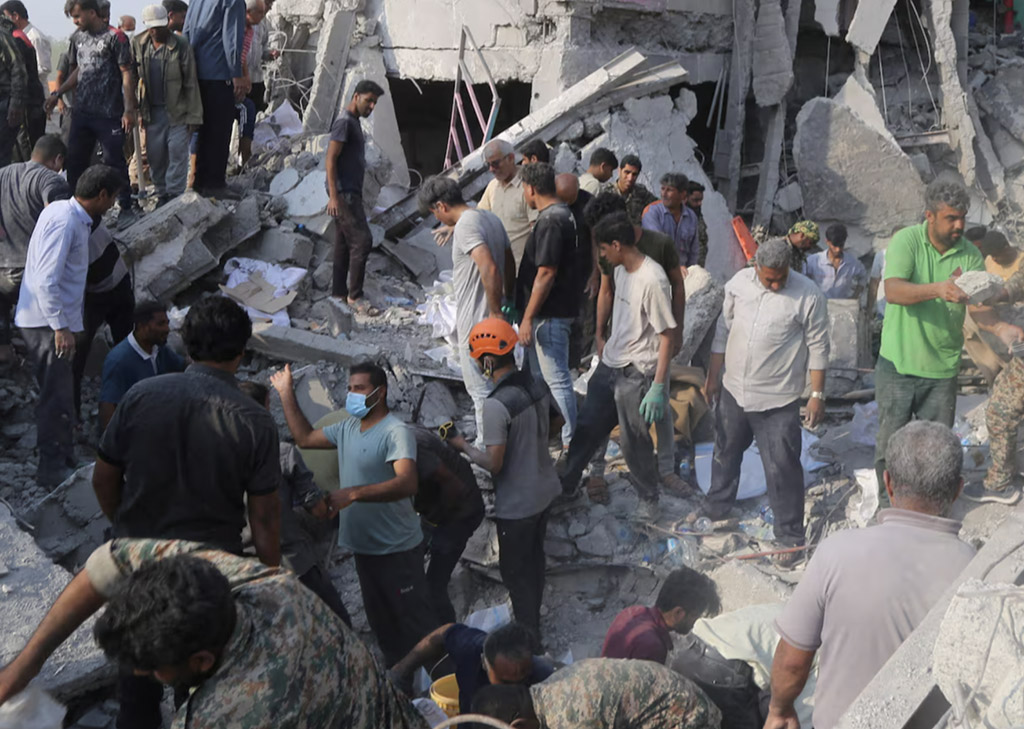

The Shajareh Tayyebeh School for girls in Minab, Iran, was struck by Tomahawk missiles on Feb. 28, 2026 in a double tap operation that was the result of the US military's use of AI. The attack amounts to a war crime.
L’école pour filles Sharajeh Tayyebeh à Minab, en Iran, a été frappée par des missiles Tomahawk le 28 février 2026, dans une attaque résultant de l’utilisation de l’IA par l’armée américaine. La majorité des 170 victimes étaient des petites filles âgées de 7 à 12 ans. Ce bombardement constitue un crime de guerre.

Des débuts sous Reagan au boom de l’IA après le 11 septembre 

Koohan Paik-Mander, étudiante en cinéma d’origine coréenne, a assisté aux prémices de la Silicon Valley en 1986, au cours d’une période exaltante et pleine de drogue qu’elle-même décrit comme « une époque étrangement amorale de ma jeunesse ». Elle était mariée à l’un des premiers développeurs de l’intelligence artificielle, qui travaillait sur la recherche en défense antimissile à l’université Carnegie Mellon pour le programme de défense stratégique du président américain Ronald Reagan, qu’on appelait communément « Star Wars » (« la Guerre des étoiles »). Lorsqu’elle a rencontré pour la première fois son futur mari, un autoportrait de lui dans sa maison de Malibu a attiré son attention. Il représentait un flot de couleurs jaillissant du sommet de sa tête, « comme une fontaine arc-en-ciel se courbant en un petit rectangle flottant dans l’espace ». Interrogé à ce sujet, il lui a expliqué qu’il s’agissait d’une représentation de lui « téléchargeant son cerveau sur une puce ». Il s’agit peut-être du premier cas documenté d’une rencontre rapprochée de type transhumaniste.

Dès les années 1980, le développeur en question régalait Paik-Mander d’histoires sur un avenir qu’il considérait comme tangible mais qui, pour elle, semblait relever de la science-fiction. Il décrivait des situations de collaboration à distance que, 35 ans plus tard, nous reconnaissons dans le métaverse. Toutefois, son charme s’est vite estompé car Paik-Mander a découvert une certaine amoralité dans la manière dont il abordait son travail sur des projets liés à la sécurité nationale qui étaient, selon elle, les précurseurs de l’actuel « centre de commandement et de contrôle mondialement interconnecté et basé sur le cloud, supervisé par la Space Force et construit conjointement par Amazon, Google, Oracle et Microsoft ». Au fil des années, Paik-Mander a pris conscience que les prémices de ce dont elle avait été témoin « permettraient de mobiliser des forces militaires sans pilote pour semer la terreur n’importe où dans le monde : un essaim de drones, de missiles hypersoniques, de torpilles sous-marines et de bombardiers, le tout serait aussi facile à mettre en place que de commander un Uber ».

L’IA a vu le jour à l’époque de la « Star Wars » : le chant du cygne de la Guerre froide de Reagan, qui visait à développer un système d’interception de missiles nécessitant des temps de réaction plus rapides que ceux de l’être humain. Un financement public massif a stimulé la recherche en la matière, et la technologie a émergé dans les années 1990 sous différentes formes : l’« agent intelligent », les progrès en reconnaissance vocale, les débuts du Big Data, l’apprentissage par renforcement et les réseaux neuronaux. L’année 1997 a marqué une étape importante lorsque l’ordinateur Deep Blue d’IBM a battu le champion du monde d’échecs Gary Kasparov. Mais ce n’est qu’après les attentats du 11 septembre, alors que l’État sécuritaire cherchait à centraliser toutes les informations en temps réel et à relier les menaces potentielles les unes avec les autres, que le développement de l’IA a bénéficié d’un financement public renouvelé et massif. L’émergence des drones meurtriers à peu près à la même époque (la CIA a mené le premier assassinat par drone au Yémen en 2002) a préparé le terrain pour la fusion de l’IA avec les véhicules autonomes, aboutissant aux tristement célèbres « frappes ciblées », au cours desquelles des innocents dans les pays visés par la guerre contre le terrorisme ont été exécutés pour avoir adopté un comportement jugé « irrégulier » par les logiciels d’IA.

De ce nouveau besoin sécuritaire est né le projet controversé Total Information Awareness (TIA) de 2002. Il visait à créer un système centralisé capable de passer au crible de vastes archives numériques, qu’il s’agisse de transactions financières, de dossiers médicaux et de voyage, de données éducatives ou de réseaux sociaux.

« C’est dans ce but que l’IA a été inventée : il y avait trop de données pour que des humains puissent toutes les passer au crible », déclare Paik-Mander à la Markaz Review. « Internet est le système de surveillance le plus complet de l’histoire. »

« Les Allemands de l’Est et la Stasi ne pourraient que rêver des capacités de surveillance de masse qui existent aujourd’hui », affirme Loewenstein. « L’un des aspects les plus préoccupants de cette technologie est l’absence totale de transparence quant à son utilisation et, en l’absence de toute réglementation, ce qui est actuellement déployé contre les Iraniens et les Palestiniens ne restera pas outre-mer mais reviendra inévitablement chez nous. »

Le tollé général suscité par le caractère intrusif du TIA a conduit le Congrès à mettre fin au projet en 2003. Bien que les défenseurs de la vie privée et des droits de l’homme aient alors poussé un soupir de soulagement, une décennie plus tard, le lanceur d’alerte Edward Snowden révélait que la recherche s’était simplement déplacée vers le secteur privé et la NSA. L’un de ses principaux architectes était un homme nommé Peter Thiel.

Thiel, Palantir et Anduril 

Thiel est un milliardaire qui finance le secteur de la tech et qui a bâti sa fortune à mi-chemin entre l’État sécuritaire et une Silicon Valley ayant abandonné tout semblant de moralité. Fils d’un officier nazi, il a grandi à Swakopmund, un port namibien de l’Afrique coloniale allemande où d’anciens nazis ont afflué après la Seconde Guerre mondiale. C’était une petite ville où les gens se saluaient dans la rue par des « Sieg Heil » et où le drapeau nazi flottait au sommet du plus haut bâtiment de la ville en l’honneur de l’anniversaire d’Hitler, et ce jusqu’en 1989. Le père de Thiel dirigeait une mine d’uranium voisine, liée au programme nucléaire de l’Afrique du Sud de l’apartheid jusqu’en 1977, date à laquelle la famille s’est installée aux États-Unis.

À l’université de Stanford, Thiel a développé une « philosophie déviante » axée sur un salut technologique au détriment de la démocratie populaire. Il a rencontré Alex Karp, un camarade d’études hyperactif, avec lequel il a ensuite fondé Palantir, la plus grande entreprise de surveillance au monde utilisant l’IA.

« Le concept de Thiel d’une “accélération massive grâce à l’IA” est une vision hyper-optimiste de ce qui permettrait de contrer la “Grande Stagnation” », explique Varoufakis à la Markaz Review. « Son argument est que, depuis des décennies, le progrès dans le monde physique — dans des domaines tels que le transport aérien, l’énergie et la médecine — est au point mort, et que l’IA est ce qui peut permettre de le relancer et de propulser l’humanité dans une nouvelle ère de croissance transformatrice. »

Thiel n’hésite pas non plus à exprimer des points de vue clairement anti-égalitaires. Dans un article, il a proposé de remplacer « les Nations unies, où se déroulent des débats parlementaires interminables et stériles qui ressemblent à des contes shakespeariens racontés par des idiots », par « Echelon : une coordination secrète des agences de renseignement mondiales, qui sera une voie décisive vers une véritable pax americana mondiale ».

Également connu sous le nom de « Five Eyes » (les « cinq Yeux »), Echelon est un réseau mondial de surveillance regroupant cinq nations anglo-saxonnes : l’Australie, le Canada, la Nouvelle-Zélande, le Royaume-Uni et les États-Unis.

La création de Palantir, une entreprise qui « défend l’Occident » grâce à une guerre orchestrée par l’IA et reposant sur des logiciels de surveillance, semble être l’aboutissement de cette réflexion. Financée par In-Q-Tel, la branche de capital-risque de la CIA, Palantir a consacré ses six premières années à travailler exclusivement pour la CIA. Elle s’est ensuite tournée vers d’autres départements gouvernementaux et une clientèle principalement composée d’États étrangers, leur proposant un large éventail d’avantages sur le champ de bataille tous basés sur l’IA, dont, notamment, la capacité de suivre des cibles et de les intégrer dans ce que le PDG Alex Karp appelle un « engrenage de destruction numérique ». Aujourd’hui, avec une capitalisation boursière d’un demi-milliard de dollars, Palantir est la plus grande entreprise de surveillance au monde.

« Ce sont les marchands d’armes IA du XXIe siècle », déclare Jacob Helberg, expert en sécurité nationale et conseiller politique externe de Karp.

Tirant son nom des « pierres de vision » (les palantirs) de la trilogie Le Seigneur des Anneaux de J.R.R. Tolkien, l’entreprise s’est positionnée comme le fournisseur d’un outil analytique « qui voit tout », car il est prévu pour traiter des ensembles de données trop volumineux pour être examinés par des analystes humains. Thiel a ensuite financé la création d’un certain nombre d’autres entreprises portant des noms inspirés de Tolkien, telles que Mithril, Valar, Erebor, Rivendell et Athelas. La plus en vue est Anduril, une nouvelle génération d’entreprises de matériel de défense gérées comme des start-ups technologiques, qui rivalisent avec les poids lourds traditionnels de la défense, tels que Raytheon et Lockheed Martin, pour décrocher des contrats gouvernementaux.

Anduril est dirigée par un Californien en chemise hawaïenne et en tongs, nommé Palmer Luckey, qui a inventé le casque Oculus VR à l’âge de 19 ans. Malgré son apparence apolitique, Luckey se déclare à la fois patriote et « sioniste radical ». Ses drones intercepteurs Roadrunner et son logiciel d’IA Lattice sont considérés susceptibles de contrer les vagues saturantes de missiles et de drones à bas coût iraniens.

Luckey, dont le goût de la controverse l’a conduit à déclarer avec ironie « J’adore les robots tueurs », se distingue également par sa conviction que les barrières de sécurité entre les drones autonomes et les opérateurs humains devraient être supprimées. « Si vous pensez vraiment que les robots ne devraient pas pouvoir prendre de décision quant aux cibles à frapper, cela signifie qu’il suffit que quelqu’un brouille votre signal pour vous arrêter », a-t-il déclaré lors d’une interview avec Bari Weiss. « Il ne me semble pas vraiment judicieux que l’équilibre des pouvoirs dans le monde soit déterminé par ceux qui disposent des meilleurs ingénieurs en radiofréquences. C’est pour cela qu’il faut une autonomie des drones. »

Les exemples qui montrent l’avantage considérable que ces technologies confère aux armées américaine et israélienne sont de plus en plus nombreux, malgré le caractère top secret d’une grande partie d’entre elles. Les membres de l’équipe de la Delta Force qui ont arrêté Nicolás Maduro auraient porté des visières équipées de réalité augmentée, intégrant une vision nocturne et la détection de signatures thermiques, ce qui leur aurait permis d’agir avec une espèce d’esprit collectif, de surveiller n’importe quelle personne qui se serait cachée derrière des obstacles et d’inspecter le champ de bataille depuis la perspective des drones qui survolaient la zone. Dans le sud du Liban, Israël a cartographié en 3D chaque bâtiment, chaque arbre et chaque relief à l’aide de la technologie Lidar, permettant ainsi à des algorithmes d’IA d’identifier des tunnels souterrains et des activités jugées hostiles. En Ukraine, Palantir scanne le champ de bataille à l’aide de satellites, de drones et de capteurs thermiques, trace numériquement les trajectoires des projectiles et permet aux soldats de cibler instantanément la source des tirs. Des programmes de sélection de cibles appelés Lavender et Maven ont maximisé le nombre de morts à Gaza, au Yémen et en Iran.

La position pro-israélienne de Luckey est typique d’une culture technologique où les contrats et la collaboration entre l’État israélien et l’industrie des hautes technologies sont normalisés. La Silicon Valley a connu un afflux d’environ 1 500 travailleurs israéliens, dont beaucoup sont d’anciens membres des unités de technologie militaire israéliennes 81 et 8200. Paik-Mander trouve problématique le virage pro-sioniste de la Silicon Valley, car « ceux qui contrôlent cette technologie contrôlent le monde ».

« L’IA démulutiplie les forces en présence », affirme Paik-Mander. Elle écrit actuellement un livre intitulé Digitizing the Sacred: How Silicon Valley Weaponizes Existence. « La Silicon Valley et Israël ne font désormais plus qu’un, en grande partie grâce à [Jeffrey] Epstein, qui a convaincu Palantir d’ouvrir un bureau en Israël. Il en a résulté un élan plus rapide vers une guerre israélo-américaine contre l’Iran. »

Les relations entre la Silicon Valley et l’appareil de sécurité et de renseignement israélien ont commencé à fleurir à peu près au moment où le financier, aujourd’hui déchu, Jeffrey Epstein a présenté Ehud Barak à Peter Thiel en 2014. Epstein a ensuite proposé la société de Barak au fonds de capital-risque de Thiel, qui a fini par y investir, avant qu’elle ne soit vendue à Axon, un fabricant de tasers et de caméras corporelles, détenu majoritairement par Vanguard et Blackrock. Epstein a également joué un rôle déterminant dans la mise en place de la collaboration technologique entre Israël et les Émirats arabes unis, en présentant Barak à son ami, le directeur de Dubai Ports World, désormais démissionnaire, Sultan Ahmed bin Sulayem. Sulayem a investi dans la société de Barak plusieurs années avant que la normalisation des relations commerciales issue des Accords d’Abraham n’aboutisse à d’intenses collaborations entre les Émirats arabes unis et Israël en matière de sécurité, portant sur un système de sécurité multinational, une plateforme de renseignement commune et des transferts de technologie.

Depuis son île à Hawaï, Paik-Mander continue d’observer l’évolution de la Silicon Valley et de l’ère technologique. Elle craint que la guerre cognitive, rendue possible par l’intelligence artificielle, ne serve à mettre en œuvre un programme de guerre sans fin. « Si l’on peut se passer de soldats, on peut tout à fait mener une guerre sans fin, ce qui signifie des profits sans fin », a-t-elle déclaré, elle rappelle ainsi la remarque de Julian Assange selon laquelle la guerre en Afghanistan a avant tout eu pour but de taxer les contribuables américains puis de blanchir ces fonds au profit du complexe militaro-industriel.

« Nos données sont le nouveau pétrole, et l’IA en est “la raffinerie” », déclare-t-elle à la Markaz Review. « Une pression s’exerce pour les extraire en continu, à chaque instant de notre existence. L’IA n’a aucun sens sans données. Tant qu’elles circulent, la surveillance active croît de manière exponentielle. »

Comme pour confirmer son analyse, l’Iran est passé cette semaine de la gestion du blocage du détroit d’Ormuz et des pétroliers touchés par des roquettes, à la menace de frapper les entreprises américaines au service de l’armée américaine, citant Google, Microsoft, Palantir, IBM, Nvidia et Oracle comme leurs prochaines cibles.


Traduit de l’anglais par Marion Beauchamp-Levet

Iason Athanasiadis

Iason Athanasiadis is a Mediterranean-focused multimedia journalist based between Athens, Istanbul, and Tunis. He uses all media to recount the story of how we can adapt to the era of climate change, mass migration, and the misapplication of distorted modernities. He studied... Read more

Join Our Community

TMR exists thanks to its readers and supporters. By sharing our stories and celebrating cultural pluralism, we aim to counter racism, xenophobia, and exclusion with knowledge, empathy, and artistic expression.

Learn more

RELATED

Opinion

Apples and Oranges, or Why the US Supports Israel

3 APRIL 2026 • By Jason Hickel
Apples and Oranges, or Why the US Supports Israel
Essays

The Souls of War Folk

3 APRIL 2026 • By Ayça Çubukçu
The Souls of War Folk
Essays

“Iran After the Fire”—a Speculative Ethnography

3 APRIL 2026 • By Shahram Khosravi
“Iran After the Fire”—a Speculative Ethnography
Columns

A Fight to The Death (the Rest of Us In-Between)

27 MARCH 2026 • By Amal Ghandour
A Fight to The Death (the Rest of Us In-Between)
Columns

Dear Souseh: Distressed (& More) by War

27 MARCH 2026 • By Lina Mounzer
Dear Souseh: Distressed (& More) by War
Opinion

Iranian Visions of Democracy from the Ruins

20 MARCH 2026 • By Nojang Khatami
Iranian Visions of Democracy from the Ruins
Essays

The AI Struggle for Middle Earth in the U.S.-Israel War on Iran

13 MARCH 2026 • By Iason Athanasiadis
The AI Struggle for Middle Earth in the U.S.-Israel War on Iran
Columns

Lebanon’s Fate in Our Current World Calamity

13 MARCH 2026 • By Amal Ghandour
Lebanon’s Fate in Our Current World Calamity
TMR 58 • MOTHER TONGUE

Ojalá: Toward an Illiteracy of Liberation

6 MARCH 2026 • By Sarah Aziza
<em>Ojalá</em>: Toward an Illiteracy of Liberation
Book Reviews

Art and Disillusionment in Saleem Haddad’s Floodlines

20 FEBRUARY 2026 • By Layla AlAmmar
Art and Disillusionment in Saleem Haddad’s <em>Floodlines</em>
Book Reviews

Two New Books Show How Gaza Changed the World

13 FEBRUARY 2026 • By Rebecca Ruth Gould
Two New Books Show How Gaza Changed the World
Columns

On Legal Victories and Human Healing

13 FEBRUARY 2026 • By Amal Ghandour
On Legal Victories and Human Healing
Columns

Small Moments and Their Much Larger Meaning

30 JANUARY 2026 • By Amal Ghandour
Small Moments and Their Much Larger Meaning
Art

Behind the Seen: Mona Hatoum on Art and Palestine

30 JANUARY 2026 • By Arie Amaya-Akkermans
<em>Behind the Seen</em>: Mona Hatoum on Art and Palestine
Essays

How Can Palestinians and Israelis Live Together?

30 JANUARY 2026 • By Raja Shehadeh
How Can Palestinians and Israelis Live Together?
Film Reviews

With Hasan in Gaza: Salvaged Palestine

30 JANUARY 2026 • By Jim Quilty
<em>With Hasan in Gaza</em>: Salvaged Palestine
TMR 57 • PALESTINE

In Two New Books, Palestinian Writing Bears Witness

30 JANUARY 2026 • By Gabriel Polley
In Two New Books, Palestinian Writing Bears Witness
Book Reviews

You Must Live: A Collection of Palestinian Poetry

30 JANUARY 2026 • By Sholeh Wolpé
<em>You Must Live</em>: A Collection of Palestinian Poetry
TMR 57 • PALESTINE

Letter from Gaza: Our Long Wait for Gas

30 JANUARY 2026 • By Esraa Abo Qamar
Letter from Gaza: Our Long Wait for Gas
TMR 57 • PALESTINE

Letter from Gaza: Stuck in Place

30 JANUARY 2026 • By Mariam Mushtaha
Letter from Gaza: Stuck in Place
Columns

Beyond Black and White: Notes from Tehran

23 JANUARY 2026 • By M. Nateqnuri
Beyond Black and White: Notes from Tehran
Opinion

What Shirin Neshat Taught Me About Iran

16 JANUARY 2026 • By Hassan Abdulrazzak
What Shirin Neshat Taught Me About Iran
Columns

Trump, The Liberator! (and the Fear Wagons)

16 JANUARY 2026 • By Amal Ghandour
Trump, The Liberator! (and the Fear Wagons)
Film Reviews

If You See Something—an Iraqi Film on Asylum

12 DECEMBER 2025 • By Alex Demyanenko
<em>If You See Something</em>—an Iraqi Film on Asylum
Fiction

“Tahmina”—a story from Iran

5 DECEMBER 2025 • By Abdollah Nazari
“Tahmina”—a story from Iran
Film

10 Noir Films from the Arab world, Iran, and Turkey

5 DECEMBER 2025 • By TMR
10 Noir Films from the Arab world, Iran, and Turkey
Film Reviews

The Woman Who Wouldn’t Break—Cutting Through Rocks’ Sara Shahverdi

28 NOVEMBER 2025 • By Alex Demyanenko
The Woman Who Wouldn’t Break—<em>Cutting Through Rocks’</em> Sara Shahverdi
Book Reviews

Terms of Servitude and the Threats of Digital Settler Colonialism

28 NOVEMBER 2025 • By Maura Finkelstein
<em>Terms of Servitude</em> and the Threats of Digital Settler Colonialism
Book Reviews

Contemporary Kurdish Writers in the Diaspora

14 NOVEMBER 2025 • By Matt Broomfield
Contemporary Kurdish Writers in the Diaspora
Interviews

Novelist Jadd Hilal on Being French and Palestinian

7 NOVEMBER 2025 • By Lara Vergnaud
Novelist Jadd Hilal on Being French and Palestinian
Centerpiece

The Grammar of Power: On Journalism, Grief, and the Stories That Break Us

7 NOVEMBER 2025 • By Adam Makary
The Grammar of Power: On Journalism, Grief, and the Stories That Break Us
Poetry Markaz

Adedayo Agarau presents The Years of Blood

1 NOVEMBER 2025 • By Adedayo Agarau
Adedayo Agarau presents <em>The Years of Blood</em>
Film

In Raoul Peck’s Orwell: 2+2=5, Truth is Revolutionary

17 OCTOBER 2025 • By Alex Demyanenko
In Raoul Peck’s <em>Orwell: 2+2=5</em>, Truth is Revolutionary
Essays

Blue, The Arabian Red Fox

3 OCTOBER 2025 • By Noura Ali-Ramahi
Blue, The Arabian Red Fox
Fiction

War and War

26 SEPTEMBER 2025 • By Hussain A. Ayoub
War and War
Featured article

Together for Palestine — Truly Historic

19 SEPTEMBER 2025 • By TMR
Together for Palestine — Truly Historic
Book Reviews

How the Media Fails Armenia and Palestine

19 SEPTEMBER 2025 • By Gabriel Polley
How the Media Fails Armenia and Palestine
Uncategorized

Reading the Landscape: Cultural Clues and Regime Messages in Iran

12 SEPTEMBER 2025 • By Raha Nik-Andish
Reading the Landscape: Cultural Clues and Regime Messages in Iran
Film Reviews

New Documentaries from Palestine, Sudan, Afghanistan, and Iran

12 SEPTEMBER 2025 • By Yassin El-Moudden
New Documentaries from Palestine, Sudan, Afghanistan, and Iran
Essays

Remaining in Light: Iranians Search for Solace and Well-Being

5 SEPTEMBER 2025 • By Malu Halasa
Remaining in Light: Iranians Search for Solace and Well-Being
Editorial

Why Out of Our Minds?

5 SEPTEMBER 2025 • By Lina Mounzer
Why <em>Out of Our Minds</em>?
Centerpiece

Trauma After Gaza

5 SEPTEMBER 2025 • By Joelle Abi-Rached
Trauma After Gaza
Film

Once Upon a Time in Gaza Wants to Be an Indie Western

29 AUGUST 2025 • By Karim Goury
<em>Once Upon a Time in Gaza</em> Wants to Be an Indie Western
Essays

Amal Doesn’t Even Know What a Banana Is: Child Malnutrition in Gaza

1 AUGUST 2025 • By Asem Al Jerjawi
Amal Doesn’t Even Know What a Banana Is: Child Malnutrition in Gaza
Essays

“A Love That Endures”: How Tamer and Sabreen Defied War and Death

25 JULY 2025 • By Husam Maarouf
“A Love That Endures”: How Tamer and Sabreen Defied War and Death
TMR Interviews

Aida Šehović on the 30th Anniversary of the Srebrenica Genocide

18 JULY 2025 • By Claudia Mende
Aida Šehović on the 30th Anniversary of the Srebrenica Genocide
Fiction

Hiding From Dragons—a short story set in Gaza

18 JULY 2025 • By Richie Billing
Hiding From Dragons—a short story set in Gaza
Featured article

“Silence is Not the Way”—Arab Writers Against Israel’s Genocide

18 JULY 2025 • By Jordan Elgrably
“Silence is Not the Way”—Arab Writers Against Israel’s Genocide
Art

Taqi Spateen Paints Palestine Museum Mural of Aaron Bushnell

11 JULY 2025 • By Hadani Ditmars
Taqi Spateen Paints Palestine Museum Mural of Aaron Bushnell
Book Reviews

Hope Without Hope: Rojava and Revolutionary Commitment

11 JULY 2025 • By Arie Amaya-Akkermans
Hope Without Hope: Rojava and Revolutionary Commitment
Poetry

Nasser Rabah on Poetry and Gaza

4 JULY 2025 • By Nasser Rabah
Nasser Rabah on Poetry and Gaza
Fiction

“My Choices Are My Downfall”—a short story by Fadi Zaghmout

4 JULY 2025 • By Fadi Zaghmout, Rana Asfour
“My Choices Are My Downfall”—a short story by Fadi Zaghmout
Essays

Life Under the Shadow of Missiles: the View From Iran

20 JUNE 2025 • By Amir
Life Under the Shadow of Missiles: the View From Iran
Columns

Afraid for Our Children’s Future, How Do We Talk About War?

20 JUNE 2025 • By Lina Mounzer
Afraid for Our Children’s Future, How Do We Talk About War?
Book Reviews

The Evin Prison Bakers’ Club — Review

6 JUNE 2025 • By Hannah Kaviani
The Evin Prison Bakers’ Club — Review
Essays

Doaa: From a Dreamworld to the Ashes of Displacement

30 MAY 2025 • By Taqwa Ahmed Al-Wawi
Doaa: From a Dreamworld to the Ashes of Displacement
Interviews

23 Hours Inside State Dept. Press Briefings on the Gaza Genocide

23 MAY 2025 • By Malu Halasa
23 Hours Inside State Dept. Press Briefings on the Gaza Genocide
Featured article

Arrested and Rearrested: Palestinian Women in the West Bank

16 MAY 2025 • By Lynzy Billing
Arrested and Rearrested: Palestinian Women in the West Bank
Books

Algerian-French Author Kamel Daoud on the Defensive

16 MAY 2025 • By Lara Vergnaud
Algerian-French Author Kamel Daoud on the Defensive
Film Reviews

Contretemps, a Bold Film on Lebanon’s Crises

16 MAY 2025 • By Jim Quilty
Contretemps, a Bold Film on Lebanon’s Crises
Books

Poet Mosab Abu Toha Wins Pulitzer Prize for Essays on Gaza

9 MAY 2025 • By Jordan Elgrably
Poet Mosab Abu Toha Wins Pulitzer Prize for Essays on Gaza
Editorial

For Our 50th Issue, Writers Reflect on Going Home

2 MAY 2025 • By TMR
For Our 50th Issue, Writers Reflect on Going Home
Essays

A Kashmiri in Cashmere

2 MAY 2025 • By Nafeesa Syeed
A Kashmiri in Cashmere
Essays

Leaving Abdoh, Finding Chamran

2 MAY 2025 • By Salar Abdoh
Leaving Abdoh, Finding Chamran
Essays

Looking for a Job, Living and Dying in Iran: The Logistics of Going Back

2 MAY 2025 • By Raha Nik-Andish
Looking for a Job, Living and Dying in Iran: The Logistics of Going Back
Literature

The Pen and the Sword — Censorship Threatens Us All

2 MAY 2025 • By Anna Badkhen
The Pen and the Sword — Censorship Threatens Us All
Art

Between Belief and Doubt: Ramzi Mallat’s Suspended Disbelief

11 APRIL 2025 • By Marta Mendes
Between Belief and Doubt: Ramzi Mallat’s Suspended Disbelief
Advice

Dear Souseh: Existential Advice for Third World Problems

4 APRIL 2025 • By Lina Mounzer
Dear Souseh: Existential Advice for Third World Problems
Film

Gaza, Sudan, Israel/Palestine Documentaries Show in Thessaloniki

28 MARCH 2025 • By Iason Athanasiadis
Gaza, Sudan, Israel/Palestine Documentaries Show in Thessaloniki
Centerpiece

Love and Resistance in Online Persian Dating Shows

7 MARCH 2025 • By Malu Halasa
Love and Resistance in Online Persian Dating Shows
Fiction

Manifesto of Love & Revolution

7 MARCH 2025 • By Iskandar Abdalla
Manifesto of Love & Revolution
Art & Photography

Afghanistan’s Histories of Conflict, Resistance & Desires

7 MARCH 2025 • By Jelena Sofronijevic
Afghanistan’s Histories of Conflict, Resistance & Desires
Art

Finding Emptiness: Gaza Artist Taysir Batniji in Beirut

21 FEBRUARY 2025 • By Jim Quilty
Finding Emptiness: Gaza Artist Taysir Batniji in Beirut
Book Reviews

Omar El Akkad & Mohammed El-Kurd: Liberalism in a Time of Genocide

14 FEBRUARY 2025 • By Rebecca Ruth Gould
Omar El Akkad & Mohammed El-Kurd: Liberalism in a Time of Genocide
Editorial

Memoir in the Age of Narcissism

7 FEBRUARY 2025 • By TMR
Memoir in the Age of Narcissism
Centerpiece

Ravaged by Fire

7 FEBRUARY 2025 • By Francisco Letelier
Ravaged by Fire
Art & Photography

Mostafa Nodeh: Featured Artist Interview

7 FEBRUARY 2025 • By Mostafa Nodeh
Mostafa Nodeh: Featured Artist Interview
Book Reviews

Memories of Palestine through Contemporary Media

7 FEBRUARY 2025 • By Malu Halasa
Memories of Palestine through Contemporary Media
Essays

Flight Plans: From Gaza to Singapore

7 FEBRUARY 2025 • By Chin-chin Yap
Flight Plans: From Gaza to Singapore
Books

“Culinary Palestine” — Fadi Kattan in an excerpt from Sumud

31 JANUARY 2025 • By Fadi Kattan
“Culinary Palestine” — Fadi Kattan in an excerpt from <em>Sumud</em>
Book Reviews

Yassini Girls—a Powerful Yet Flawed Account of Historical Trauma

31 JANUARY 2025 • By Natasha Tynes
<em>Yassini Girls</em>—a Powerful Yet Flawed Account of Historical Trauma
Film Reviews

My Favorite Cake, Iranian Cinema’s Bittersweet Ode to Love

17 JANUARY 2025 • By Karim Goury
<em>My Favorite Cake</em>, Iranian Cinema’s Bittersweet Ode to Love
Arabic

Huda Fakhreddine & Yasmeen Hanoosh: Translating Arabic & Gaza

17 JANUARY 2025 • By Yasmeen Hanoosh, Huda J. Fakhreddine
Huda Fakhreddine & Yasmeen Hanoosh: Translating Arabic & Gaza
Book Reviews

In Killing Gilda Yahya Gharagozlou Tells an Intriguing Iranian Tale

10 JANUARY 2025 • By Azadeh Moaveni
In <em>Killing Gilda</em> Yahya Gharagozlou Tells an Intriguing Iranian Tale
Uncategorized

Malu Halasa and Jordan Elgrably publish Sumūd: a New Palestinian Reader

4 JANUARY 2025 • By TMR
Malu Halasa and Jordan Elgrably publish Sumūd: a New Palestinian Reader
Art & Photography

Mounir Fatmi—Where Art Meets Technology

28 DECEMBER 2024 • By Sophie Kazan Makhlouf
Mounir Fatmi—Where Art Meets Technology
Book Reviews

Criticizing a Militaristic Israel is not Inherently Antisemitic

20 DECEMBER 2024 • By Stephen Rohde
Criticizing a Militaristic Israel is not Inherently Antisemitic
Poetry

Annahita Mahdavi West: Two Poems

19 DECEMBER 2024 • By Annahita Mahdavi West
Annahita Mahdavi West: Two Poems
Opinion

Susan Abulhawa at Oxford Union on Palestine/Israel

6 DECEMBER 2024 • By Susan Abulhawa
Susan Abulhawa at Oxford Union on Palestine/Israel
Essays

A Fragile Ceasefire as Lebanon Survives, Traumatized

29 NOVEMBER 2024 • By Tarek Abi Samra, Lina Mounzer
A Fragile Ceasefire as Lebanon Survives, Traumatized
Essays

A Jewish Meditation on the Palestinian Genocide

15 NOVEMBER 2024 • By Sheryl Ono
A Jewish Meditation on the Palestinian Genocide
Editorial

The Editor’s Letter Following the US 2024 Presidential Election

8 NOVEMBER 2024 • By Jordan Elgrably
The Editor’s Letter Following the US 2024 Presidential Election
Film

The Haunting Reality of Beirut, My City

8 NOVEMBER 2024 • By Roger Assaf, Zeina Hashem Beck
The Haunting Reality of <em>Beirut, My City</em>
Art & Photography

Palestinian Artists Reflect on the Role of Art in Catastrophic Times

1 NOVEMBER 2024 • By Nina Hubinet
Palestinian Artists Reflect on the Role of Art in Catastrophic Times
Centerpiece

“Habib”—a story by Ghassan Ghassan

1 NOVEMBER 2024 • By Ghassan Ghassan
“Habib”—a story by Ghassan Ghassan
Books

“The Ballad of Lulu and Amina” — from Jerusalem to Gaza

1 NOVEMBER 2024 • By Izzeldin Bukhari
“The Ballad of Lulu and Amina” — from Jerusalem to Gaza
Essays

The Felines that Leave Us, and the Humans that Left

1 NOVEMBER 2024 • By Farnaz Haeri, Salar Abdoh
The Felines that Leave Us, and the Humans that Left
Books

November World Picks from the Editors

25 OCTOBER 2024 • By TMR
November World Picks from the Editors
Book Reviews

The Walls Have Eyes—Surveillance in the Algorithm Age

18 OCTOBER 2024 • By Iason Athanasiadis
<em>The Walls Have Eyes</em>—Surveillance in the Algorithm Age
Film

Freedom is a Combat Sport: On Tatami

11 OCTOBER 2024 • By Karim Goury
Freedom is a Combat Sport: On <em>Tatami</em>
Editorial

A Year of War Without End

4 OCTOBER 2024 • By Lina Mounzer
A Year of War Without End
Art & Photography

Visuals and Voices: Palestine Will Not Be a Palimpsest

4 OCTOBER 2024 • By Malu Halasa
Visuals and Voices: Palestine Will Not Be a Palimpsest
Featured article

Censorship and Cancellation Fail to Camouflage the Ugly Truth

4 OCTOBER 2024 • By Jordan Elgrably
Censorship and Cancellation Fail to Camouflage the Ugly Truth
Essays

Shamrocks & Watermelons: Palestine Politics in Belfast

4 OCTOBER 2024 • By Stuart Bailie
Shamrocks & Watermelons: Palestine Politics in Belfast
Essays

Depictions of Genocide: The Un-Imaginable Visibility of Extermination

4 OCTOBER 2024 • By Viola Shafik
Depictions of Genocide: The Un-Imaginable Visibility of Extermination
Opinion

Everything Has Changed, Nothing Has Changed

4 OCTOBER 2024 • By Amal Ghandour
Everything Has Changed, Nothing Has Changed
Book Reviews

Don’t Look Left: A Diary of Genocide by Atif Abu Saif

20 SEPTEMBER 2024 • By Selma Dabbagh
<em>Don’t Look Left: A Diary of Genocide</em> by Atif Abu Saif
Book Reviews

Tragic Consequences — On Western Meddling in the Middle East

13 SEPTEMBER 2024 • By Dina Rezk
Tragic Consequences — On Western Meddling in the Middle East
Featured Artist

Featured Artists: “Barred From Home”

6 SEPTEMBER 2024 • By Malu Halasa
Featured Artists: “Barred From Home”
Book Reviews

Egypt’s Gatekeeper — President or Despot?

6 SEPTEMBER 2024 • By Elias Feroz
Egypt’s Gatekeeper — President or Despot?
Fiction

“Fragments from a Gaza Nightmare”—fiction from Sama Hassan

30 AUGUST 2024 • By Sama Hassan, Rana Asfour
“Fragments from a Gaza Nightmare”—fiction from Sama Hassan
Essays

Beyond Rubble — Cultural Heritage and Healing After Disaster

23 AUGUST 2024 • By Arie Amaya-Akkermans
Beyond Rubble — Cultural Heritage and Healing After Disaster
Poetry

Hafez, Iran’s Revered Poet, trans. Erfan Mojib & Gary Gach

15 JULY 2024 • By Erfan Mojib, Gary Gach
Hafez, Iran’s Revered Poet, trans. Erfan Mojib & Gary Gach
Fiction

“Firefly”—a short story by Alireza Iranmehr

5 JULY 2024 • By Alireza Iranmehr, Salar Abdoh
“Firefly”—a short story by Alireza Iranmehr
Books

The Mourning Diaries of Atash Shakarami

5 JULY 2024 • By Poupeh Missaghi
The Mourning Diaries of Atash Shakarami
short story

“Deferred Sorrow”—fiction from Haidar Al Ghazali

5 JULY 2024 • By Haidar Al Ghazali, Rana Asfour
“Deferred Sorrow”—fiction from Haidar Al Ghazali
Book Reviews

Is Amin Maalouf’s Latest Novel, On the Isle of Antioch, a Parody?

14 JUNE 2024 • By Farah-Silvana Kanaan
Is Amin Maalouf’s Latest Novel, <em>On the Isle of Antioch</em>, a Parody?
Poetry

Three Poems by Somaia Ramish

12 JUNE 2024 • By Somaia Ramish
Three Poems by Somaia Ramish
Centerpiece

Dare Not Speak—a One-Act Play

7 JUNE 2024 • By Hassan Abdulrazzak
<em>Dare Not Speak</em>—a One-Act Play
Books

Palestine, Political Theatre & the Performance of Queer Solidarity in Jean Genet’s Prisoner of Love

7 JUNE 2024 • By Saleem Haddad
Palestine, Political Theatre & the Performance of Queer Solidarity in Jean Genet’s <em>Prisoner of Love</em>
Interviews

Nothing is Normal, Nothing Is What it Seems (Underground Theatre in Iran After the Woman, Life, Freedom Movement)

7 JUNE 2024 • By Mehrnaz Daneshvar, Salar Abdoh
Nothing is Normal, Nothing Is What it Seems (Underground Theatre in Iran After the Woman, Life, Freedom Movement)
Art & Photography

What Is Home?—Gazans Redefine Place Amid Displacement

31 MAY 2024 • By Nadine Aranki
What Is Home?—Gazans Redefine Place Amid Displacement
Essays

The Elephant in the Box

3 MAY 2024 • By Asmaa Elgamal
The Elephant in the Box
Featured Artist

Bani Khoshnoudi: Featured Artist for PARIS

1 APRIL 2024 • By TMR, Jordan Elgrably
Bani Khoshnoudi: Featured Artist for PARIS
Art & Photography

Will Artists Against Genocide Boycott the Venice Biennale?

18 MARCH 2024 • By Hadani Ditmars
Will Artists Against Genocide Boycott the Venice Biennale?
Editorial

Why “Burn It all Down”?

3 MARCH 2024 • By Lina Mounzer
Why “Burn It all Down”?
Essays

Israel’s Environmental and Economic Warfare on Lebanon

3 MARCH 2024 • By Michelle Eid
Israel’s Environmental and Economic Warfare on Lebanon
Columns

Genocide: “That bell can’t be unrung. That thought can’t be unthunk.”

3 MARCH 2024 • By Amal Ghandour
Genocide: “That bell can’t be unrung. That thought can’t be unthunk.”
Book Reviews

Eyeliner: A Cultural History by Zahra Hankir—A Review

19 FEBRUARY 2024 • By Nazli Tarzi
<em>Eyeliner: A Cultural History</em> by Zahra Hankir—A Review
Art

Issam Kourbaj’s Love Letter to Syria in Cambridge

12 FEBRUARY 2024 • By Sophie Kazan Makhlouf
Issam Kourbaj’s Love Letter to Syria in Cambridge
Poetry

“WE” and “4978 and One Nights” by Ghayath Almadhoun

4 FEBRUARY 2024 • By Ghayath Al Madhoun
“WE” and “4978 and One Nights” by Ghayath Almadhoun
Editorial

Shoot That Poison Arrow to My Heart: The LSD Editorial

4 FEBRUARY 2024 • By Malu Halasa
Shoot That Poison Arrow to My Heart: The LSD Editorial
short story

“Water”—a short story by Salar Abdoh

4 FEBRUARY 2024 • By Salar Abdoh
“Water”—a short story by Salar Abdoh
Essays

A Treatise on Love

4 FEBRUARY 2024 • By Maryam Haidari, Salar Abdoh
A Treatise on Love
Featured article

Israel-Palestine: Peace Under Occupation?

29 JANUARY 2024 • By Laëtitia Soula
Israel-Palestine: Peace Under Occupation?
Books

Illuminated Reading for 2024: Our Anticipated Titles

22 JANUARY 2024 • By TMR
Illuminated Reading for 2024: Our Anticipated Titles
Book Reviews

An Iranian Novelist Seeks the Truth About a Plane Crash

15 JANUARY 2024 • By Sepideh Farkhondeh
An Iranian Novelist Seeks the Truth About a Plane Crash
Poetry

Brian Turner: 3 Poems From Three New Books

14 JANUARY 2024 • By Brian Turner
Brian Turner: 3 Poems From Three New Books
Art

Palestinian Artists

12 JANUARY 2024 • By TMR
Palestinian Artists
Art & Photography

Cyprus: Return to Petrofani with Ali Cherri & Vicky Pericleous

8 JANUARY 2024 • By Arie Amaya-Akkermans
Cyprus: Return to Petrofani with Ali Cherri & Vicky Pericleous
Essays

Gaza Sunbirds: the Palestinian Para-Cyclists Who Won’t Quit

25 DECEMBER 2023 • By Malu Halasa
Gaza Sunbirds: the Palestinian Para-Cyclists Who Won’t Quit
Books

Inside Hamas: From Resistance to Regime

25 DECEMBER 2023 • By Paola Caridi
Inside <em>Hamas: From Resistance to Regime</em>
Columns

Messages From Gaza Now

11 DECEMBER 2023 • By Hossam Madhoun
Messages From Gaza Now
Film

Religious Misogyny Personified in Ali Abbasi’s Holy Spider

11 DECEMBER 2023 • By Bavand Karim
Religious Misogyny Personified in Ali Abbasi’s <em>Holy Spider</em>
Featured excerpt

The Palestine Laboratory and Gaza: An Excerpt

4 DECEMBER 2023 • By Antony Loewenstein
<em>The Palestine Laboratory</em> and Gaza: An Excerpt
Editorial

Why Endings & Beginnings?

3 DECEMBER 2023 • By Jordan Elgrably
Why Endings & Beginnings?
TMR 37 • Endings & Beginnings

“The Summer They Heard Music”—a short story by MK Harb

3 DECEMBER 2023 • By MK Harb
“The Summer They Heard Music”—a short story by MK Harb
Fiction

“The Waiting Bones”—an essay by Maryam Haidari

3 DECEMBER 2023 • By Maryam Haidari, Salar Abdoh
“The Waiting Bones”—an essay by Maryam Haidari
Featured excerpt

Almost Every Day—from the novel by Mohammed Abdelnabi

3 DECEMBER 2023 • By Mohammed Abdelnabi, Nada Faris
<em>Almost Every Day</em>—from the novel by Mohammed Abdelnabi
Fiction

“I, Hanan”—a Gazan tale of survival by Joumana Haddad

3 DECEMBER 2023 • By Joumana Haddad
“I, Hanan”—a Gazan tale of survival by Joumana Haddad
Art

Hanan Eshaq

3 DECEMBER 2023 • By Hanan Eshaq
Hanan Eshaq
Book Reviews

First Kurdish Sci-Fi Collection is Rooted in the Past

28 NOVEMBER 2023 • By Matt Broomfield
First Kurdish Sci-Fi Collection is Rooted in the Past
Opinion

Gaza vs. Mosul from a Medical and Humanitarian Standpoint

27 NOVEMBER 2023 • By Ahmed Twaij
Gaza vs. Mosul from a Medical and Humanitarian Standpoint
Art & Photography

Palestinian Artists & Anti-War Supporters of Gaza Cancelled

27 NOVEMBER 2023 • By Nada Ghosn
Palestinian Artists & Anti-War Supporters of Gaza Cancelled
Fiction

Bahar: 22 years in the Life of a Compulsory Hijabi in Teheran

20 NOVEMBER 2023 • By Joumana Haddad
Bahar: 22 years in the Life of a Compulsory Hijabi in Teheran
Art & Photography

Iranian Women Photographers: Life, Freedom, Music, Art & Hair

20 NOVEMBER 2023 • By Malu Halasa
Iranian Women Photographers: Life, Freedom, Music, Art & Hair
Opinion

What’s in a Ceasefire?

20 NOVEMBER 2023 • By Adrian Kreutz, Enzo Rossi, Lillian Robb
What’s in a Ceasefire?
Opinion

Beautiful October 7th Art Belies the Horrors of War

13 NOVEMBER 2023 • By Mark LeVine
Beautiful October 7th Art Belies the Horrors of War
Opinion

Palestine’s Pen against Israel’s Swords of Injustice

6 NOVEMBER 2023 • By Mai Al-Nakib
Palestine’s Pen against Israel’s Swords of Injustice
Books

Domicide—War on the City

5 NOVEMBER 2023 • By Ammar Azzouz
<em>Domicide</em>—War on the City
Essays

On Fathers, Daughters and the Genocide in Gaza 

30 OCTOBER 2023 • By Deema K Shehabi
On Fathers, Daughters and the Genocide in Gaza 
Islam

October 7 and the First Days of the War

23 OCTOBER 2023 • By Robin Yassin-Kassab
October 7 and the First Days of the War
Art

The Ongoing Nakba—Rasha Al-Jundi’s Embroidery Series

16 OCTOBER 2023 • By Rasha Al Jundi
The Ongoing Nakba—Rasha Al-Jundi’s Embroidery Series
Essays

Forging Peace for Artsakh—The Debacle of Nagorno Karabagh

16 OCTOBER 2023 • By Seta Kabranian-Melkonian
Forging Peace for Artsakh—The Debacle of Nagorno Karabagh
Book Reviews

Reza Aslan’s An American Martyr in Persia Argues for US-Iranian Friendship

1 OCTOBER 2023 • By Dalia Sofer
Reza Aslan’s <em>An American Martyr in Persia</em> Argues for US-Iranian Friendship
Art & Photography

Adel Abidin, October 2023

1 OCTOBER 2023 • By TMR
Adel Abidin, October 2023
Art

Special World Picks Sept 15-26 on TMR’s Third Anniversary

14 SEPTEMBER 2023 • By TMR
Special World Picks Sept 15-26 on TMR’s Third Anniversary
Essays

A Day in the Life with Forugh Farrokhzad (and a Tortoise)

3 SEPTEMBER 2023 • By Fargol Malekpoosh
A Day in the Life with Forugh Farrokhzad (and a Tortoise)
Poetry

Three Poems from Pantea Amin Tofangchi’s Glazed With War

3 AUGUST 2023 • By Pantea Amin Tofangchi
Three Poems from Pantea Amin Tofangchi’s <em>Glazed With War</em>
Art

What Palestine Brings to the World—a Major Paris Exhibition

31 JULY 2023 • By Sasha Moujaes
<em>What Palestine Brings to the World</em>—a Major Paris Exhibition
Book Reviews

Can the Kurdish Women’s Movement Transform the Middle East?

31 JULY 2023 • By Matt Broomfield
Can the Kurdish Women’s Movement Transform the Middle East?
A Day in the Life

A Day in the Life: Cairo

24 JULY 2023 • By Sarah Eltantawi
A Day in the Life: Cairo
Book Reviews

Why Isn’t Ghaith Abdul-Ahad a Household Name?

10 JULY 2023 • By Iason Athanasiadis
Why Isn’t Ghaith Abdul-Ahad a Household Name?
Opinion

The End of the Palestinian State? Jenin Is Only the Beginning

10 JULY 2023 • By Yousef M. Aljamal
The End of the Palestinian State? Jenin Is Only the Beginning
Fiction

Arrival in the Dark—fiction from Alireza Iranmehr

2 JULY 2023 • By Alireza Iranmehr, Salar Abdoh
Arrival in the Dark—fiction from Alireza Iranmehr
Fiction

“Here, Freedom”—fiction from Danial Haghighi

2 JULY 2023 • By Danial Haghighi, Salar Abdoh
“Here, Freedom”—fiction from Danial Haghighi
Essays

Zahhāk: An Etiology of Evil

2 JULY 2023 • By Omid Arabian
Zahhāk: An Etiology of Evil
Fiction

“The Long Walk of the Martyr”—fiction from Salar Abdoh

2 JULY 2023 • By Salar Abdoh
“The Long Walk of the Martyr”—fiction from Salar Abdoh
Columns

The Rite of Flooding: When the Land Speaks

19 JUNE 2023 • By Bint Mbareh
The Rite of Flooding: When the Land Speaks
Editorial

EARTH: Our Only Home

4 JUNE 2023 • By Jordan Elgrably
EARTH: Our Only Home
Arabic

Arab Theatre Grapples With Climate Change, Borders, War & Love

4 JUNE 2023 • By Hassan Abdulrazzak
Arab Theatre Grapples With Climate Change, Borders, War & Love
Photography

Iran on the Move—Photos by Peyman Hooshmandzadeh

1 MAY 2023 • By Peyman Hooshmandzadeh, Malu Halasa
Iran on the Move—Photos by Peyman Hooshmandzadeh
Book Reviews

Hard Work: Kurdish Kolbars or Porters Risk Everything

1 MAY 2023 • By Clive Bell
Hard Work: Kurdish <em>Kolbars</em> or Porters Risk Everything
Opinion

Nurredin Amro’s Epic Battle to Save His Home From Demolition

24 APRIL 2023 • By Nora Lester Murad
Nurredin Amro’s Epic Battle to Save His Home From Demolition
Essays

When a Country is not a Country—the Chimera of Borders

17 APRIL 2023 • By Ara Oshagan
When a Country is not a Country—the Chimera of Borders
Essays

Artsakh and the Truth About the Legend of Monte Melkonian

17 APRIL 2023 • By Seta Kabranian-Melkonian
Artsakh and the Truth About the Legend of Monte Melkonian
Film Reviews

Yallah Gaza! Presents the Case for Gazan Humanity

10 APRIL 2023 • By Karim Goury
<em>Yallah Gaza!</em> Presents the Case for Gazan Humanity
Beirut

Tel Aviv-Beirut, a Film on War, Love & Borders

20 MARCH 2023 • By Karim Goury
<em>Tel Aviv-Beirut</em>, a Film on War, Love & Borders
Cities

The Odyssey That Forged a Stronger Athenian

5 MARCH 2023 • By Iason Athanasiadis
The Odyssey That Forged a Stronger Athenian
Essays

Home Under Siege: a Palestine Photo Essay

5 MARCH 2023 • By Anam Raheem
Home Under Siege: a Palestine Photo Essay
Book Reviews

Yemen War Survivors Speak in What Have You Left Behind?

20 FEBRUARY 2023 • By Saliha Haddad
Yemen War Survivors Speak in <em>What Have You Left Behind?</em>
Book Reviews

White Torture Prison Interviews Condemn Solitary Confinement

13 FEBRUARY 2023 • By Kamin Mohammadi
<em>White Torture</em> Prison Interviews Condemn Solitary Confinement
Beirut

Arab Women’s War Stories, Oral Histories from Lebanon

13 FEBRUARY 2023 • By Evelyne Accad
Arab Women’s War Stories, Oral Histories from Lebanon
TV Review

Palestinian Territories Under Siege But Season 4 of Fauda Goes to Brussels and Beirut Instead

6 FEBRUARY 2023 • By Brett Kline
Palestinian Territories Under Siege But Season 4 of <em>Fauda</em> Goes to Brussels and Beirut Instead
Columns

Letters From Tehran: Braving Tehran’s Roundabout, Maidan Valiasr

30 JANUARY 2023 • By TMR
Letters From Tehran: Braving Tehran’s Roundabout, Maidan Valiasr
Book Reviews

Editor’s Picks: Magical Realism in Iranian Lit

30 JANUARY 2023 • By Rana Asfour
Editor’s Picks: Magical Realism in Iranian Lit
Art

The Creative Resistance in Palestinian Art

26 DECEMBER 2022 • By Malu Halasa
The Creative Resistance in Palestinian Art
Book Reviews

Mohamed Makhzangi Despairs at Man’s Cruelty to Animals

26 DECEMBER 2022 • By Saliha Haddad
Mohamed Makhzangi Despairs at Man’s Cruelty to Animals
Featured article

Don’t Be a Stooge for the Regime—Iranians Reject State-Controlled Media!

15 DECEMBER 2022 • By Malu Halasa
Don’t Be a Stooge for the Regime—Iranians Reject State-Controlled Media!
Columns

Siri Hustvedt & Ahdaf Souief Write Letters to Imprisoned Writer Narges Mohammadi

15 DECEMBER 2022 • By TMR
Siri Hustvedt & Ahdaf Souief Write Letters to Imprisoned Writer Narges Mohammadi
Music

Revolutionary Hit Parade: 12+1 Protest Songs from Iran

15 DECEMBER 2022 • By Malu Halasa
Revolutionary Hit Parade: 12+1 Protest Songs from Iran
Film

Imprisoned Director Jafar Panahi’s No Bears

15 DECEMBER 2022 • By Clive Bell
Imprisoned Director Jafar Panahi’s <em>No Bears</em>
Art

Museums in Exile—MO.CO’s show for Chile, Sarajevo & Palestine

12 DECEMBER 2022 • By Jordan Elgrably
Museums in Exile—MO.CO’s show for Chile, Sarajevo & Palestine
Opinion

Historic Game on the Horizon: US Faces Iran Once More

28 NOVEMBER 2022 • By Mireille Rebeiz
Opinion

Fragile Freedom, Fragile States in the Muslim World

24 OCTOBER 2022 • By I. Rida Mahmood
Fragile Freedom, Fragile States in the Muslim World
Opinion

Letter From Tehran: On the Pain of Others, Once Again

24 OCTOBER 2022 • By Sara Mokhavat
Letter From Tehran: On the Pain of Others, Once Again
Poetry

The Heroine Forugh Farrokhzad—”Only Voice Remains”

15 OCTOBER 2022 • By Sholeh Wolpé
The Heroine Forugh Farrokhzad—”Only Voice Remains”
Editorial

You Don’t Have to Be A Super Hero to Be a Heroine

15 OCTOBER 2022 • By TMR
You Don’t Have to Be A Super Hero to Be a Heroine
Art

#MahsaAmini—Art by Rachid Bouhamidi, Los Angeles

15 OCTOBER 2022 • By Rachid Bouhamidi
#MahsaAmini—Art by Rachid Bouhamidi, Los Angeles
Art & Photography

Homage to Mahsa Jhina Amini & the Women-Led Call for Freedom

15 OCTOBER 2022 • By TMR
Homage to Mahsa Jhina Amini & the Women-Led Call for Freedom
Art

Defiance—an essay from Sara Mokhavat

15 OCTOBER 2022 • By Sara Mokhavat, Salar Abdoh
Defiance—an essay from Sara Mokhavat
Film

Ziad Kalthoum: Trajectory of a Syrian Filmmaker

15 SEPTEMBER 2022 • By Viola Shafik
Ziad Kalthoum: Trajectory of a Syrian Filmmaker
Art & Photography

Shirin Mohammad: Portrait of an Artist Between Berlin & Tehran

15 SEPTEMBER 2022 • By Noushin Afzali
Shirin Mohammad: Portrait of an Artist Between Berlin & Tehran
Columns

Salman Rushdie, Aziz Nesin and our Lingering Fatwas

22 AUGUST 2022 • By Sahand Sahebdivani
Salman Rushdie, Aziz Nesin and our Lingering Fatwas
Art

Abundant Middle Eastern Talent at the ’22 Avignon Theatre Fest

18 JULY 2022 • By Nada Ghosn
Abundant Middle Eastern Talent at the ’22 Avignon Theatre Fest
Editorial

Editorial: Is the World Driving Us Mad?

15 JULY 2022 • By TMR
Editorial: Is the World Driving Us Mad?
Centerpiece

Big Laleh, Little Laleh—memoir by Shokouh Moghimi

15 JULY 2022 • By Shokouh Moghimi, Salar Abdoh
Big Laleh, Little Laleh—memoir by Shokouh Moghimi
Film Reviews

War and Trauma in Yemen: Asim Abdulaziz’s “1941”

15 JULY 2022 • By Farah Abdessamad
War and Trauma in Yemen: Asim Abdulaziz’s “1941”
Book Reviews

A Poet and Librarian Catalogs Life in Gaza

20 JUNE 2022 • By Eman Quotah
A Poet and Librarian Catalogs Life in Gaza
Columns

World Refugee Day — What We Owe Each Other

20 JUNE 2022 • By Jordan Elgrably
World Refugee Day — What We Owe Each Other
Art & Photography

Featured Artist: Steve Sabella, Beyond Palestine

15 JUNE 2022 • By TMR
Featured Artist: Steve Sabella, Beyond Palestine
Art & Photography

Steve Sabella: Excerpts from “The Parachute Paradox”

15 JUNE 2022 • By Steve Sabella
Steve Sabella: Excerpts from “The Parachute Paradox”
Book Reviews

Fragmented Love in Alison Glick’s “The Other End of the Sea”

16 MAY 2022 • By Nora Lester Murad
Fragmented Love in Alison Glick’s “The Other End of the Sea”
Film

Art Film Depicts the Landlocked Drama of Nagorno-Karabakh

2 MAY 2022 • By Taline Voskeritchian
Art Film Depicts the Landlocked Drama of Nagorno-Karabakh
Book Reviews

Abū Ḥamza’s Bread

15 APRIL 2022 • By Philip Grant
Abū Ḥamza’s Bread
Columns

Not Just Any Rice: Persian Kateh over Chelo

15 APRIL 2022 • By Maryam Mortaz, A.J. Naddaff
Not Just Any Rice: Persian Kateh over Chelo
Latest Reviews

Food in Palestine: Five Videos From Nasser Atta

15 APRIL 2022 • By Nasser Atta
Food in Palestine: Five Videos From Nasser Atta
Opinion

U.S. Sanctions Russia for its Invasion of Ukraine; Now Sanction Israel for its Occupation of Palestine

21 MARCH 2022 • By Yossi Khen, Jeff Warner
U.S. Sanctions Russia for its Invasion of Ukraine; Now Sanction Israel for its Occupation of Palestine
Columns

Nowruz and The Sins of the New Day

21 MARCH 2022 • By Maha Tourbah
Nowruz and The Sins of the New Day
Essays

Mariupol, Ukraine and the Crime of Hospital Bombing

17 MARCH 2022 • By Neve Gordon, Nicola Perugini
Mariupol, Ukraine and the Crime of Hospital Bombing
Art

Fiction: “Skin Calluses” by Khalil Younes

15 MARCH 2022 • By Khalil Younes
Fiction: “Skin Calluses” by Khalil Younes
Latest Reviews

Three Love Poems by Rumi, Translated by Haleh Liza Gafori

15 MARCH 2022 • By Haleh Liza Gafori
Three Love Poems by Rumi, Translated by Haleh Liza Gafori
Columns

“There’s Nothing Worse Than War”

24 FEBRUARY 2022 • By Jordan Elgrably
“There’s Nothing Worse Than War”
Fiction

Fiction from “Free Fall”: I fled the city as a murderer whose crime had just been uncovered

15 JANUARY 2022 • By Abeer Esber, Nouha Homad
Fiction from “Free Fall”: I fled the city as a murderer whose crime had just been uncovered
Columns

Getting to the Other Side: a Kurdish Migrant Story

15 JANUARY 2022 • By Iason Athanasiadis
Getting to the Other Side: a Kurdish Migrant Story
Art & Photography

Refugees of Afghanistan in Iran: a Photo Essay by Peyman Hooshmandzadeh

15 JANUARY 2022 • By Peyman Hooshmandzadeh, Salar Abdoh
Refugees of Afghanistan in Iran: a Photo Essay by Peyman Hooshmandzadeh
Book Reviews

Meditations on The Ungrateful Refugee

15 JANUARY 2022 • By Rana Asfour
Meditations on <em>The Ungrateful Refugee</em>
Book Reviews

Temptations of the Imagination: how Jana Elhassan and Samar Yazbek transmogrify the world

10 JANUARY 2022 • By Rana Asfour
Temptations of the Imagination: how Jana Elhassan and Samar Yazbek transmogrify the world
Interviews

The Fabulous Omid Djalili on Good Times and the World

15 DECEMBER 2021 • By Jordan Elgrably
The Fabulous Omid Djalili on Good Times and the World
Book Reviews

The Vanishing: Are Arab Christians an Endangered Minority?

15 NOVEMBER 2021 • By Hadani Ditmars
The Vanishing: Are Arab Christians an Endangered Minority?
Film Reviews

Will Love Triumph in the Midst of Gaza’s 14-Year Siege?

11 OCTOBER 2021 • By Jordan Elgrably
Will Love Triumph in the Midst of Gaza’s 14-Year Siege?
Art & Photography

Hasteem, We Are Here: The Collective for Black Iranians

15 SEPTEMBER 2021 • By Maryam Sophia Jahanbin
Hasteem, We Are Here: The Collective for Black Iranians
Essays

Why Resistance Is Foundational to Kurdish Literature

15 SEPTEMBER 2021 • By Ava Homa
Why Resistance Is Foundational to Kurdish Literature
Featured excerpt

The Harrowing Life of Kurdish Freedom Activist Kobra Banehi

15 SEPTEMBER 2021 • By Kobra Banehi, Jordan Elgrably
The Harrowing Life of Kurdish Freedom Activist Kobra Banehi
Latest Reviews

Women Comic Artists, from Afghanistan to Morocco

15 AUGUST 2021 • By Sherine Hamdy
Women Comic Artists, from Afghanistan to Morocco
Weekly

Heba Hayek’s Gaza Memories

1 AUGUST 2021 • By Shereen Malherbe
Heba Hayek’s Gaza Memories
Memoir

“Guns and Figs” from Heba Hayek’s new Gaza book

1 AUGUST 2021 • By Heba Hayek
“Guns and Figs” from Heba Hayek’s new Gaza book
Weekly

Wafa Shami’s Palestinian Mulukhiyah

25 JULY 2021 • By Wafa Shami
Wafa Shami’s Palestinian Mulukhiyah
Weekly

Fadi Kattan’s Fatteh Ghazawiya الفتة الغزاوية

25 JULY 2021 • By Fadi Kattan
Fadi Kattan’s Fatteh Ghazawiya الفتة الغزاوية
Columns

When War is Just Another Name for Murder

15 JULY 2021 • By Norman G. Finkelstein
When War is Just Another Name for Murder
Fiction

Gazan Skies, from the novel “Out of It”

14 JULY 2021 • By Selma Dabbagh
Gazan Skies, from the novel “Out of It”
Art

Malak Mattar — Gaza Artist and Survivor

14 JULY 2021 • By Jordan Elgrably
Malak Mattar — Gaza Artist and Survivor
Essays

The Gaza Mythologies

14 JULY 2021 • By Ilan Pappé
The Gaza Mythologies
Columns

The Semantics of Gaza, War and Truth

14 JULY 2021 • By Mischa Geracoulis
The Semantics of Gaza, War and Truth
Latest Reviews

No Exit

14 JULY 2021 • By Allam Zedan
No Exit
Essays

Gaza, You and Me

14 JULY 2021 • By Abdallah Salha
Gaza, You and Me
Columns

Gaza’s Catch-22s

14 JULY 2021 • By Khaled Diab
Gaza’s Catch-22s
Essays

Making a Film in Gaza

14 JULY 2021 • By Elana Golden
Making a Film in Gaza
Essays

Gaza IS Palestine

14 JULY 2021 • By Jenine Abboushi
Gaza IS Palestine
Latest Reviews

A Response to “Gaza: Mowing the Lawn” 2014-15

14 JULY 2021 • By Tony Litwinko
A Response to “Gaza: Mowing the Lawn” 2014-15
Centerpiece

“Gaza: Mowing the Lawn” by Artist Jaime Scholnick

14 JULY 2021 • By Sagi Refael
“Gaza: Mowing the Lawn” by Artist Jaime Scholnick
Essays

Sailing to Gaza to Break the Siege

14 JULY 2021 • By Greta Berlin
Sailing to Gaza to Break the Siege
Weekly

The Unfinished Presidency of Jimmy Carter

4 JULY 2021 • By Maryam Zar
The Unfinished Presidency of Jimmy Carter
Book Reviews

ISIS and the Absurdity of War in the Age of Twitter

4 JULY 2021 • By Jessica Proett
ISIS and the Absurdity of War in the Age of Twitter
Weekly

A New Book on Music, Palestine-Israel & the “Three State Solution”

28 JUNE 2021 • By Mark LeVine
A New Book on Music, Palestine-Israel & the “Three State Solution”
Art

The Murals of “Education is Not a Crime”

14 MAY 2021 • By Saleem Vaillancourt
The Murals of “Education is Not a Crime”
Art

The Murals of Yemen’s Haifa Subay

14 MAY 2021 • By Farah Abdessamad
The Murals of Yemen’s Haifa Subay
Poetry

A visual poem from Hala Alyan: Gaza

14 MARCH 2021 • By TMR
A visual poem from Hala Alyan: Gaza
TMR 7 • Truth?

The Crash, Covid-19 and Other Iranian Stories

14 MARCH 2021 • By Malu Halasa
The Crash, Covid-19 and Other Iranian Stories
TMR 6 • Revolutions

Ten Years of Hope and Blood

14 FEBRUARY 2021 • By Robert Solé
Ten Years of Hope and Blood
TMR 6 • Revolutions

The Revolution Sees its Shadow 10 Years Later

14 FEBRUARY 2021 • By Mischa Geracoulis
The Revolution Sees its Shadow 10 Years Later

Leave a Comment

Your email address will not be published. Required fields are marked *

16 − 7 =

Scroll to Top