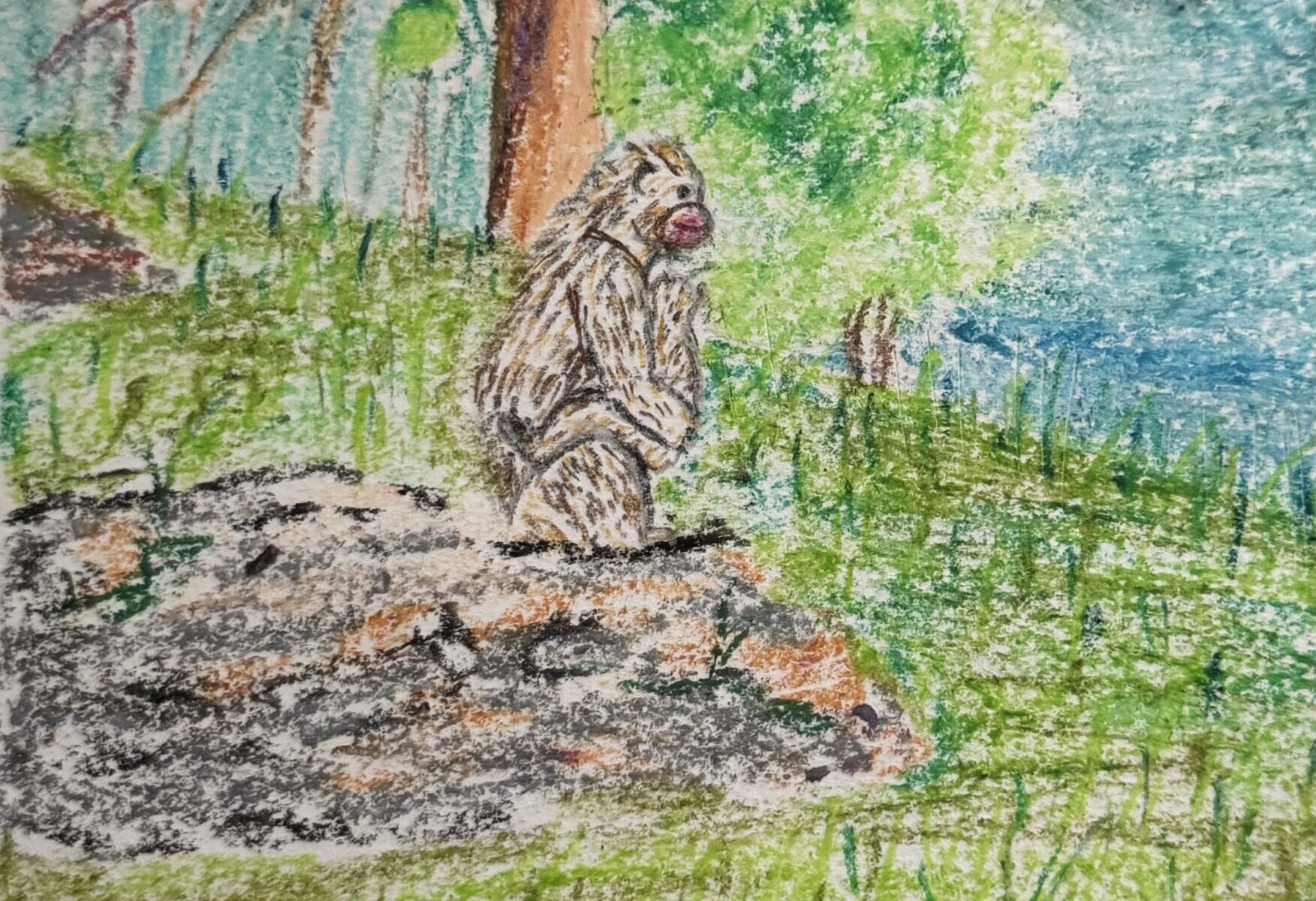
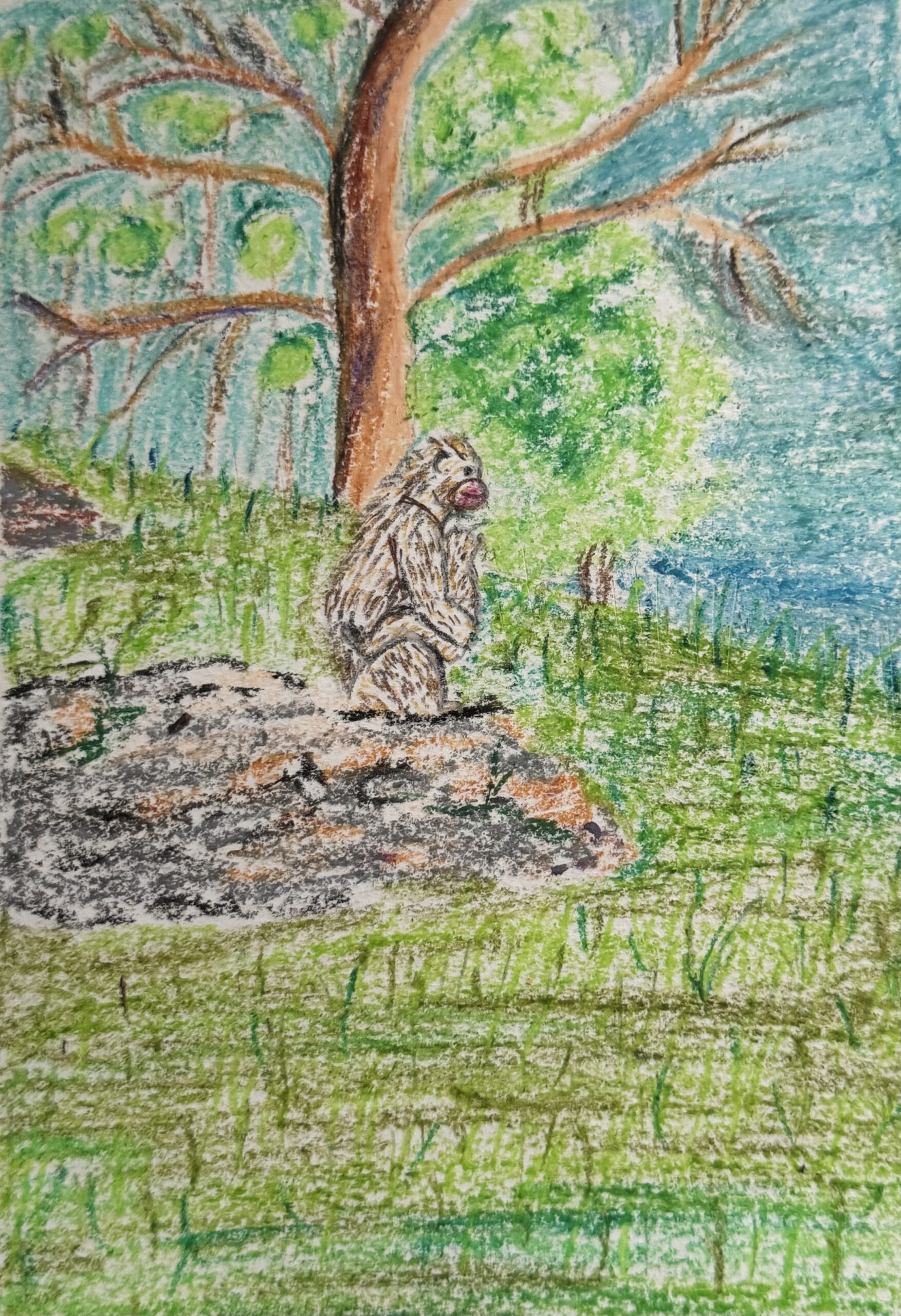
A runner-up for the Azhar Short Story Prize, this story takes us to a peculiar town where, for generations, families have lived by one unbreakable rule: never eat another family’s fruit. Then the fruit begins to disappear, and everything changes.
After Italo Calvino’s The Black Sheep
Fruit trees were the boon and the bane of our town. There were many of them, many of them, one variety in each family’s garden, all bursting with fruit the whole year round. But each family could only eat fruit from its own trees. That’s how it always was, as far back as we could remember; that’s how it had been for generations.
The Moz family had banana trees in their garden, their elephant-ear leaves large and lush; the family members were known to be pushovers, and sometimes a little bit dotty. The Rumman family, who had pomegranate trees, were hard and prone to secrecy. The Portokalos family had orange trees, and every last one of them was full of vim and vigor, almost lashing you with their energy. The Safargals, on the other hand, who had quince trees, were the most mysterious of our townspeople: they were lumpy and knobby, as though made by a rushed god, and they could be rather acerbic — but they left the most tantalizing fragrance in their wake. A world apart from the Tinneens, who had dragonfruit trees and were, hands down, the most stunning family in our town, their progeny always the belles and beaus of the ball. And yet conversations with them were often a bit disappointing, their opinions watery and indistinct; they seemed to have little of substance to say. Then there were the Tiins, whose garden was full of fig trees. They were the softest, sweetest, and most lethargic people for miles around: sometimes they’d keel over into a nap in the middle of a conversation.
Each family only ate fruit from its own trees and never touched the others. That, as we have said, is the way it always was and always had been. Until one day a stranger came to town.
None of us saw the stranger arriving in our town. We don’t know if they came by train or by bicycle, if they flew in. All we know is that, one night, fruit began to disappear from our trees. Five oranges here, a pomegranate there; the next day, a couple of quinces, followed by a fistful of figs. We didn’t know at first, of course, that there was a stranger in our midst. We didn’t know that this was someone who was new and did not know the rules: that fruit was not, most certainly not, for public consumption. That each type of fruit belonged only to one family. And the fruit was never, ever to be mixed.
Here is what we assumed: we assumed that someone had reneged on this centuries-old covenant. We assumed that it was someone from our town who had suddenly decided to break the rules. The Safargals thought it was one of the Rummans who had stolen their quinces: they had seen one of them eyeing their trees strangely last time the brood had come over for a visit. The Moz family pointed fingers at the Tinneens; the Portokalos clan was certain it must have been the soft and unassuming Tiins.
And so began a series of reprisals. Children would clamber onto their neighbors’ trees in broad daylight and pluck the fruit. Wizened old grandparents would slip in under the cover of night to do the same. The middle-aged would come up with an excuse to drop in to see their neighbors and slip a fruit or two into their pockets on their way out. It was an all-out fruital feud. Almost overnight, the rather placid atmosphere of our town turned into one of anger, of excitement, of endless suspicion, rumination, and mastication. Our streets became lined with piths and pits and peels and accusations.
It ended suddenly. The stranger was found lying on a street corner — dead of a sugar glut. And that’s when we all realized what this person had come to our town to do. We didn’t know them, knew nothing of their gifts, of their own personal characteristics; somehow they had come to throw our town into both disequilibrium and also an intense new equilibrium, then expired.
We gathered around the body and decided, as they were a stranger with no known kith or kin, that we would now be their kin in the here and in the beyond. We lit candles and prayed over the body. We thanked them for the disarray. We cried and we hugged one another and we saw, finally, how our edges had been softened: how the Rummans had lost a little of their hardness upon eating the bananas; how the sweet and passive Tiins, when they ate the oranges, found they had more drive, more zest, more oomph. The Safargals, often caustic of wit, were made kinder, more tender, by the consumption of figs. The Moz family had more clarity and composure after eating pomegranates; the introduction of quinces had made the Tinneens into more intriguing interlocutors. All together, we buried the body, prayed over its fragrant soul.
Knowing what we now knew, we decided to retreat. A truce was made between our families: everyone would go back, to their own garden, to their own fruit trees, respecting once again the laws that had been laid down for generations. And it was all harmony once again, each family snuggling back into the groove of its own flawed constitution. And we all felt peace again, and the comfort of the known, of being exactly the way we were always meant to be, nothing less, and nothing more.
Until, one day, a vegetable farmer came to town.