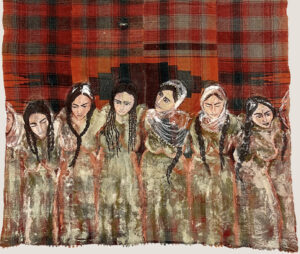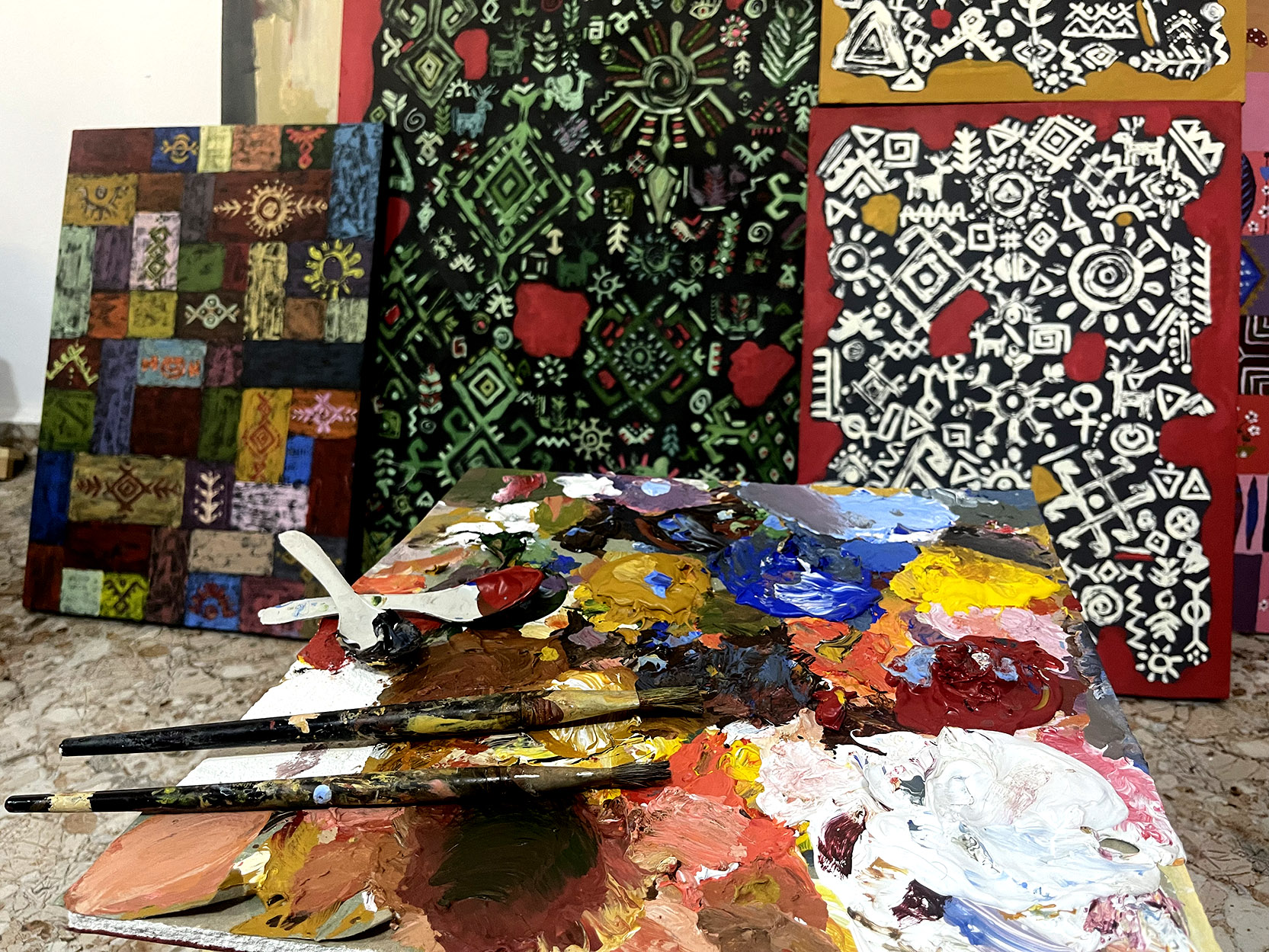
Despite enormous constraints — fifteen years of war, state repression, inadequate funds, and more — Kurdish women artists continue to create.
Early this year, as armed clashes between Kurdish units and Syrian government forces spread to the suburbs of the northern Syrian city of Heseke, I watched Kurdish female fighters flash peace signs as they rode by on armored vehicles. They were hunting suspected pro-government sleeper cells in the dense concrete houses surrounding an ISIS detention center. Throughout fifteen years of civil conflict now seemingly reaching its endgame, Heseke has witnessed a series of deadly clashes. The Kurdish militants who have long controlled the country’s war-torn, autonomous northeast have variously battled Islamist opposition groups, the Islamic State of Iraq and the Levant (ISIS), deposed dictator Bashar al-Assad — and now Syria’s new Islamist government.
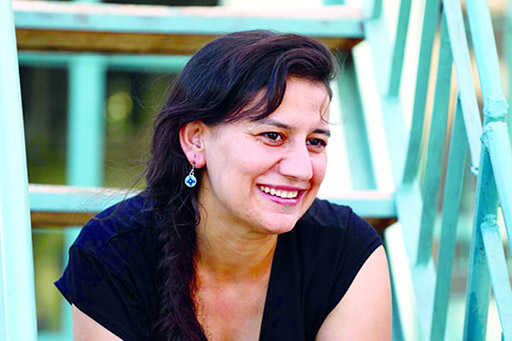
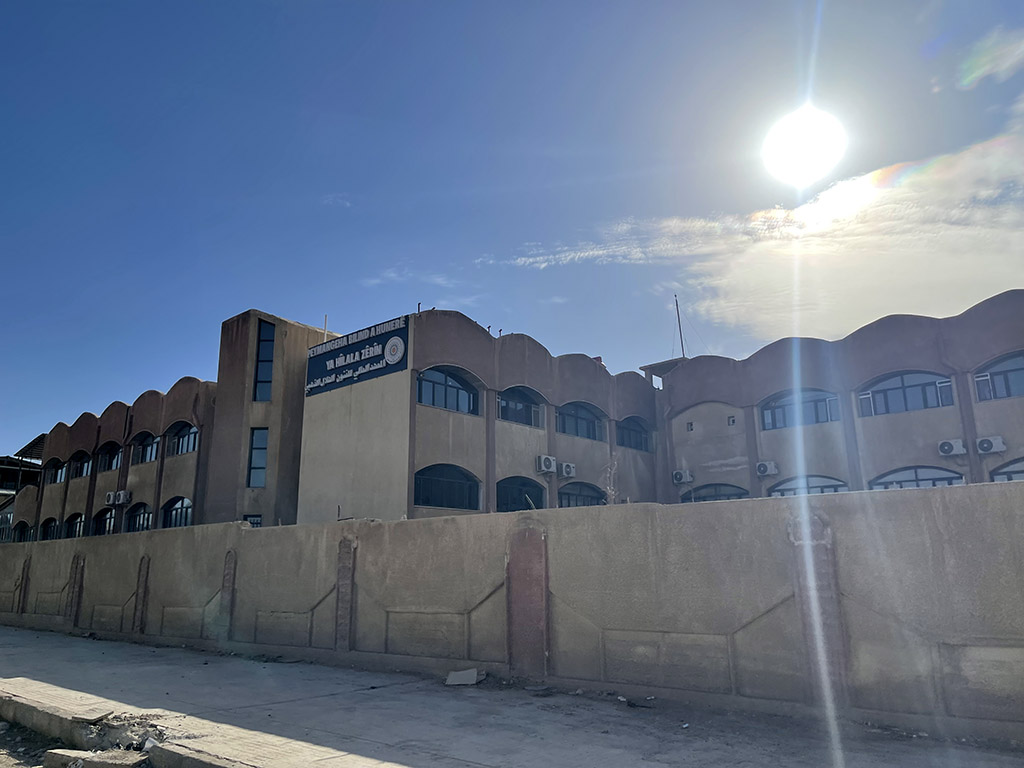
Heseke’s troubled streets have not only known war, however. Nearby stands the Fertile Crescent High Institute of Art (Peymangeha Bilind a Hunerê ya Hîlala Zêrîn). Kurdish filmmaker and instructor Sevinaz Evdike describes it as a “women-only space for women to express themselves,” which has welcomed hundreds of young women over the past two years in line with the broader feminist commitments of Syrian Kurdistan’s “Rojava revolution.”
The 2012 outbreak of the Syrian civil war enabled the country’s long-repressed Kurdish minority to declare autonomy and begin governing the Kurdish-majority regions known as “Rojava” on the basis of a unique political ideology, advocating for decentralized, municipal governance, women’s autonomy, and minority rights. Beyond the battlefield, the Kurdish women’s movement that spearheaded the revolution also advocates for autonomous women’s participation in all walks of life, encompassing all-female political councils, social movements, legal systems — and the arts. But female artists in this region face multiple intersecting battles: not only deadly armed attacks and social opposition, but also the limitations of a lingering artistic conservatism within Kurdish political culture itself.
Evdike, who directs her own films and fiercely advocates for women in the arts, has been part of these struggles from the outset. “Before the revolution, there wasn’t a single cinema; many of our people have never seen a film,” Evdike recalls. She herself travelled to Kurdish regions in neighboring Turkey to further her studies in filmmaking before joining the Rojava Film Commune (Komîna Film a Rojava) in 2015, as the Kurdish struggle against ISIS would thrust the region’s all-female Women’s Protection Units (YPJ) to global prominence.
When the Kurds first declared autonomy, Evdike notes, “all those with prior professional experience were men. In the first [film] project I participated in, women worked as actors’ assistants, wardrobe, make-up. And that was it.”
But this soon changed, as the broader revolutionary movement enabled female artists to make their voices heard. Evdike shot her short film Mal (Home 2018), in the devastated ruins of Raqqa in the aftermath of the former ISIS capital’s capture by Kurdish forces. She followed that with her feature Berbû (The Wedding Parade 2022), filmed after Evdike’s hometown was seized by Turkish-backed militants. Both follow ordinary girls and women swept up in the tides of war, but rather than a tableau of passive suffering, the films seek to depict their resilience, resourcefulness, and political commitment.
These qualities weren’t limited to the screen. Evdike recalls long, fraught efforts to help would-be artists escape repressive family situations and join her cooperative. “From 2019 onward, there were more women involved in cinema: they became directors, scriptwriters, camera-women,” she says, citing research conducted by another all-female film collective based in Rojava. Evdike has even worked with female ISIS members to use arts workshops to forge bonds, understanding, and reconciliation between women on opposite sides of the Syrian conflict, an extraordinary process captured in the documentary The Return (2021).
Women who initially worked alongside Evdike as assistants are now directing their own shorts and documentaries. These include Gulê Welat’s Xewn (Dream 2024), in which a grieving mother reconnects with her slain son in her dreams, and Nadia Derwish’s Jinwar (2024), which documents life in the autonomous women’s village of the same name. Films produced in Rojava tend to follow in the path of revolutionary art, often marked by elements of social realism or melodrama. Though influenced by this revolutionary culture, the region’s female-produced films also seek to capture everyday life and interior struggles, adding depth and color to a fledgling film industry which can otherwise tend to the propagandistic.
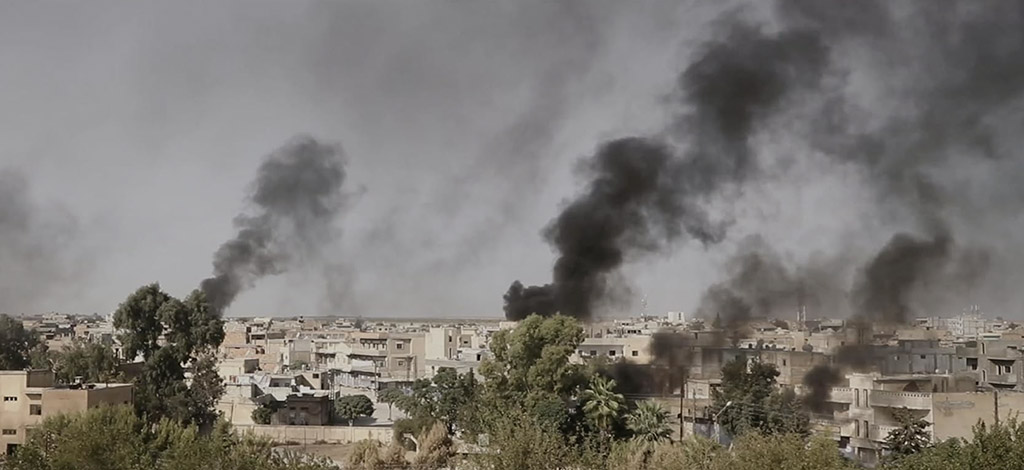
As their subject matter suggests, these artists operate within severe constraints: films are edited amid massive power blackouts; directors are denied visas to screen their work abroad; and production schedules are constantly disrupted by violence. The town where I first met Evdike, Welat, and Derwish in 2018 remains occupied by Turkish-backed militiamen. In Rojava, following the latest round of fighting, I met would-be film directors now using their cameras to shoot frontline journalistic reports. “We’re not only trying to tell stories of resistance, but that was always our priority as filmmakers,” Evdike says. “There was never a moment of peace, and seldom opportunities for us to tell other stories from our society, on other issues of deep debate among our people.”
In the face of these continued challenges, the work begun a decade ago persists. Building on the experiences of the Film Commune, Kezi Collective, and other similar organizations across the creative arts, two new institutes for the arts have opened in recent years. This includes the all-women project in Heseke where Evdike now heads up a three-year film program. Other departments offer similar courses across theatre, dance, and the visual arts.
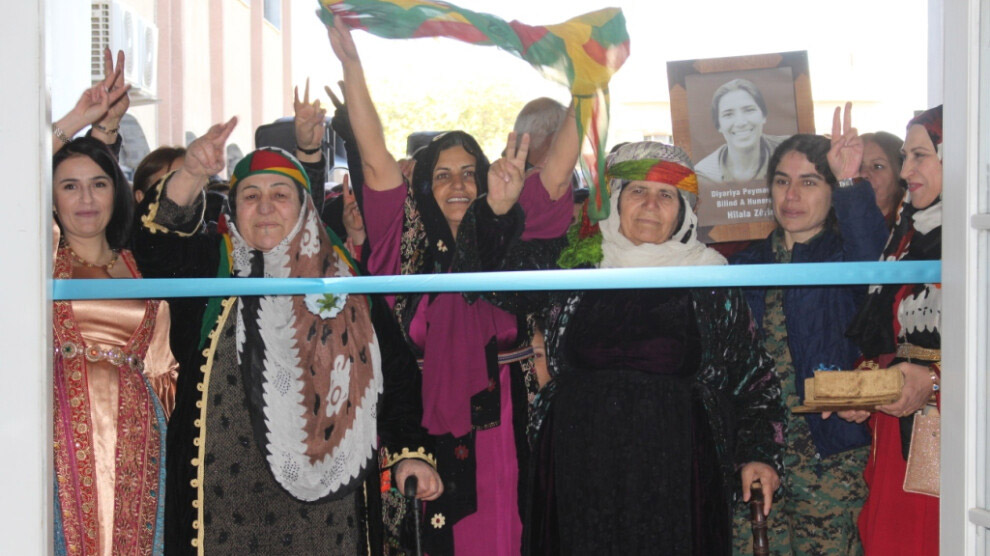
On one level, the institute is significant simply for bringing scores of young women filmmakers together to live, think, and create free of conservative male influence. “It’s true that if you look at cinema production in another country, you focus on the output, the films that are released,” Evdike says. “But here, it’s a social question.” With many of these young women themselves victims of displacement, Evdike describes managing “ten crises a day” as her students flee forced marriages to join the academy, navigate family pressure to return home, and endure the agony of not knowing the fate of relatives trapped on the wrong side of Syria’s frontlines.
Beyond helping young women process these crises through art, the Institute gives Kurdish creatives a space to explore new forms of expression. As Evdike explains, Kurdish filmmaking still faces specific limitations: “Kurdish govend dance and dengbêj singing are very traditional, so these are accepted in our society. But other art forms, cinema, the visual arts, dance forms beyond govend, are not accepted. Even setting aside the women’s issue, they’re generally viewed as pointless.”
Politically, the Rojava revolution has platformed Kurdish and other regional folklore long suppressed by the region’s centralized, anti-Kurdish governments. But this commitment has likely stifled less familiar forms of expression. Rojava’s artists have yet to produce any compelling rap music or speculative fiction, to cite two genres that have found a place in other revolutionary movements. Arguably, the defining novel of the revolution also remains to be written.
Rather than treating Kurdish folkloric art in isolation, classes and research projects at the Institute seek to deepen and foster organic links between different mediums. Students take classes on women’s cinema from a Middle Eastern perspective, research the phonology of Kurdish traditional music, and trace the evolution of traditional Kurdish music from prior centuries in the modern-day laments sung over the Syrian battlefield. The institute’s end-of-year show brings together classical and Kurdish music, intertwined within the same productions and performances. The same approach informs work in the film department, which Evdike describes as a natural site of cross-pollination as young filmmakers interpolate their peers’ music, acting, and visual creations into a relatively young medium.
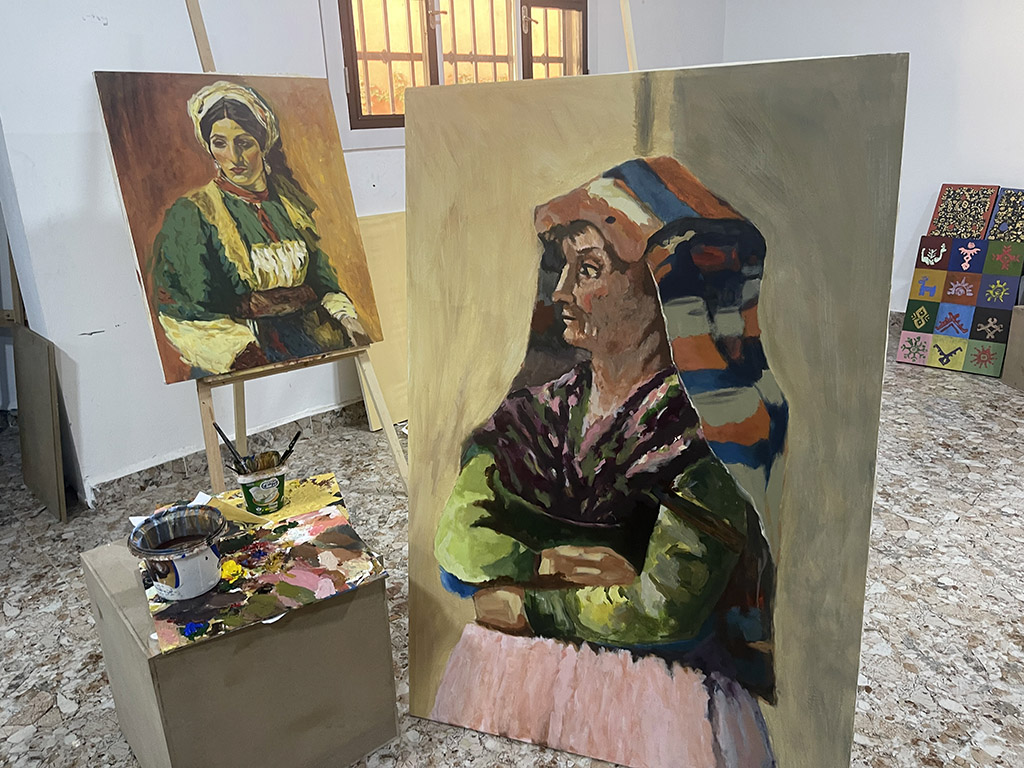
This multi-disciplinary approach has informed the most exciting artwork produced in Rojava since the revolution. In the striking music videos produced by collective Hunergeha Welat, dengbej vocal elements and traditional instruments are remixed with both classical backing and modern beats to create a wholly new form of revolutionary art. Crucially, this includes blending the region’s various languages and cultural traditions, incorporating not only Kurdish, but also Arabic, Syriac Christian, and minority folk elements in a powerful challenge to the reactionary Kurdish nationalism which has also influenced the revolution’s political direction. Even the videos’ color palette frequently eschews the stereotypical sandy yellows and dusty greys beloved by conflict reporters documenting the tragedy, choosing rather to reflect the bright shades of traditional Kurdish dressmaking.
This innovative approach to the tones, shades, and tradition is not limited to Rojava. In the diaspora, Kurdish musicians have adopted a comparable approach, with electronic producers like CHAMOS and Tülin Tekkal lighting up dance floors with Instagram-friendly remixes of traditional Kurdish songs, often colored with references to Kurdish revolutionary politics. Displaced visual artists like Vian Hussein, who grew up overseas, similarly combine traditional Kurdish crafts and the vocabulary of the revolution within the framework of portraiture and sculpture to express contemporary experiences of displacement and resistance.
Though these moments of cultural cross-pollination point to a future where Rojava’s artists are less hemmed in by violence and suffering, that horizon still seems far away. The Women’s Institute opened its doors in November 2024. That same month, jihadi turned statesman Ahmed al-Sharaa’s Islamist forces launched the blitzkrieg offensive that toppled dictator Bashar al-Assad — a move to end the Syrian conflict altogether. Following the new government’s January 2026 assault against Rojava, the Kurdish-led autonomous region signed a ceasefire and integration agreement that should see its governing and military structures return to central government control while retaining some degree of autonomy. As salaries go unpaid and diplomatic wrangling continues, much remains unclear, however, including the fate of the region’s autonomous women’s organizations, cinema collectives, and artistic institutes.
After fifteen years of war, ordinary locals hope for peace. Yet there is a clear tension between the new Syrian government’s conservative, Islamist politics and the Kurdish focus on women’s autonomy, meaning any integration process will also be deeply fraught. And given deepening tensions between Kurds and Arabs, renewed violence is a distinct possibility.
The region appears likely to preserve some Kurdish linguistic and cultural autonomy, allowing for artistic production to continue, but under even more adverse conditions marked by creeping state repression, lack of funds and international access, and a reactive Kurdish nationalism. None of these conditions are conducive to expansive artistic thought.
“As the people of Rojava we haven’t experienced any moment where we’re free to produce art as we would like,” Evdike says. “We are constantly in a situation of crisis.” Much like the young female protagonists in her short film Mal, who build a make-believe house out of rubble, Rojava’s artists will continue fighting against the odds to carve out a space of their own.