In a newly translated anthology, nine Jordanian women explore gender, bodies, and cultural expectations, resulting in unexpected epiphanies.
In the summer of 2024, a group of twelve women met in Amman, Jordan, for the first of a series of writing workshops called Tajalli — “Epiphany.” Organized by Maryam Dajani, writer, pharmacist, researcher, and force of nature on the Ammani literary scene, the plan was to reflect on and write about the body from an ethnographic standpoint, examining the relationship between the individual and their environment. What does it mean to be a woman, participants were asked. A woman in Jordan? A mother? A woman who chooses not to be a mother here, or even a wife?
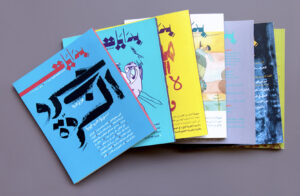
Over the course of four intensive writing workshops, participants read Women Who Run with the Wolves by Clarissa Pinkola Estés, Erica Jung’s Fear of Flying, and Scheherazade Goes West by Fatema Mernissi, and participated in body mapping and other somatic practices led by movement trainer Shereen Khamis. And then they wrote. Nine of these women eventually chose to publish their resulting musings in the anthology ليس في النص ما يكفي من جسد: إثنوغرافيا ذاتيّة جمعخيّة للنساء (There’s Not Enough Body in the Text: A Collective Autoethnography of Women, Arab Institute for Research and Publishing, 2025), edited by Dajani. A tenth, whose title became the title of the anthology, withdrew her work at the last moment.
These nine sets of texts, written by Duha Abualzait, Raneem Abo Rmaila, Taghreed Abu Shawar, Maryam Dajani, Aseel Fakhouri, Ala Janbek, Dana Judeh, Ola Khaleel, and Yara Zreiqat, are prefaced by an introduction by Dajani, in which she uses the term “host body” to describe women. She writes:
The body is about more than just biology. It is a political and cultural text inscribed with the discourse of power, etched with our daily rituals of obedience.
Just as the pregnant female body donates its resources to a fetus growing inside it, accepting pain and countless changes in service of another being, women have been conditioned to neglect the self for the benefit of others. They are often the repositories of tradition, making space within themselves for all of society’s expectations. Writing their stories, then, is a way to reclaim their bodies, their selves.
The writers in this collection have done exactly that, taking their stories back from medical professionals who dared to speak over them, western academics speaking for them, and parents insisting on raising traditional daughters. Their texts discuss body image and societal pressure to look slim and young; illness, motherhood, and postpartum depression; outsider judgment for being “too liberal” or “too conservative”; and the way women’s voices are silenced and their sexuality stifled. There are even hints of gender dysphoria.
The real strength of this autoethnography is that touch of the personal; far from being dry or academic, these essays resonate deeply with the reader.
The essays are frustrated, nuanced, and occasionally in direct opposition to each other, emphasizing the breadth and depth of the Jordanian female experience. They reminded me, as I read, of my experience teaching at the University of Jordan a decade ago. At the time, I was new to Amman and — between linguistic challenges and not knowing my way around the city — could barely take a taxi. The course I taught, fittingly titled Intercultural Communication, served as a kind of group therapy for my culture shock (forty enthusiastic therapists to one confused instructor). For my students, accustomed to a more lecture-based style of learning, it was a chance for endless conversations about the society I’d come from, the United States, and the one in which we were living, Jordan. That first semester, the single male student in the course dropped out, so there was little the remaining female students and I didn’t feel comfortable saying.

My students that semester were as varied as the authors of this book — from different social strata, religions, and family backgrounds — and we spent a lot of time discussing their frustrations as women existing in the world. My hijab-wearing students spoke about being rejected during job interviews because they didn’t look “modern” (i.e., western or liberal) enough, and my Christian students described being stereotyped as shameless because they drank or had mixed friend groups. My Palestinian students talked about their difficulty feeling at home in a country where up to 80% of the population has Palestinian roots and yet Jordanian women married to foreigners (e.g., Palestinian men) cannot pass down citizenship. And they almost all spoke about marriage: the pressure to marry young (but only the “right man”) and have a family, the way some parents considered marriage more important than their degree. One student stopped coming to class in order to plan her wedding; another was resuming her studies after having a son. I joked with them that Jordan felt so familiar to me because I was from the American South, which has many of the same characteristics: emphasis on family, hospitality, good food, religion, and tradition. A lot to love, a lot to struggle with. Many of my students felt as conflicted about their society’s expectations as I did growing up in Mississippi.
It’s no surprise, to me at least, that the Tajalli workshop was so successful. The series aims to redefine the notion of research by building new methodologies in which Jordanians, in this case women not so different from my students, can use the personal to better understand the collective. The real strength of this autoethnography is that touch of the personal; far from being dry or academic, these essays resonate deeply with the reader. Something else that struck me in the collection is the grace with which Dajani and her fellow writers accepted the choice of the missing writer to leave the project. “When a woman herself becomes a gatekeeper of her own voice, a censor of her own desires, she fears being misinterpreted or seen as rebelling against the prevailing religious, social, and political narrative,” Dajani writes. And yet this self-censorship, this withdrawal, is just another part of the process. The workshop — the epiphany — was never meant to be just about writing, but about holding up a mirror to the collective. Another key takeaway: liberation — namely, reclaiming the body — takes time, and every stage is valid.
This spring, Dajani will lead a new workshop in the Tajalli series, entitled “Cartographies of Power: A Collective Autoethnography to Understand and Deconstruct Power, from Biology to the Political Economy.” Like 2024’s iteration, it will emphasize turning people (erstwhile “research samples”) into theorists in their own right, subverting traditional authority, be it patriarchal or political. Participants will discuss theories ranging from Gramscian hegemony to social criticism; Arab critical theory by Abdullah Laroui, Hisham Sharabi, and Hisham Bustani; postcolonial international law, Foucault, and Bourdieu; and feminist and intersectional theories by Kimberly Crenshaw, bell hooks, Audrey Lorde, Fatema Mernissi, Nawal El Saadawi, and Leila Ahmed.
Beyond theory, however, the workshop will also trace the flow of power from the macro to the micro level — governments to boardrooms to kitchen tables to the mind itself — dispelling the notion that hegemony begins with the political, recognizing instead how it, too, begins with the body. As Dajani notes, “revolution must manifest itself not only in parliaments and in the streets, but also in the synapses, rituals, and intimate gestures where the architecture of the political first takes root.” With life in Jordan rhythmed, as of this writing, by the wail of emergency sirens and the explosions of intercepted missiles, what could be more apt? Even as we ration our propane and stock our cabinets, our neighbors are subjected to Israeli invasion and direct hits by Iran due to their ties with the U.S. It all feels like a reminder — in case we needed one — that lessons on deconstructing power are more vital now than ever.
In the following pieces, some of the more daring of the collection, Dajani examines the mind-body connection as she has experienced it throughout her life. In “The Body Never Lies,” she gives a short history of her body, dissecting its inherent wisdom and the importance of listening, while in “A Purple Body,” she discusses pleasure and, along with it, the hijab, exploring its effect on her. I hesitated at first to include the latter essay, given how often western non-Muslims criticize the veil as a symbol of oppression, but it should be clear from her writing that Dajani does not position herself within that ideology. Her text, instead, involves both praise and criticism — analysis, not judgment, and one very much worth reading.
*
The Body Never Lies
The soul betrays me, and the body doesn’t.
My soul revolts against my body,
Scratches it.
Its claws leave stripes across its surface,
Silencing it.
My body loves me,
The kind of love that says
Qui aime bien châtie bien,
So it shakes off its blanket of dust
To teach this soul a lesson.
My favorite teacher crept closer to me in our fourth-grade science lab and playfully stuck the live grasshopper we were studying under my nose. I pushed my seat back in a fright, the frantic beating of my heart my first encounter with that ferocious little bird that has tried fruitlessly, for so many years, to escape my chest.
That same year, during the mandatory vaccinations we were given by the Ministry of Health, most of the students were hesitant, scared of the needle, but I got up and stood proud at the front of the line, ready for my jab so I could go back and tell them airily, “It didn’t even hurt.”
A week later, I was hiding behind the couch in our sitting room, afraid to receive yet another vaccine that my doctor father held in his hands.
Until recently, when my body screamed “no,” I silenced it.
The body is the basic source of information we need to empower ourselves with independence and self-confidence, and illness is perhaps how it reacts when we take its vital functions for granted. One of the most important things we can do is listen to our true inner voice to understand our life story. Which leads us to a thorny dilemma: the dichotomy between feeling what our body is actually experiencing and feeling what it “should” feel based on criteria we’ve absorbed from an early age.
The people who believe they’re feeling what they should feel, and who put all their effort into not feeling the things they forbid themselves — these are the people who end up sick. Unless, of course, they let their children pay the price instead, by projecting onto them the emotions they can’t acknowledge to themselves. Overbearing, self-righteous people have long set the rules for feeling according to their own framework, rather than the nature and language of our bodies, so we rarely ask ourselves the right questions. First, how can we access the knowledge stored in our bodies? And second, how can we read the history of the body and learn its language?
When I finally allowed myself to feel all the feelings that had accumulated in me over time, I was able to free myself from the past. Feelings are never the product of a conscious effort. They’re simpler than that, and they exist for reasons that are good and valid but seldom obvious. I learned how to pinpoint the vital signs my body is always sending, shyly and faintly, and how to silence the inauthentic voices that cluttered my mind so I could finally hear my inner voice, my whispering nerve endings. When I began to learn their language, I could finally make out the history of my body, hidden in my every detail.
Starting with my ability to feel at peace in my body rather than in my mind, that shiver that makes every hair on my body stand on end, the itch I get when he’s close to me, the contractions in my lower abdomen, and the deep pain in my left thigh that comes suddenly and disappears the same way. The pressure in the soles of my feet as I get ready to undertake something exhausting and the history of my nose, which tells a saga of sensitivity to all kinds of grasses and pollens. It runs when I’m nervous, which has led to an intimate relationship with tissues. So sensitive, this nose, but it’s given me a fine sense of smell and taste.
They say that reconciliation with the nose is the highest form of reconciliation with the body; the story of Cyrano de Bergerac, translated into Arabic by Al-Manfaluti, is the best example of this. Today, I look in the mirror and see the faint scar on my upper arm, glimpse the thin white line on the inside of my left ring finger. I run my fingers through my dyed-blue curls, where the gray hairs have turned a shimmering metallic navy. You can see the gray more clearly now. I look at my face, remembering the passage of pimples over it, then touch the mark on my nose where I pierced it ten years ago, later removing the piercing as though the hole wouldn’t close up, that hole which had caused me so much pain and required such an adjustment just to blow my nose. The muscles in my right hand had learned to slide a few millimeters down on the right, to avoid pressing on the ring and injuring the lining of my nasal cavity. That flexible muscle memory of my fingers. Was it really worth all the trouble?
As for the history of my heart muscle, I went back to the early days of its transformation into wings and talons, before I communicated with that bird beating in my chest, and I learned how to release it and what its ferocity was trying to force on me. I learned to hear it chirping happily and to respond, to calm its twitching, agitated wings as it tried to fly, to keep my chest from hurting. I learned how to tell when the adrenaline was flowing along its flanks, tempting it, and reminded it to be patient, not to be a moth, rashly plunging toward the specter of fire in the distance.
The history of my body is the history of my existence, which cannot be distorted or manipulated like the history of the soul. My understanding of my body’s history, intertwined with the map of associated emotions, has helped me transform this body into my greatest ally in life, in lieu of making it my closest enemy. When I vex and doubt it, I lose access to its wisdom.
My body is the box of riddles in which I’ll live till the end of my days, and it’s up to me to engrave on it the history of the soul inside.
*
A Purple Body: Discovering the Mind-Body Relationship
“You’re beautiful, you know that?”
So my mother told me yesterday. It was more declaration than question, her eyes contemplating me intently as she lay stretched out on the maroon velvet sofa in the sitting room at home, across from the balcony teeming with plants. To me, the question brought to mind a separation that began in childhood, the day I decided to elevate my mind at the expense of my body.
“No, I don’t know that.” I answered her frankly. I’d grown up believing that true value lay in the mind, and that the body was a burden to be covered, hidden, and risen above. I grew up seeing my mind take precedence over my body the way I’d learned from my father: my body was just a vehicle for my thoughts. I tried with all my might to engage the value of the mind, to free it from the constraints of the body.
I donned the hijab and the jilbab when I was quite young, because I wanted to, and as a matter of course, just like my mother and older sisters. It was the third day of first grade; I put on a hijab and jilbab my mother had ordered from the tailor just for me, a vivid purple. I can still remember the shocked faces of the kids on the school bus when I walked out my front door and climbed in like it was any other day, totally self-confident and fully covered. When the kids in my class started poking fun at my hijab, the way children do, saying it was too late, they’d already seen my hair, I told them I’d gone to the salon and changed my hairstyle before I covered up.
During the three days before I put on the hijab, I’d sat between two male friends from preschool, completely content. The image I have of those days is of me jumping from chair to chair in the classroom, bright-faced and laughing, my hair dancing around my face before I finally sat down between Amin and Laith. And then people’s understanding of me changed, as if I’d decided to move them to a different plane, one where they looked not at my body but at my mind. But I never once thought that this shift also meant I’d somehow deprived myself of an awareness of my own body.
The world around me, which had treated my body and mind as one entity, changed completely. This transformation wasn’t just in the way others saw me but also in how I saw myself. My body became something I had to rise above, to make room for the mind that kept watch over me, in charge of everything. Until very recently, I believed that the hijab made men notice my mind rather than my body, freeing me from the idea that my value as a woman stemmed solely from the attractiveness of the latter. We don’t choose our bodies, but we can develop our minds; my body isn’t something to be proud of because it was a gift, not an achievement. As for my mind, I put pressure on myself to make it beautiful enough to compensate for everything my body would’ve wanted to express if it weren’t covered. The physical body has its limits; the mind has none.
My hijab concealed all my physical attributes related to my innate, instinctive, and sensual preferences, leaving only my mind to distinguish and perform these functions, sometimes through effort and sometimes through manipulation, until my mind became incredibly strong. So I was left with an unexplored body, guided by a sightless mind of unsurpassed beauty.
Here my personal experience intersects with how the French philosopher Maurice Merleau-Ponty conceived of the relationship between the mind and the body. He was among the first to talk about an “embodiment of perception,” of the senses, meaning that the mind cannot be separated from the body because the senses are a part of the bodily experience, and the mind can’t perceive the world around it without regard to the body it inhabits. I believed that wearing the hijab would free my mind from the constraints of the body, but the truth is that I simply deprived myself of existing fully.
According to research, the senses overlap and influence each other. For example, our posture can influence how we perceive distance; even the slightest movement of the head or covering an ear can change how we interpret distance and sound. All of this brings us back to the fact that the body’s not just an outer shell that we cover or rise above; it is an essential part of our perception, the gateway through which we access the world.
Perhaps my hijab did free me from being stereotyped as a woman and from the way others viewed me, but it also represented a barrier to experiencing my body and expressing myself with it. My mind and body work together to form my experience in this world. An example of this is the orgasm, which is the physical experience that most dramatically unites the mind and body, the most violent and powerful, the brightest light, in which I feel as though I’m returning to my body, as though my soul has been restored, a moment of frisson and revolution.
That shiver, a mixture of cold and heat, signals the body’s chaos as it undergoes a complex neuro-physical experience in preparation for that rising sensation that will culminate in intense waves pulsing infinitely outward from their source till they engulf every atom of my being, till these vast nerve impulses satiate the body before the mind and it relaxes with all the megalomania of a revolution that has succeeded in seizing power, leaving me to a new uprising after a million streams have burst forth from my nerve endings, seeking quiet riverbeds.
The strange thing is that the moment of the orgasm, that moment midway between life and death, is the one in which I most fully feel my mind and body together. Everything suddenly becomes clear. As Freud said of the life and death instincts, orgasm represents a complicated moment of union between the two, between the craving for life and the desire for annihilation. It’s as if orgasm is the gateway to God in a momentary union of mind and body, in which the spirit of the sacred is manifested in a great, redoubled synergy that expresses nothing but absolute perfection. I can almost see God in it, appearing as energy, the light from which the sun rises, and the breath he breathed into the clay to give it a soul.
But even in that experience in which I feel my true physical existence in its highest manifestation, as if I lived only a half-life without it, my mind has the greater share, giving me the ability to fully immerse myself. I ignored the role of my body and put my mind on a pedestal, but it may actually be the gateway to a deeper understanding of the brain’s role as a woman’s most important sexual organ and to thinking about the mental, emotional, and physical processes in the sexual response as integrated.
The brain is the control center for the nervous system and for emotions and desires, operating through several regions, such as the hypothalamus, amygdala, and orbitofrontal cortex, which are involved in managing sexual response. The hypothalamus, for example, controls the release of hormones that enhance sexual desire and arousal, while the amygdala is associated with feelings of pleasure and gratification, which are fundamental to sexual activity. These components mean that women’s sexual arousal may begin with a psychological or emotional reaction before there is any clear physical response.
This is where neuroplasticity arises — the ability of the brain to reshape itself based on the experiences that play a key role in this context. Thanks to neuroplasticity, women can modify their sexual responses to fit their surrounding social context. If their environment forbids more open sexual expression, the brain can rely instead on imagination or emotion to arouse desire or pleasure. This adaptation may manifest as a delayed response or rely more on emotions, mental stimulation, or cultured conversations than on immediate arousal. Women’s sexual response is intertwined with psychological, societal, and cultural factors, and the brain is instrumental in processing and managing these desires. This psychological and biological complexity can be viewed as a natural adaptation to the historical constraints placed on women, reflecting the ability of the mind to compensate for them and shape sexual experiences that rely more on emotion and intellect than on the purely physical.
It’s no wonder, then, that women are often attracted to intelligent men — there’s even a word for it, sapiosexual — unlike men, who are often first attracted by women’s physical characteristics. Historically, both sexes sought out the physical strength that would allow them to mate and survive, but with urban development, the need for male physical strength diminished, and the mind became more critical for survival. (Does this make women more evolved than men?)
Here, we women elevate the mind over the body once again, in an evolutionary context that frees women’s sexual pleasure from the forward march of time or the link between orgasm and procreation, as in men, as well as from the aging of the body and the physiology of multiple orgasms, unlike in men. Can we think of this as a partial compensation for our historical invisibility, physically and sexually? There’s a Bolivian proverb that translates as “A man can; a woman wants.” There are constraints on a woman’s desire, as powerful as it is.
In the same way that societal pressures lead a woman to focus on the mind at the expense of the body, a woman’s body, essential to her perception of the world, has been alienated from her and turned into nothing more than a vehicle for male pleasure. In addition, male-dominated science has historically ignored the female orgasm and considered it unnecessary, even saying that from an evolutionary perspective, it was merely a byproduct of male physiology.
But the orgasm didn’t evolve for reproductive purposes, which provides a basis for the idea that a woman’s sexual identity is not tied solely to her reproductive role. This calls for a freer understanding of female sexuality, one that is not constrained by patriarchal definitions of reproductive function or standards of beauty. At which point, when I say to my daughter, “You’re beautiful, you know that?” she’ll know that I mean both inside and out. And she’ll reply, “Of course I know that!”
All translations by Addie Leak