Beirut-Based Writer, Translator, Senior Editor steps into new leadership role
BEIRUT/MONTPELLIER/LOS ANGELES—(JUNE 2026)—The Markaz Review (TMR), an independent nonprofit platform for literature, arts, and culture from the Arab world/SWANA region and its diasporas, aka “the center of the world,” has just announced the appointment of Lina Mounzer as its new Editor-in-Chief. Mounzer, a Lebanese writer, translator, and senior editor at TMR, assumes editorial leadership from founder Jordan Elgrably, who launched the publication in 2020, building it into one of the foremost English-language platforms for SWANA creative voices (TMR also publishes in Arabic, and French). Elgrably transitions to the role of publisher and editor-at-large; he will continue to guide the organization’s strategic vision, partnerships, and development.
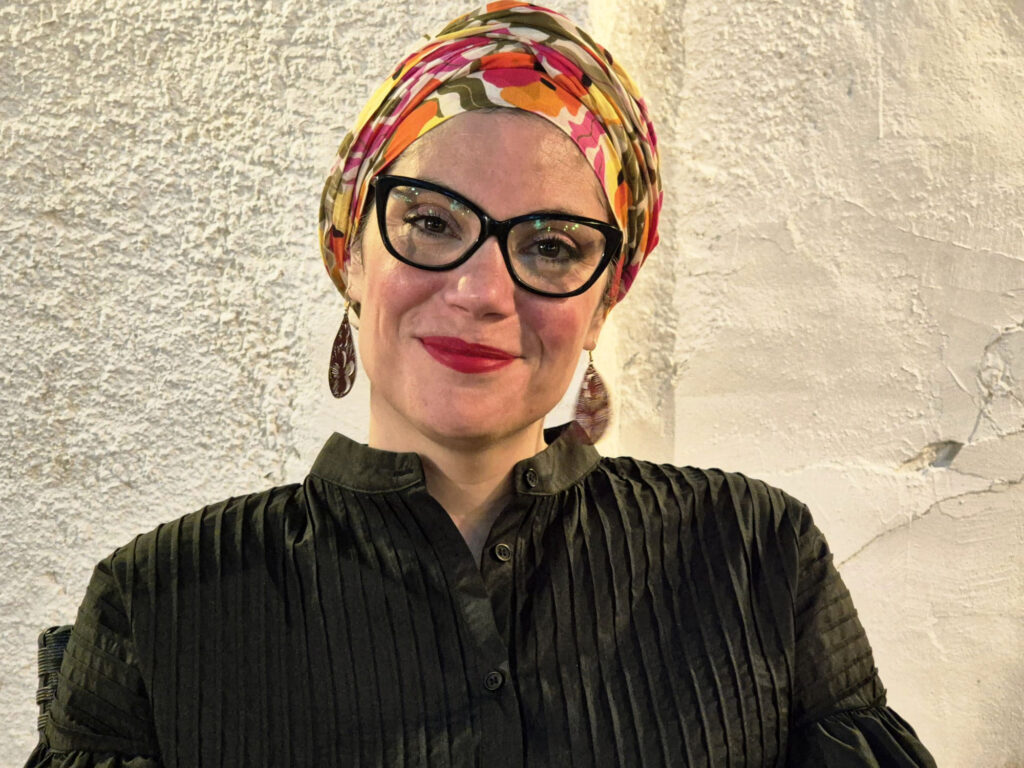
As the publication’s Beirut editor since 2023, Lina Mounzer has been instrumental in helping shape TMR’s editorial voice in response to the violence besieging the region she calls home. She believes that the review’s commitment to centering writers who might otherwise be marginalized by mainstream Anglophone publishing is instrumental in creating a counter-narrative to the dehumanizing discourse pervasive in understanding of the region.
Says Lina Mounzer, “In 2024, one year into the genocide on Gaza, I wrote an editorial for TMR, ‘A Year of War Without End,’’ that ended up going viral. There was one line in particular that was quoted again and again: ‘Ask any Arab what the most painful realization of the last year has been and it is this: that we have discovered the extent of our dehumanization to such a degree that it’s impossible to function in the world in the same way.’ The fact that it resonated so deeply just goes to show how widespread was this feeling of frustration and betrayal among people from our region. TMR was founded as a platform intended to bring SWANA voices to the world, to assert their importance as ‘critical components in the global production of literature, commentary and cultural critique,’ but the last few years have shown us that we need to set our sights even further. Toward nothing less than an attempt to fundamentally change the order of a world that has not only allowed but endorsed the commission of crimes of annihilation and cultural erasure against the people of this region. But how, in this medium of words, of art, do we change the way this system works? By changing the way we speak. Not toward, not vis-à-vis the world without—what we call ‘the west,’ but which in reality is an entire financial and political system as manifest at ‘home’ as it is ‘abroad.’ But for, toward, with, and with regard to one another. This is the crucial difference between TMR and other English-language publications focused on this region. We are no longer interested in translating this part of the world to that so-called west, but rather in having us speak to one another in order to better organize, strategize, and rebuild our own world, in accordance with our values, seeking neither permission nor endorsement for our discourse. We are interested in the local even more than we are the global; in speaking from the center to the center as the center, eschewing the idea of ourselves as peripheral altogether.”
Welcoming Mounzer as the new Editor-in-Chief, TMR’s publisher Jordan Elgrably recalls that, “We launched the review with a debut issue entitled BEIRUT, less than a month after the 2020 Port Explosion. I think it is especially fitting that our new leader hails from one of the SWANA region’s pivotal cities.” Adds Elgrably, “Writers and other creatives from Lebanon, Palestine, Iran and beyond, are expressing themselves as never before, despite the intimidation of the mukhabarat [intelligence services], and the predations of Israel, which continues to try to establish itself as the hegemon of the Middle East. They’re also defying the dictates of the New York gatekeepers by consistently surprising those who would bet against them. Two generations of Arab and other SWANA writers are challenging the ways we think of the Middle East, North Africa—really, the way we think of the world, period. I have in mind such originals as Salar Abdoh, Mai Al-Nakib, Leila Aboulela, Rabih Alameddine, Hisham Bustani, Selma Dabbagh, Abdulrahman ElGendy, Saleem Haddad, Isabella Hammad, MK Harb, Shady Lewis, Hisham Matar, and too many more to name.”
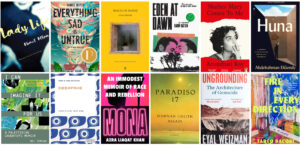
The Markaz Review, a nonprofit, has established itself as an essential destination for literature and criticism from Karachi to Casablanca and its diaspora, publishing weekly online content, bimonthly themed digital editions, podcasts, and roundtable discussions, and curating acclaimed anthologies including Stories from the Center of the World: New Middle East Fiction (City Lights, 2024) and Sumūd: A New Palestinian Reader (Seven Stories 2025).
With Lina Mounzer at the helm, TMR enters its next chapter headed by a writer whose own life and work embody the publication’s founding conviction: that voices from the center of the world are not peripheral to global literature—they are indispensable to it. Mounzer’s vision is that western readers will be invited to listen in to these voices as if they were eavesdropping.
About Lina Mounzer
Lina Mounzer is a Lebanese writer and translator based in Beirut. She has made valiant attempts to live in other cities, including London, Montreal, and Budapest, but continues to return inevitably to Beirut. As such, much of her work is either directly about or inspired by this endlessly eclectic and beguiling city. Her essays have appeared in Equator, The Paris Review, The Washington Post, Freeman’s, and The Baffler, as well as in the anthologies Tales of Two Planets (Penguin 2020), Best American Essays 2022 (Harper Collins 2022), and Gaza: The Story of a Genocide (Verso Books 2025).
# # #