As Beirut’s Zoukak Theatre Collective shuts down, the founders seek to adapt once again to the city’s endless series of crises.
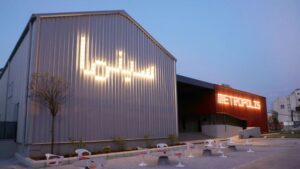
They got the news in the summer of 2025. The lease for Zoukak Theatre Collective’s headquarters, a converted warehouse boxed in by highways in the industrial district of Karantina on the outskirts of Beirut, was due to be renewed, and the landlord wanted to make some changes. Big changes. Their yearly rent of $20,000 was getting blown up to $50,000, a 150% increase.
In the previous five years alone, the collective — a non-hierarchical group of five theatre-makers defying the odds as artists running their own theatre — had, alongside the rest of Lebanon, pushed through a sequence of crises of Greek-tragedy proportions: economic collapse, a global pandemic, one of the largest non-nuclear explosions in history, alongside repeated bouts of ferocious Israeli bombardment. The word “unprecedented” continuously acquired new meanings.
“Every time there’s a crisis, the reflex is to close,” says Omar Abi Azar, one of the collective’s co-founders. “There are so many challenges, but we never wanted to end on defeat.”
During the Covid lockdowns, performing was impossible. During the worst of the economic crisis, pocket change for theatre tickets turned into money rationed for groceries. In August 2020, the Beirut Port blast blew out the theatre’s windows, knocked out walls, destroyed most of their lighting equipment, and sent cracks through the ceilings and floors.
Each of these crises could have heralded the end. But, as Junaid Sarieddeen, another co-founder, says, “if the explosion was the reason we closed, it would have been an ending that set a bad vibe for us — and for the city.”
But after years of pushing through each catastrophe, adapting and re-adapting, the sudden rent increase forced the collective to hesitate on next steps. Being in constant survival mode was exhausting. And yet, after everything the theatre had survived, were they really going to let the rent be what brought the curtain down?
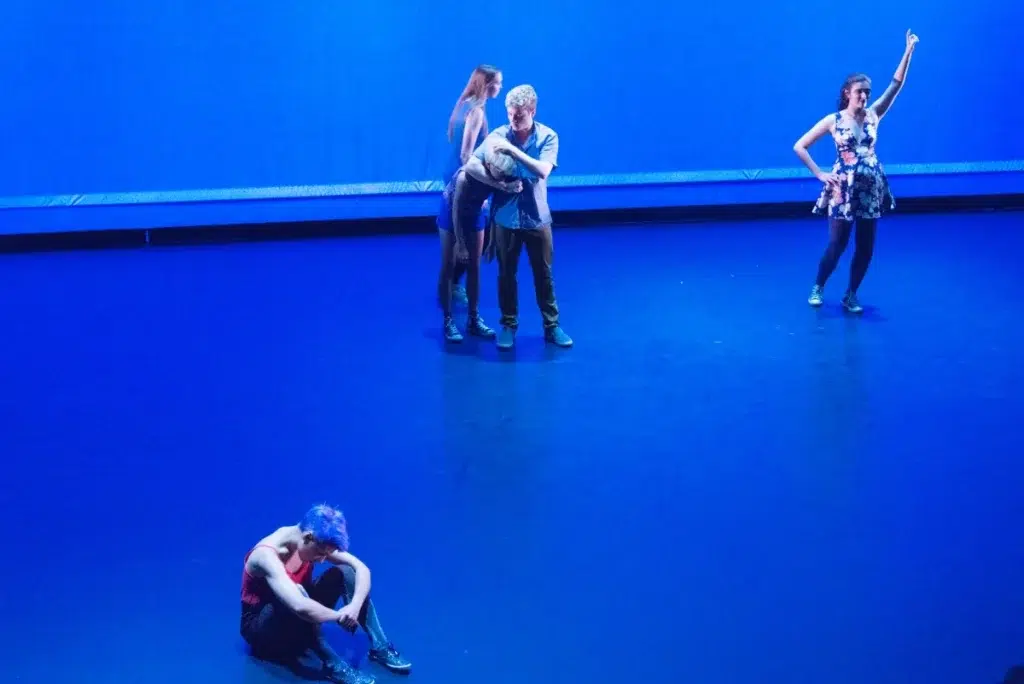
Since moving into the Karantina spot in 2016, most of Zoukak’s operational costs were covered by the Swiss organization Drosos, but its mandate restricts funding to eight years. For the following two years, Zoukak managed to piece together support from other sources. Though the funding was sufficient, it was also unstable. And yet the insecurity was worth navigating. “It’s so important to have a space, as theatre-makers,” says Maya Zbib, a third Zoukak co-founder. After ten years of rehearsing in living rooms and carpeted UNESCO conference rooms (“they served their purpose, but they were terrible!”), she says having their own black-box theatre “was like having a castle.”
The highly political theatre company began as a group of university friends emerging in the wake of the 2006 war. Their first performance, an existential postmodern exploration of the role of theatre in the world, “Hamlet Machine,” was put on at and with support from Beirut’s Sunflower Theatre. They soon acquired a small apartment in the suburb of Furn al-Shebbak, the living room of which became the stage for several intimate performances for an audience seated on plastic chairs. They also brought theatre into places around the city that could double as a set and backdrop for site-specific storytelling, building on a practice they’d picked up at the Lebanese University, where theatres were in short supply. While in Beirut they experimented with space, they were also being invited abroad to perform on stages in front of international audiences. Finally, with Karantina, their cramped quarters blossomed into a space complete with a lobby, bar, studio, black-box theatre, and big open area for events.
Plenty of space to move around, the clean slate of a black-curtained room, insulation from the noise of the outside world — having this available at all times of the day was a blessing, and also, inevitably, a burden. As a theatre company with its own theatre — rather than in residence at a space run by an institution — Zoukak embodied a rarity in the Lebanese theatre world. The set-up allowed the artists themselves to be completely autonomous, rather than beholden to stakeholders, but it also meant that when the toilets broke, someone had to come in early to rehearsal to deal with it.
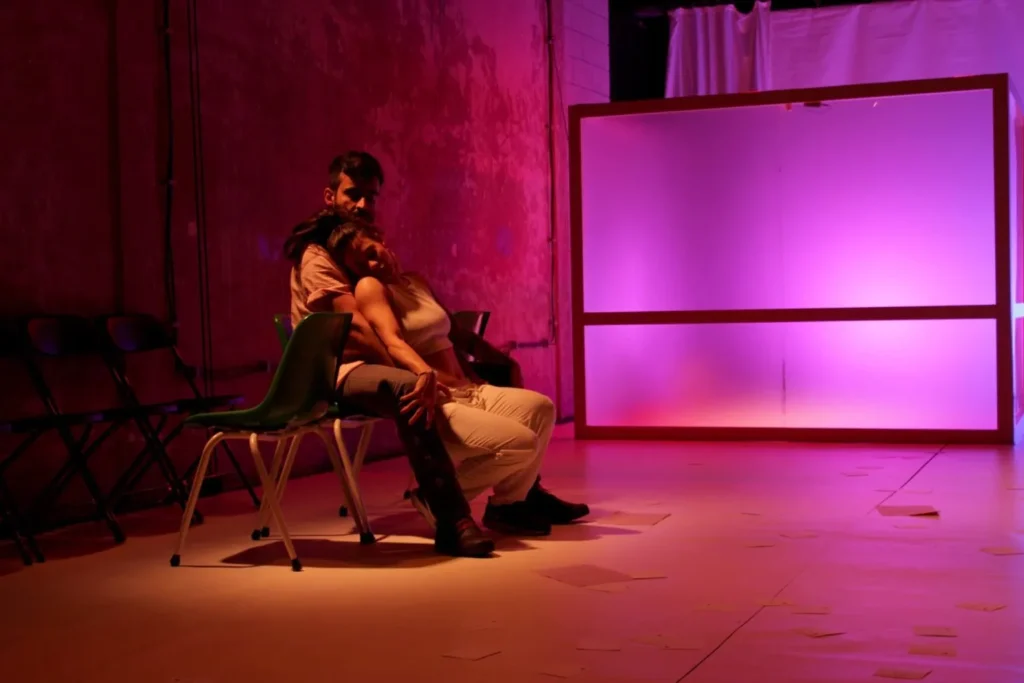
“When I tell people what we do, it doesn’t seem plausible,” Maya says. “One time, I was opening my calendar to add an appointment and my friend looked at my schedule and said ‘What is this?! Well, good luck with that!’ It’s insane!”
The logistics of keeping the theatre running were starting to eat into the time they’d rather be spending developing their artistic practice, Maya explains. “In the last few years, it really became about the venue. We were doing so much technical admin.”
So, in late 2025, with all this in mind, they mulled over Zoukak Theatre’s latest — and what would prove to be their greatest — predicament. To make ends meet, they’d need to use the space more commercially, rent it out for club nights three times a week, for weddings… for anyone who would pay, really.
“Sure, there could have been ways to make money,” Junaid says casually, “but that would have changed the whole identity of the collective.”

In the end, they opted not to reshape the theatre around commercial rentals. “We didn’t want to rent the space to just anyone… or for a play whose content we don’t agree with,” Omar says. They didn’t want to go commercial. It wasn’t the ever-elusive money that had kept them going the last twenty years, it was something else, and they didn’t want to lose sight of that “something else.”
It was time to close the doors on the theatre that had thrived — and at times just barely survived — on the margins of Beirut. It’s clear however, going by the social media outcry, that Zoukak’s audiences are distressed about this decision. More so than the collective itself: In conversations with Maya, Omar and Junaid, excitement for the next chapter reigns supreme. The tragedy, for them, lies in no longer being able to host and support other artists, which had satisfied a large part of their purpose.
“For the city, it’s terrible,” Maya says. “But for us, we can create opportunities wherever we go. And now, we can be more inspired because we will be less exhausted,” she adds with a laugh.
Omar figures if the landlord hadn’t pushed them out, something else eventually would have. “I don’t think we would have lasted another two years. It’s the place. It’s the situation in Beirut.”
“Do you know how much fuel it takes to run a theatre?” he says laughing. With state electricity averaging seven hours a day, costly privately-run generators fill the gaps. The cost of keeping the lights on at Zoukak Theatre rivaled the rent itself.
“This current model is not sustainable,” Omar explains. “We need to find a model that outlives this crisis of culture.”

For Maya, part of that model means finding a smaller space, one with fewer upkeep requirements, so they can focus on putting on shows and running workshops. Even then, they’ll need to think creatively to get around the “crisis of culture” that extends beyond Lebanon’s borders. Germany and France, both major funders of Lebanon’s cultural scene, have made serious cuts to arts funding in the last few years, while increasing defense spending instead.
Of course, they still mourn. Their beloved theatre would soon become part of the neighboring Naggiar’s storage space. And the impossible rent increase is just another way for capitalism to remind independent artists that they’re not welcome in a world where money always calls the shots.
And what about anger? Surely they’re furious with the landlords, enraged by pervasive greed? But the collective refused to villainize the building’s owners: Junaid described their relationship with them as “okay,” agreeing that it takes a lot of energy to be angry at landlords. Omar said members of the family that own the building knew the work Zoukak was doing and would sometimes attend performances. He shrugged off the decision as typical of anyone in the real estate market.
When they first moved in, the Zoukak crew was hopeful but humble. They didn’t think they’d make it past the first four or five years. Instead, they exceeded their own expectations by a landslide: Ten years with more than forty original performances that sold over 129,000 tickets, and workshops and collaborations that brought together more than 7,000 artists. No small feat.
“It’s about remembering the space and the people we connect with there,” Junaid says. “The meaning we created together, the way Zoukak evolved.”
They’re leaving the theatre knowing it did not go underappreciated. “We did everything we wanted to do in this space, everything we said we would do,” Maya says.
“And everything we did, it’s all there,” says Junaid. “It’s not going anywhere. We did it.”
But to be honest, Junaid says, they are, in a way, relieved to be free of the constant scrounging and penny-pinching. Maya and Omar see the same silver lining. Now they can throw themselves back into the craft and into collaboration with other theatres. The propositions are already flooding in. There’s scant time for bad vibes.
“Closing a theatre is as difficult as opening a theatre,” Omar says. “Finding offices where we can meet, figuring out where we will put the equipment, discussions with partners…”
“First, we’ll take 48 hours of vacation,” he laughs, “and then we go on tour.”
They’ll be in Greece, Spain, and France, and in August they’ll perform a new play at Sicily’s Segesta Theater Festival, in an Ancient Greek amphitheatre. Zoukak’s Beirut schedule is less certain, but the collective will hopefully appear on stage there in December. Omar doesn’t know it at the time of our conversation, but in early May, Zoukak Theatre would be shortlisted for the Global Leaders Institute for Arts Innovation’s Global Arts Prize — whose winners are awarded $30,000 USD — recognizing arts organizations that are “redefining the relevance of arts in today’s society.”
At the last open mic night, all ages, from crawlers to cane-users, filled the main space. It had none of the pompousness of a highly institutionalized cultural event and all of the warmth of an organic network of people who want to go to the theatre and be pulled in by the bravery on stage. There was theatre, music, poetry, speeches. Junaid performed a humorous monologue about all the ways in which a performer could get killed doing theatre, paired with elaborate AI-generated paintings in which he is portrayed dying various dramatic deaths. Omar, primarily a director, stayed behind the scenes, watching the space’s last performances play out from the bar.
By closing night, Junaid, Maya, and Omar’s excitement seemed to have won out against the city’s cynicism. Zoukak’s audiences and co-conspirators danced their hearts out in the same space where they had once been spellbound by a story. In the background, people wandered slowly in and out of the black-box theatre, paying their respects to the empty stage.
But by the end of that month, war broke out again in Lebanon. As the ground shook with the impact of Israeli bombs, the Zoukak Theatre Collective moved their costumes, set pieces, and equipment into a storage-meets-office space not unlike their first Furn al-Shebbak apartment. From this temporary headquarters, the team launched a new project, “Artists at Work,” supporting local artists from the conception of their performance to its staging, culminating in a festival in December. The program’s name is apt. One gets the sense that no matter what happens, Zoukak will always be artists at work, outliving the crisis of culture by continuously rising to the occasion of the culture of crisis.