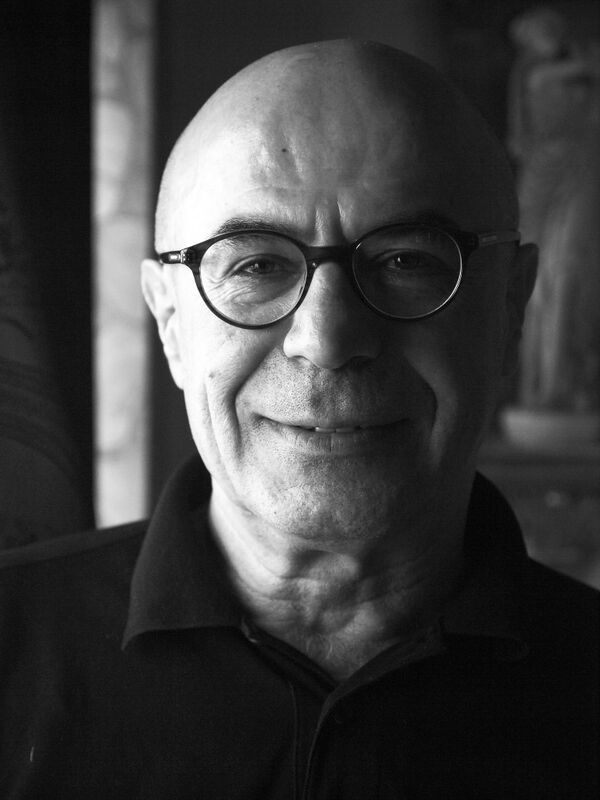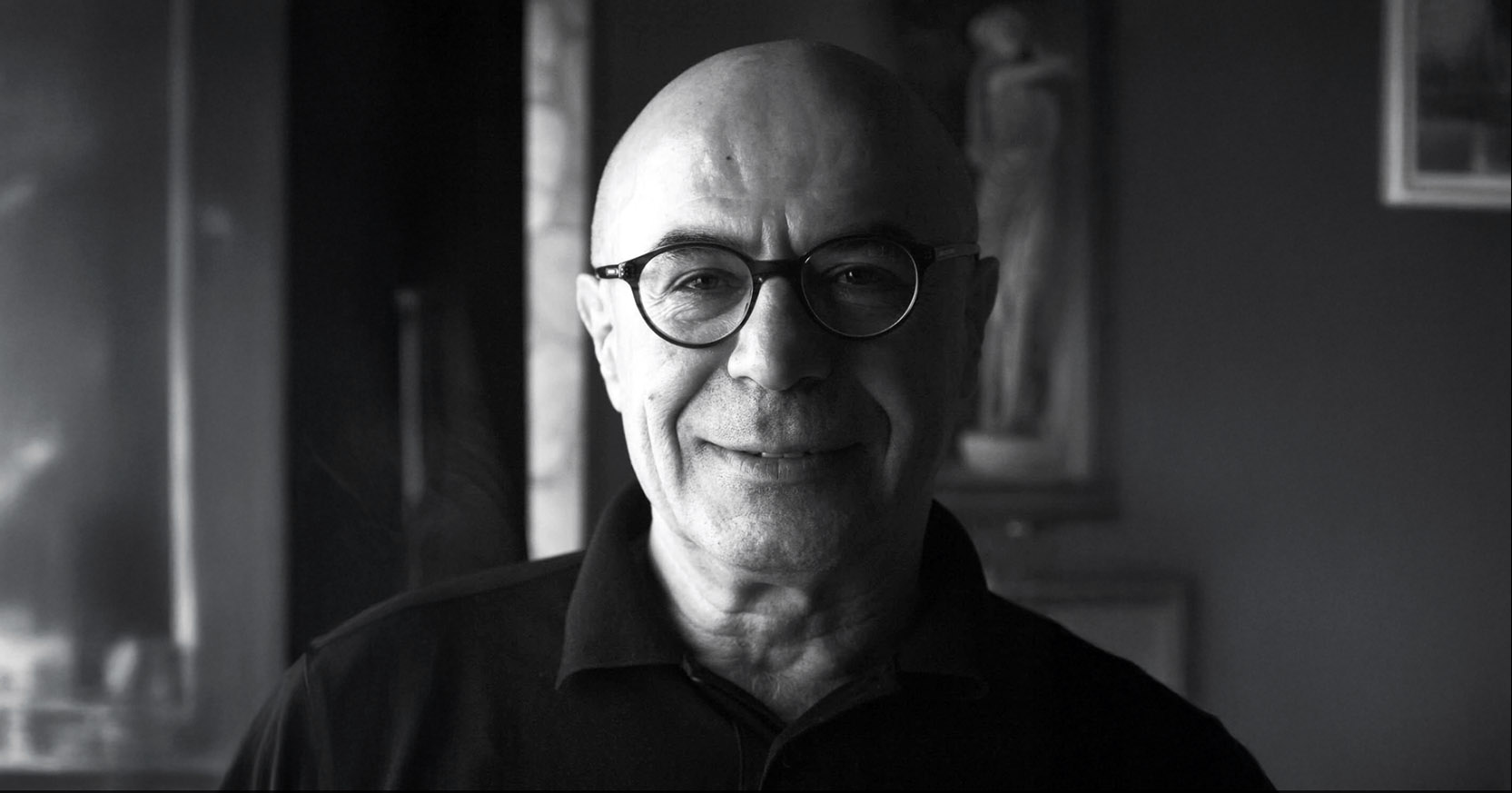
A major voice in contemporary Kurdish poetry, Rafiq Sabir spent years as a Peshmerga prior to the 1991 Kurdish uprising in Iraq. He lived much of his life in exile. Among his poetry collections are Burning in the Rain, Mirror and Shadow, and An Appointment with Light.

Most of Rafiq Sabir’s poetry narrates physical and internal journeys occurring in parallel. An internal state becomes the speaker of the poems; an external physical state becomes the narrator of the story. Words drift through the narrative like fluid shifting between the material and immaterial, in constant movement between periods of history.
This fluidity is not surprising, perhaps, from a poet who defines “home” as “not a land, a river, a mountain, a city or a neighborhood, but rather, “freedom, justice, human respect, right, and dignity.” Sabir, born in 1950 in Qaladze, the Kurdish region of Iraq, north of Slemani, near the Iranian border, believes that “when home becomes a prison, freedom, anywhere, becomes home.”[1]
The first political events that disrupted Sabir’s childhood and education were the Aylul Revolts and the First Iraqi-Kurdish War. In search of safety, his family relocated, several times, and sometimes with much of his village. The subsequent Iraqi pro-Nasserist military coup within the Ba’ath Party in 1963 threatened the security of Kurdish areas. Sabir’s school would close for months at a time whenever danger approached the borders. In response, his family sent him to Slemani to finish his studies alone in the city — he was only thirteen. Being separated from his parents was an overwhelming experience. Then, a few years later, in 1968, his father died. Sabir had lived through the devastation of the Kurdish people and their lands, but found himself personally bereft. “In that moment, for the first time in my life, I felt that I was the loneliest person in the world. I lived with that feeling for years,” says Sabir, recalling the moments he watched others wash his father’s body in the courtyard of his home.
And yet, in later years, this isolation would come to feel like freedom, too — in grief, in persecution, in poetry. “Questions That Have No Answer,” from his collection Mirror and Shadow (1996), is dedicated to his father. The poem alternates between past and present, between doubt, truth, and questions. It contemplates a life brought into the midst of danger, having been given a home no larger than the width of a coffin, the length of a dug grave. Sabir shows the reader his deep love and admiration for his father, while also revealing the doubts and reservations he continued to carry about the man’s beliefs.
Sabir’s adult life was also marked by movement: In 1978, Sabir left Iraq for Bulgaria where he began his doctorate in Philosophy. Then, as the political struggle in Kurdistan intensified, he went from Sofia to Lebanon, to Tehran, to Mahabad, and finally the Kurdish Regions of Iraq through Shene, a Kurdish village close to the Iranian border whose neighboring mountains housed many Kurdish freedom fighters. Sabir joined them, in 1979. When the civil conflict intensified in 1982, Sabir left again: Iran, Syria, back to Bulgaria to finish his studies, Georgia, and finally Afghanistan where, with a group of Iraqi Communist party members, he helped smuggle Kurds who had returned from their studies in Europe but couldn’t travel legally through Iran.
This constant migration became an important theme in Sabir’s work, notably in the word gerok — “wandering” — which describes things that are still or have limited movements: “the wandering shade of a tree,” “a wandering corpse.” Often he places wandering close to words like “longing,” “craving,” and “yearning.” Movement gave Sabir a sense of the freedom he longed for, but he also knew that not all movement is liberating: “Since then, I have felt like a rock broken free, rolling down a slope, with nothing to break my fall.”[2]
The paths may not make it somewhere, and there remains the excuse to leave
for the children of silhouettes, roaming birds that collect the light
and devise their time in a song, their setting, in flight.
While in Afghanistan, Sabir learned of the infamous Halabja chemical attack of March 16, 1988, part of the Iraqi Anfal genocide campaign against the Kurds. (Between 1986 and 1989, the Iraqi Ba’athist genocide attempts were estimated to have killed around 182,000 Kurds.) The campaign was named from Anfal — “the spoils of war” — the eighth chapter of the Qur’an, which narrates the triumph of 313 followers of the new Muslim faith over almost 900 pagans at the Battle of Badr in 624 AD. The Anfal campaign ensured that slaughtered Kurds were buried in mass graves in the desert regions of Iraq so they could be categorized as “missing people.” New mass graves are still being unearthed to this day, and tens of thousands remain missing. Accordingly, the word “disappear” comes up in Sabir’s poetry again and again; the word lim, sand — a geographical habitat very different and far from the mountainous areas in which Kurds have historically lived — has come to symbolize death and loss of identity. Sabir’s collection “Clearance” is dedicated to these mass deaths. He opens the book with a verse from the Qur’anic Al-Anfal chapter and a poem by Octavio Paz (from “Flame, Speech,” translated by Mark Strand):
﴿فَلَمْ تَقْتُلُوهُمْ وَلَٰكِنَّ اللَّهَ قَتَلَهُمْ﴾ (الآية ١٧)
“And you did not kill them, but it was Allah who killed them” (The Qur’an, 8:17)
*
But the gods don’t speak:
they make and unmake worlds
while men do the talking.
They play frightening games
without words.
In these poems, sand is multilayered, literally and figuratively. Thanks to its low thermal conductivity, the sand on the surface warms and retains heat for longer. The deeper particles, however, the ones in which victims suffocated or froze to death, remain cold: “And ‘the weed in the garden’ welcomes sandcolor days.”
Like many other constructed compound words in Sabir’s work — mass-death, stonefaced, nightfrost, and sign-speak — sandcolor creates an entire network of meaning. In my translation, I recreate these networks of words, which introduce the emotions characteristic of Sabir’s work. The line “I sign-speak with the unseen” insists on the presence of the missing, “the unseen,” as the body moves through space deliberately communicating in place of what cannot be seen.
“Lawki Halabja” is similarly inspired by the devastation in Halabja — dead corpses, human and animal alike, all over the city and its remote areas, the disfigured face of survivors, the look of trauma: “I had never felt the meaninglessness of life like I did on those days, and the essence of my being more worthless.” The images in this poem appear to haunt the poet, they reoccur elsewhere, in “Cemetery Guard,” for example, which was published years later: “dried, silver foam from open mouths / that siege life.”
Sabir uses one thread to establish his theme, while my thread changes colors.
The continuity of subjects between different works is achieved by repeating key terms that map his poetic thought process. The Arabic word ghaib, for example, conveys that something is concealed, that it can’t be seen. The word also has religious significance when indicating the realm of the divine, things that only God knows. Ghaib is also used more generally to talk about future events, or about things known only to some. Sabir uses the word to indicate uncertainty and doubt as a reality in their own right. The common translation “the unknown” alludes to inability. I chose to translate this term as “secret” in many places to attribute the unknowable quality to the things themselves rather than the speaker’s power: “I seek in myself the shadows of being / I inspect the ashes of the past at its root / and listen to the language of secrets.” Yet “secret” loses the multiplicity embedded in ghaib, in the physicality of sight as well as the cognitive aspect of knowledge: “where, at the ceremony of becoming one / I sign-speak with the unseen.” So, at other times I use “the unknown” and “the unseen” in my translations. Sabir uses one thread to establish his theme, while my thread changes colors.
By 1989, Sabir had cut all political ties. Like many Kurdish members of the Iraqi Communist Party, he had realized that the party continued to prioritize Iraqi interests over Kurdish ones. Observing that the rights of Kurds were always sacrificed to the Iraqi communities in power, he concluded that “a party that belongs to the dominant force and promises to represent all in a multiethnic country will fail to represent the minorities.” Yet even as he lost faith in politics, and against the temptation to fall silent in the face of such violence, Sabir remained committed to his craft. The pain in his writing sharpened over decades of revolution, civil war, and invasion, and still, he remained patient, even gentle — as if the loss of peace he experienced in his world made him cling to it more tightly. A voice of the present echoing those of the past.
A Window Hangs Open
A window hangs open to the desert and the night.
A place whispers the story of its aging.
And you, while waiting for nothing,
play with the dark,
as if wanting to unsettle this night and its birds
or stack up darkness to trap
XXXXthe future.
From the dark, steam rises,
from the drips of light, scent of rosewater.
And you stand guard over life at night,
by a blue light.
The paths may not go somewhere,
and there remains the excuse to leave
for the children of silhouettes, roaming birds
that collect the light
and devise their time in a song,
their setting, in flight.
A window hangs open to somewhere far
A place leans back on eternity,
and you still wear silence
you want to glorify words
in quiet.
You stroke the leaves
that change the color of October.
Inside the circle of time, an empty space
for the simplicity in coincidence.
A blue ambush between night and day
which we can’t grow fond of
or escape.
Time is a notion inside you.
Place, from you to eternity.
And truth, a strand of light
XXXXxinside you.
*
At the Edge of the Forest
XXXXXI
At the edge of the forest,
I woke up
my songs had scattered over the dust and
my shadow lay
like a prayer rug
on a sleeping lake.
I was lonely in my waking
lit like a dark fire.
XXXXXII
Night spurred an emptiness, like a desert.
Rain washed over the dark, like a body,
and I carried mine, all on my own,
through the night.
While waiting for the impossible,
I held my ashes out to the rain.
Night took on the shape of solitude and exile;
in that moment, everything resembled me.
XXXXXIII
I had to see myself in that gray mask
as I was burning like a dark fire,
I had to feel that circular space
that surrounded me in my sleep.
I had to believe the soul’s resignation,
the body’s incapacity,
and my own solitude.
I was bound inside time,
free in space.
XXXXXIV
In solitude, I spurred a chaos within myself;
XXXXXtired of being tired
XXXXXtired of being naive
I searched for my frozen hands
that were lost in the dark of that forest.
I looked into myself—
a sculpture carved from illusion and crystal.
I accompanied this awakening,
I was a sign of beginnings and endings.
XXXXXV
At the edge of the forest, I woke up.
I was myself and not,
and right there
I saw everything.
At one with myself
I mirrored myself.
*
In Time
You might say that time escapes its solitude,
speech its meaning,
you yourself,
and life reads bareness
as it waits.
Colors fade in the mouth of time, like your face.
You touch the past
that sleeps beneath the ash like numb ember,
you look at Now, end to end,
empty as the path to impossibility.
Moments resemble moments, equal, you might say,
and place is an empty setting.
You fear not death or life
but time.
One color alone
narrates the story of everything, in silence.
One voice
glints like knife, in the dark.
In days, each thing is forgotten,
In days, each thing is not forgotten.
*
A Tableau
The crushed stones are asleep in the rain
and the city, inside its high walls.
I am heading home
through glints of the cold
my foot sinks in the dark
XXXXXand awakens an open space.
I leave a mark on the coal-ash road
that testifies to an absence.
The night works with its own glow
to paint,
and I draw on echoes of words
to present the tableau of silence.
The city is asleep in the rain,
calm in the airglow,
and a lonely tree on the edge of the road
XXXXXlooks my way.
I hear it whispering to itself,
thinking, I would say, about the solitude
of the longest night.
*
Guide
Fortuity plays games with fate,
and I wait like a dewdrop.
Among the magnified colors,
I search the roots for the fibers
XXXXXwherever those are forsaken.
And I ask myself:
what is your expectation as you go to that meeting place?
I ask myself:
where does this exile come from or this determination,
when the future waits on the path to certainty
XXXXXand the mirage of a word mirrors reality?
coincidence: fate
death: the most familiar friend
and life: the guide?
*
Another Departure
As if another sudden departure is near
as if fate will wait
the waves rock the island like a ship
the sleepy moon slips between clouds
the trees are awake, and
colors blend into one
and the empty roads, more frightening than a corpse
XXXXXsadder than a funeral.
The bodies like fallen logs
the featureless faces, stones.
Unfailingly, power is bright
XXXXXand truth, calm.
This might be madness
XXXXXor necessity
but no one asks why cut through that river
when our bodies will remain on the shore.
No one asks what’s meant by that freedom.
And you who refuse to ask Aphrodite for wings,
it’s not easy for you to believe:
XXXXXplace is in ruins, and
XXXXXtime runs blind.
*
Cemetery Guard
You might say flight imitates rays of light
the day’s ode to prediction confirms what’s already certain
light faces eternity, amazed.
Some clouds toy with morning rays and wind,
XXXXXlike birds,
they give flight a mythical splendor
they give nature new colors and new smells
and the shadows that gray us, their blur.
The clouds shade the day with sulfur and thirst.
Sky falls into its depth
and thirst, into thirst.
You might say death imitates rays of light.
XXXXX***
The air gets colder and colder still
the sun is asleep behind the dusty wall of the horizon
and we, at the ceremony of becoming one, converse with the secrets
we gaze frightened at the mass-death of startled birds,
and in vain we stand against Nothing
our hands filled with the thirsty sand
that stands against us for the humid smell of rivers.
Hopeless, we seek the face of God
who, like the moon, is almost round and
XXXXXfaceless.
If there is a quicker way to death, show us.
Otherwise, what’s the use of these frozen fire pits
XXXXXthat force the wind to blow in our face.
Why, beneath this yellowish, gray arc,
should we praise skill and bareness?
Why, as we stand next to our quivering shadow,
should we write down all that is already certain?
Waiting, you are to blame
for distracting us with hallowed graves,
XXXXXwith counting corpses.
Life, you are to blame, for rashly attaching us to
the glory of myths,
to a history
carved on a deserted corner with the spearhead of some thieves,
carved on the high walls of cities by pious dervishes
you had us admire mastery
which mirrored a pack of lies, laid bare
by the dead as they celebrated hardship.
Now the history of dust reads itself
ironlike seconds rob expectation of its meaning
and things, as they wait for the outcomes,
become strangers to themselves and
XXXXXformless:
XXXXXechoes and a dog bark that frighten the corpses
XXXXXstonefaced children who toy with eternity
who change the face of time with their numb looks,
dried, silver foam from open mouths
XXXXXthat siege life.
And we, awake at night, are neither dead
XXXXXnor alive,
our bodies fill
spaces layered with fog,
ignorant, we save ourselves from expectation
we are shocked when bareness gives its shape to
the thirst of the fields.
And darkness is the first witness when the wet goes dry
when death
XXXXXimitates rays of light.
XXXXX***
The world got colder and colder still
trees quivered inside the silver nightfrost
sky, a gray face,
stars looked blue
nights were our only shadow
nights, waited as we did,
we who ignorantly bleached our own dreams.
Nights smelled like mineral spirits and fear and black powder.
Shadows of horsemen, like lead, walled up both ends
of the gorge
XXXXXIf we haven’t arrived, where have we gotten?
XXXXX(It’s no time for questions. Twenty-seven,
one of us said, counting the corpses.)
And inside that black, humid hole
we took the color of dust and gray clouds,
we reached out for the roots of the boulders
that embraced the dark
with half open eyes, we looked at fire arrows
that pierced the clouds,
we looked at moonlight
that reflected a dark bronze mask on smoky faces,
and at that moment
a soft, viscous rain came down,
came down, burning.
XXXXX***
Those who, by mere chance, crossed the gorge that night
might not recognize me now.
Yet I remember the smallest detail;
the pain in my cold hands
that was stuck into the night like tree stumps,
the blur on curved faces,
I still find their traces on my days,
the last cry of a wounded teenage boy
that spread across the narrow gorge like an echo:
“We love peace
XXXXXbut won’t trade freedom for anything else.”
I remember all that happened,
still, under a clovebrown arc
that takes the warmth of the sun,
I turn to the past
where, at the ceremony of becoming one,
I sign-speak with the unseen
and my heart, in welcoming what’s already certain,
keeps on waiting like the desert nights.
The earth is still swollen with the smell of yellow smoke and fruit and iron.
Those who disappeared stay in our disrupted minds. They don’t want to
XXXXXaccept that eternal separation,
XXXXXthat ending to the world.
Deep in the desert
they dust their bodies of sand and the chill,
stubborn, they search and search
for the way home.
And the weed in the garden welcomes sandcolor days,
coldly as usual,
as if they’re sure of their fate
as if they know that death
XXXXXguards the cemetery
XXXXXof wakened souls.
[1] Sabir, Rafiq. “The Meaning and Aesthetics of Any Poetic Text Lie in Its Language.” Interview by Dana Malaki, originally published in Hawlati Newspaper, issues 1219–1221 (2014). In Looking at Dawn. Mang Publication, 2015, p. 28.
[2] Sabir, Rafiq. “Every Thought and Philosophy, However Great, Takes the Shape of the Minds That Follow It.” Interview by Ashna Kamal, originally published in Gelawêjî Niwê magazine, issues 7 (1998). In Looking at Dawn. Mang Publication, 2015, p. 36.