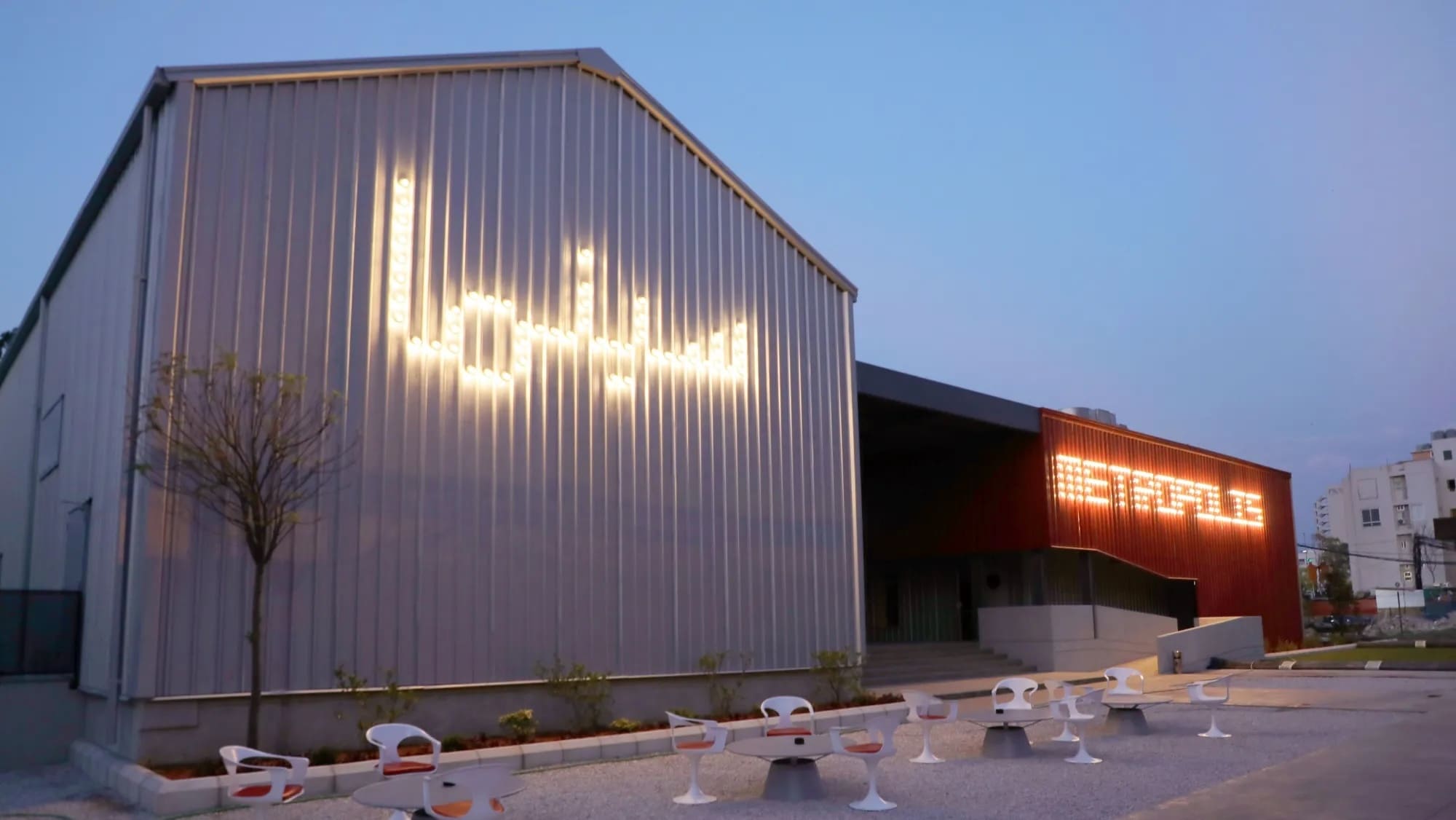
If crisis is hardwired into the DNA of Lebanon’s cultural production, it is uniquely entangled with the history of this indie cinema.

“When you write a grant proposal, they have a section called ‘risk assessments.’ You write, If this happens, this is what I’m gonna do. If that happens, that’s what I’m gonna do.” Hania Mroué’s eyes were smiling as she spoke.
“I always felt very silly writing this, because you can’t say, ‘If World War Three happens, I’m gonna …’”
“The risk that you assess in this exercise is usually very insignificant,” she resumed, “so you have to come up with banal solutions. Here, you’re dealing with very different risks, so we learned that you have to come up with a program that could, at the very last minute, turn into something else.”
It was May 2026. Sitting in the library of Cinematheque Beirut—the film conservation project Metropolis launched in 2019—Mroué had been reflecting upon the decision to resume programming the previous month. The cinema shut in early March 2026, when the 2023 conflict with Israel abruptly resumed on a much larger scale, stoking speculation about an even wider war.
Since the April 2026 “ceasefire,” airstrikes are less common in greater Beirut but the whine of surveillance-attack drones is unremitting. Israeli troops maintain an occupation zone south of Lebanon’s Litani River, 29-30 km north of the UN Blue Line, where they have been razing all habitation, infrastructure, and farmland. Residents trying to return have been attacked.
The conversation with The Markaz Review naturally turned to how the cinema was going to mark its 20th anniversary on July 11. Mroué’s disclosures about what was in store were measured. Films will be projected, she said, and Metropolis’ two decades will be recollected in print. There is an ambitious new initiative in the works too, but she kept this information to herself.
Who knows what might happen in the next two months?
Cinema amid chaos
Crisis is hardwired into the DNA of all Lebanon’s cultural organizations, but it is uniquely entangled with Metropolis’ history.
In the late ’90s, Mroué fell in with a cluster of young filmmakers to create the nonprofit Beirut Development and Cinema (Beirut DC), later rebranded as Aflamuna. An economist and dancer by training, she went on to serve as director of Beirut DC’s flagship festival of Arabic-language film, Ayam Beirut al-Cinema’iyya.
“A film festival lasts 10 days, then it’s over,” Mroué mused a few days before Metropolis’ 2006 launch. “But this is never going to end. It’s a little frightening.”
The cinema projected its first film—the grand prize winner of the Semaine de la Critique (Critics’ Week) program, which had premiered at Cannes a couple of months earlier—on July 11, 2006. Metropolis was then based in the sub-basement theater of Hamra’s Masrah al-Madina. The capacity audience (some remember 80 seats, others 110) included Beirut film lovers and European guests and supporters.
The successful launch was deflated the next day, when Israeli forces set about destroying south Lebanon’s infrastructure after a border incident. Then, early in the morning on July 13, Israel bombed Beirut airport and laid siege to the country. The 2006 war continued for a month, the displacement crisis lingered on beyond that.
As the Ras Beirut neighborhood was flooded with residents fleeing Israeli attacks on Beirut’s southern suburbs (Dahieh) and south Lebanon, Al-Madina opened its subterranean rooms to unhomed families.
Before long, Metropolis was projecting a children’s film program to distract the Madina’s displaced youngsters—an improvised start to the many children’s outreach initiatives the cinema has since overseen.
Metropolis’ first crisis also occasioned an inadvertent social experiment.
Having invested a tidy sum to bring in the Critics’ Week film reels, and to secure the diesel required to run the theatre’s generator, Mroué eventually decided to project the films to anyone wanting to watch. Metropolis’ audience had evaporated. As the director put it at the time, they were watching the war on television or getting drunk. Probably both.
During a chat one evening, Mroué quietly confided that a couple of young women staying at the Madina had asked if they could watch the film being projected in the near-empty hall.
“They must be bored senseless,” was Mroué’s sympathetic aside.
The director welcomed her guests, warning that this may not be the sort of film to which they—or their parents—were accustomed.
Her warning proved prescient when a father turned up and, standing in the doorway, summoned his daughter out of the dark room.
Twenty years on, the founder’s fears about the cinema’s longevity have also proven well-founded. As post-2006 Lebanon oscillated from generative chaos to disruptive crisis, the cinema’s public and industry programming diversified considerably.
Metropolis launched programs dedicated to audience outreach and education among Beirut school children, in marginal communities and villages around the country, as well as filmmaker workshops, and film distribution and conservation initiatives.
The cinema has projected in three locations and, in the years-long lull between Metropolis 2.0 and 3.0, operated without a space of its own. By 2008, the cinema had outgrown the Madina’s little theatre and migrated across town to Cinema Sofil; they also partnered with Empire Cinemas, though that deal foundered during the contraction preceding the 2020 financial collapse. Metropolis 3.0’s purpose-built Mar Mikhail venue is not far from the site of the 2020 Port blast.
Finding meaning in the normal
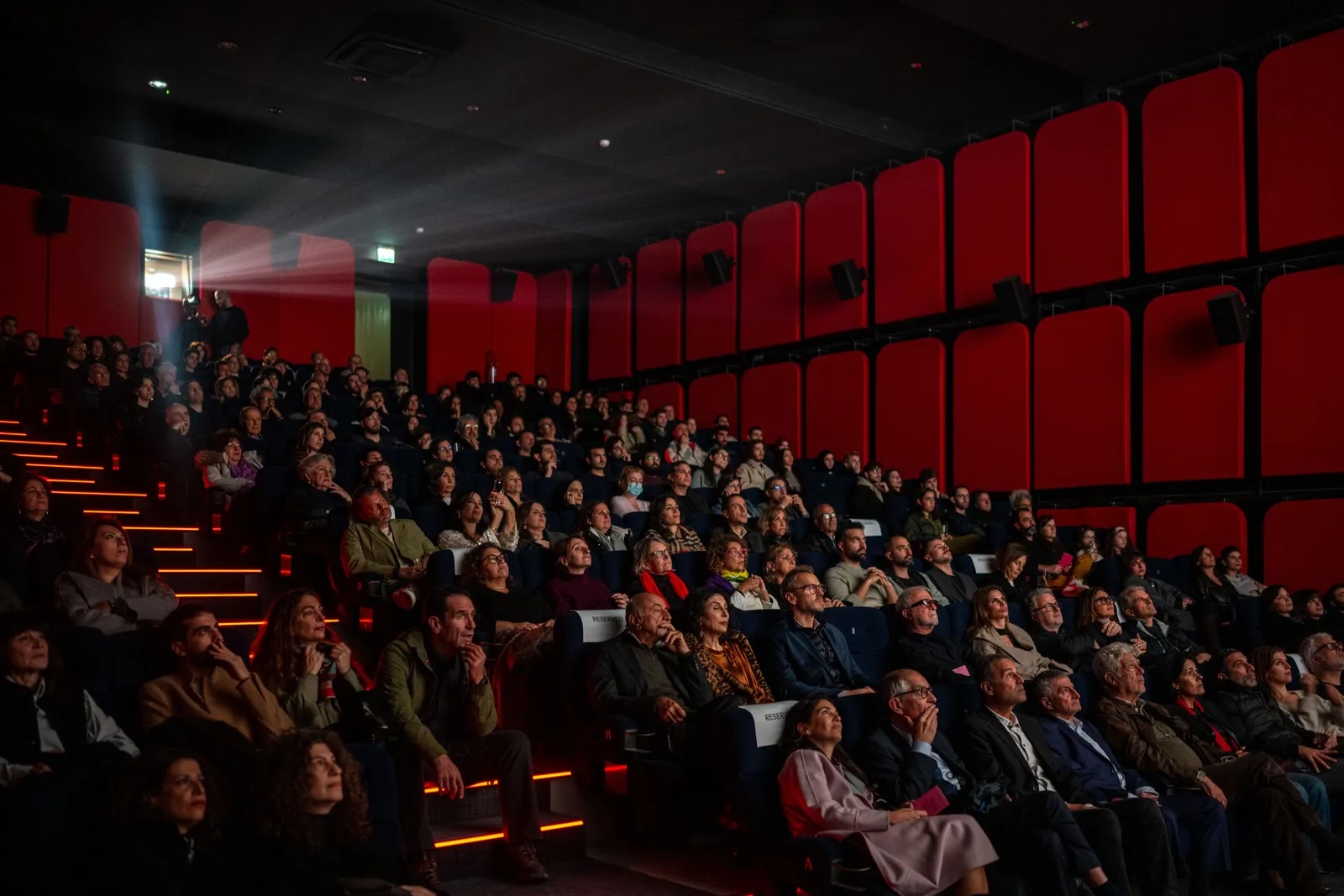
Metropolis was among the many cultural institutions to shutter when Israeli airstrikes abruptly escalated after the February 2026 attacks on Iran. The cinema resumed its programming in April out of economic necessity. Given the open-ended nature of this war, Mroué feared that the cinema wouldn’t recover from an extended closure.
Shortly after reopening, she got a call from filmmaker Lana Daher, whose feature Do You Love Me had been scheduled to premiere at the cinema in April. Informed by a years-long research project, Daher’s audio-visual montage—comprised almost entirely of footage drawn from 70 years of film, television, and personal archives—captures the beauty and horror of Lebanon’s recent history.
Daher asked if the release could go ahead as planned. Mroué agreed. The rollout was quiet and neighborhoods south of Beirut were bombed the day of the opening, but opening night was a full house. A month of sold-out shows followed. Daher’s film may be the most popular film Metropolis has ever screened.
If you have any other job during a war, you don’t ask yourself existential questions. You continue.
“This film was the perfect program choice,” Mroué smiled. “It gathers the Lebanese audience around one narrative. You’re sharing collective memory, you’re sharing emotions, traumas, laughter.
“Even if you don’t like the film, and many didn’t of course, this is our history. Seeing our cinematic patrimony brought comfort, even if we disagree artistically with what Lana did with the archive.”
Mroué and her team found renewed meaning in the audience response to the reopening. “Most of those who came to the cinema said one thing: ‘We need to be together.’ At that moment I understood that may be Metropolis’ most important mission.
“If you have any other job during a war, you don’t ask yourself existential questions. You continue. The fact that we could continue without changing our programming was very reassuring. What we’re doing is relevant.”
Metropolis paired Daher’s work with a pair of films assembled from footage of two much-loved civil war-era Ziad Rahbani plays—Bil Nisbi La Bukra Shu? and Film Ameriki Tawil.
“Together,” Mroué said, “they constituted something that I think the Lebanese agreed to love.”
Since April, regular programming has been punctuated by several screening cycles, including the Southern Screens festival, the exhibition centerpiece of Metropolis 3.0.
“Southern Screens was a bluntly political event,” she said, “although cinematically it’s also extremely important. People came despite the afternoon bombing of Shoueifat (an area not far from Beirut proper) and I felt very much that their presence was an act of resistance.”
Celebration, low-key and forward-looking
Metropolis announced its 20th anniversary plans at the end of June. The public program would center on a few days of screenings and discussions, with the central date, July 11, going to a pair of accomplished Lebanese shorts. Ali Cherri’s La Sentinelle, which debuted in May during Cannes’ Critics’ Week, and Marie-Rose Osta’s Someday a Child, which won the Golden Bear for Shorts at the 2026 Berlinale.
The projections would otherwise be dominated by three disparate classics—Giuseppe Tornatore’s much-emulated 1988 crowd-pleaser, Cinema Paradiso; Jean-Luc Godard’s resonant 2004 hybrid Notre Musique, paired with Ghassan Salhab’s 2005 mid-length doc Brief Meeting with Jean-Luc Godard (or cinema as metaphor); and Férid Boughedir’s Caméra Arabe, a doc recounting the region’s 1967-87 encounter with cinematic modernism.
The anniversary celebration also included a workshop on operating an independent cinema—specifically programming and creating an identity that fosters audience trust. Discussions were led by three prominent indie cinema founders—Butheina Kazim of Dubai’s Cinema Akil, Youssef El-Shazli of Cairo’s Zawya cinema, and Kais Zaied of Tunis’ CinéMadart. The other workshop participants were aspiring Lebanese cinema operators. Two operations in south Lebanon and north Lebanon—respectively, Saida’s Ishbilia Theatre and Marsa7 in Tripoli-Al-Mina—have actively collaborated with Metropolis for years. The third is the Rivoli Cinema, a 1960s-era movie house in Riyaq, a historic village between Baalbek and Zahle in the Beqaa Valley.
“I find these three completely different models very inspiring,” Mroué says in a July conversation. “It’s important that they share their experiences. Riyaq and Ishbilia could benefit from the experience of CinéMadart, for instance, which works a lot on outreach with ciné-clubs, nonprofits and cultural organizations to attract audiences and create debate.
“Marsa7 does not have the same means as Cinema Akil, but they are both very small and charming. How do you attract an audience and operate a space with very limited seating? Akil has now become a city landmark in a very difficult city, so their model could be useful for Marsa7.”
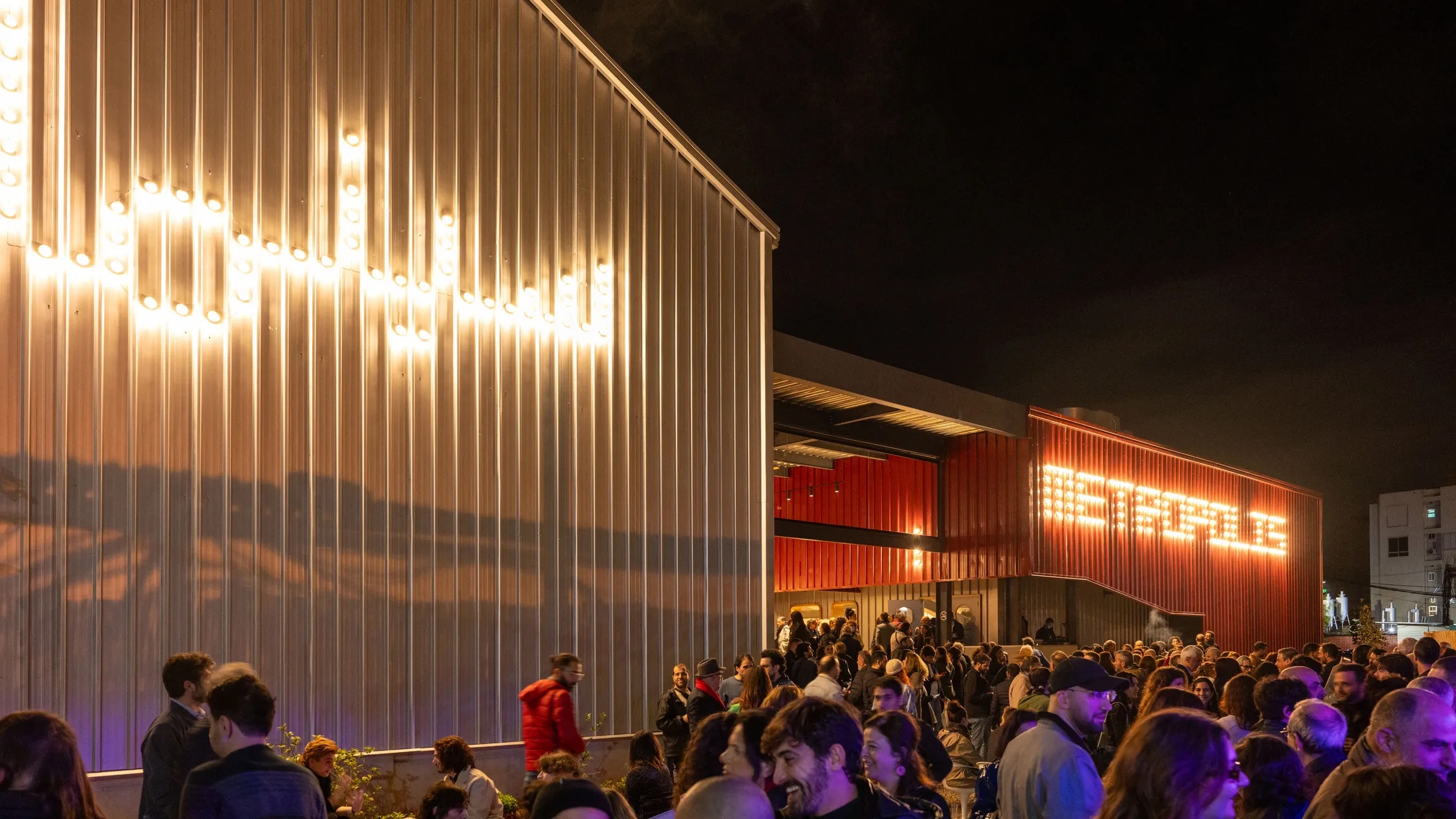
The workshop was one of three laying the foundation for Salet Wassel (literally “Spaces of Connection,” a play on the Arabic phrase silit wasl, “connecting link”). Supported by the French Embassy and French Institute in Lebanon, this initiative aims to create a network of cinemas across Lebanon. In addition to the know-how cultivated in these workshops, Salet Wassel will provide funds to bring the spaces’ infrastructure up to industry standards—from seating to sound and DCP (Digital Cinema Package) equipment.
Metropolis and its three partners must develop a common project for launch by late 2026.
I cannot pretend to celebrate 20 years of existence without acknowledging that this relies on a society that has been very—and I know people hate this word—resilient and resistant.
“Next year we’ll be experimenting with how we can work together,” Mroué smiles. “They will have a budget for all kinds of programs—contemporary films, classics, programs for children, and documentaries. That’s only the beginning. Once this network is established, I hope we may also find ways of fundraising and securing film rights together.”
For Mroué, this anniversary doesn’t celebrate a cinema but the years of interaction, conversation, and collaboration that have made it possible for Metropolis to thrive, despite the ambient hostility of the country’s political economy.
“We would not have survived if it were not for the ecosystem around us, whether the filmmakers, the donors or the audience, the service providers, even the moral support. If we didn’t have that, we wouldn’t be able to continue.”
“I cannot pretend to celebrate 20 years of existence without acknowledging that this relies on a society that has been very—and I know people hate this word—resilient and resistant. There are so many filmmakers and artists here who say very clearly, ‘We don’t want to leave the country. We want to stay and work here.’ This gives you a raison d’être.”
“It’s not about us,” Mroué says. “It’s about something collective—I don’t know, an unconscious desire to repair what has been damaged and to create something beautiful from it.”