Lara Sheehi talks about reclaiming the psyche as a site of struggle in her new book, From the Clinic to the Streets.

Lara Sheehi will already be known to many who strive to think, write, and organize at the vanguard of anti-imperialist, anticolonial, and anti-Zionist struggle around the world. A Lebanese Arab clinical psychologist, Sheehi is a founding member of the Institute for the Critical Study of Zionism, serves on the advisory board for Forensic Architecture, and frequently collaborates with prominent leftist outlets in addition to producing her own podcast, Psychic Militancy. But what these biographical details fail to convey is the relentless, almost-dizzying dynamism with which she moves and fights. Squared off against some of the most horrific human disasters of this age, she nevertheless exudes a love for, and commitment to, life.
Sheehi’s most recent book, From the Clinic to the Streets, was published by Pluto Press in 2026. This follows Psychoanalysis Under Occupation, an award-winning academic book she co-authored with Stephan Sheehi. Lara Sheehi describes From the Clinic to the Streets as a resource for “comrades,” wherein she leverages her expertise as a scholar and practicing psychoanalyst toward revolutionary ends. In Sheehi’s reading, psychoanalysis is anything but a neutral force. Rather, she exposes the ways its modalities are weaponized to uphold oppressive structures through the manipulation and capture of our affective and subjective states. These mostly subtle intrusions—from engineered confusion to strategic exhaustion to the vague, uneasy sense we must be losing our minds—are intended to occlude what we most intimately know: that the conditions of life today are those of great and unjust suffering.
They are intended, too, to barricade us from reaching the most logical conclusion such awareness would bring: the imperative to resist the systems which terrorize and destroy us and others, every day. In Sheehi’s deft hands, and in imagined conversation with revolutionaries from Frantz Fanon and Malcom X to Walid Daqqa and Ghassan Kanafani, psychoanalysis becomes a set of tools to “reskill ourselves” for combat. Resisting internalized violence and reclaiming our psychic terrain, says Sheehi, is foundational to maintaining the clarity we need as we move toward a liberated world. Practical, poignant and politically unflinching, From the Clinic to the Streets is a guide to dismantling prisons within us, and beyond.
This conversation has been edited for length and clarity.
— Sarah Aziza
SARAH AZIZA for TMR: I’d love to open with sharing a beloved quote by the poet Dionne Brand, which kept running through my head when I was reading your book: “What would it mean to talk as if the world you know is the world?”
I think it’s even more provocative than it sounds at first. To begin with, yes, what would it mean if all of us, the global majority, started telling the world as we saw it? But then I think about how difficult it can be to locate the self, to really understand and trust the world-experience we’re having, to even get to the point of speaking it. There are so many junctures of possible disconnection or confusion, where many of us lose the thread of what we really know, see, and feel. This book strikes me as a kind of like a decoder manual. I see you helping us track how the confusion and intrusions happen, and how to relocate ourselves and move toward the world we want.
LARA SHEEHI: Thank you, that’s such a beautiful quote, and it reminds me of Leanne Betasomake Simpson’s question: “What would happen if nobody sided with colonialism?” There’s the same sort of texture to that, and I don’t think that’s accidental. Exactly as you’re saying, it foregrounds the struggle of remaining tethered to the realities of the world. Power actively tries to occlude our own knowledge from us. Its structures are dedicated to stabilizing systems of extraction, like settler colonialism, capitalism, imperialism, cis-heteropatriarchy—these are the very things that get in the way of us holding what we know intimately. This brings to the forefront the type of commitment we need to have—what I’m calling psychic militancy—to track the force that’s taking us away from the idea that “not siding with colonialism” is possible.
TMR: And you write specifically toward those among us who have political commitments yet struggle to hold onto our clarity. You connect this to your core tenet that the psyche is a contested space.
LS: What you’ve just described is what I call a psychic intrusion, and I use those words very carefully and purposefully because I want to draw attention to the fact that an intrusion happens because somebody is doing the intruding, and that there’s a purposeful intention behind that intrusion, which you just laid out: to disconnect the people who are in active struggle. This was the opening—I was asking, “How does this happen?”
This is where I came into the recognition that the psyche is contested space, that it is being intruded upon as a primary target of power. These structures—particularly expansionist structures that invade every single intimate space in our world, relationally, politically, infrastructurally, and in our interiority—rely on the theft of our psychic terrain. Their power gain can’t be done without the theft of our psychic terrain.
Yet we can see how psychoanalysis has mostly worked hand in hand with the state to depoliticize the work of the making of the human.
So, I think this experience that I hear so many comrades describe, this feeling of “going crazy” is a part of that. When you feel crazy, you expend a lot of energy internally. You start to doubt yourself. You start to feel like you’re the one who’s unreasonable. You isolate yourself. You disconnect from the struggle, and you fundamentally think “if I could just do something better, if I could change something within myself [I’d be fine].” This is a redirection of attention and energies toward individualist failures, rather than a full-hearted, wholesale assault and antagonism against the structures that are creating our oppression.
TMR: This reminds me of a quote by Fanon you have early on, where he says that under colonialism, “nothing has been left to chance,” or your quote by Saidiya Hartman about the “internalization of the whip.” I think you’re inviting us to step away from the self-blame, but at the same time to approach our interiority with a lot of curiosity and vigilance.
LS: Yes, exactly.
TMR: You mentioned individualism, and it never ceases to amaze me how much work this individualism does for empire. Maybe we could talk about that for a moment and also bring in where psychoanalysis is situated here; how we’ve been sold “therapy” versus the more expansive versions you’re offering us.
LS: Absolutely. The myth of individualism is where I would start. It is a lie. It is a lie that is fundamentally needed to uphold and stabilize white supremacy. We can see this even in the predatory overlord classes: they are not individuals. They work together in unison through interconnected relationships to do their work of extraction and plunder, and yet they sell the lie that it’s individualism that gets them there, right? I want us to think about the contradiction that’s here. On the one hand you are told that you are an individual and you can do anything, but don’t you dare take that individualism as permission to act in a way that disrupts a structure. Then you’re just a lowly little individual, and why the fuck would you think that you could do anything to make a difference.
My area of interest and study is psychoanalysis because that is the theory I was reared in. This modality of psychological inquiry [came] at the same time as the construction of the atomized subject as individualized, compartmentalized, an interiority and subjectivity separate from the external world. A part of what I do in the book is go back to Freud to show even he didn’t think about it in this way. He always understood that people’s interiority was affected by the environment and social world in which they came into being. Fanon then takes that to a different extreme. He says we can’t separate these things—the psychic, the political, and the social—because he was a Marxist, of course. Yet we can see how psychoanalysis has mostly worked hand in hand with the state to depoliticize the work of the making of the human. [They say] all you have to do is look inwards, and then you can heal. It’s not about what’s happening in the world, about what is creating the condition in which my symptoms arise.
TMR: And you don’t only speak to how it’s been used to depoliticize us but also tell us how it’s been explicitly politicized by the state in the form of PSYOPS (psychological operations). This history is truly chilling to read—the explicitness with which they tell us, as you say, that they’re pursuing “warfare psychologically waged.”
LS: Absolutely, and I so appreciate the generosity of your close reading because you connected it with despecialization. The thing that I realized through the study is that psychoanalysis tells the lie that it is a neutral field, that it’s not involved in the work of politics. They use this to induce shame in clinicians who are actively politically engaged—they’re made to feel incompetent or like lesser clinicians because they’re choosing their politics “over their work.” But when we look at it and the history, we see how intimately psychology in general and psychoanalysis in particular have been involved in the work of state power, in creating entire infrastructures of surveillance and of psychological warfare, what we now know colloquially as PSYOPS. We see that psychoanalysis has always been despecialized, but in service of power. So, my plea to despecialize psychoanalysis as a tool in the arsenal for liberation is, in many ways, just practical. Every space in which we live—the ideas we’re brought up in, which are transformed into normativity, the things we take for granted “will always be as they are”—are actually the product of a very purposeful, cold, mechanical process in which psychology and psychoanalysts have been at work for decades.
So, when I spent time reading the counterinsurgency manuals, I saw they are very clear on the way that they use psychoanalytic principles. The word “transference” is actually in the manuals—which is probably the most identifiable psychoanalytic concept other than the unconscious. Transference is central, and that still lives in the manuals today about how that should be manipulated. All forms of extraction have had some psychological component, but as of the 1950s, this has been consolidated into an entire multi-billion-dollar arm of the state that has people working year-round. What we now know as marketing and mass communications come from that, but we also saw it utilized by the CIA for the overthrow of leftist governments, particularly in Latin America.
Still, people like to be dismissive if we bring up PSYOPS—at most, they’ll say it’s a thing of the past. There were these experiments like MK Ultra and COINTELPRO, and all of those involved experimentation on people, but “don’t worry, psychology now is more ethical.” There’s nothing more violent than that lie.
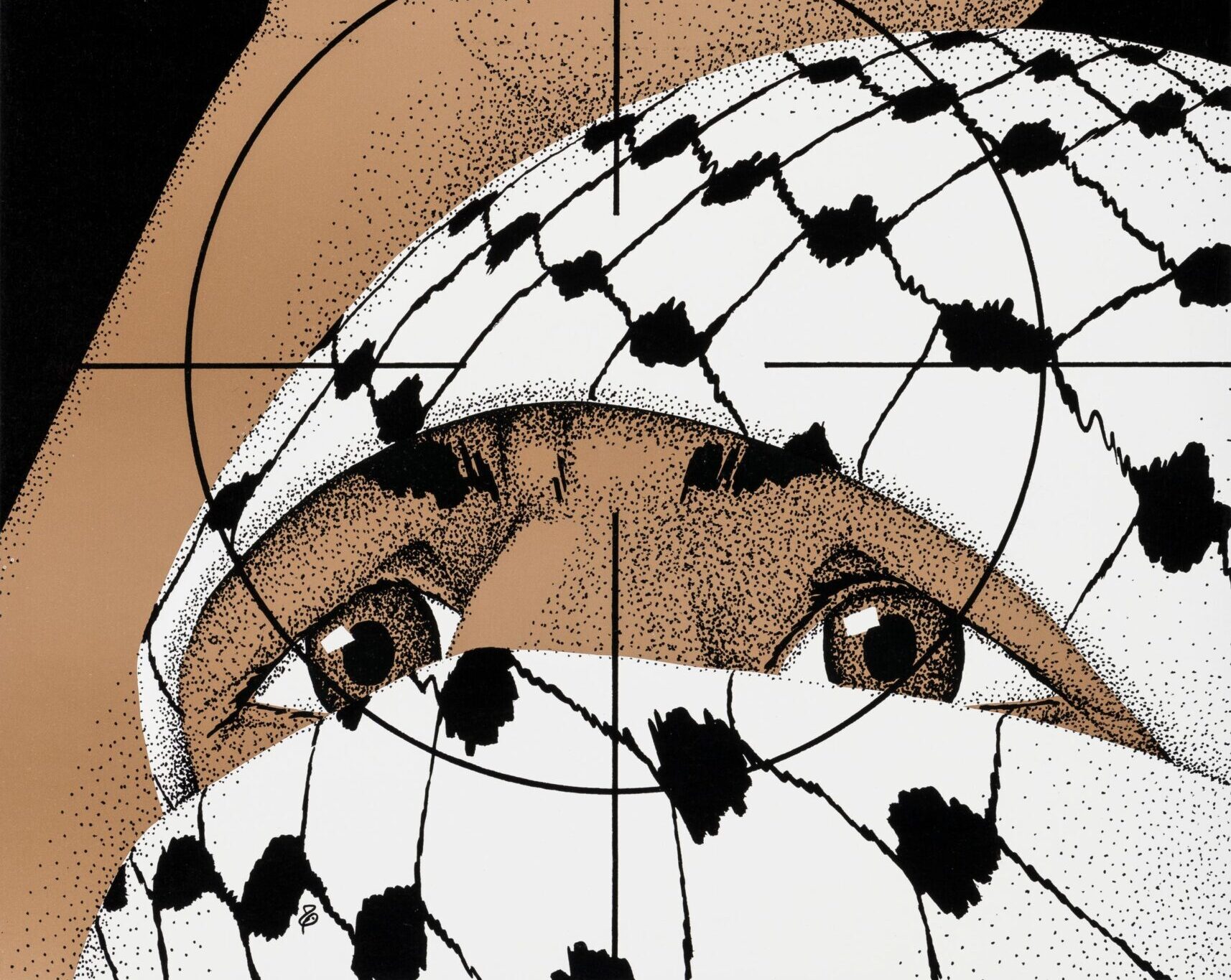
TMR: Maybe this would be a good time to go to some of the affective states that you offer us. You walk us through several, including exhaustion and fear, but right now I’m thinking about how you specifically highlight confusion as one of the most destabilizing or debilitating affective states. You also remind us that Fanon warned us of “confusion mongers.”
LS: Yes, the affective states that I lay out are not meant to be comprehensive, but they’re an overview of experiences that I have heard repeatedly in my work. The point is not to question whether an affect is authentic or not. Of course, we feel confused as people living in a world, but we need to become attentive and attuned. If power is always intruding on our psyche and our psychic terrain is up for theft, then we should be vigilant and curious when an affect like confusion is mobilized. When does it burst into being? Am I feeling confused, despite actually knowing something to be very true? What is this confusion stabilizing in this moment? That’s what I would call a symptomatic register, signaling that power is present and playing on us and through us, as Sarah Ahmed would tell us.
Confusion always happens when we’re in the throes of struggle that feels life affirming.
Fanon calls out psychologists here as confusion mongers. He says we become mediators between the state and people’s interiority. Why? Because we have the power to rewire the ways people are thinking about themselves. Most people can point to the source of their suffering. Most people understand that poverty is to blame, that these impossible conditions of capitalism and individualistic rot create a great deal of suffering, and that no matter what they do, like working three or four jobs, they still can’t afford a place to live. I don’t need a therapist to clarify that for me. Fanon says confusion mongers come in here and turn people inward and make them confused about the source of their psychic suffering. Now we have all of these industries—self-help, TikTok, etc.—that displace the political and social project of psychic suffering.
Confusion always happens when we’re in the throes of struggle that feels life affirming; those are the moments we start to question ourselves and go, “Wait a second, is it me? Am I crazy? Is this really happening?” These “implants” are mobilized to make sure that we do not remain connected to the world we want to live in, to go back to where we started.
TMR: It is so simple and profound that you admonish us not to question the feeling. It’s an authentic feeling, but we should try to draw the line and ask “what is this stabilizing? What is this making me disidentify away from?”
LS: Yes exactly.
TMR: To pivot, I try to bring in political prisoners whenever we’re talking about struggle, as you do so beautifully and frequently. There are many examples but right now I’m thinking of Walid Daqqa and his writing on the “searing of consciousness”—he’s tracking how the psychological torture he’s facing in Zionist prisons reflects the condition of incarceration, which is the prison, but also which is occupation. Maybe you could talk a little bit about this tracking of conditions, what you call the psychopolitical affective. This sort of feels like the connecting point for me.
LS: Yes, it is. It is absolutely the connecting point. Political prisoners factor so heavily in this book because my political commitment is that our struggle runs through our political prisoners. There’s a reason why they are political prisoners, and the fight for their liberation is part of our larger liberation movement. That’s number one, and that’s something that our region has always fronted.
Walid Daqqa is a gorgeous example of this, and also—maybe this lands for you too—because he was also such a beautiful writer. He specifically talks about the psychic and the affective. Every single political prisoner that I’m in conversation with, all of our revolutionaries, did not shy away from the centrality of the psychic and the affective as a centerpiece. They spoke both in terms of how power intends to make people feel despairing and keep them in their place as incarcerated, captured people, and on the flip side, the ways that these revolutionaries honed their psycho-affective skills to ward off the intrusions and allow them to remain connected.
Walid Daqqa gifts us so many examples of this militancy, which is the most important takeaway I have from Daqqa’s work. In speaking to the condition, he also tells us no version of compromise or softening of oneself is going to change the conditions of incarceration. Me being a better prisoner, a nicer prisoner, does not make me any less a prisoner. On the surface, this feels so simple, but to really think about all the seductions that we have from power to shift our behavior, in the fantasy that in those compromises they will shift their behavior. That’s the psychic intrusion. Daqqa’s whole body of work tells us that’s a lie.
It’s not that he thought writing or thinking in this way is going to be what materially freed him. He remained. He remains incarcerated. His body, his corpse, is incarcerated, but he did not let them psychically capture him, and he insisted on the fact that Palestine still exists. He understood why he was incarcerated. He remained connected to his comrades, even connected to his partner, he smuggled out his sperm to birth a beautiful child, who they called Milad, who exists in the world in defiance of their barbed wire and their incarcerative conditions and their walls. For us to recount those things, not as slogans only, but as material instantiations of the type of defiance and psychic militancy we are talking about—that can only come into being because you understand the power of the psyche in being able to do that bypassing. That doesn’t happen unless we’re psychically militant.
TMR: Allah yarhamu.
LS: Allah yarhamu. Yes.
TMR: As much as this book is about critiquing colonialism and diagnosing problems and indicting these oppressive structures, there’s also a lot of hope in this book, and the word “future” is in the title. It really feels like a defense of freedom dreaming, in the words of Robin D.G. Kelly. So I’d love to hear more about this futurity and, dare I say it, hopefulness.
LS: Absolutely. Power and particularly systems of extraction and domination, like settler colonialism, colonialism, and capitalism, work on foreclosures. They are meant to make us feel and live in a world that is in a foreclosed loop. Nothing can change. And that fixedness necessarily shores up and ensures the futures of settlers. They insist that the future of settlers is secure, the future of capitalist billionaires is secure. That is what this entire fascistic spectacle is about. So for me, I think that being able to consistently imagine possibilities beyond that and actually create them, is a practice we need. One way to begin doing this is by attuning to every moment in which our movements are already exceeding these structures. We must resist the stories we are told by power, that our revolutions are failures.
The moment of your most avid struggle is when you will feel how power comes down on you.
Tufan al-Aqsa for me is a beautiful example, and here we can track that we have documented proof of a moment in which people broke free of that foreclosure. Literally, we have photos of this. The militants who broke out made their way back to their villages. That was the intention. The ‘awda was part of that, and it happened just like the political prisoners who broke out of prison and dug their way out with a spoon.
Power will tell us, “Well, haha, they got recaptured.” Instead, what we hear from [the re-captured prisoners’] testimony is, “We saw Palestine.” That’s what I mean by attuning to the possibilities constantly, despite the direst circumstances and power consistently telling you nothing is possible here. They want us to disidentify from very real examples that are in front of our eyes. They don’t want us to envision our futures, to project them as necessarily there, rather than that of the settler. We are always asked to give up our own belief in the certainty of our liberation, but when we do that, we are doing the work of shoring up the future of the settler.
So what I’m arguing for is not just hope; it’s the certainty that the world we are building will come into being. Because if nothing else, I will not cede that psychic space to colonizers and oppressors who rely on us giving up and collapsing. Because that is the only way that their futures become the only ones that exist.
TMR: Yes, there is a certainty assumed in giving up—quite a trick. I’m thinking now about Bayo Akomolafe; he talks about how freedom is sometimes still in reference to the oppressor—in his case he was talking about the slave plantation, but the point is there’s a limitation if we define our liberation as the absence of a particular structure. Rather, he sees truer liberation in indeterminancy, in the open-ended possibility in the unknown. I’ve been thinking that fascists and tyrants really fear indeterminacy more than anything else.
And that fear, as we know, is often translated to violence—especially as we move toward liberation. You advise us that things might get worse, individually or collectively, as we’re starting to dismantle and resist the psychic and material oppressions.
LS: They are worse. There is a genocide, COVID, monumental poverty, climate catastrophe, which people of the global south and impoverished people the world over bear the brunt of. This is now.
The moment of your most avid struggle is when you will feel how power comes down on you. We are seeing that in the unimaginable magnitude of cruelty, violence, and dehumanization happening right now, particularly in the Zionist instantiation, because there is a global majority that is antagonizing that force. That’s not an excuse for it, but this is the way that power acts when it is being called out, when it cannot hide anymore.
I sometimes use the word psychotic to describe the behavior of those in power. I use it here, to highlight a process that relies on reality bending. That’s what the term psychotic comes from—a moment when you bypass material reality and forcibly coerce people into disbelieving what is actually happening to them. That is why every single day you need to be reminded to believe in their dominance—through an American flag or through the Zionist entity’s flag and all the displays of force. Those structures rely on that psychotic functioning.
But I’m always asking: does being disengaged from the struggle make any of that better? And that feels like such a simple thing, but it’s so difficult, right?
TMR: Disengaging does not make it feel better. Being incarcerated and having good manners doesn’t make us less incarcerated. Thank you for these reminders. I’m thinking of your quote in the book by Malcolm X, that we should not be ashamed to be extremists in the face of extreme violence.
I think this is the perfect moment to ask you about Fanon’s beautiful ideology of the precondition and how that should teach us to move.
LS: Fanon’s quote is another one that on the surface feels like a simple statement, but it really makes us contend with our commitments.
He says, “liberation is the precondition”—it is not, as we often think, an end point. He’s saying, “No, no, liberation is where it starts. Everything else comes after.” It comes in response to people critiquing the FLN, saying that they were too uncompromising. We can transfer that sentiment to today—this is lobbed against activists and militants, whether it’s in Gaza or in Lebanon or in Yemen or in Sudan or Venezuela or Cuba or elsewhere. There’s always a demand that they change their tactics, based on a fantasy that a change in their tactics is what will make power bend. And Fanon says that the idea that being more reasonable is going to change the colonizer’s mind is a lie. Once liberation is here, we’re happy to come to the table.
Palestinians are being asked to compromise even after decades of good faith compromises have done nothing but to entrench Zionist colonization from the river to the sea. Every time you cede space, that is in service of the colonizer. Fanon also warns us that the colonizer doesn’t give away anything for free, right? Nothing. That’s what power is.
So why wouldn’t militancy be our starting point, not where we get, but our starting point? Because we have all the examples that tell us that nothing works in the face of power, you know.
TMR: I feel like you keep speaking to us about foundation-laying, teaching us how to right ourselves in the fight we’re already in. It leads us to the conclusion that resistance is how we get power to bend, not compromise. To sustain this kind of militancy requires profound love for one’s people and the cause. I feel like a beating heart of love comes through in the commitment of this book, and I know many people must feel very loved by this labor, Lara. I think it’s enabling a lot of us to love better, not just to fight better. So I just wanted to thank you.
LS: That means the world to me, because it does underscore everything. It’s our profound love for the world, for the people that inhabit it, for the people who are sacrificing every single day to make sure that we all can break free of the conditions that oppress us and make us believe nothing else can be possible. I want to dedicate my whole world to that.