After decades spent gathering Kurdish literature and cultural artifacts for an "exile museum," one man's life's work is under threat.
1987 was a busy year. The Iran-Iraq War was in its seventh year of bloodshed, Turkish militants were bombing PKK camps, and Syrian troops were being sent into Lebanon. Amid this intense fray of global geopolitics, it is understandable how a Kurdish publishing house, diligently founded that year in Stockholm, Sweden, would be overlooked. And yet, by 1988, SARA Publishing & Distribution had become the main supplier of Kurdish literature worldwide.
For nearly forty years, the publisher’s founder, Goran Candan, has helped institutions such as the Library of Congress in Washington, D.C., Harvard University’s Widener Library, the New York Public Library, China National Library, Bibliotheca Alexandrina in Egypt, Bibliotheki Kipriaki in Cyprus, and many others establish Kurdish collections. Among the thousands of items he has sent them are Kurdish monographs, newspapers, journals, cassettes, VHS tapes, and CDs. Years of dedication have left Candan with not only an extensive collection of Kurdish literature but also a wealth of Kurdish cultural material. This prompted him, in October 2007, to convert SARA into what is now the Foundation for the Kurdish Library and Museum (Stiftelsen Kurdiskt Bibliotek och Museum) in “the hope that our children can read the traces of their ancestors’ lives, work, and hopes.”
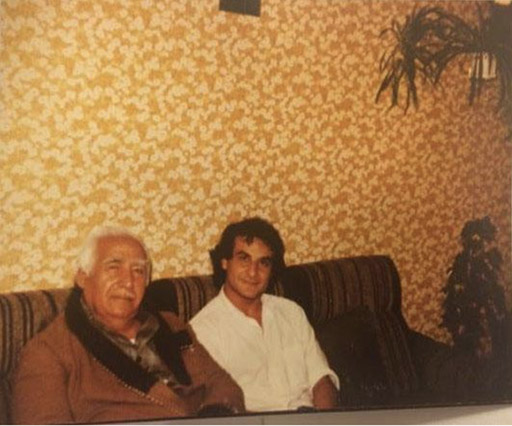
Candan’s trajectory makes sense: reflecting on historical legacies is natural when you grow up in a nation that tries to erase your existence. When he was twenty-three, Candan moved to Sweden from Amed, an ancient city on the Tigris River. Also known as Diyarbakır, Amed is now part of Türkiye and home to over 1.6 million people, most of whom are Kurds. This city is often regarded as the unofficial cultural center of the Kurds, despite the harsh assimilation tactics and linguicide historically enforced by the Turkish government. The year Candan was born, renowned Kurdish intellectual Musa Anter was imprisoned by Turkish authorities for publishing a Kurdish-language poem in the Diyarbakir newspaper İleri Yurt. The harsh reality of being a Kurd in a nation-state hostile to his mother tongue did not prevent Goran Candan from becoming a writer, journalist, and translator. Under his pseudonym, Bavê Barzan, Candan published several compilations of Kurdish folktales and myths for children, which were later translated from Kurdish into Swedish and Catalan. The Kurmanji versions of the texts were even adapted to the Sorani Kurdish script and published from Slemani, underscoring what appears to be a lifelong mission to preserve the Kurdish language and heritage for future generations.
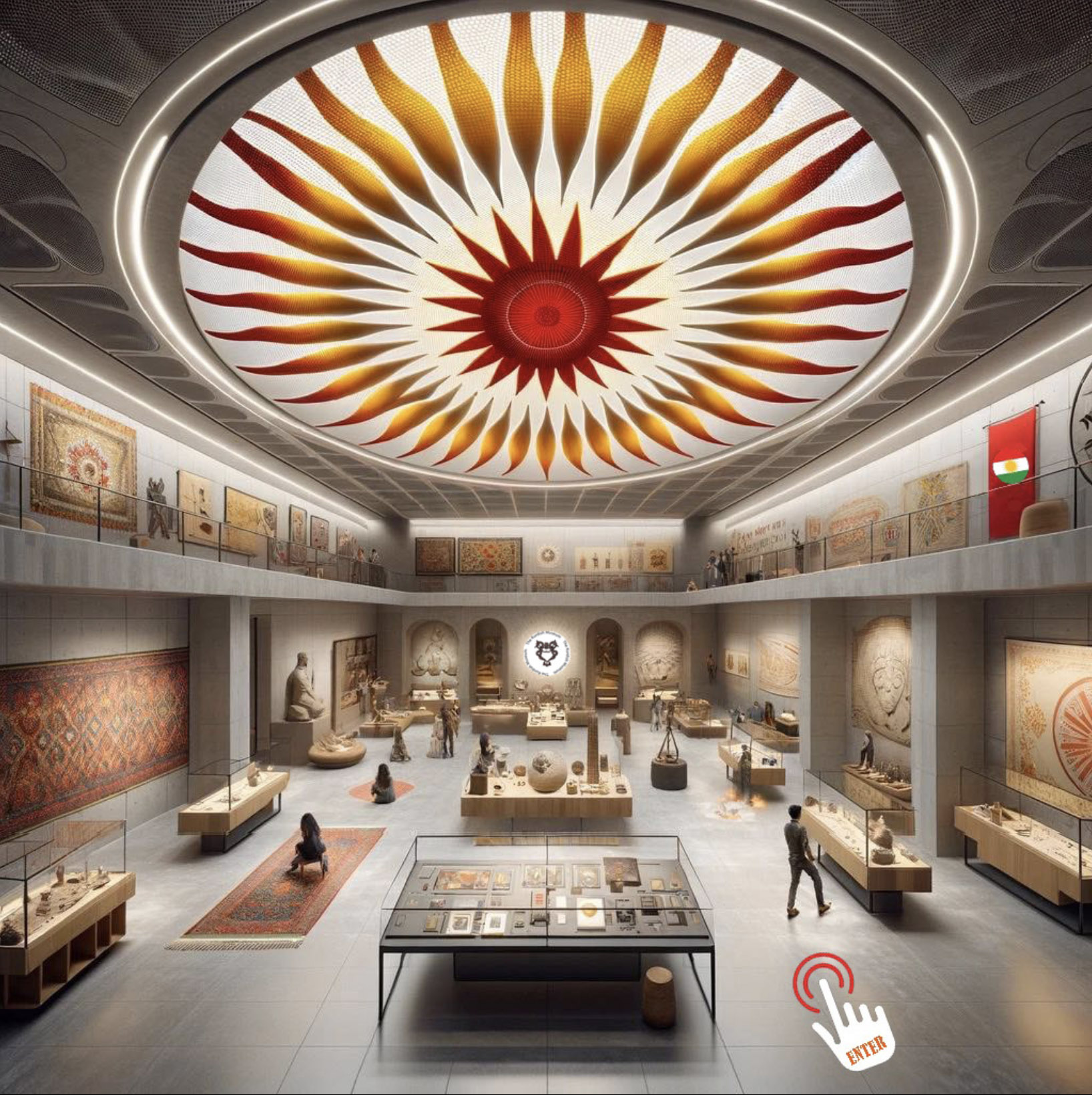
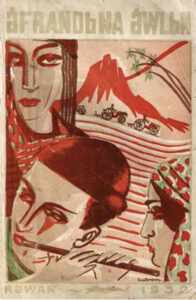
While in Europe, Candan remained active both creatively and politically. He established and maintained several magazines and newspapers, such as Yekîtiya Rewşenbîrê, Welatparêzên Kurdistanê, and Halk Gerçeğî, alongside several friends. These publications aimed to collect political and cultural news relevant to Kurds to keep them informed. Since nation-states such as Iran, Iraq, Türkiye, and Syria were careful not to represent Kurds or provide information in their own language, members of the Kurdish diaspora, like Goran Candan, organized these activities to ensure Kurds were not left in the dark. In a notable act of resistance, Candan translated a work by Kurdish political activist and former mayor of Diyarbakir, Mehdî Zana, who was imprisoned after the 1980 Turkish coup d’état, into Kurdish. Given Candan’s history, it is not unsurprising that he decided to take his publishing house turned Kurdish library a step further, and establish the Kurdish Exile Museum. The museum was to serve as a permanent exhibition hall for the unique and extensive archive of Kurdish artifacts he had collected and saved from destruction. According to Candan, the foundation “today has the largest Kurdish book collection both in and outside of Kurdistan.” In addition to books and precious archival material, the Kurdish Exile Museum houses vintage LPs, newspaper clippings, jewelry, photographs, advertisements for cultural products, various handicrafts, and much more.
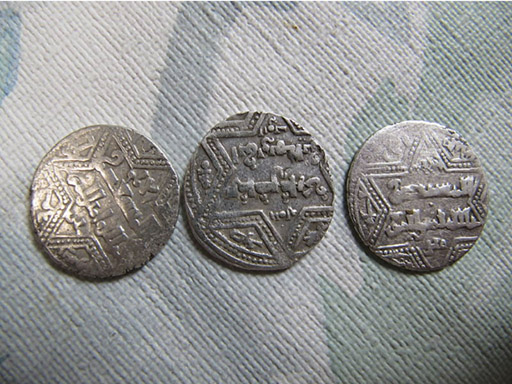
Among the many treasures in the collection, Candan highlights its coins from medieval Kurdish dynasties, the Marvanids and Shaddadids, from the ninth century AD, and the Ayyubids from the twelfth century. He explains the significance of preserving these objects: “In the Kurdish context, finding a coin belonging to a Kurdish dynasty from the Middle Ages is undoubtedly a great thing… [since] Kurdish culture and language have been strongly discouraged and, not least, banned and criminalized for decades in Turkey.” Historical objects like these coins provide evidence not only to researchers but also to everyday Kurds. These artifacts are invaluable tangible anchors of identity when navigating the storm of propaganda from a nation intent on reshaping history and writing entire peoples out of it. Given the fraught history of the Kurds and Kurdistan, marked by erasure, genocide, and forced assimilation, such historical objects have become increasingly difficult to track down. In fact, some of the items in the Kurdish Exile Museum may be the only ones of their kind remaining. Yet, after decades of being preserved, these artifacts are again under threat.
•
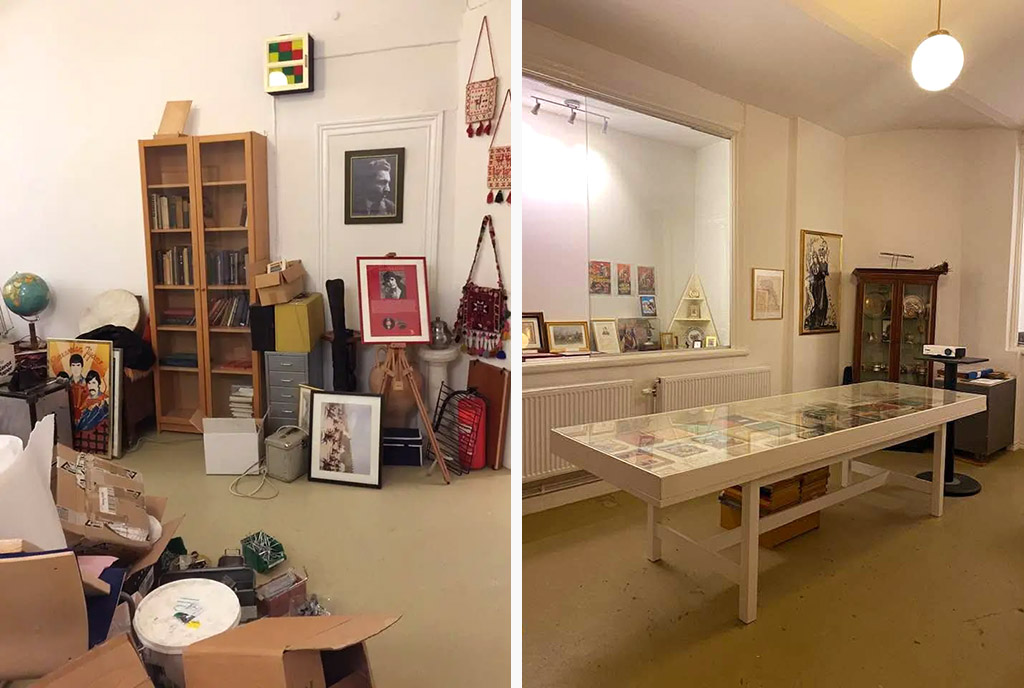
On August 16, 2025, nearly 39 years after establishing his publishing and distribution house on a street in Stockholm, Candan received a call. He told me, “The new property owner’s secretary informed me that my lease had been terminated with only three months’ notice.” Even more troubling, neither the Kurdistan Regional Government nor any other Kurdish organizations offered any assistance with relocating his priceless archive — an impressive seven tons of books, museum-quality objects, and various other archival materials. Candan emphasized the substantial expenses associated with packing, moving, and storing the collection. “I have a friend who personally contributed $3,000, but, unfortunately, the total cost is about twice that amount,” he says.
Candan, now retired, purchased 800 boxes and paid three workers to pack his archive over three months, after which it was moved into a storage unit. Without sustained external support, Candan must simply hope that no unexpected expenses consume that month’s storage unit rent. Dejected, he told me, “As you can see, I did not receive support from our own government or political parties, which unfortunately did not surprise me.”
Museums are often contested, even political spaces: Who gets to be heard, seen, and have their history preserved? Often, these questions are answered by those in power, not by the people who own the histories and objects on display in the museum. For several years, Goran Candan changed the narrative. The Kurdish Exile Museum became a vibrant cultural center alive with the history of Kurds — a nation long denied, oppressed, and fragmented by several nation-states. As someone who has dedicated his life to the Kurdish struggle for representation and freedom, Candan reflects on the importance of caring for this museum’s contents. “Now it feels extra important to preserve these cultural treasures for the descendants,” he says.
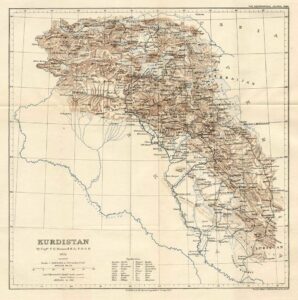
In Candan’s birthplace of Bakur, Northern (Turkish) Kurdistan, Kurds are often challenged by Turkish nationalists about the existence of Kurdish culture and history. A common provocation is the question, “Well, where is Kurdistan on the map?” For many Kurds, it is deeply meaningful to know about and be able to point to maps predating the nation-state of Türkiye that depict Kurdistan as one unified region.
The very existence of these historical objects in the Kurdish Exile Museum collection challenges gaps and silences in many of the “official” archives to which Kurds are subjected. It is baffling, then, that neither Kurdish political leaders nor the Kurdistan Regional Government in Bashur prioritized this project. Countless objects in Candan’s archive are rare, irreplaceable, or require specific conditions to be properly preserved for future Kurds, scholars, and admirers. In the unique context of Kurdish survival, it can be argued that Kurdish authorities should view the preservation of this collection — a cultural inheritance — as a national responsibility.
2026 has been a busy year, too, but the loss of the Kurdish Exile Museum feels particularly tragic — an archive of Kurdish culture and history quietly consigned, by a single phone call, to a heap of boxes in a dark storage unit. A reminder, if one was needed, that money holds the power to determine the survival of a people’s narrative and culture. Like the generations of Kurds before him who risked publishing poetry in Kurdish or running for office to serve their people, Goran Candan refuses to give up on the cultural inheritance he has gathered for future generations. The Kurdish Exile Museum, in many ways, mirrors the experience of occupying space as a Kurd — pushed further into exile while forever carrying the label of exile.
But another defining marker of Kurdish identity is hope, despite the odds, which fuels Kurds’ determination to persist. Today, more so than in 1987, Kurdish language publications are prolific, the number of native speakers has surged, and more young Kurds are able to access their history and culture. May the future of the Kurdish Exile Museum be equally hopeful.