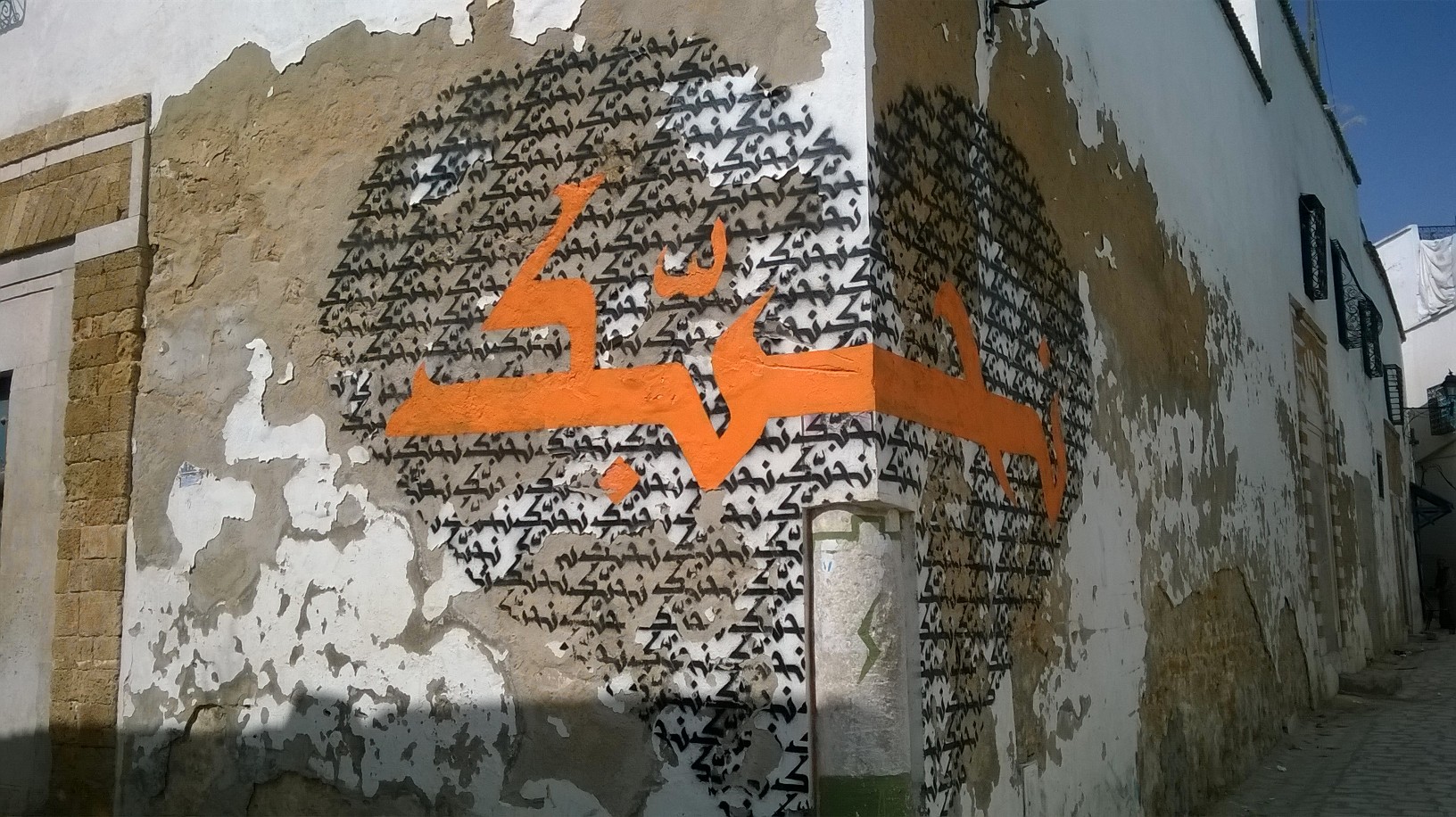
Tunis’ ancient citadel is threatened by climate change and incompetence, but could also offer solutions to hotter, wetter conditions.
TUNIS: Four male dancers languidly swayed to an orchestral hypnosis of drum, qraqeb (metal castanets) and bandir inside the sweltering interior of a deconsecrated Catholic church in the Medina of Tunis. Sweat poured off their bodies as they performed a rumination on the traditional Amazigh peasant calendar’s garrat al-anz period of deepest winter.
To the sweating audience, winter, or even a trace of chill, seemed implausible. Fans waving, they poured out of the church at the performance’s end into the Medina’s vacant streets. It was the third day of September, and Tunis stood at the tail-end of a harsh summer marked by fierce heatwaves, extensive electricity cuts, water shortages, and an unspecified number of people who expired in hospitals, prisons, and homes as a result of the conditions. Tunisians described it as the toughest summer of their lives, and the year that drove home the consequence of climate change.
A few days later, the first autumnal rains offered little respite. Intense squalls flooded central Tunis, creating an incongruous paradox: residents negotiated their waterlogged city, knee-deep in rainwater, even as supermarkets shelves remained vacant of drinking water and residents foraged in local cafes for single 2lt bottles sold by the owner at a premium, but only to those acknowledged as locals. Others stocked up on soft drinks and watermelons as water substitutes.
“We’ve just emerged from Hell,” said Faouzi Abidi, an archaeologist and farmer of a drought-struck olive grove, who has applied for a bank loan that will allow him to pump water from a nearby river after his well dried out. “Power cuts of several hours during 50-degree heatwaves make it impossible to sleep at night, making you less functional the next day.”
In its complexity, size, and population, the Medina of Tunis is the Arab world’s largest, inhabited medina.
Tunisia is one of the world’s most water-stressed countries, with declining rainfall contributing to its per capita share of water falling to 400 cubic metres in 2023, more than half below the 1000 cubic metres that is the UN’s water poverty baseline. In 2023, extremely low water levels in the country’s thirty dams ushered in the introduction of water quotas. As a result, the wheat harvest reached only 250,000 tonnes that year, compared to an annual average of 1,5 million, prompting shortages in bakeries and expensive imports.
Ever since Tunisia became the first in a chain of countries to overthrow its regime and inaugurate the Arab Spring in 2011, the North African state has been marked by political instability. A flowering of free expression and the arts was accompanied by neglect of the country’s rich natural heritage, as political instability shifted focus away from long-term planning. UNESCO singled out the Medina as one of several World Heritage Sites under threat.
In its complexity, size, and population, the Medina of Tunis is the Arab world’s largest, inhabited medina, and encapsulates all the dangers posed to heritage by drought, poverty, and intensified, climate change-caused weather phenomena.
“The Arab world’s medinas are not equipped to face climate change,” said Omniya Abdel Barr, an Egyptian architect and architect of Islamic art and architecture at London’s Victoria and Albert Museum, “and because they tend to be in underprivileged communities, even if the state’s taking care of the listed monuments, the urban fabric really suffers.”
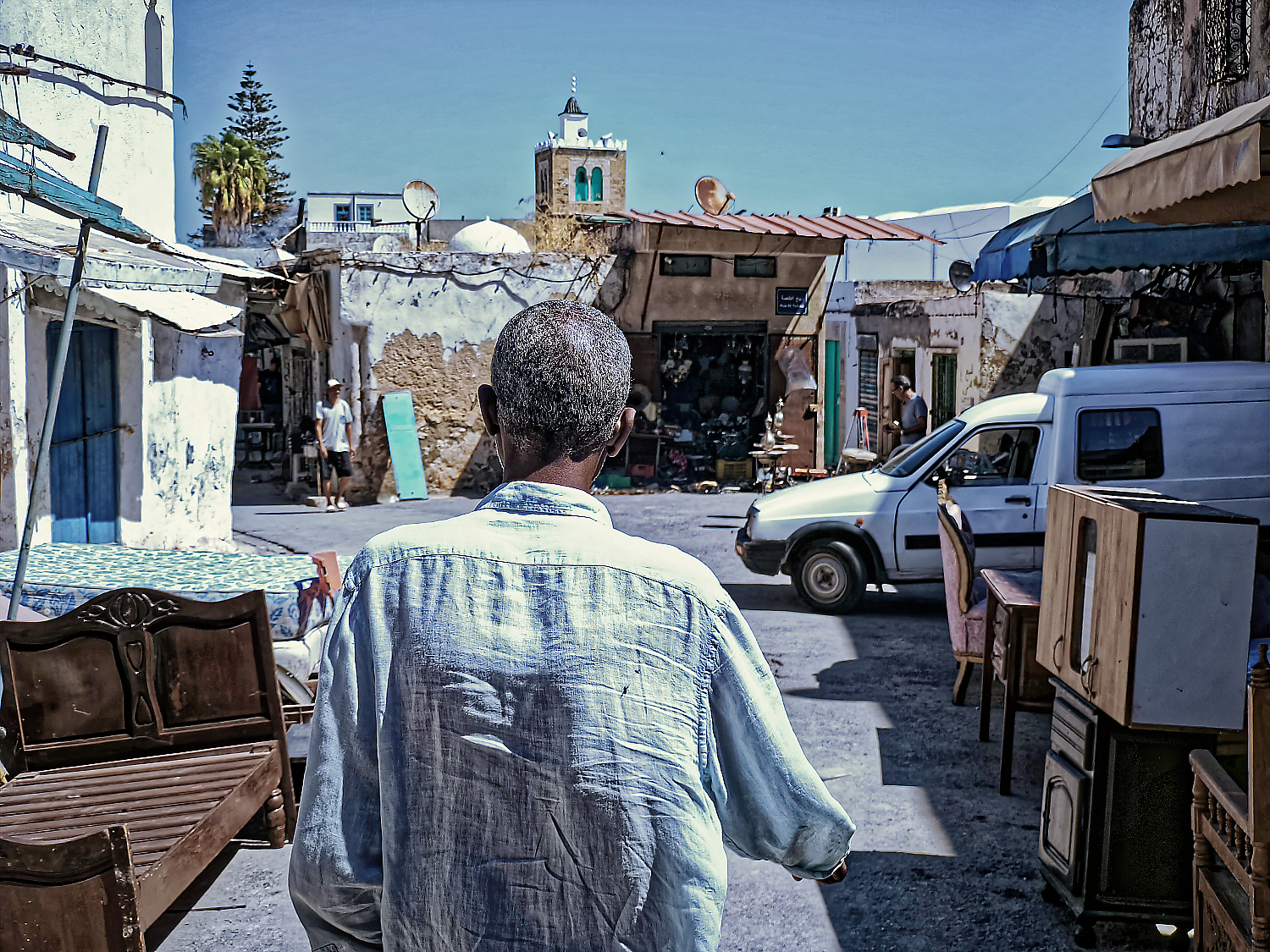
΅While the Tunis Medina is still-inhabited and only partially touristified, its centuries-old, overpopulated stone buildings are repaired or rebuilt with inappropriate modern materials, their walls weakened by the pooling of water effluent from a/c units, and their neglected underground cisterns are ticking time bombs.
“When piped water arrived in the Medina, many families closed their wells by choking them with sand and rubble,” said architect Adnen El Ghali, the author of When Diplomacy Shapes the City: The Consular Quarter of Ottoman Tunis. “While nothing happened at first, the distorting effects of this mass of water-infiltrated rubble began having structural effects on the buildings.”
An evolving but critically vulnerable Medina
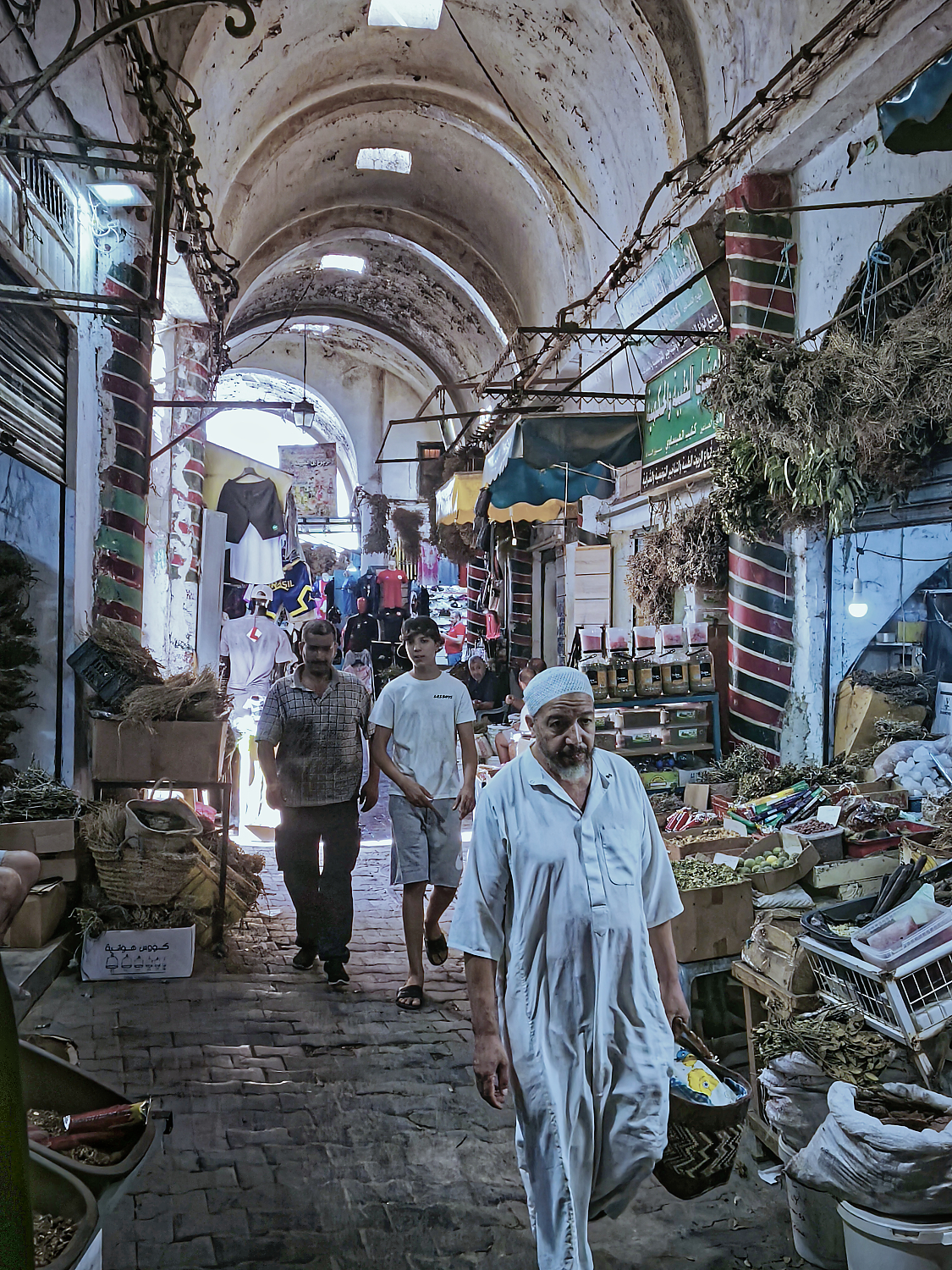
Once-walled, the Medina’s fortifications were demolished as of the late 19th century. Now, its covered markets are accessed through narrow lanes that plunge the visitor into a world of dusty grandeur. Grand lamps from Tunisia’s Europeanizing period swing from vaulted corridors, backdropped by slender Andalusian columns crafted in Levantine black-and-white stonework. They float above a world of traditional commerce anchored in a medieval globalization whose products derived from the biosphere instead of Asian factories. Today, the Medina’s perfumers still mix plant-extracted ingredients, coppersmiths fashion trays from sheets of the reddish-brown metal, and the fabric suq sells an array of local and imported clothes.
Beyond the hustle of the markets, schoolchildren and adults walk the cobbled lanes into grand or humble residential quarters whose ancestral mansions are currently inhabited by successive waves of emigration from the countryside, dating back to Tunisia’s 1956 independence from the French. These gradually displaced the baldiya, a refined commercial and political class that formed the Medina’s aristocracy. As the country went through French colonialism, independence. and modernization, the baldiya abandoned their grand homes in favor of the amenities offered by the modern city expanding beyond the Medina.
“There are houses in the Medina where the owners died and, right after burying them, their grandchildren, who had already been living outside the Medina for years, locked their homes up pending deciding what to do with them,” said Zoubeir Mouhli, an architect and former director of the Association for the Protection of the Medina of Tunis, who points to complicated inheritance laws as one of the greatest challenges facing the Medina. “Before you know it, thirty or forty years elapse, with the deserted buildings forming a hole in the community!”
It was into such a minor palace that Leila Ben-Gacem walked one morning in 2006. The Tunisian native and social entrepreneur had just returned to Tunis after a childhood spent in the Emirates and a work-stint in Libya. Standing at the edge of a courtyard strewn with flowers tidily drying in the sun, she watched the last in a long lineage of perfumers shuffle across. Since their children had left for a comfortable suburb, the couple—who felt stranded in a Medina radically changed to the one they had known—inhabited just a tenth of their home. “I had found my life’s mission,” Ben-Gacem said. “It appeared to me like my national duty to save this house”.
Ben-Gacem purchased the stately house, renovating it into a boutique hotel through the instability of the 2011 revolutionary aftermath, and opening in 2013.
“Because I’m a social entrepreneur, I’m going to hire people from the community, although it was a struggle because they were high-school dropouts, rural emigrants whose families had come to Medina from Tataouine (in Tunisia’s South) and lived in okeilas,” she said, referring to the old homes typically shared by several families.
In 2019, Ben-Gacem opened a second hotel on the site of a grand house she purchased after convincing thirty-four inheritors at daggers-drawn with each other to sell to her. Today, she is the director-general of Tunistoric, a real estate investment syndicate that brings together wealthy Tunisians and insurance funds to acquire large properties with the potential to transform a district.
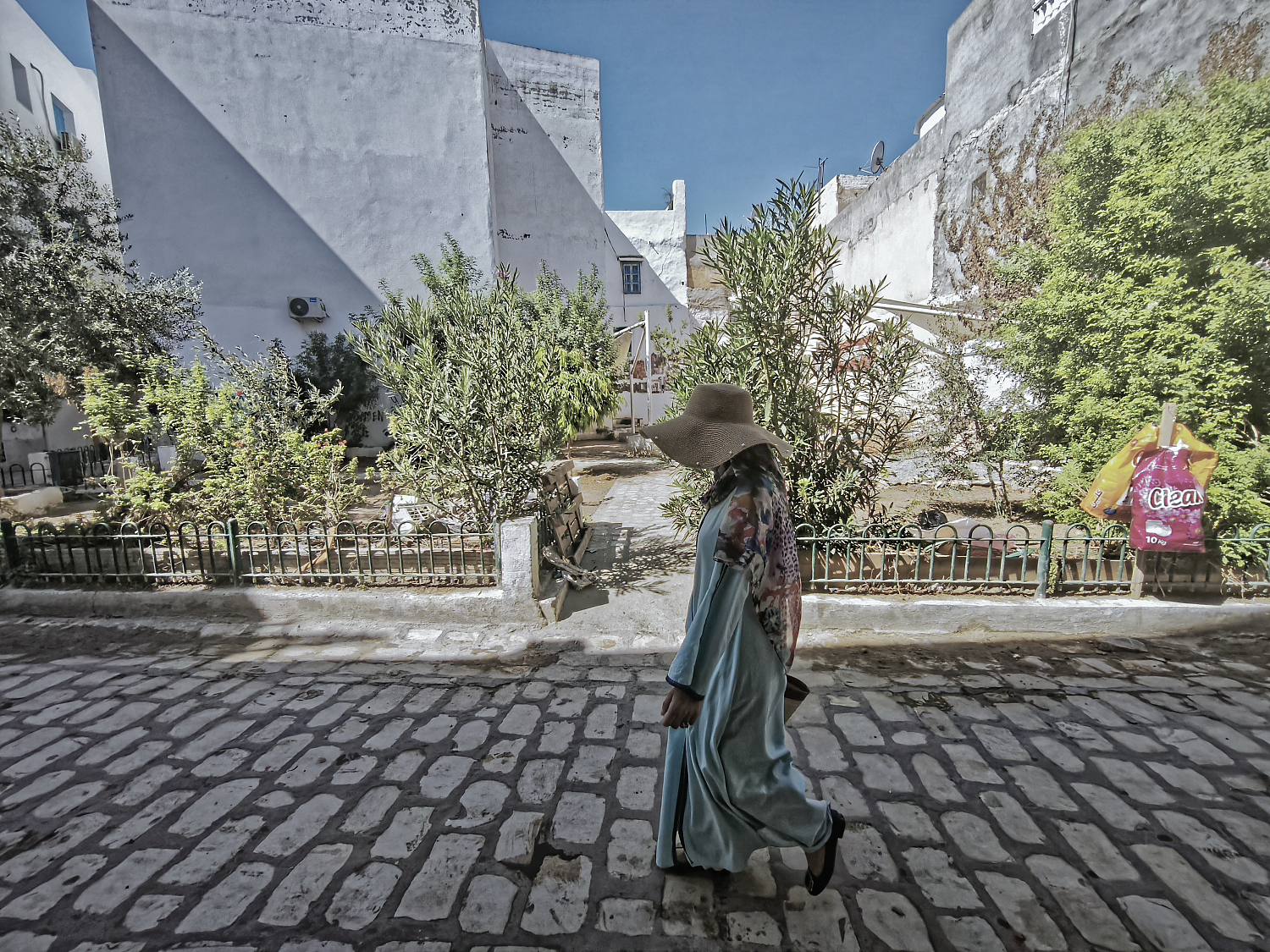
“If you have six buildings, you can create an eco-system with a transformational dynamic,” she said, describing how the fund is focused on a working-class district just next to the Medina where almost one in two shops are shut.
Of the four buildings purchased so far, one will be turned into a restaurant, another into a hotel, and a third into a museum of Tunisian craftsmanship. “It can become an inclusive investment that uplifts the community, or everything can go expensive and then people from (upscale district) Marsa move in,” Ben-Gacem said, tittering nervously about the prospect of reconciling the investors’ profit motive with her social sensitivities.
“For decades, preservation was focused on the physical and intangible heritage but often didn’t care enough about the social element itself,” said Lucio Frigo, an urban planner and real estate developer who is working on heritage projects in Tunis and Jeddah. “If a house was restored properly, they couldn’t care less whether the house was expropriated, where the resident family went, and whether it became a shop, hotel, or restaurant.”
Frigo is in the process of editing an Atlas of the Medina, part of a project with the Harvard University Graduate School of Design proposing an ecological urbanism framework for the Medina and exploring if it can attract new residents from among Tunis’ professional classes.
A garden in the Medina
One of the social projects Ben-Gacem is sponsoring is a community garden in the Medina’s popular Bab Sweika district. Working with Medina-raised architect Firas Khelifi, a parcel of land that once hosted a collapsed building was cleared, trees planted, and a garden took shape.
“This place used to be an illegal rubbish dump,” said Khleifi, who remembers growing up in such a tight-woven community that he could enter any house for a glass of water. “When people started believing that it belonged to them, everything changed.”
Nevertheless, the stultifying heat and drinking water shortages took their toll.
Trust-building was required to sway the community. For a whole year, the new plants Ben-Gacem paid for would be uprooted and taken away by the neighbors the moment they were planted. Khleifi organized a planting workshop for the neighborhood children which bound them to the plants and ended the looting. By last year, the winter garden had produced 40 kilos of vegetables, a compost pile was established, and there was talk of opening a well. A part of the Medina that women had avoided became a place they now arrange to meet in.
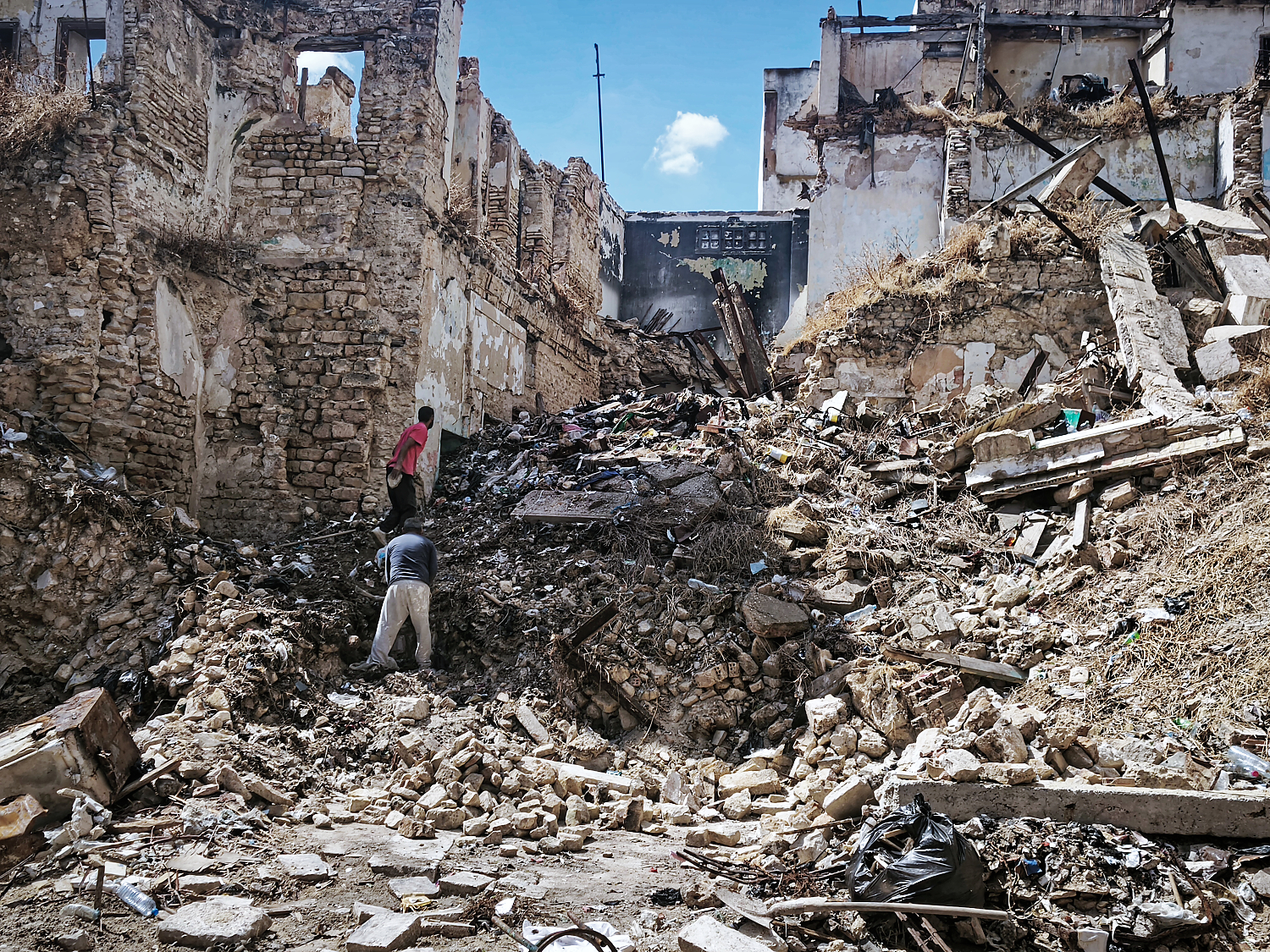
“I want that all the Medina’s khirba (collapsed ruins) to be turned into a living garden for the children of each neighborhood,” said Ben-Gacem, who sponsored a 2018 municipal mapping project that documented the existence of 163 collapsed building sites in the Medina. “By changing the fabric of the system, we can increase the peoples’ sense of belonging to the land and the Medina.”
The Medina’s dense, stone construction and winding lanes provide shade and funnel breezes, significantly reducing the modern city’s average temperature. Furthermore, its proximity to several ministries spared it electricity cuts during the summer. Nevertheless, the stultifying heat and drinking water shortages took their toll.
Ben-Gacem believes that potential solutions to the challenges of climate change exist just under the surface. Literally.
Maajel: the hydraulic system undergirding the Medina
The long-disused wells and cisterns beneath each house, known in Arabic as maajel, were designed to collect rainwater and could be pressed into service again as a valuable alternative to piped water. For that to happen, they must be decontaminated from a sewage system that, over decades of non-maintenance and swollen population sizes, steadily infected them.
“The Arabs chose this location on which to build the Medina because the water plateau is as high as 8-10 meters from the surface,” said Ben-Gacem. “Since it’s now decades that water isn’t being extracted from the wells, there’s greater water volume and increased humidity, so the buildings are more fragile.”
The problem is compounded not just by the use of non-porous, modern building materials like cement and tiles (rather than mortar, wood, and stone) but by entire generations of architects having been trained to reach for cement instinctively. The Medina is an urban ecosystem designed to reduce high temperatures, on the condition that it not be burdened by excessive levels of humidity, which destabilize the soft clay upon which large parts of it are constructed.
“One major source of increased humidity are all the new A/C units whose effect is a huge differential between internal and external temperatures, resulting in condensation that contributes to the dismantling of the mortar,” said Ghali. “Combined with the soft clay on which they’re constructed, it is resulting in buildings collapsing.”
Rainfall is increasingly resulting in flooding as uncollected garbage blocks the sewers. The resulting flooding weakens the soft subsoil, resulting in an epidemic of collapsed buildings. The municipality recently cleared several areas of rubble as part of an urban gardens project. A man working on the site of three collapsed buildings proudly said that the plot would be rebuilt “with modern materials.” Another 500 buildings are threatened with collapse.
The network of rubble-choked maajel under the Medina were singled out by the World Monument Fund in 2025 as a priority project since their “rehabilitation today would reduce demand on strained municipal water supplies and help build local drought resilience.” After ten years of failing to find workers trained in maintaining them, Ben-Gacem is casting her net wider to traditional central Tunisian towns like Kairouan and Sfax whose Medinas have still-functioning maajel.
“One of the Medina’s greatest problems is humidity and dirt,” said Ahlem Memmi, the communications manager for L’Art Rue, a cultural organization that has run a biannual arts festival called Dream City since 2006, which has enticed tens of thousands of visitors to the Medina, reacquainted them with their heritage, and reintegrated it into contemporary Tunisia’s cultural life. “There’s also the terrible, ever-present smell of rubbish, which can end up affecting you after prolonged exposure, and circulate germs.”
L’Art Rue has made its headquarters in Nahj Maqta, a dense and trash-choked part of the Medina adjacent to the Chinese goods market that still bears the scars of Allied bombing during World War Two. Organizers earned the trust of locals by offering jobs to delinquent youth, while seeking to familiarize attendants of Dream City with the Medina by rotating each edition through a different district and rehabilitating old and abandoned buildings.
“Since Dream City’s purpose is to access places that were locked off and rehabilitate them for the public, to acquire permits and open them during the festival, it facilitated communication with the officials in charge,” said Memmi. The church where the dance performance occurred was one of these places.
Manuela Maffioli is one of the residents of the Medina attracted to Tunisia by its vibrancy. Sitting on the beer-terrace of the Majestic Hotel in Tunis’ colonial-era centreville, the Bologna native said that her first impressions of Tunis in 2004 were of “an atmosphere I hadn’t ever encountered anywhere else. There was a cinema showing excellent arthouse films, lively restaurants gathering journalists, syndicalists and bohemians, and the city center was a lot cleaner and less populated than it is today.”
Given the dramas the country is experiencing, heritage may appear a low priority.
Maffioli renovated two old Medina homes, opening one as a guesthouse and inhabiting the second. This summer was so witheringly hot that she remained in Tunis, stretching a net over her terrace to shield the plants, and watching the barometer in her home record unprecedented levels of humidity: “One day it became so hot that I felt myself melting like a candle: I started crying of frustration.”
“Just in the two decades I’ve been living here, the climate has become tropical.”
The combination of overbrimming wells and rubble-choked maajel with aging, overcrowded buildings patched up with non-porous building materials and subjected to choking humidity is an urban disaster waiting to happen.
Climate change frontline
Already largely covered by the Sahara, desertification has been gnawing away at Tunisia’s steppe and Mediterranean climactic zones for decades. State paralysis and a collapsing economy have convinced thousands of Tunisians to embark on rickety boats for Europe. The drowning of some over the summer sparked public protests which mixed with public anger at the exorbitant rise in prices.
Given the dramas the country is experiencing, heritage may appear a low priority. Yet as humanity enters uncharted climactic waters, the urban synthesis delivered by accumulated millennia of experience in living on the cusp of the Mediterranean with the Sahara is that, rather than just being a museum of the past, the Medina offers solutions for the future too. Tunisia’s historical experience in enduring heat is evident in the troglodytic homes of Matmata, Tijma, and Haddej, and the unique, sunken Roman villas of Bulla Regia. These, along with the Medina’s stone houses, offer real-life examples of the alternatives available to us for lower-energy housing.
“If you think about the future of heritage romantically, then you’re condemning it to a slow death,” said Frigo, who is seeking to renovate some apartments as a way of convincing young professionals that life in the Medina can be both attractive and affordable. “But if you move it away from the economy of consumption, spectacle and tourism to an actual place of contemporary production, then a future can be imagined for it.”
Solutions to manage the Medina’s current decline are possible, but they require a mix of more active state, NGO, and private engagement. Municipal services must be restored, entities such as the National Heritage Institute and the Association for the Protection of the Medina of Tunis reactivated, and bureaucratic delays and a restricted understanding of what constitutes heritage overcome.
“It’s no longer enough to preserve a monument and clear the 200-meter radius around it,” said Ghali. “There’s an entire urban identity that must be preserved, and possibly adapted to the future of how we build.”