 Seven Questions is a new series of conversations with writers about the questions that surround the making of fiction. Rather than focusing on a single book or the craft of writing, we’re interested in the messier territory of practice: the doubts, obsessions, routines, and uncertainties that shape a writer’s work, and the uneasy question of what purpose fiction serves in the world.
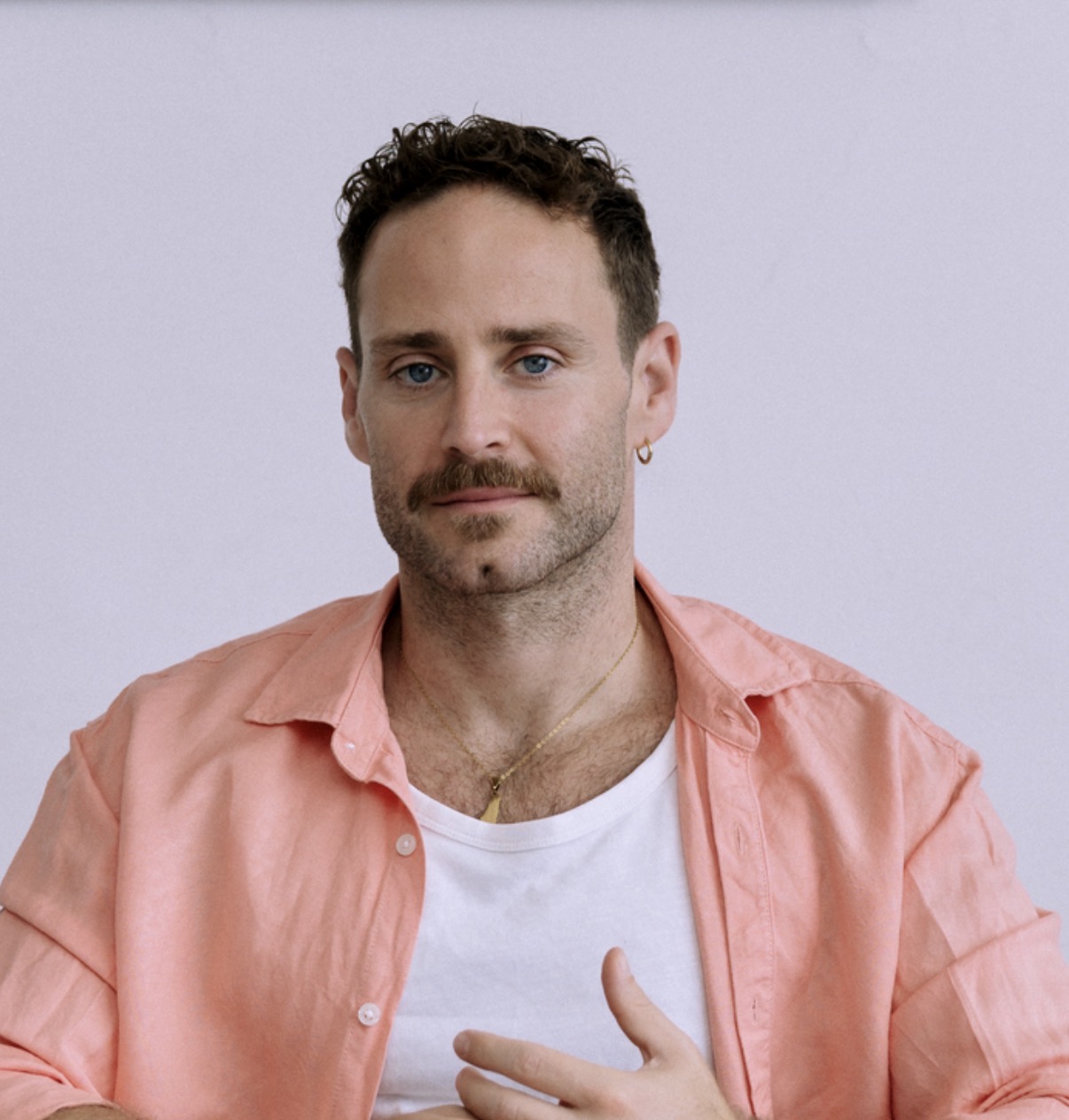
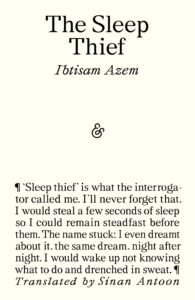
Ibtisam Azem—author of The Book of Disappearance (2014; English translation, 2024) and the newly-released The Sleep Thief (2011; English translation, 2026)—reflects on writing through uncertainty, the limits of fiction in the face of violence, and finding her way back to the quiet of the page.
– Saleem Haddad, Fiction Editor
What problem are you currently trying to solve in your writing?
The novel I’m working on, which is about three generations of a Palestinian family and their relationship to land, settler-colonial law, and organized crime. I have to trace the complicated history of the family as it is subjected to military rule, state violence, and legal and economic pressure. The interconnected stories reveal the visceral changes in class and gendered family dynamics.
What’s something readers often misunderstand about your work?
I don’t know if we can speak about one particular type of reader, but I think many Palestinian writers are faced with the fact that some readers and critics in the West—and perhaps also in the Arab world, although from a different perspective—tend to focus primarily on the politics of the work, or on what they perceive its politics to be.
Sometimes this means that the work is not approached first and foremost as fiction: as a work of art and imagination with its own literary dynamics and genealogy. This is not to say that politics is not always an aspect of how works are written and read. But fiction is not an anthropological document. It has its own language, imagination, ambiguities, contradictions, and aesthetic dimensions, and these deserve to be taken seriously as well.
Someone once said that “every writing is a failed attempt,” and yet I still wake up every day and make what I know is a hopeless attempt to beat your loneliness in the world.
What’s the hardest thing to write honestly?
Every unwritten idea or work is hard to write until it’s written. I find that love and violent scenes are not easy to write, nor is dialogue, since it is very easy to fall into the trap of the known and the seen. But maybe that applies to writing in general.
Which writer do you think deserves to be read more widely, and why?
Hussain al-Barghouthi (1954-2002) and the poet Muin Bseiso (1926-1984) are not read as widely as they should be, even in the Arab world. Both have very unique voices.
What does it mean to write fiction at this particular moment?
Writing fiction at this particular moment means refusing to allow reality, no matter how devastating, to dictate the limits of our imagination—and with that, possibilities of the future. We are living through a moment of immense violence, loss, and uncertainty, but fiction gives us a space to ask questions that reality sometimes makes difficult to ask. It allows us to imagine other possibilities, other futures, and other ways of seeing the world.
But that’s a theory. At this moment in Palestinian history, amid a new chapter of the genocide, I find myself very often sitting by words and not in them, as if I want to draw every word and, with that, take a breath. I find myself looking at them. So these days I am looking more, trying to find my way back to silence and reflection, so that maybe I can find my way back to writing in a way that feels meaningful to me.
Writing fiction at this particular moment means refusing to allow reality, no matter how devastating, to dictate the limits of our imagination–and with that, possibilities of the future.
What are you becoming less certain about as a writer?
Can fiction really provide answers? Or is this a story we want to tell ourselves? I think I believed in the past that if I examined some things closely enough, or spent enough time with and around them, I could eventually understand them. And yet I’m less certain of that now. Some things remain unresolved, contradictory, and sometimes impossible to fully understand.
Perhaps I am also becoming less certain about what a fiction writer is supposed to be or do, and more certain about what they shouldn’t do. A novelist doesn’t have to have answers or to explain the world. We need to remain curious, to ask difficult questions. There is a need to listen, and to listen carefully, to our characters and to the world—but are we really always capable of doing that? I try to create spaces for contradictions to exist without being resolved. What does “resolving” an issue in a work of fiction mean? Someone once said that “every writing is a failed attempt,” and yet I still wake up every day and make what I know is a hopeless attempt to beat your loneliness in the world.
The more I write, the more comfortable I am with uncertainty. That’s the story that I want to tell myself, anyway. But it’s not the whole story, because I still struggle with uncertainty. I hate it, and yet every day I have to learn anew to embrace it. Perhaps that is one of the things fiction has taught me: that not everything needs to be settled to be meaningful. Still, that is sometimes easier said than done.
A novelist doesn’t have to have answers or to explain the world. We need to remain curious, to ask difficult questions.
What is your current writing routine?
For the time being, my routine is to try to find a routine. I feel like a professional dancer who hasn’t danced for a while and now has to go back to it. Every step feels familiar and yet as if you are taking it for the first time.
The last novel I wrote was published in 2014, and I published a short story collection after that, but writing a novel is different. I have been conducting interviews for my current fiction project for the past few years, and I have been writing, but not as intensively as I want. Now I’m at a crossroads and have a fellowship at the Radcliffe Institute, where I can take some time to “go back home” to writing.
In the past, my routine usually depended on my work schedule. I would try to wake up very early, at five, and write until nine, because after that the world of work as a journalist would take me back to the other reality. So I’m trying to find my way back to waking up and sitting with the quiet of the morning and its beginnings. But I’m not there yet. I’m still restless.