Two writers explore how the creative process can transform shame, estrangement, and rage into acts of political and imaginative resistance.
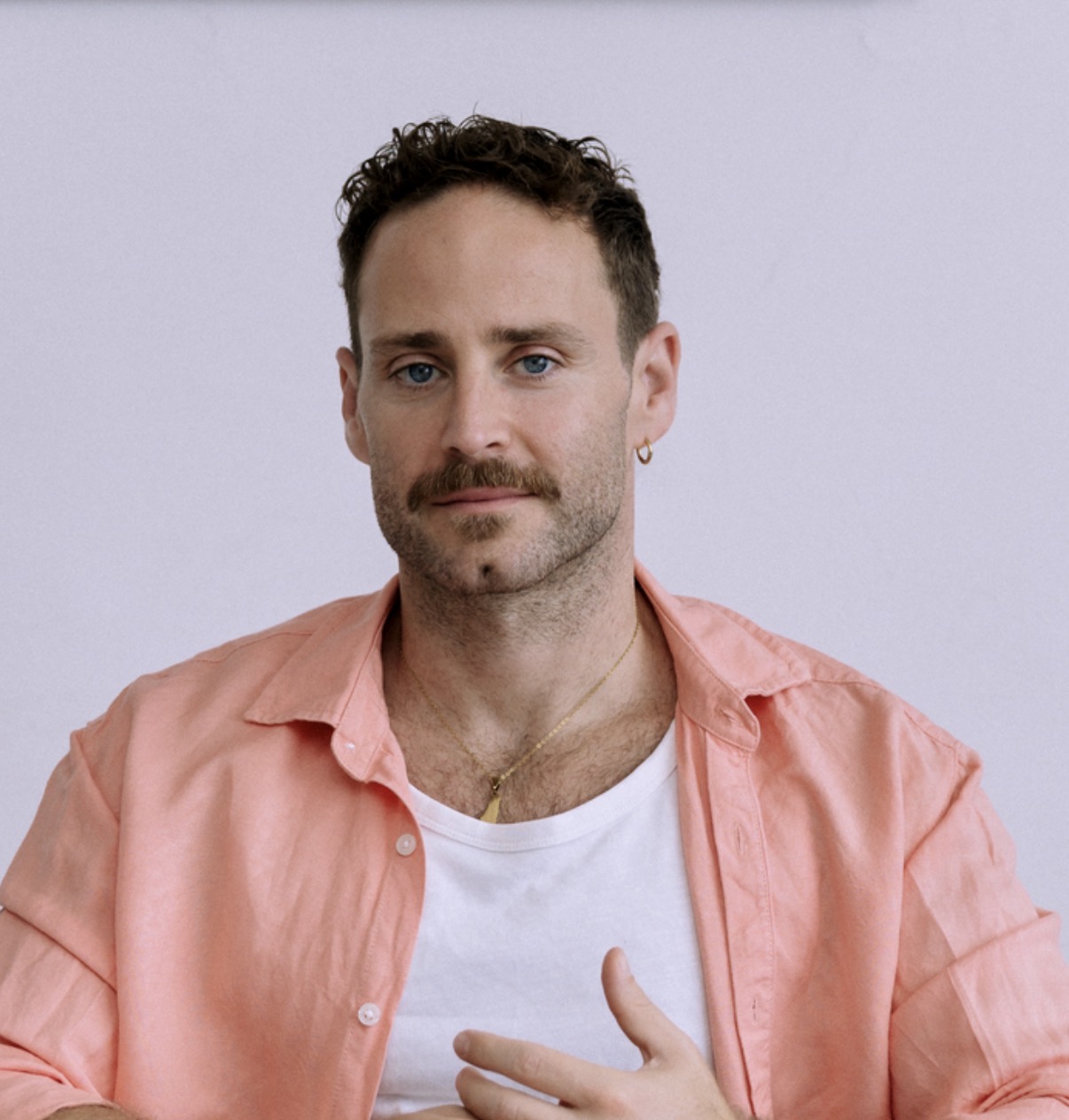
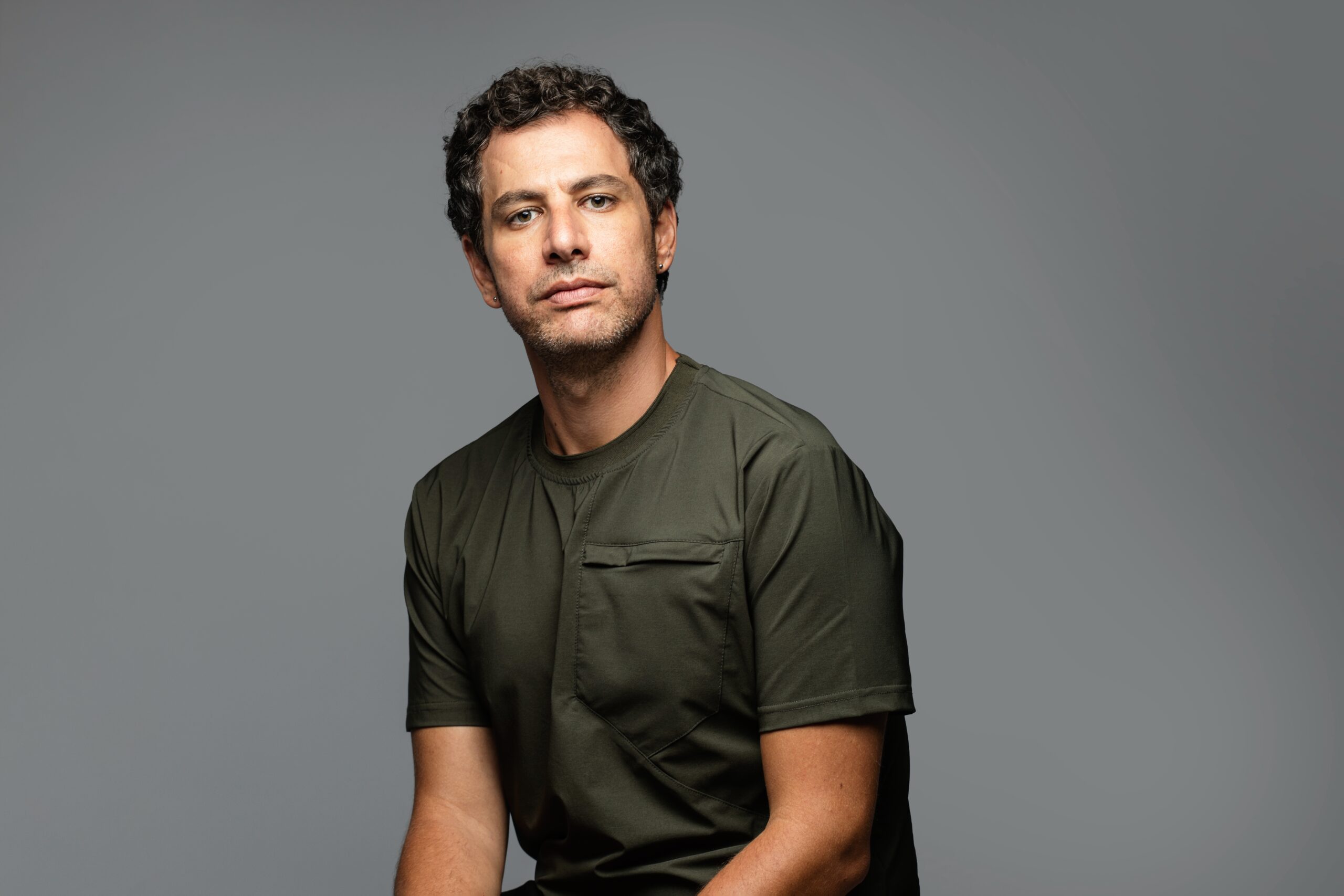
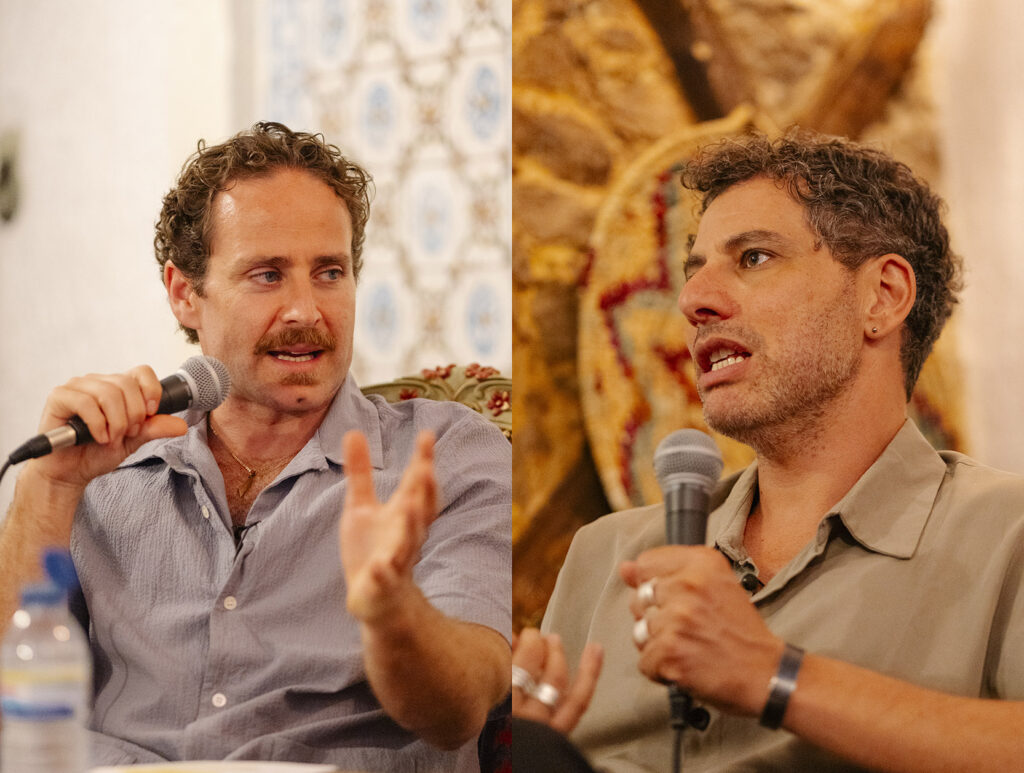
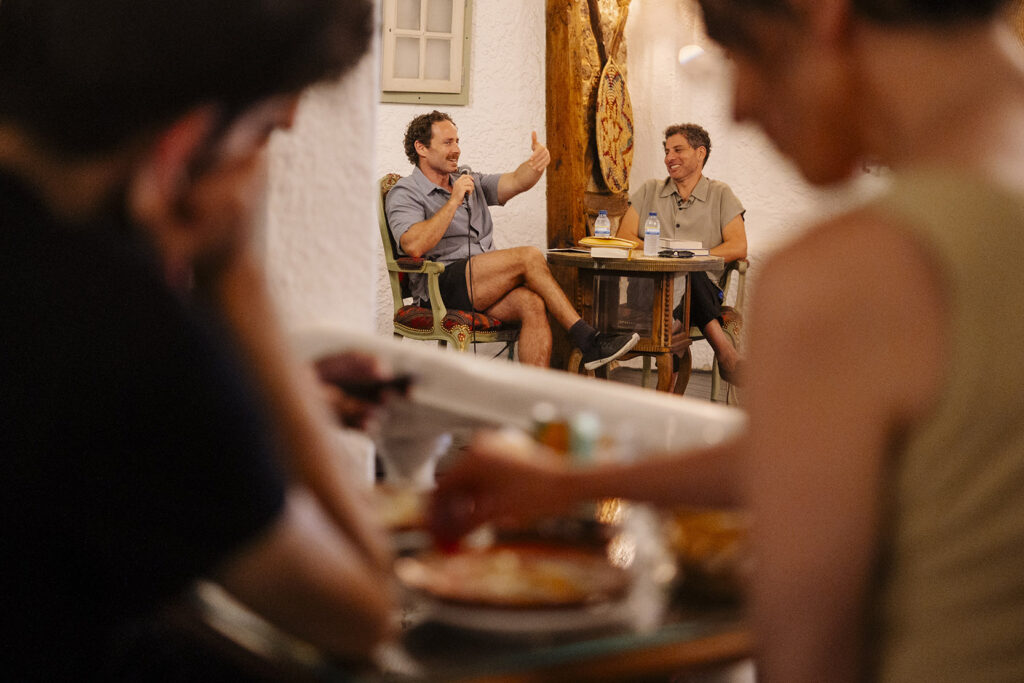
Introduction: On June 18, 2026, I joined writer and scholar Tareq Baconi for a public exchange at Casa Palestina in Lisbon. Founded as a cultural and political space for Palestinians and allies in Portugal, Casa Palestina has become an important gathering place for discussions about Palestine, exile, memory, art, and liberation.
Tareq and I have been in conversation for more than a decade. We shared early drafts of each other’s books — his memoir Fire in Every Direction and my novel Floodlines — long before either was published. What follows is an edited version of our discussion, which began with questions about fiction, memoir, and the relationship between politics and intimacy, before moving into broader reflections on Palestine, queerness, family, return, memory, estrangement, and rage. At the heart of the conversation was a shared concern with how large political ruptures shape private lives, and how storytelling might help us navigate the complicated terrain between personal experience and collective history. We spoke about what it means to write honestly in times of catastrophe, how identities become politicized and contested, and how ideas of home and return are transformed by displacement. Throughout, we returned to a question that runs through both of our books: how do we live with rupture, and what forms of belonging remain possible in its aftermath?
— Saleem Haddad

Saleem Haddad: You emerged as a scholar of Hamas, publishing a highly acclaimed book, Hamas Contained, based on your PhD. But Fire in Every Direction is much different. It’s a coming-of-age memoir, a love story, but also a queer Palestinian story. The first draft that I read was written as a series of letters to Ramzi, the boy you fell in love with when you were both growing up in Amman. At what point did Palestine enter this book?
Tareq Baconi: When you saw an early version of the manuscript, Hamas Contained had just come out. I thought I was writing a letter to the boy I loved when we were growing up in Amman in the eighties and nineties. It started as a friendship that, on my side at least, turned into a love and infatuation.
At the time, I didn’t have words to describe what I was going through. Queerness was absent from the world around me, I didn’t have the language to articulate what the friendship was morphing into. I always knew that — once I had the language — I would return to this story. After Hamas Contained came out, almost immediately I started writing a letter to Ramzi explaining what all that mess was—
SH: By “that mess,” you mean the friendship?
TB: The collapse of the friendship, the inability to articulate what I was feeling, all of it. My relationship with him had unfolded in different ways, one of which was through letter writing. We used to write letters to each other constantly. So I had a whole stack of his letters to me, and the book was conceived as a letter that I was now writing to him twenty-five years later. It was a very intimate process for me, I didn’t know where it was going. But as I wrote about these two boys, a question started surfacing: why are these boys in Amman? Ramzi and I are both descendants of refugees from Palestine. I did not set out to write a book about Palestine, but Palestine is all over this book. It’s organically part of these boys’ lives, in their parents’ lives, in their grandparents’ lives. The book became a story about my grandparents, their expulsion from Palestine, my parents and their flight from Lebanon, and my own childhood in Amman. It became a story about the Nakba, about that first rupture, so to speak, about the Palestinian condition, about exile, about displacement, and how these things shape your intimate relationships, your friendships, your lovers, the sex you have — all of that is shaped by these politics, right? They’re macro politics, but they manifest intimately.
SH: It’s such a departure from your first book, which was academic and political, to shift gears towards something very intimate and personal. But the politics didn’t really go away, it just became more intimate.
TB: Yes. In some ways, I felt that Fire is more political, because sometimes in academic or policy writing you’re hiding behind analysis. You’re making an argument. But when you’re writing about people’s intimate lives, there’s no hiding, and politics appears in all of its messiness. But that wasn’t my intention. I’m sure you feel that in your writing. Both of your books are extremely political, but — maybe I’m putting words in your mouth — you probably wouldn’t have thought, “I’m setting out to write a political book.”
SH: I’m not sure, actually. I grew up in a deeply political environment by virtue of being Palestinian. Our Palestinian identity was always set against whatever country we lived in at the time. Being Palestinian in Kuwait in the eighties was very different from being Palestinian in Kuwait when we returned in the nineties. Being Palestinian in Jordan is very different from being Palestinian in Lebanon. Politics was never abstract; it was always deeply personal.
How many people were thinking about Gaza before 2023?
When I started writing fiction, the politics was always clear to me. In fact, with Guapa, it was the opposite of what you’re describing. I wanted to write an Arab Spring novel, a novel about the revolutions. Politics was the entry point. But I realized I couldn’t write about the politics without writing about family, love, friendship, and desire. So at least with my first novel it was the other way around. The politics was the entry point, and the personal then became inevitable through that.
TB: Fire is a book that’s written against a silence. That silence was queerness. I wanted to articulate the narrative that I didn’t have access to. The fact that the book then also became about Palestine makes sense, because it became a book about understanding identities that are demonized, that are actively undermined, that are weaponized in many ways. Palestinian identity is heavily political. As you said, it looks differently in Lebanon than in Jordan. It looked differently for me in Jordan than in London. It’s an identity that carries weight and ethics and commitments to revolution. I came to Palestine through a queer identity, through an understanding of how certain identities are rendered abject, demonized or weaponized.
SH: Was that lens of abjection present in your work on Hamas?
TB: I actually think part of the reason why I gravitated towards Hamas was that it was a movement that was severely misunderstood, misrepresented, demonized, especially in the West. It was a movement that you couldn’t engage with rationally. If there’s something no one is talking about, I want to understand why.
SH: That reminds me of your essay about Gaza as the abject, which I think links to queerness.
TB: The essay was talking about narratives and misrepresentation of Gaza, which in the western imagination is either hypervisible or completely invisible. In its hyper visibility, before the genocide it was seen as an awful place, collapsing, unlivable, uninhabitable, a place that’s full of terrorists. Think about Gaza before 2023 — how many people were thinking about Gaza before 2023? That two million Palestinians are imprisoned indefinitely with no end to their imprisonment, and yet forgotten or demonized. That, for me, was a condition of abjection.
Queerness is also often treated this way — certainly in heteronormative societies, in patriarchal societies — as undignified, unacceptable, dirty, associated with pandemics and disease. The entry point into abjection was Julia Kristeva, a philosopher who wrote a beautiful book called The Powers of Horror. If you go into that which is made abject, into that which is miserable, and you reclaim it, that’s a site of revolution. This is what queer folks do. They say, “you want to call me a faggot, I’ll reclaim that.” That becomes the site of emancipation.
It’s the same for Gaza. The point is not to prove one’s humanity. The contestation is not whether there are “good people” there who deserve to live. It’s about reclaiming Gaza in all of its complexity — its misery, beauty, resistance, and contradictions.
SH: This approach feels central to your memoir. The way you write about your experiences, the way you revisit your childhood, was also very much from this position of abjection, because you were this queer kid who went to Petra and bought a doll. There are these very intimate domestic scenes, familial scenes, where your queerness becomes visible to the wider world. You refer to these glances as the darting shadows.
TB: In Fire, I had the sense of writing into parts of my past that were filled with shame, self-loathing, and internal conflict, and putting them on the page and saying: now everyone can read my shame. But that’s also an act of reclaiming.
I’m curious whether you feel that in your writing. There’s a lot of sex and embodiment in your books, the messiness of the body, the messiness of sexual relations. There’s something about your writing that’s confronting and provocative, almost leaning into these things that are unstable or unutterable or impolite. It’s keeping with the tradition of queer writing, externalizing everything that we’ve internalized onto the page.
But do you feel bad? When you’re coming into the queer and into the body and into sex in your writing, does it come from a place of shame, even if it’s past shame?
SH: If I’m writing and suddenly hesitate, or feel ashamed, I always stop and think. The hesitation usually points towards something important. I think it’s good practice as a writer to question, to interrogate, because that shame is also where that tension is, and the strength of a piece of writing is when you touch on that sore point, on the nerve. It’s not that I go out looking for it necessarily, or that I’m trying to excavate shame. I don’t think that I carry a lot of shame now. I had a lot of shame when I was younger, but I don’t think I have that shame anymore. Perhaps writing Guapa helped with that, but for me it’s creatively important to see where the nerve is, and to explore it and touch it.
If I’m writing and suddenly hesitate, or feel ashamed, I always stop and think. The hesitation usually points towards something important.
TB: For me, if I’m writing about that boy who was playing with dolls and who was seeing how his mother or father would glance at him in a certain way, and putting myself back in that place and feeling that shame again, that shame is a big part of me, it’s in my body, my history, and so owning that and putting it on the page is an act of taking back my power over it as well.
SH: Guapa came out in 2016, at the height of Israeli pinkwashing and a broader western liberal discourse around queer rights. The novel was critical of aspects of Arab society, including cultures of shame, but I felt a responsibility to ensure that critique wasn’t co-opted. It was important to talk about these issues honestly, because I think by hiding them you feed into the colonizers’ power. But I felt I had to resist instrumentalization. I’m curious what the landscape looks like today. What conversations have you been having around queerness and Palestine, now that your book has come out ten years later?
TB: I want to return to the point about not writing on the colonizers’ terms. But just to comment specifically on pinkwashing, I think you were writing in a particular moment in time when pinkwashing was at its peak. I don’t know that pinkwashing is as effective anymore. For the most part, people now understand what the Zionist project is doing, and how it weaponizes queer rights. I remember seeing an image two or three months into the beginning of the genocide of an Israeli tank going into Gaza and a soldier holding the pride flag, which felt like a relic from the past. It felt like a desperate act on their part. It didn’t land. You cannot see a tank going into a genocidal apocalyptic landscape and think, oh, this is for queer rights. Pinkwashing wasn’t anywhere in my consciousness when I was writing this book—
SH: Really? That’s surprising.
TB: Nowhere. I would have never thought that I want to show queer life in order to fight their claims around pinkwashing. I was worried about a different kind of co-optation, by the liberals, not by pinkwashing.
SH: I mean, I see them as the same.
TB: In many ways they are, but pinkwashing wasn’t on my mind, but I get asked about it all the time, so obviously people are interested in that. I was very aware that, as a queer man and as a Palestinian man writing in English, whether I liked it or not, certain terms are going to be assumed on me. These are often liberal politics, and I’m not a liberal, and this book is not a liberal book, and I think that I knew that there would be a certain co-optation that would be happening both on Palestine and on the queer identity.
Writing the first draft as a letter to the boy I called Ramzi helped protect against that. When I started writing, I was in denial that I was writing anything that would be published. I was writing a letter to Ramzi. Those were the early versions that you saw, that framework allowed me to have “Ramzi” as my sole reader.
If I thought any of what I was writing would have a public readership, I would have been guarded. I wouldn’t have been able to be as vulnerable as I ultimately was. Because if I start thinking about how a Jane or a Sam are going to read this book, then I’m going to be doing a lot of explaining to them. But if Ramzi is my sole reader, then I’m just writing to another Palestinian man of my age. So there’s Arabic in this book that isn’t transliterated or explained. If you don’t read Arabic, that can be very unsettling, but I wanted a western reader to be unsettled. That’s what I wanted them to feel, so that their experience would be one of a voyeur’s into a conversation that’s happening between two Palestinians. It was unsettling the western gaze. It was structurally very intentional to protect me from being pulled into a terrain and into a politics and into a discourse that I didn’t want to be dealing with. Do you do a similar thing?
SH: I remember struggling with this while writing Guapa. Like you, I wrote the first draft for myself. I didn’t think it would be published, and that freedom allowed me to touch those sore points without worrying. Only later, during editing, did I begin thinking about different readers.
TB: I think the writing and the publishing are different processes. I think they have to be, because you have to accept that when it’s getting published, it’s out in the world, and it is going to be co-opted, and you have no control over that, but you have to protect as much as you can. Do you feel inhibited by that?
SH: No, I don’t, and I think we have talked about this before, that to be a novelist, to be a writer, you need to have a certain iciness when it comes to these things. I make this decision when I decide to write about something, I make a calculation over who this might offend, who am I betraying, and then I make a calculation: is my art more important than this relationship? It’s cold, but this is how I approach it. But I’m a writer, I’m not a good person.
TB: There are people who I didn’t feel like I needed their permission. I tried to do it as ethically as I could, but I knew that it came with a certain degree of exposure, and I knew that it would hurt some people. My partner said to me, if you’re living with a writer in the family, you’re living with an arsonist, you’re going to burn things down, and you just have to accept that. I moved as ethically and cautiously as I could, but there was a lot of negotiation that had to happen internally. There are parts in the book that are difficult to imagine, even now, as being in the public sphere. I gave my family the manuscript and asked them to read and to make sure that they were comfortable with everything before they gave me permission to publish. With my mother, it was a negotiation on several parts in the book to find a place that we were both comfortable with. Those were the relationships that mattered to me.
There’s something about the insistence on writing about the messy and the complex that’s also a difficult position to hold when the stakes are so high and the narratives, or the contestation, is so extreme.
SH: I think this is something I’ve had to deal with in Floodlines. The novel deals with sexual abuse in the family, it deals with suicide, it deals with political complicity, with big, thorny issues, and vicious arguments between families, which are usually kept behind closed doors. The novel is partly inspired by my mother’s side of the family, who are Iraqi, and the response within that family was mixed. One of the things that I heard from some of them was: “We’re a very happy family, our art is very hopeful. Why is the novel so dark?” Well, first of all, I’m not going to write a novel about a happy family, but more importantly, in order for us to get to that happiness and feel that it’s earned, we need to go through a lot of the muck and really kind of understand all of these tensions and touch on all of those nerves and sore points.
TB: But do you feel the weight — not just from family — but as someone who’s living in the West, in terms of how your novels will be perceived or intentionally misread?
SH: Any Arab writer working in English who claims not to think about these questions is either lying to themselves or being irresponsible. Of course these things are always on my mind. But I owe it to myself, and I owe it to the people who take the time to read my work, to be as surgically precise as I can with the political and personal complexity of the times that we’re living in, and that involves looking critically at all dimensions, and occasionally some of these will brush up against nerves, and occasionally, if picked out, can be used to bolster a narrative. But if I were to write while always thinking about the ways certain lines or scenes might be taken out of context by a Zionist or a liberal feminist, then I’ve already lost the battle.
My value system, what I believe in, is that queer liberation and Palestinian liberation are inseparable.
TB: One of the challenges that I’ve had to deal with was the question: do you really have to be talking about queer rights now? Isn’t that a deflection? Aren’t you bringing up laundry that you shouldn’t be bringing up, isn’t that giving your adversary more power?
SH: How would you answer that question? I know that you wrote this book before the genocide, but, in the struggle for Palestinian liberation, why devote time to discussing queerness?
TB: I don’t know that I know how to live in a way that accepts these as separate struggles. They’re both embodied in me. A free Palestine is obviously a struggle for the land. We want all the Palestinians to return, we want sovereignty over Palestine. That’s a very clear struggle. But I also want that politics to be feminist as well, to have queerness at its heart. That’s not to say that if there’s an Islamist in the struggle for Palestine or a patriarchal secular nationalist, that I’m not able to be in struggle with them. We’re all in the same struggle. But my value system, what I believe in, is that queer liberation and Palestinian liberation are inseparable.
SH: Both of our books are also about exile and return. But when we shared our first drafts with each other, I don’t think either [theme] was that big. But they emerged as key themes in both.
TB: Return is complicated and messy, and I think one of the most beautiful scenes in Floodlines is about return. It’s redemptive and disappointing and beautiful and ugly.
SH: Something I find very interesting to return to in my writing is that distance between our desires, memories and imagination, and the reality of what is. It can be the space between how you might imagine a person to be romantically, and the reality of what that relationship is, which I think Guapa deals with. But it can also be how you might remember your childhood neighborhood in Iraq, which is what happens in Floodlines, and then the present geography of the neighborhood you are confronted with upon your return, where the neighborhood has changed to the point that it’s not recognizable. And so what are you left with then?
I had this experience with my mother, because I traveled back to Baghdad with her last year. She hadn’t been back in nearly forty years, and we visited her neighborhood. I was doing final edits on Floodlines. We took a taxi to her neighborhood, and she saw a kebab restaurant, and she said, “This kebab restaurant existed when I was a teenager. My house is the seventh street from this restaurant.”
We stood in front of the restaurant, we counted the streets, and we walked. We started getting lost, and I could see she was getting disoriented because she was not recognizing anything. She started doubting herself. “Maybe we took the sixth road, let’s go back,” she said. So we walked back and forth. And finally, we went back to the seventh, and we walked halfway down the road, and she suddenly stopped and said: “This is where my house used to be. But it’s not here anymore.” As soon as she made that connection, accepted her house was gone, she was completely reoriented. She knew exactly where everything was. Once her private geography adapted to the real geography, she was reoriented. When I returned from that trip, I wrote this scene in the novel, where a character returns to their neighborhood.
TB: I loved that scene. I think Palestine is a specific case because it’s settler colonialism, right? The reason that return is so fundamental to Palestine and Palestinians is because the whole Zionist project is committed to our erasure. Zionism wants to pretend that the land is empty, so it has to empty the land of its inhabitants. So, for Palestinians to talk about return, we’re really saying we want to dismantle Zionism, we want to dismantle settler colonialism, and we want our sovereignty back. So, it’s about completely removing this regime that has implanted itself, that’s what our return means.
When I think about return, I don’t want to go back to Palestine 1948. It’s not going back in time to what was, it’s taking what was and projecting it into our present and into our future. For me, return is returning sovereignty to Palestinians over Palestine. It’s not going back to 1948, because time didn’t stop. There’s a new reality there. And return means building on this new reality with justice. Return temporally isn’t going back but looking forward. But there is a continuity in reclaiming the land and undoing colonization. This is where you dispel nostalgia. This is where nostalgia sometimes is denial. Because there’s no going back to that Palestine. That Palestine is gone, but there is a Palestine today, that Palestine is real, and that’s the Palestine we’re fighting for.
SH: For me personally, I come from generations of displacement. My grandmother and grandfather were displaced from Palestine. My dad was then displaced from Lebanon. He moved to Iraq; he married my mother. They were then displaced from Iraq. We were then displaced from Kuwait. The 1948 Nakba was the beginning of a series of displacements that happened throughout our family. I come from generations of rootlessness. For the longest time my father never owned property. It was a real struggle for us to convince him to buy property, because in his mind there’s an impulse of “Why would you buy property, you never know when you might have to leave again.”
So I’m interested in whether estrangement can itself be a political and ethical framework with which to view the world. The epigraph of my first novel was a line from Adorno, “It is part of morality not to be at home in one’s home.” Adorno was saying this in the context of fascism and capitalism, and how it is a moral position to estrange yourself from fascist regimes, from capitalist regimes, because once you’re at home with accepting that we live in a genocidal world, what does that make of your humanity? In this instance, estrangement becomes a moral position. Even though I advocate for the liberation of Palestine and the right of return, I’m not sure if I will necessarily live to see these benefits, so then my position becomes that of someone who will likely live and die in a position of rootlessness and estrangement, not to mention the estrangement that happens when you grow up queer and you’re estranged from your own body, you’re estranged from your own desires. How can I turn this sense of estrangement into a home, and how can I then continue to fight for a return that I will never experience. I will not see the return. I’m here for the fight, and for the love of the fight, and for the connections and networks that I build along the way.
I’m interested in whether estrangement can itself be a political and ethical framework with which to view the world.
TB: I agree with you, and I think the Palestinian condition today is a condition of exile. You know, I initially resisted the idea that I was writing a memoir. I wanted to write to Ramzi, that was the writing process for me, I wanted a feeling of intimacy with him and closure, even though I had moved on. But over the course of the writing, rage became a huge emotion for me, and maybe it’s because I was finishing the book against the backdrop of genocide, but the title of the memoir refers to something I used to describe my mother, who was an angry woman, and this rage was burning like a fire in every direction. While I was writing, part of me was thinking, “I understand my mother’s rage now, and I forgive it.” But in finishing the book, I realized that actually it is not forgiveness but gratitude I had for her. Because she instilled in me a rage that now I’m grateful for. Because if you’re not going insane with rage at this moment in time, you’re not understanding what is happening. My rage was something that I got from my mother, she modeled to me what rage looks like, and I think rage is a political tool we need to reclaim.
Floodlines (2026, by Saleem Haddad) is published by Europa Editions in the UK and the US. Fire in Every Direction (2025, by Tareq Baconi) is published by Atria Books in the US and Sceptre in the UK.