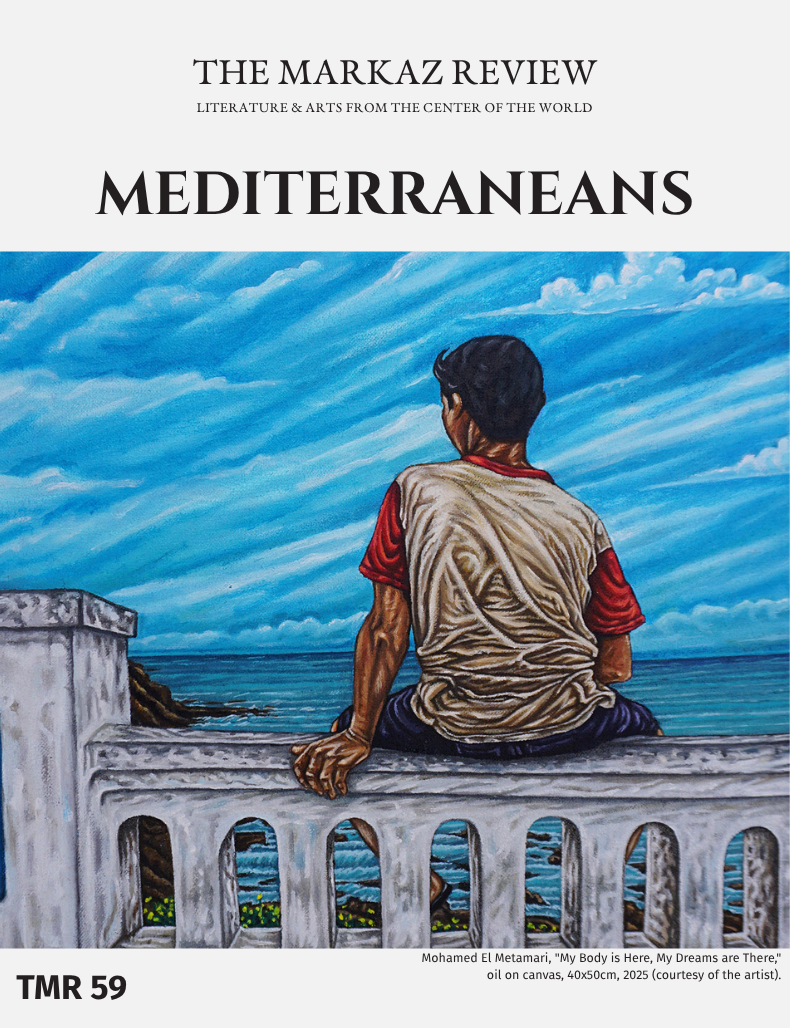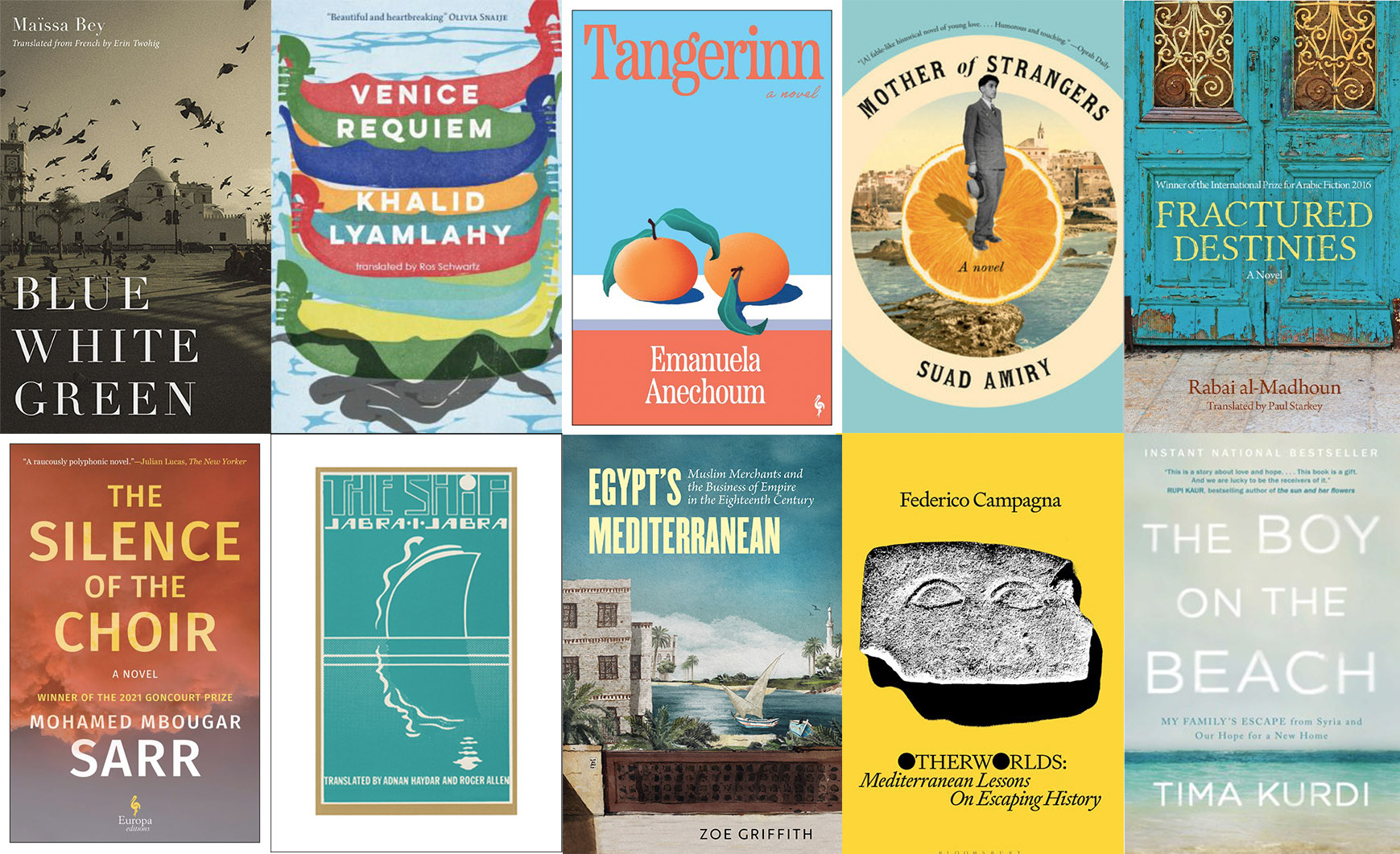
To read the Mediterranean is to encounter it anew each time — a sea of stories, always in motion.
FICTION
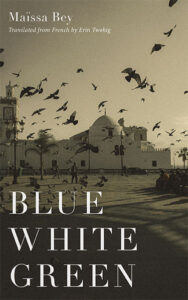 Blue White Green by Maïssa Bey, translated from French by Erin Twohig (Georgetown University Press 2026)
Samia Benameur, better known by her pseudonym, Maïssa Bey, is an Algerian educator and writer born in 1950 near Algiers on the Mediterranean. Blue White Green, her seventh novel and winner of the 2006 Cezam Prize, is set in Algeria over three decades (1962-1992). Told through the perspective of its two main protagonists, Ali and Lilas, “who believed that everything would change” after independence, the novel draws tension between those who see a complete break with the past as necessary and those who believe we must look to where we have come from, to know where we are going. As the translator’s introduction makes clear, the novel is split in three: The initial anti-colonial, socialist revolution headed by politician Ahmed Ben Bella (1962-1972); the student protests and disillusionment that follows as the new administration fails to live up to its promises (1972-1982); and the rise of an Islamist movement fueled by growing public discontent to sever the nation’s ties from France (1982-1992).
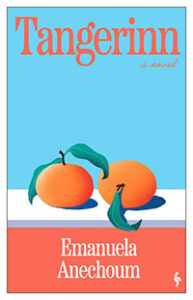 Tangerinn by Emanuela Anechoum, translated from Italian by Lucy Rand (Europa Editions 2026)
At its heart, this award-winning debut novel is about trying to understand whether where we come from defines who we are. Is identity fixed, or is it, in fact, something we constantly negotiate between past, family, culture, and personal choices? The novel explores these questions through Mina, a thirty-year-old living in London, where she fled to reinvent herself and escape her small-town past. But a decade later, she is still drifting, untethered and uncertain. When her Moroccan-born father Omar dies, she returns to her childhood home on the Calabrian coast, where he ran a bar called Tangerinn, a haven for immigrants in town.
“Through the relationship between father and daughter, I was trying to analyze the differences between the immigrant experience and the expat experience, mainly through two characters: Omar, the father and immigrant who moves from Morocco to Italy, when he’s around 25 years old, and the daughter, Mina, who later moves from Italy to the UK (the expat). The difference between their experience is mainly a question of privilege, but they also have some things in common, mainly the search for a lost identity and the longing for a community to belong to,” Anechoum comments in an interview. The novel has been praised by the New York Times as a “welcome rejoinder to prevailing ideas about migration: that it is a linear narrative, that leaving home (and, tacitly, drifting westward) automatically corresponds to an improvement in circumstances.”
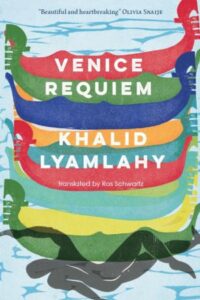 Venice Requiem by Khalid Lyamlahy, translated from French by Roz Schwartz (Hope Road 2026)
Venice has long served as a gateway to the Mediterranean, connected to trade routes linking Europe, North Africa, and the Middle East. So, it’s safe to describe Venice Requiem as a novel with a Mediterranean dimension, one that explicitly evokes migration routes and sea crossings. Based on a true incident, the novel questions what it means to be a spectator to suffering and do nothing. In 2017, a 22-year-old Gambian refugee named Pateh Sabally drowned in Venice’s Grand Canal. People watched, filmed, and even shouted “Africa” instead of helping. This disturbing event is at the core of the novel, as its narrator, a young writer living in Paris, becomes obsessed with the tragedy. Traveling to Venice (a postcard-perfect city now shadowed by a racist death), he makes it his business to bring back to life his imagined friend Pateh through a reconstruction of the events of that day. Throughout Lyamlahi’s second novel, the narrator quotes authors who lived in or wrote about Venice: Carlo Goldoni, Thomas Mann, Ernest Hemingway, Lord Byron, Marcel Proust, and others. By engaging in dialogue with their writings and experiences, the novel explores whether literature can actually do justice to real suffering. Born in Rabat, Morocco, Lyamlahy is an Assistant Professor at the University of Chicago, where he teaches and works primarily on Maghrebi literature, focusing on political, aesthetic, and sociocultural issues in the region.
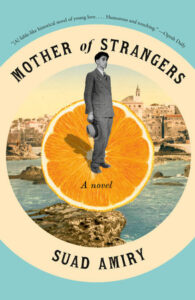 Mother of Strangers by Suad Amiry (Vintage 2023)
Set in Jaffa, Amiry’s historical novel portrays Palestinian life during the British Mandate (1918-1948). Although Amiry was born in Damascus, Syria, her father was from Jaffa, a city overlooking the Mediterranean. In 1948, Amiry and her family fled Jerusalem as refugees and settled in Amman, Jordan, where she grew up. The novel draws on the true story of two teenagers in love: Subhi, a 15-year-old mechanic, and Shams, a 13-year-old girl he hopes to marry. As Amiry traces the collapse of British rule in Palestine in 1947, and the subsequent imposition of Israeli rule in 1948, readers witness a once prosperous and cosmopolitan city, known as mother to strangers, descend into a place of fear, violence, and destruction, its population fleeing eastward to Jordan, north by sea to Lebanon, and south to Egypt and Gaza. The novel also examines the fate of the 3,000 Palestinians who remained in Jaffa (out of the 100,000 who had lived there before 1948), and were confined to “Arab ghettos,” enclosed by barbed wire and guarded gates, subject to a daily curfew. It further explores the 1950 Absentee Properties Law, which stripped Palestinian refugees throughout the diaspora, Israel, the West Bank, and the Gaza Strip of the right to reclaim their properties, even when they were physically present in areas controlled by Israel.
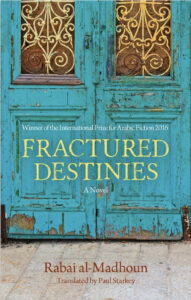 Fractured Destinies by Rabai al-Madhoun, translated from Arabic by Paul Starkey (AUC Press 2018)
Winner of the International Prize for Arabic Fiction and considered one of the most important Arabic novels of the 21st century (The National), al-Madhoun’s novel explores Palestinian exile, with all its complex loyalties and identities; the Mediterranean Sea acts as a significant backdrop to the characters’ lives, particularly in coastal cities like Acre, Jaffa, and Gaza, highlighting themes of longing and displacement within the Palestinian experience. The novel centers on one question: Which is more painful, being forced to abandon your homeland, or remaining and watching strangers erase all traces of your culture and history? Structured like a musical concerto, the novel unfolds across four “movements,” each with its own distinct storyline and voice: the elderly Ivana, on her deathbed in London, who implores her daughter to carry her ashes back to her hometown of Acre; Julie and her husband, Walid, who undertake the journey to Palestine to fulfil the wish. As the couple grapples with the impossibility of fully reclaiming the past, Fractured Destinies reveals how acts of remembrance and love can bring together pieces of a broken life and a people, however imperfectly.
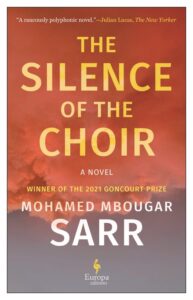 The Silence of the Choir by Mohamed Mbougar Sarr, translated from French by Alison Anderson (Europa Editions 2017)
When 72 men arrive in Altino, a town in the Sicilian countryside, they are known to the townspeople as the ragazzi (the guys), whom the Santa Marta Association, run by Sabrina, an immigration lawyer, takes under their wing. As they await their fate, they encounter all kinds of strange characters: a vicar who rewrites their pasts, a woman committed to securing them asylum, a man determined to fight them, an elderly translator, and finally a reclusive poet who no longer writes anything. Each character is forced to reflect on what it means to encounter people they know nothing about. This multilayered second novel by the Senegal-born author is a powerful plea for compassion in the face of hatred.
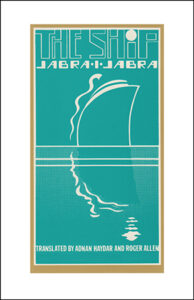 The Ship by Jabra I. Jabra, translated by Adnan Haydar and Roger Allen (Three Continents Press 1985)
Jabra Ibrahim Jabra (1920-1994) was a Palestinian Iraqi writer, translator, and intellectual widely recognized as one of the most influential figures in modern Arabic literature. He is notably known for introducing modernist and existentialist themes into Arabic writing. His philosophical and introspective novel, The Ship, is an exploration of the post-1948 Arab world, with its frustrations, yearning for homeland, and struggle for survival. The story, which unfolds through conversations, debates, and internal monologues, revolves around a group of Arab intellectuals and exiles aboard a ship cruising the Mediterranean. Perfect for readers of Camus and Kundera, who are drawn to thoughtful meditations on life, identity, and exile.
Nonfiction
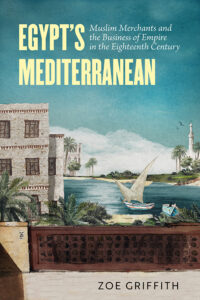 Egypt’s Mediterranean: Muslim Merchants and the Business of Empire in the Eighteenth Century by Zoe Ann Griffith (University of California Press 2026)
Egypt’s Mediterranean explores the intersections of commerce and statecraft in the eighteenth-century Ottoman Empire, through the lives of overlooked intermediaries who lived and worked on Egypt’s Mediterranean coast. Egypt’s port cities mediated the geographic distance and economic scales between the province’s agricultural landscape, its Red Sea connections, its hegemonic capital city, and its position within the wider Ottoman realm, while Ottoman Muslim merchants acted as linchpins of imperial governance in Egypt, mediating the state’s access to Egyptian wealth. Drawing on Arabic, Ottoman, and French sources, Egypt’s Mediterranean foregrounds the role of Muslims and Islamic law in Mediterranean history, decentering European capital and actors in an interconnected story of imperial realignment and changing fortunes on the eve of modernity (from the book jacket).
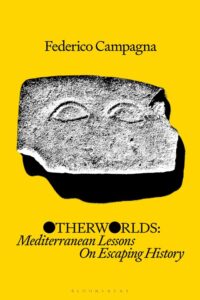 Otherworlds: Mediterranean Lessons on Escaping History by Federico Campagna (Bloomsbury 2025).
At its heart, this philosophical book by Federico Campagna poses a question that feels ancient but also urgently contemporary: What sustains us when our world falls apart, when the certainties we once relied on are gone? To explore this, Campagna moves through a sweeping arc of Mediterranean history (Bronze Age, Hellenistic world, Fall of Rome, Middle Ages, Modern and contemporary eras), tracing how people reinvented reality in the wake of catastrophe. Throughout, the Mediterranean emerges as a place of constant movement, crisis, and creativity. As Campagna himself describes it in an interview, the book “introduces you to a series of friends, tells you hundreds of stories of other people like you, that were in your same situation, and how they tried to make sense of a general historical catastrophe they could not avoid or reverse. Reading it, you will feel less alone, and maybe you will learn some tricks on how you can do it.”
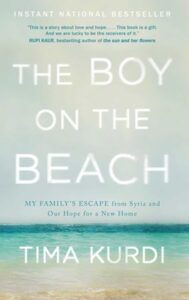 The Boy on the Beach: My Family’s Escape from Syria and Our Hope for a New Home by Tima Kurdi (Simon and Schuster 2018)
When Alan Kurdi’s body washed up on the shore of the Mediterranean on September 2, 2015, the political became personal overnight, as the world awoke to the reality of the Syrian refugee crisis. Tima Kurdi first saw the shocking photo of her nephew in her home in Vancouver, Canada. The memoir begins with Kurdi’s memories of a happy life in Syria before the war, her siblings’ hardships in refugee camps and towns, and the bureaucratic obstacles Kurdi encountered when trying to bring them to Canada. Its most searing and widely memorable passages center on the fatal boat journey from Turkey toward Europe.