In Lebanon, as elsewhere, the costs of abandonment have pervaded almost every aspect of life and politics.
Resentment of Hamas among ordinary Gazans is widespread, even if the rage against Israel is much greater.

As Shehada’s observation extends beyond Gaza, the lay of the land becomes profoundly clear: peoples at once assailed and abandoned. For many, the implied equivalence between Israeli aggression and Arab failure that frames this portrait is unsettling, even offensive. As a matter of absolute principle, there can never be any such pairings lest Israel’s unique menace find refuge in the shadow of such failure.
But the very hard truth is that the two do function as a pair, one of many. It is not lost on us in this neighborhood, for example, that if we were asked to substitute the antagonists on Shehada’s tableau of discontentment, the list would become disturbingly interchangeable and jarring:
Resentment of the Palestinian Authority among ordinary West Bankers is widespread, even if the rage against Israel is much greater.
Resentment of the Egyptian state among ordinary Egyptians is widespread, even if the rage against Israel is much greater.
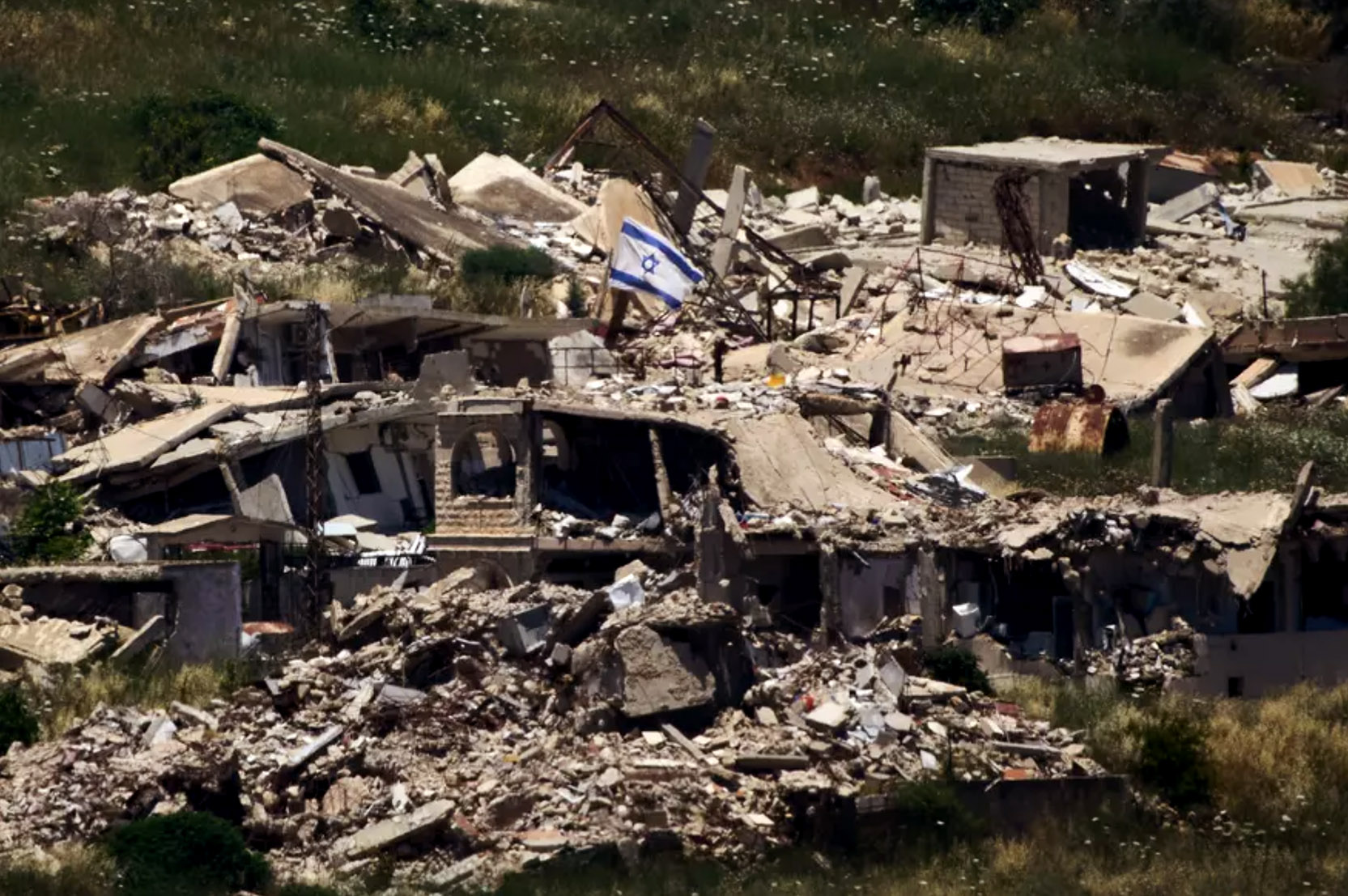
Resentment of the Syrian state among the ordinary people of Quneitra and Daraa is widespread, even if the rage against Israel is much greater.
Resentment of Shiite militias among ordinary Iraqis is widespread, even if the rage against Iran and the US is much greater.
Resentment of the Lebanese state among ordinary Lebanese is widespread, even if the rage against Israel is much greater.
Resentment of Hezbollah among the ordinary people of southern Lebanon is widespread, even if the rage against Israel and the Lebanese state is much greater.
Resentment of the Lebanese state among Tripolitans is widespread, even if the rage against Hezbollah is much greater.
You’re welcome to switch the names around.
In Lebanon, the costs of abandonment have pervaded almost every aspect of life and politics. To foreign forces, we became a wide-open arena; between ourselves we bickered over frivolous reasons and fought over large causes. We fashioned bespoke realms, sustained by make-believe normalcy and makeshift solutions.
Over the past two weeks, we, yet again, felt the weight of our republic’s congenital weakness. Caught in an intensifying Iranian-Israeli struggle that recently left Iran ascendant, Lebanon hammered out a framework agreement with the Jewish state under US sponsorship. The government wanted to demonstrate that it was master of the country’s fate. Practically every clause confirmed the opposite, none more damning than an Israeli withdrawal from the south conditioned on the disarmament of Hezbollah. What was thus meant as an audacious bid for political authorship could more persuasively be cast as an extraordinary boon to a diminished Israel. In its defense, the government argues that it has both the legitimacy and the authority to force the movement’s demobilization. Israel and Iran know otherwise. So do many Lebanese. But now, per the agreement, responsibility for the Israeli occupation rests squarely with Hezbollah. A pass breathtaking in its recklessness to an enemy with a long list of war crimes and brazen territorial designs.
This is the state of play today in Lebanon: a government that is alarmingly reliant on an American mediator with a consistent record of bias towards Israel, and an armed resistance whose subservience to Iran’s interests and dictums has become barefaced. Slicing through this impasse is the chasm between aspiration and delusion. The state believes the path to suzerainty starts through the framework agreement. Hezbollah believes that it can still perform its dual role as Iran’s forward defense and Lebanon’s resistance. But while the government is certain to fail in implementing the framework’s onerous provisions, Hezbollah is politically depleted by the enormous human and material sacrifices wrought by the war.
Last week, into this contested space stepped Syria’s foreign minister, Asaad al-Shaibani. The highlight of his visit was the raucous reception he received in Tripoli. This thunderous expression of fealty stands in pronounced contrast to the city’s disenchantment with an absent Lebanese state. A disenchantment whose depth is surpassed only by Tripolitans’ fury at Hezbollah for its intervention in the Syrian civil war to shore up Bashar Assad.
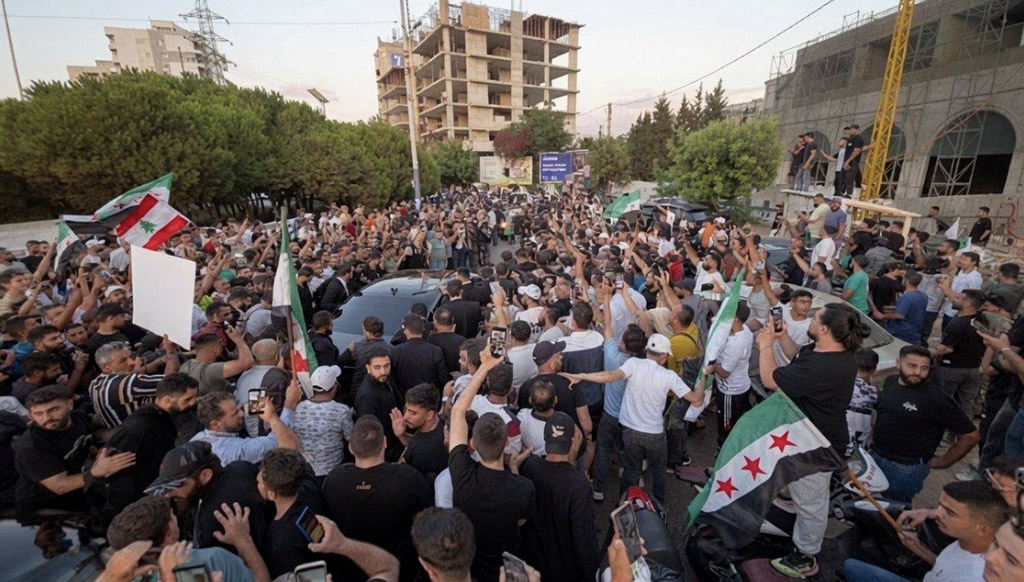
Tripoli’s troubled relationship with the motherland started with the latter’s French-engineered birth in 1920. Part of Syria, it would compete with Beirut as a commercial gateway; part of Lebanon, it would yield pride of place to the capital. Its people resisted their new Lebanese identity until the early 1940s. Since then, the city, the second largest, has worn the wounds of its marginalization. No episode was more evocative of its impoverishment than the 2022 drowning of ninety-seven people — part of a larger group attempting to reach Italy by sea.
There is much to read in Tripoli’s warm embrace of Al-Shaibani. If not the Lebanese state and Hezbollah, certainly Israel and Iran are hard at work discerning its meaning.
On Another Note
Until recently, I was unfamiliar with the films of Nadav Lapid. The Israeli filmmaker lives in France in large part as a disavowal of his home country. This year, he had to cancel his participation in the Marseille Film Festival after twelve participants threatened to withdraw. The controversy raised the obvious question: why boycott an Israeli whose creative output is itself very critical of Israel?
Arielle Angel interviewed Lapid on the Jewish Currents podcast, On the Nose. I found Lapid’s sympathy for those who called for his boycott one of the interview’s more interesting turns.
Have a listen!
Amal Ghandour’s biweekly column, “This Arab Life,” appears in The Markaz Review every other Friday, as well as in her Substack, and is syndicated in Arabic in Al Quds Al Arabi.
Opinions published in The Markaz Review reflect the perspective of their authors and do not necessarily represent TMR.